Today's puzzle was not good, so the following should be of more interest.
White to play and win
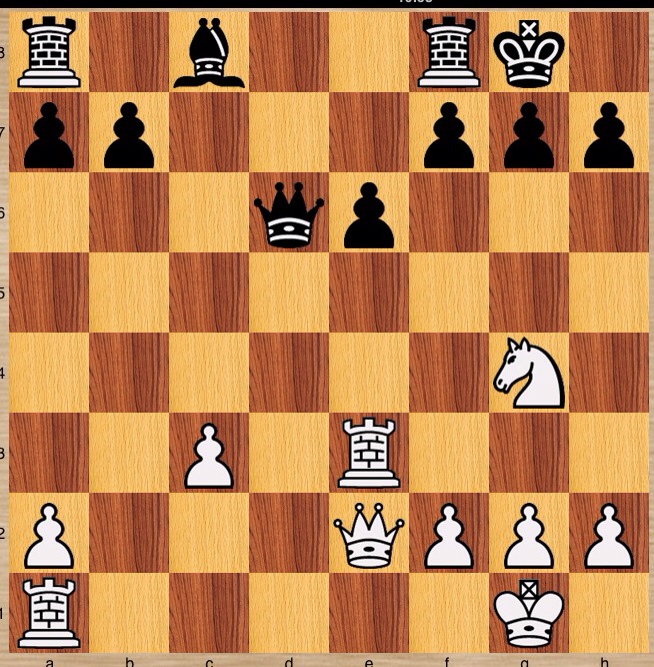
S Williams-R Weaving, Torquay 2013
Source: Chess magazine, September 2013 'harder puzzle for the club player'
Solution
The first move, 1 Nf6+, is obvious, as is the best reply, 1…Kh8. It is simple to discount 1…gf 2 Qg4+ Kh8 3 Rg3 when black must sacrifice his queen, 3…Qg3, when white is simply better. Material is level, nominally, but black's kingside/ black square weakness must win through. I'd give myself 2:1 odds on beating Magnus Carlsen from that position [maybe I am being optimistic, but I can dream].
But what after 1…Kh8?
A diversion, now. I looked at this problem when on a family walk from Buttermere up to the summit or Haystacks in the English Lake District.

Charlie at Innominate tarn, near Haystacks
La famille Beardsworth walk at different paces, so whilst sometimes we stick together, often we stretch out, and sometimes we str-e-t-c-h out. So there is plenty of thinking time, and this time I took a photocopy of the 'harder puzzles' page with me, to think about both when walking along and when waiting. (A wonderful thing about chess: you can be thinking about it when no-one knows; ideal for walks, interminable meetings, and dull conference calls…)
I found this month's harder puzzles not easy: solving eight of the nine more or less by inspection, though this one really troubled me. How to land the knock out blow? I spent most of my time on 2 Qh5, especially 2…h6 3 Rg3 and 3 Rd1. There are some nice variations. For instance 3 Rd1 Qf4 4 Rf3 Qg5 5 Qg5 hg 6 Rh3 mate; or in this line, 4…Qc4 5 Qf7!!, a beguiling theme in several variations. If 3 Rd1 Qb6 (defending d8, so the Qf7 trick doesn't work, then 4 Rg3 and black is pretty trussed up, and 5 Qg4 is threatened. But I am mindful of 'long variation, bad variation' and then saw the black queen is far better on e7, when white's attack fizzles out.
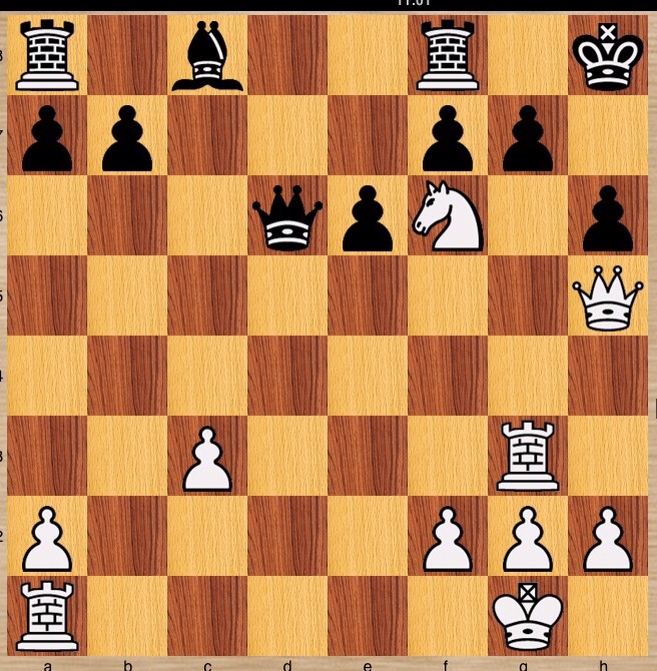
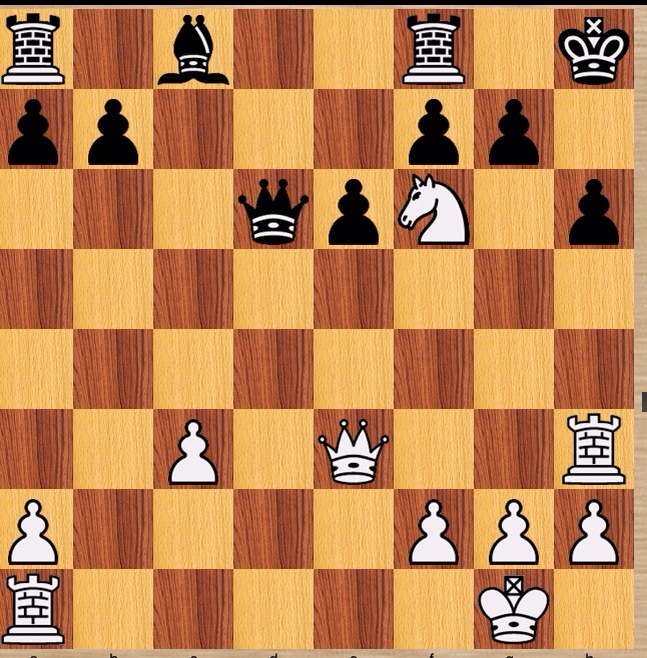
So, what to do? Reverse the move order: 2 Rh3! when everything works. 2…h6 3 Qe3!! is game over. I am not sure whether there is a general theme here, but by moving the less flexible piece first, reserving the greater option, the queen can go either to g4, h5 or somewhere new, e3: it is probably too much to say 'and e3 is a black square'. Whilst black is without his black squared bishop, his black squares don't look particularly weak in the first position, but maybe they do after he has committed to …h6.
A final point to ponder: whilst the Chess magazine page is headed harder puzzles for club players, would the GMs or Super GM's find the puzzles hard? If not, why not? It would be great to know if any of the GMs who follow my blog found this puzzle hard, and if not, why not: what techniques do they use?
 Posted with Blogsy
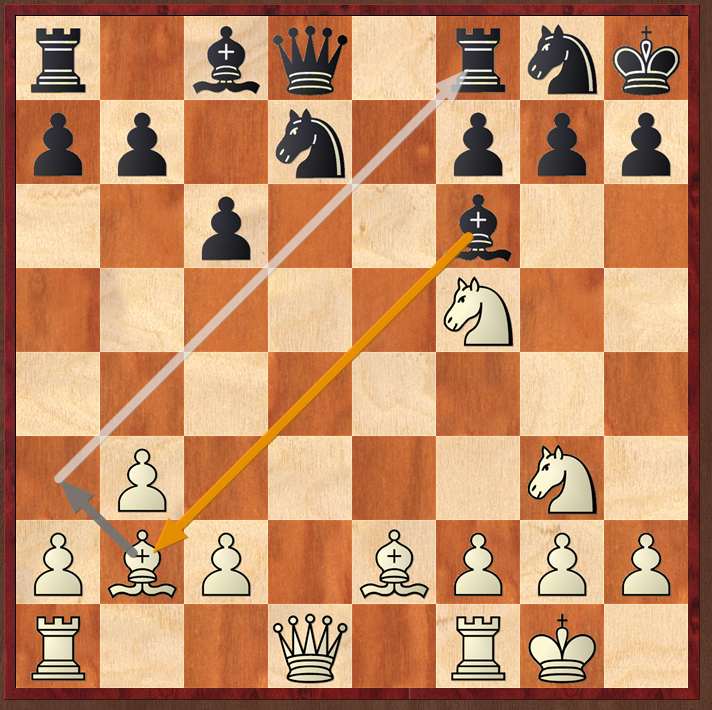
White to play and win (if black doesn't defend well: not one to waste your time on)
Solution
Oh dear: after yesterday's pleasure, comes today's disappointment.
Having tried to solve the puzzle in my head, I decided that I needed to set the pieces out.
The only good thing to say is that I was solving this at our holiday home in Kas,Turkey, so the view is beautiful, and the environment tranquil. But the chessboard is also quite tranquil.
I looked and looked, to no avail. There is one LPDO, the Ra8, but that is unlikely to be the motif. Biffs like Ng7 are just bad, for white has his own LPDO Bb2. Nothing comes either from landing a piece on d6, either the Q or N, though there is a potential smothered mate motif Nf7 to strive for; and whilst h7 is undefended, apart from the Kh8, white can't get at it.
So, frankly, I had no ideas. In a game I would surely presume it was equal, and exchange on f6: or, I did think of being cute and playing 1 Qc1 to seek to put the Q on the long diagonal, but even if it gets there, there is a Qf6 challenge. Nor did 1 Ba3 appeal: black wouldn't need to take on a1, and can instead play 1..c5 or 1…Ne7: white might be a tad better, but no more.
I don't like giving up on problems, but eventually had to here. Basically, white just didn't seem to have enough, and I knew that I would have no more ideas. So I turned to the answer, and found that 1 Ba3 Ba1? was played: looked into it a bit more, couldn't be convinced, checked with an engine, and my doubts where confirmed.
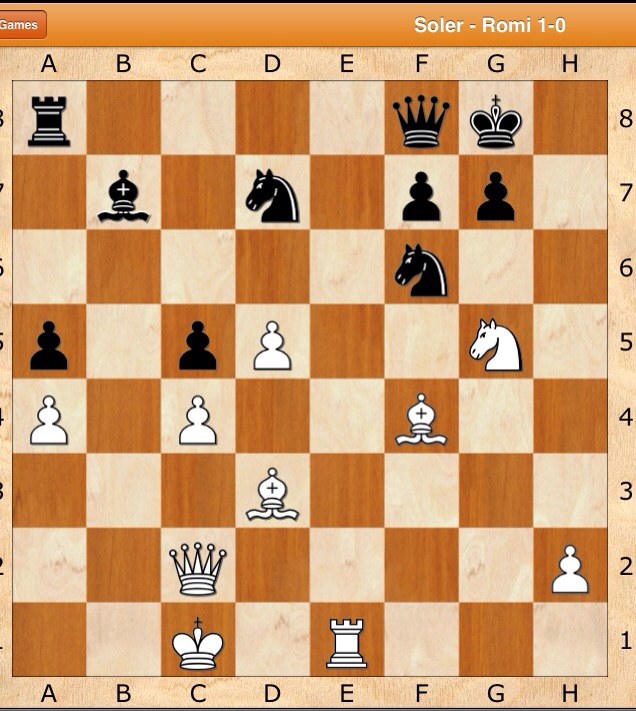
White to play and win
Solution
I found this a thoroughly enjoyable one. It didn't take me that long, but it involved putting a few disparate thoughts together:
Only one LPDO, the Bb7;
The king is in a net, with clearly Bh7+ being a possibility, so the Nf6 is tied;
The Re1 and Ng5 are both well placed; in particular, the N threatens f7
The weakest piece for white is either the Qc2, or the Bf4.
Looking at all possible smites made me think of Bd6 hitting the queen. It doesn't work initially, but if first 1 Bh7+ Kh8 then 2 Bd6!! is game over: the Queen is tied in f7, and the Bh7 and Re1 prevent its only moves.
Very pleasing.
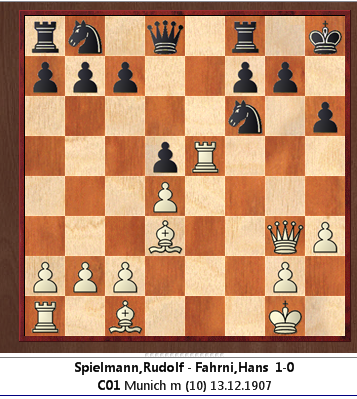
White to play and win
Solution
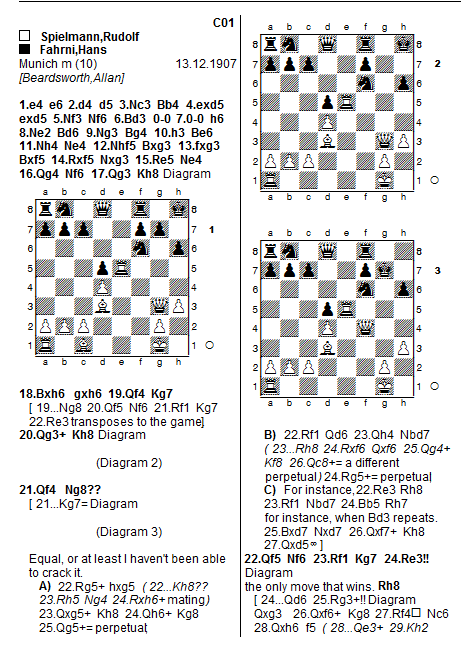
This puzzle shows, for me, the difference between trying to solve a set puzzle, and playing the game in practice. I saw the first two moves, 1 Bh6 gh 2 Qf4 more or less instantly, but couldn't get them to work to my entire satisfaction.
However, in practice I am sure I would play the above moves, for two reasons. Firstly, for want of better; secondly because they should be at least a draw. I would see what Black did, and then decide. Moves like Rf1-f3 or Rf1-f4 or Re3-g3 abound, and if the black rook leaves f8, then Rd5 is sometimes possible.
One of the points I had to appreciate was that if 2..Kg7, then 3 Rg5+, and the rook has to be taken, leading to a perpetual, since if 3…Kh8 then 4 Rh5 mates. The fact that there was at least a perpetual in this line gave me the comfort to know this is how I would play in practice, since, with the position after 2…Kg7 on the board, 'there might be more'. I then looked as much as I could to find that 'more', without success.
I solved this puzzle in a cafe, and only had my iPhone with me. So I checked it first with Stockfish, and, since I was puzzled by what it told me, also with Hiarcs. Both give 1 Qh4 as their preference, evaluating it as level or slightly worse, even after the exchange of queens. But I knew that 1 Qh4 wasn't the solution, and despite these engines giving 1 Bh6 as 0.0- their main lines leading to a repetition- I checked it at home with Houdini, and it too finds no more than a draw after Kg7: black's Ng8 was the losing move.
The correct, full, evaluation after 2…Kg7 might be different: maybe deep engine analysis would show that there is a precise line which overcomes black, perhaps leading to an ending with a clutch of pawns and a too disorganised opponent: but my intuition, having looked at a few lines, is that the problem is cooked, and that it is a draw with best play.
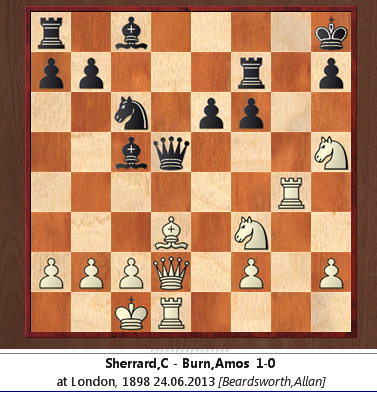
White to play and win
Solution
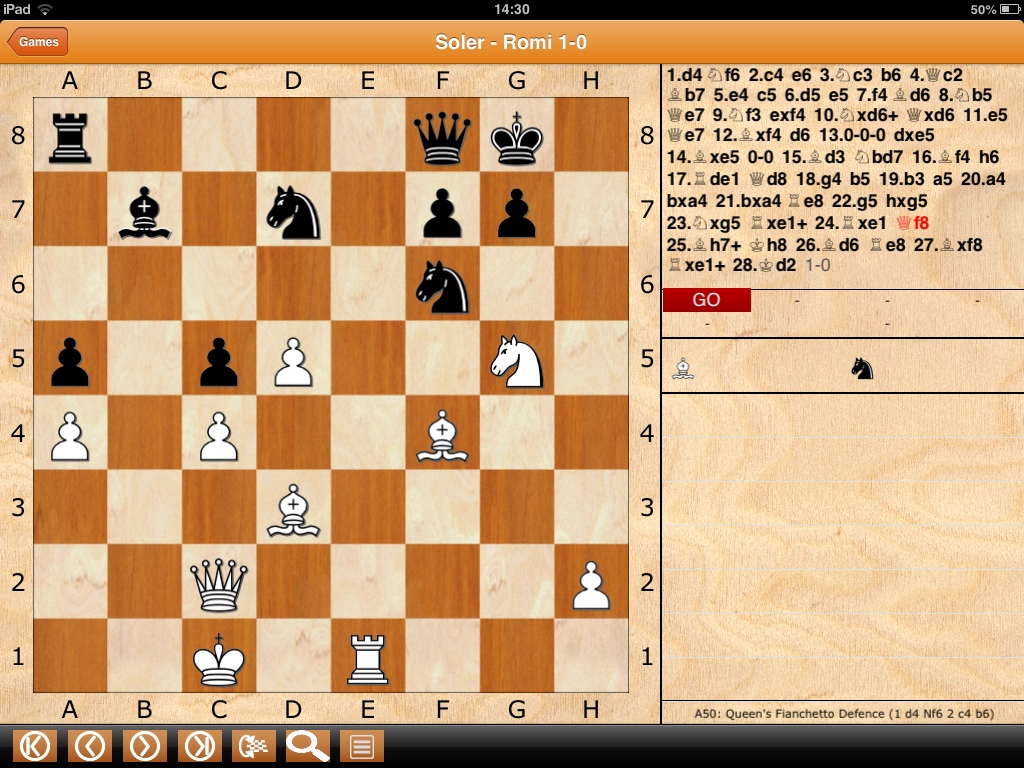
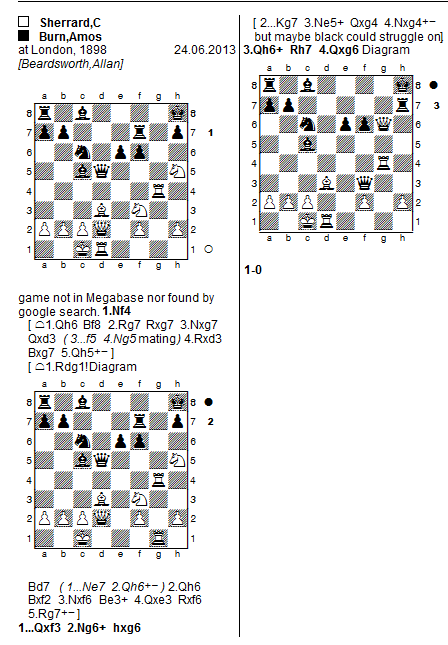
At least three moves win here. I chose the second best one, 1 Qh6, threatening 2 Rg7 mating on h7, so that 2…Bf8 is forced; and then 3 Rg7! Rg7 4 Ng7 f5 when all that needs to be seen (and it took me a while) was that 4…f5 permits 5 Ng5, mating next move. Nice enough.
In fact, 1 Rdg1 was even better; the point being that it forces the less useful move 1…Bd7, when after 2 Qh6 the defence 2…Bf8 is not possible because of 3 Rg8mate : quite instructive, really, and yet another example, if more examples are needed, of 'bringing all the pieces to the party'. Pity I had to load the position into my iPad and that Hiarcs showed me this win.
In the game, white chose a third move, 1 Nf4, which also wins- it is a move I didn't even consider. If black wants to, after 1 Nf4 he can struggle on with loss of material- the position is not obviously winning in one of the lines (see below). This puzzle is actually a good example of principles, because my move, 1 Qh6 also brings a piece to the party, but the best move brings an even better piece: or, develop the worst placed piece, so could have been found by applying two maxims.
As an aside, whilst writing the above paragraph, I struggled to remember who is credited with the develop the worst placed piece maxim. I recalled learning about it not that long ago (within the last ten years- I wish I had learnt chess properly as a child) from a Chessbase DVD by Rustam Kasimdhanov, but I couldn't remember who he credited it to, so I tried google:

Fortunately, after a bit of reflection, I remembered that Kasimdhanov credited Vladimir Makagornov with this maxim. Memory beats google.
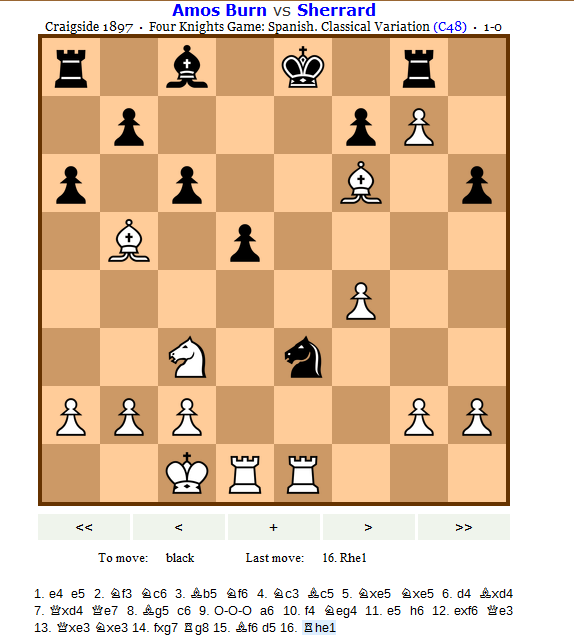
Finally, when searching (unsuccessfully) for this game, I found that Sherrard had two other games against Burn: in 1899 he lost a normal length game, but in 1897 he lost to the great player in only 16 moves.
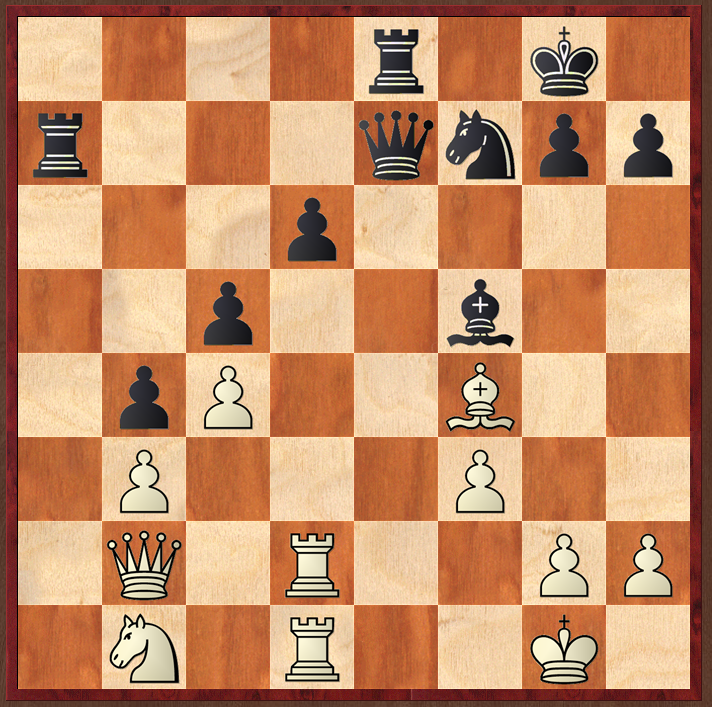
Black to play and win
Solution
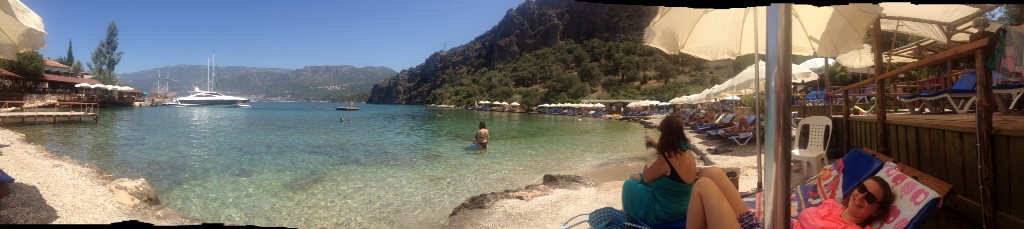
An easy one, unless you are sitting at Nuri's beach, Limangazi, Kas, Turkey where the pattern of light made me assume that the piece on a7 was a pawn…so I worked on black being a piece down.
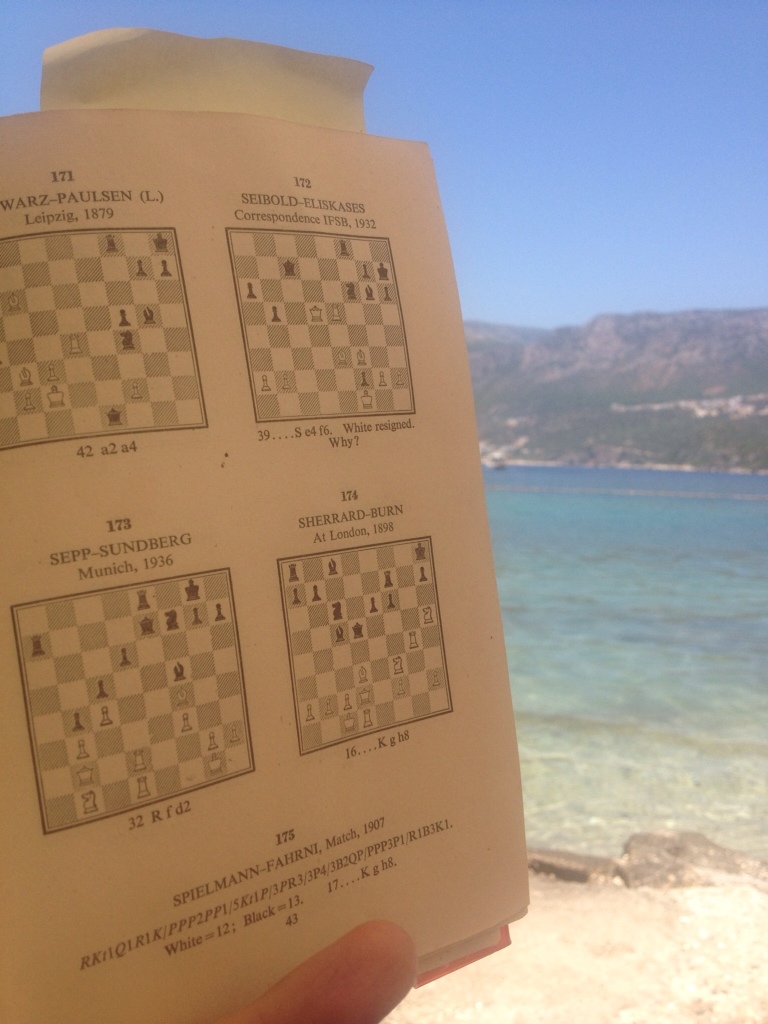
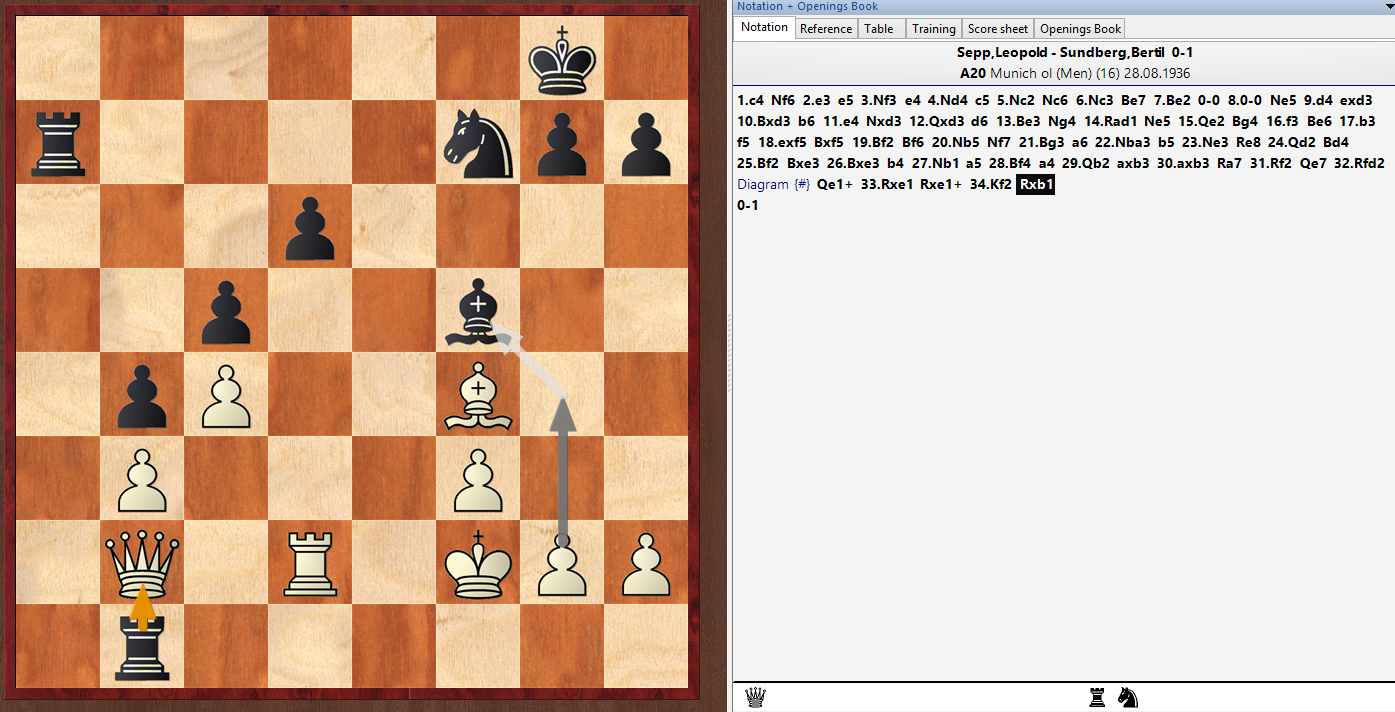
Clearly, there are some back rank mating threats, and also the Qb2 is in a net, but 1…Qe1+ doesn't quite work- white can slip away to a2, and neither does 1…Qh4, when simply 2 Bg3 is sufficient. So, look again at the book, at last notice it is a rook on a7, and the 1…Qe1+ combination now works a treat.
I am reminded of the old adage, I think attributed to Ruy Lopez, so seat your opponent with the sun in his eyes.
Black has just played 39…Ne4-f6. White resigned. Why?
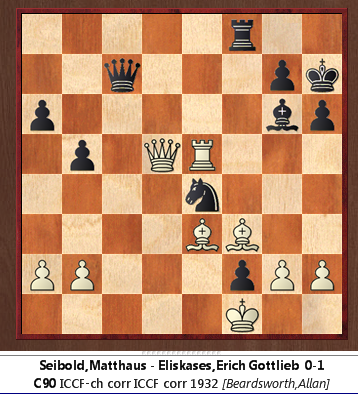
Solution
I messed this one up. Sure, I found a winning line, with Ng4, but I missed a lovely conception. Not much more to say, alas for me.
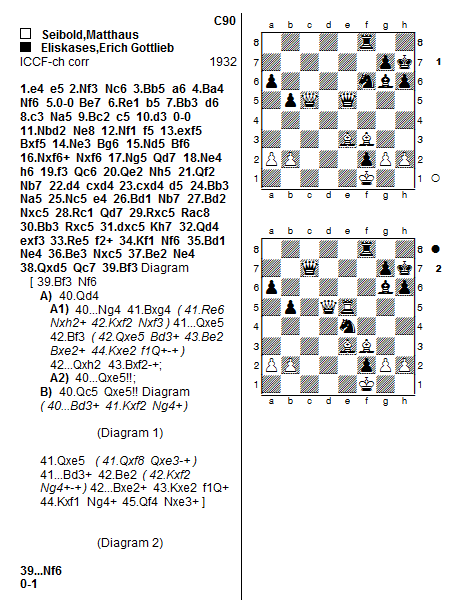
Black to play and win
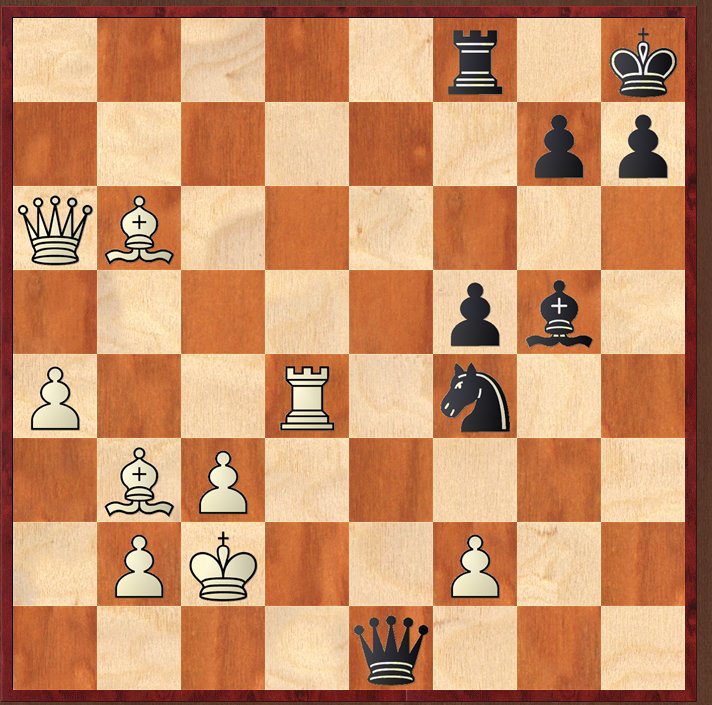
Solution
White's king is in a net, and the other Purdy factor is that the Qa6 is LPDO. So it is a question initially about where to throw away the Nf4- by which I mean it is at present preventing 1…Qc1+.
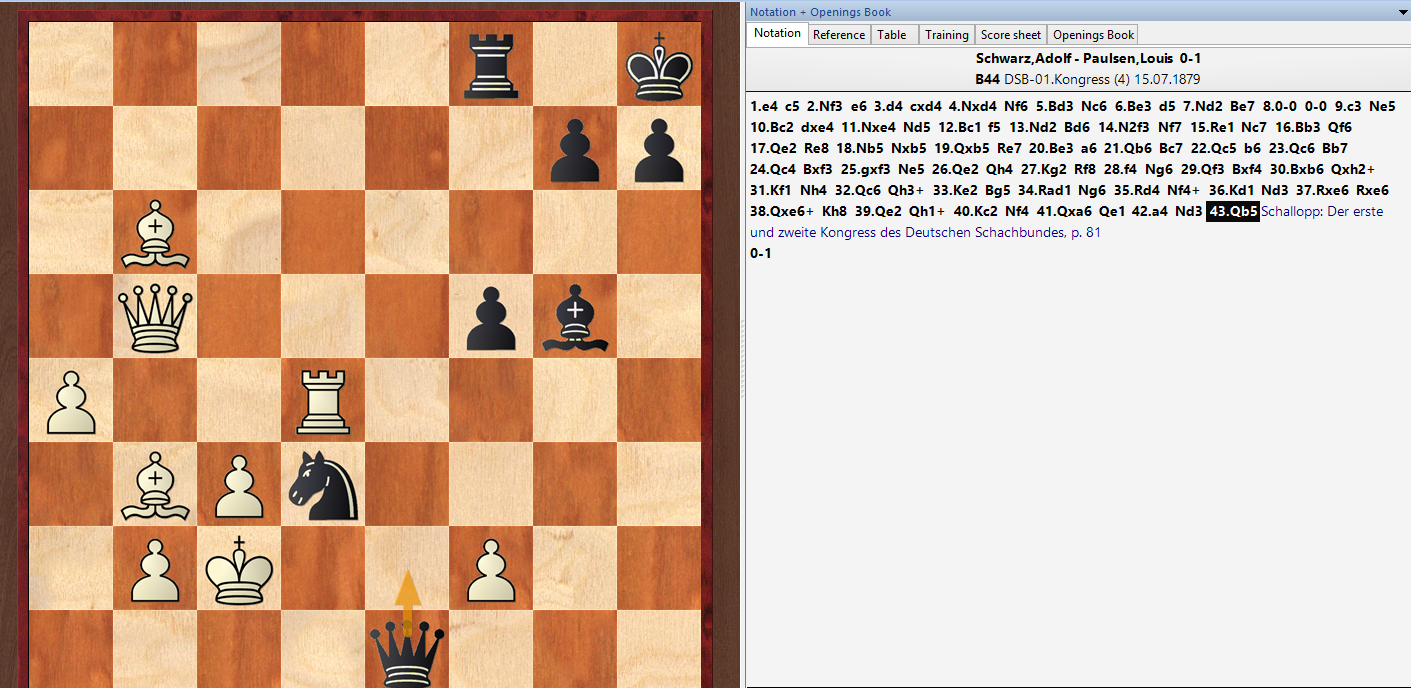
Noting that the LPDO queen can be skewered if 1…Nd3 2 Kd3 (by 2…Qf1+), that knight move has appeal: also, if 2 Qd3, the queen takes away his king's escape square, so that 2…Qc1 is mate. And if 2 c4, then if nothing else, the Nd3 can fork the king and queen with Nb4+: it is one of those positions were all the tactics work. In fact, if 2 c4, black as mate in two by Qs2+-Qb2mate. Random other defences like 2 Bc5 also lose to the same mate in two.
A nice puzzle, not too hard, but with some calculation.
White to play and win
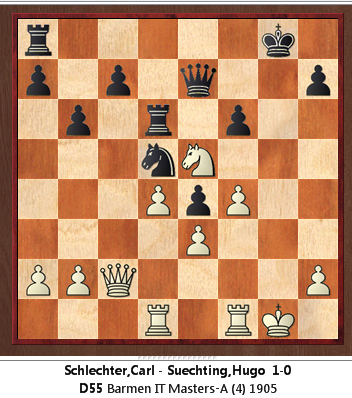
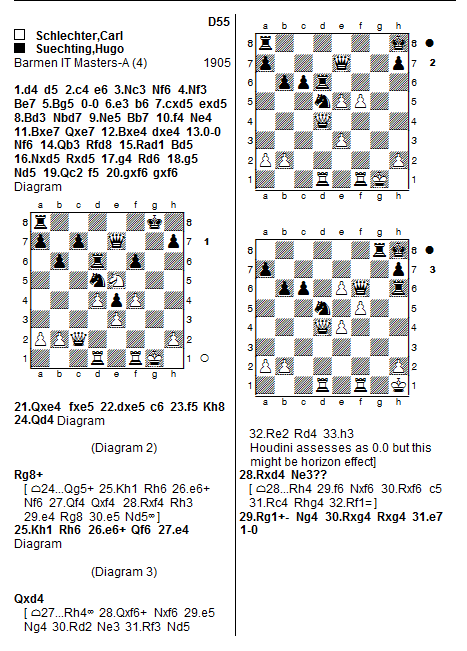
Solution
I have crossed out 'and win' with some hesitancy. Starting first with Houdini, its preference, 1 Nc4 and accept a slight disadvantage, surprised me. It thinks the move played, and the move that I chose (and would choose in a game) is somewhat inferior, with black somewhat better by active defence.
This may be the result of the horizon effect, or show the difference between silicon calculation and carbon emotion. The phalanx of advancing e and f pawns would frighten most blacks, their hope being to sacrifice the knight for one or better still two of them. Houdini shows the way, by actively improving the queen (Qg5+) and creating counter threats (Rh6): instructive, as ever.
Not for the first time, Magnus astounded me yesterday, beating world number 2 from a 'drawn' position, in which he was even a pawn down (albeit doubled pawns) against World no 2 Lev Aronian.
I was particularly mystified by the following position, Magnus being white.
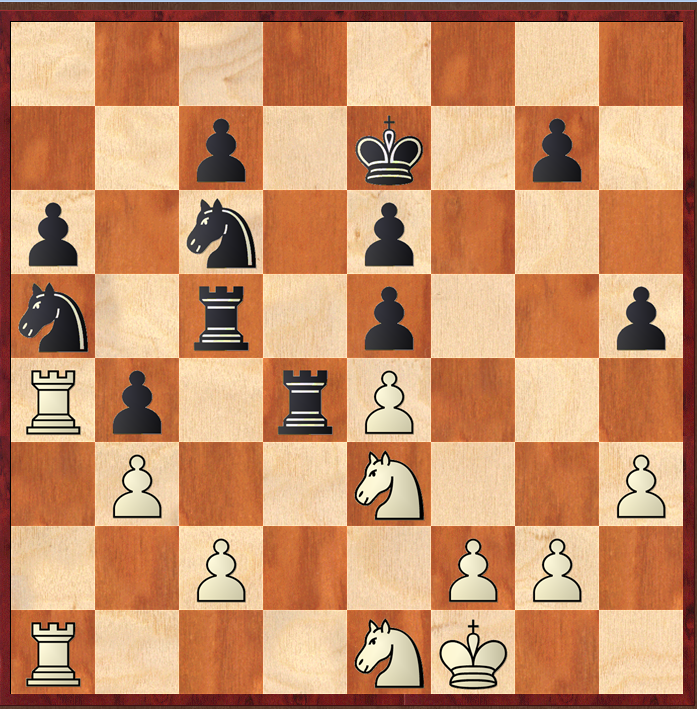
By chance, this was the position which the game had reached when I switched on my computer having arrived at home, having had a weekend in the Lakes, the game being played on Sunday evening. Since we had to unpack and make dinner, I couldn't watch the game: a quick inspection anyway made me think it would soon be a draw, which was sufficient for Magnus to win the tournament, with Kamsky-Nakamura already having finished.
My glance was too fast to notice what white's last move was (31 Nf3-e1) but something jarred: was the e4 pawn en prise?; so I looked again at the position, and saw both white's last move, and that the pawn was indeed en prise: and a move earlier, white could have taken the rook on d4: I was intrigued; but still expected a draw.
'Of course', Magnus won: I looked at the game after it had finished. I could see that his 51st move was venomous:
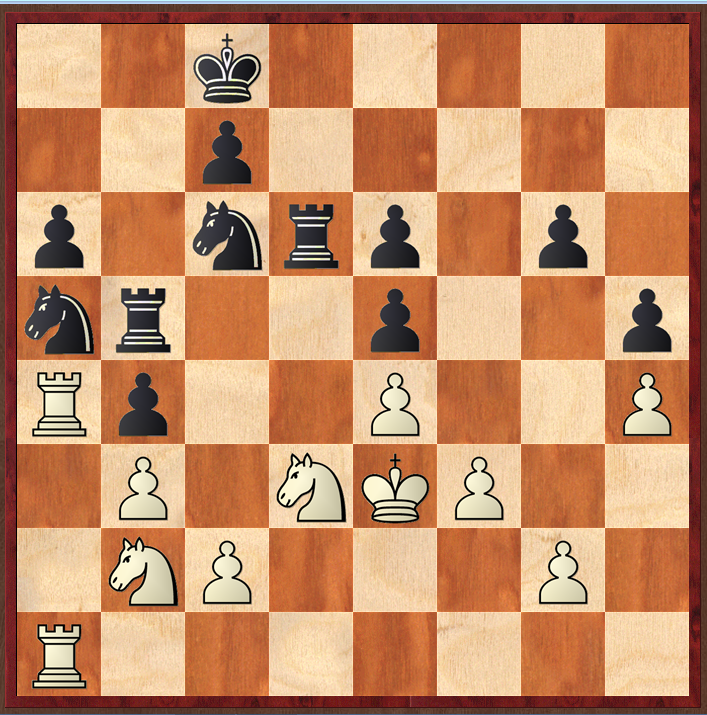
See with hindsight, that is: the fact that 51 Ra1 threatens tactics with Nc4 because a later ..b3 doesn't hit the rook.
What puzzled me most, though, was what happens if black takes the e4 pawn after 31 Ne1? This really puzzled me, and I tried hard to find out. The first report of the game was on chessvibes.com (Chessbase did a flash report) but it didn't give much analysis; so I thought more, and earlier this evening, saw the Chessbase fuller report, hoping for the answer, but it skipped over the move. I got the pieces out, set the position up, and revisited it: mainly wondering if the rook was trapped, but realising that that couldn't be the solution, since it could always return to d4. Then, it hit me: the Re4 is LPDO and in horizontal alignment with the Ra4, so the b4 pawn is pinned. So 31…Re5 32 Nd3! Rb5[] 33 c4!! must be the idea, with the resultant position being below.
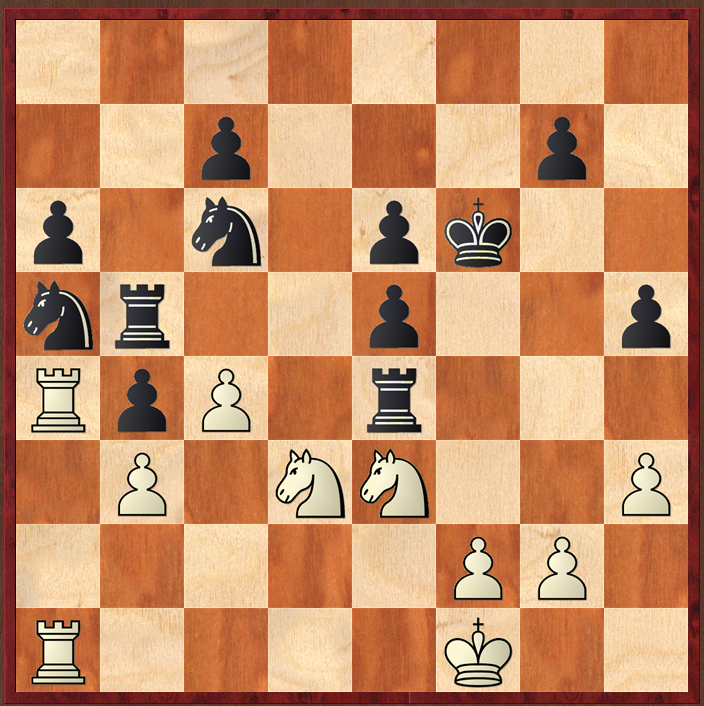
There are a few messy lines, which I have only skirted so far. 33…Nb3 is possible, but I think black's best is 33 …bc 34 Re4 Nb3 when there is another cute point: both white's rooks are LPDO, and the Re4 is in forking distance of the king: Nd2+ is a threat. I suspect white is better after 35 Ra2 but at my level, any result is possible after 35…Nd2+ 36 Rd2 cd 37 Ke2.
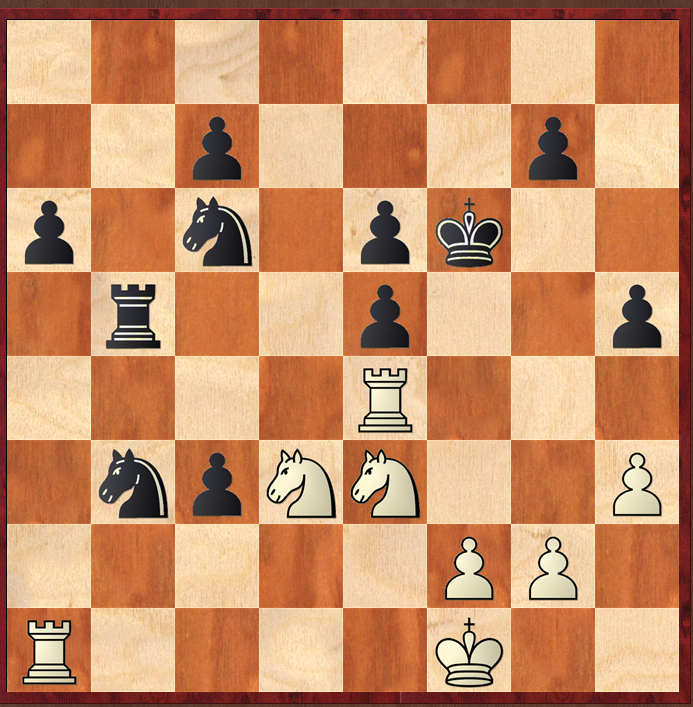
Whilst presently black has several pawns for the piece, they are separated, and I suspect will fall off one by one, and white will win.
Simply amazing what the top players see: I would have been assessing white's position as in jeopardy, a pawn down with just the ability to shuffle his king: of course, black's knights are tangled, and I couldn't see how black could untie himself, but I presumed a draw by repetition would have been the result. I would not have guessed black would quickly collapse.
 allanbeardsworth