White to play and win
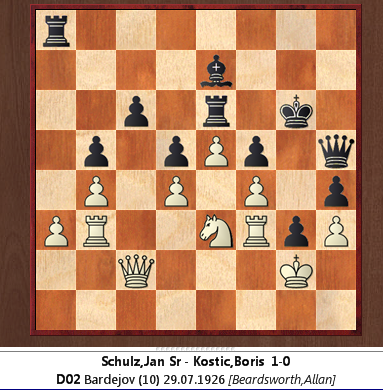
Solution
A straightforward one. The immediate thought is that a capture is needed to break open the position. When these are examined one by one, 1 Nf5 sticks out, and all that is needed to see is that the Kg6 is tied to the Qf5, so that Rg3+ Rg3+ breaks the tie, and game over: and not taking the knight is clearly hopeless.
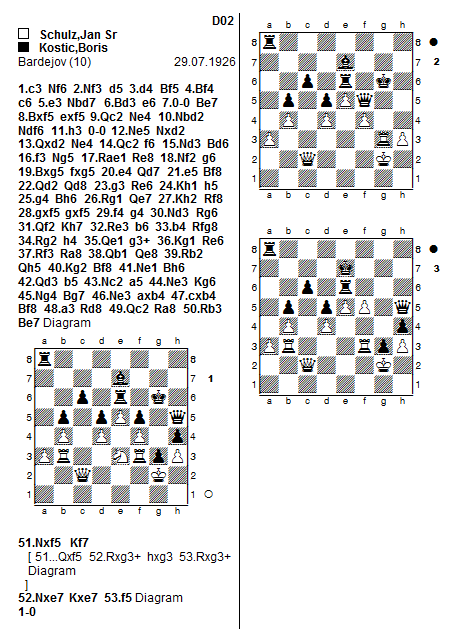
 Posted with Blogsy
White to play and win
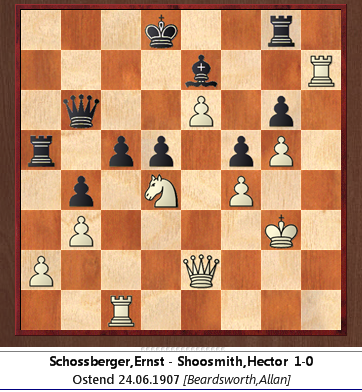
Solution
The move I first thought of was 1 Qe5: threatening Re7, also threatens the Pd5; and looking to b8. Then it depends on how black depends. I thought black s best was 1…Rb7, when white continues with Qd5+ and Nc6, winning the house. Other defences such as 1…Rf8 don't succeed: Re7 and Qg7+ mates or wins the rook.
In the game, black defended better, with 1…Qb7, and the solution is pretty. The idea of Rh1 is simply bringing more pieces to the party, but Rh7 and the conclusion is very nice.
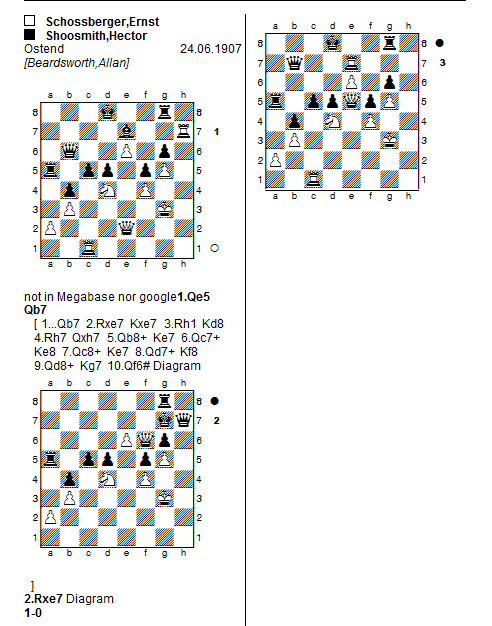
White to play and win
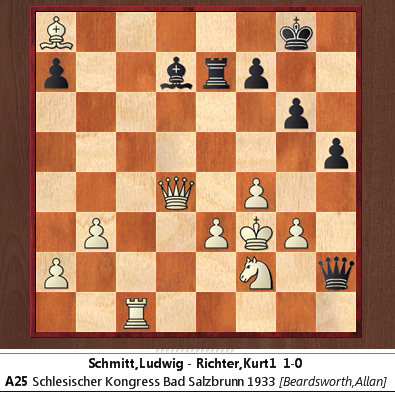
Solution
Not one of my better efforts. Sure, I saw the winning move- or one of the winning moves- 1 Rh1, but I discounted it after 1…Bg4, not looking hard enough. I think there is a standard thinking error here, not looking a half move deeper, giving up and looking elsewhere after first impressions.
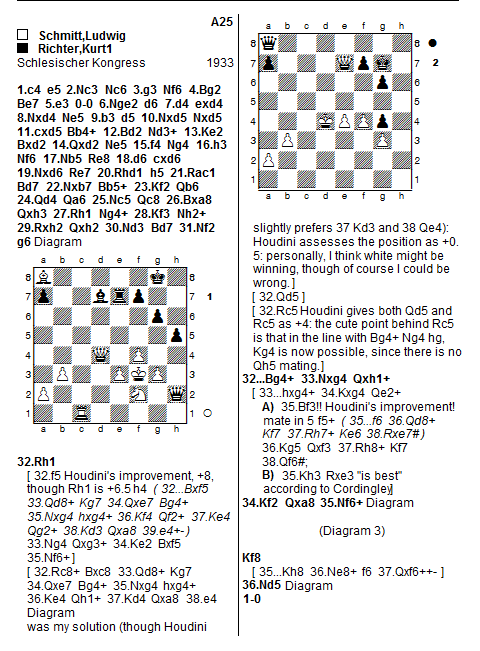
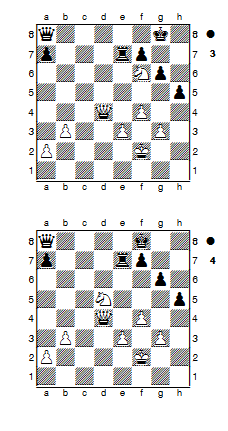
The move I chose, very quickly, was 1 Rc8+. I was able to calculate the line deeply, and assessed the Q+P ending as winning, but Houdini tells me white is only somewhat better. I don't know: what I do know is that 1 Rh1 is far better, as are each of Houdini's 1 f5!!, 1 Qd5, 1 Rc5! (exclamation marks partly for originality).
I was intrigued by the following position from the recent game between the top two American GMs.
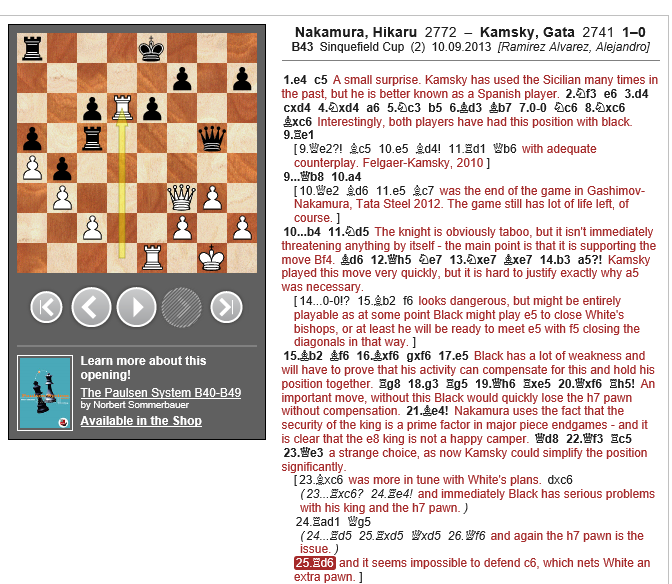
In particular, Alej's laconic comment that after 25 Rd6 the c6 can't be defended. What about 25…Rc8?
The obvious reason was that 26 Re6+ might be mate: and it is easy to see it is after 26 …fe 27 Re6+ Kd7 28 Qf7+. But what, I thought about 27…Kd8?
At first, I thought black would squiggle out after 28 Qf8+ Kc7, noting that the Rc5 is not LPDO, being defended by the queen. The position stumped me, until eventually I had the lightbulb moment and saw 28 Qf7!. It's first threat is 29 Re8mate, and the defence 28…Re5 loses not only to 29 f4 but even better to the sideways shuffle 29 Rd6mate!
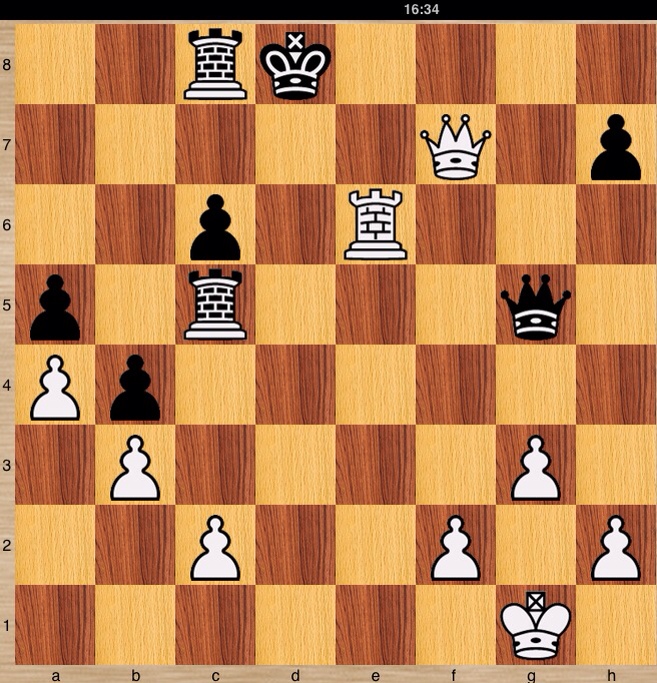
Not the most difficult piece of analysis, but nice enough, and I far prefer the light guiding annotations typically on Chessbase than the voluminous engine enhanced works: there is a pleasure in posing and solving such questions: thank you, Alej, for being laconic!
White to play and win
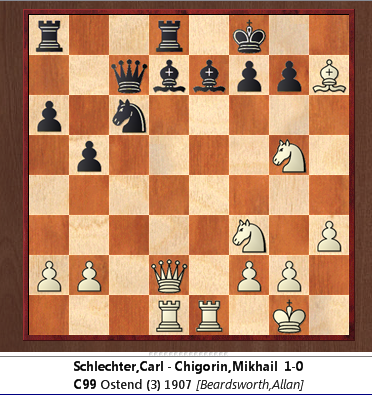
(One worth spending time on: a lot to see)
Solution
I thoroughly enjoyed this one. To me, it was a choice between 1 Qd5 and 1 Nf7. For a while, I couldn't get either to work; I dillied and dallied (no Kotovian tree of analysis here, no Soviet GM rigour of looking at each line once and only once).
Eventually I settled on trying to make 1 Nf7 work, mainly because the best defence I could see, Bb4 and Ne7, looked so ungainly. When I envisioned Re7 in that line, I 'knew' I was past the summit in terms of solving, and the rest was checking, making sure there were no nasties lurking.
Afterwards, looking at it with Houdini, further depths were found. In addition, since this game was Chigorin playing the Chigorin, I then had a look at the earlier moves of the game, and some additional comments are included in the attached PDF.
This is one of my favourite puzzles so far. Quite challenging, but surmountable.
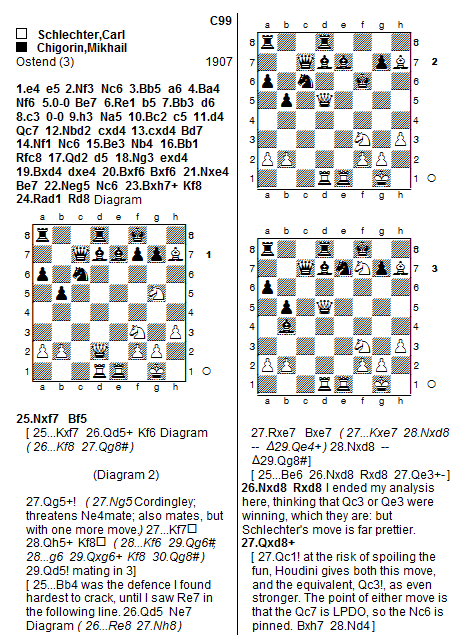
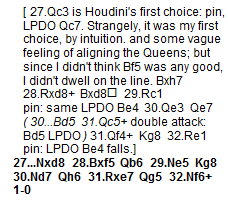
One further thing to note is that white had many strong moves in the initial position. After a few minute's or thought, here are Houdini's analyses:
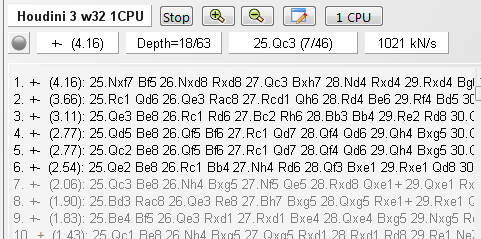
The PDF below has more on this game.
White to play and win
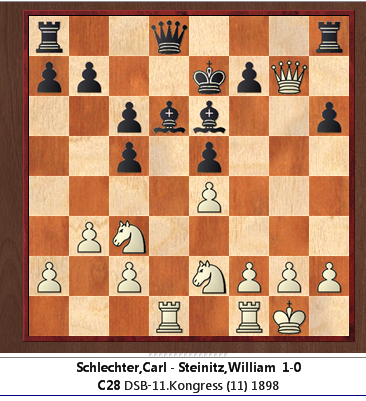
Solution
Rather unkindly, I have crossed out 'and win' on this puzzle. The problem with having engines is that you can pretend you play better than the first World Champion.
I flunked this one: I didn't even see the first move 1 Nf4, so no points for me. I chose 1 f4, assessing it as at worst a comfortable edge, but Houdini assesses it as equal after 1…Qg8, when queens have to come off.
Houdini's preferred first move is 1 Qg3, keeping the queens on, and hoping to attack either by Pf4-f5 or Ng3-f5. In the game, white played 1 Nf4!, exclamation mark because of imagination- though, there is no reason why I shouldn't have seen it-after which Steinitz crumbled with the losing 1…Rg8. If this game had been played in 2013, viewable live on ICC or Playchess, the kibitzers would be guffawing because 1…ef is more or less equal. But the honest answer is not to blame Steinitz, since the position after 2 e5 looks very scary indeed: but the Berlin defence type central structure seems to hold, and then all three results are possible.
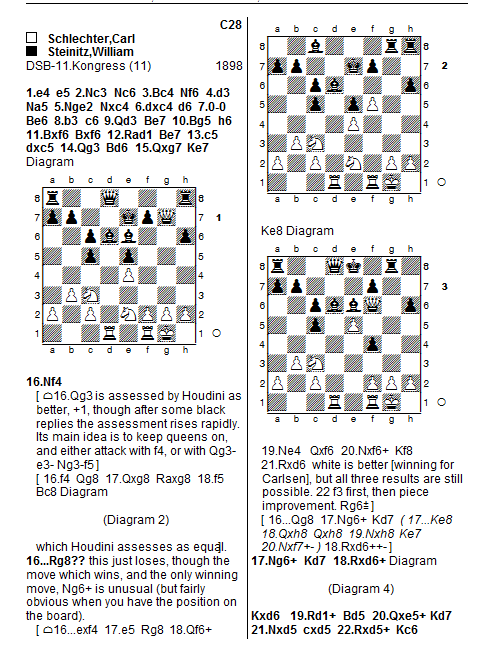
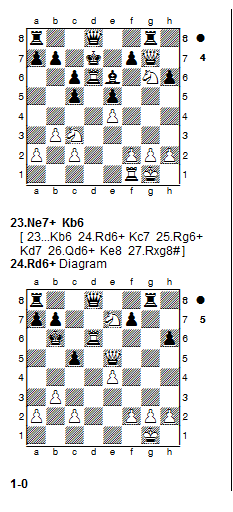
The disappointment for me is not even considering 1 Nf4: time and again I don't follow 'procedures', I just rush into problems, see pretty lines, see what I think are good lines, and turn to the solution. I wonder whether it is possible to follow a 'process' or 'checklist' to try to root out such errors? I wonder if the top players do this in practice?
White to play and win
Solution
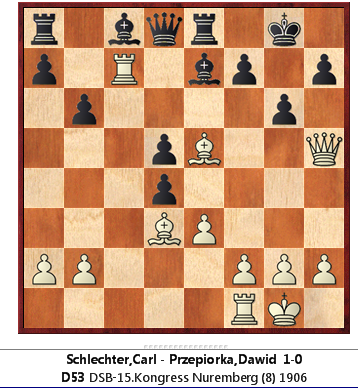
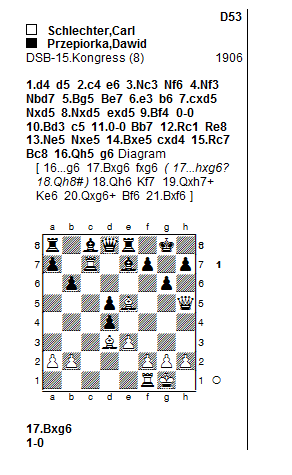
I found this one fairly straightforward. After seeing that 1 Qh6 is met by 1..f6, when 2 Bg6 isn't clear, a quick reversal of moves led to 1 Bg6! when it was fairly easy to see that black has no defence.
Black to play and win
Solution
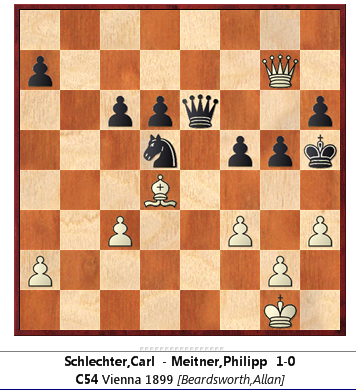
Fairly straightforward. Black's king is in a net, and the aim is to trap it. The only calculation is to decide what to do after 1 g4+ hg; it didn't take king long to choose 2 hg, simply because it removes some of black's options, but I think 2 fg would still be good enough.
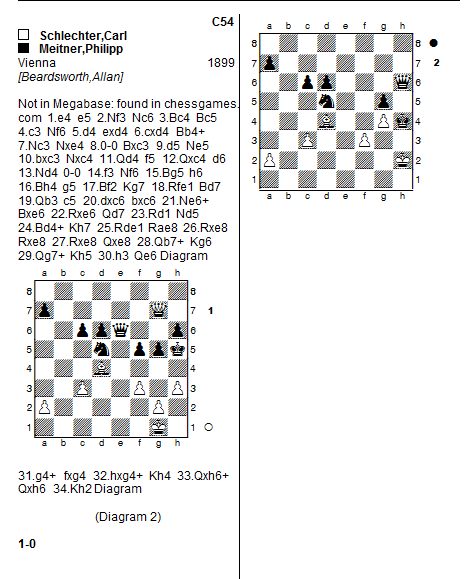
This blog is not the finest piece of analysis, not at all important, but I did find it pretty. I am blogging it today because the idea came to me by comparison with Cordingley 163
The puzzle position below is from Chess Today
White to play and win
Solution
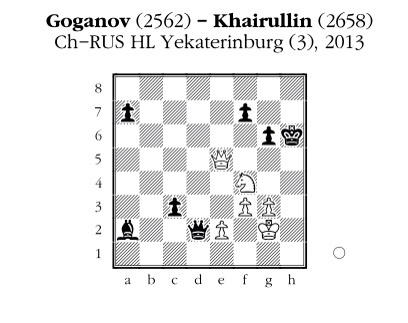
The correct solution, which I failed to find (I thought the line below won) is 1 Qe8+ Kg5 2 Ne6+! which is a desperado/ square clearing move, permitting f4+ followed by either Qe5+ or Qg4+ mating. Very nice.
My Pretty but flawed solution
My solution started with 1 Qh8+ Kg5 2 g4. The first idea is that it theeatens 1 Nh3 mate, so the knight must be captured.
Taking with the king loses to 2Qf6mate, so black's only move is 2…Qf4 when 3 Kh3 was my point. The king hiding is similar to Cordingley 163.
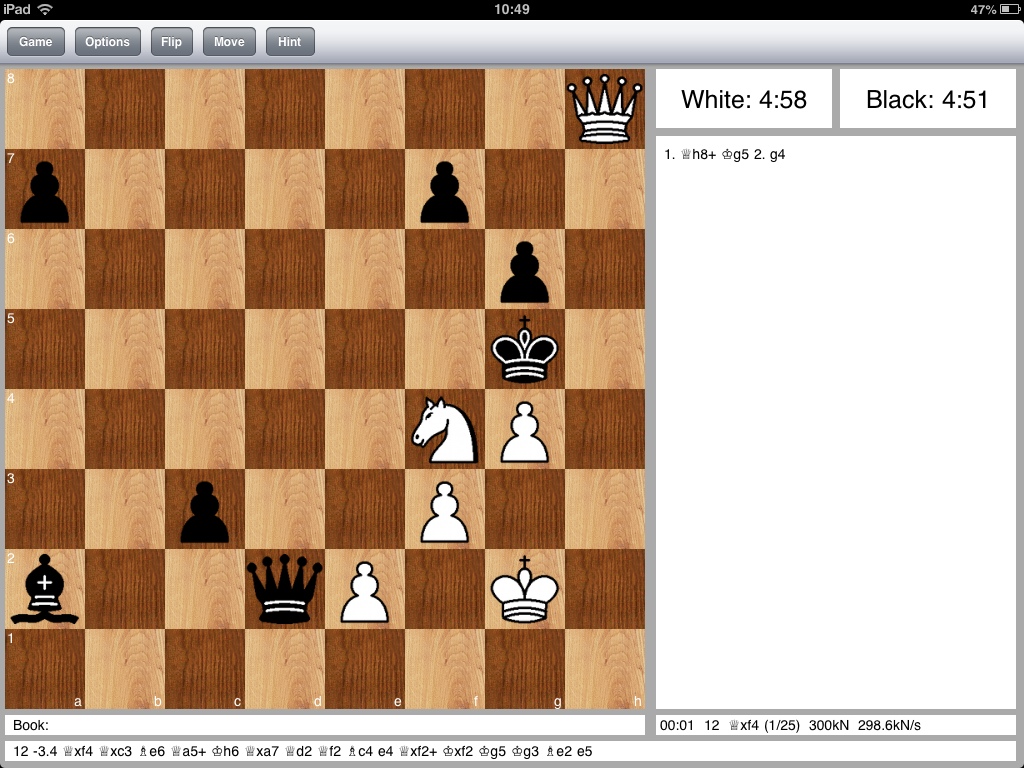
Then what? The black queen must move, since 4Qh4mate is threatened, but where to?
4… Qc7 (where it is LPDO) loses to 5 Qh4+ Kf4 6 Qg3+ skewering. 4…Qd6 is the same.
4… Qe3 loses to 5 Qh4+ Kf4 6 Qf6mate.
4… Qd2 (where the queen is not LPDO) fails in a different, pretty way: 5 e3!! which threatens 6Qh4 mate, so that 6..Qe3 is forced, when Qh4-f6 is mate again.
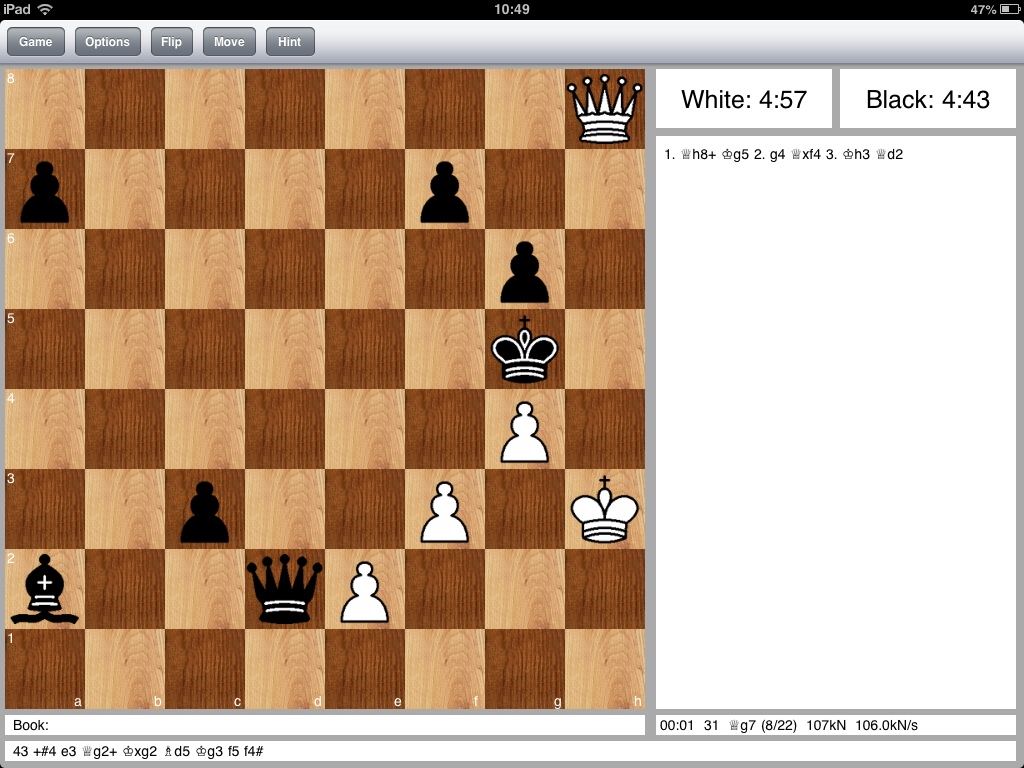
So, how does black defend? He only has one move, which I missed, 4… Qc4! The idea behind it is to pin the e2 pawn: 5e3?? Qf1+ and black wins.
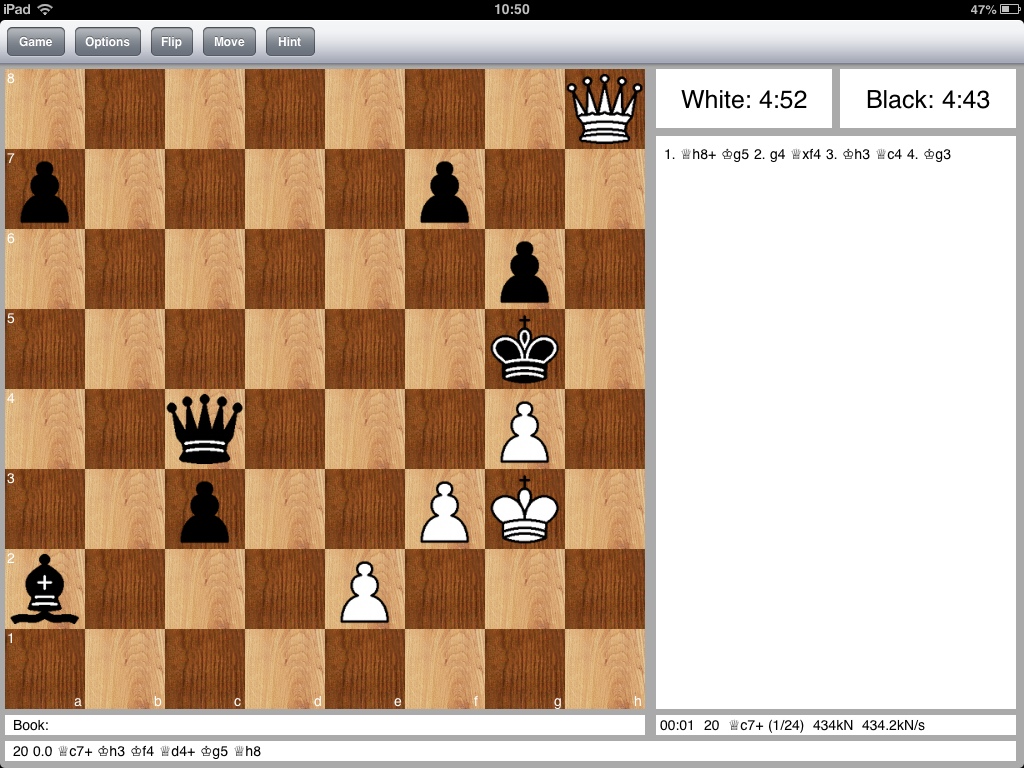
But it is not over yet. 5 Kg3 and it is drawn, either by 5..Qf4+ 6 Kh3 Qc4, repetition, or 5… Qc7+ 6 Kh3 and now either 6…Qc4 (pinning the e2 pawn again because of the jump-check on f1) or 6… Qc6 (pinning the e2 pawn because of 7 Qf3+) but not say 6..Qd6 because of 7 e3! mating ( even better than the skewering Qh4-g3).
Very pretty. Quite trivial though.
White to play and win
Solution
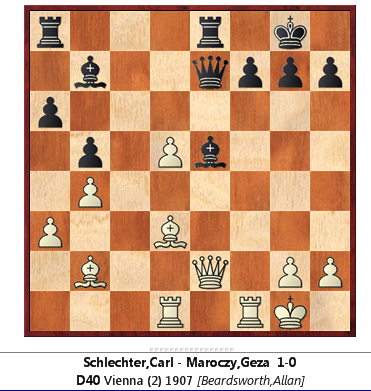
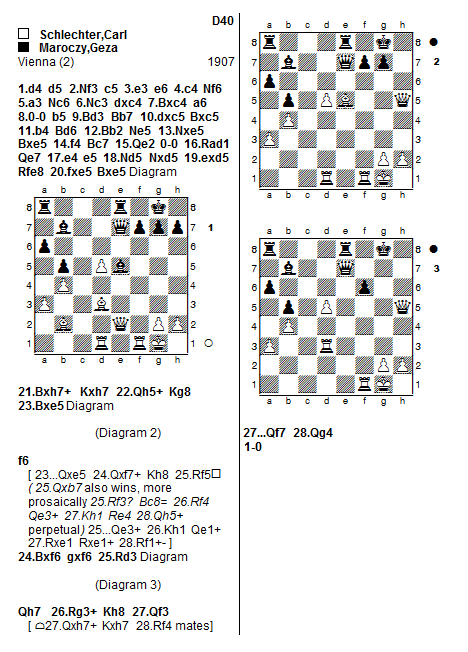
The solution is not too hard, 1 Bh7+ is the obvious first move, and all that is necessary to realise is that after the bishop is captured, white checks on h5, swaps on e5, then 4 Qf7+ is a double attack, hitting the LPDO Bb7: game over.
I didn't spend much time on the game defence: in practice, one could end the analysis with 3 Be5, knowing that if 4 Bf6 didn't work, the B could retreat instead: and then only analyse Bf6 is black does indeed play 3…f6.
 allanbeardsworth