Today’s problem is from the January 1979 Chess magazine. I have hundreds (many hundreds) of magazines on my book shelves, and I thought I would dip into them; and thought I would start with going forty years back.
As is my custom, I only say which side is to play: and not giving an idea if the move wins or otherwise, unless on occasion I think signposting would be helpful. Instead, the problems are posed with the instruction to decide what you would play, as in a game.
Black to play

Maier v Kasmindzhanov, Rogaska Slatina 38/9/11
Solution
1..Nh4 brings two pieces to the party: the N itself, and the Bh7. Bg3 is also threatened, as is 2…Qh3+ 3 Kf1[] Rf3; so 2 f4[] Qh3+ 3 Bg2

3…Bf4! and if 4 Bh3, 4…Be3+ mates.

FEN
5r1k/p5pb/1r1b2np/2N5/1p1PB1P1/8/PP1BQP1q/2R1RK2 b – – 0 29
Today’s problem is from the recent Grenke Classic.
As is my custom, I only say which side is to play: and not giving an idea if the move wins or otherwise, unless on occasion I think signposting would be helpful. Instead, the problems are posed with the instruction to decide what you would play, as in a game.
Black to play
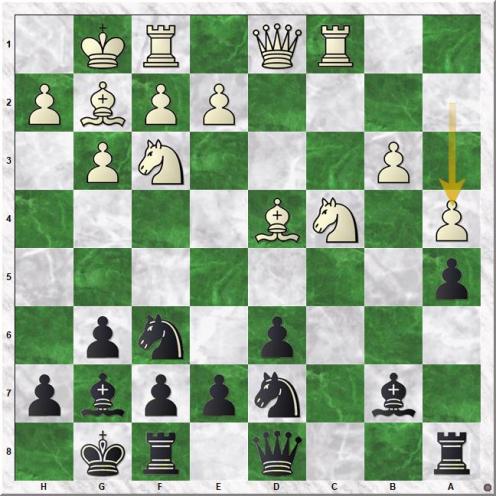
Meier v Carlsen, Baden-Baden 26/4/19
Solution
Watching live, I was assuming 1…Rc8 to challenge on the c-file and clear the long diagonal. But 1…Ra6! instead, an idea I don’t recall seeing before: then Qd8-a8, Rf8-c8, Ra6-c6 and Black has used his pieces so well.
In fact, White regrouped, Nc4-a3-b5, so we reached the following position:

Magnus went on to win a fine game, sacing the Pa5 for central pawns and active pieces. A masterpiece.
FEN
r2q1rk1/1b1nppbp/3p1np1/p7/P1NB4/1P3NP1/4PPBP/2RQ1RK1 b – – 0 14
Today’s problem is from the recently finished Grenke Chess tournament, in which all eyes have been on the stellar performance by Magnus Carlsen. But there were some other great moments by other playters too.
As is my custom, I only say which side is to play: and not giving an idea if the move wins or otherwise, unless on occasion I think signposting would be helpful. Instead, the problems are posed with the instruction to decide what you would play, as in a game.
Black to play: who is better? form a plan?
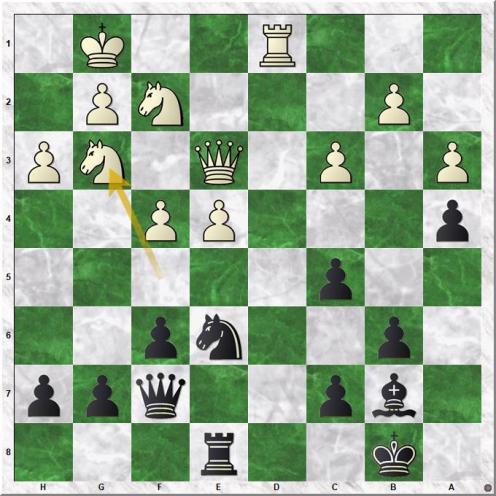
Naiditsch v Svidler, Grenke 21/4/19
Solution
I watched this live, whilst focussing on Magnus’ game. I thought “equal, may be a bit better for Black”.
Not long after, Peter had won a fine game. He managed to attack the Pe4 in masterly fashion:
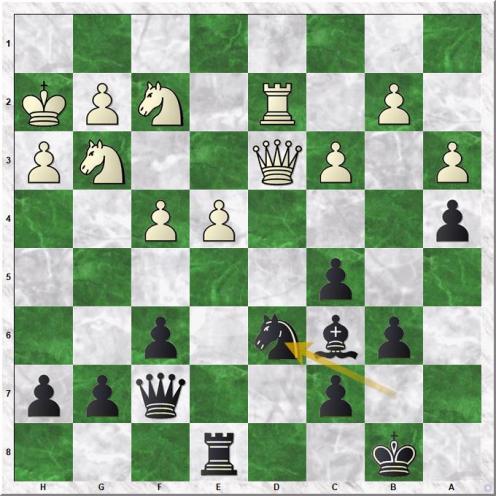
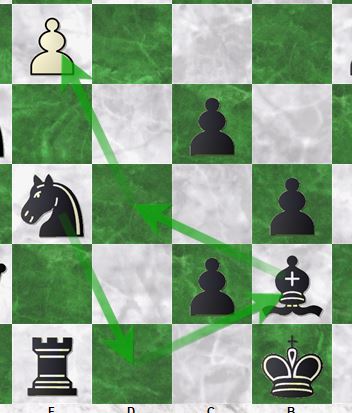
The Knight manoeuvre Ne6-d8-b7-d6 is a great example of the improve the worst placed piece principle.
FEN
Jan 2019 mobile phone
Today’s problem is from an old edition of Chess magazine. Not sure which, since I took a copy of this puzzle without recording the magazine date.
As is my custom, I only say which side is to play: and not giving an idea if the move wins or otherwise, unless on occasion I think signposting would be helpful. Instead, the problems are posed with the instruction to decide what you would play, as in a game.
White to play
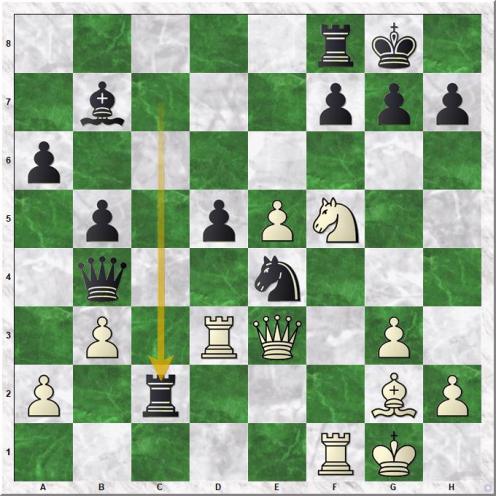
Wlodarczyk v Wypych, Poland 2011
Solution
1 Rd4 Qc3 2 Re4! de 3 Qg5
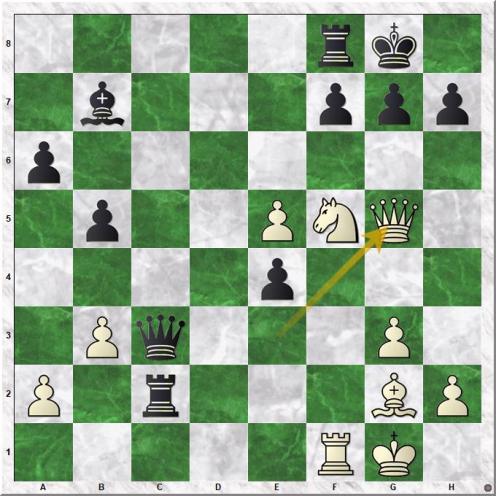
and after 3..g6, 4 Ne7+ 5 Qf6+ 6 Nf5+, it is mate next move.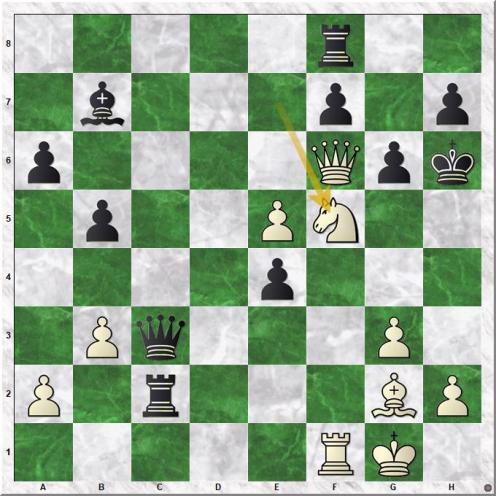
FEN
5rk1/1b3ppp/p7/1p1pPN2/1q2n3/1P1RQ1P1/P1r3BP/5RK1 w – – 0 23
Today’s problem is from an old edition of Chess magazine. Not sure which, since I took a copy of this puzzle without recording the magazine date.
As is my custom, I only say which side is to play: and not giving an idea if the move wins or otherwise, unless on occasion I think signposting would be helpful. Instead, the problems are posed with the instruction to decide what you would play, as in a game.
Black to play

Issakainen v Livner, European Club Cup 2011
Solution
1..Ng3! and if 2 Kg3, 2…Qf4+ and 3…Rh2 mate; so
2 Qf3[] when 2…Qf5+! 3 Kg3 h4+ and 4…Rh2+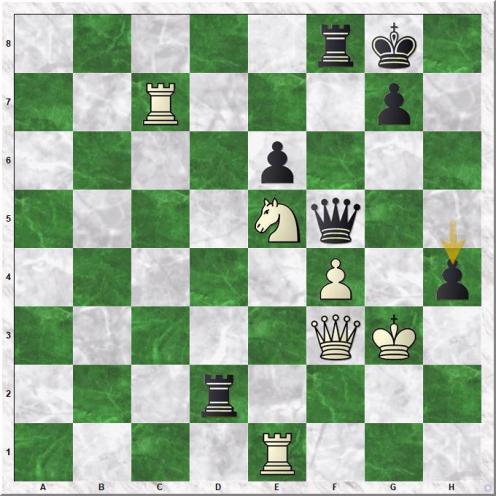 FEN
FEN
5rk1/1QR3p1/4pq2/4Nn1p/5P2/6PK/3r4/4R3 b – – 0 39
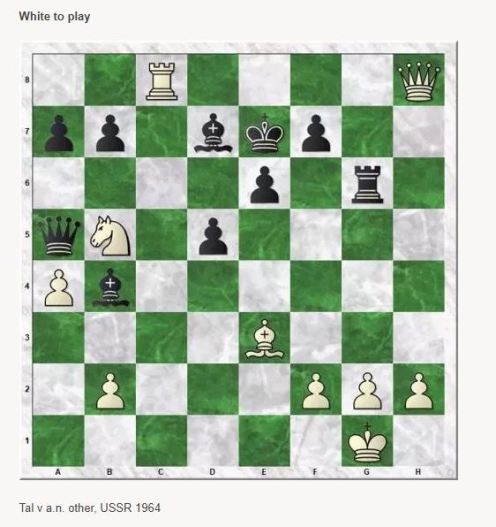
Today’s problem is from the recent Bangkok Open. A lovely finish by my school mate Nigel Short can’t go unpublished in this blog.
As is my custom, I only say which side is to play: and not giving an idea if the move wins or otherwise, unless on occasion I think signposting would be helpful. Instead, the problems are posed with the instruction to decide what you would play, as in a game.
White to play

Short v Avinash, Bangkok 2019
Solution
1 Re6! and Black resigned, since if 1…Ke6 then 2 Qd5+!! Kd5[] 3 Bc4 mate.

FEN
r2qn3/r1pn1kbp/1pR1ppp1/1P1p4/PB1P1P2/1Q2P1P1/3N3P/R4BK1 w – – 0 1
Today’s problem is from the January 1979 Chess magazine. I have hundreds (many hundreds) of magazines on my book shelves, and I thought I would dip into them; and thought I would start with going forty years back.
As is my custom, I only say which side is to play: and not giving an idea if the move wins or otherwise, unless on occasion I think signposting would be helpful. Instead, the problems are posed with the instruction to decide what you would play, as in a game.
White to play
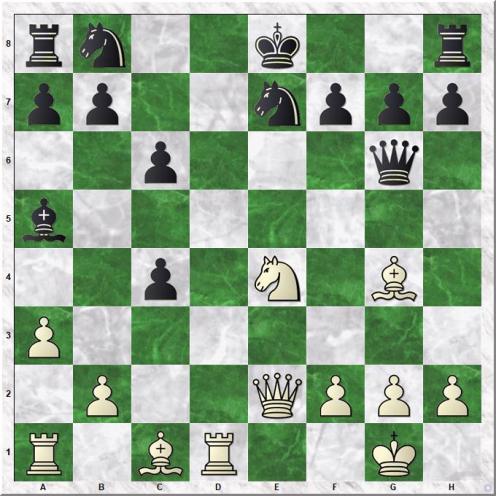
unknown players
Solution
This position is given in an advertorial attached to the January 1979 Chess magazine, advertising books by Pergamon.
It is one of two book prize quiz puzzles. The other is shown as mate in 3 but is anything but; this one is shown as mate in six but again isn’t!
Of course, I now live in the world of engines, but in neither case could find the mate which is thought to be there.
For this problem, my engine’s three suggestions are two moves I came up with (though I tried to make 1 Nd6+ into a mate- it wins, but isn’t a mate)
1 Bf5!
1 Bh5
because the Queen is in a net, and the one I didn’t dream of, but brings more pieces to the party and also exploits the Queen being in a net is 1 h4!! That move is my engine’s comfortable favourite; if 1…h5 2 Bf5 and the Queen is trapped.
Having said that, 1 Bf5 also traps the Queen so we are only talking in terms of engine assessments and not practical play.
FEN
rn2k2r/pp2nppp/2p3q1/b7/2p1N1B1/P7/1P2QPPP/R1BR2K1 w kq – 0 1


 allanbeardsworth