Now that my solving of the puzzles from Matni Udar has finished, for the next few weeks I will post my selection of the pick of the best problems.
For those who follow my blog daily, hopefully they will either boost confidence if you remember the solution, or will give you another challenging puzzle; and in both cases, I hope you will have renewed pleasure from seeing an interesting problem.
In due course, I will start a new series; I think I have chosen the book to use, but will make my final decision shortly.

Solution
The solution is here.
I write this blog in the early stages of the last round of the Grand Prix in Palma de Mallorca.
We are only a few minutes in: Nakamura-Aronian is already at move 25 of a Marshall:
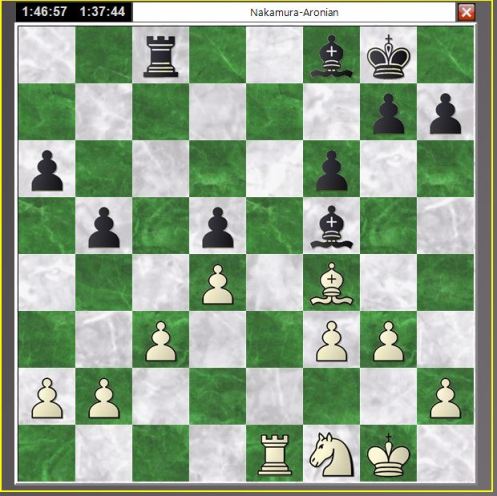
I presume this will be a draw; the other games are still in their openings, including Giri- Vallejo Pons, where Anish played a fifth move I would never have thought of.
White to play: what would you play?
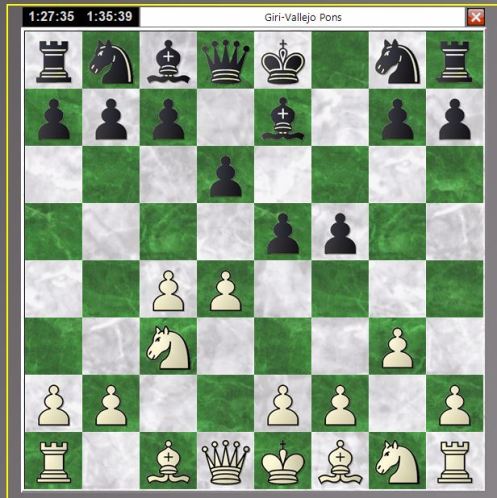
Giri v Vallejo Pons, 25/11/17 Palma de Mallorca Grand Prix
Solution
Giri played 5 Bh3, quickly met with 5…Na6; and the game position as I post this blog is:
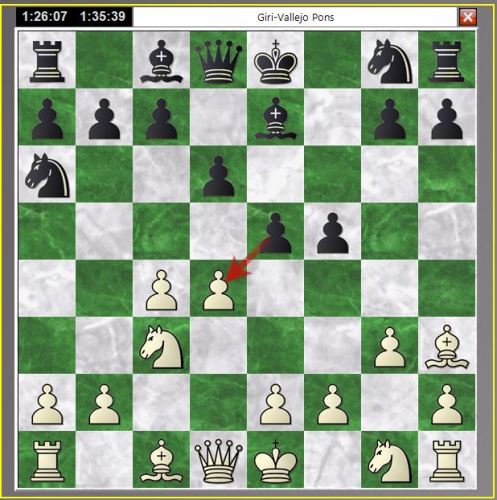
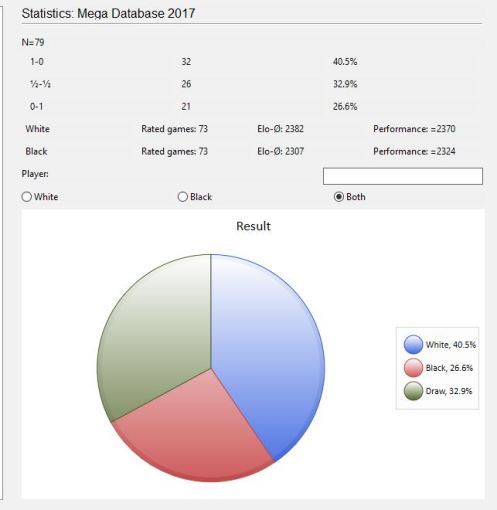
I would never have considered 5 Bh3; and don’t fully appreciate its point(s). A search on my Megabase 2017 shows that Zvjaginsev first played the move, and it has had success:
The position before 5 Bh3 has been played in 73 games in Megabase. I don’t have the Chessbase skills to know the most common next moves.
Update: as I finalise this posting, Anish has, of course, played on the a file (the only consistent moves were 6 Na4, 6 Qa4+ and the move played, 6 a3). Zvjaginsev will be proud.
Hopefully the game will continue to be interesting.
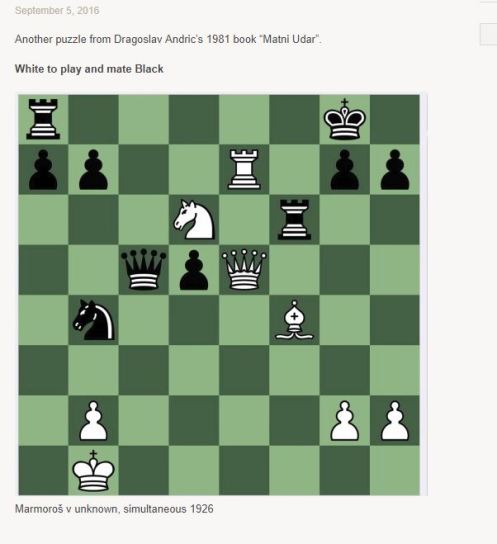

Now that my solving of the puzzles from Matni Udar has finished, today and for the next few weeks I will post my selection of the pick of the best problems.
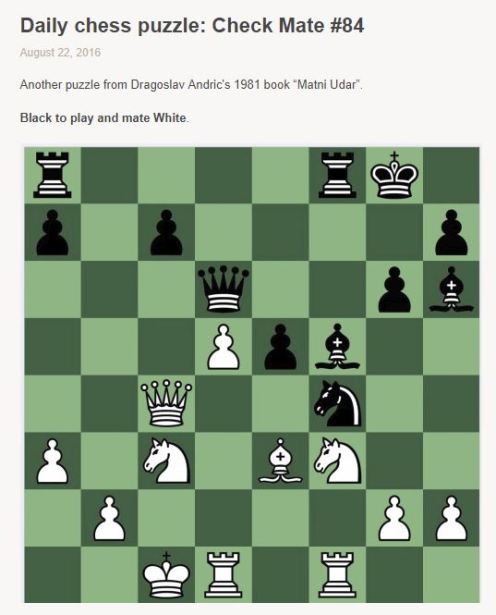
For those who follow my blog daily, hopefully they will either boost confidence if you remember the solution, or will give you another challenging puzzle; and in both cases, I hope you will have renewed pleasure from seeing an interesting problem.
Solution
See this posting for the solution.
Black to play and win

Source: unknown game, position given in Jacob Aagaard’s ‘Excelling at chess’.
Solution
I recently attended a brilliant weekend of three training sessions with Jacob Aagaard. Before the weekend, I had read his latest book ‘Thinking inside the box’ and thoroughly enjoyed it.
Since the course, I resolved to read all his instructional books, all of which have been lying on my shelves, many for some years. Jacob was a wonderful trainer in person, with the knack of explaining things, and I am expecting the same from his books.
Firstly, I am reading his 2001 book, Excelling at Chess, from which this puzzle is taken (page 74).
After several sessions of trying to solve it- actually mirroring how Jacob said he solved it-by failing to find a win after 1…Qc2+ 2Kc2 Nd4+ 3 Kd1 (there isn’t a win there: e.g. Nb2+ or Re1+ don’t work) I eventually reversed the moves and found 1…Re1+!! when everything fits into place. 2 Re1[] Qc2+! now works. 3 Kc2 Nd4+ 4 Kd1 now loses to 4…Nb2 mate, the Rook occupying e1, so instead 4 Kb1 when 4…Nc3+ leads to a pretty smothered mate.
Another puzzle from Dragoslav Andric’s 1981 book “Matni Udar”.
White to play and win
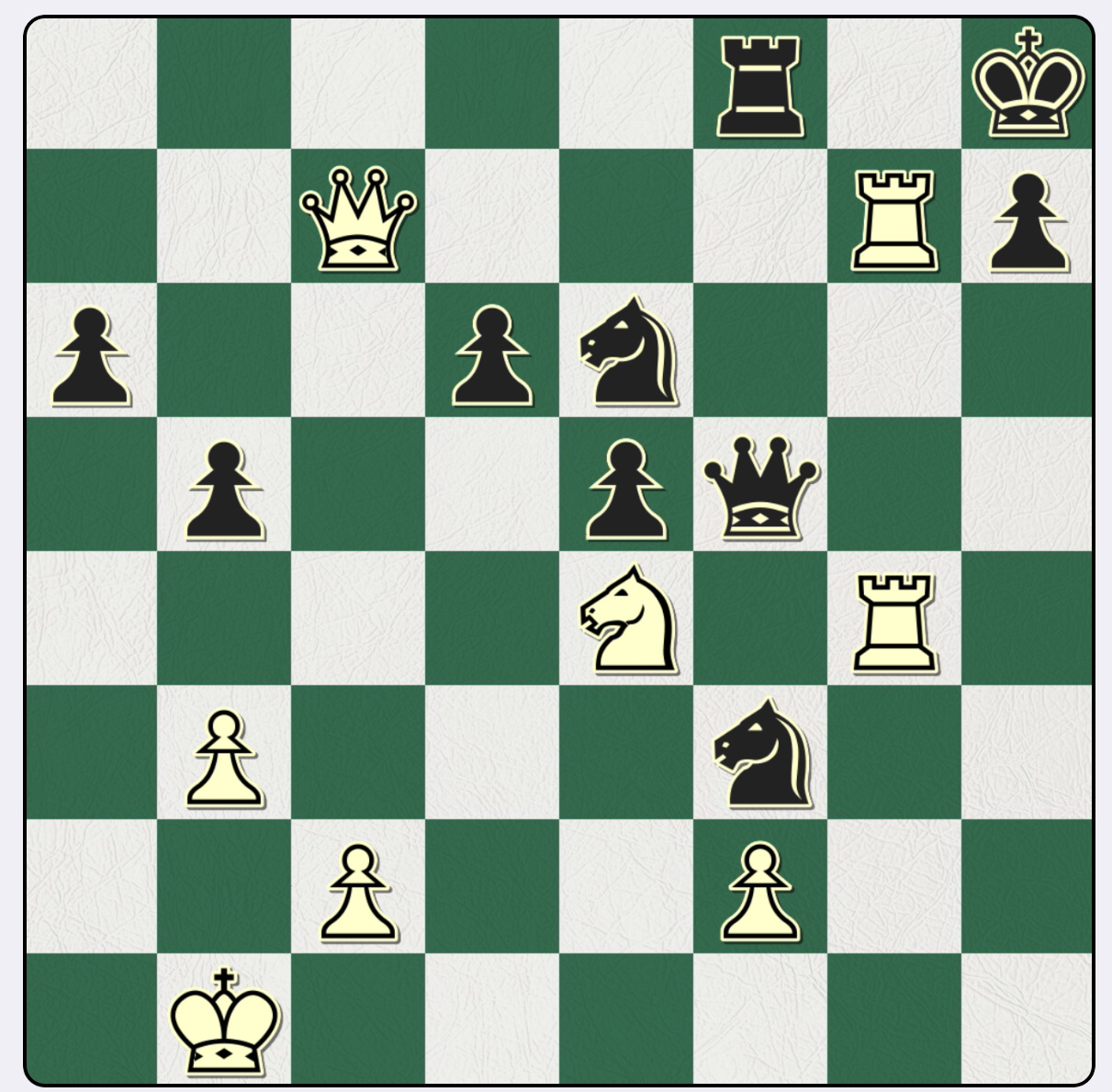
Quist v unknown, Helsinki 1980
Solution
A lovely puzzle to bring Matni Udar to an end.
I was pleased to find the lovely solution, but when entering the position into my Stockfish app in order to print the positions, it told me there are other ways to win. 1Qe7 for instance is very strong, and is the engine’s first preference, but only in terms of +5 instead of the +4 given for the game continuation: 1 Nf6!!
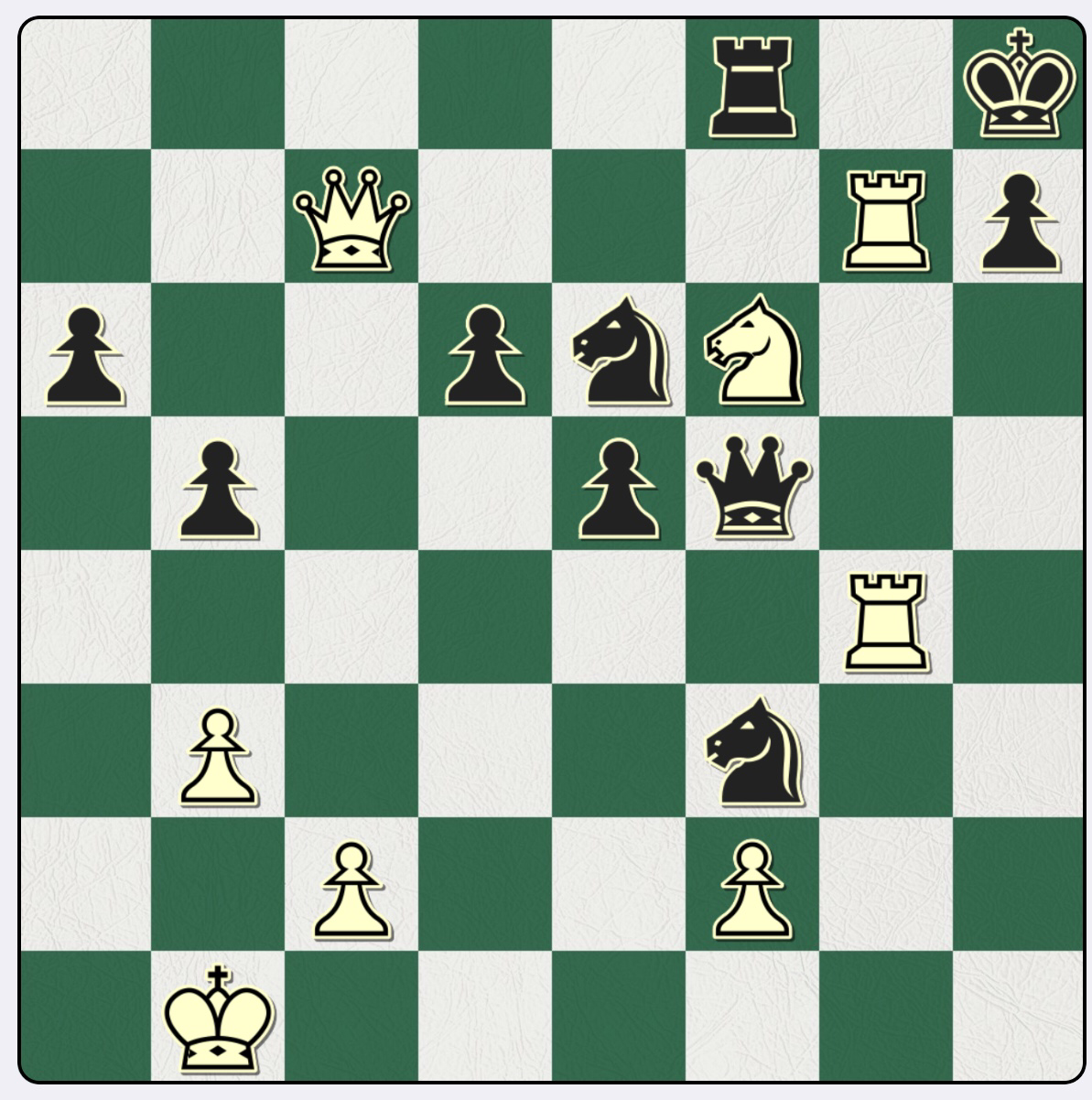
I have recently been on a wonderful weekend course in Edinburgh with Jacob Aagaard. One of the tenets Jacob repeatedly made to us, which I am trying to learn from, is ‘slow down’: calculate slowly, and I have been trying to do so, so far with results. So I fixed the position after 1Nf6 firmly in my head whilst looking at Black’s various defences.
Many are easily dealt with; the only interesting one being 1..Neg5 (or 1…Nfg5) when I found the lovely finale 2Qf7!! (Stockfish prefers 2Rh7+ after 1…Neg5 winning the queen after 2…Qh7 3Nh7) which I think is a very fitting move to end the coverage of this book.
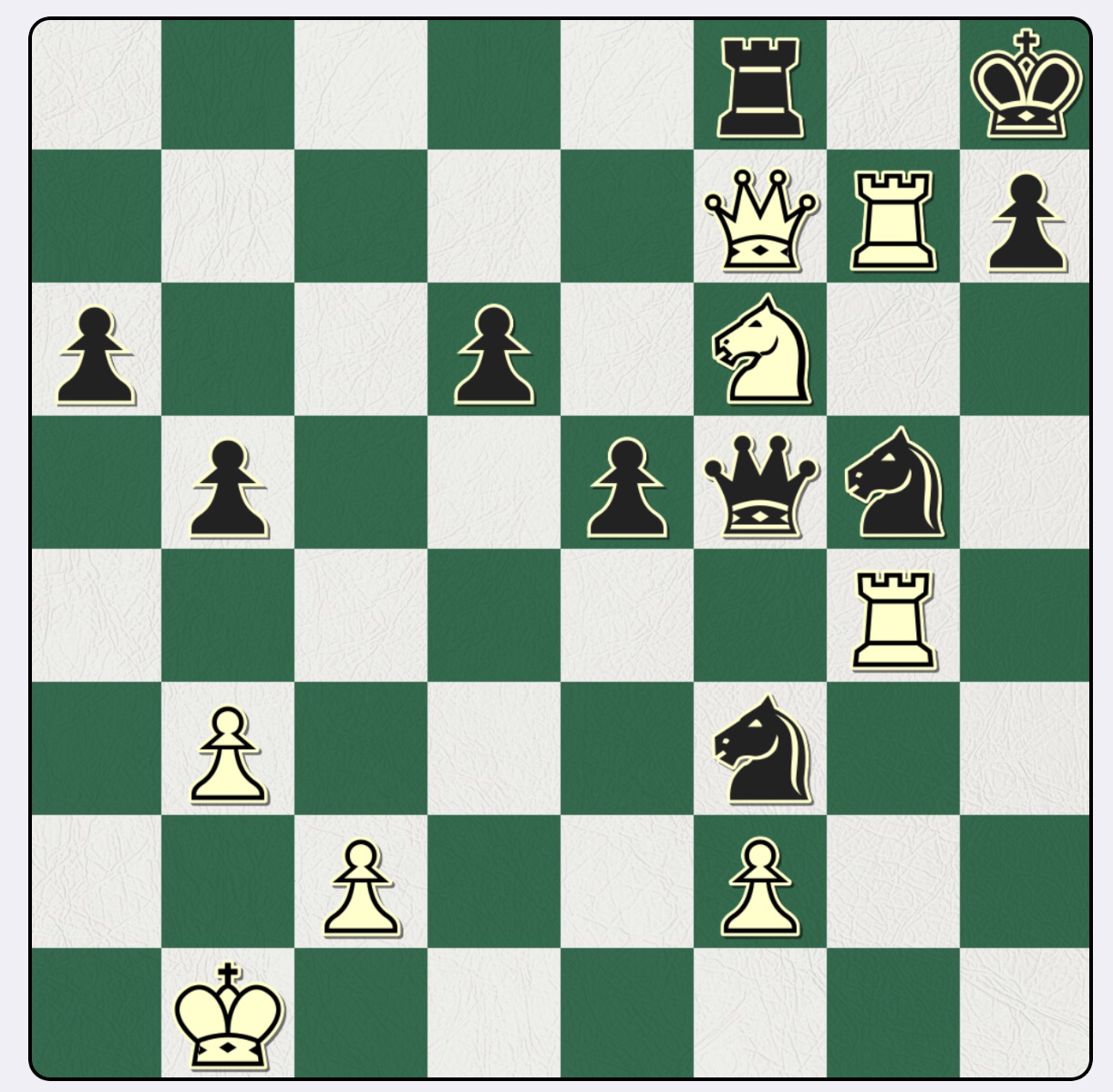
FEN
5r1k/2Q3Rp/p2pn3/1p2pq2/4N1R1/1P3n2/2P2P2/1K6 w – – 0 1
Another puzzle from Dragoslav Andric’s 1981 book “Matni Udar”.
Black to play and win
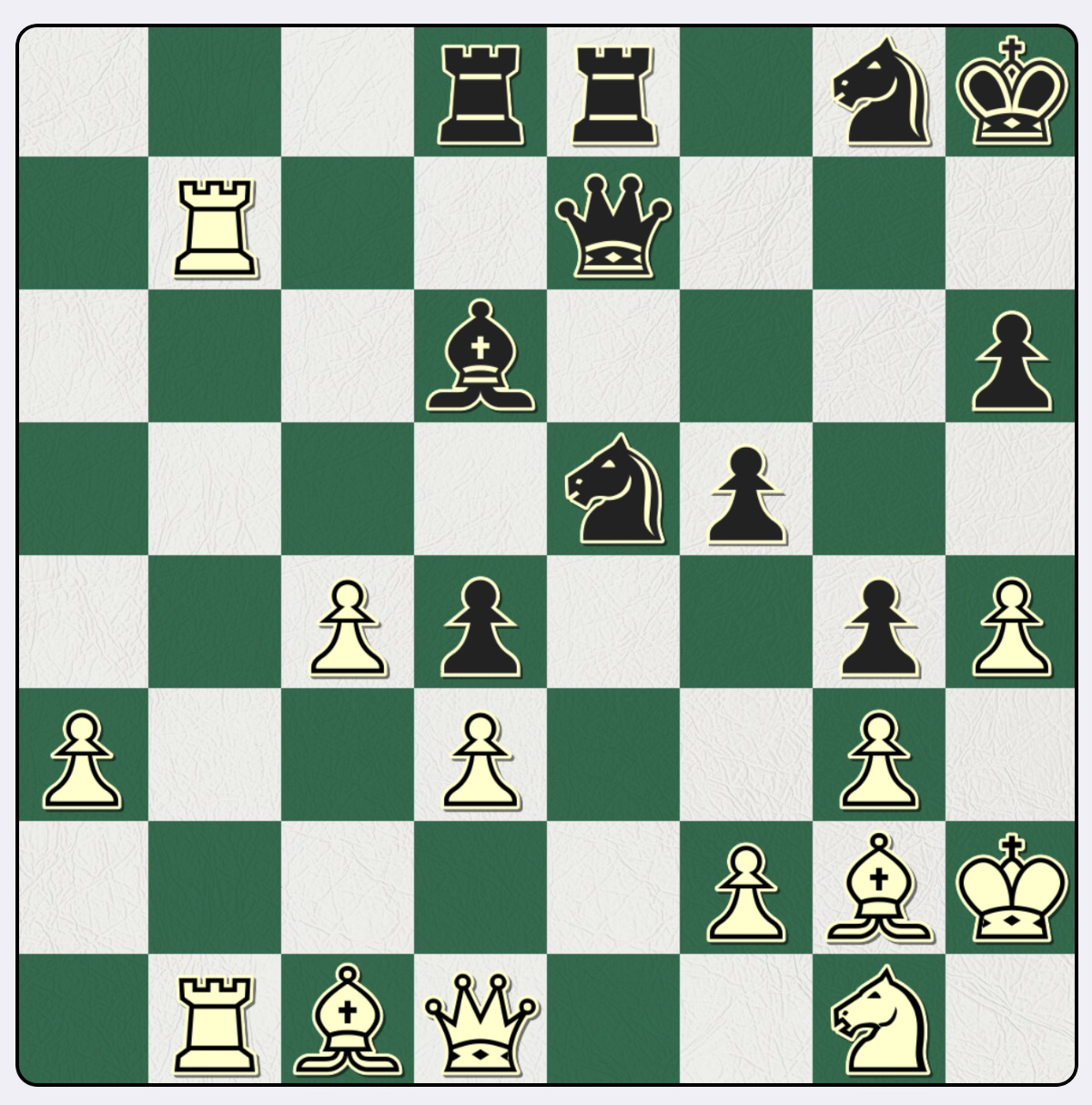
S Martinovic v S Markjanovic, Pula 1980
Solution
Not too hard, but a nice second move needs to be seen to make the obvious 1…Qh4+ work after 2gh.
2…Nd3+! rather than the obvious 2…Nf3++? seals the deal: it is mate by 3…Nf2 (or 3 f4 Bf4+ and 4…Nf2 mate).
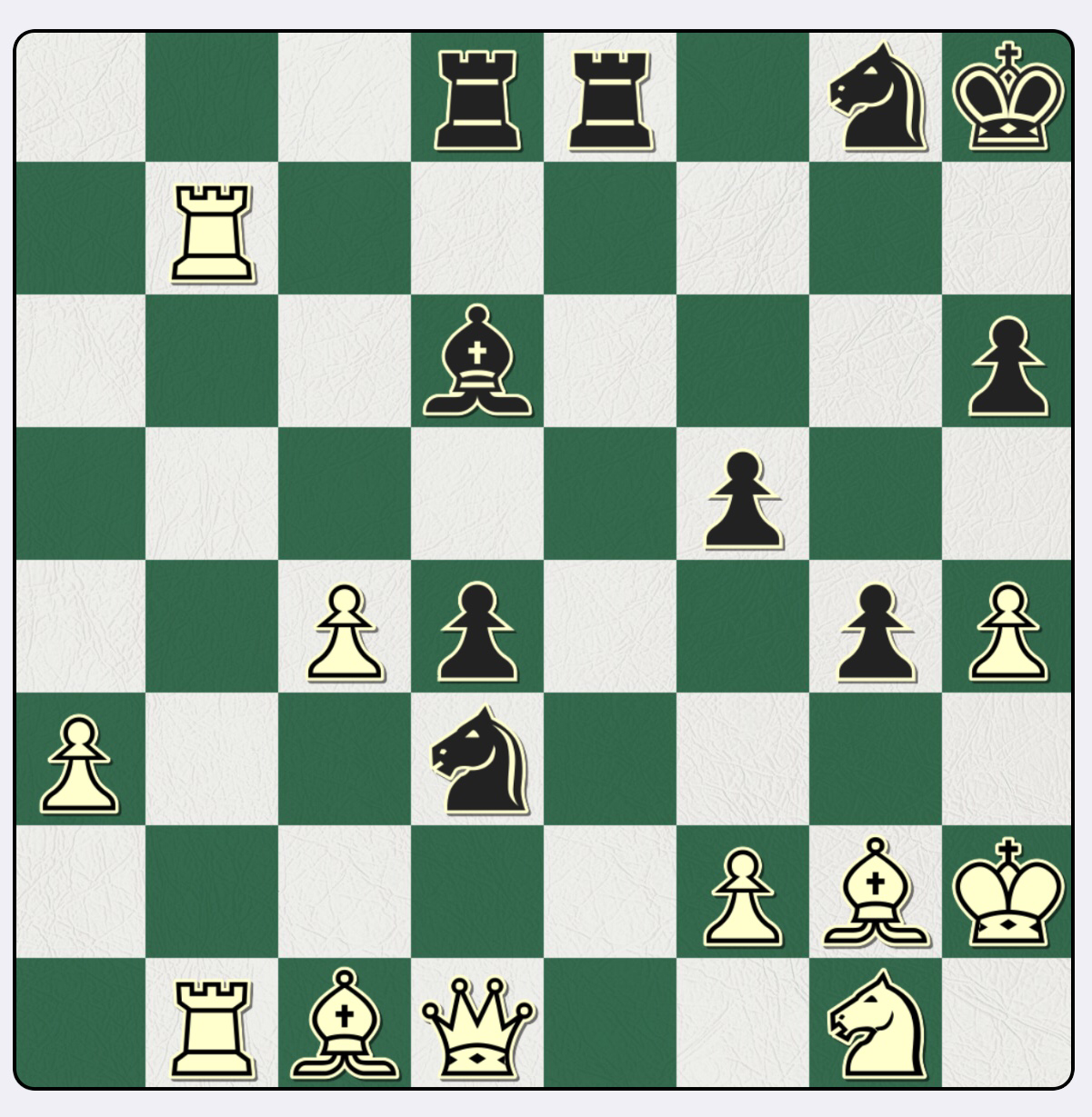
White’s ‘best’ is 2 Bh3 when various moves win. 2…Nf3+ being one. Even 2…gh works because after 3gh Ng4+ is followed by 4…Nf2+ forking king and queen.
FEN
3rr1nk/1R2q3/3b3p/4np2/2Pp2pP/P2P2P1/5PBK/1RBQ2N1 b – – 0 1
Three wonderful games in today’s Grand Prix in Palma de Mallorca.
The game of the day is Aronian’s wonderful attack vs Giri; having a rather lazy Sunday, I logged on to watch the games near the end, and enjoyed playing “guess the move” for the final few moves; not seeing if and how Levon was going to conclude his attack. But he played the last final moves so rapidly that I suspect he had seen the finale long before.
For now, three “guess the moves”:
White to play in Hikaru’s and Levon’s games, and Black to play in the third.
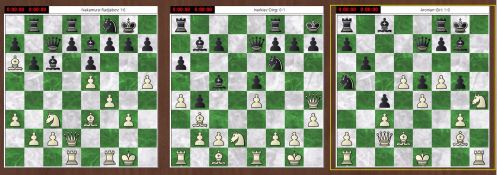
Solutions
These moves each show the incredible wonder of chess, and the equally incredible strength of the world’s top players.
Another puzzle from Dragoslav Andric’s 1981 book “Matni Udar”.
White to play and win
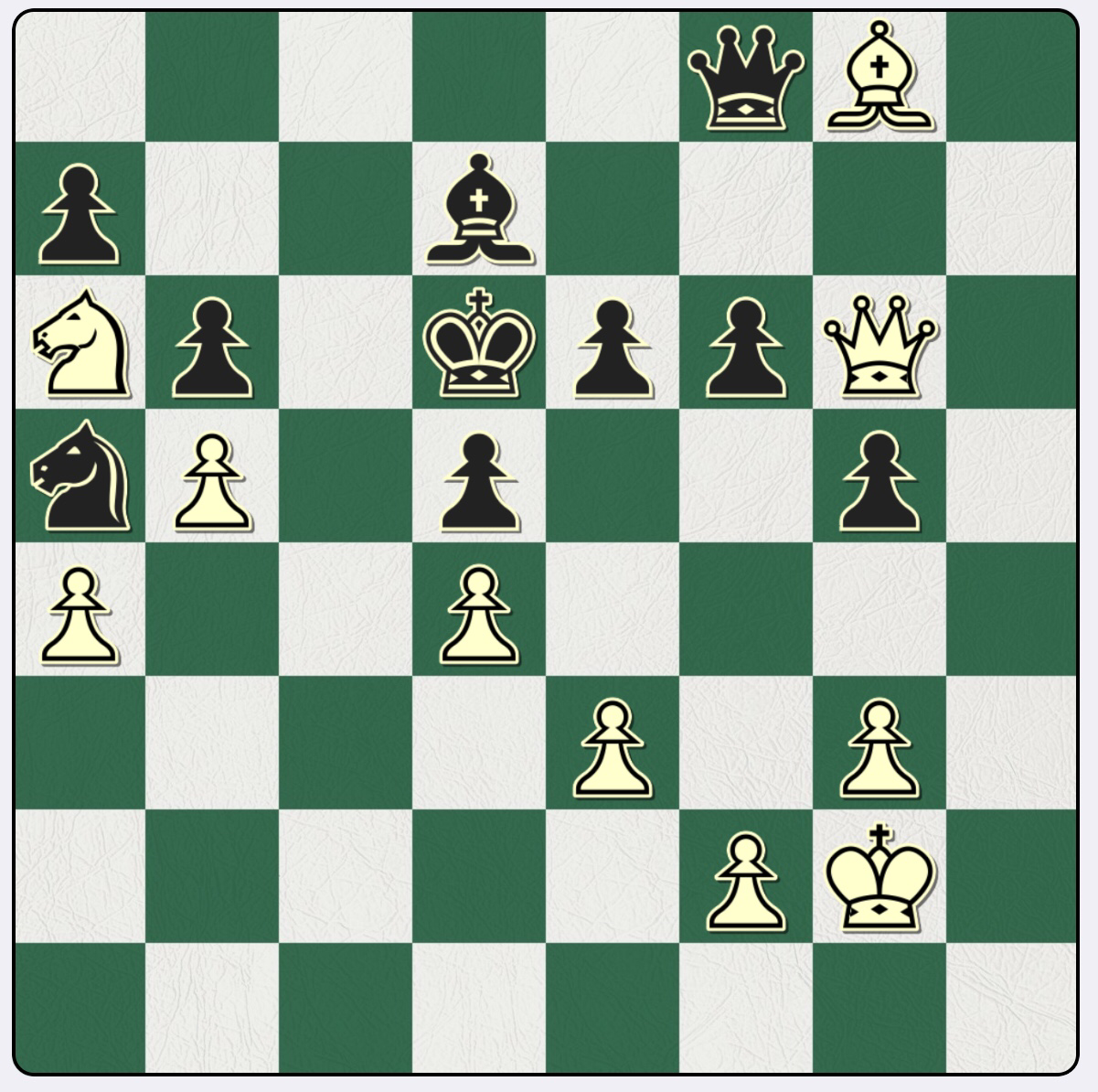
C McNab v P Hammer. Malta Olympiad 1980
Solution
The backward move 1Qb1 might normally be hard to see, but here White’s Queen is restricted, so finding it is easier.
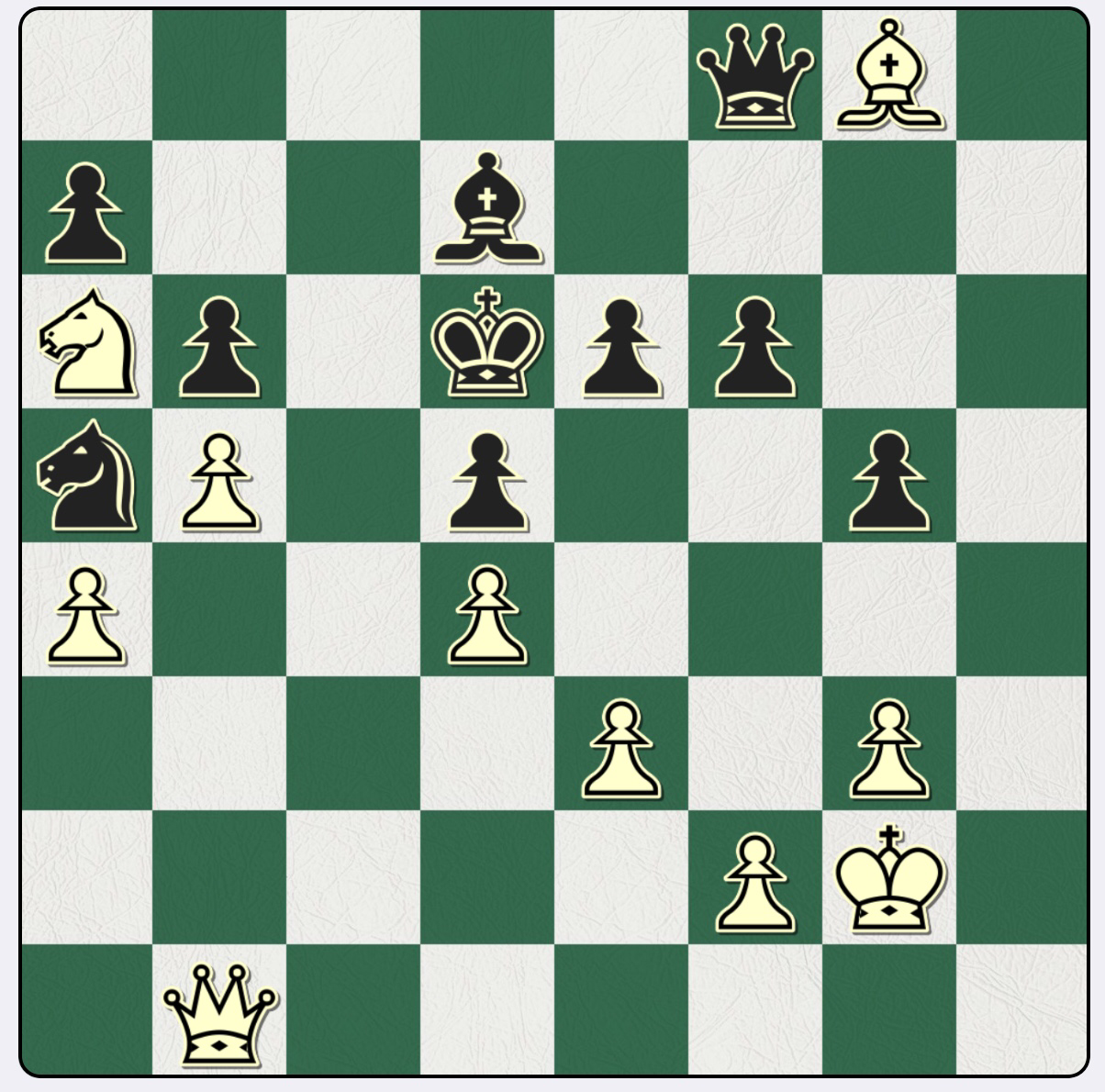
If 1…Ke7 2 Qb4+ Ke8 3 Nc7+ wins the queen.
FEN
5qB1/p2b4/Np1kpp2/nP1p2p1/P2P4/4P1P1/5PK1/1Q6 b – – 0 1
 allanbeardsworth