Another puzzle from Dragoslav Andric’s 1981 book “Matni Udar”.
White to play and mate Black.
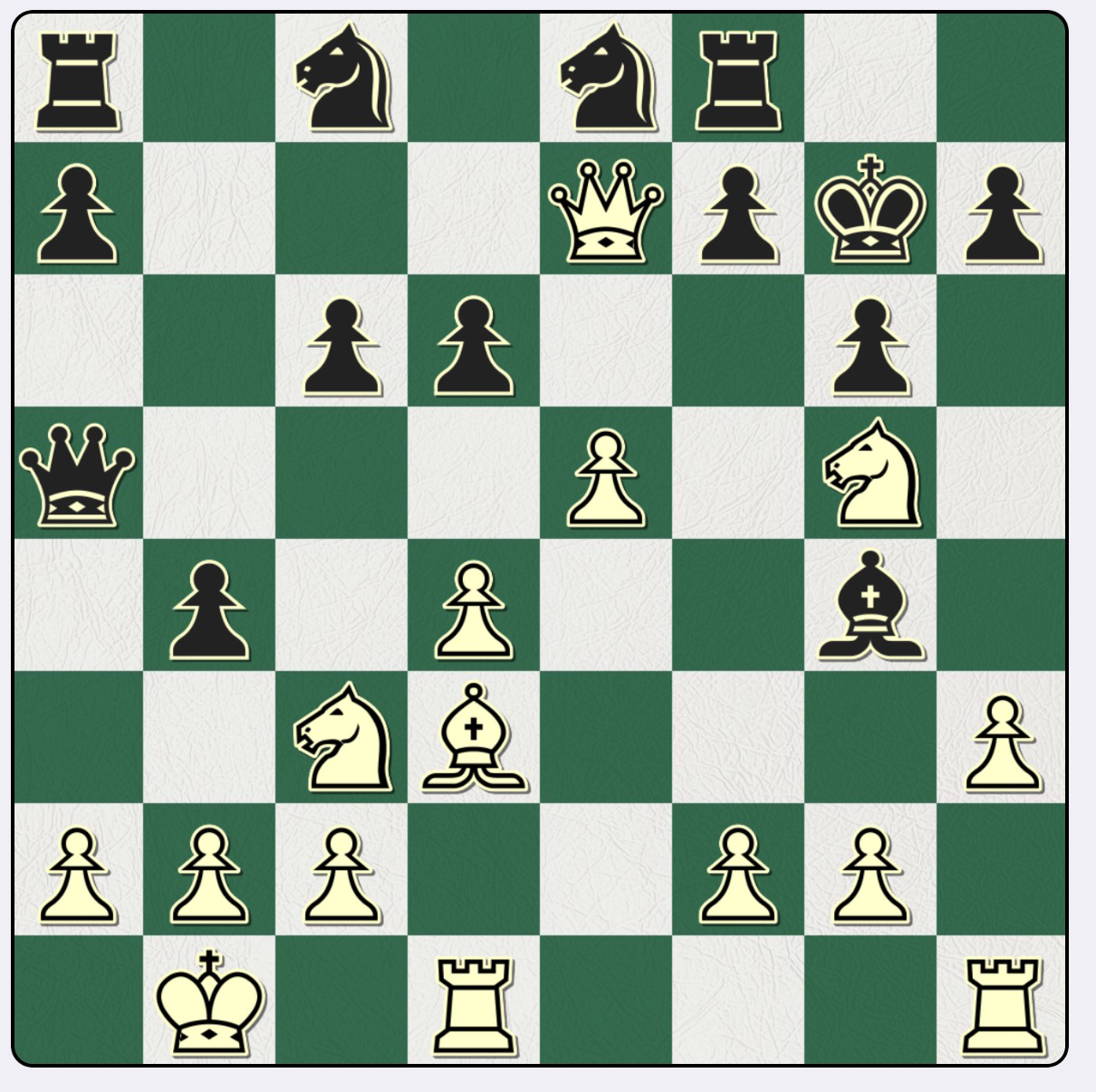
Vanfrenkelm v Daens, Hungary 1976
Solution
Fairly easy, since, it being a problem, you know the solution has to be 1hg!, sacrificing the Queen, and all you need to do is check that it does indeed work.
So 1 hg Ne7[] 2 Rh7+ Kg8[] 3 Rdh1 and mates.

FEN
r1n1nr2/p3Qpkp/2pp2p1/q3P1N1/1p1P2b1/2NB3P/PPP2PP1/1K1R3R w – – 0 1
Another puzzle from Dragoslav Andric’s 1981 book “Matni Udar”.
Black to play and win
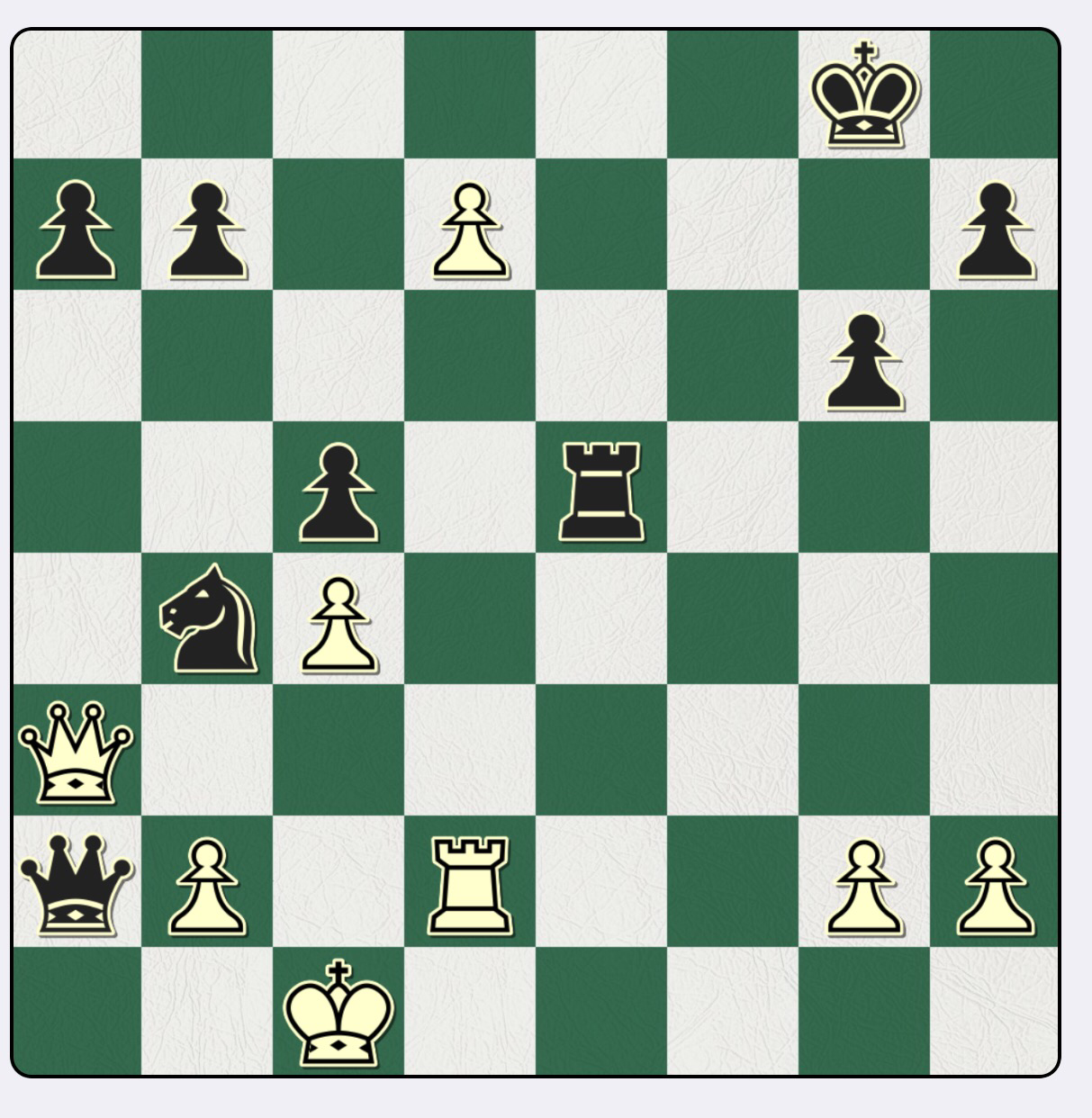
Vaczi v Denys, Orleans 1976
Solution
Not too hard: 1…Qb1+! deflects the King, and after 2 Kb1[] Re1+ mates next move.

FEN
6k1/pp1P3p/6p1/2p1r3/1nP5/Q7/qP1R2PP/2K5 b – – 0 1
Another puzzle from Dragoslav Andric’s 1981 book “Matni Udar”.
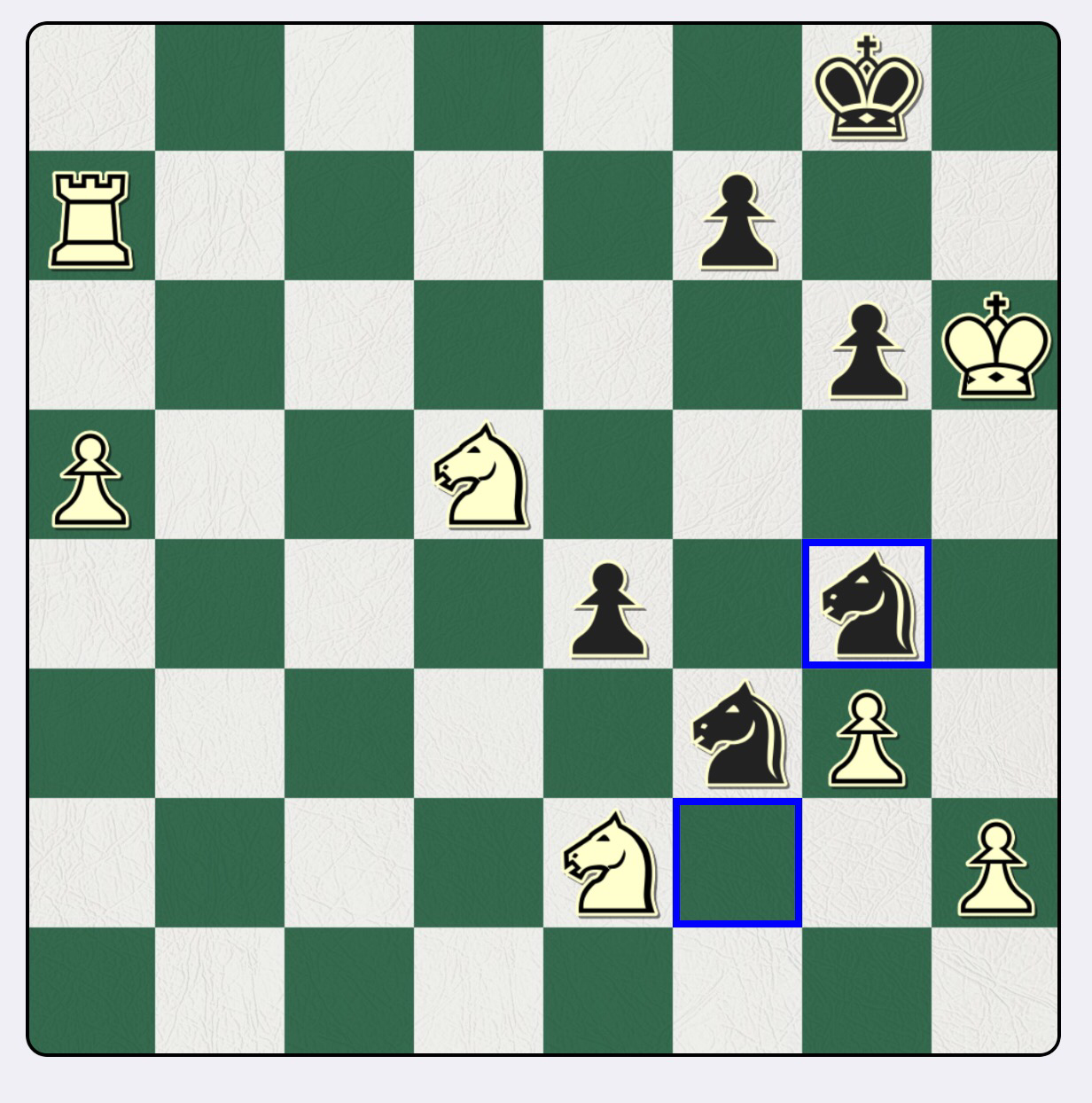
Black to play and win

Versteeg v Fritschy, Eindhoven 1976
Solution
Not too hard: 1…Rd5+ to deflect the Ne3 from g4. Then 2…g6+ and 3 Ng4 mate.
FEN
3r2k1/R4pp1/8/P6K/4p3/4NnP1/4Nn1P/8 b – – 0 1
Another puzzle from Dragoslav Andric’s 1981 book “Matni Udar”.
White to play and mate Black.

Mosionzik v Dementiev, USSR 1976.
Solution
The obvious moves are 1 Rh7+ and 2 Rch2: and indeed they win, mate in 10: by Black prolonging things by giving his pieces away.
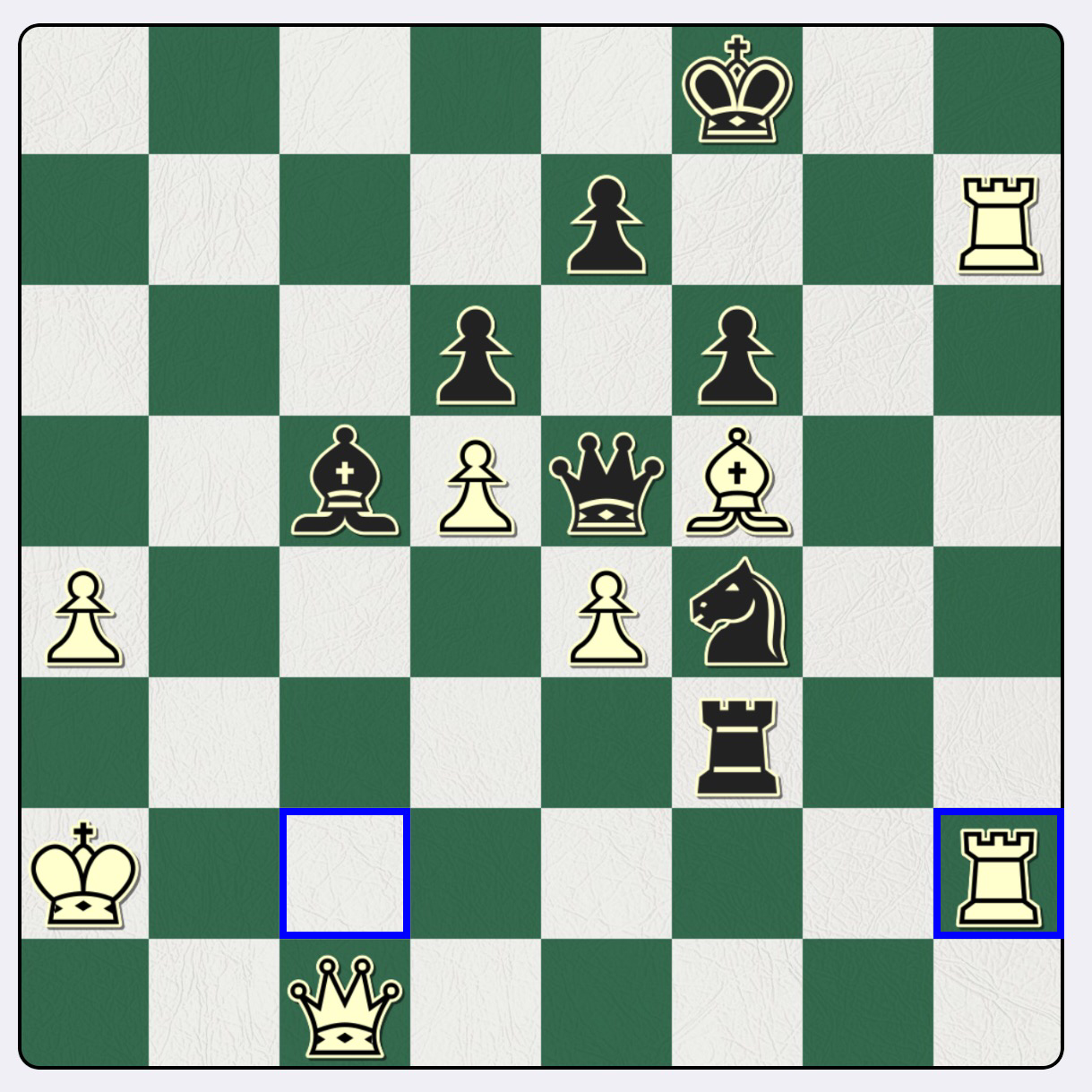
So, that’s the solution, but I was surprised when checking the book to see 1 Qg1!! (the book’s exclams): alas, Black isn’t forced to take, and after 1…Kf8! it is level after 2 Rc5 dc 3 Rh7 due to 3…Ra3+ and perpetual. Or if 3 Qc5 h5 and the game goes on.
FEN
8/4p1kp/3p1p2/2bPqB2/P3Pn2/5r2/K1R5/2Q4R w – – 0 1
Another puzzle from Dragoslav Andric’s 1981 book “Matni Udar”.
White to play and mate Black.
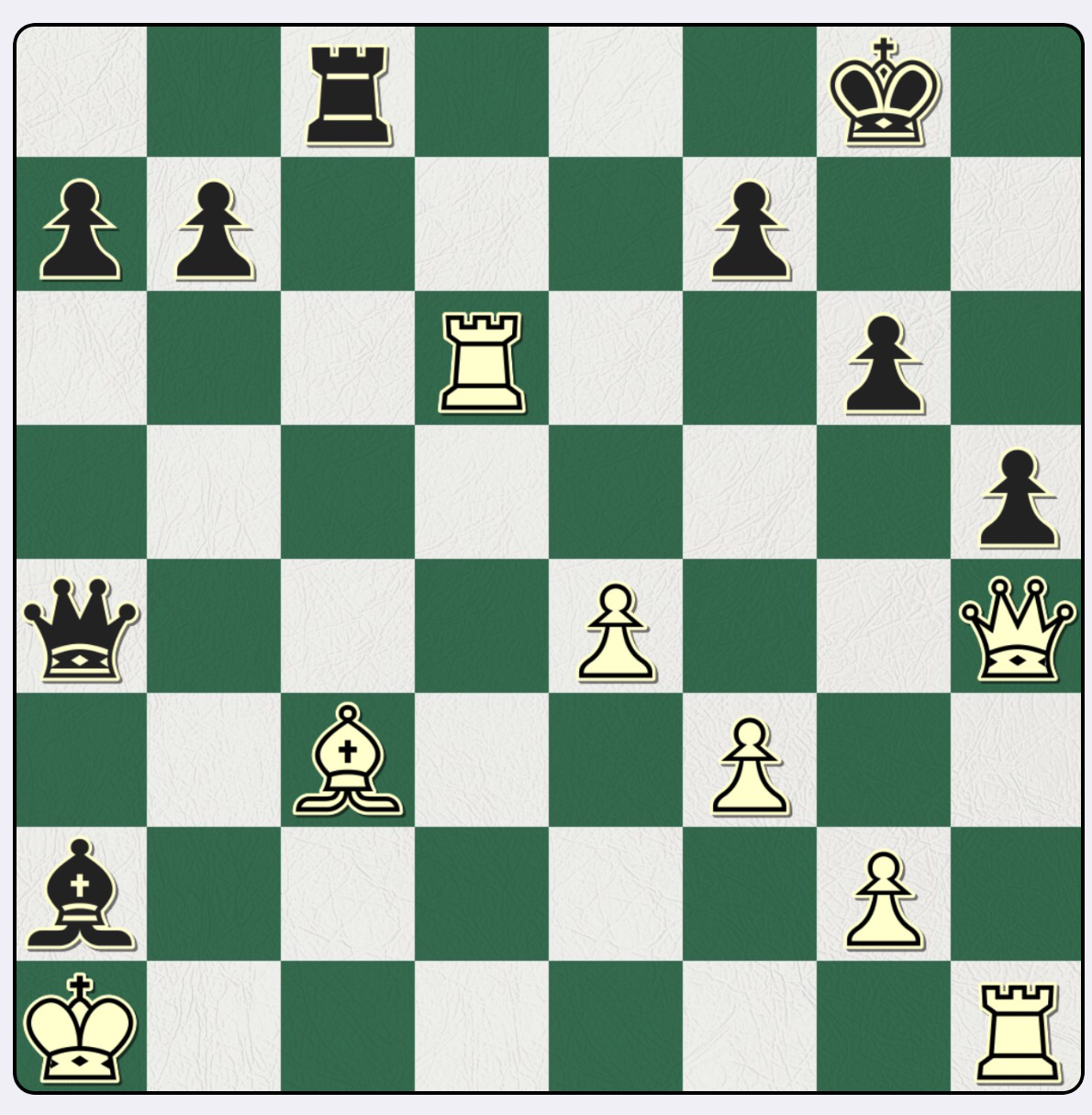
Makov v Vazenjin, Novosibirsk 1976
Solution
The first move is fairly easy, out of desperation, since the obvious 1 Rd8+ doesn’t work: 1…Kh7 and if 2 Rc8 Bb3+ and Black mates.
; and there is no cute finish with 2Qh5+ (though this sets up the idea for the actual solution).
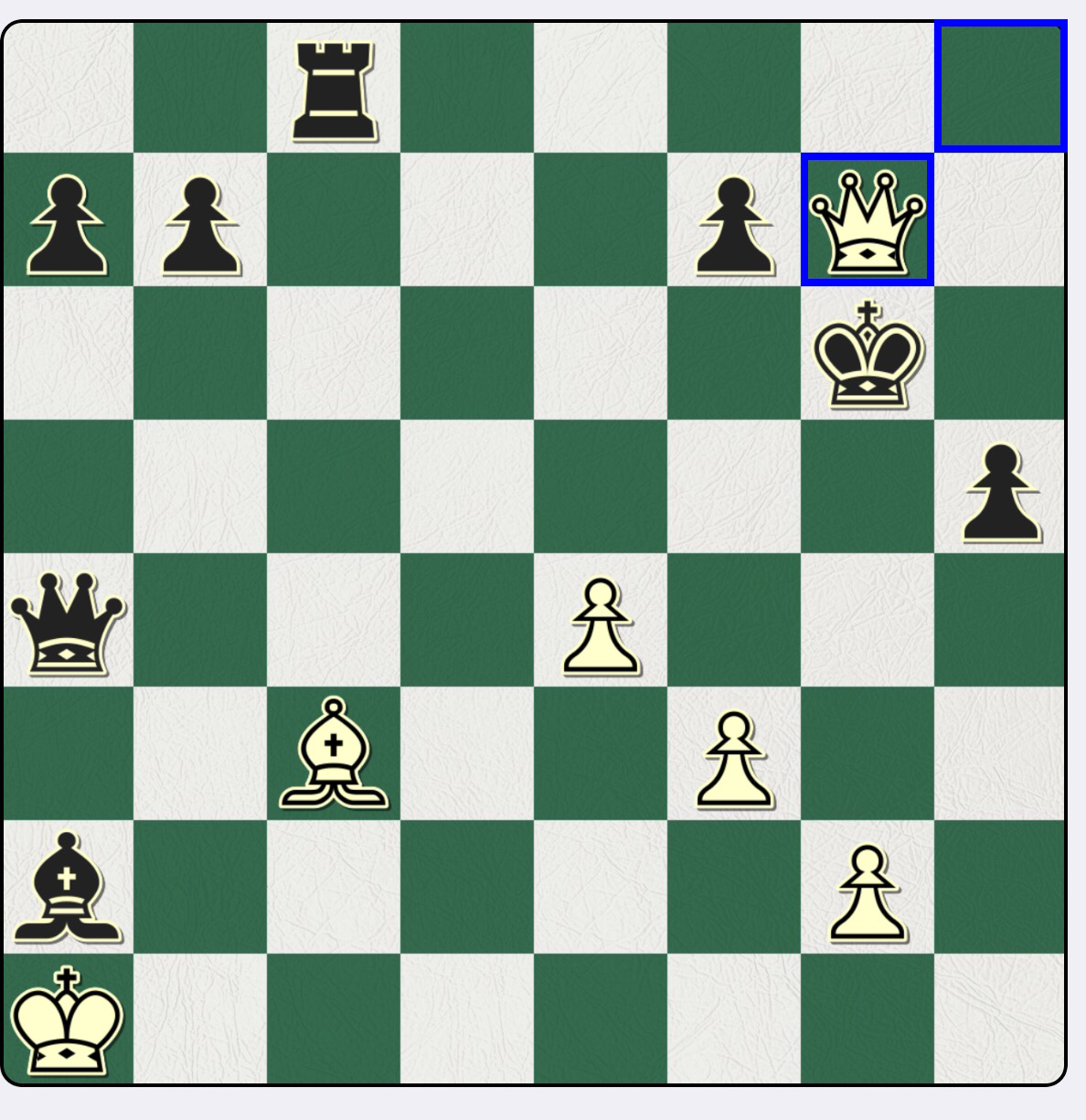
So, 1 Qd8+! and if 1…Rd8 2 Rd8+ and 3 Rh8 mate.
Therefore, 1…Kh7 but now there is a nice breakthrough: 2 Rh5+! gh[] 3 Rh6+! Kh6
4 Qh8+ Kg6[] 5 Qg7 mate. A long, forced line.
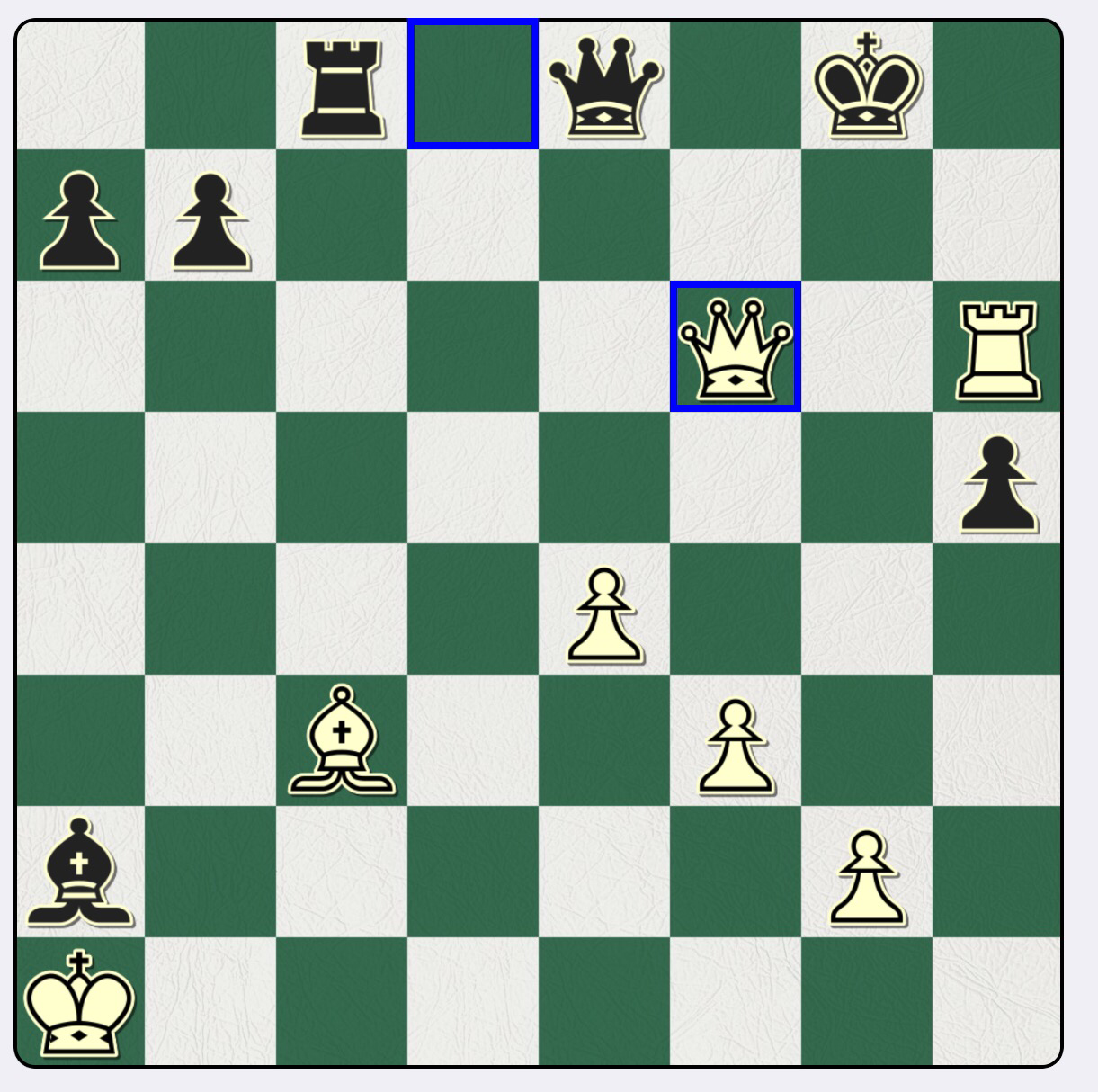
Black can also defend by 1…Qe8; when 2 Rh5! crashes through with mate. E.g. 2…gh 3 Rh6 f6 4 Qf6 and there aren’t even any spite checks.
FEN
2r3k1/pp3p2/3R2p1/7p/q3P2Q/2B2P2/b5P1/K6R w – – 0 1
Another puzzle from Dragoslav Andric’s 1981 book “Matni Udar”.
White to play and mate Black
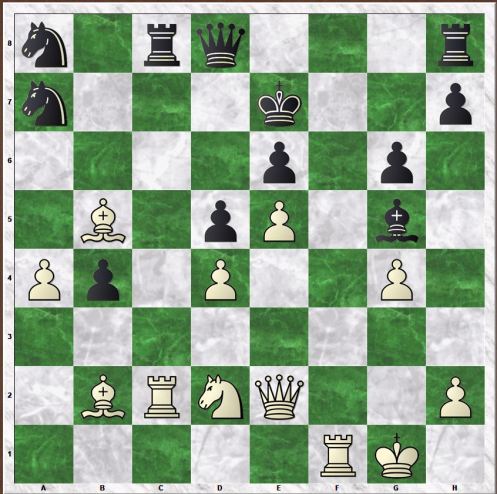
Malet v Hilsman, Menden 1976
Solution
I fluffed this one, missing entirely the idea 1 Ba3!! ba 2 Qf3!! with a double attack on a3 and f7.

It still isn’t easy: 2..Be3+ 3 Qe3! (3..Kh1 Rf8! is only some advantage to White) Nb5 and now 4 Qh6!! is obvious if you are made from silicon.
I played 1 Ne4! de, but couldn’t find a way to follow it up: 2 Qe1! is winning.

Also, 1 Rc8 Qc8 2 Nf3 is +-, but mainly because of the threat of 3 Qe1!, which is hard to see: though a Purdy player would see the LPDO and might find the retreat.
I think in a game I would have played 1 Nf3 which Komodo also says is +3, for the same idea of an eventual Qe1; and 1…Rc2 2Qc2 just leaves White threatening Qc5+ with mate: 3 Be3+ 4 Kg2 Qc7 5 Qb3! is another double attack on the LPDO Be3 and LPDO Pb4, 1-0.
FEN
n1rq3r/n3k2p/4p1p1/1B1pP1b1/Pp1P2P1/8/1BRNQ2P/5RK1 w – – 0 1
Another puzzle from Dragoslav Andric’s 1981 book “Matni Udar”.
Black to play and win
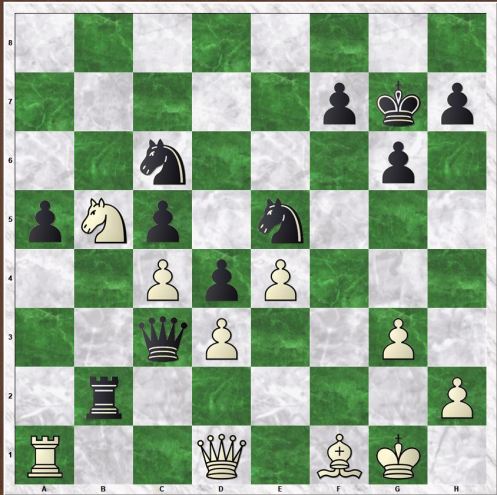
Ugoljcev v Asin, 1976
Solution
Not too hard: 1…Qe1! deflects the white queen. If 2 Qe1 Nf3+ and 3…Rh2mate.

FEN
8/5pkp/2n3p1/pNp1n3/2PpP3/2qP2P1/1r5P/R2Q1BK1 b – – 0 1
Another puzzle from Dragoslav Andric’s 1981 book “Matni Udar”.
Black to play and mate White
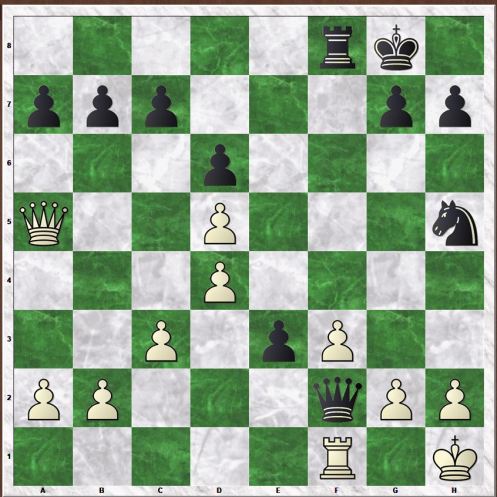
German v Ramfeld 1976
Solution
Nice: took me a while to see that after 1..Ng3+ 2 hg[] Black has time for a rook lift 2…Rf6, and if White exchanges on f2, the h-file mate still applies.
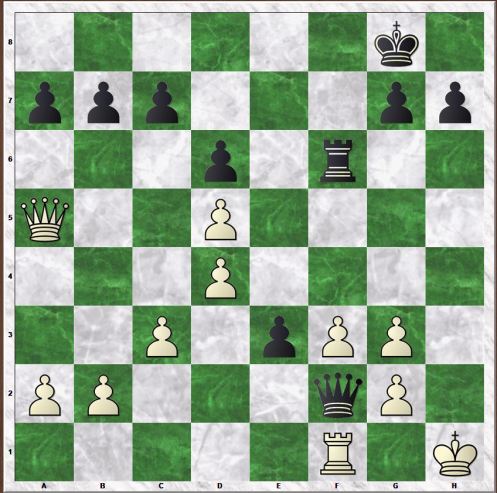
FEN
5rk1/ppp3pp/3p4/Q2P3n/3P4/2P1pP2/PP3qPP/5R1K b – – 0 1
Another puzzle from Dragoslav Andric’s 1981 book “Matni Udar”.
Black to play and mate White

Solution
Fairly straightforward: examine all biffs means you have to look at 1…Qh2+, and with the Ba7 pinning the f2 pawn, 2…Rh4+ 3…Ng3 and 4…Rh1 mate follows.

FEN
4r3/b4pk1/p3p3/Pp1pPnpp/1Pr4q/2P2B2/3BRPPP/2R1Q2K b – – 0 27
Another puzzle from Dragoslav Andric’s 1981 book “Matni Udar”.
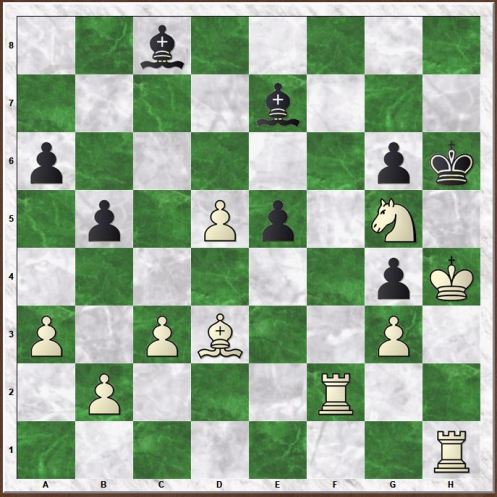
Black to play and mate White
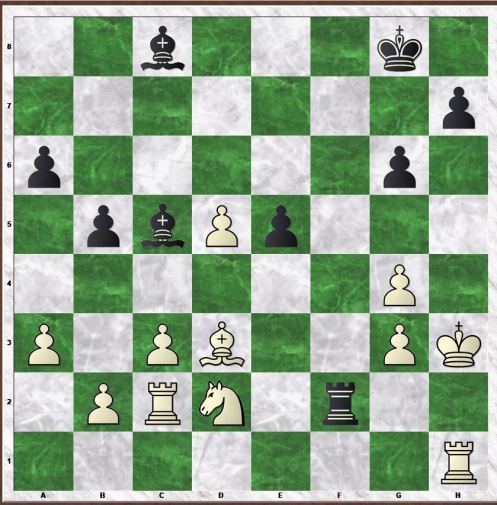
Mastilovic v Belic, Novi Sad 1976
Solution
A hard one, made easier by there not being many choices: but I didn’t solve it entirely, missing the main point a few moves in.
1…h5! [] 2 Ne4[] (2 Bg6? Bg4+ and 3…Be7 mate) 2..hg+ 3 Kh4[] Be7+ 4 Ng5[] Kg7!

with the point being that Rf8=h8 mate can’t be stopped, except by 5 Rf2 when 5…Kh6 is conclusive. Also 5 d6 doesn’t change things: 5…Bd8 and the same threats can’t be parried.
FEN
2b3k1/7p/p5p1/1pbPp3/6P1/P1PB2PK/1PRN1r2/7R b – – 0 1
 allanbeardsworth