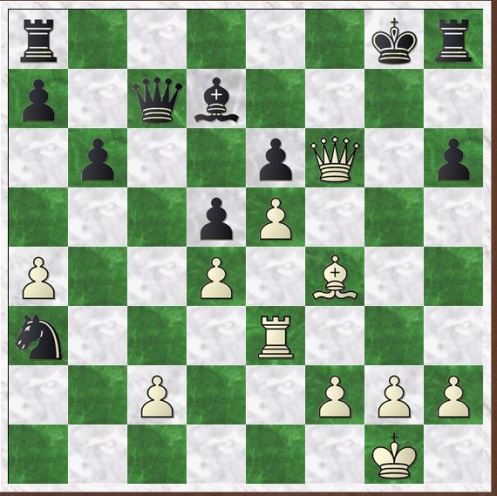
White to play and win
evaluate 1…g5 2 Rh6 Kg7
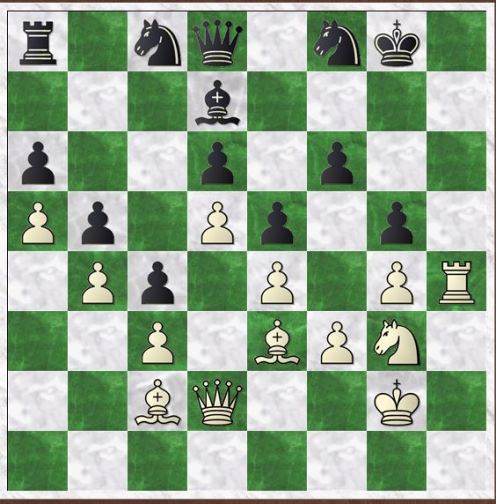
Fischer v Gligoric, Rovinj-Zagreb 1970
Solution
Black’s defence looks solid, until you examine all biffs and consider 1 Rf6!!
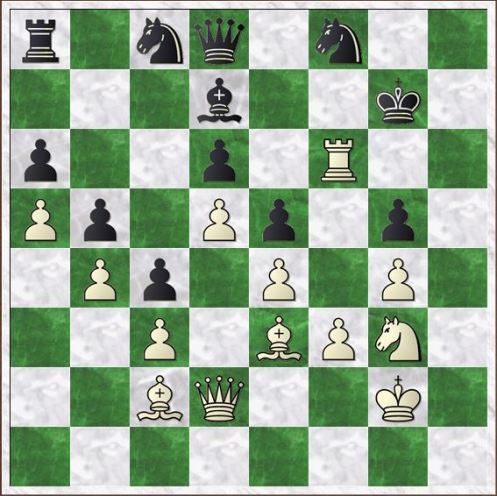
Then if 1…Kf6, 2 Bg5+ skewers King and Queen, whilst 1…Qf6 is met by Nh5+ with a fork.
White to play and win
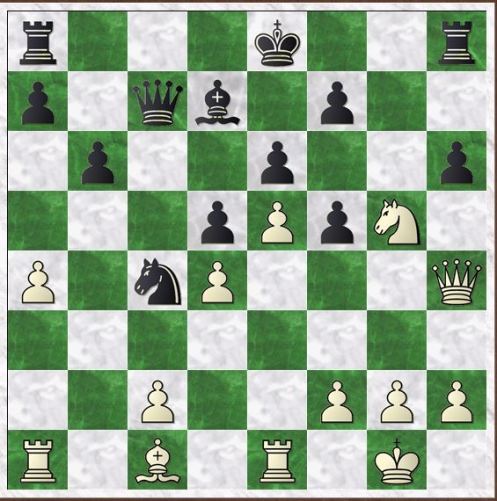
Dueball-Burnett, Berlin 1970
Solution
The first moves are fairly simple, and White has the big practical luxury of a fall back perpetual check, if nothing else.
1 Nf7! Kf7 2 Qf6+ Kg8
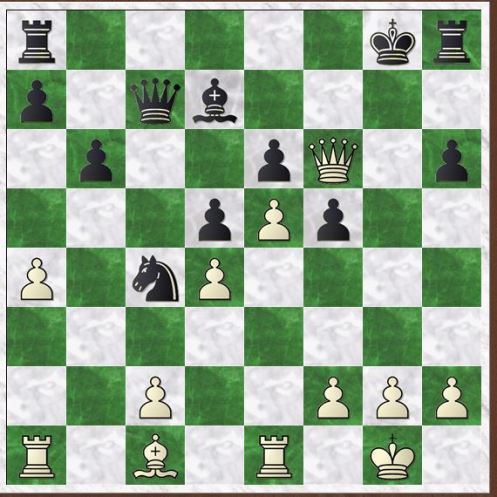
And now the main task is to see how to rook lift or get the B in. 3 Ra3! seems natural, and indeed wins after 1…Na3 2 Qg6+ Kf8[] 3 Ba3+ when 3…Qc5 is forced. Or, 3…f4 when after 4 Bf4 Ra3 5 Re3! the other rook swings over to g3, 1-0.
Black to play and win
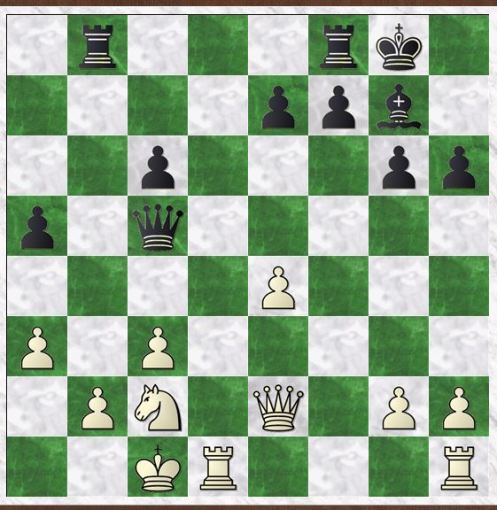
Kapengut v Vaganian, Dubna 1970
Solution
The first moves are straightforward, but how to finish off? And after 1…Rb2! 2 Kb2[] Qc3+ 3 Kca[] it is not obvious how to proceed.
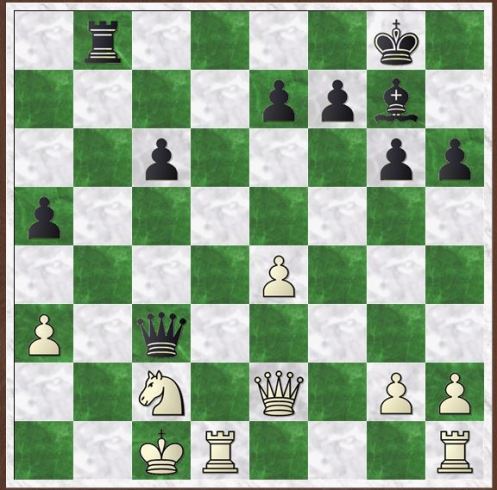
Eventually I realised a slow move was needed, bringing up reinforcements: 3…Rb8! and it is all over, since 4…Rb1+! is threatened, deflecting White’s King to b1, when Qb2 is mate.
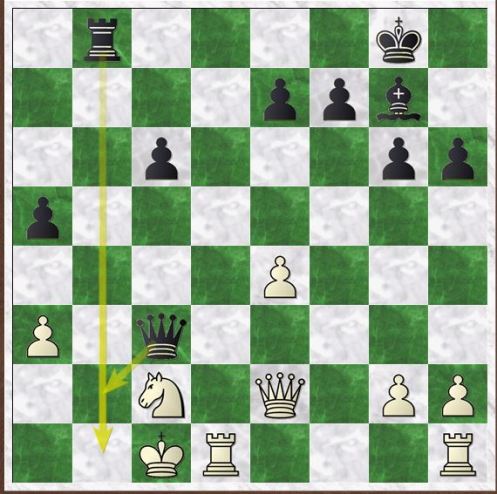
Nice.
White to play: evaluate 1 Ne6+ Qe6 2 Qe6 Bb2+ 3 Kb1 Ba3+=
(i.e. critique the line)
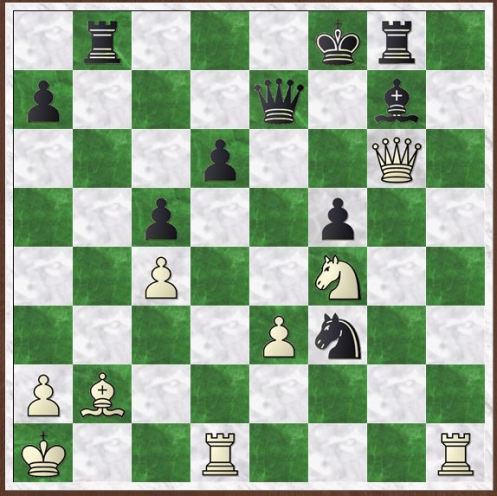
Larsen v Kavalek, Lugano 1970
Solution
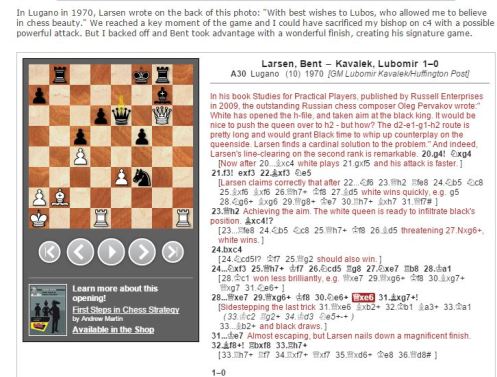
If puzzle 258, a couple of days ago, was part of my teenage chess education, today’s puzzle is part of my 50s chess education, since I immediately recognised the position, and the player’s, from Kavalek’s Huffington Post article which was published on ChessBase . I had read the article, for its great analysis of the wonderful Carlsen-Li game from Qatar (and for its ill-researched claim about an early Ka1-Ka8 pattern in that game- see my earlier blog posting.
So, as so often happens in tactical sequences, the automatic recapture 2 Qe6 is ? and the zwischenschach 2 Bg7+ changes everything: 1-0


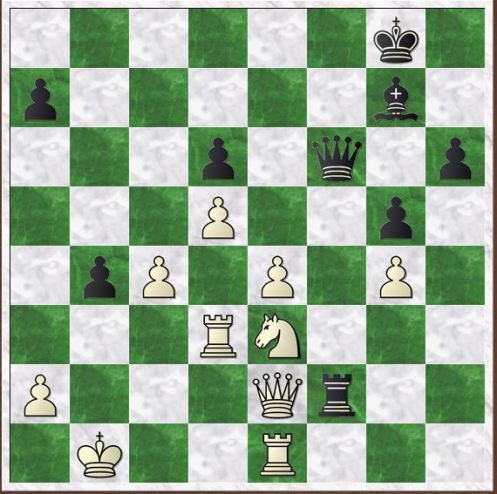
Black to play and win
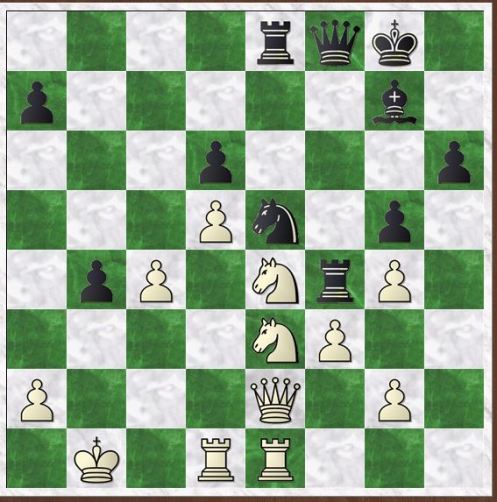
F Portisch v Bilek, Zalaegerszeg 1969
Solution
Quite hard to see the way through the tangle of central pieces, but when one sees the jump biff Rf4-f2, noting that from f2 the R also eyes b2, the forcing 1…Nf3! 2 gf Ree4! becomes not too hard to see.
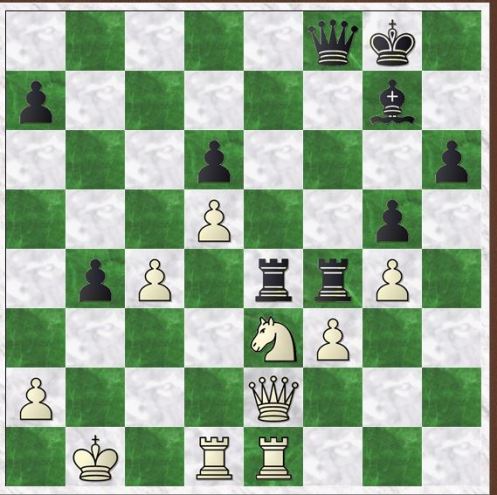
Then a quick check is needed to see that after 3 fe Qf6! Black is winning, for instance 4 Qd3 Rf2 0-1.
Black to play and win
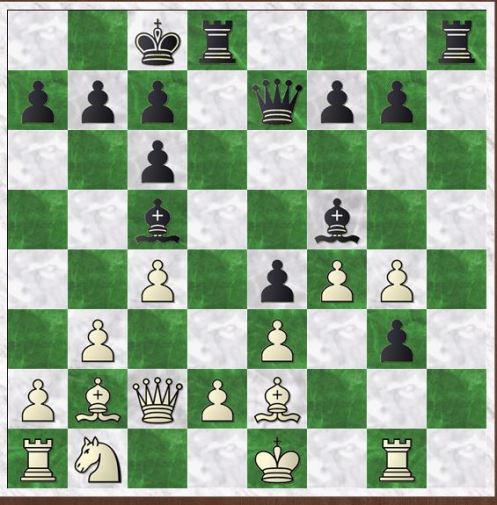
Larsen-Spassky, USSR-World, Belgrade 1970
Solution
Part of my chess education. I was eight when the game was played, and hadn’t learned to play chess. But by my mid-teens, partly because my local library only had very few chess books (two of the three volumes of Paul Keres, and one being Bent Larsen’s best games) I loved Larsen (I was a child of Bobby Fischer) and therefore new my heroes spectacular defeat (against Spassky, whom I also liked for his sportsmanship in Reykyjavik).
So, 1…Rh1!!
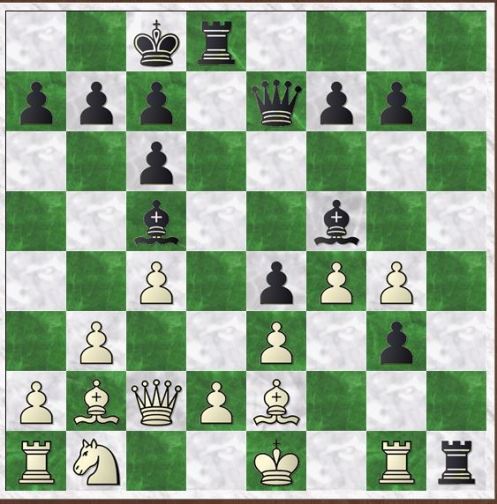
2 Rh1 g2 3 Rf1 Qh4+ is soon curtains.
Black to play; evaluate 1…Nc6
(a puzzle to spend some time on, but not too much; an analytical effort.)
What move was better than 1…Nc6? (a difficult question)
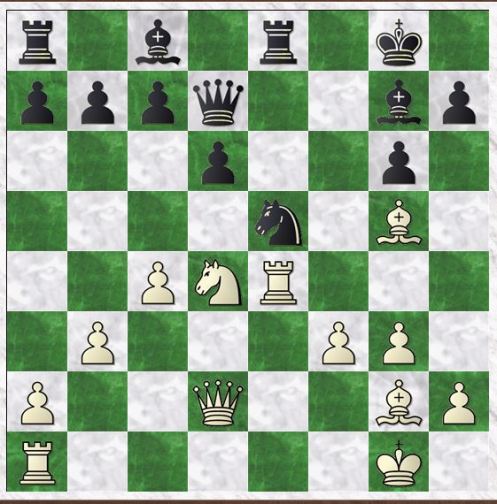
Larsen- Stein, Belgrade 1970
Solution
A disappointing puzzle, since there is nothing clear. 1…Nc6 2 Nc6 Re4 3 fe bc and the position is unclear.
I could add far more lines, but don’t think there is much point. The game is given in Megabase 2012 and there are reams of analysis around this position, some +-. some -+. some unclear- too much to replicate. The position is just “and the game goes on”.
In the initial position, 1…Nf7! is a better choice for Black, and Black is probably winning since 2 Re8+ Qe8 3 Re1? loses to 3…Bd4+; so 3 Be3 when 3…c5 pins and wins.
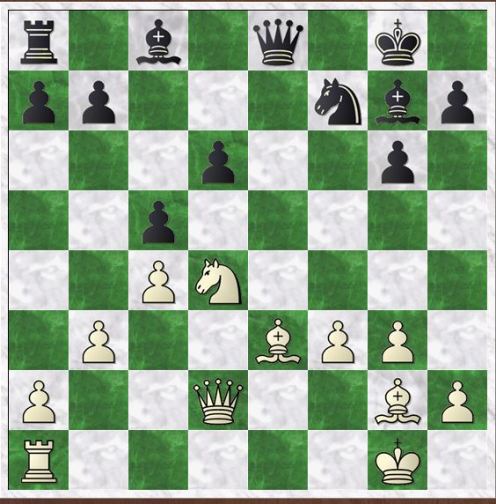
Black to play and win
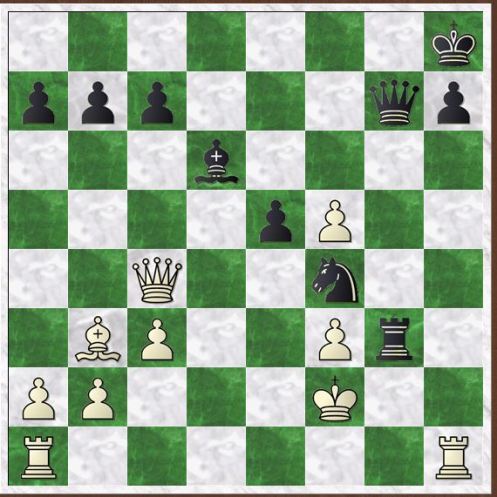
Hinton, Tim v Beardsworth, Allan, Stockport Rapidplay 2016
Solution
Today is my youngest child’s 18th birthday, so, to celebrate, a break from the series from Teschner’s and Miles’ book, to a recent game of my own. My opponent, for this 30min per player rapid game, on arriving at the board told me he was a reader of this blog and also quipped, asking whether our game might feature. In the end, we both agreed that the finale had to be in, and he sportingly said he had no problems at all losing to a combinational finish like occurred.
The finish was when each of us was down to our last two or three minutes. I am pleased to say that I saw the winning motif a few moves before and was just building up to play the diversionary tactic which followed.
1…Rf3+!! 2 Kf3 Qg2+ 3 Ke3[]
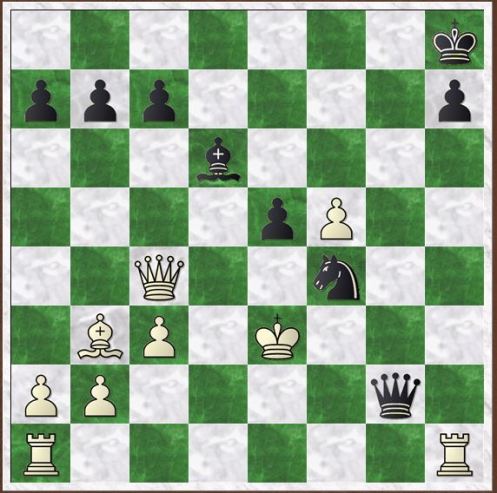
1…Bc5+!! deflecting the Queen 0-1, for if 2 Qc5 Qe2 mate.
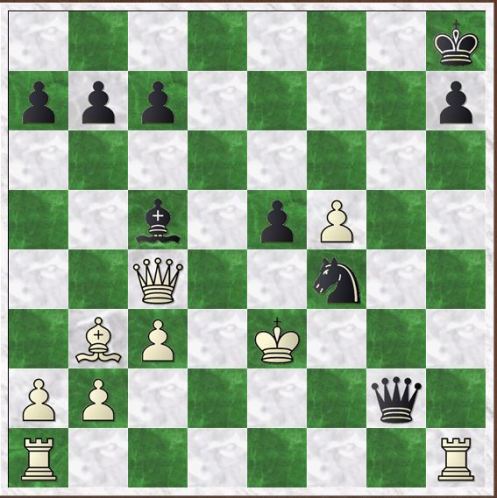
Of course, 2 Ke1 was a tougher defence. I was planning 2…Qg3+ 3 Kd1 Qg2 when Black is easily winning if 4 Re1 Rd3+ ( 5 Kc1 Qd2+ picks up the LPDO Re1); the engine says that 4 Qg8+ is relatively best, but at -5 Black should easily win, especially since the lines aren’t hard: push the h pawn, bring up the King, capture on f5, and White has no counterplay. The engine tells me though that 2…Nd3+ is mate in 14- maybe I would have found it, because the point is that 3 Kd1 loses to 3…Nb2+ with a royal family fork, and Ke2 or Kd2 is met by 3…Qg2+, so White is forced to lose the Q by 3 Qd3 Rd3.
A pretty combination and fitting for today.
Black to play and win
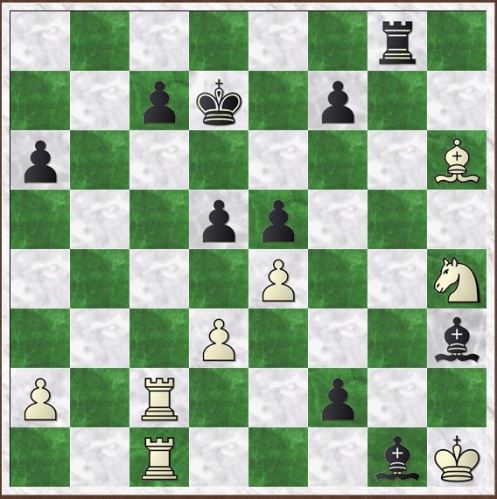
Almgren v Burger, California 1969
Solution
Quite difficult, since the pieces are spread out and placed unusually. In Teschner’s book, we are told the strange fact that Black mistakenly touched his Rg8: so, the move has to be a rook move. I think this is to show that there is something better than 1…f1(Q) and so, confined to rook moves, it is not to hard to try 1…Rg3 – if only for the prophylactic reason that it prevents 2 Be3.
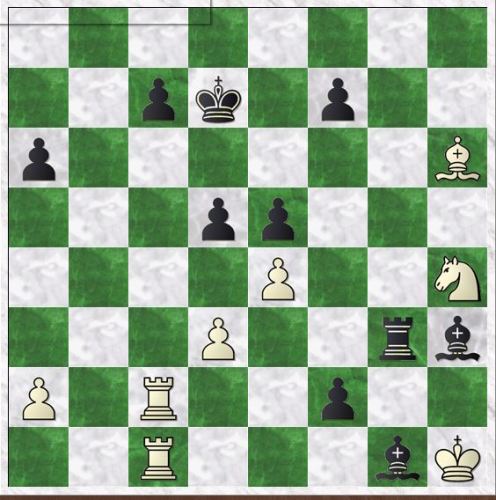
If White checks (2 Rc7+) it isn’t too hard to see that Black can shuffle away- Ke8=Ke7-Kf6.
Black has a nice threat. If say some pass move like 2 a4 then 2…Bg2+!! 3 Ng2[] Rh3 mate.
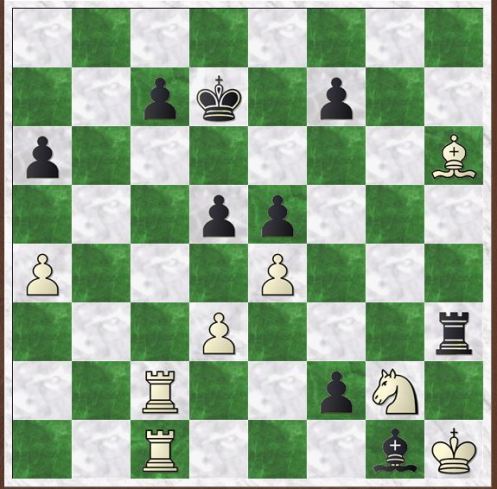
I have created a game file with some more lines here.
 allanbeardsworth