White to play and win
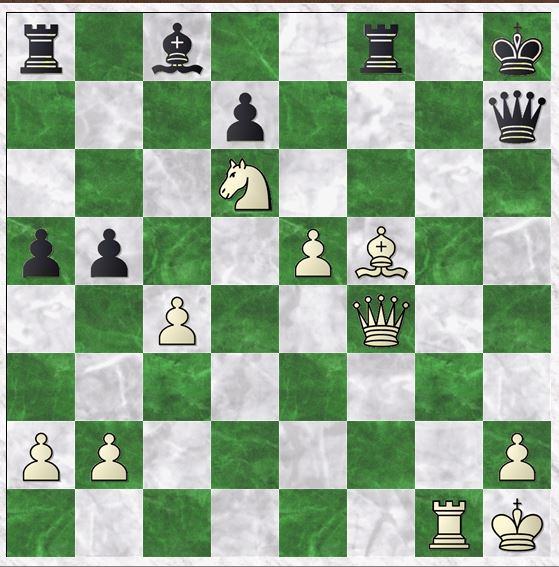
Zinn v Matulovic, Maribor 1967
Solution
In the game, White played 1 Qe4, and eventually won; and I found 1 Rg6! a which is stronger, and wins the queen- Black's best is 1…Bb7+ 2 Nb7 Qg6 3 Qh4+ +-.
However, White has the far prettier 1 Rg8+!!
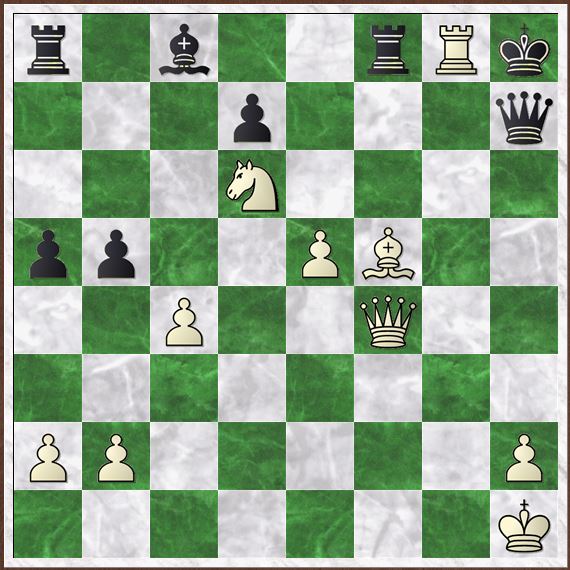
It is the same idea as 1 Rg6, but far, far prettier.
My engine hasn't got a sense of humour though: it says 1 e6!! is even stronger, mate in 16 in fact.
 Posted with Blogsy
White to play and win
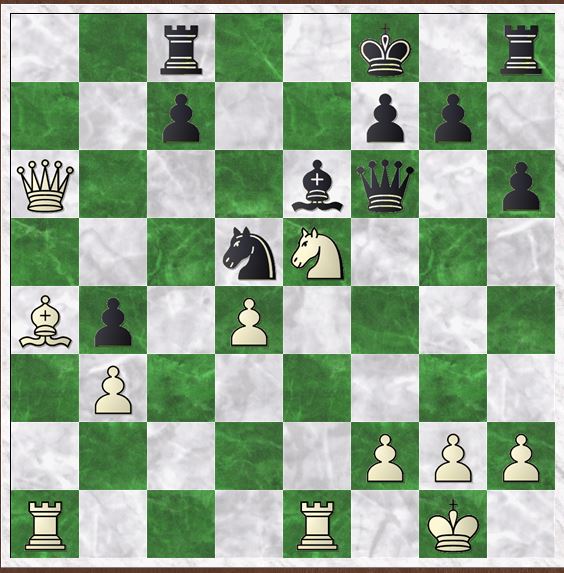
Friedrich v Bantleon, Havana 1967
Solution
Not too hard today, just a question of ordering the moves in the attack. 1 Nd7+ Bd7[] 2 Qc8+!
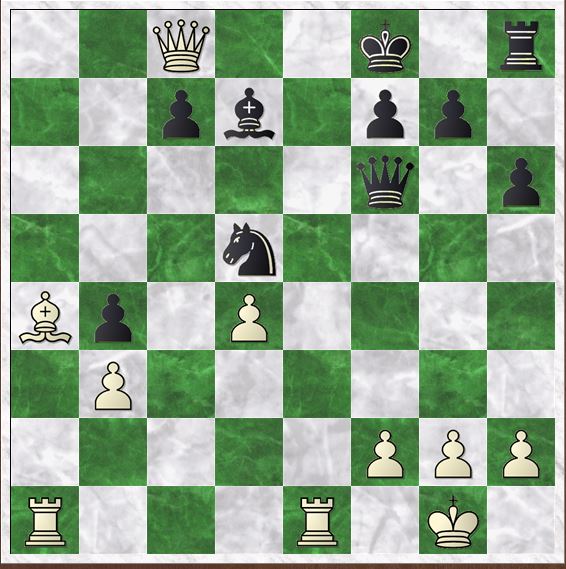
And after 2…Bc8[] 3 Re8 mate.
White to play and win
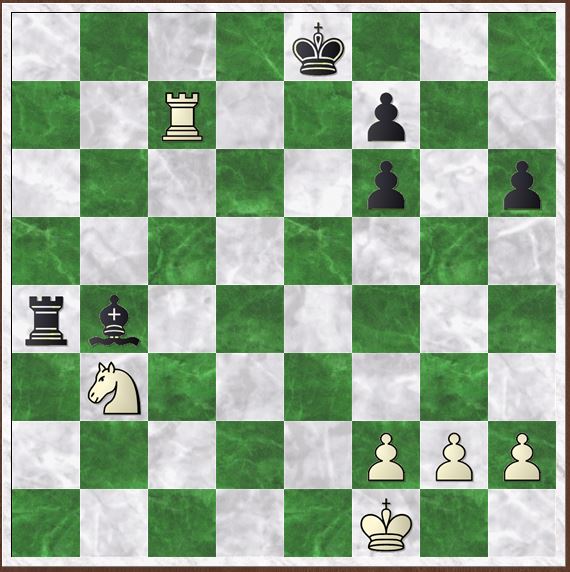
Ivkov v Dückstein, Sarajevo 1967
Solution
A nice puzzle, involving keeping control, and exploiting the geometric alignment of the Black rook and bishop, with the Ra4 being a LPDO.
So 1 Rc4! Ke7 (1….Kd7 2 Nc5+) 2 Rd4! keeps the Black King hemmed in. Then 3 g3 4 Kg2 5 Nd4 6 Rc4 and 7 Nc2 or similar wins the bishop.
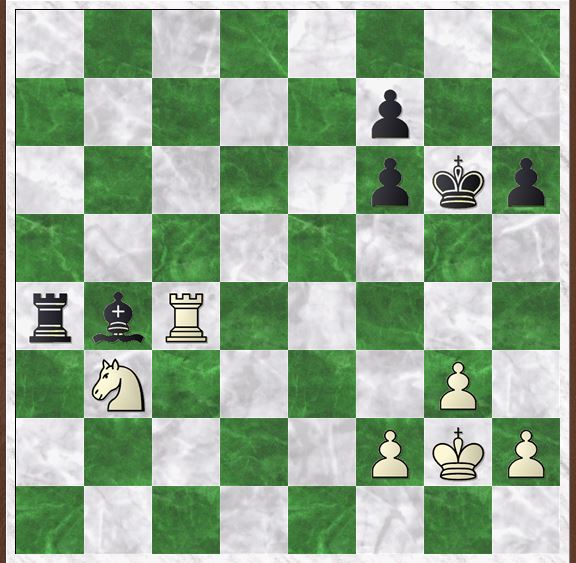
The game’s final position is below.
White to play and win
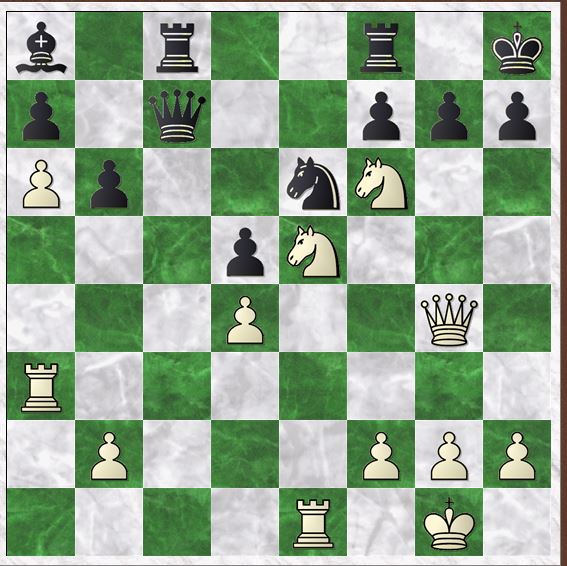
Rossolimo v Blomberg, San Juan 1967
Solution
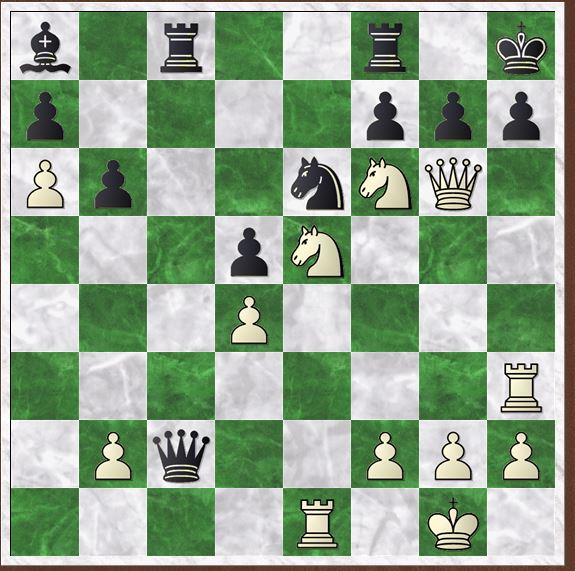
A standard theme, one which, if you know it, you see instantly: 1 Qg6!
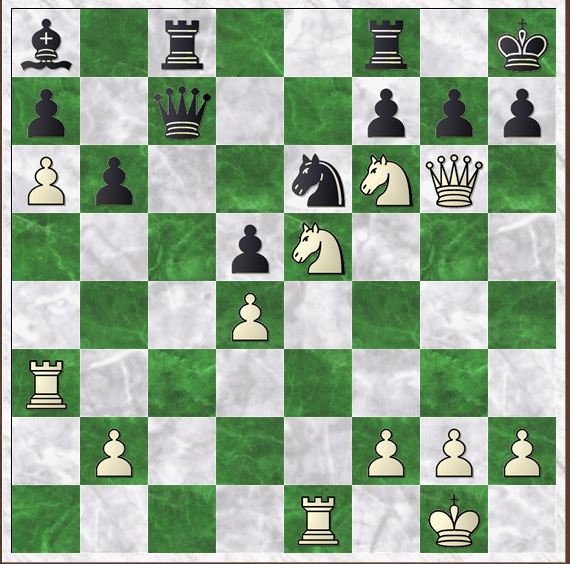
Taking the Nf6 is mated by Qf6+ and Rg3+, so 1…fg 2 Ng6+ hg[] 3Rh3mate. A nice end to the rook lift.
However, there is more to the problem:
1…Qc2!? 2 Rh3!!
and, perhaps harder,
1…Ng5!
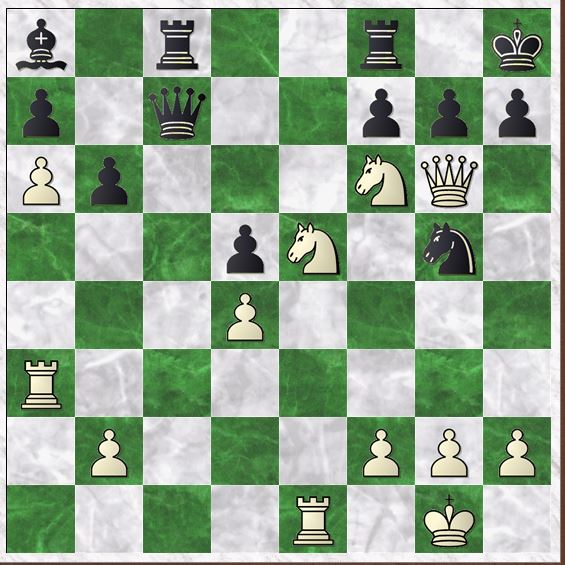
There are various lines: briefly 2 Qg5 Qd8! 3 Nfd7!! Qg5 4 Nf8 and White is winning, but the game goes on.
So:
1 Qg6! isn’t best at all! The engine immediately pops up with 1 Qe6!
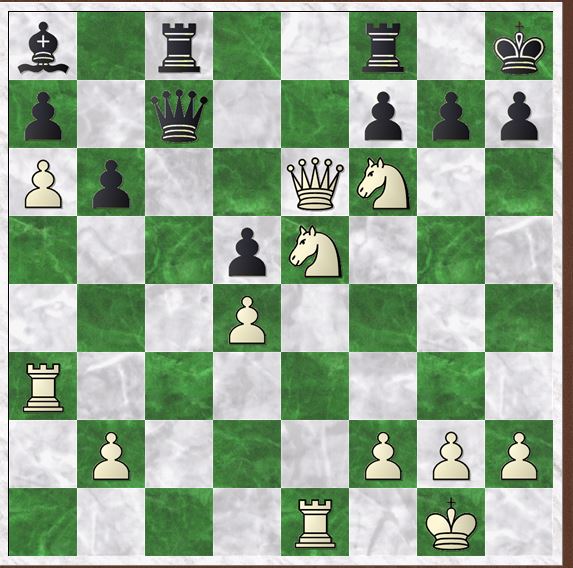
This is cleaner, but far less pretty.
P.S. I wanted to see how the position arose, but the game isn’t in Megabase nor on chessgames.com, and my googling hasn’t found it. If anyone is interested enough and can find it, please let me have the game score. Thank you.
Black to play and win
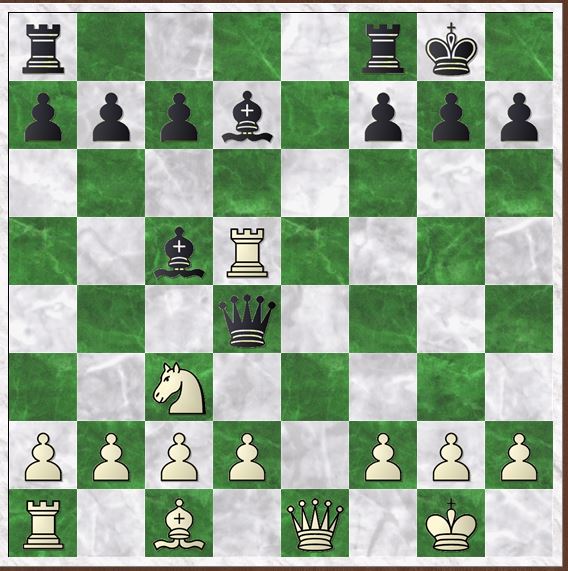
Danielsson v Blomberg, Löndsboda 1967
Solution
Yet another example of Purdy’s mantra to ignore threats. 1…Rae8! and it is all over, since if say 2 Qf1, defending the Pf2, then 2….Qf2+! anyway, 3 Qf2 Re1 mate. 1…Rfe8 is equivalent.
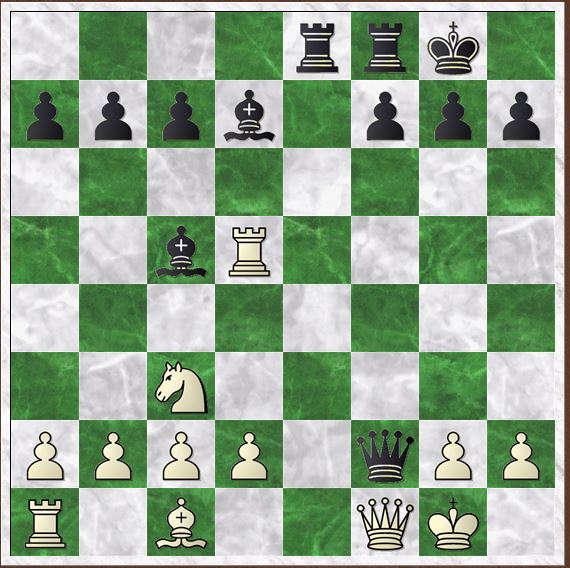
White to play and win
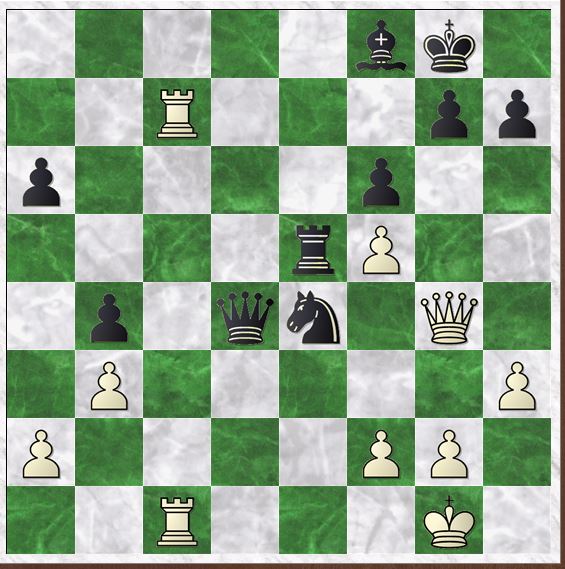
Bronstein v Gligoric, Moscow 1967
Solution
A nice piece of calculation today. Not to hard, since the lines are forced, but deep, so hard to foresee to the end.
1 Rg7+! begs to be played, 1….Bg7[] 2 Rc8+[] Kf7[] 3 Qh5+[] Ke7[] 4 Qe8+! (may not deserve the exclamation mark: all it is is better than the alternative checks):
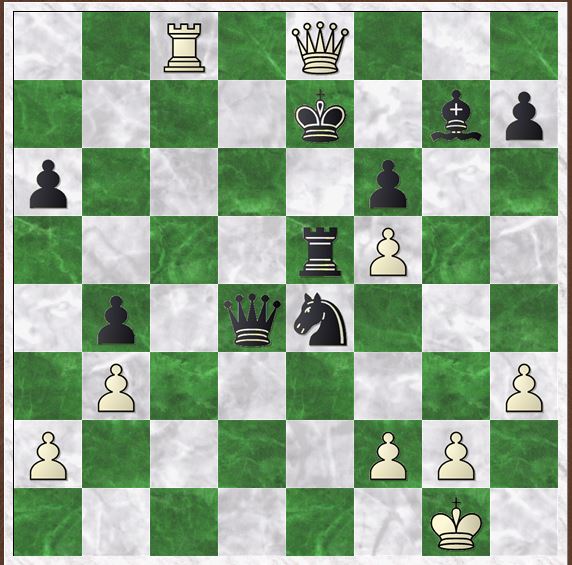
4…Kd6[] 5 Qd8+! mate! (quite hard to visualise- 5 Rc6+ etc is more prosaic, also winning, more slowly).
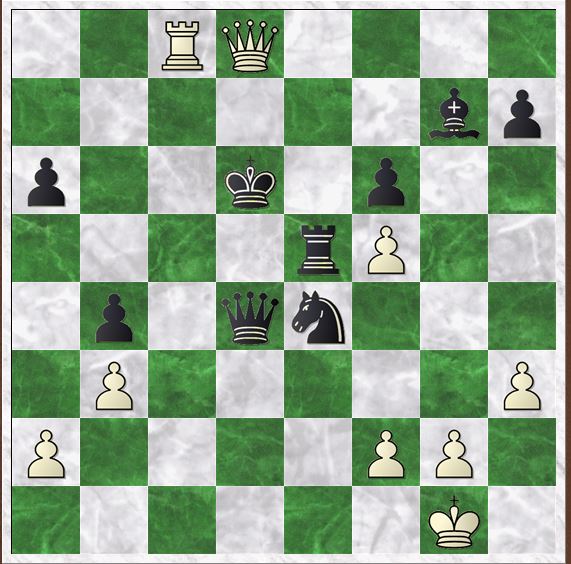
So a long line, but forced. For blog honestry/integrity, I didn’t see 5 Qd8 mate as I visualised the solution. Instead, I kept checking on the white squares: h5-e8-c6-d7, which I suspect is a common trait, and the sideways shift to a black square is harder to see, at least from the initial position.
White to play and win

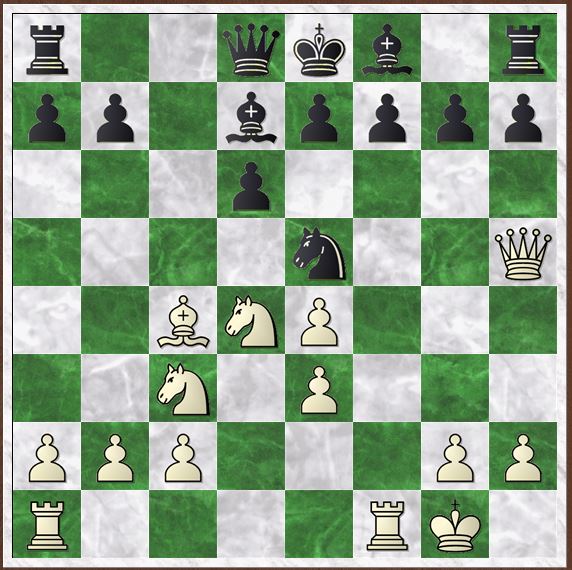
Zuidema v Ree, Zevenbergen 1967
Solution
Quite an interesting one today. Black’s powerful Ne5 dominates; whilst Black’s weakness on f7 is apparent.
CJS Purdy taught us to ignore threats so 1 Qh5!! and if 1…Nc4?? 2 Qf7 mate; or 1…g6 2 Qe5! so Black is forced to grovel with say 1…e6 2 Be6 or 1…Bc6 2 Bf7+ when White is a pawn up, and has compensation, to repeat a well known quip.
White to play and win
Cooked, alas- try and find a few ideas.
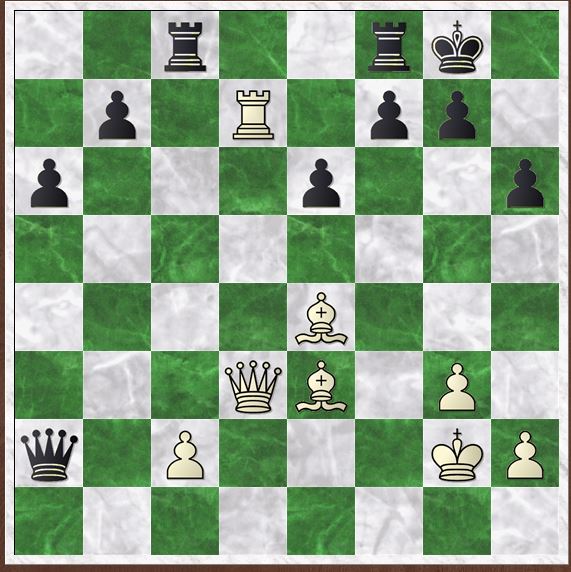
Dueball v Müller, Berlin 1967
Solution
For the first time in the years I have been blogging, a puzzle is seriously cooked. The solution is meant to be 1 Bd4 Kh8 2 Bg7+ Kg7 3 Qg6+! but that would involve the Q jumping over the Bd3.
In the game, Black played 1…f6? met by 2 Bh7+ Kh8[] 3 Qg6 Rg8[] 4 Bf6 +-. When I saw the solution in the book (since I gave up trying to make any form of check or sacrifice work) I thought 1…Qc4 but this too loses to 2 Bh7+! Kh8[] 3 Bg7+! Kg7[] 4 Qg6+ Kh8[] 5 Qh6.
So, 1 Bd4! is strong, but not winning: 1…Kh8! or 1…e5! 2 Be5 Qe6 both make the game go on. My engine tells me 1 Rb7 is similarly a slight advantage to White.
White to play and win
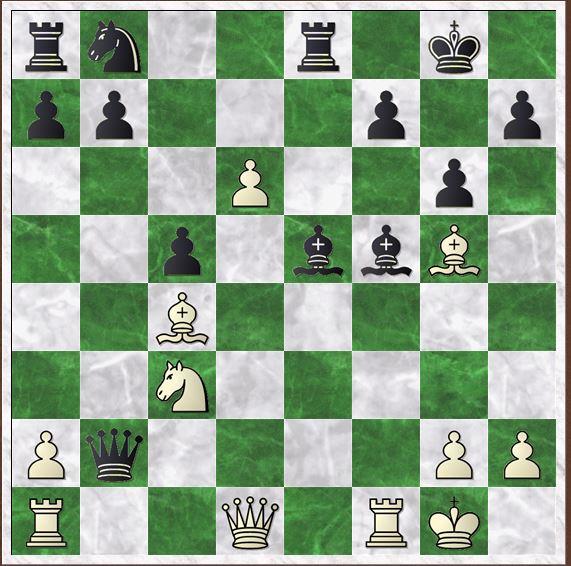
Vladimirov v Doda, Leningrad 1967
Solution
A problem of immense complexity.
I “solved” it, “playing” 1 Rf5! gf 2 Bf7+ Kf7 3 Qh5+ Kf8 4 Bh6+ Bg7 5 Rf1! which does indeed win; but is only a fraction of the story.
I wasn’t totally sure- Black has several alternatives at some stages. and can gobble more material, so whilst I chose it, I wasn’t convinced that an engine wouldn’t find something better.
So I turned to the solution, having spent a considerable time on the above line and variations, only to find Teschner gives 1 Bf7+! Kf7 2 Rf5+ gf 3 Qh5+ transposing: I then, shame on me, realised that whilst I had looked at 1 Bf7+! I had quickly discarded it, even though that move order is more forcing.
Then I turned the engine on…and 1 Bf7+ is weaker than 1 Rf5! for a really hard to find reason.
Suggestion
Use the starting position as one for a deep study session, and see what you can find. There are some computer only lines, unless you are a super GM.
Solution
There are some quite incredible variations, and rather than give them here, I have annotated them, together with brief comments, on the whole game.
In case the hyperlink doesn’t work, the url is:
http://www.viewchess.com/cbreader/2015/11/2/Game1167643937.html
The 8th November is the anniversary of my beloved mother’s death in 2002; so quite fitting I feel, given the whole hearted support she gave me for my chess, that today’s problem is a classic.
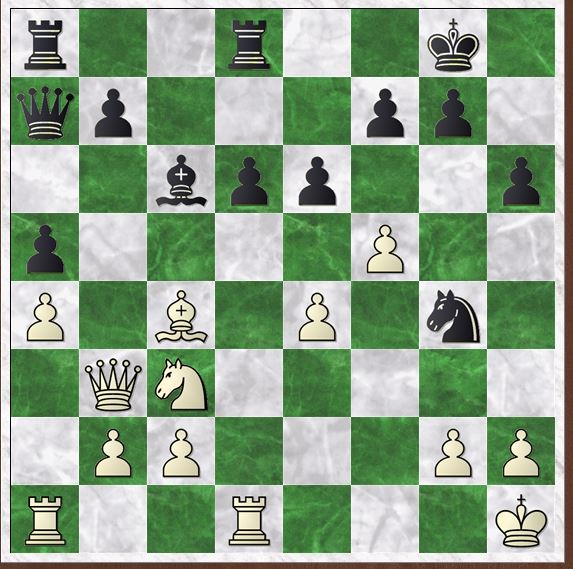
Black to play and win
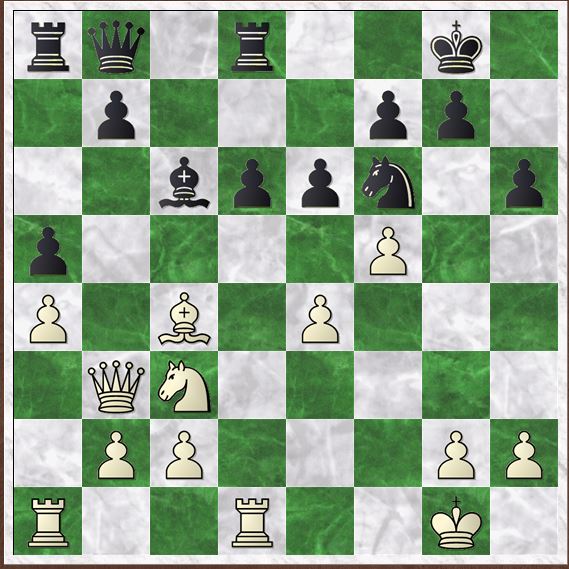
Letelier v Schmid, Havana 1967
Solution
White has potent threats on the a2-g8 diagonal, but as CJS Purdy teaches us, in thinking about a position, spend some time ignoring threats: consider what you would like to happen if they couldn’t possibly be executed.
He also told us to examine all biffs. So, 1…Qa7+! 2 Kh1 (2 Kf1 same) 2…Ng4 and Black wins the exchange: 3 Rf1[].
My engine also likes 1..Ng4! giving it an equivalent horrendously high negative evaluation- mid to high teens.
 allanbeardsworth