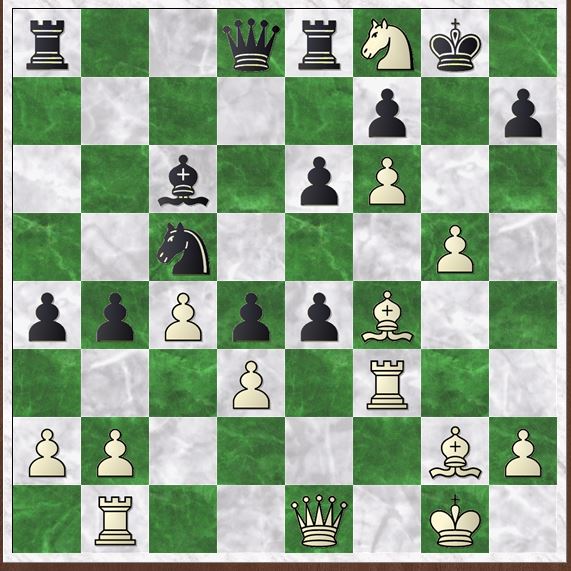
White to play and win
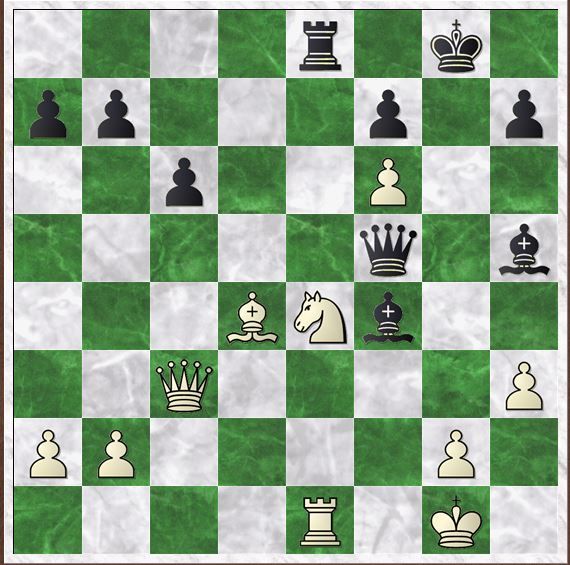
Uhlmann v Witkowski, Polanica Zdroj 1967
Solution
A nice puzzle, geometrically ‘interesting’. Clearly, there is a jump check Re1-e8, which in fact is a jump-mate, but how to discover the attack is hard. 1 Nd6 fails since rooks are exchanged and then 2…B*d6 the bishop can retreat to f8.
So 1 Ng3! and things work: the Qf5 is overloaded, it can’t both defend the Bh5 and the Re8/back rank. So 1…Re1+ 2 Qe1 Bg3 fails to 3 Qe8 mate; or 1….Qc8 makes the Bh5 a Loose Piece, and Loose Pieces Drop Off, as John Nunn taught us. So 1-0.

 Posted with Blogsy
White to play and win
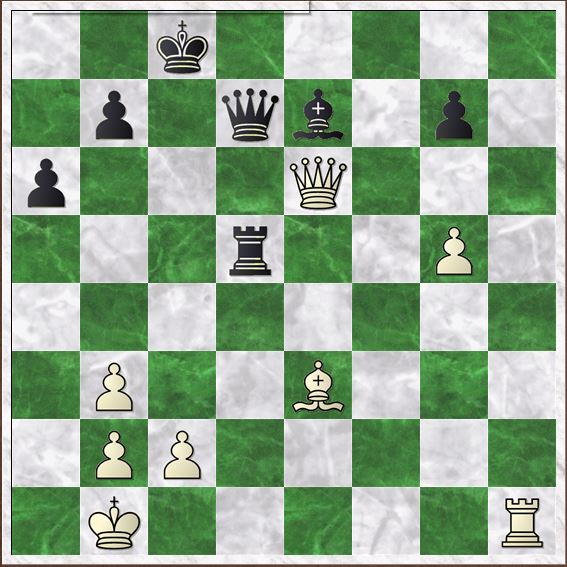
Lehmann v Pomar, Palma de Mallorca 1966
Solution
Examine all biffs is yet again the key. 1 Rh8+ Bd8 2 Rd8+!
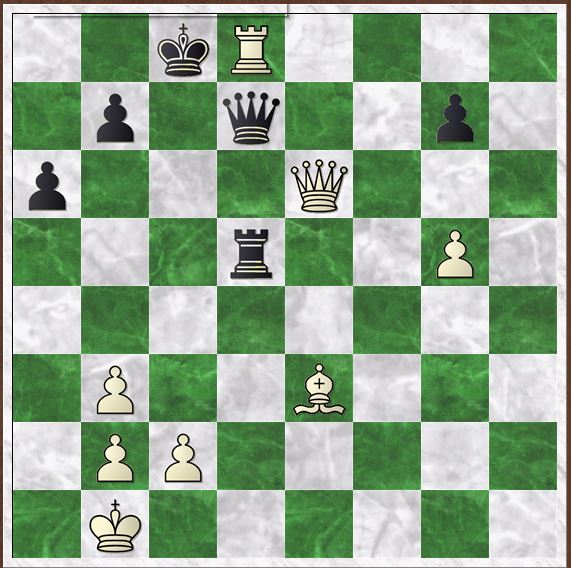
The move I guess White missed, since in the game he played 1 Qe4, rooks came off, and White won in the ending.
2…Kd8[] 3 Bb6+ Kc8[] 4 Qg8+ 1-0
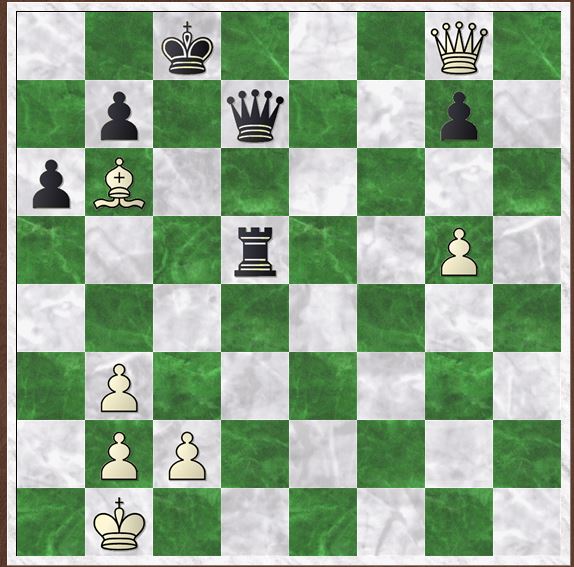
White to play and win
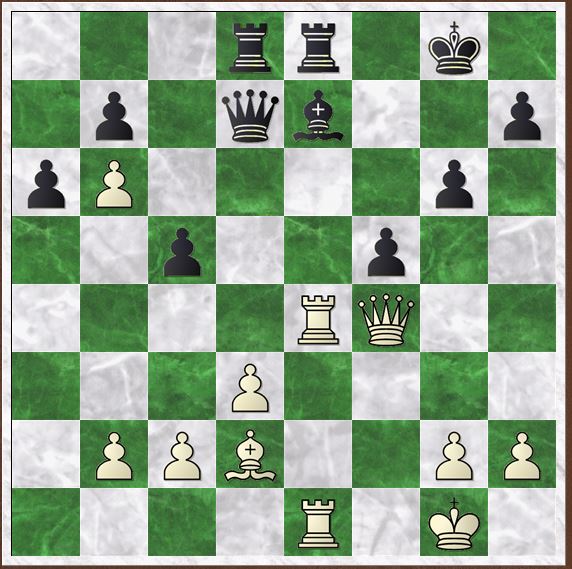
Larsen v Bednarski, Havana 1967
Solution
White has to act fast: if say 1 Re2, then 1…Bf6, and it is probably equal.
Part 1
So: (but read to the end)
1 Qe5! fe 2 Bc3
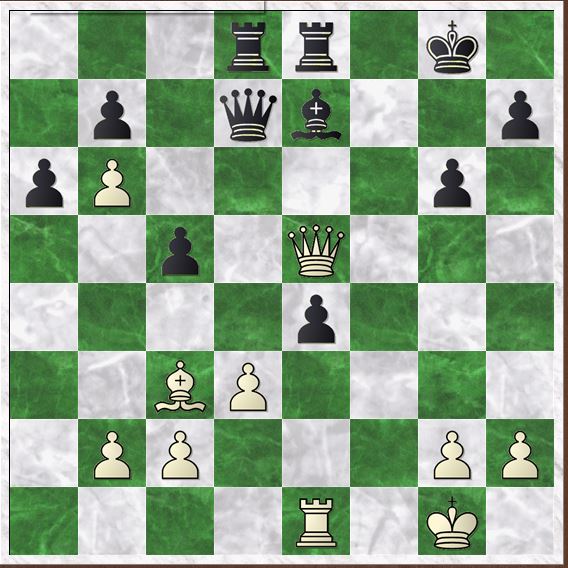
2…Bf8 3 Qh8+ Kf7[] 4 Qh7+ Ke6 5 Qg6+ Kd5:
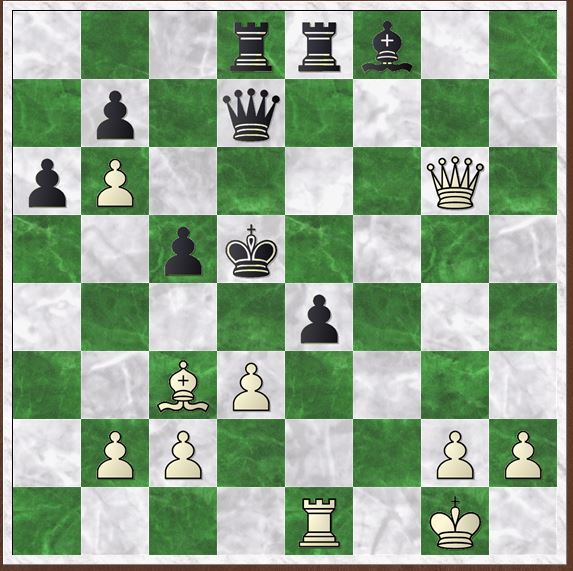
This is as far as I could see from the initial position, and I wasn’t sure how about it- so much so, that as well as 6 de+ and 6 Re4, and some lesser moves like 6 b3, 6 Qg8+ or 6 Qh5+, I also looked at 6 c4+ Kd4 7 Bc3+, not realising that the B was on c3, so that 6 c4+ wasn’t possible. My intuition settled on 6 Re4.
Part 2
I tend to write my answers before checking them with engines, since my ultimate aim in doing my daily puzzles is to improve. Mostly, when I find errors or improvements, I amend what I have written. The above could be a textbook case of analytical errors.
6 Re4? is losing: Fritz gives it as -4; the amazing 6 Be5!! is White’s best, freeing White’s c2 pawn: 6…Re5 7 c4+ Kd4 8 Qf6!! is an impossible computer line, which is assessed as 0.0: 8…Qd2 9 Qf2+! e3[] 10 Qc2! e2! 11 Qc3+ Ke3[] 12 Qc1+ Kd3 13 Qc3+ Ke4 14 Qf3+! Kd4[] 15 Qc3+! is a perpetual;
But 5 Qg6+, which I thought was natural, is weaker than 5 Re4+! Kd6 (5…Kd5 6 Qd7+! is the point, and after 6…Rd7[] 7 Re8) 6 Qg6+ Kd5 apparently it is equal after the bizarre, to me, 7 b4- a move I would never think of, nor do I understand;
But 4 Qh7+ is also weak, and 4 Rf1+ is winning! 4…Ke6 5 Qe5mate, so 4…Qf5 is forced, losing the queen;
and 2…Bd6 is better than 2…Bf8, though White still wins by the idea of exchanging queens and picking up the Re8: 3 Qh8+ Kf7[] 4 Qh7+ Ke6[] 5 Re4+ Kd5[] 6 Qd7 and 7 Re8;
and 1…fe? is weaker than 1….Bh4 with advantage to Black: 2 Qe8+ Re8 3 Re8+ Kf7: Black is I think winning;
and 1 Qe5 is weaker than the move played in the game, 1 Bc3!, which is a better order of moves. Black can’t play 1…Bh4, and if he tries to prevent 2 Qe5 by 1…Bd6, White exchanges twice on e8, and then picks up the LPDO Bd6, and Black doesn’t have a mate or perpetual. So, 1 Bc3! fe 2 Qe5 and White wins as above (2…Bd6 3 Qh8+, 4 Qh7+ 5 Re4+ 6 Qd7 7 Re8). In the game, because Larsen found 1 Bc3, Black played 2…Bf8 and lost by the Qh7+/Rf1+ line.
but (1 Bc3!) Black has better: 1…c4!! which has the idea of interfering with White’s plans by the threat of Bc5+: If 2 Qe5 Bc5+ 3 Qc5[] fe 4 Qc4+ Qd5 and Black is better. White does though have 2 Re5!! and he is still winning, though to my eyes, the game still goes on 2…cd and only 3 cd! is winning, whereas the more natural 3 Qc4+ is only equal- all computer lines, of course;
but, rather than 1 Bc3!, which Larsen played, 1 Re6!! is best of all: it prevents 1…Bd6 (the Re1 is defended by the Bd2) and prepares to occupy the long black diagonal.
Part 3
This position shows how complex chess is, and how different engine chess is compared with human chess. I haven’t included diagrams in part 2, partly for length, but also because this puzzle would be a good one for home analysis and self-improvement. The lines I have given are only a selection.
But, in summary 1 Qe5? is weak because of 1…Bh4!; 1 Bc3 is good, but 1…c4 complicates it; and 1 Re6! is the best.
Black to play and win
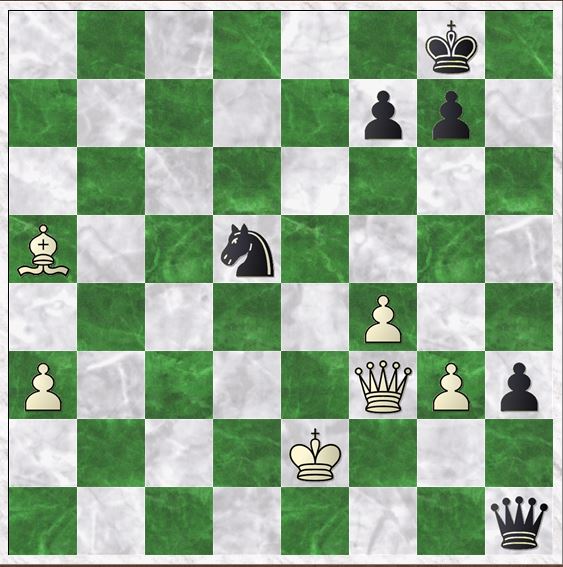
Medina- Tal, Palma de Mallorca 1966
Solution
A nice puzzle today: are all combinations involving Tal nice, and difficult?
1…Qh2+ 2 Qf2; or 1…Qg1 2 Qd5 h2 3 Qd8+ and a repetition after 3…Kh7 4 Qh4 1/2-1/2.
At first, I tried moving the queen ‘somewhere’ but couldn’t find ‘where’. So, actually as a last resort, but really it should have been examine all biffs, 1…Qf3+! 2 Kf3 Ne3! and the pawn promotes.
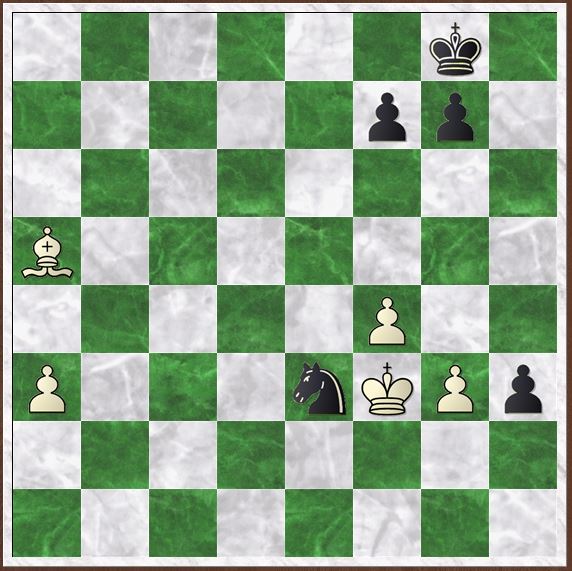
Nice.
Black to play and win
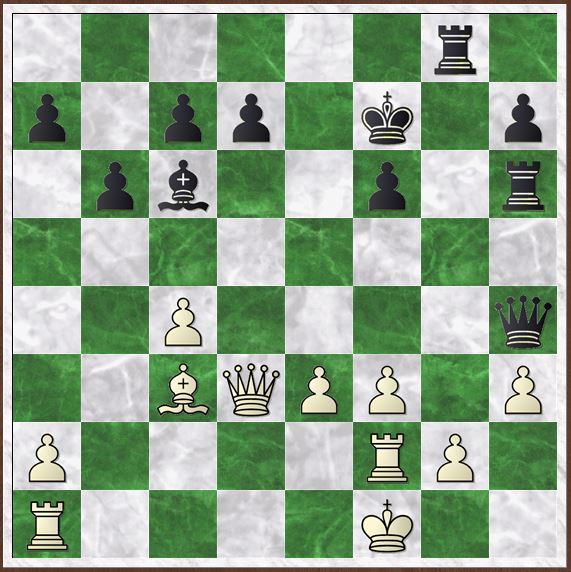
Gligoric v Larsen, Havana 1967
Solution
Which biff is best? Clearly, a breakthrough is required, and equally clearly, 1….Rg2! is the move to try first.
2 Kg2? is clearly inferior: 2…Qh3+ 3 Kg1[] Qh1 mate; so 2 Rg2 Qh3.
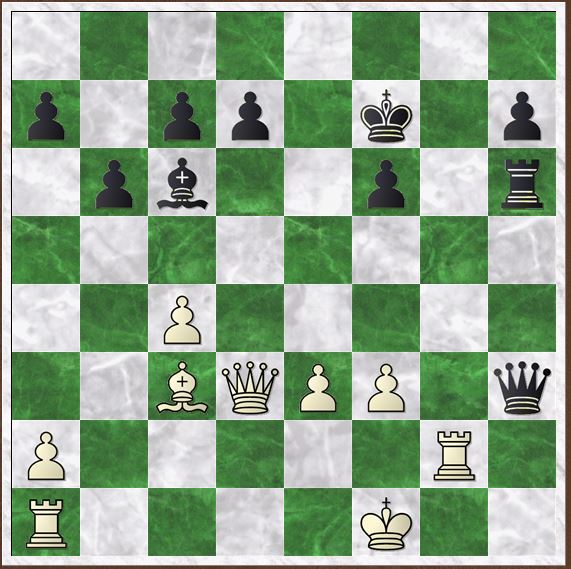
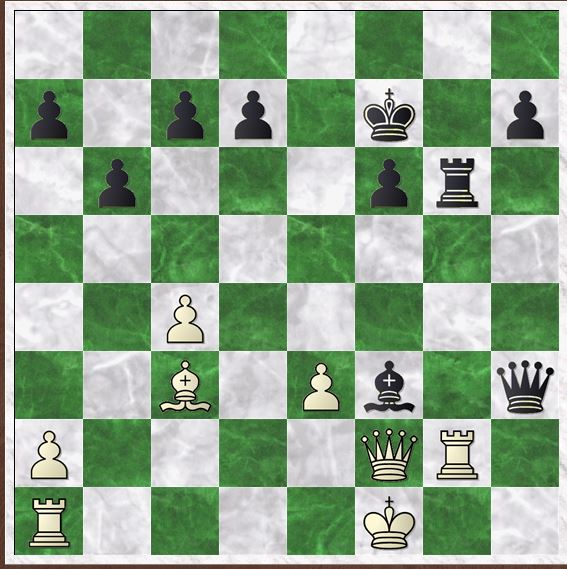
Note that on h3, the Black Queen now defends d7, freeing up the Bc6 from that function. White has various options, but 3 Qe2 is natural, when 3…Bf3 4 Qf2 Rg6 0-1. If instead for instance 3 Qd2, then 3…Bf3 and it is similar: Black still threatens 4 …Rg6, and if 4 Kg1 then 4…Qh1+ 5 Kf2 Qg2 0-1
White to play and win
Black plays …Bd3? here:
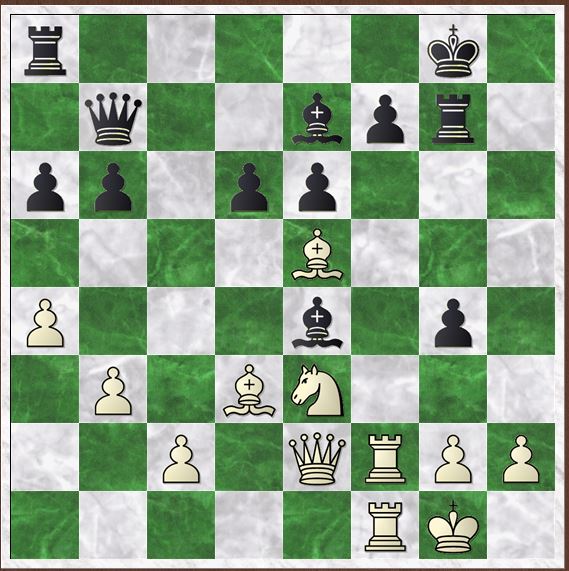
Gufeld v Suetin, Tbilsi 1967
Solution
In a game, it might not be obvious, but being a puzzle, 1 Rf7! begs to be played.
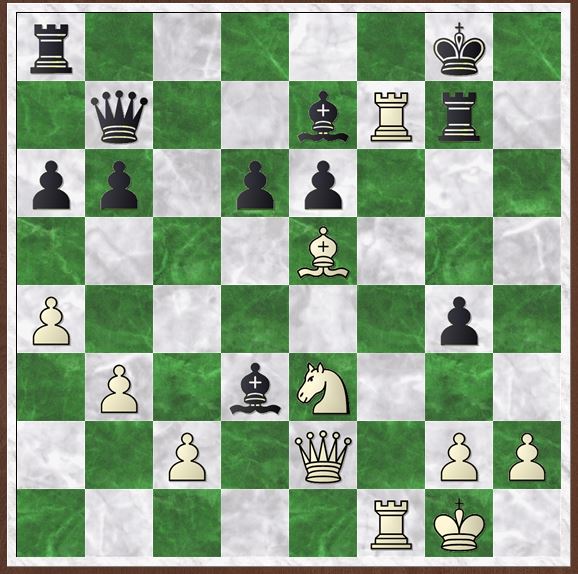
If the Q is captured, then 2 Rg7+ Kh8[] 3 Re7+ de[] 4 Rb7 Bf1[] 5 Nf1, and White emerges a piece up. If the Q isn’t captured, say 1..Rf7, then 2 Qg4+ and 3 Rf7 is equally gruesome.
White to play and win
…after Black plays 1…Be2 in this position
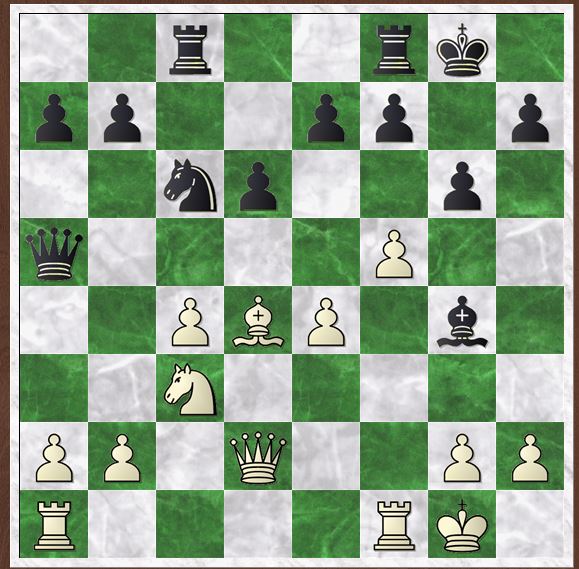
AN Fischer v Kraidman, Israel 1967
Solution
A nice puzzle. Black’s first move is cute, exploiting the fact that the Qd2 is a LPDO and is also tied to the Bd4, and the Qa5-Nc3-Qd2 pin.
But the pin can be broken: 1 b4!
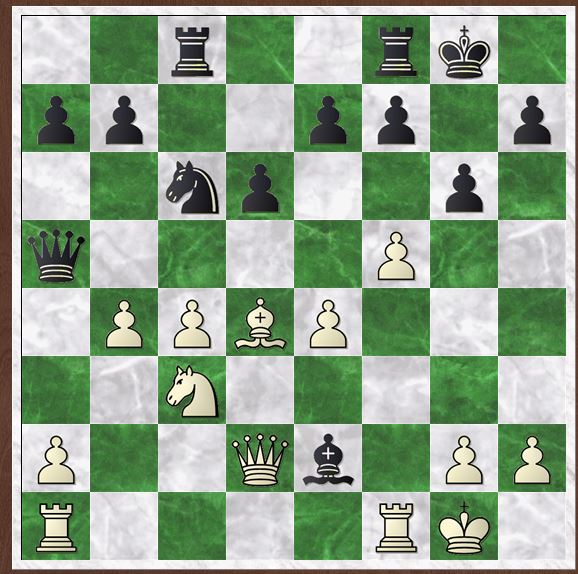
1…Qb4[] 2 Rab1 Qa5 3Rb5 and after the Q moves, 4 Ne2 wins a piece. Or 2…Qc4 3 Ne2 again wins the piece, for insufficient compensation.
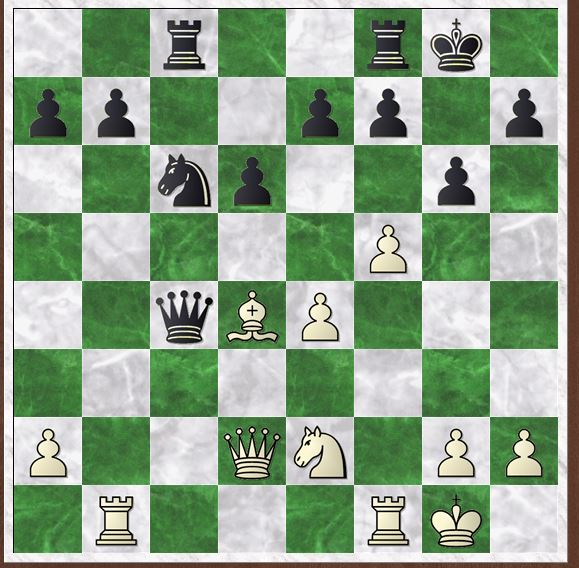
White to play and win
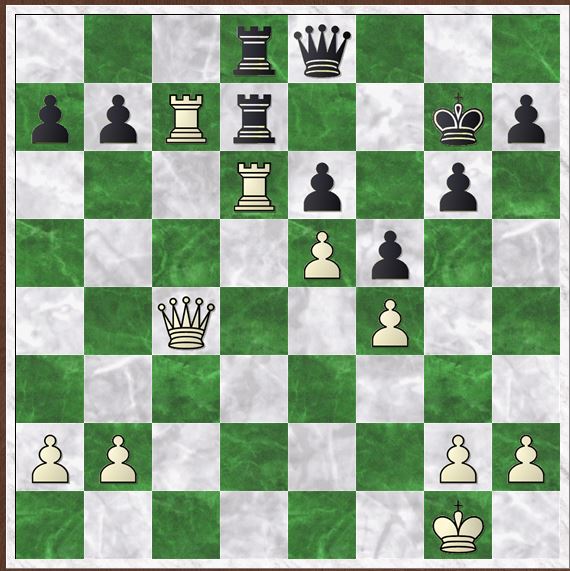
Pachman v Gunnarsson, Vrnjacka Banja 1966
Solution
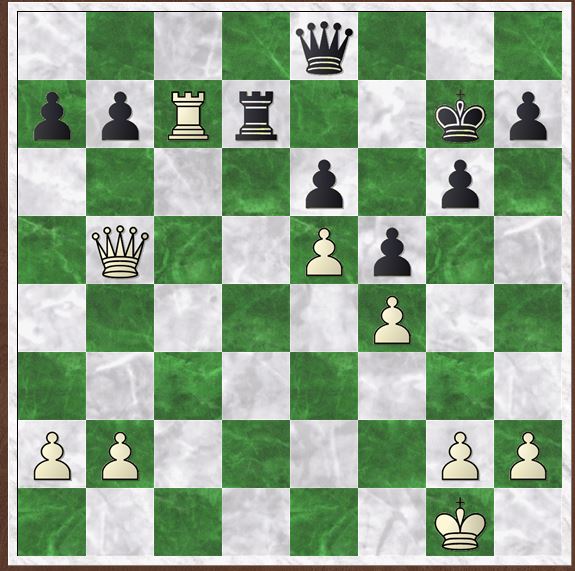
Fairly straightforward today. Exchange one pair of rooks, the correct way, and then pin and win. So 1 R6d7+ Rd7[] 2 Qb5 and a rook is won; 2…Re7 doesn’t defend the Qe8 because the Rook is pinned to the King, so the Q is a LPDO. (If instead 1 Rcd7+ Rd7[] 2 Qb5 Re7 does this time defend the Q).
Black to play and win
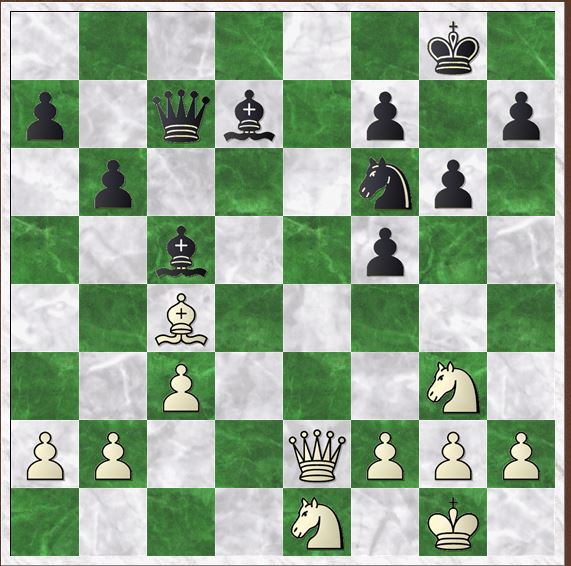
Vizantiadis v Pachman, Vrnjacka Banja 1967
Solution
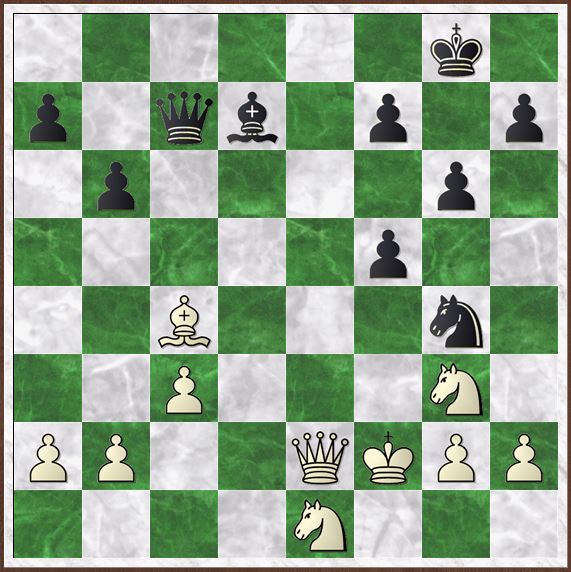
Examine all biffs yet again works. 1…Bf2+! wins a pawn after 2 Qf2 Qc4;
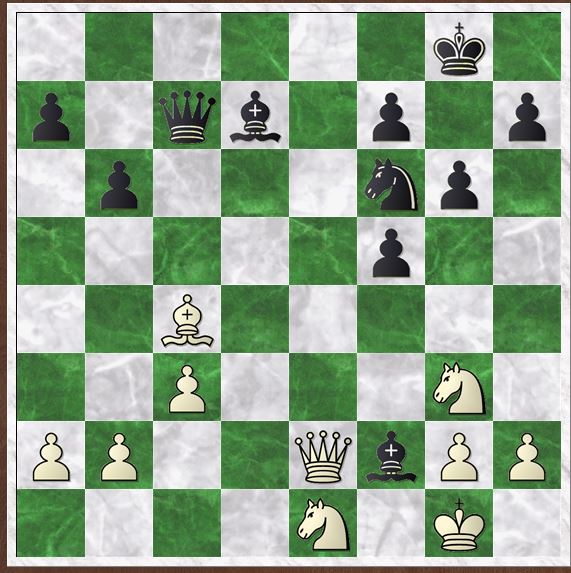
so instead 2 Kf2, when 2…Qc5+ 3 Kf1 Ng4! and the threat of 4…Nh2 mate means that White can’t move his Bc4, so that Ne3+ next move captures it. Or 2….Ng4+ is probably stronger, with 3 Kg1 being met by 3…Qc5+ mating.
White to play and win
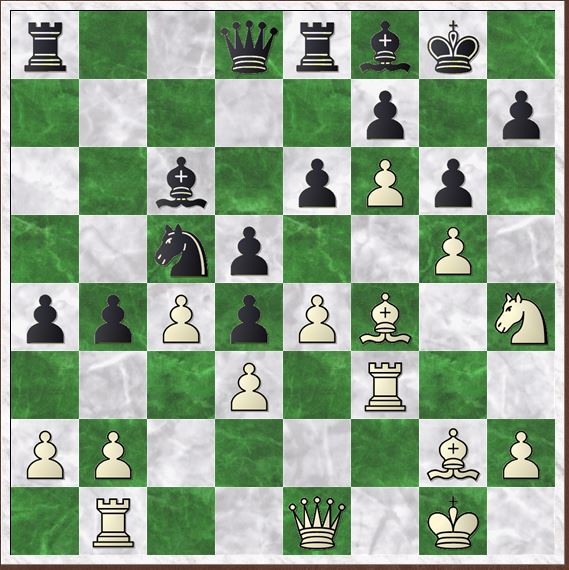
Book- Westerinin, Helsinki 1966
Solution
Fairly straightforward today. The ‘main lines’ are obvious: 1 Ng6!
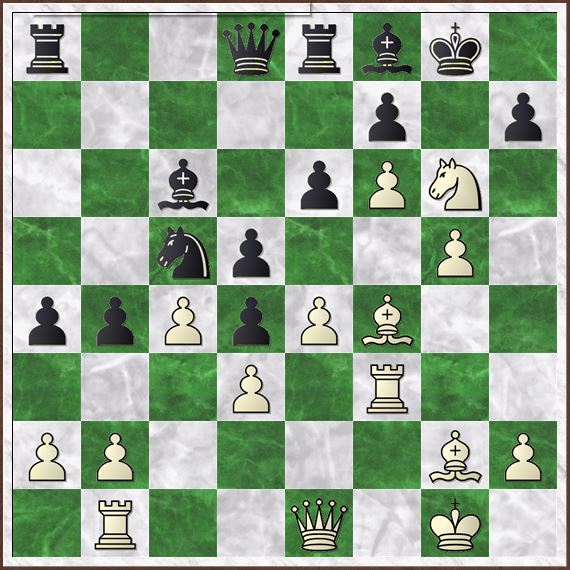
If 1…hg, then 2 Qh4, 3 Rh3 and mate on the h file. If 1…fg, then 2 f7+ and if 2….Kf7, 3 Bc7+ discovers on the queen.
Perhaps the move I would play if I were Black would be 1…de, hoping for white to go wrong. But 2 Nf8! plans again to play Qh4, this time with the aim of Qh6 and Qg7 mate: 1-0.
 allanbeardsworth