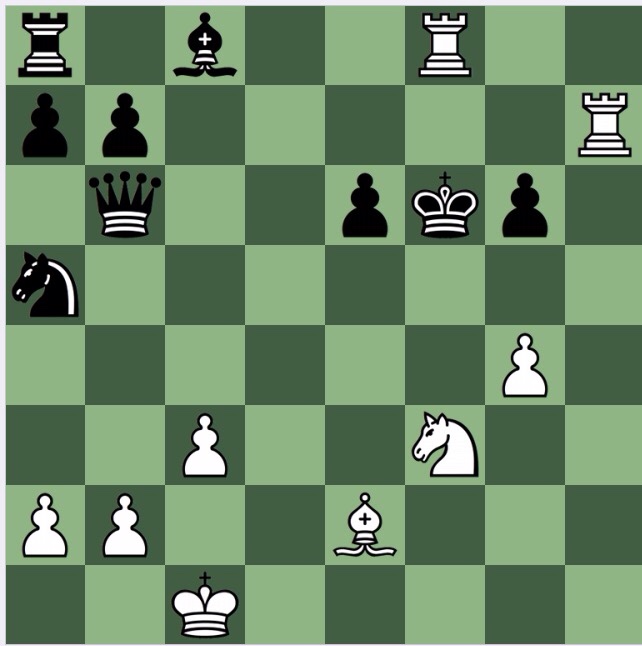
White to play and win
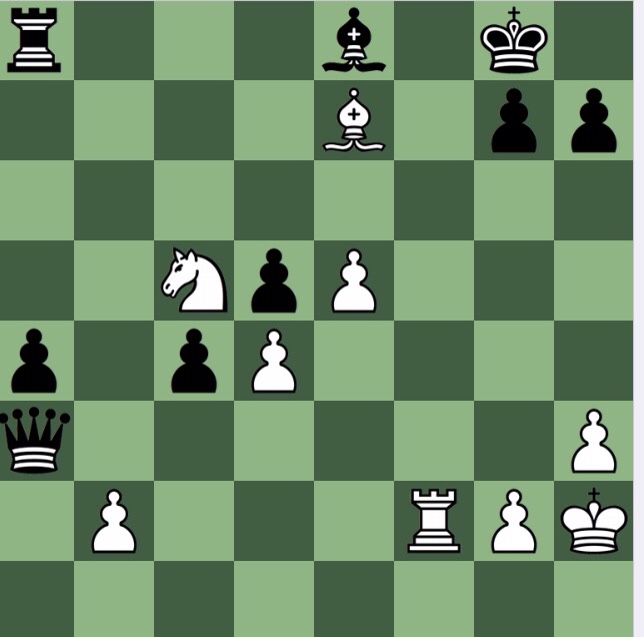
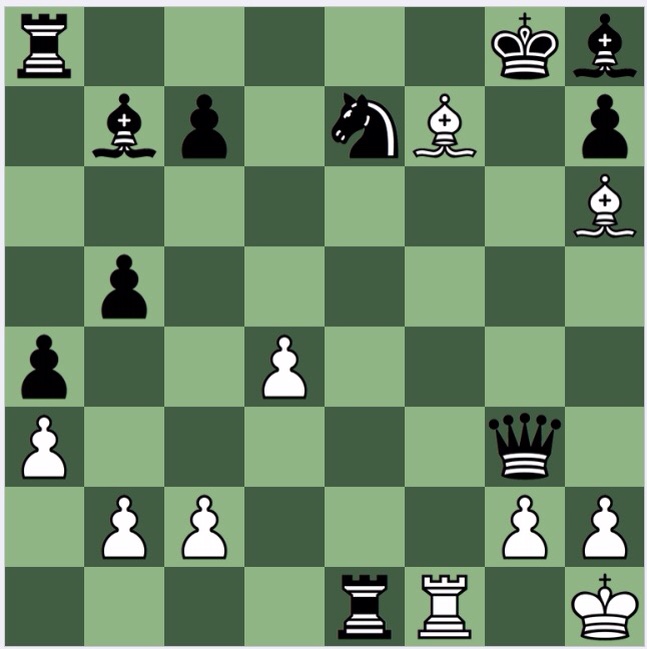
Black played 1….Qb3 here.
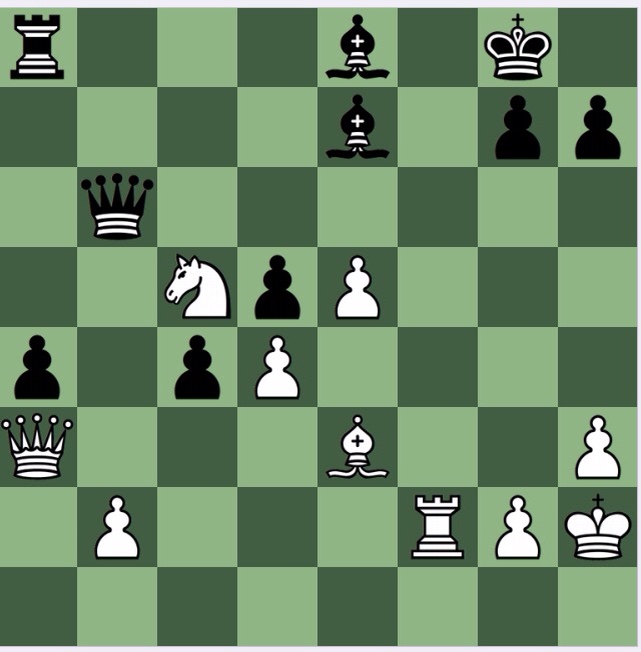
Damjanovic v Lehmann, Beverwijk 1966
Solution
After examining routine moves, like taking on b3 with either piece, you look for something special, and 1 Bg5! is not too hard to consider, following examine all biffs or because the Be7 has the function of jump-buffing the Qa3- it is tied to being ready to capture the Qa3. All being terms from my favourite author, CJS Purdy.
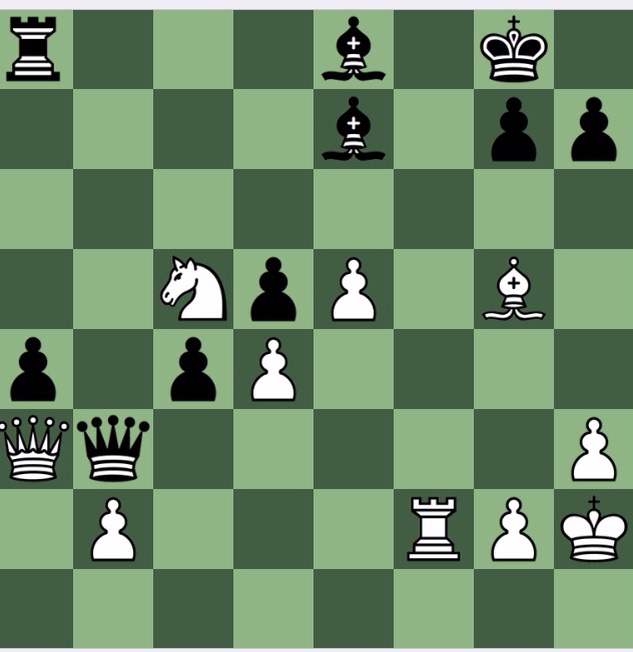
If 1…Qa3 then the zwischenzug 2 Be7! wins a piece, by the threat of mate.
 Posted with Blogsy
White to play and win
White steers the game into a won ending, is the rubric in Teschner's book.
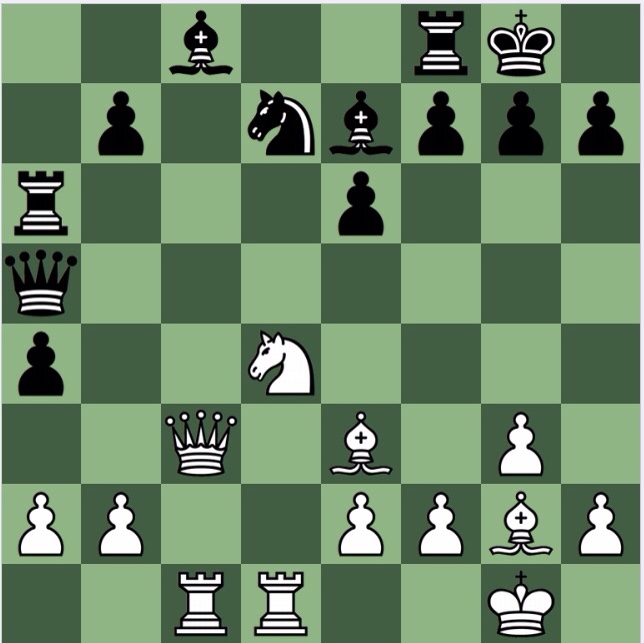
Smyslov v Donner, Havana 1965
Solution
I flunked this one, spending a lot of time on 1 Qc8 Rc8[] 2 Rc8+ Nf8 (best) 3 Bb7 trying to convince myself that White is winning.
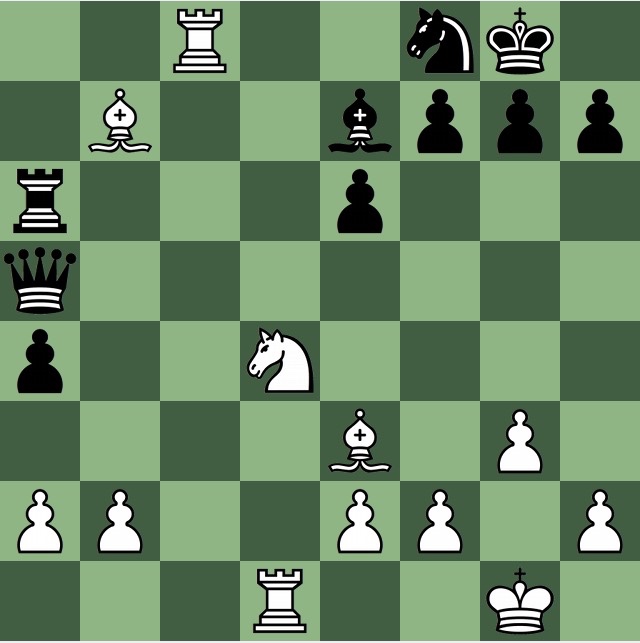
Against orthodox play, White can easily be better. 3…Rd6 is sensible, when 4 Kg2 breaks the pin because it threatens Nc6 hitting the Qa5, with Rd6-d1 not being check.
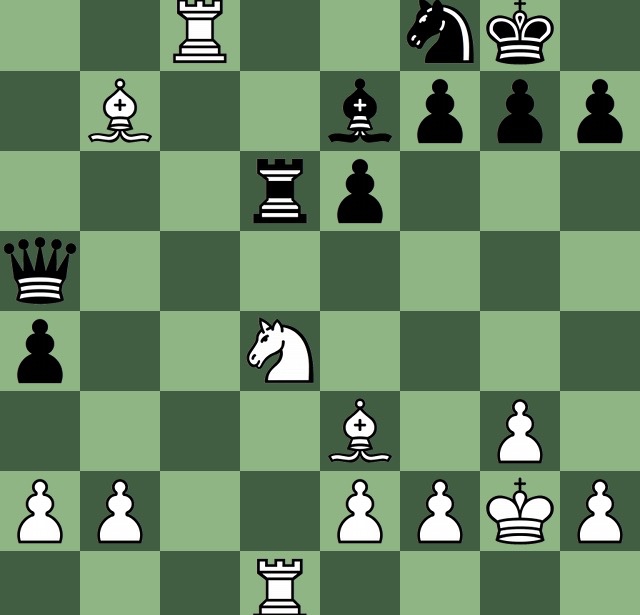
But Stockfish tells me 4….Bg5 is equal.
Instead, the version of Stockfish on my iPhone prefers 1 Qc7! Qc7 2 Rc7. If then 2…Bd6, 3 Rc8! Rc8[] 4 Bb7 is surprisingly strong,
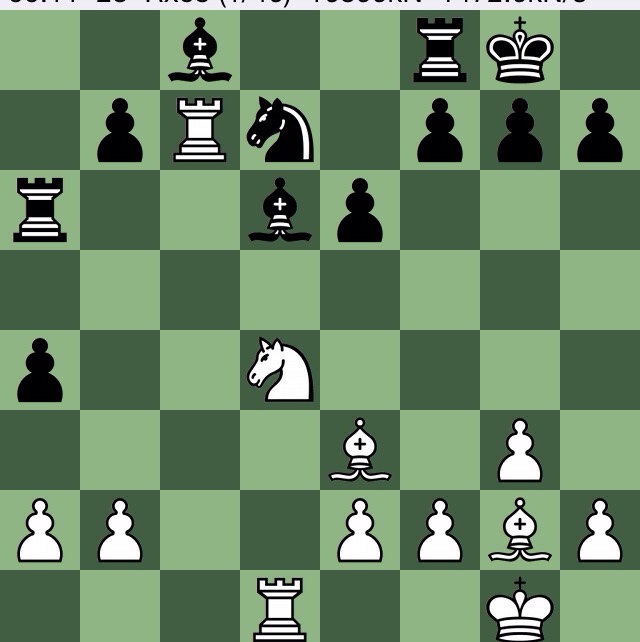
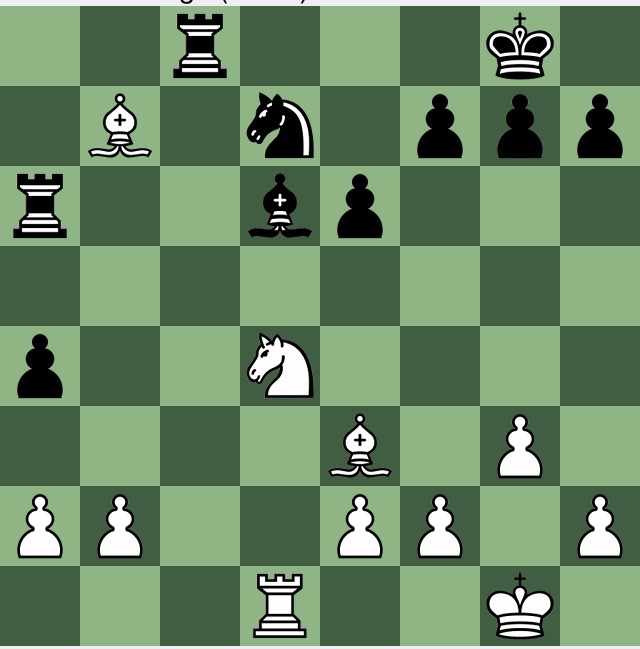
White is indeed winning after 1 Qc7.
But Stockfish on my iPad, and Smyslov in the game, played better still. 1 Qa5! Ra5[] 2 Rc8!! Rc8[] 3 Bb7
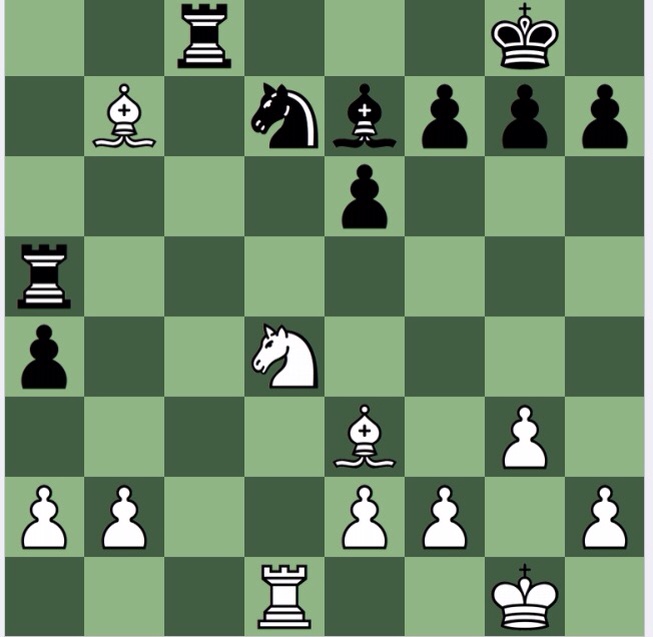
in the game, Donner resigned here. Some thought shows that the secondary threat of Nc6, hitting the LPDOs on a5 and e7, is crushing.
Instructive.
White to play and win
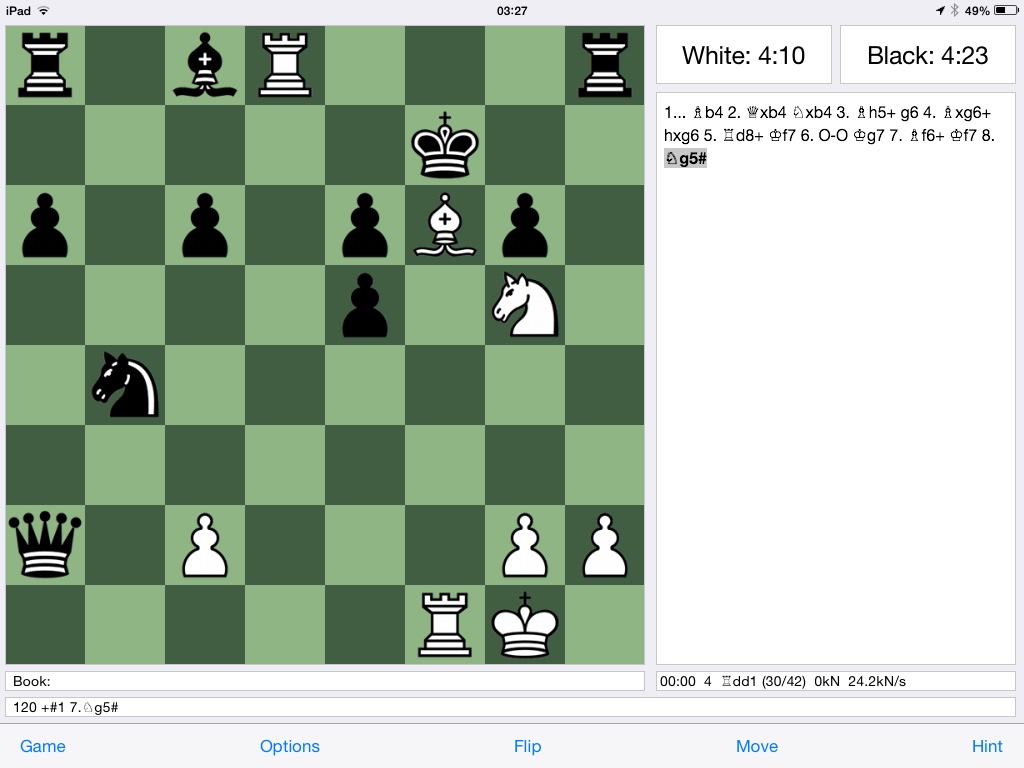
What would have happened if Black had played 1….Bb4?
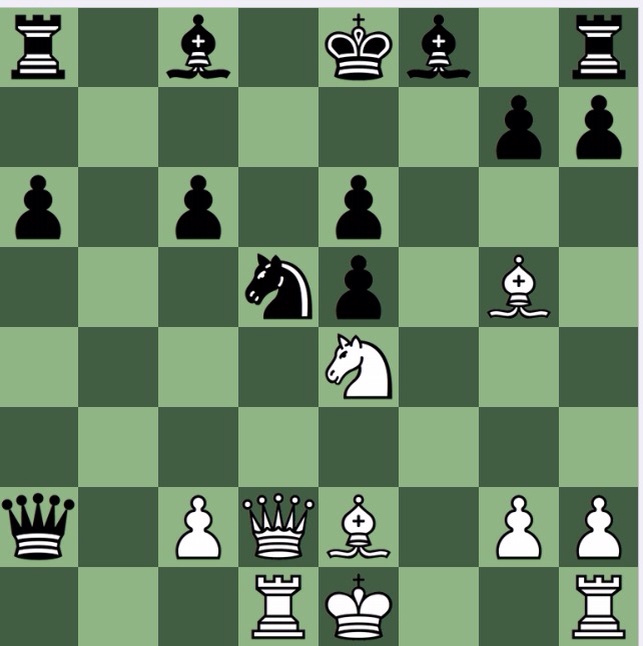
Reinhardt v Panno, Buenos Aires 1965
Solution
The first moves aren't too hard, the first move itself being forced. 1 Qb4[] Nb4[] 2 Rd8+ Kf7[].
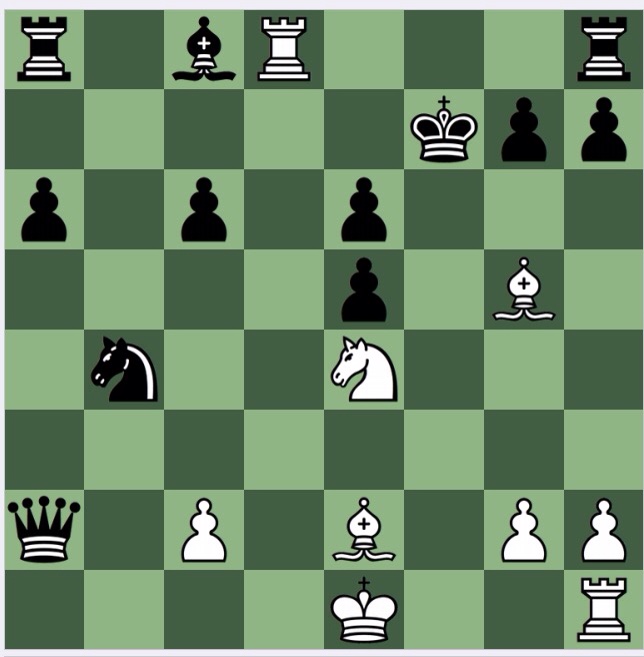
On this occasion, it didn't take me long to find the shortest path to mate. 3 0-0+ Kg6[] 4 h4 (bringing another piece to the party, threatening h5mate) 4…h5[] 5 Rh8 and mate next move.
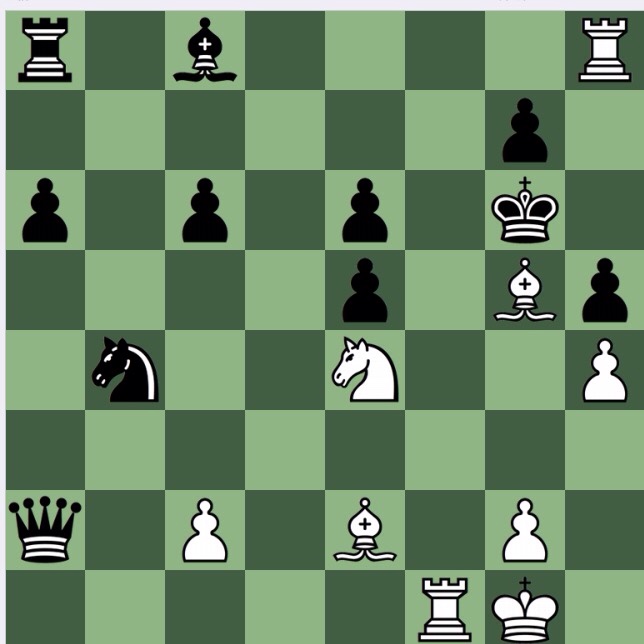
This line is Stockfish's preference, but I did wonder if 3 Bh5+ led to mate, and indeed it does, and in an interesting way: 3…g6[] 4 Bg6+! hg[] 5 Rd8+ Kf7[] 6 0-0+ Kg7[] 7 Bf6+ Kf7 (say) 8 Ng5 mate. The point of the interesting (to me) 4 Bg6+ is that if instead 7…Kh6 then, because there is no Ph7, 8 Rh8 is check and mate. The 4 Bg6+ line is, of course, from Stockfish.
Black to play and win
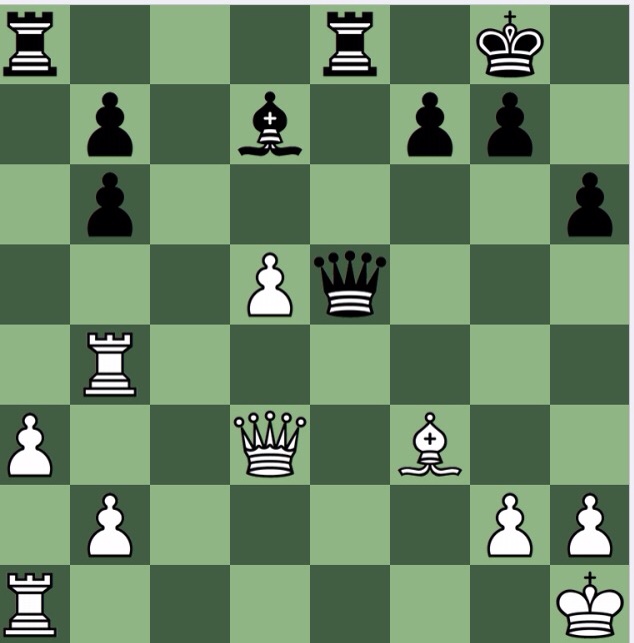
Mikenas v Bronstein, Tallinn 1965
Solution
A day off.
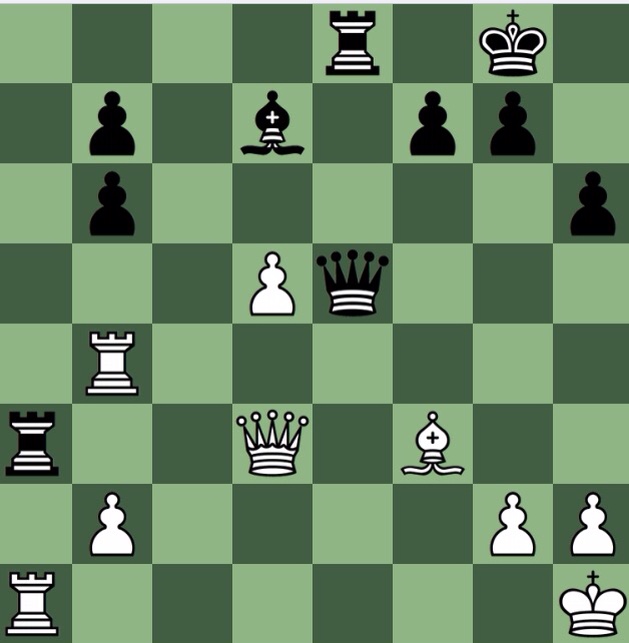
A well known position, seen often. 1…Ra3!
White to play and win
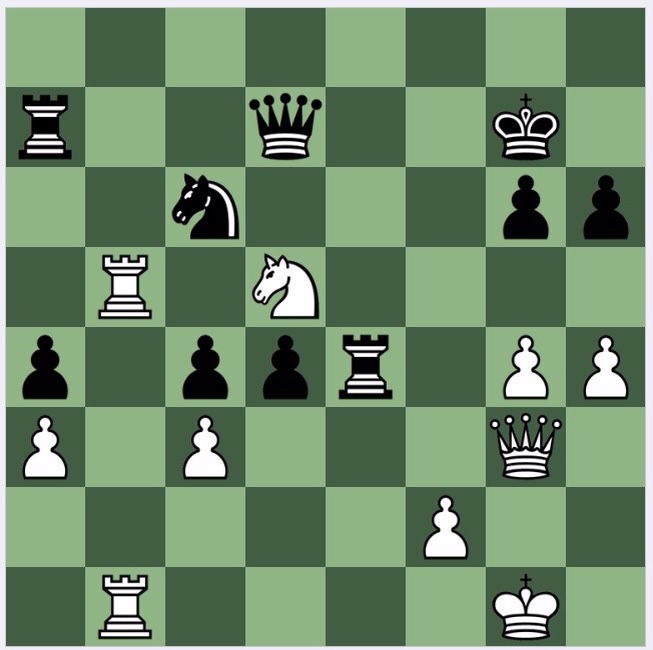
Vasiukov v Taimanov, Tallinn, 1965
Solution
As with yesterday's puzzle, examine all biffs leads to the solution. If it didn't, combining it with looking for LPDOs, here the Re4, and seeing how they could be biffed, should succeed. 1 Nf6! forks Rook and Queen, and if captured, 2 Qf3+ again forks the Rook and King, winning the rook: White is therefore up an exchange, with full control over the position to boot.
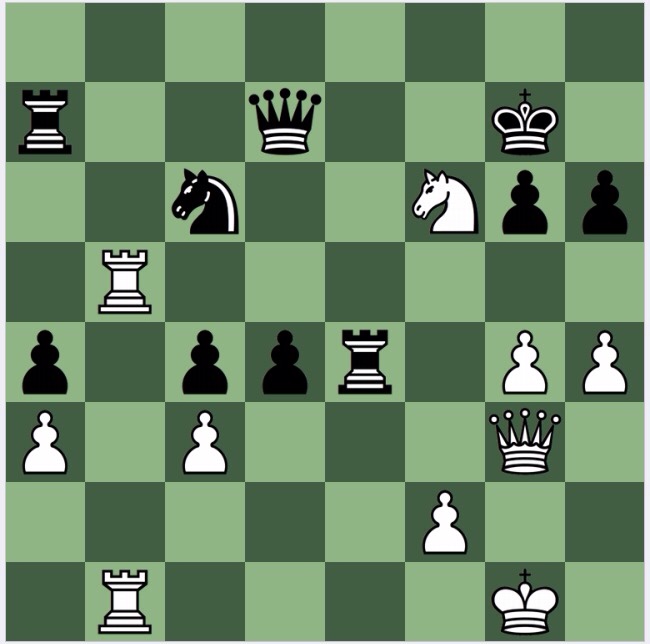
A final thought. Had there for instance been a Black Knight on f6 in the initial position, then one would have examined 1 N*Nf6 without a moment's thought, and no doubt then seen 2 Qf3 easily. The benefit of CJS Purdy's technique, of asking a series of specific questions, helps find moves which are far less obvious, without a N of f6.
White to play and win
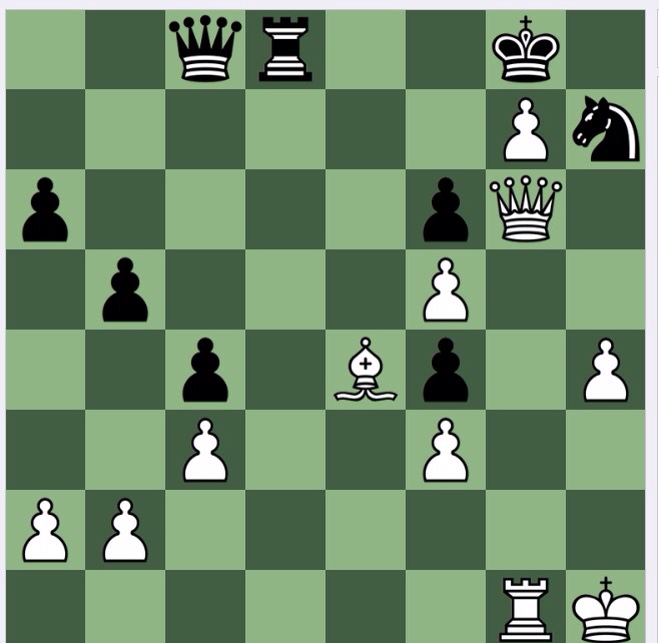
Fischer v Benko New York 1965-66
Solution
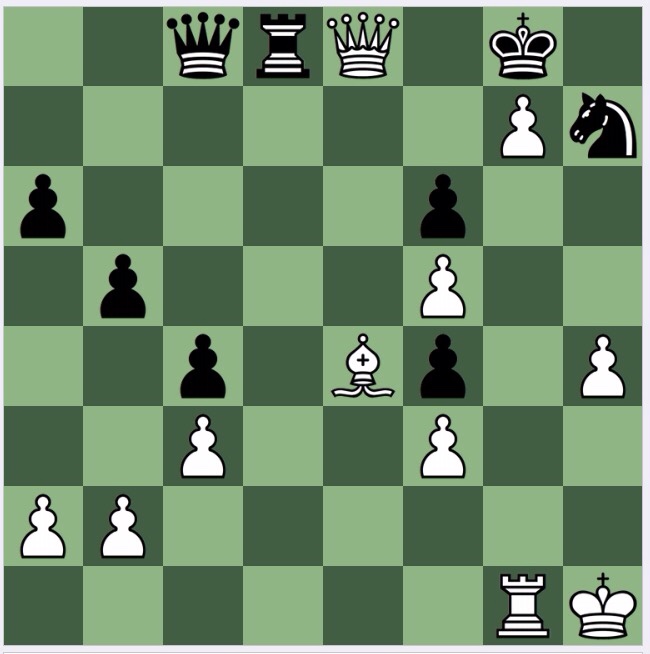
Not to hard, if you examine all biffs. 1 Qe8+! deflects the Rd8, which was tied to defending d5, and after 1….Re8 2 Bd5+ is decisive.
White to play and win
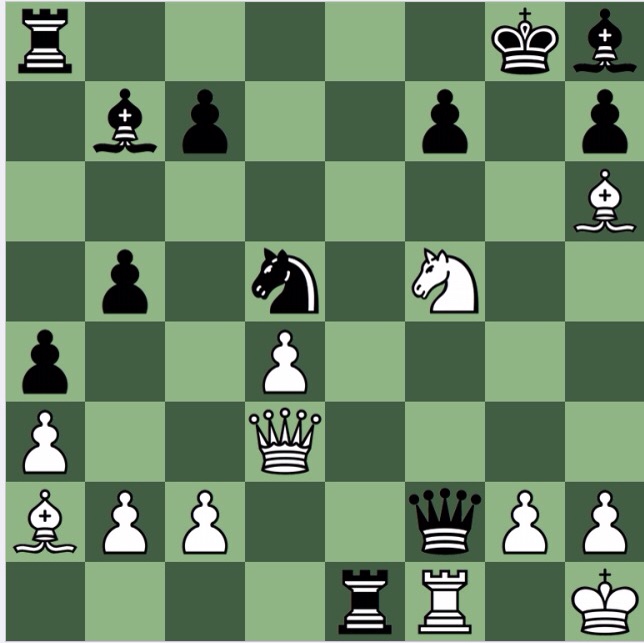
Hallier v Herman, Hamburg 1965
Solution
White is getting mated, so desperate measures are needed. Trying first and seeing that 1 Qg3+? Qg3 2 Ne7+ doesn't succeed, I reversed the move order, and, as so often in chess tactics, that worked.
1 Ne7+! Ne7 (1….Re7 2 Rf2 1-0; 2…Re1+ 3 Rf1) 2 Qg3+! Qg3 (2…Ng6 3 Qf2 protects the Rf1) 3 Bf7 mate.
Black to play and win
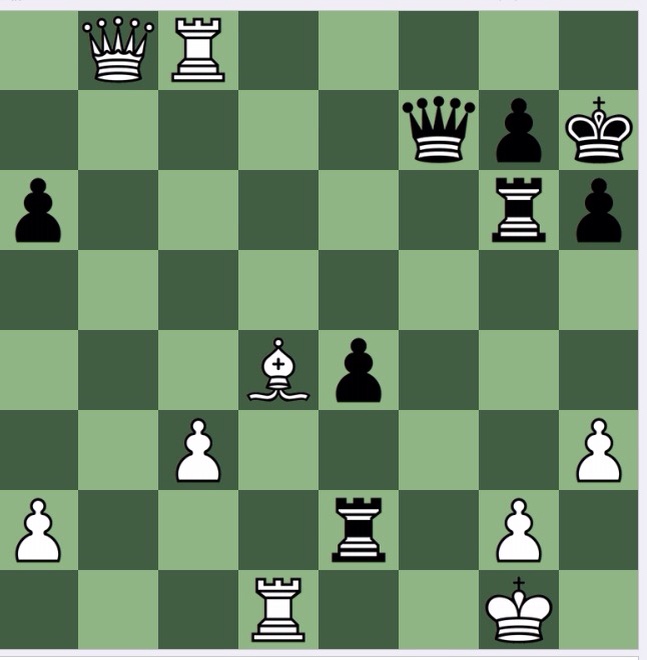
Sakharov v Holmov, Kiev 1964-5
Solution
A computation exercise, working out which precise order of checks is optimal. First, decide whether Rgg2+ or Reg2+. Then see whether winning the LPDO Rd1 is the best Black can do, or whether there is a mate. After not too long, I found a mate with Rgg2+: 2 Kh1 Rg1+! 3 Kg1 Qg6+ etc
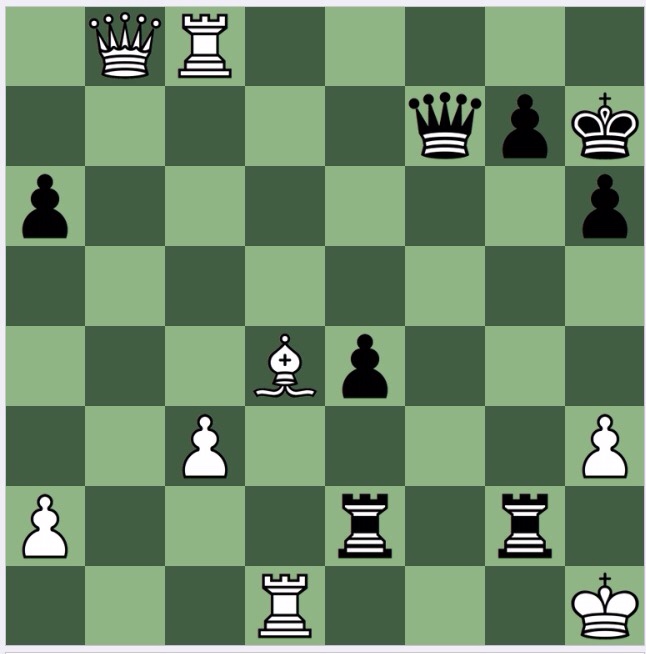
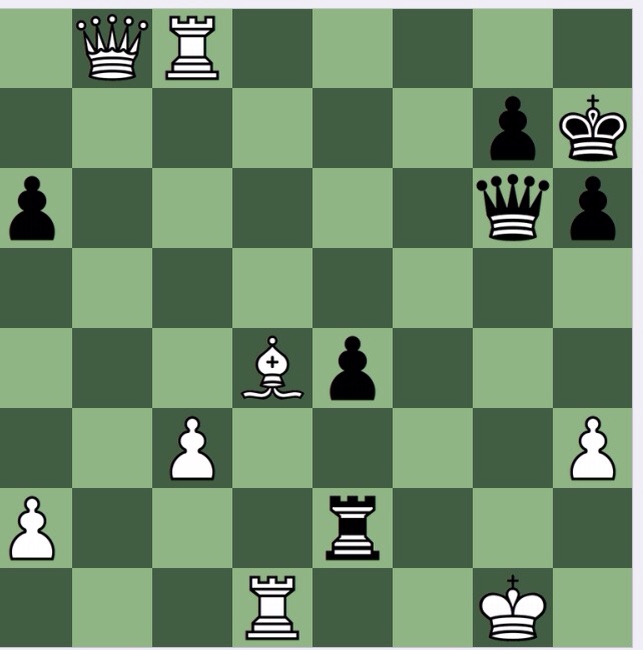
When entering the diagram into Stockfish, it also showed me that Reg2+! is a forced mate. 2 Kh1 Rh2+!! (the move I missed) 3 Kh2 (3 Qh2 Qf3+ mates next move) 3…Qa2+! etc. Black uses the whole board.
White to play and win
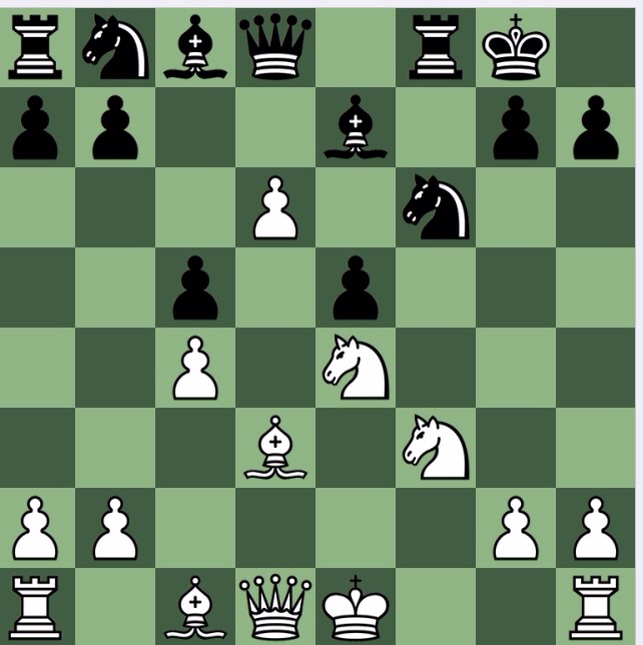
Black castled here:
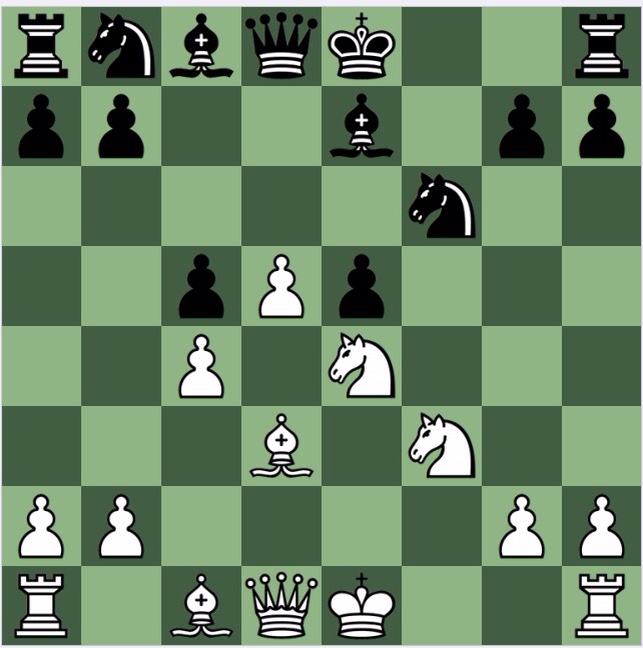
Sallay v Berczy, Budapest 1965
Solution
Examine all biffs or potassium cyanide both apply here.
1 d6! and if 1…Bd6 2 Nd6 Qd6 3 Bh7+ wins the queen; or 1…Ne4 2 de Qa5+ 3 Bd2.
White to play and win
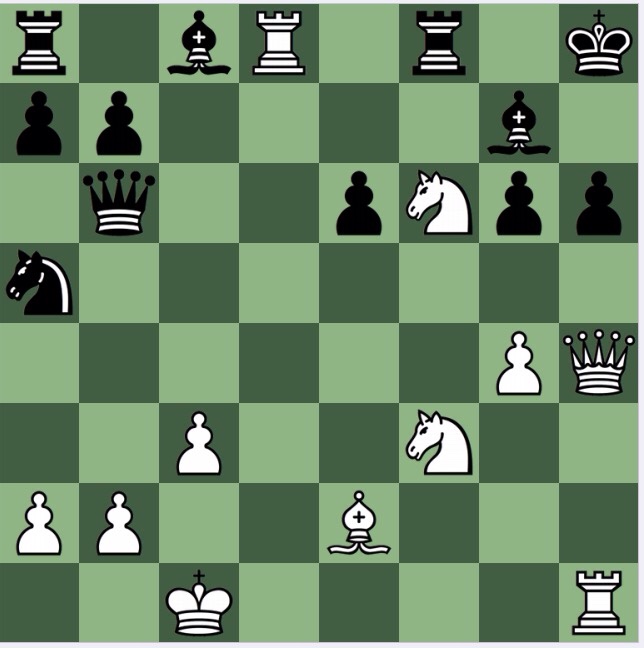
Stein v Liberzon, Erevan 1965
Solution
The first move is obvious, but the position depends on seeing the nice move further into the combination, one which produces a smile:
1 Qh6+ Bh6[] 2 Rh6+[] Kg7[]
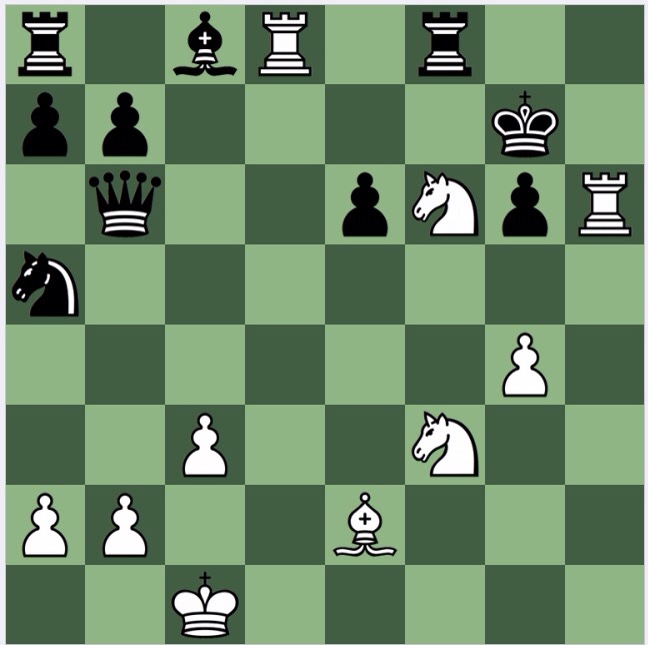
3 Rh7+! Kf6[] 4 Rf8 mate. Pretty.
 allanbeardsworth