White to play and win
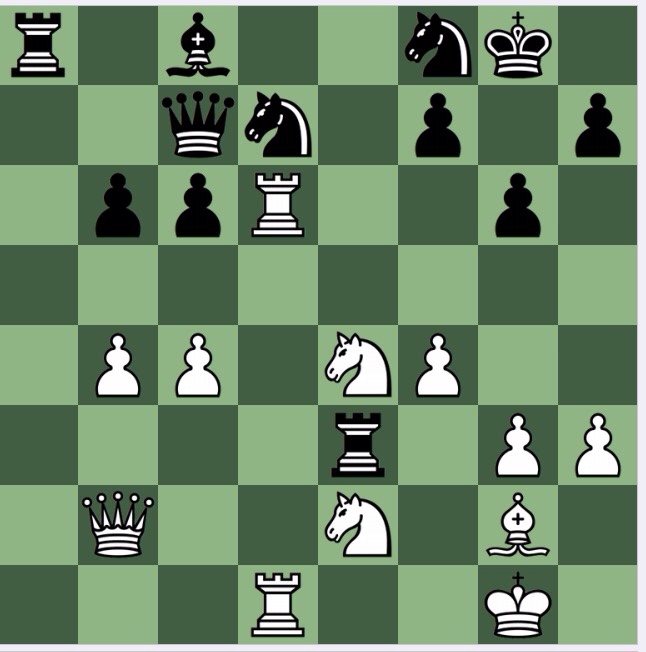
Schmid v Langeweg, Hamburg 1965
Solution
1 b5! is fairly natural, it's first and most obvious point being to soften up the long diagonal to the Ra8. The second point is that if 1…Bb7 then taking twice on d7 is followed by Nf6+: 2 Rd7 Nd7 3 Rd7 Qd7 4 Nf6+ forking the king and queen.
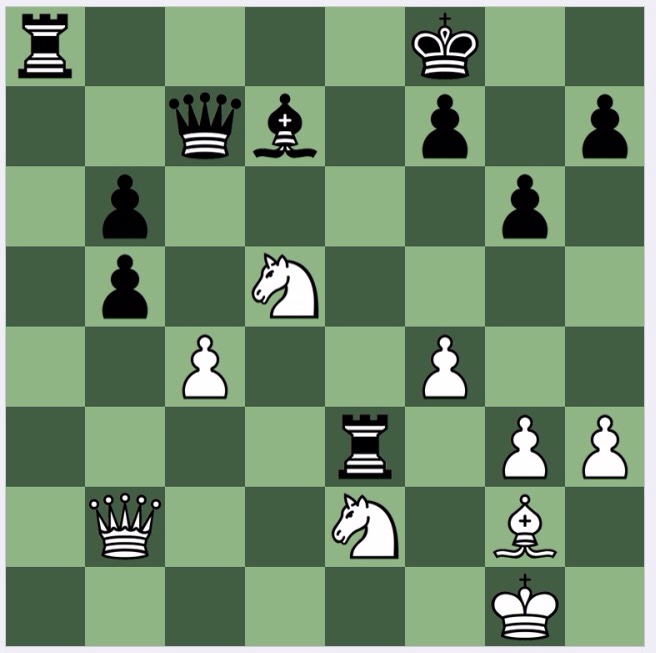
But it's hidden point is that after 1…cb White's knight now has access to the d5 square: 2 Rd7! Nd7 3 Rd7! Bd7 4 Nf6+ Kf8 5 Nd5! 1-0
 N
N
 Posted with Blogsy
White to play and win
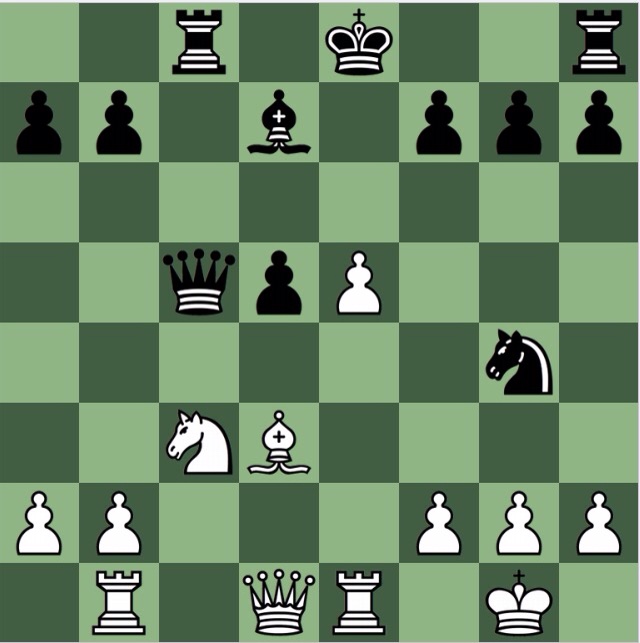
Malich v Kovacs, Budapest 1965
Solution
Purdy on threats: imagine they can't possibly be implemented, and consider what you want otherwise to do. Here 1 e6! breaks the connection between the Bd7 and Ng4, and opens the e file to Black's king. 1…Nf2 is forced, when 2 ed+ Kd7 3 Bf5+ (to get the Bd3 out of the range of the Nf2 discovery) Kc7 4 Nb5+! with the idea that if 4…Qb5, 5 Kf2, and Black's threats are over, or if Kmoves, 5 Qd4, with the same effect. Stockfish suggests instead the flashier 4 Qd4 with the same idea, but also it prefers 3 Qa4+, with the idea that 3…Kd8 is met by 4 Qh4+ picking up the Nf2.
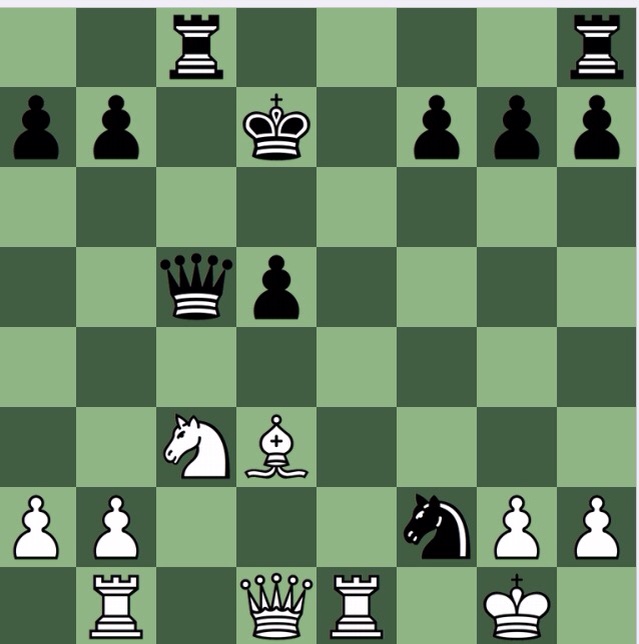
White to play and win
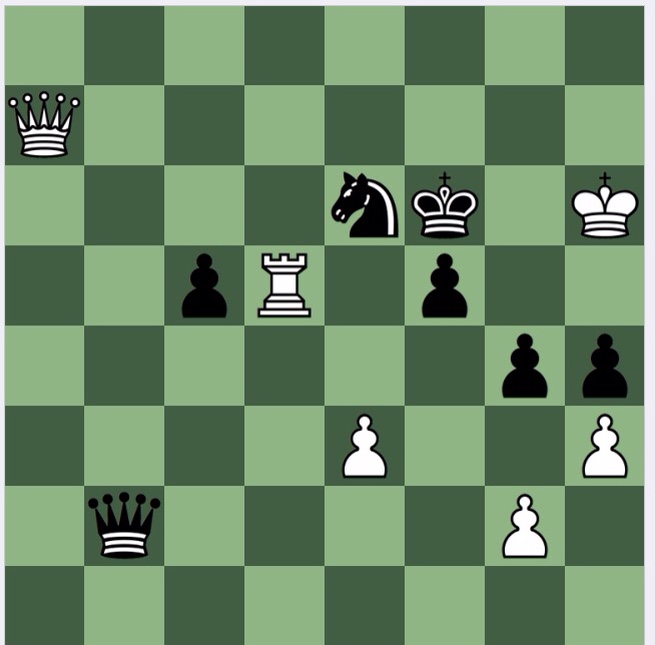
Schmid v Keres, Tel Aviv 1964
Solution
A loss by Paul Keres, to Lothar Schmid. Had it been an actual game, the win would be easy to miss, unless the player was a disciplined Purdy player (which I am not, it is a counsel or perfection) when it is not too hard, but still pretty. The geometrical alignment of the K and LPDO Qb2 are key, and it is also immediately apparent that the main difficulty is that the Ne6 covers g7.
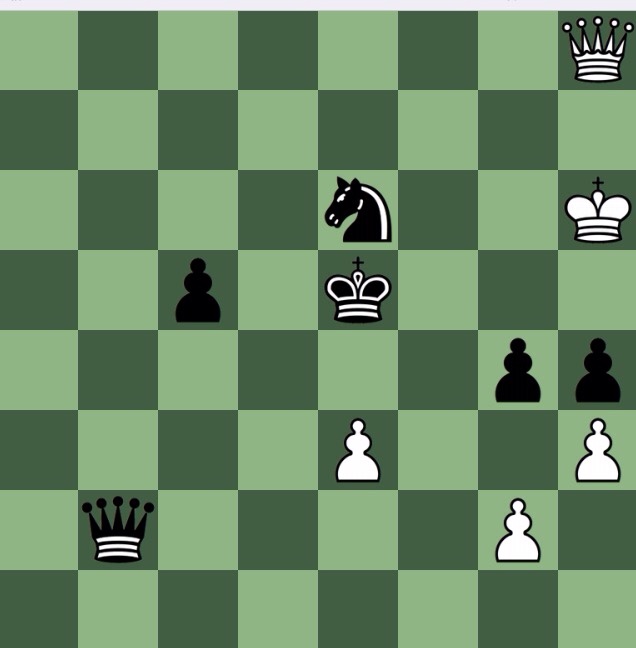
But, examine all biffs and 1 Rf5+! Kf5[] 2 Qh7+! Kf6 (or Ke5) 3 Qh8+ is the desired skewer.
I have been doing the Saturday and Sunday Telegraph crosswords for fifteen years; or, thirty five years, with a twenty year break.
I learnt how to solve the Daily Telegraph crossword during sixth form maths lessons (I was in a class of four, all of whom were doing double maths: we finished the single maths syllabus in a term or so, and then our enlightened teacher taught us how to solve crosswords, one of his loves, and bridge, another; teaching bridge by also teaching us A level statistics, which we weren't being examined on. But JLT's (our teacher's initials) inspirational teaching us statistics was a boon to my future university studies and career). I used to practice crossword solving in 'free periods'.
Eventually, I used to solve them in five minutes or so. Ten would be appalling, five acceptable. But then I got bored with them, stopped, and gave them no further thought until we moved to where we now live, and a couple who became really close friends re-introduced me, it being their joint pastime.
I like crosswords less now, and can take them or leave them, and now only do the weekend ones. As such, since so much is habit, my solving times have doubled, trebled or worse. This Sunday's was one clue easier than it needed to be.
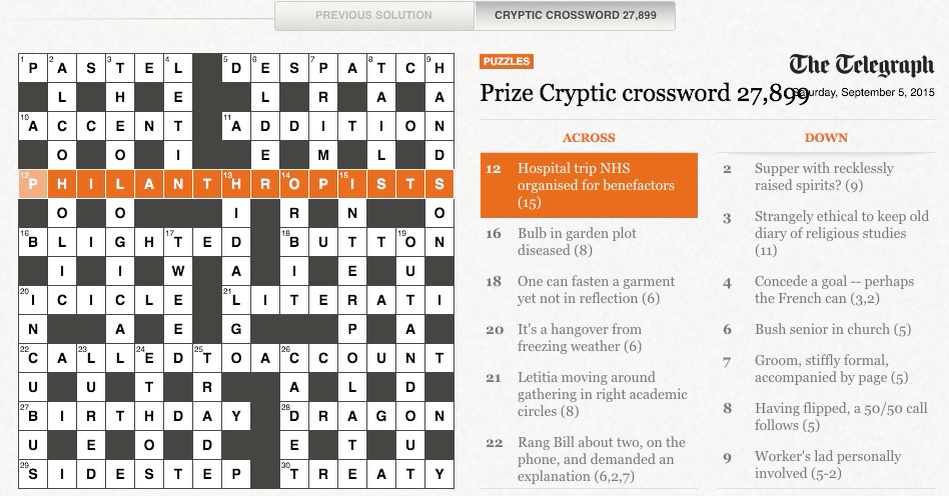
Saturday
Sunday
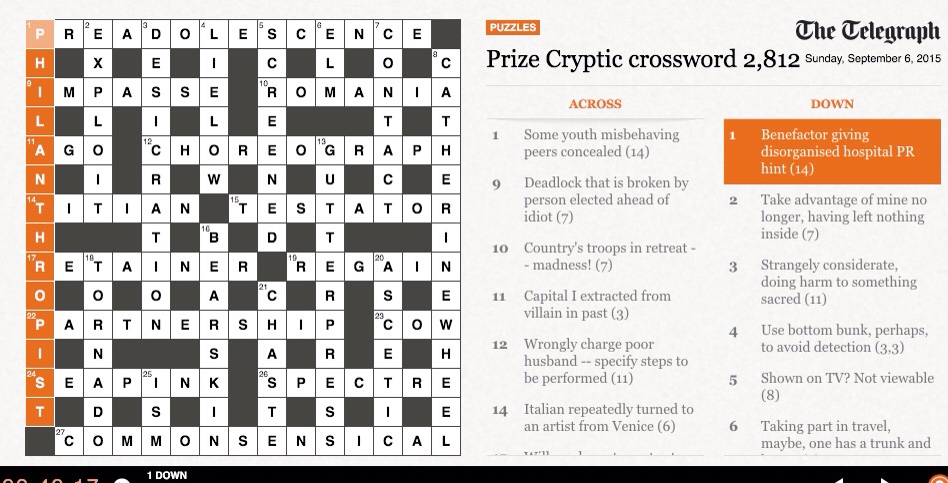
The setters change each day, so the consecutive appeared of PHILANTHROPISTS must be a coincidence, and I suspect an extremely rare one at that. I wonder how many similar occurrences there have been over the years, both in general and also with 14 letter words. Surely not many of the latter?
White to play and win
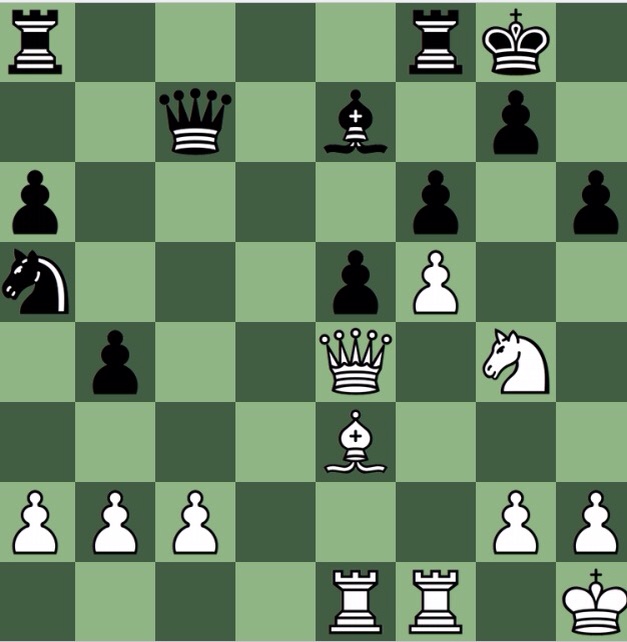
S Gligoric v Norman Littlewood, Hastings 1964-5
Solution
I flunked this one royally. I couldn't decide between 1 Bh6 and 1 Nh6, finding both too hard to calculate. Eventually I settled on 1 Bh6 as the move I would play in a game, judging that 1..gh 2 Nh6+ had more chances of resulting in something in practice, but not being sure if 1…Qc4 was better for white, or better for Black. In fact, Stockfish says 1…Qb7 is the only move to keep broad equality, though it favours white, and also showing an impossible to compute win for white after 1…gh.
However, 1 Nh6+ is far stronger, 1…gh 2 Bh6 and I should have been able to see, but didn't, that 2…Rf7? isn't possible since the Ra8 drops off. The Rf8 is tied to the Ra8.
Not the hardest, so my failure today is galling.
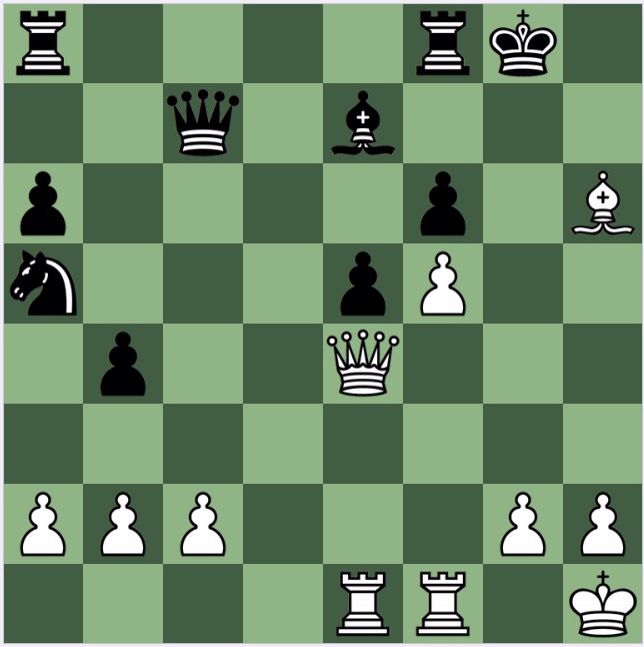
White to play: the rubric from Teschner's book is:
White has sacrificed a piece but the attack doesn't succeed, so he forces an elegant draw.
(I) find the draw;
(II) in fact, there is a win…find this too.
This posting, the second of two, asks you to find the win.

Mazzoni v Kraidman, Tel Aviv 1964
Solution
Alas, I just trusted the rubric, as one does with puzzle books, found the pretty draw, and started to write the blog, including entering the position into Stockfish on my iPad. Immediately it flashed up 1 Bf6! Bf6 2 Qh6 with a +6 assessment.

Looking at the above position, I can well imagine why White in the game, and then Teschner in compiling his book, didn't see a win here. It doesn't look, on first sight, to be a typical +6 position. But looked at closer, the Bf6 is tied to defending g7, so when a N moves to g5, it can't be taken, and the Qc7 is tied to defending the Rb1, which would otherwise be a LPDO.
Lines such as 2…Be8 3 Ng5 Qc7 4 Ne6 show how gruesome the position actually is for Black- the Rf8 and Rb1 are both LPDOs.

White to play: the rubric from Teschner's book is:
White has sacrificed a piece but the attack doesn't succeed, so he forces an elegant draw.
(I) find the draw;
(II) in fact, there is a win…find this too.

Mazzoni v Kraidman, Tel Aviv 1964
Solution
First the draw, which isn't too hard to spot, given the rubric says 'elegant', which implies something special.
1 Qh6!
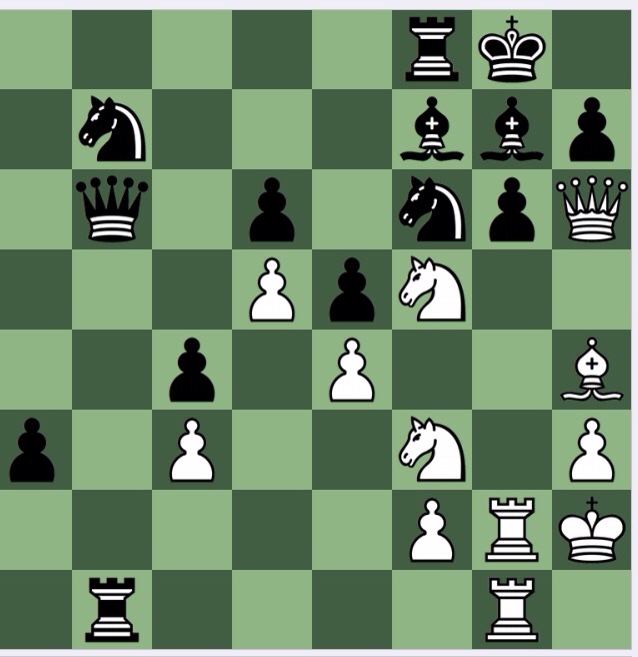
If 1…Ne8 then 2 Ng7 Ng7 and either 3 Bf6 or 3 Ng5 are gruesome, so 1…Bh6 is forced.
2 Nh6+

2…Kh8?? 3 Bf6 is mate, so 2…Kg7 when 3 Nf5+ Kg8 is a perpetual.

I will post the cook, the win, as a separate posting.
White to play and win

Noorda- Sibe, Beverwijk 1965
Solution
A standard problem, where the writing of this blog took ten times or more longer than solving the puzzle. All that was needed was to check that the standard 1 Ne5 worked, with no tricks; it does: 1..Bd1 2 Bb5+ Kd8 3 Nf7+ forks the king and queen.

White to play and win
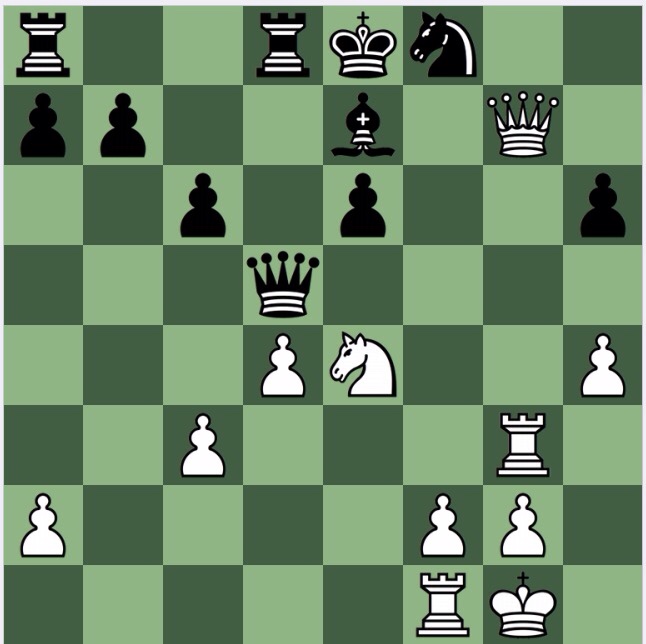
Korchnoi v Bronstein, 1964-5
Solution
Hard or not hard? At first, at least for a few moments, I couldn't see how to break into Black's defensive camp, perhaps omitting to look at sacrificing the queen. But then examine all biffs, and 1 Qe7+! came to mind, and then it was 'obvious': 1…Ke7[] 2 Rg7+ Ke8[] 3 Nf6 mate.
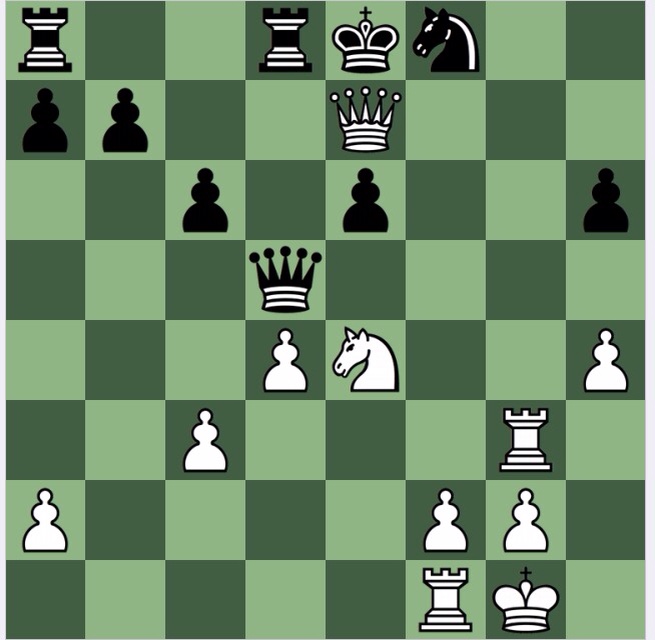
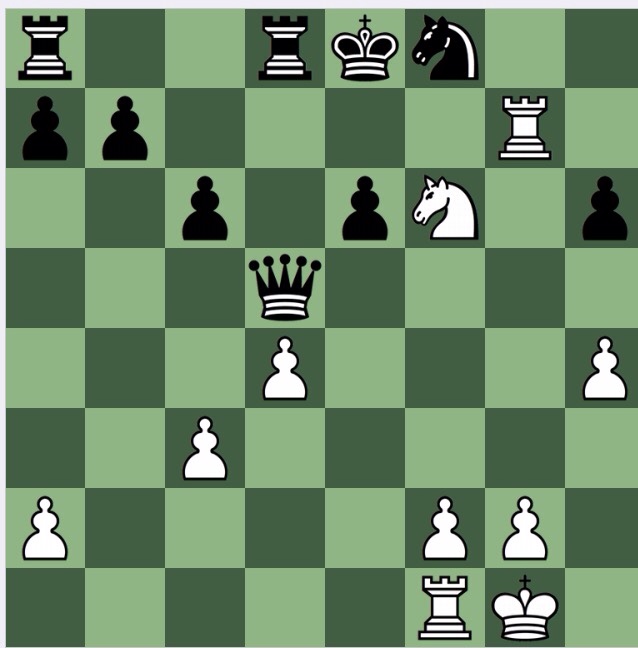
White to play and win
Black, in order to avoid the Nf5+ fork, discovering a (double) attack on the Qe7, played …Kf8 in this position:
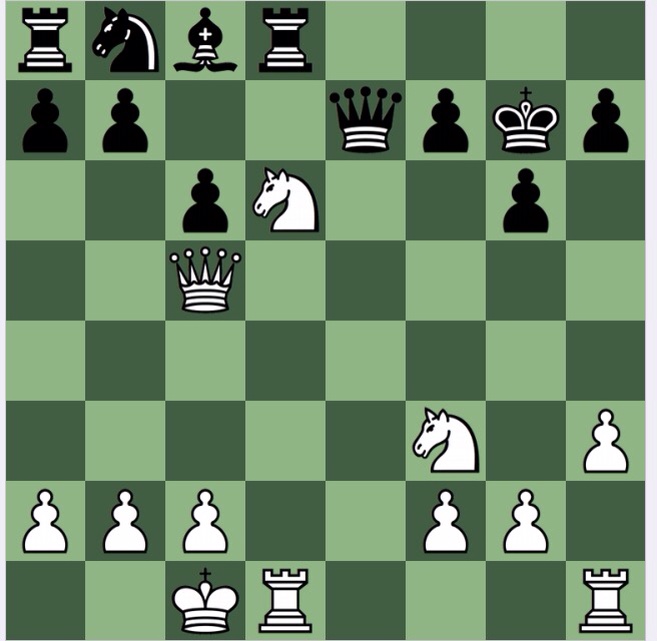
Pawelczak v AN Other, Berlin 1964
Solution
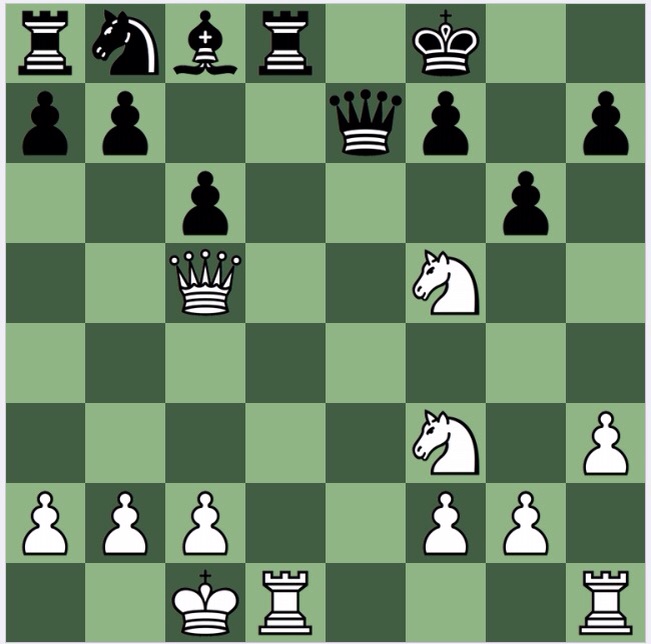
Not too hard, since examine all biffs requires you to look at 1 Nc8, which fails to 1…Rc8, and 1 Nf5!. The Q is tied to defending the Rd8 so that after 1…Qc5, 2 Rd8 is mate. And otherwise, the Black queen is lost.
 allanbeardsworth