White to play and win
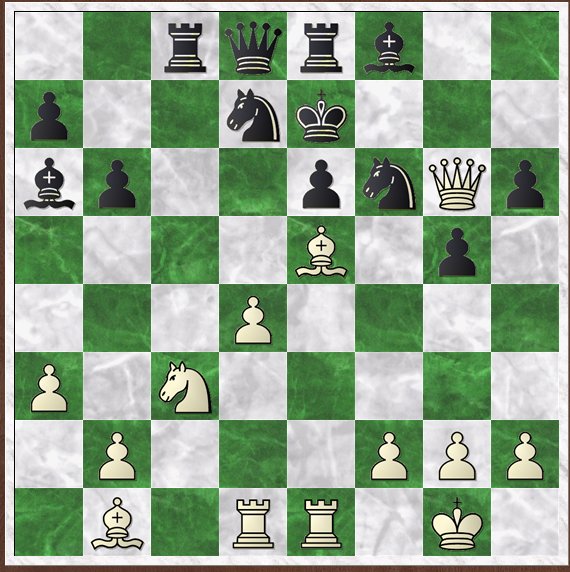
Donner v Dunkelblum, Beverwijk 1964
Solution
Nil points for me.
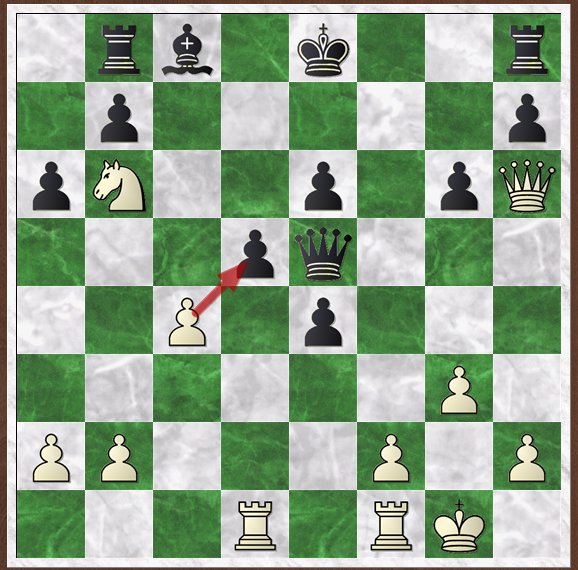
Yes, I found 1 d5!, which wins prosaically, but then I moved on to the next problem, thinking that I had solved this one. So I entered the diagram in my app and was amazed to find 1 Nd5+!!
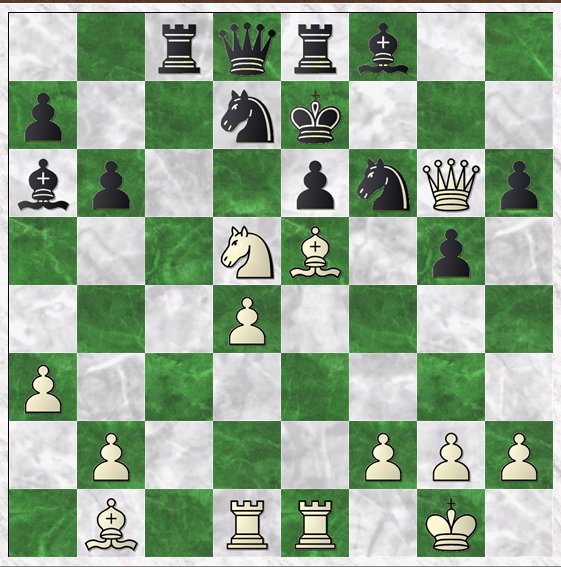
As soon as you see it, the force of it is clear. If 1…Nd5, 2 Qh7 is mate.
If I were at school, the teacher would rightly given me lines: examine all biffs.
 Posted with Blogsy
This is an occasional series of postings inspired by a brief discussion on the flight home from Turkey this summer. The flight attendant saw I was reading a chess book (quelle surprise) and, just making polite small talk, said she also liked playing chess, saying that depending on whether other crew members played, she would play on stopovers. Later in the flight she asked me if I had a chess set at home…and that set me thinking. How many chess sets do I have? And since then number is, well, shall we say, quite high, I thought I would blog about them especially those which ‘mean something to me’.
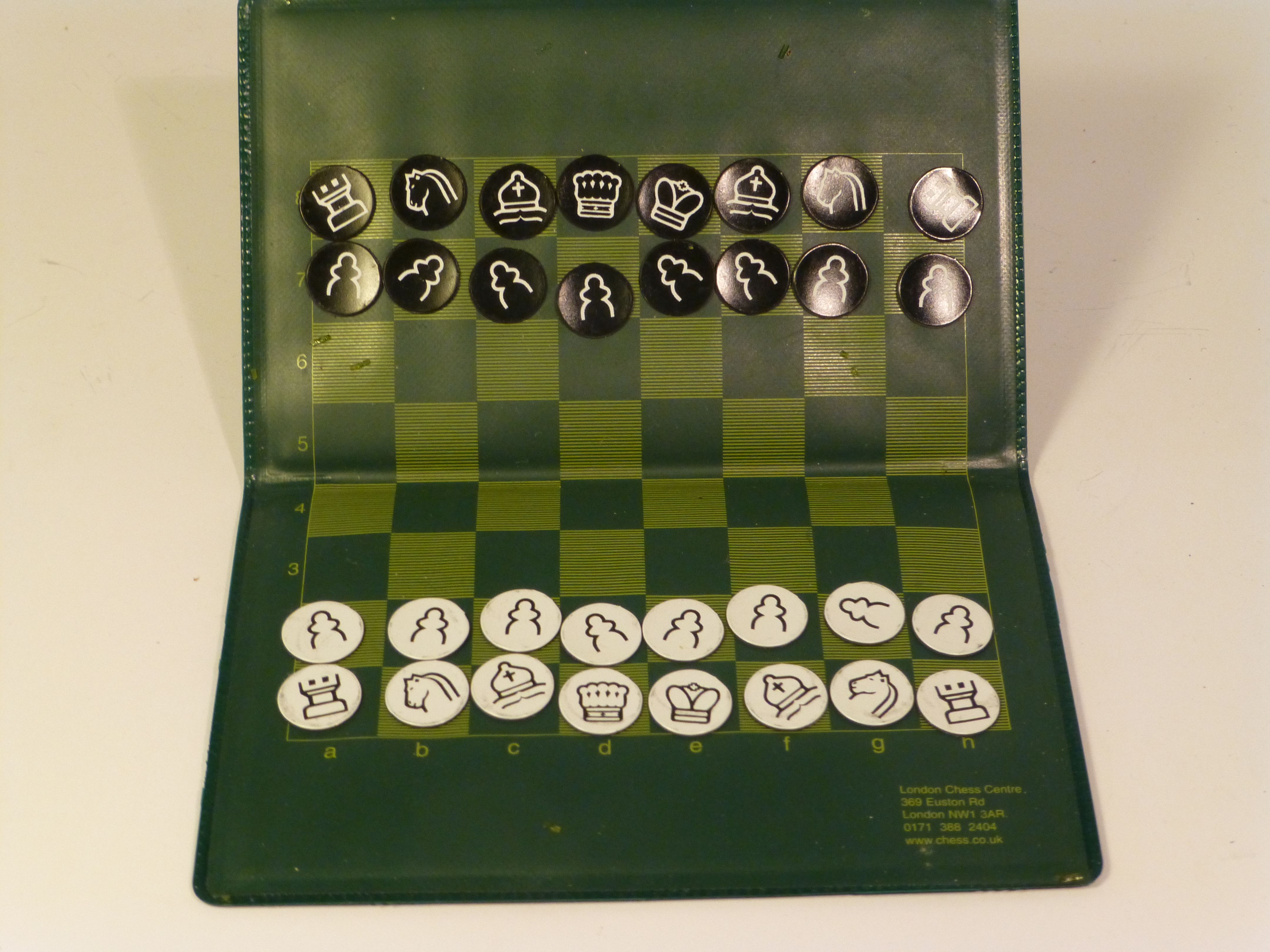
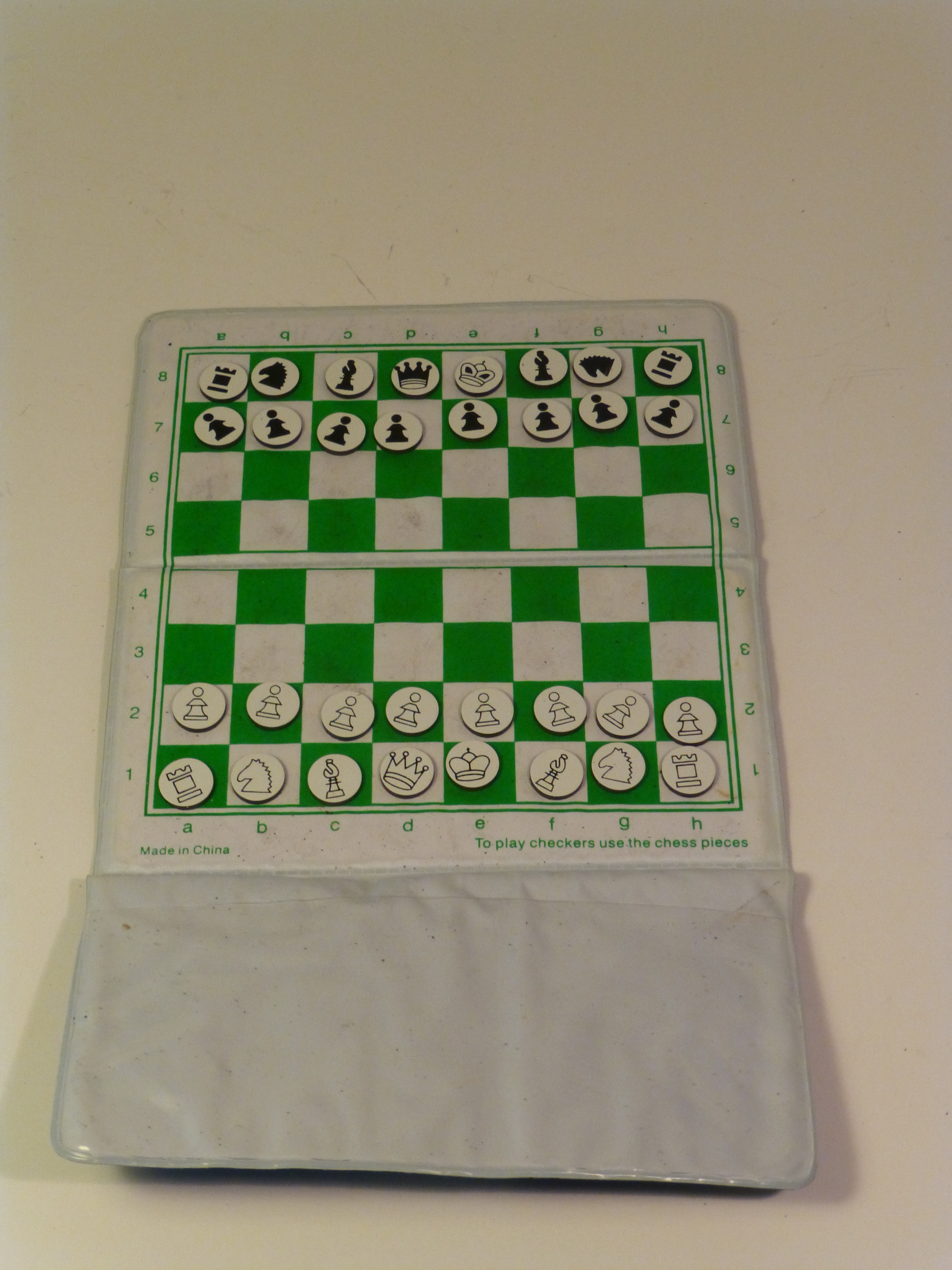
Another travel set bought from Chess & Bridge in London. And, again, one I’ve used a lot. The pieces are more slender than the other similar set, but the set is very portable and easy to use, and so has been used significantly over the years.
Rating
6/10: slightly more fiddly than the other green magnetic set, but still a nice travel set.
White to play and win (or, at least, gain an advantage)
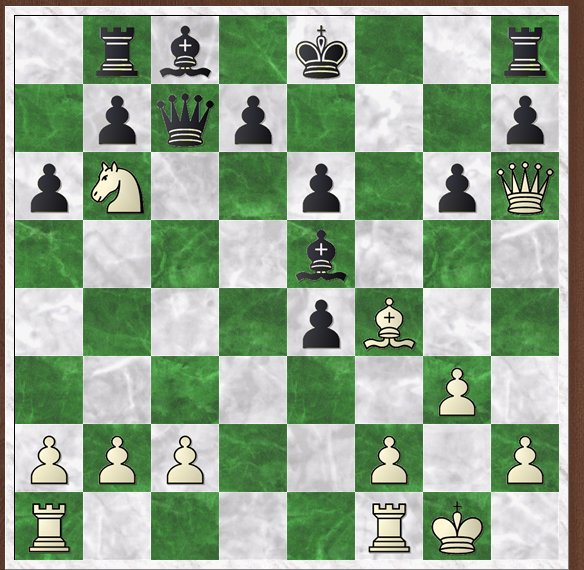
Szabo v Langeweg, 1964
Solution
Knowing it is a puzzle, 1 Qg7 comes to mind more or less immediately. If it didn't, then examine all biffs would cause it to be considered, or noting the Qc7-Be5-Bf4 skewer would similar cause Qg7 to come to mind. After 1..Qg7, 1…Bg7 is forced, when 2 Bc7 Bd4 3 Bb8 Bb6 results in a position where white is better, but is it necessarily winning?
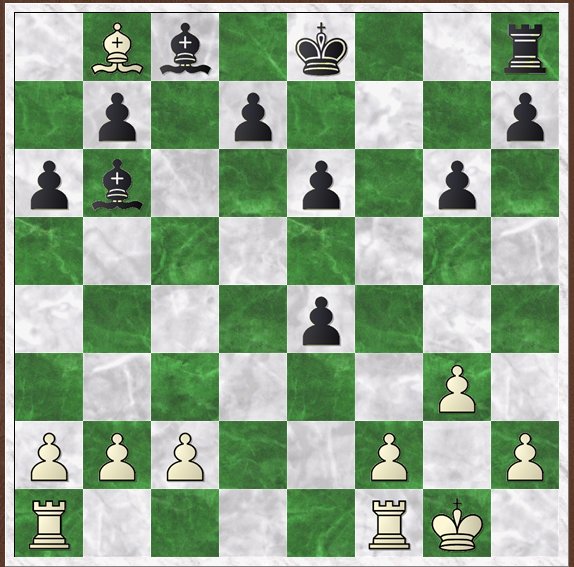
My engine gives it as +1.2, so clearly not, or at least the game goes on with white being better. Surprisingly, my engine only slightly prefers 1 Qg7 to 1 Be5 Qe5[] 2 Rad1, with the idea 2…d5 3 c4. Playing a few lines shows that white is again better, with Black weak on the dark squares and with a somewhat exposed king.
This is an occasional series of postings inspired by a brief discussion on the flight home from Turkey this summer. The flight attendant saw I was reading a chess book (quelle surprise) and, just making polite small talk, said she also liked playing chess, saying that depending on whether other crew members played, she would play on stopovers. Later in the flight she asked me if I had a chess set at home…and that set me thinking. How many chess sets do I have? And since then number is, well, shall we say, quite high, I thought I would blog about them especially those which ‘mean something to me’.
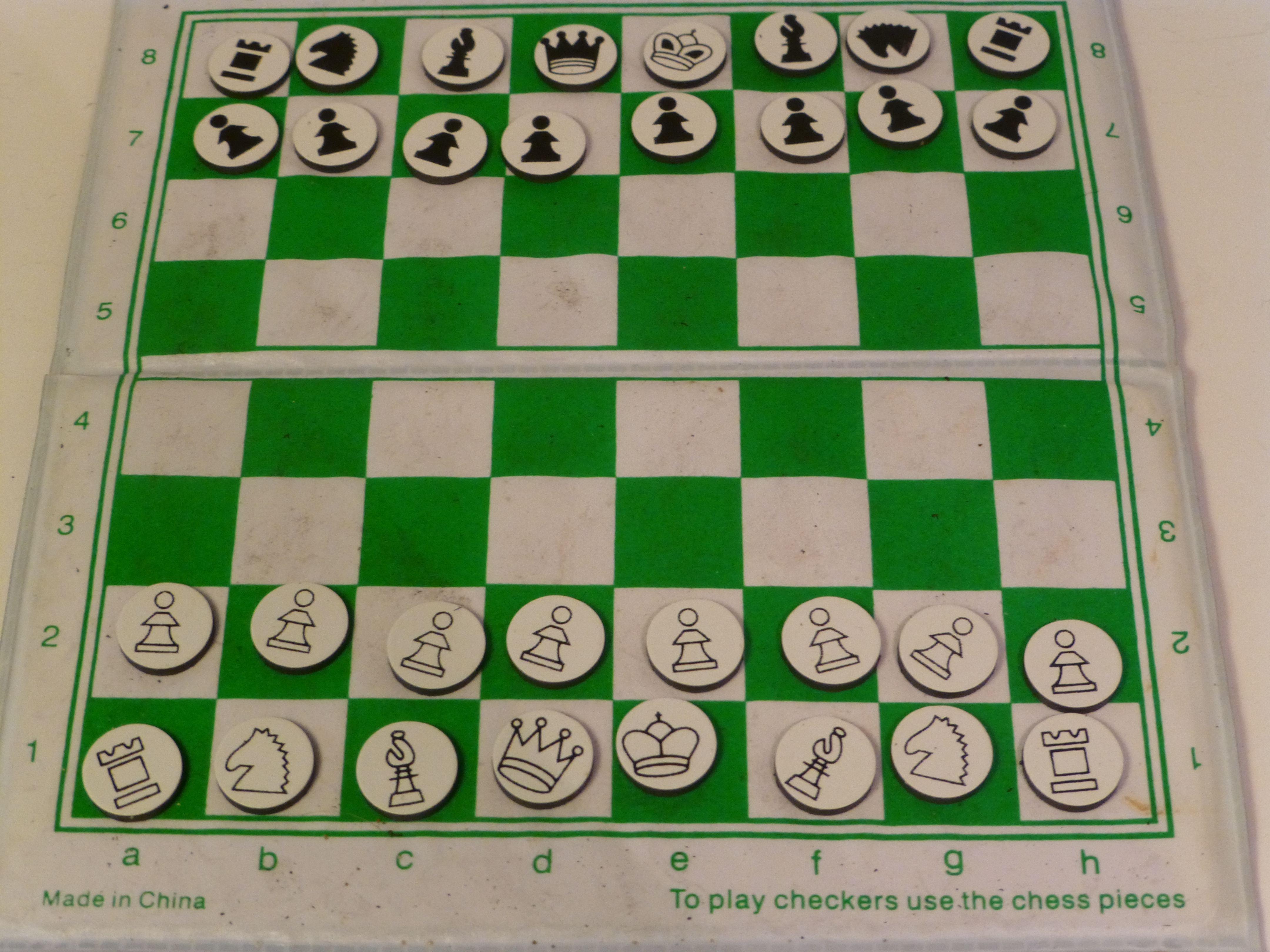
This a fairly inexpensive magnetic travel set, bought from my favourite shop in the whole of London (Chess & Bridge, Baker Street) on one visit. It is a very nice set to use. The pieces are decent sized, decent weight; the board light and foldable, so great to have in your travel bag. I’ve used it a lot, and still do.
Rating
7/10: a high rating because it is very practical, well used, and loved.
Black to play and win
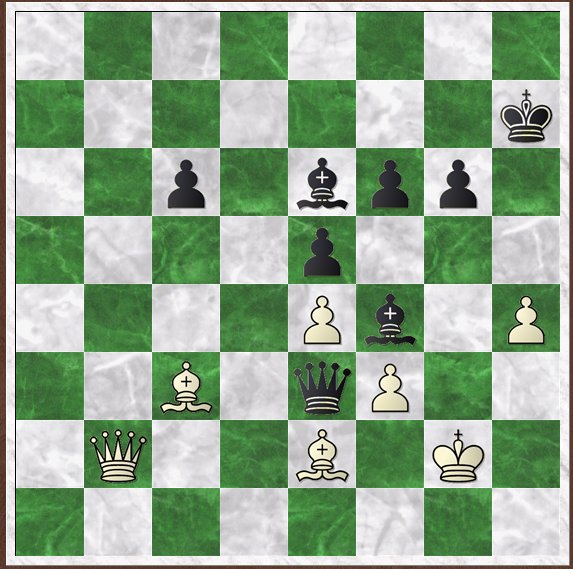
Stambuk v Unzicker 1963
Solution
Examine all biffs fairly quickly leads to 1…Bh3+ being tried, and once 2 Kh3 Qg1 is found, the problem is solved. White's minor defence is 2 Kh1 but then 2…Qf2, noting that if Ba6 (say) 3…Bg2 is mate.

White to play and win
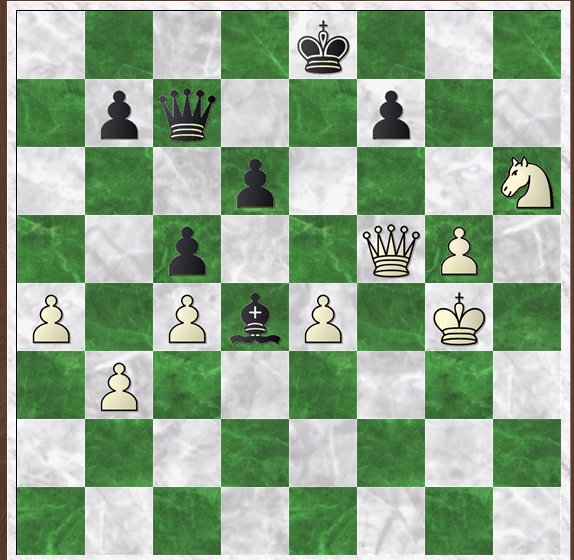
Korchnoi v Gligoric, Yugoslavia-USSR 1963
Solution
A nice piece of calculation is all that is needed here. 1 Nf7! demands to be played, and the only question is 'is it winning after Qb7+ and the queen exchange?'. 1….Qf7[] 2 Qc8+ Ke7[] 3 Qb7+ Kf8 (say) 4 Qf7+ Kf7 and then it is clear that the a pawn promotes: 5 a5 and the Bd4 can't get back in time.
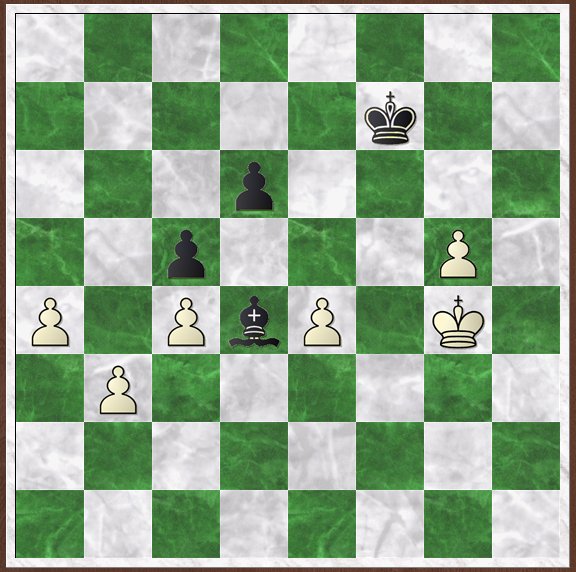
White to play and win
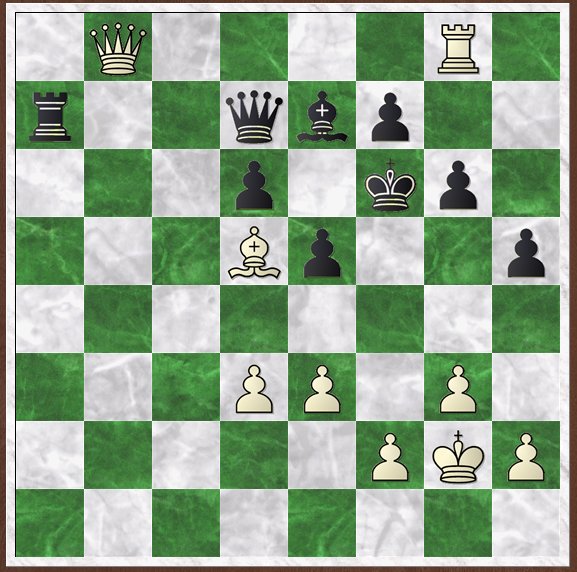
A Andersen v J Johannson, Malmo 1964
Solution
Examine all biffs: I intuitively tried the correct 1 Rg6+! first, ignoring the poor 1 Bf7, let alone the fanciful Qa7 or Qd6+. After 1 Rg6, 1…fg or 1…Kg6 are the only two contenders, with 1…Kf5 at best just dropping two pawns after 2 Bf7…but at worst losing to mate in 1 by 2 Be4 mate!
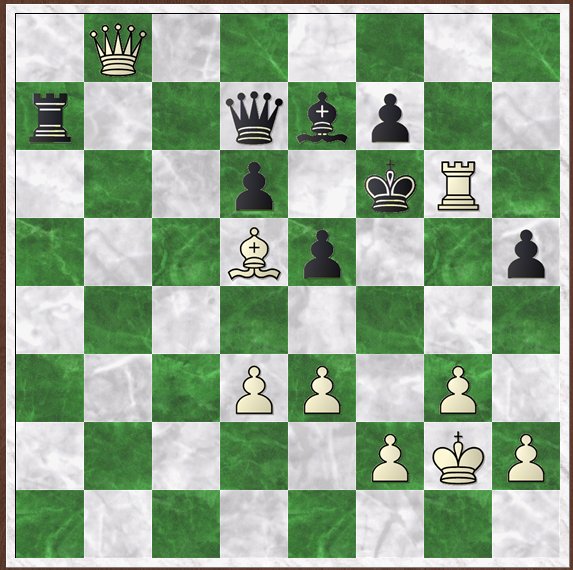
Taking 1…fg first, it is clear Black is in a mating net: 2 Qh8+, and a combination of Be4/h4/f3 depending on Black’s order of moves.
So 1..Kg6 is best, when 2 Qg8+
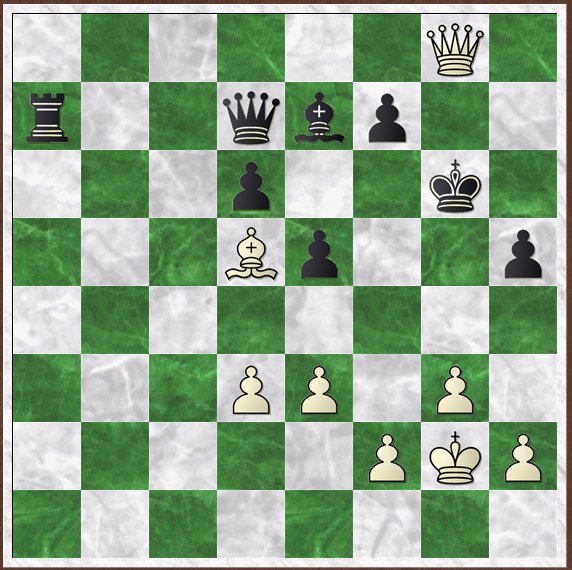
and here 2..Kh6 is clearly best (2..Kf6 3 Qf7+ Kg5 4 Qg7+! and mates: the king is hunted down). After 2…Kh6 it isn’t obvious what to do: 3 Bf7? loses, to 3…Qf5, and Black can rustle up a defence, and then his material counts. In fact, 3 Be4! forces 3…f5, the point of which is to deny Black’s queen the use of that square, so 4 Qg8+ Kg6[] 5 Bf3 mates.
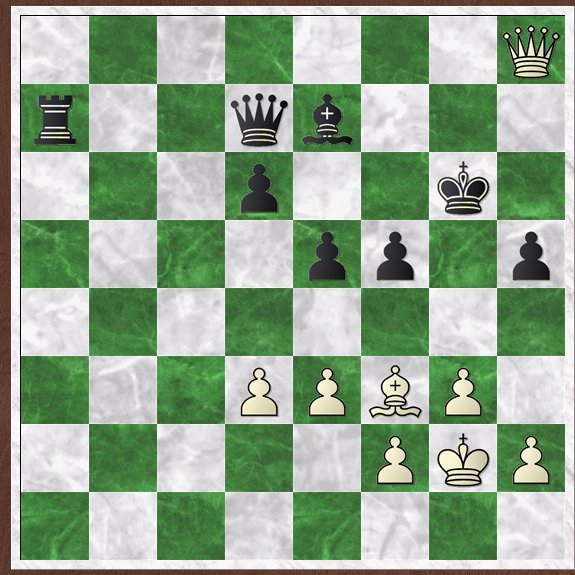
Difficult.
In the game, and in Teschner’s analysis, White ‘got there’ but there are imperfections in his moves and the annotation: chess was different pre-engines.
Now go back to the very start: Houdini assesses 1 Rg6+ as +7, initailly, rising after a few minutes to +11; but also gave 1 e4 a similar, slightly higher score, and also gives the same to 1 h4. Fascinating: the engines shows me that Black is so trussed up White should improve his position first, taking away f5 from the Q and K, and g5 from the K, first. Very instructive.
This is an occasional series of postings inspired by a brief discussion on the flight home from Turkey this summer. The flight attendant saw I was reading a chess book (quelle surprise) and, just making polite small talk, said she also liked playing chess, saying that depending on whether other crew members played, she would play on stopovers. Later in the flight she asked me if I had a chess set at home…and that set me thinking. How many chess sets do I have? And since then number is, well, shall we say, quite high, I thought I would blog about them especially those which ‘mean something to me’.
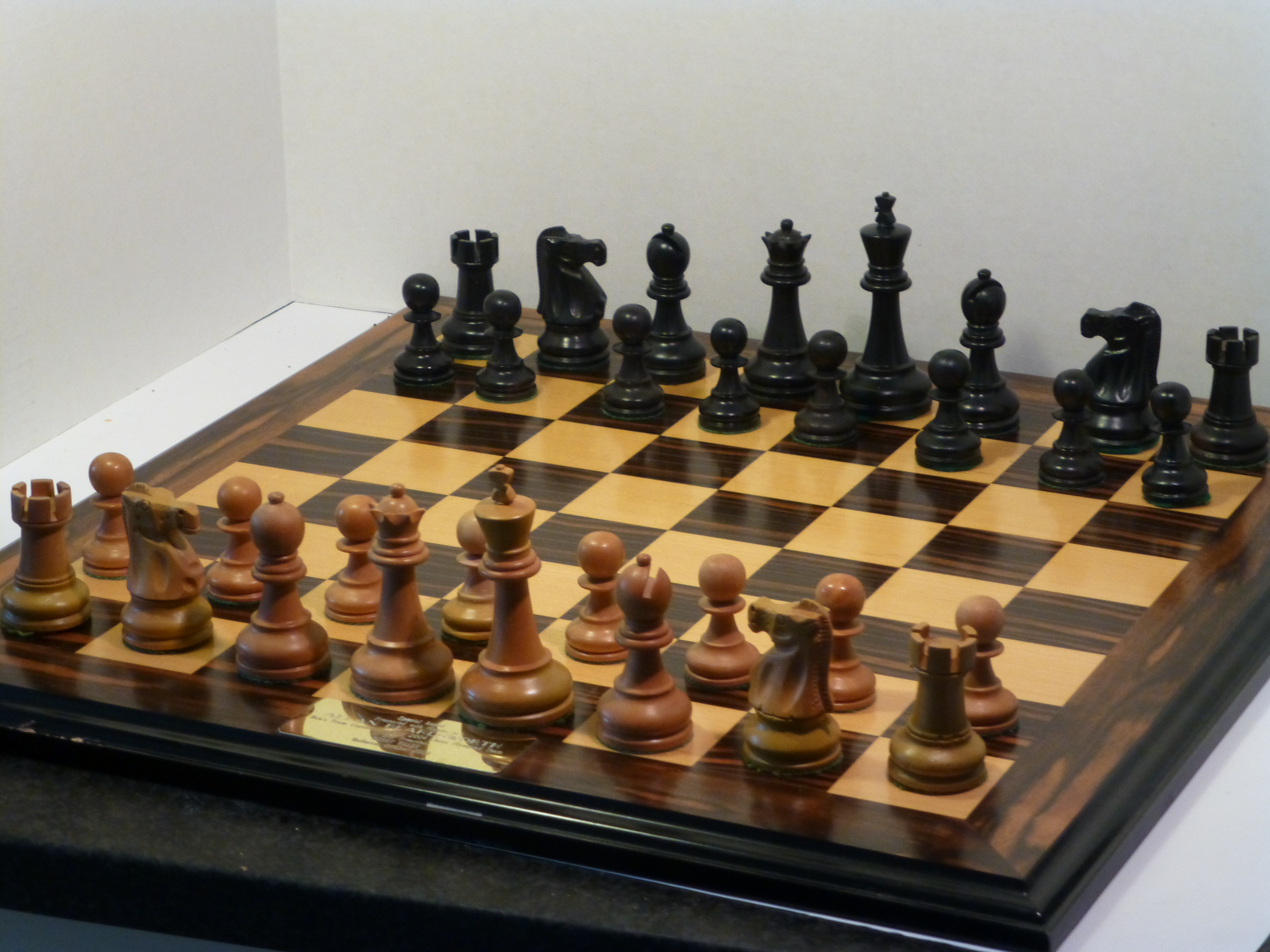
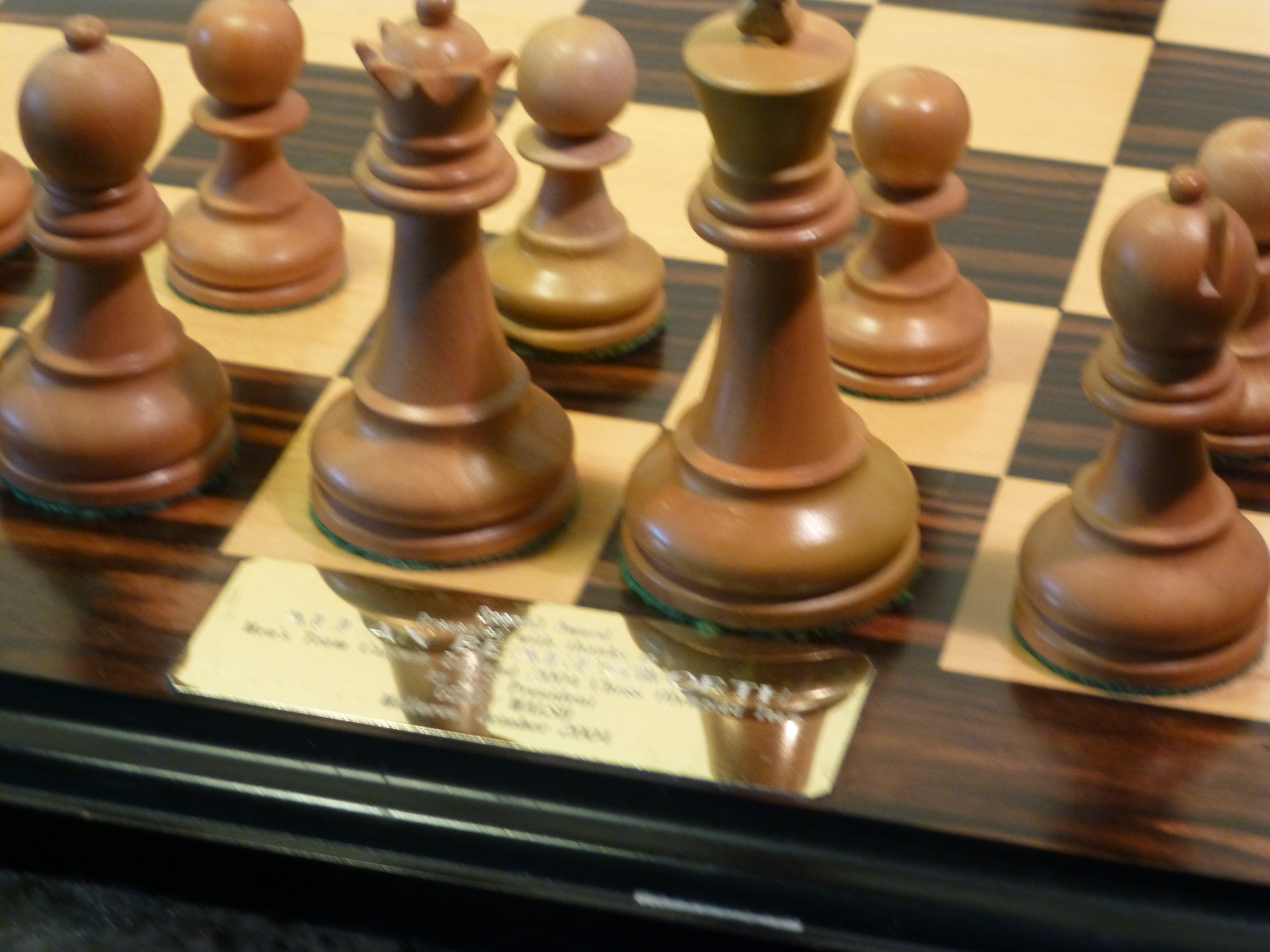
This beautiful set was presented to me by Richard Caborn MP, then Minister for Sport, at the Houses of Parliament, when I became England men’s captain.

I have used the set a lot, but not as much as the green ivory set which Jane bought me for my fortieth. I do like this set a lot, and the reason for receiving it is of course a significant occasion in my life; just maybe loyalty to Jane means her set edges this one out.
Rating
10/10: lovely pieces, and a wonderful memento of my appointment.
White to play and win
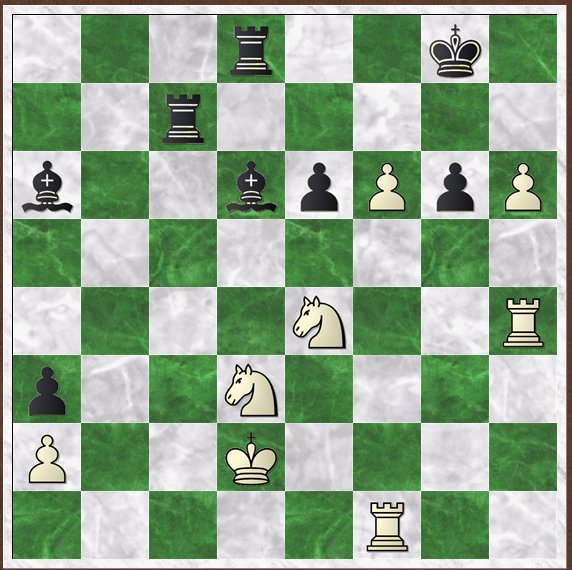
Kadrev v Vasiukov, Moscow 1964
Solution
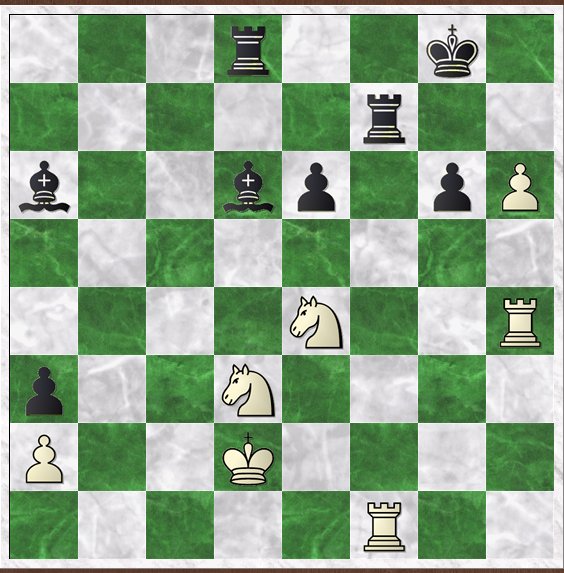
Not too hard today, but some calculation needed, noting that Black threatens something like …Bb4+ or …Bd3, in one order or the other. But 1 f7+ (examine all biffs) forces 1…Rf7 (else 2 Nd6 and either the f or h pawn promotes) when 2 h7+ (examine all biffs again) overloads the King. The King is tied to the Rf7 and also the h8 square, so 1-0.

White to play and win
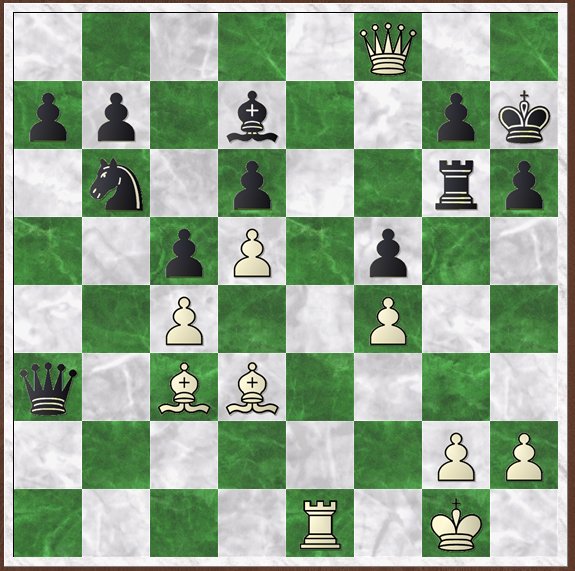
Gligoric v Hort, Moscow 1964
Solution
1 Bg7 (examine all biffs) screams out to be played.
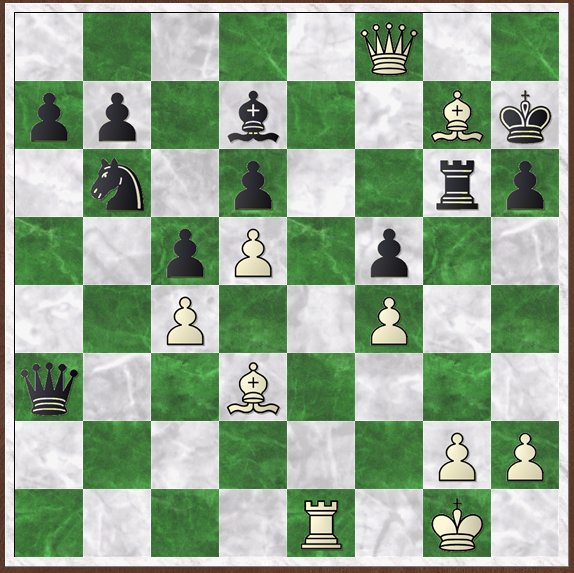
Black can’t ignore the B, e.g. 1…Qd3?? is met by 2 Qh8 mate, so either has to take the B, or move his Rg6.
Capturing first: 1…Rg7 2 Bf5+ Bf5 (2..Rg6 3 Qf7+ and 4 Bg6) 3 Qf5+

and mate in a couple or so moves.
Next, 1…Rg4 (or 1..Rg2+: the desperado loses, just a bit slower)
White to play and win
It is worth solving this position too: not obvious, but two very pretty forced mates (shown to me by Houdini)
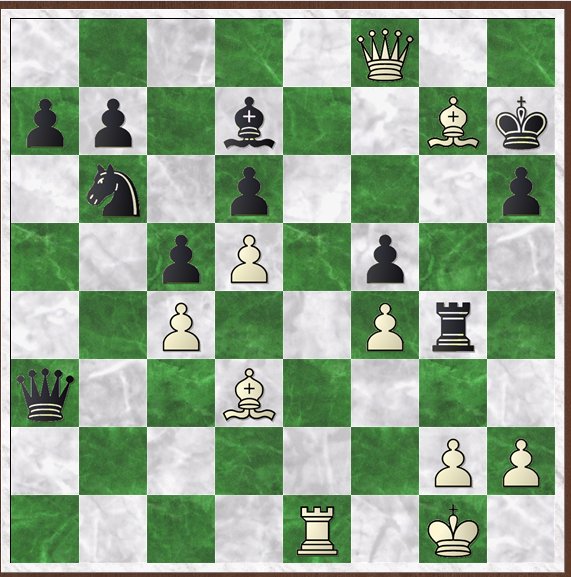
I would be in danger of doing a merry-go-round series of checks, Qh8+ Qh6+ Qf6+ and wondering why I had got to; or in danger of losing my way trying to mate, and then getting the move order wrong.
In fact, the checking sequence is correct after 3Qh6+ Kf7[]
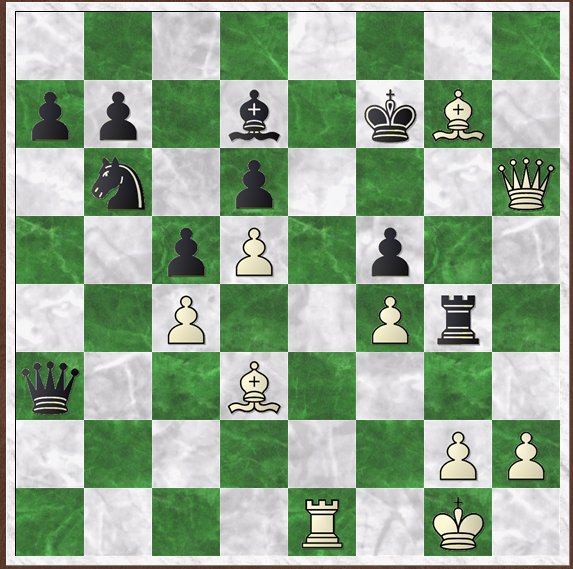
I would find 4 Re7+!! if it were a puzzle, but would I be able to keep a cool head and find it in a game? Maybe, maybe not – it would depend on the clock situation. 4 Re7+ neatly forces the King to stop rotating, and 4…Ke7 5Qf6+ Ke8[] 6 Qf8 is a nice mate, with 4..Kg8 5 Qh8 mate being Black’s alternative form of death.
Going back to the position after 1..Rg4, the equally pretty alternative is 2 Bf5+!!
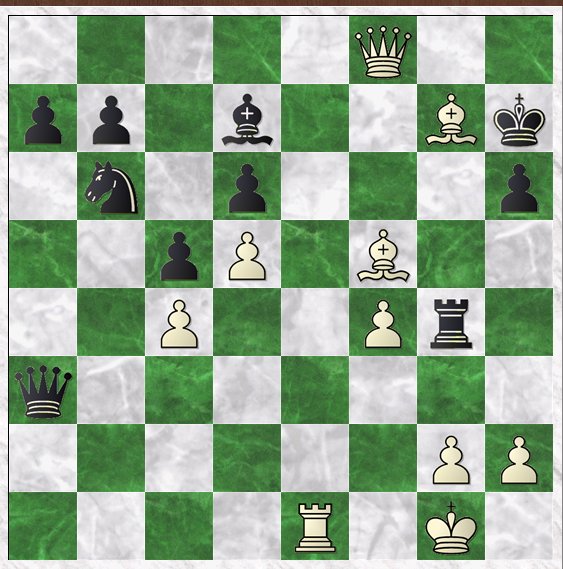
It’s point is not obvious, but is cute: it moves the Bd7 away from defending e8, so that Re8+ can come in: 2..Bf5 3 Qh8+ Kg6[] 4 Qh6+ Kf7[] 5 Qf6+ Kg8[] 6 Re8+! and 7 Rh8mate.
Nice, and instructive. Examine all biffs and looking for ties (the Bd7 is tied to defending e8) yet again are in point.
 allanbeardsworth