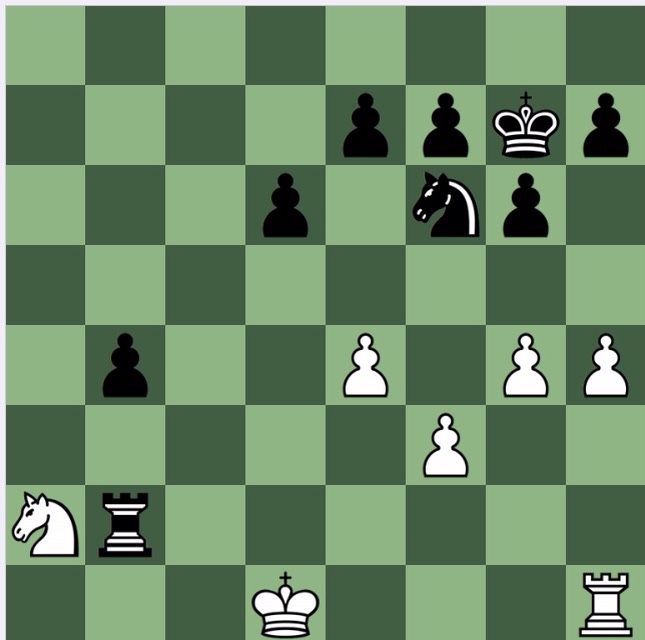
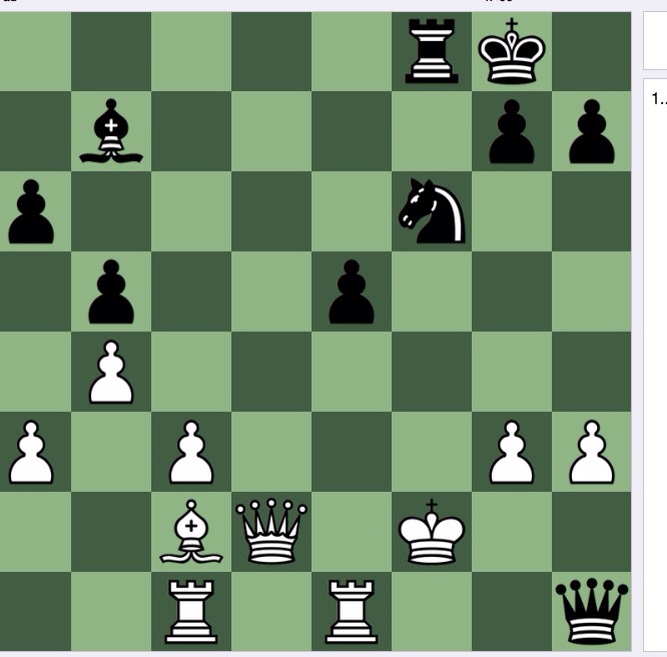
White played 1 Rf7: with what result?
Is Black winning, losing, or drawing?
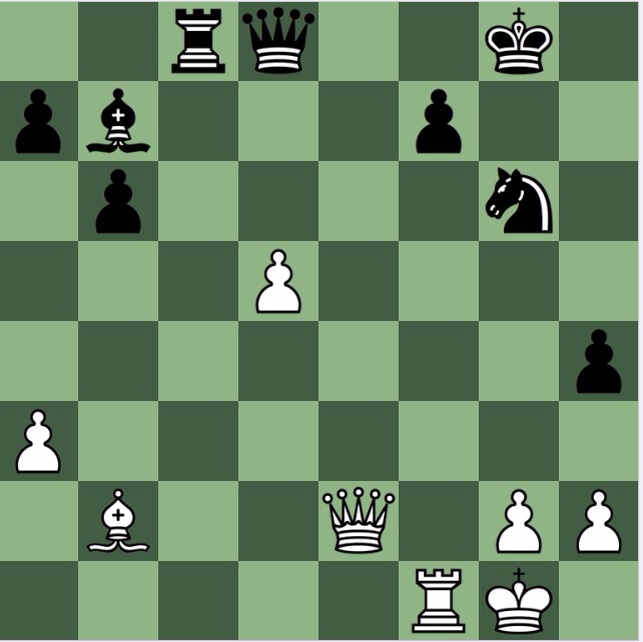
M Levitt v JL Gluckman 1997
Solution
This is just the sort of position in which the development of chess engines has taught me that…I am rubbish at calculation. I struggled my way through this, at first thinking Black could take 1…Kf7 since 2 Qe6+[] Kf8[] 3 Qg6 might not be losing, and is probably winning for Black. But then I saw the zwischenschach 3 Qf5+! and white wins. He either collects the Ng6 with check, after which the checks continue, or he skewers Ke7 and Qd8.
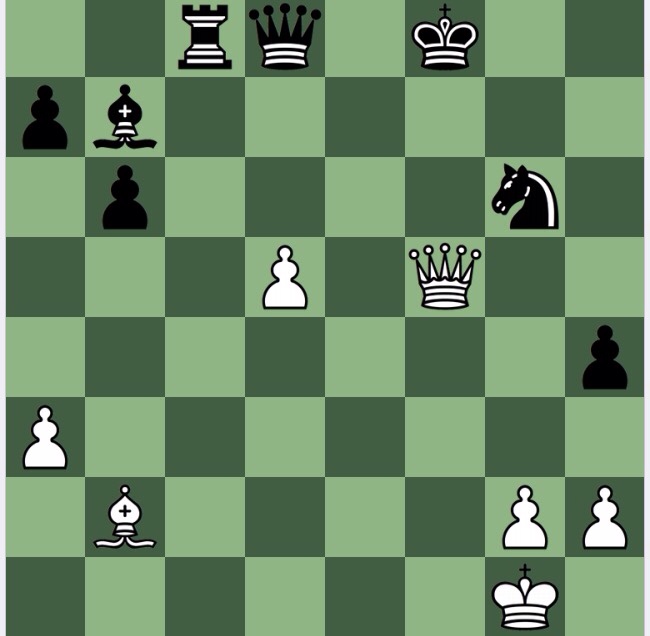
So 1…Kf7 loses. In the game black played 1…Rc7 and also lost after 2 Re6 Qd5 3 Qe8; I didn't even consider 1…Rc7, instead choosing 1…Qd5! by intuition as the most active defence (having proved that 1…Kf7 loses).
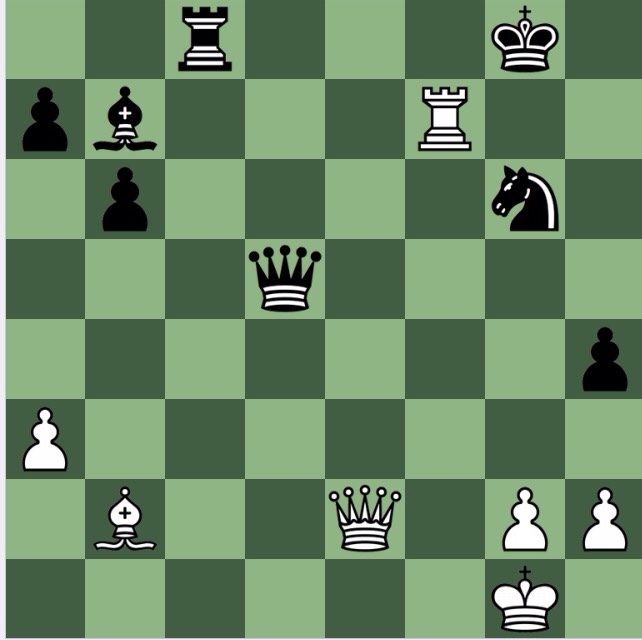
But I couldn't fully analyse 1…Qd5; I saw 2 Rg7+ Kf8 but then wasn't sure whether 3 Qf2+ was a draw – to me, just unclear; whereas 3 Rg6 Qc5+ looked at least equal. Reitstein says that indeed 1…Qd5! is best and assesses it as unclear, hard for either side to prevail.
I have only given the position cursory engine treatment: this is one for more serious study when time permits. Firstly, after 3 Rg6? Qc5+ the engine tells me that Black is simply winning, since the tactics if 4 Qf2 end with Rc2+ forking Kf2 and Rb2- LPDOs do drop off; and if 4 Kf1 Qf5+ 5 Qf2 the LPDO Bb2 still falls off, to the same fork after queens are exchanged; and if 5 Kg1 the other LPDO drops off, 5…Qg6.
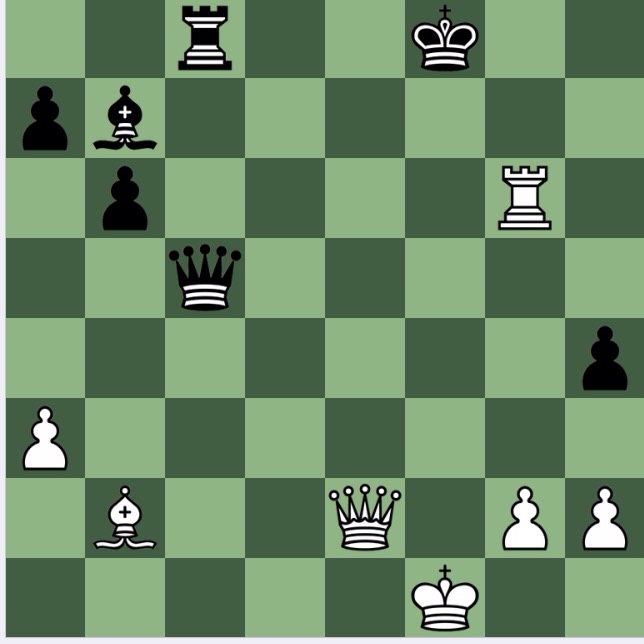
This is one where the position could deserve an hour or more or study.
 Posted with Blogsy
Black to play and win
White played 1 d3 here
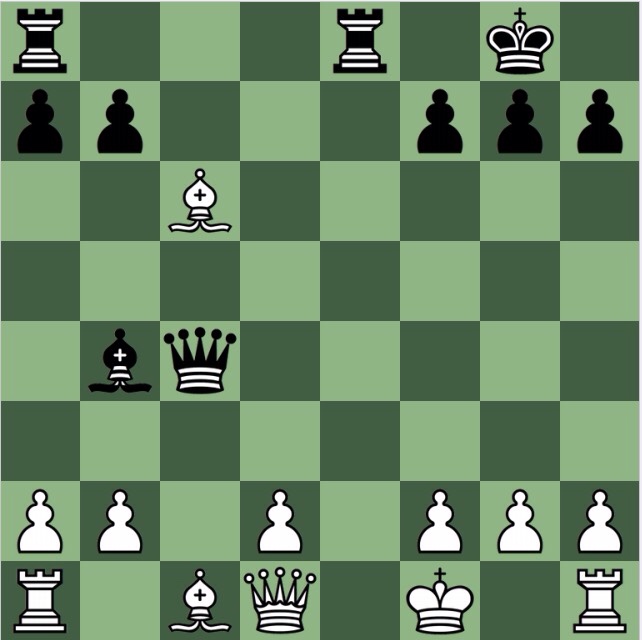
T Chandler v A Salversda 1986
Solution
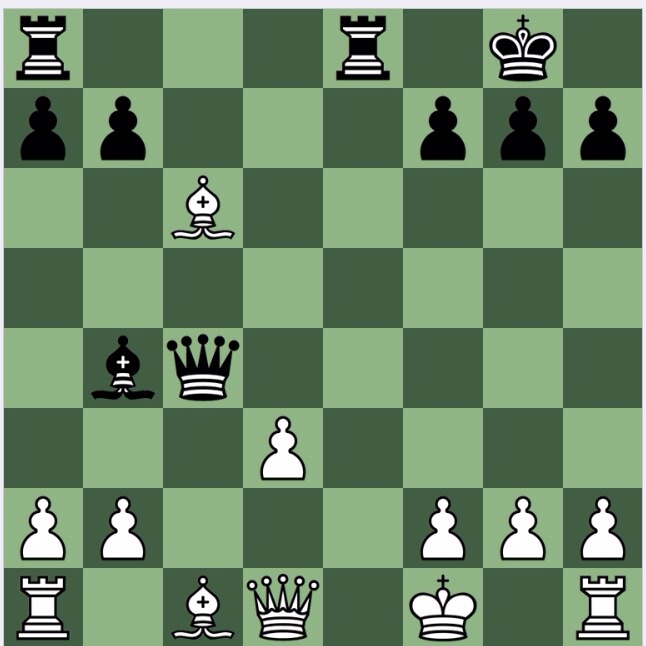
A rest day. 1…Qd3+
Black to play and win
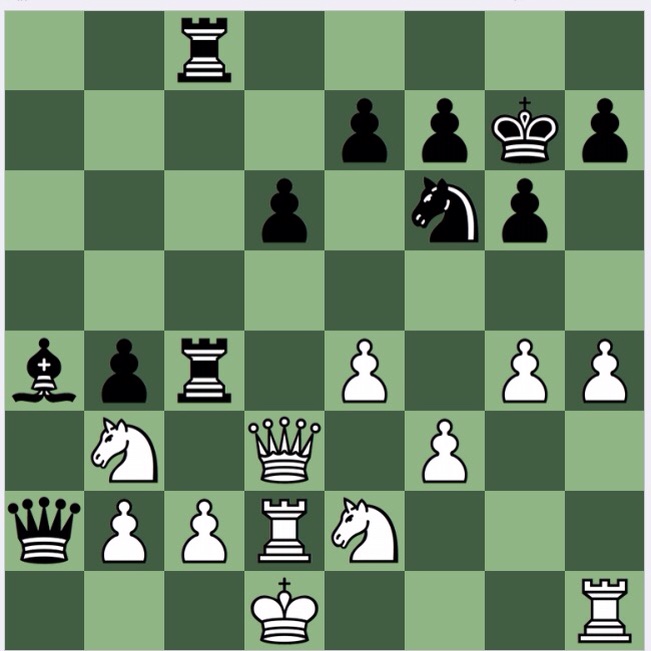
A Van der Heever v W Berson 1985
Solution
Almost by a process of elimination ( e.g. 1…Bb3 2 cb Qa1+ -+ fails to 2 Qb3 and black's attack is spent) one gets to (gets to= examine all biffs) 1..Rc2! which is easily seen to be playable- a no risk line, since after 2 Rc2[] Bb3 black at least gets his exchange back, and will be at least a pawn up. In fact, after 3 Nd4 Bc2+ black is simply winning.
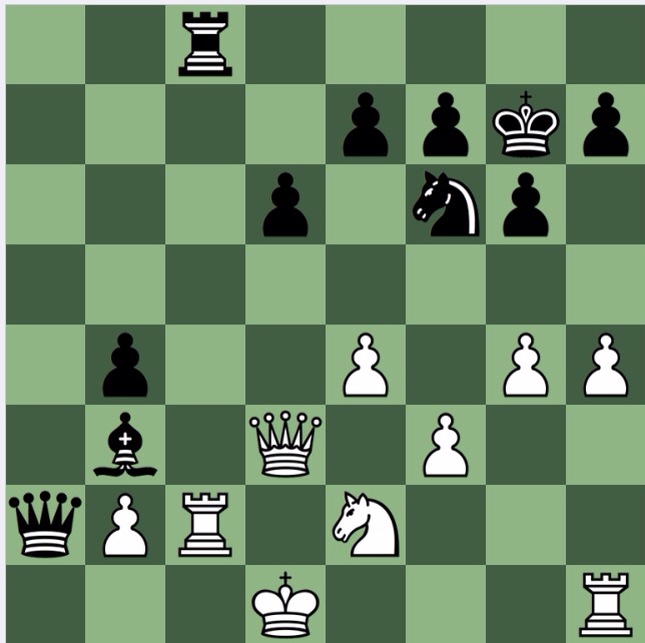
Or, here, if 3 Nc1 then 3…Bc2+ 4 Qc2[] Rc2 5 Na2 Rb2 is a winning simplication.
Finally, Stockfish slightly prefers 1…Qb2: black is simply winning with either move.
Black to play and win
White played 1 Rc6 here: what happened next?
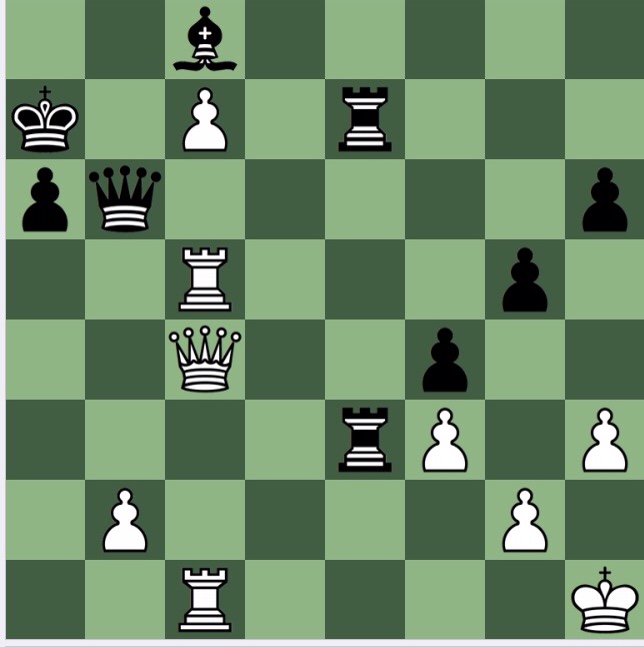
D Isaacson v CH Van der Meyden 1963
Solution
Trivial today: 1…Re1+ and after 2 Kh2 Qg1 mate.
Black to play and win
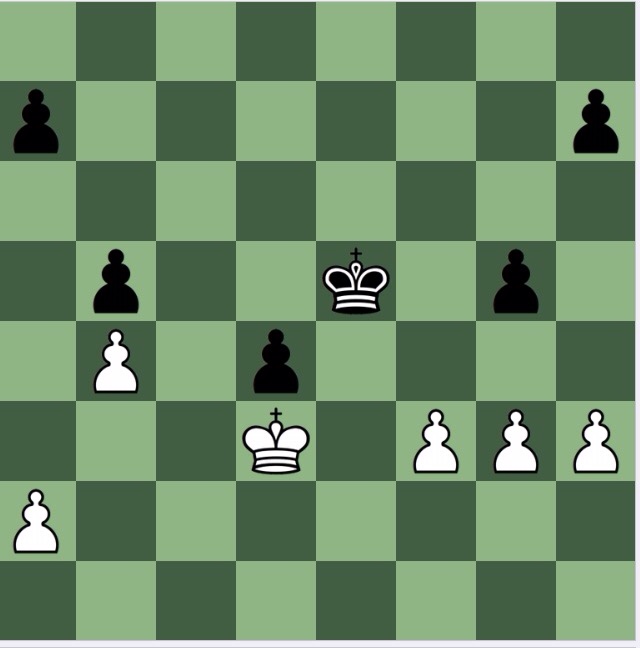
C Klaver v JC Meintjies 2004
Solution
A nice calculation exercise. At the time of writing New in Chess are tweeting each daily positions from Joel Benjamin's book Liquidation: their problems are tough (i.e. I get most wrong). This one is easier (i.e. I got it correct).
1…h5 and depending on how white plays, one way or another, black's king gets to f4, and eats pawns…and the race to queen is one sided. White doesn't gain by inserting a3/a6. Simple counting in both cases shows black promoting a few moves before white.
White to play and win
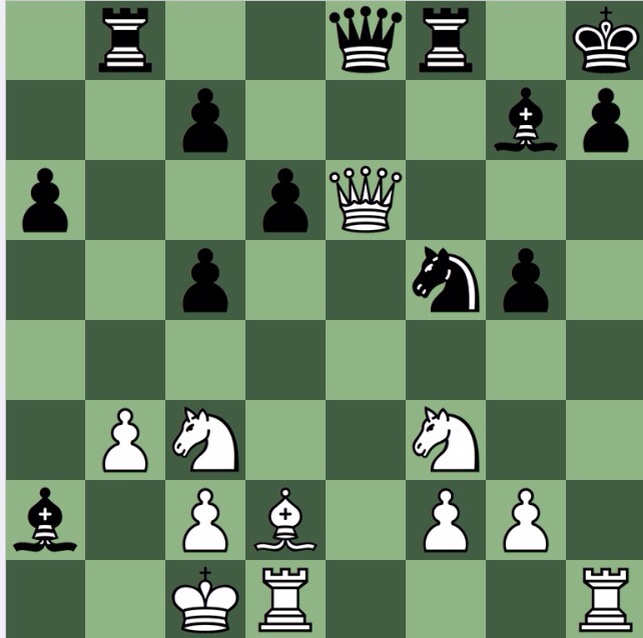
W Kobese v JJ Steenkamp 2005
Solution
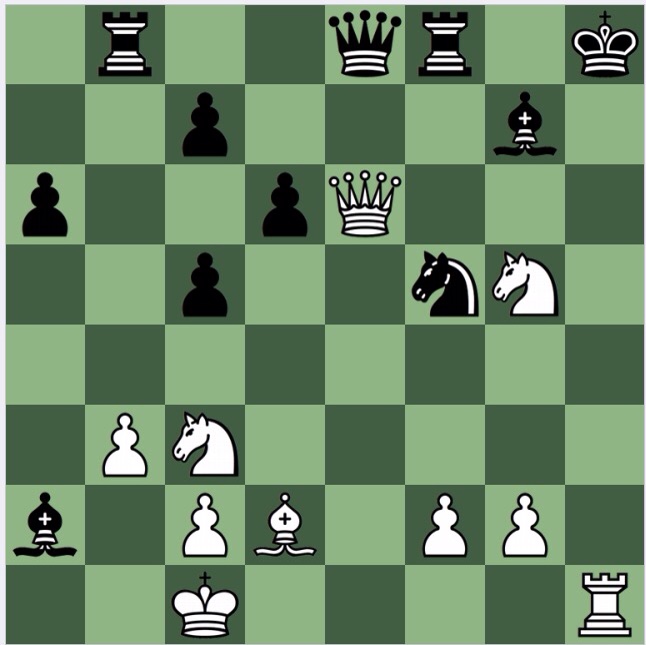
The first move is obvious, the problem with this puzzle is deciding the follow up, but once you see (after 1 Rh7+ Kh7) that 2 Rh1+ is blocked by 2…Bh6, then the alternative biff 2 Ng5+ has to be tried, and it quickly falls into place.
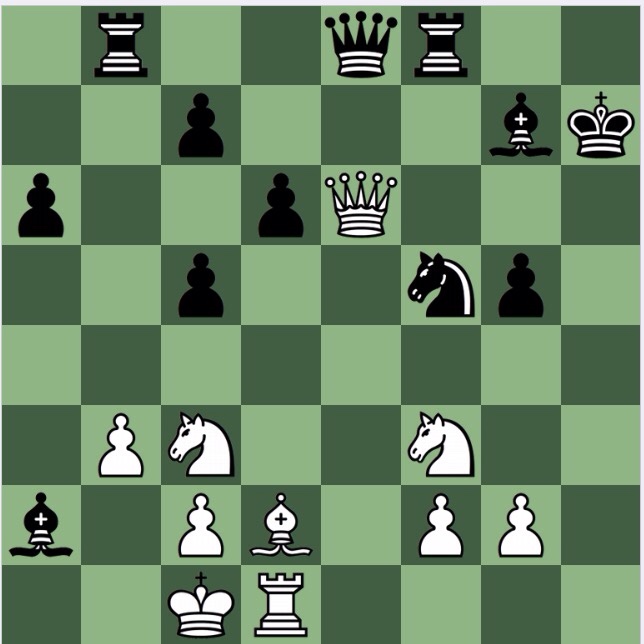
Black is forced to play 2…Kh8[] when 3 Rh1+ follows, and white takes whatever would in whatever order black puts on the h file, and then Qh7 mate follows.
White to play and win
Warning: really hard, or at least I think it is, but very satisfying to solve. Took me longer than it should, perhaps.
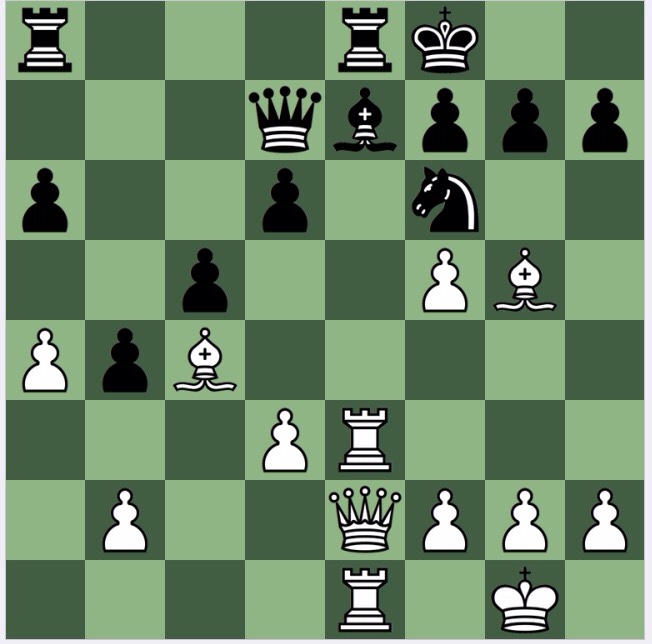
D Friedgood v V Huang 1971
Solution
This one took me all of a standard British unit of time (the time it takes to brew a cup of tea) and all of a long dog walk both without success, so I did what I rarely do with these puzzles, and set the pieces out, and tried to think it through as a game.
Just as I told my daughter I was giving up and going to look at the solution, the solution came to me. 1 Ba6! overloads the black queen.
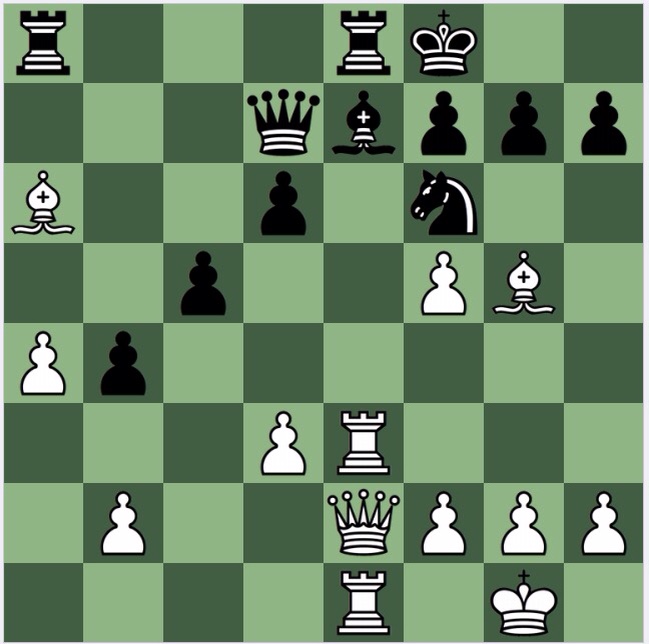
Firstly, if 1…Qa4 (which, apart from taking a pawn, also takes away b5 from the white bishop), 2 Re7 is decisive.
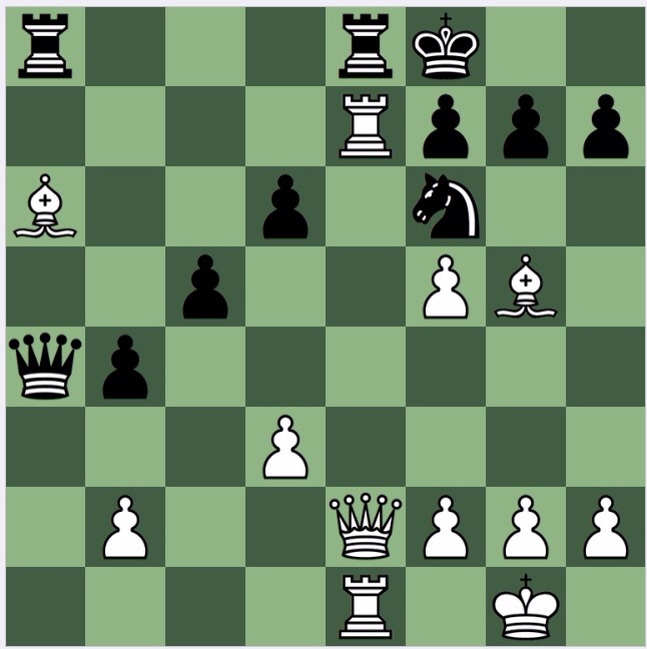
If 2…Re7, then 3 Qe7+ Kg8[] 4 Bf6 and white emerges a piece up.
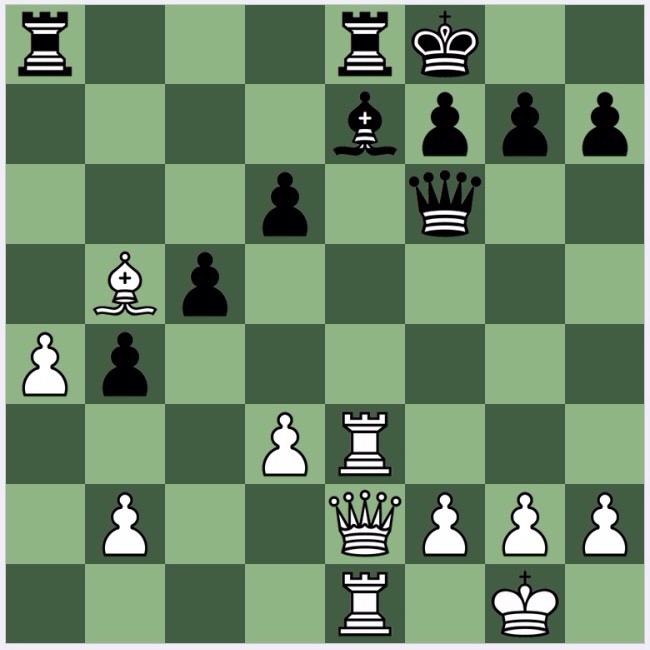
Second, and perhaps best for black, is 1…Qf5 when 2 Bf6 Qf6; then 3 Bb5 and white is at least the exchange up, with a bind.
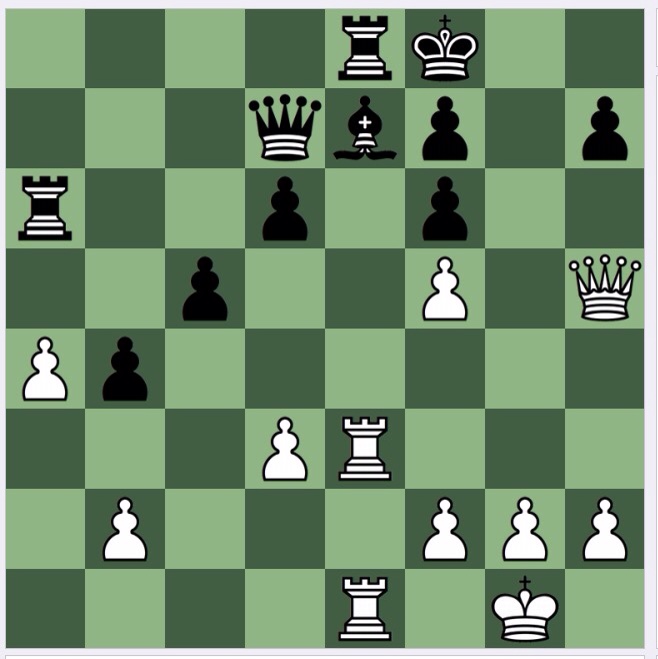
Finally, if 1…Ra6, 2 Bf6 gf[] 3 Qh5, and black is mated.
This puzzle is one of those annoying ones for me: if shouldn't have been so hard. In fact, I think I saw 1 Ba6 in my early appraisal (I will have done, following examine all biffs) but didn't appreciate it.
White to play and win
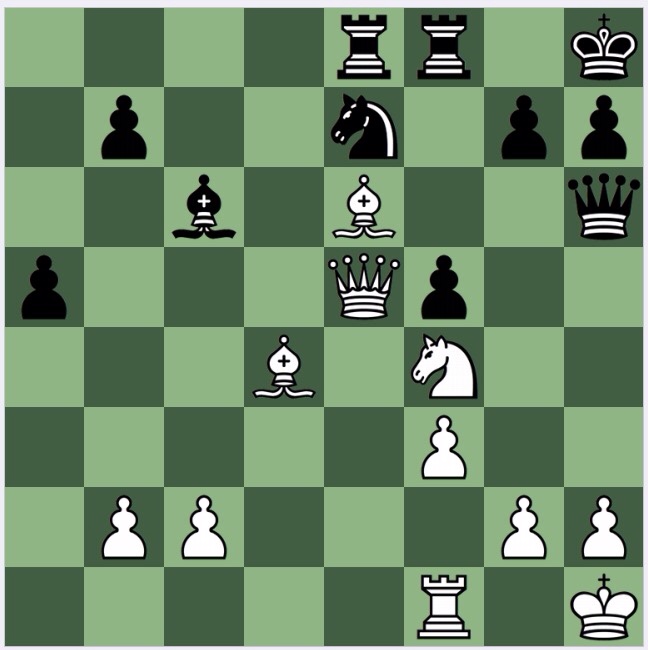
AN Rubinsztein v CC De Villiers 1975
Solution
The first moves are obvious, but it still took me a while to solve this one: it is necessary to be able to see a few moves deep.
1 Nh5! Rg8[] 2 Bg8 Rg8[]
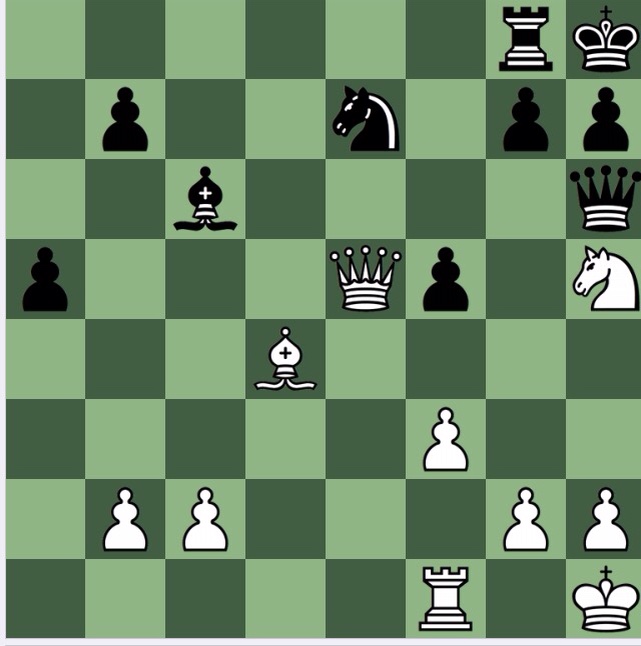
3 Ng7! Rg7 4 Qe7
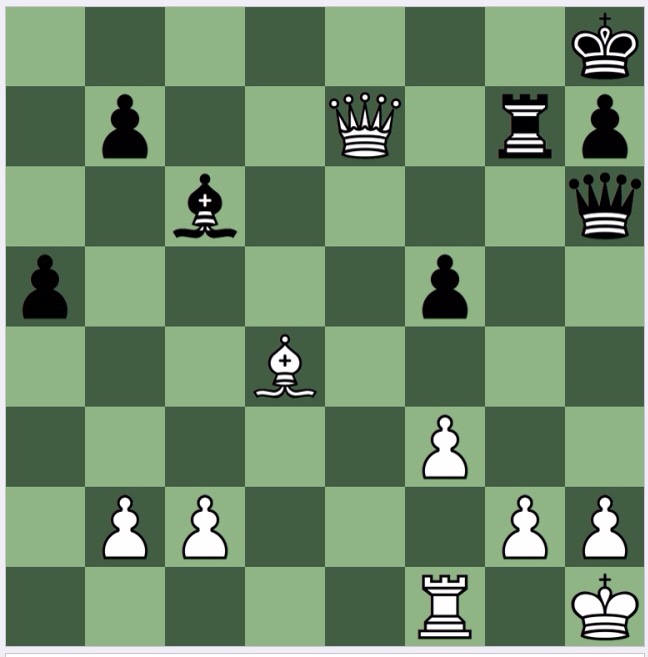
and the game is over.
Black to play and win
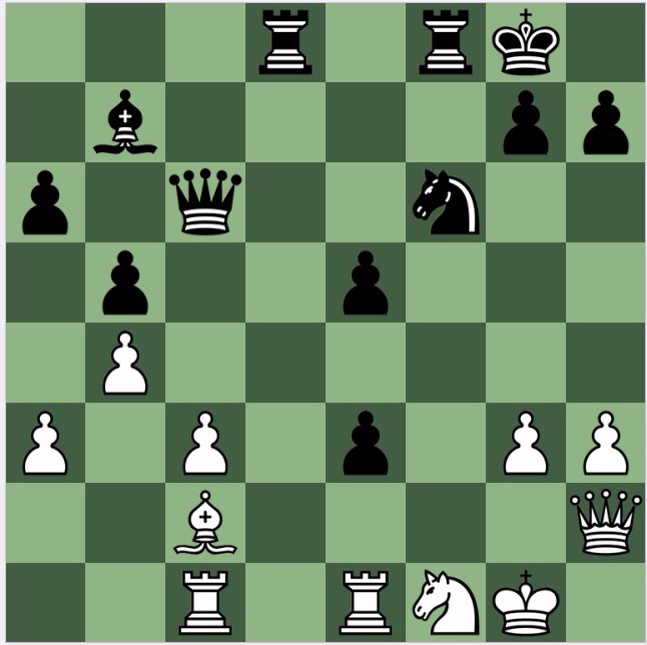
R Hillman v P Aalbersberg 1975
Solution
Examine all biffs yet again leads to the solution: 1…Rd2!
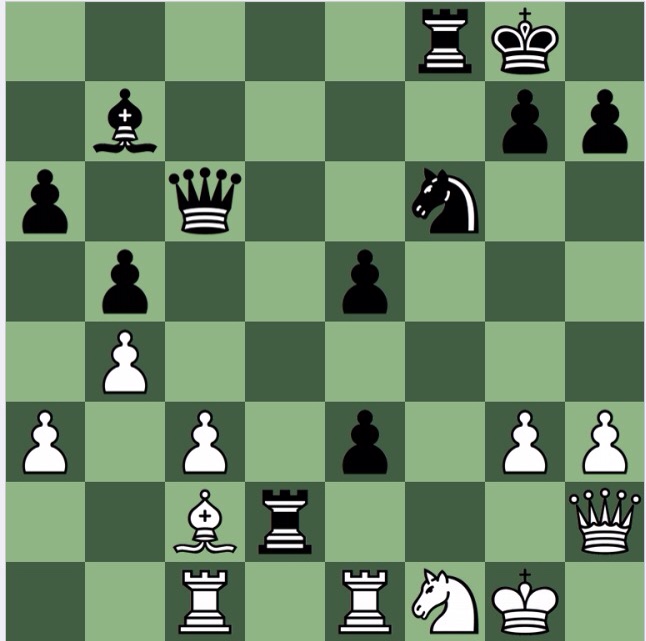
and if 2 Nd2 ed 3 Qd2 Qh1+ 4 Kf2 Ne4+ and mates next move.
White to play and win
Black played Rf7 in this position: how did white respond?
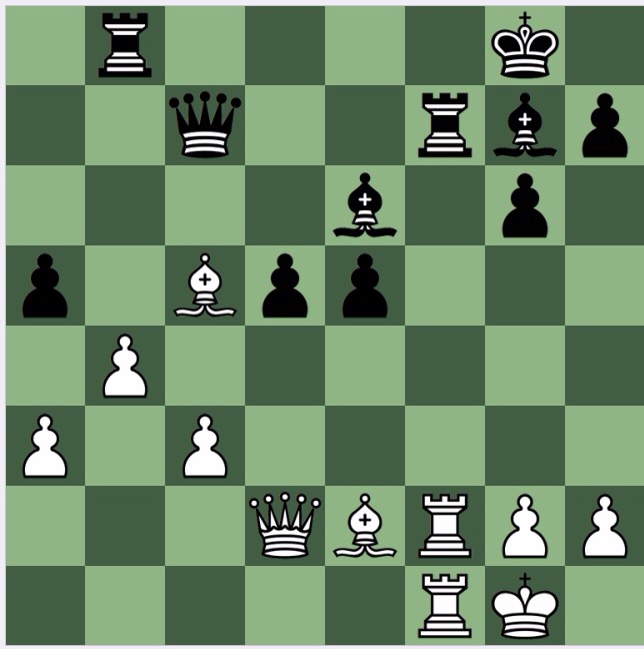
A Davatz v G Boulle 1981
Solution
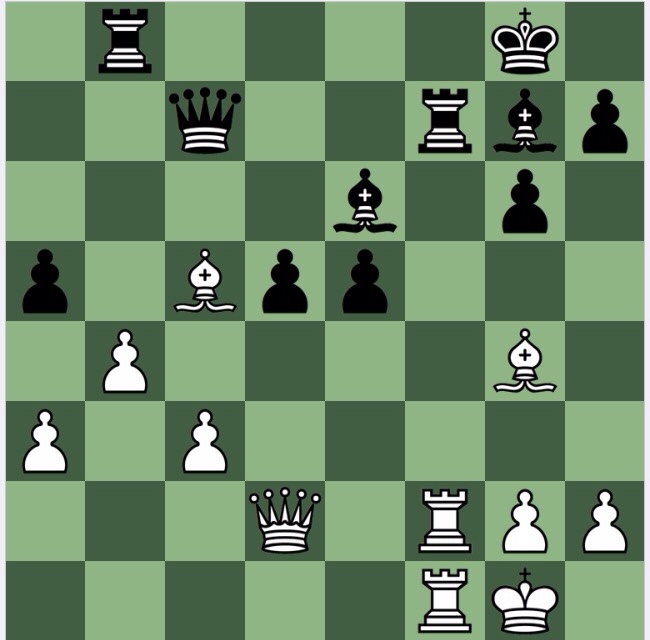
Examine all biffs and a review for LPDOs both lead to 1 Bg4! And perhaps strangely, there is no adequate reply. The fact that the defender of f7 is a LPDO makes black's position collapse. Best is 1…Bg4 2 Rf7 but then white has an overwhelming advantage.
 allanbeardsworth