The Unbelievable Truth is a BBC Radio 4 programme in which panellists have to give short talks during which they have to smuggle some lies and some truth past their fellow contestants. Their fellow panellists buzz when they think the speaker has lied.
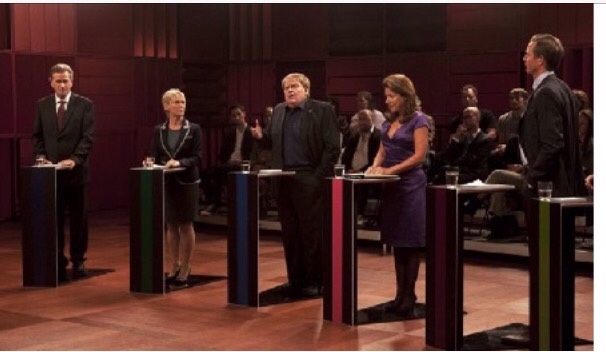
So far, in the 2015 UK Election, we have had two debates: Ed Miliband v David Cameron and a seven leaders debate, Borgen style.
 Posted with Blogsy
White to play and win
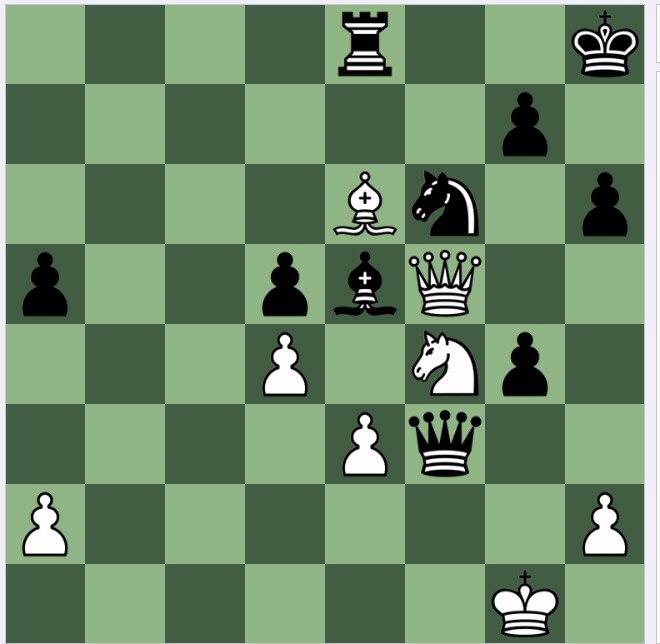
FN Barnett v W Nelson 2005
Solution
Quite a standard solution to today's problem: biff, biff, biff, mate.
1 Ng6+ Kh7[] 2 Nf8+ Kh8[] 3 Qh7+ Nh7[] 4 Ng6 smothered mate.
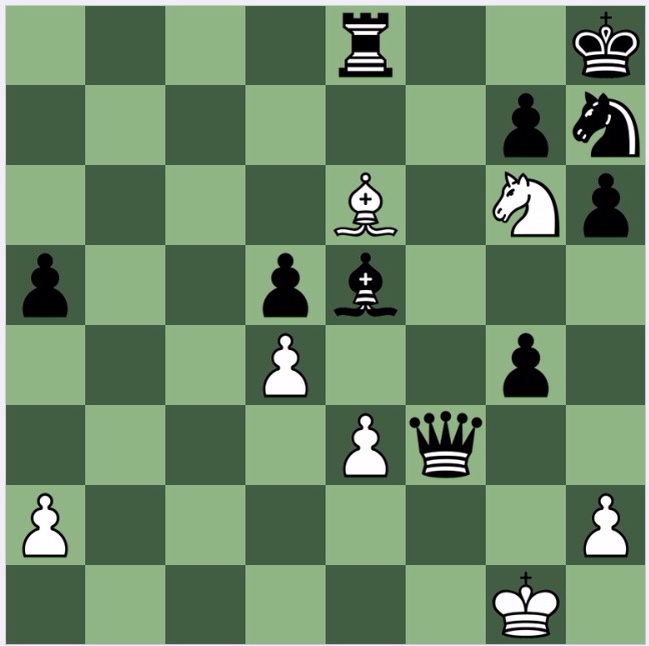
Black to play and win
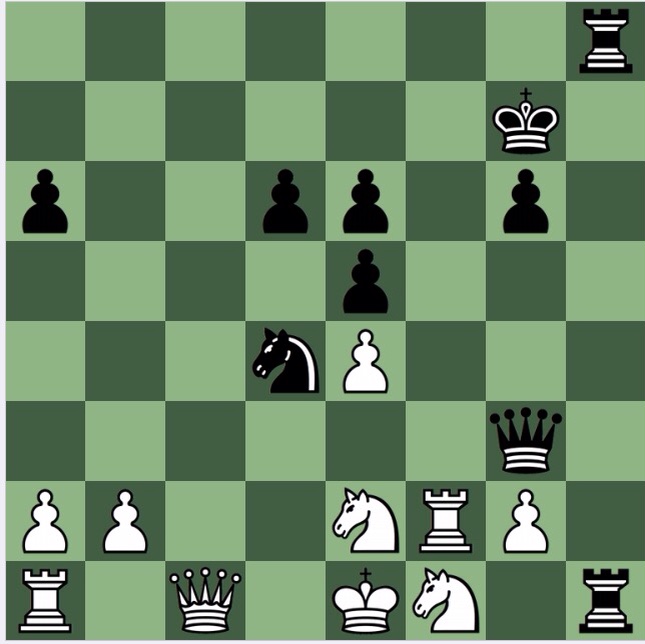
D Collier v M Levitt
Solution
Not too hard today, since the line is linear, and forcing. 1…Rf1+ 2 Kf1 Rh1+ 3 Ng1[] Qd3+ 4 Re2 Qe2 mate.
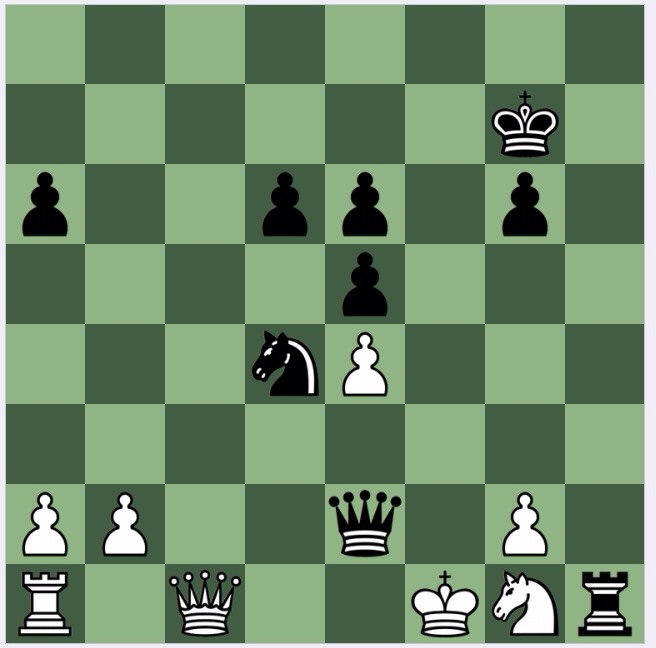
White to play and win
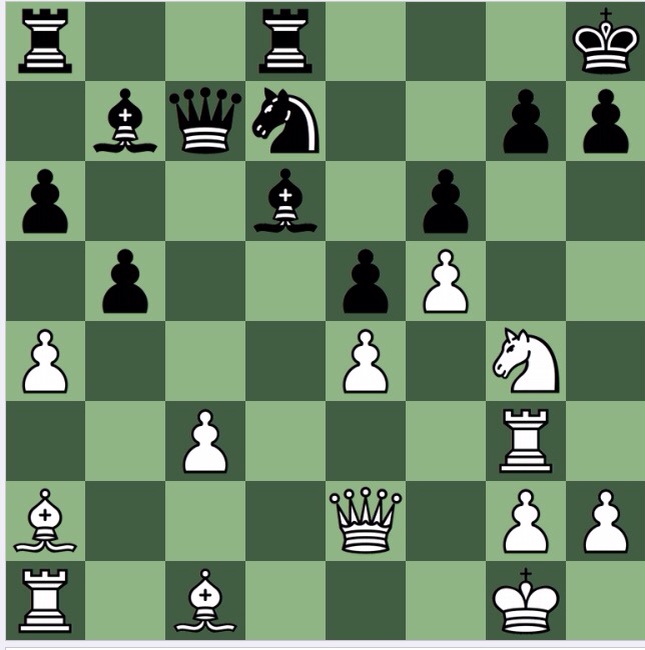
A Bickoff v M Rubery 1989
Solution
The move my hand wanted to play, the move I would play ten times out of ten in blitz, is 1 Nh6!- which turns out to be very good; but in a classical game, I would have more doubts, 'just in case' there was a defence: and I could see myself chickening out by playing the safe, and fairly strong, 1 Rh3.
Back to the best move, 1 Nh6, the easiest line to dispense with is 1…Rf8; then 2 Nf7+ wins the exchange, and white still has the attack. So only 1….gh needs calculating. Then 2 Qg4
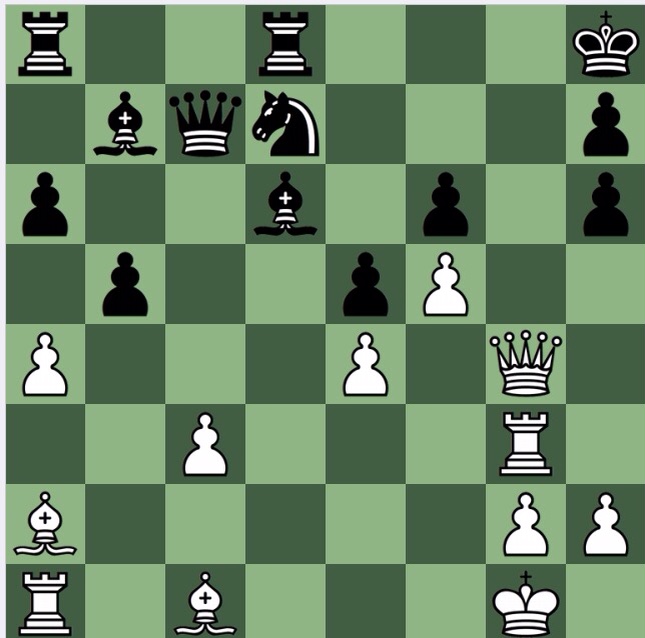
Nc5 3 Bh6 wins.
I wrote the above before turning to the solution in the book, and before entering the position into Stockfish. Alas, I missed something, as did white in the game. Black did indeed play 1…Rf8 and white did indeed win the exchange by 2 Nf7+, but 2 Rg7!! is far classier.
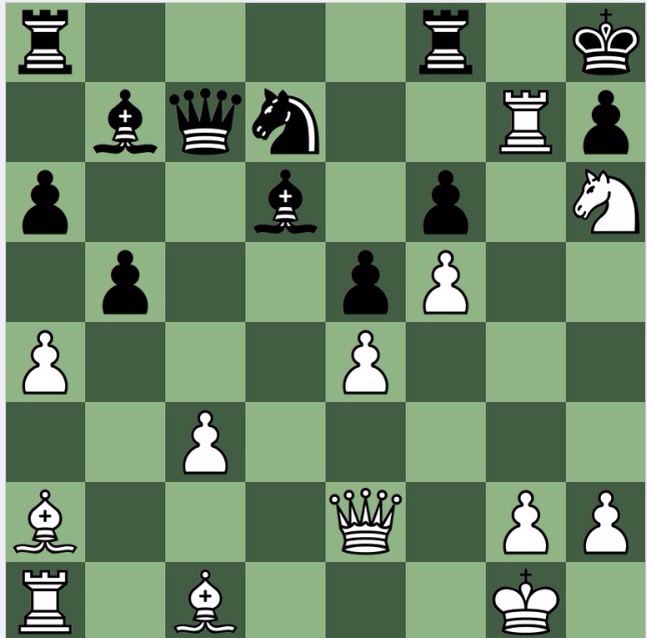
2…Kg7 3 Qg4+ Kh8[] 4 Qg8+!!
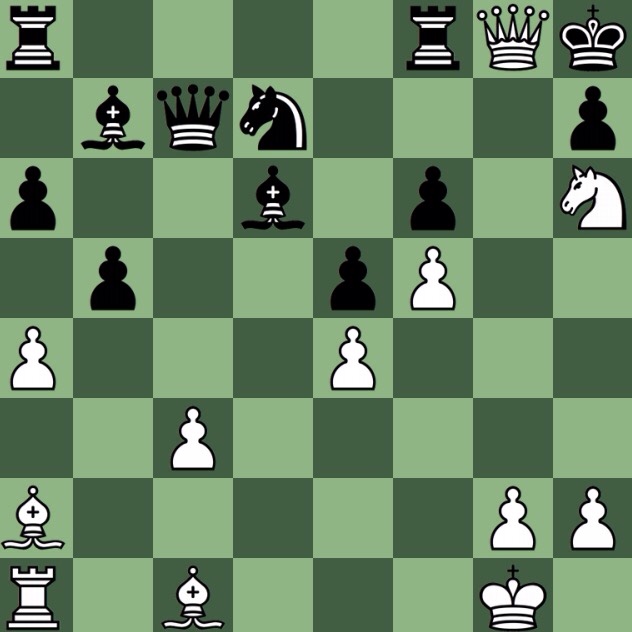
Rg8[] 5 Nf7+ Kg7[] 6 Bh6 mate.
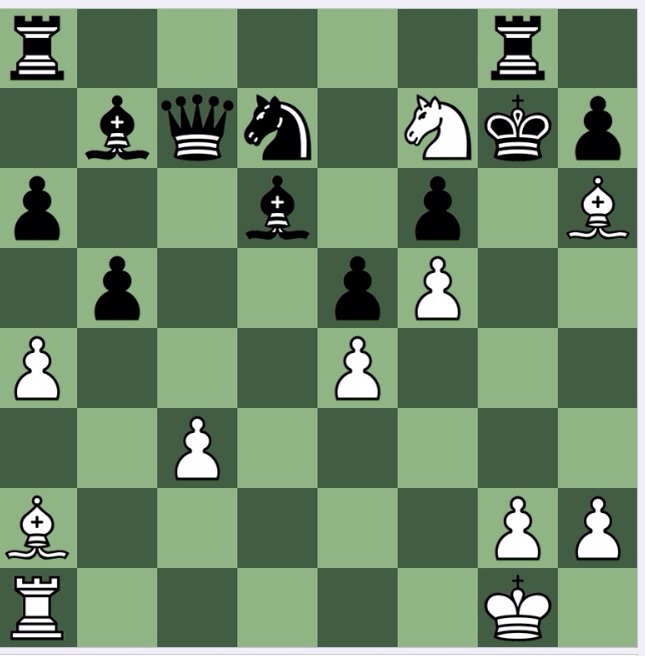
White to play and win
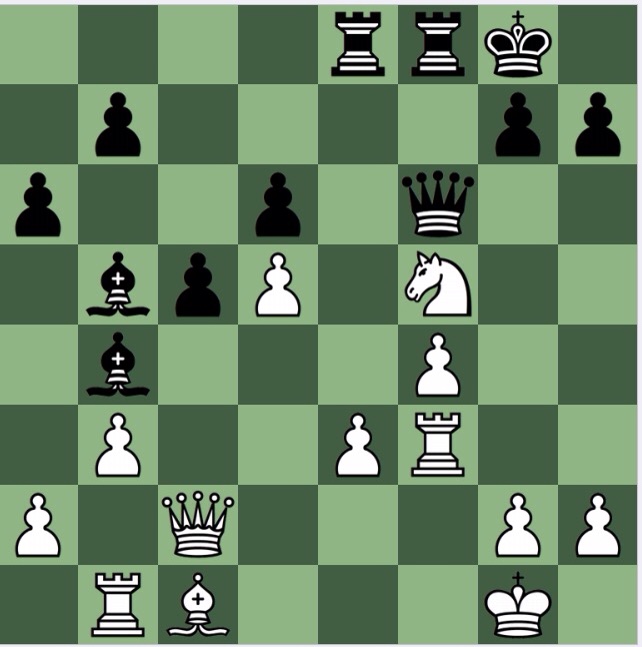
JJ Steenkamp v J Lovemore 1997
Solution
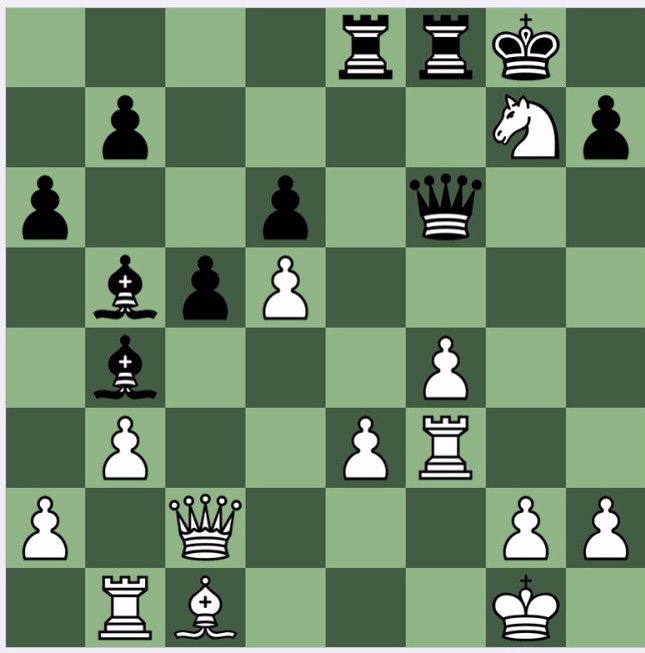
Fairly standard today: 1 Ng7! is an obvious biff. If 1…Kg7, 2 Bb2; and if 1…Qg7, 2 Rg3; and otherwise the king side is ripped open.
White to play and win
Find the most convincing way to win
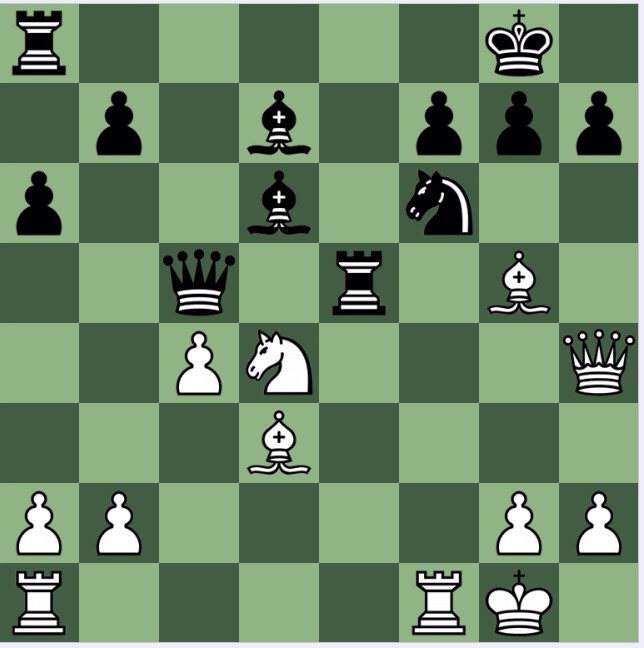
A Willenberg v D Bornheim 2005
Solution
I muffed this one. Reitstein's rubric, which I didn't give, said that white thought that 1 Bf6 would give an advantage, but wanted more, and found it. I found something, but not it, and had I applied Purdy's due process, I would have found the best move, which in hindsight is also 'obvious'.
First, my line. 1 Rf6! with the principal line 1…gf 2 Qh7+ Kf8[] 3 Qh8+ Ke7[] 4 Bf6 mate.
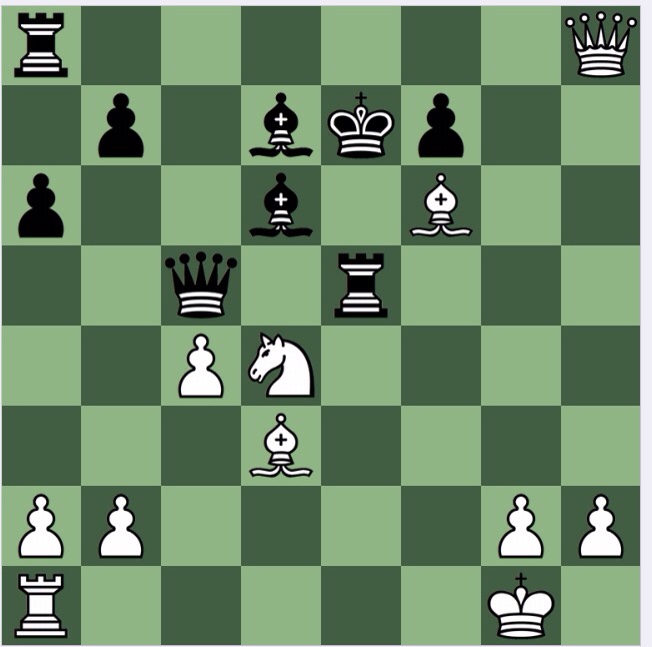
I thought that was 'it', the solution, and lazily only looked at the better defence 1…Rg5!. Then, 2 Qh7+ gets nowhere, so 2 Bh7+! Kf8[] (2…Kh8? 3 Bg6+ and 4 Rf7+ 1-0) 3 b4! Qe5 (3…Qa7 drops the Bd6: 4 Rd6 and white is a piece up)
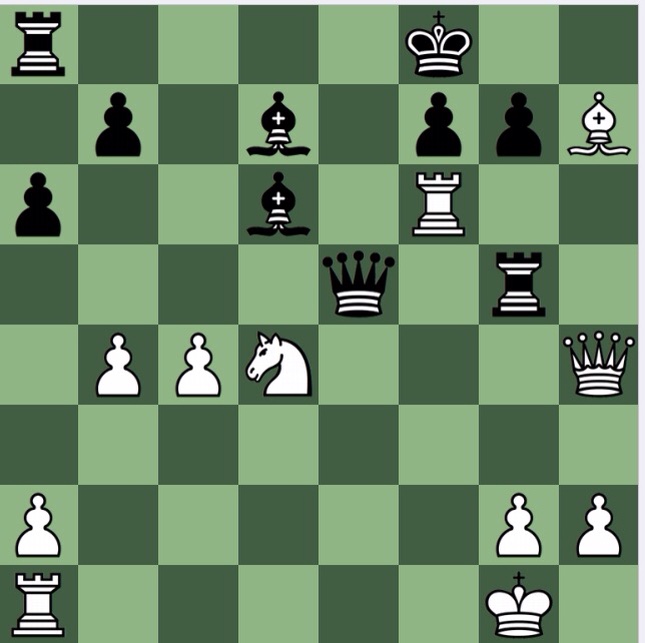
4 Rf7+! (not too hard to visualise, since it is a forcing variation, and has to be looked at) 4…Kf7[] 5 Rf1+ Ke7 6 Re1 1-0
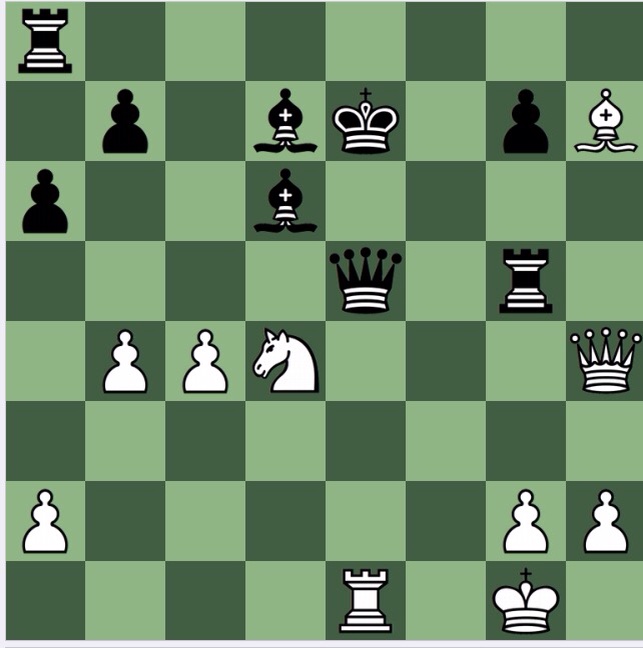
So, I was pleased with this long variation, and so turned to the solution, only to see what I had missed. There is a phrase in chess 'long variation, bad variation' and mine is a case in point. Instead, examine all biffs leads you to 1 b4! which diverts the Q, and also means that black can't defend by playing …Rh5: so e.g. 1…Qc8 2 Bf6 and it is all over.
Finally, if instead 1 Bf6, then 1…Rh5 is messy. 2 b4 Rh4 3 bc gf 4 cd Rd4 5 Rad1 and white is better, but the game goes on.
Black to play and win
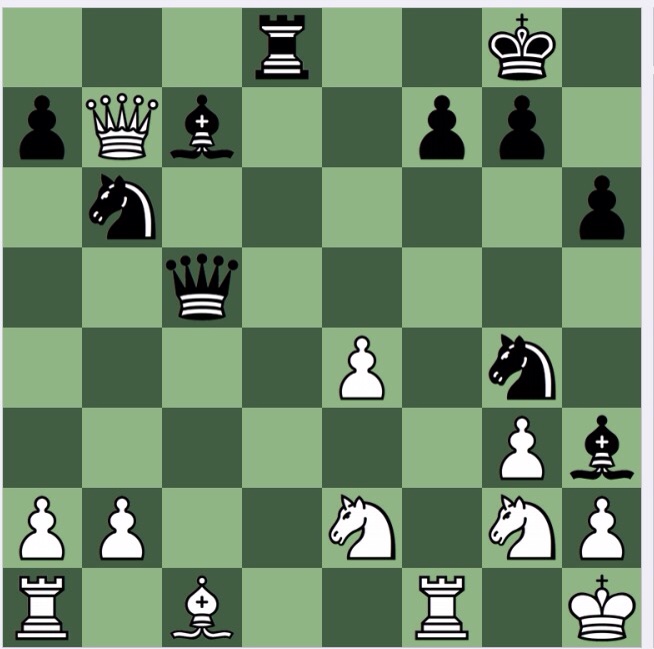
Mate in 5
J Van den Berg v D Wolf 1989
Solution
There is clearly a smothered mate motif, and also back rank mate ideas. Once I saw that the Rf1 was tied to the first dank, 1…Qf2! came to mind, and, as soon as I saw it, the lines clicked into place.
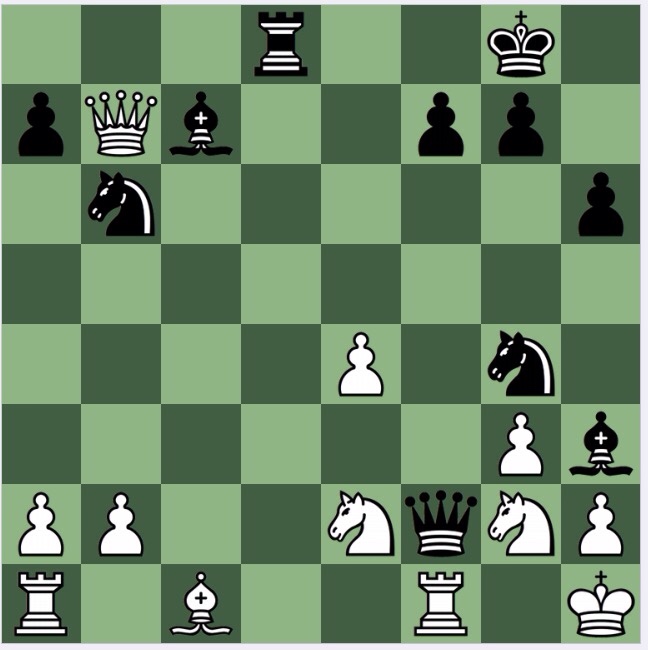
The mate in five follows after 2 Rf2 Rd1+.
If instead 2 Rg1, 2…Qg1+! and after 3 Kg1, Rd1+ 4 Ne1[] Re1 mate.
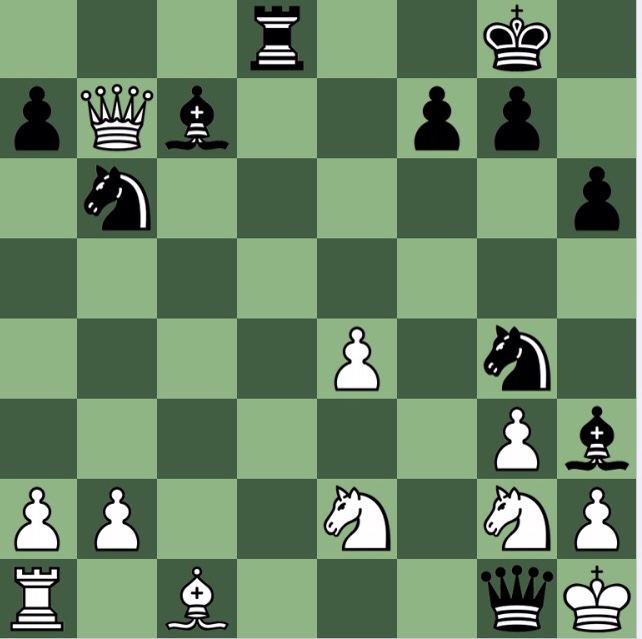
White to play and win
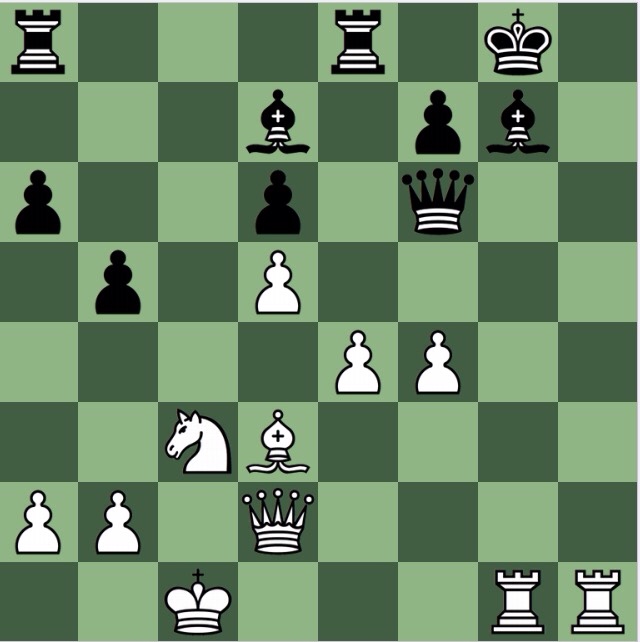
M De Pointe v A Goodman 1967
Solution
I found a solution , but not the solution.
I chose 1 e5!, which is the 'move my hand wanted to play' and after 1…de, played the inferior 2 Ne4? My line was easy to calculate a long way: 2…Qf4 3 Qf4 ef 4 Nf6+ Kf8[] 5 Nd7+ Ke7 6 Rg7 Kd7[] 7 Rf7+ Kd6 8 Rf4.
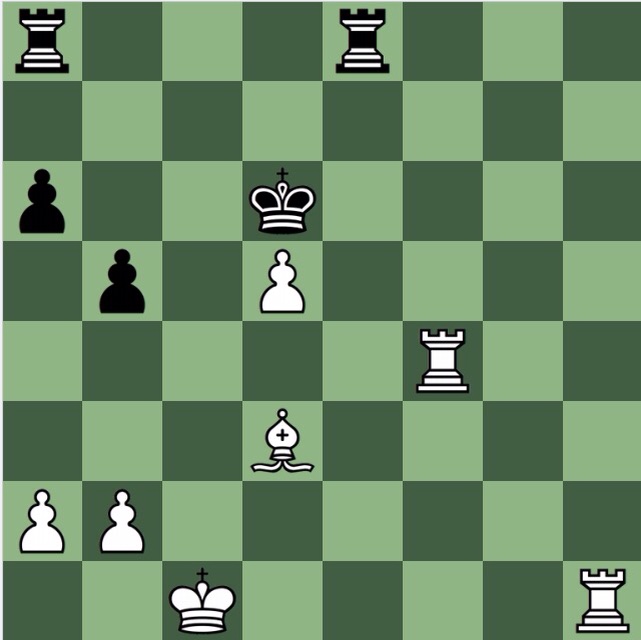
That was as far as I got: of course, it is technically winning, but equally, the game goes on. Also, if 2…Q somewhere, then 3 Qg2 Qg6 4 Qh2! is 1-0 because of the threatened Qh8+.
However, after 1….de, 2 Rh7! is far stronger: I just didn't see the Rh7 lift.
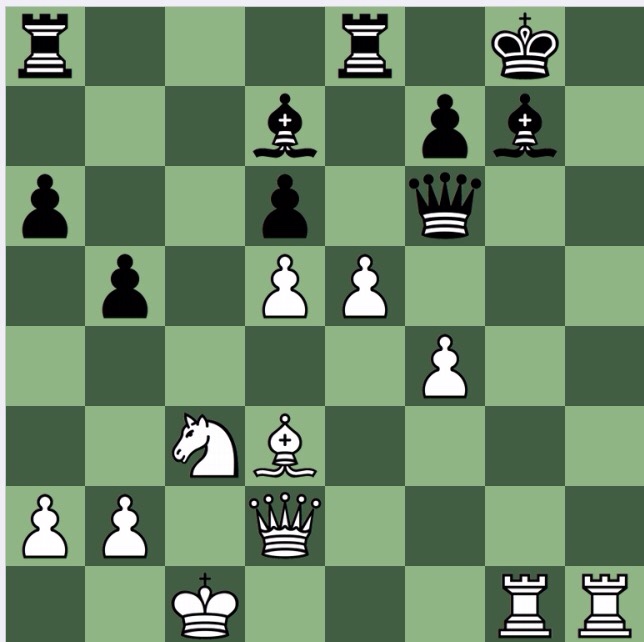
Reitstein gives 1 Rh7! as the solution, and it is equally good.
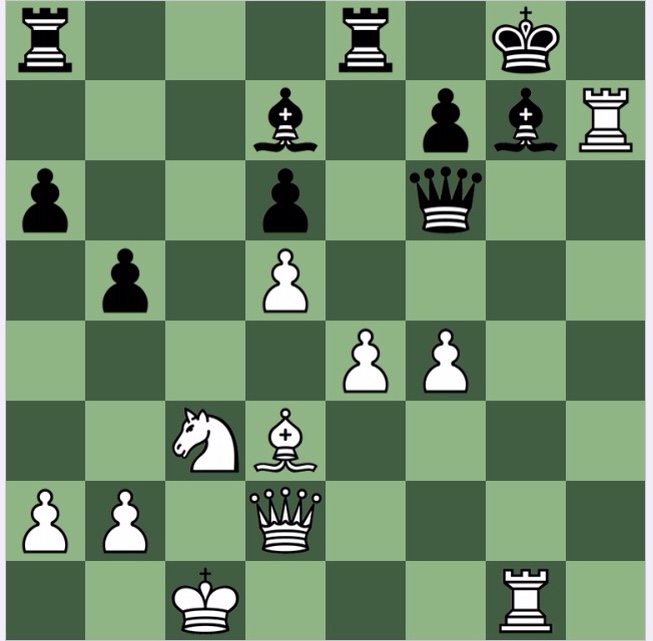
White missed this idea too, playing 1 Qg2, and the game went on.
Black to play and win
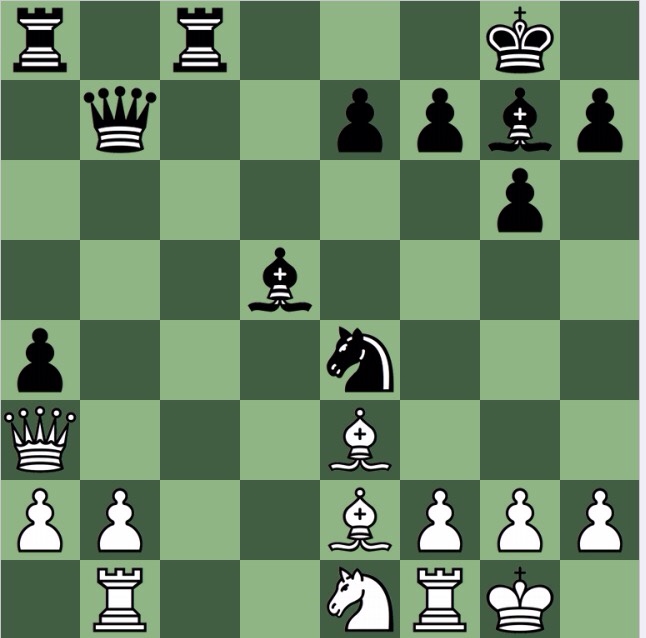
White has just played 1 Nf3, covering c2 and g2.
P Hangelbroek v JH Van Dyk 1961
Solution
The move 1 Ne1 turns white's took into a LPDO, and coupled with the jump-biff Qb7-b1 it isn't too hard to see 1..Nc3! winning at least the exchange: and possibly the a2 pawn.
Black to play and win
J Tsalicolgou v AN Rubinsztein 1975
Solution
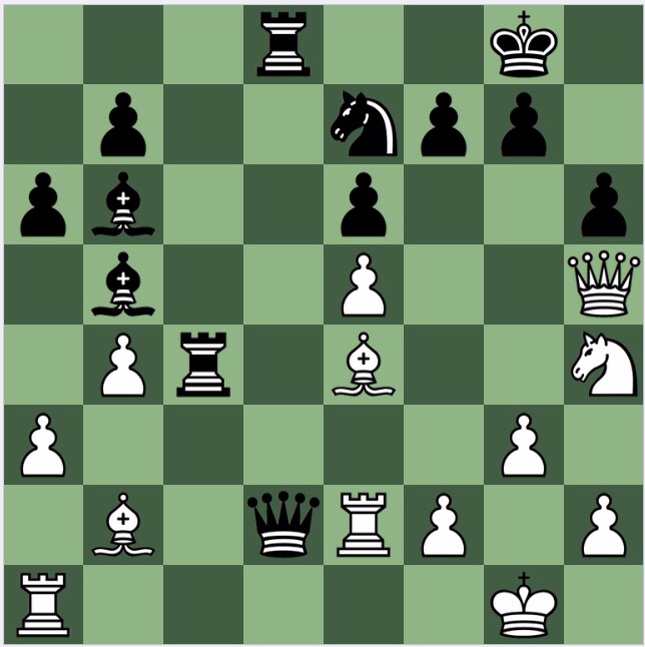
I got this one wrong, but only in the sense of choosing a -8 move when Stockfish (and black in the game) found a -11 one.
Firstly, mine: 1…Re4! 2 Rd2 Rd2
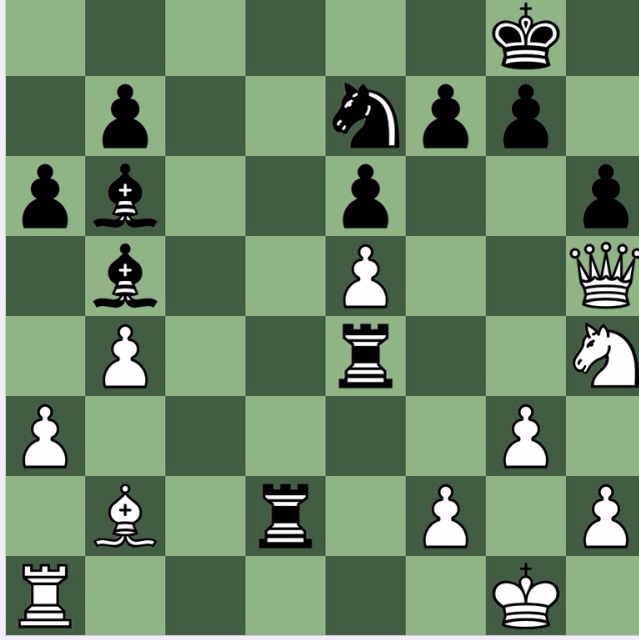
When Black's position is over-powering. If for instance 3 Qf3 then 3…Rf2+ and either the queen falls to a discovered check if Qe4, or if the rook is captured, at the end of the exchanges the LPDOS Bb2 drops off.
—
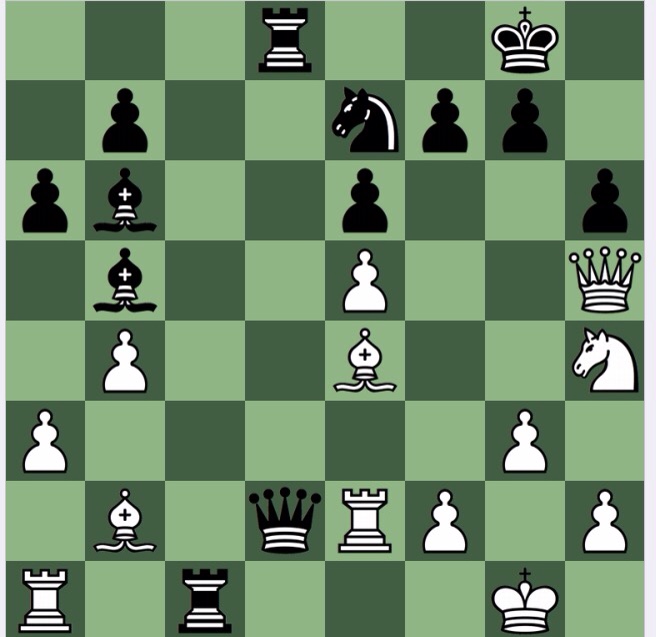
However, 1…Rc1+ scores even higher, and after 2 Bc1 (2 Rc1 Be2 and black wins a piece, with the LPDOS Bb2 dropping off) Qd1+ and mates. In the game, black played 2…Qe2? and drew- strange that he missed Qd1+ having found Rc1+.
 allanbeardsworth