Black to play and win
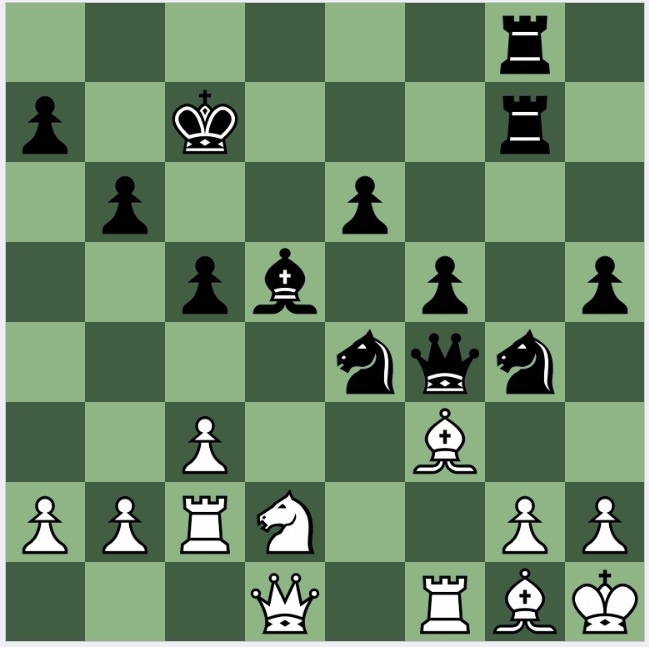
E Holloway v G Somerville 1995
Solution
An exercise in calculation, clearly aimed at 'how to break through' with g2 and the d5-h1 diagonal being key.
I often find this type of positon, with lots of pieces in play, hard, getting caught in the fog. Here, one point to watch out for is on some lines Nh2 Bh2 results in the Queen and King being skewered.
The current positon is not too hard: a nice exercise. First, checking on f2 (examine all biffs) with Nef2+! being clearly preferable because it forces 2 Rf2 (2 Bf2 Qh2 mate); and then 2…Nf2+ 3 Bf2. Black has improved his rooks and his bishop for trivial material loss.
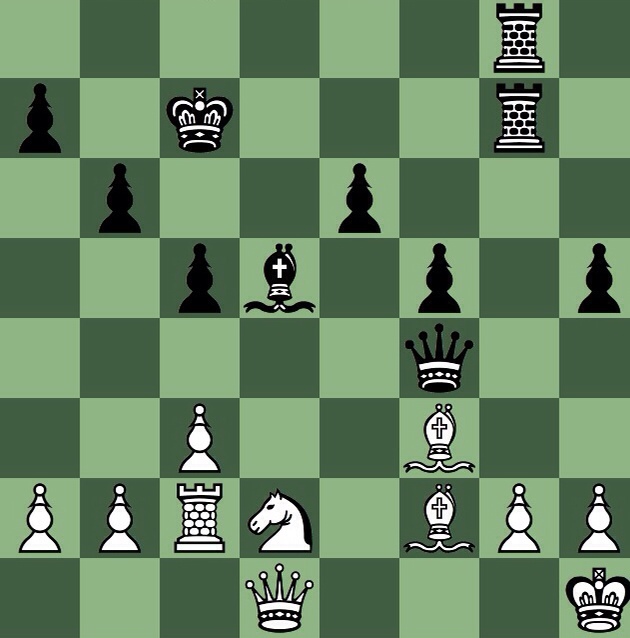
Then, it is not hard to see that 3…Rg2 is ruinous: it threatens mate on h2, opens the diagonal, and removes the protection of the Bf3.
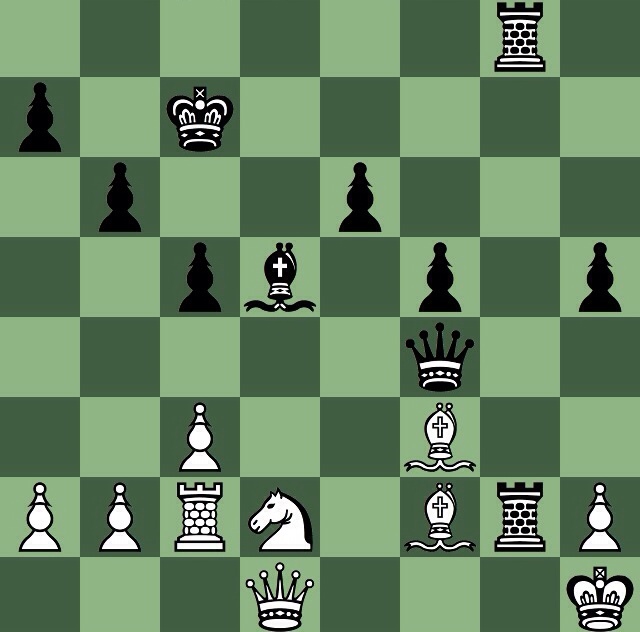
If 4 Bg3 R8g3 5 hg Qg3 mates on h2 or g2.
 Posted with Blogsy
White to play and win
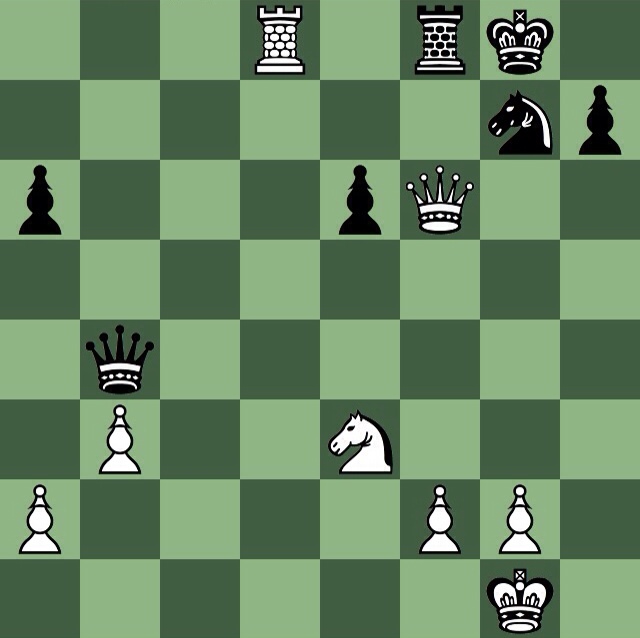
M Levitt v G Michelakis 1995
Solution
Clearly, the position is critical, by which I mean that there is either something here, and white can exploit the pressure, or exchanges will occur on f8 and the game will fizzle out. Given that this is a problem in a puzzle book, you know the answer is the former.
Analysing it with Purdy principles:
The Rf8 is pinned by the Rd8 to the Kg8 so that R*f6 is illegal;
The Qb4 is tied to the defence of the Rf8.
Also, it has to be noted that white doesn't have an h2 pawn, so that there is no back rank mate defence for black, and also there is no perpetual.
So, armed with the above, I quickly found 1 Nc2! Qc5 2 b4! Qd6[] 3 Qg7+ and white emerges a piece up: 1-0.
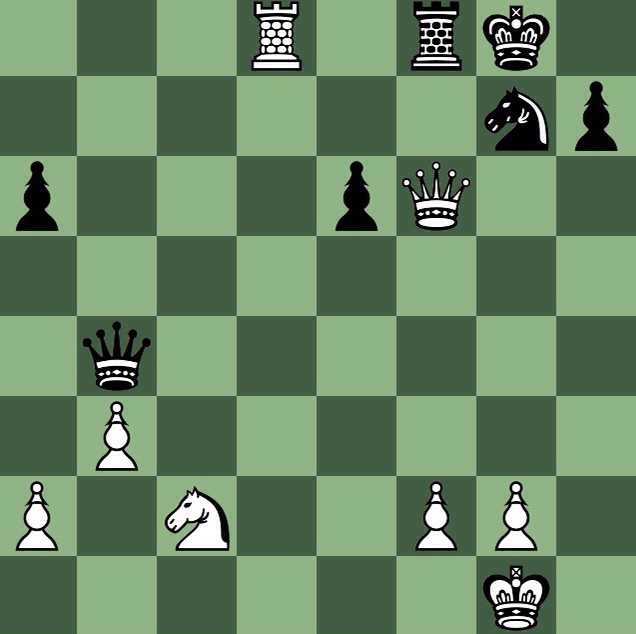
Black to play and win
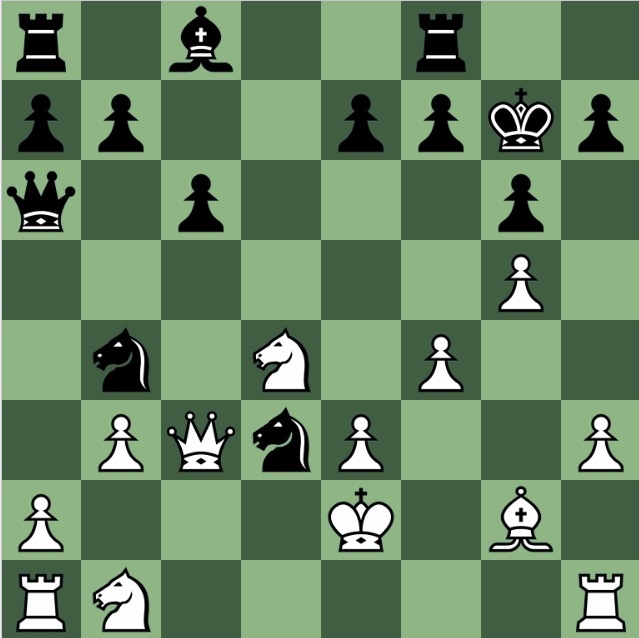
S Galleid v H Goldberg 1976
Solution
White has a deadly threat of Ne6++ and Qg7 mate; and meanwhile, the Nd4 protects e2, black's queen's entry square. So drastic measures are needed.
1…e5! suggests itself, using a prophylactic approach: it really dents white's attack. Then 2 fe c5!
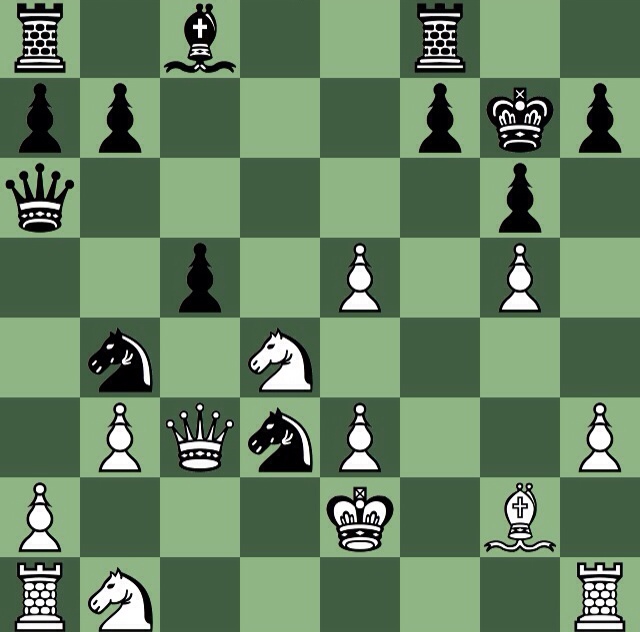
If the knight moves, it is game over after 3…Nf4+ and 4…Qe2+ (though I haven't checked the lines). So the question is, can white spoil things by e.g. the messy 3 a3?
3 a3 black plays 3…cd, when 4 Qc4 hopes to win back the knight on d3 once its protection has gone. But it does not work: 4…Qc4 5 bc Nc2 6 Ra2 Ne5!
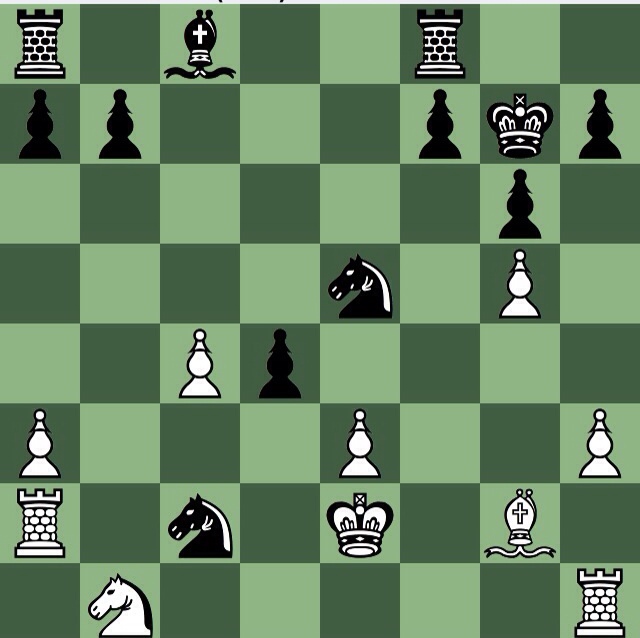
…with the points that 7 ed fails simply to 7…Nd4+, and it is game over, and 7 Rc2 to potassium cyanide, the pawn fork 7…d3+. It always makes me smile when I see this forking motif.
White to play and win
W Kobese v J Francisco 1998
Solution
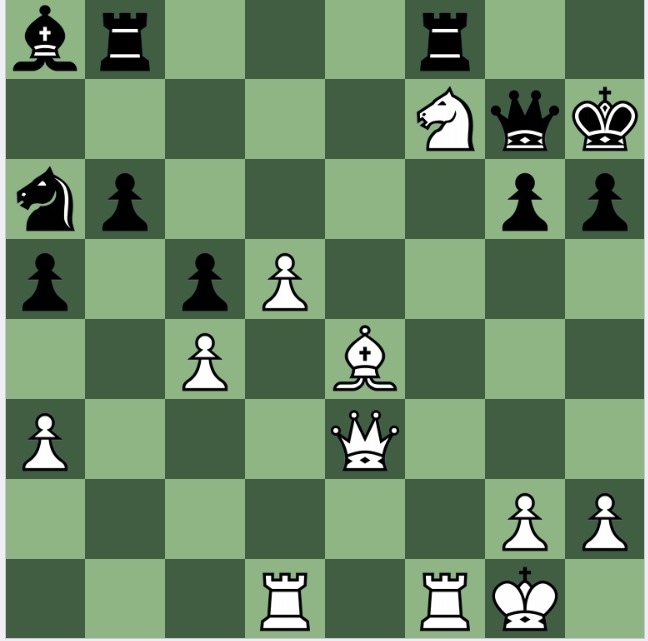
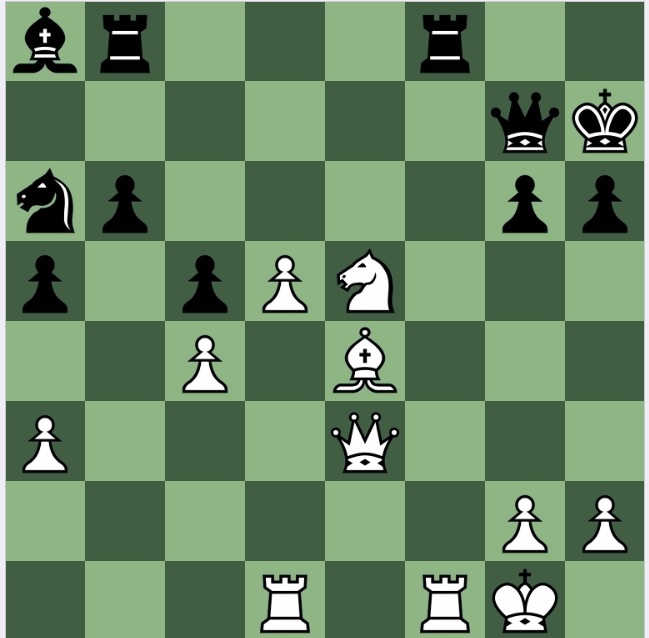
After looking at biffs like 1 Bg6+, 1 Ng5+ and flashy moves like 1 Rf6, rejecting them all, I then saw the retreat 1 Ne5 and realised it was game over.
The knight is poisoned: 1…Qe5?? 2 Bg6+ wins the queen. So the g6 pawn falls, and the black king is then naked. White has the better pieces, a protected passed pawn, and the safer king.
White to play and win
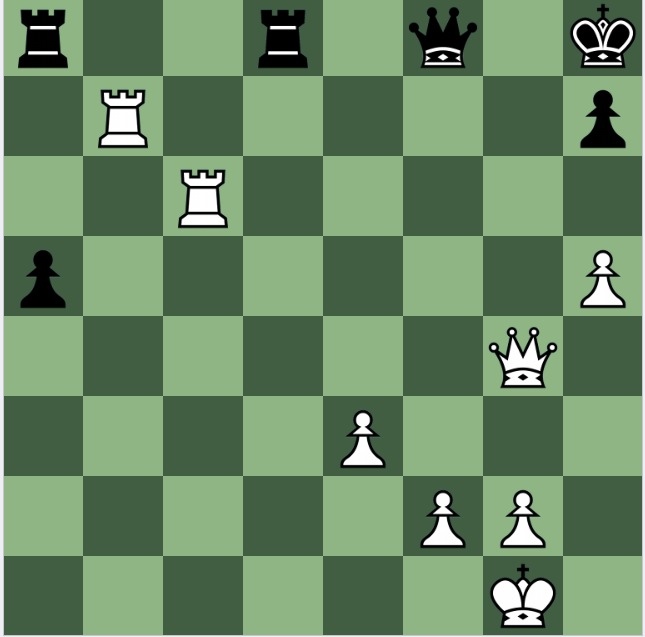
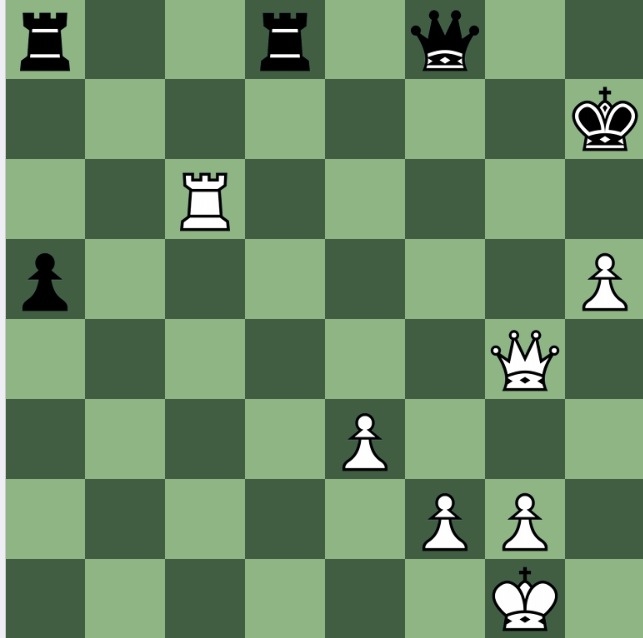
(I) what is wrong with the move white played in the game, 1 Rh7+!;
(2) how instead should white win?
K Dreyer v AA Ponelis 1972
Solution
(1) 1 Rh7+
Alas, black has a saving resource. 1…Kh7[] 2 Qg6+ Kh8 3 Rd7 when 3…Rd1+! 4 Kh2 Qd6+ and the queens come off, 0-1.
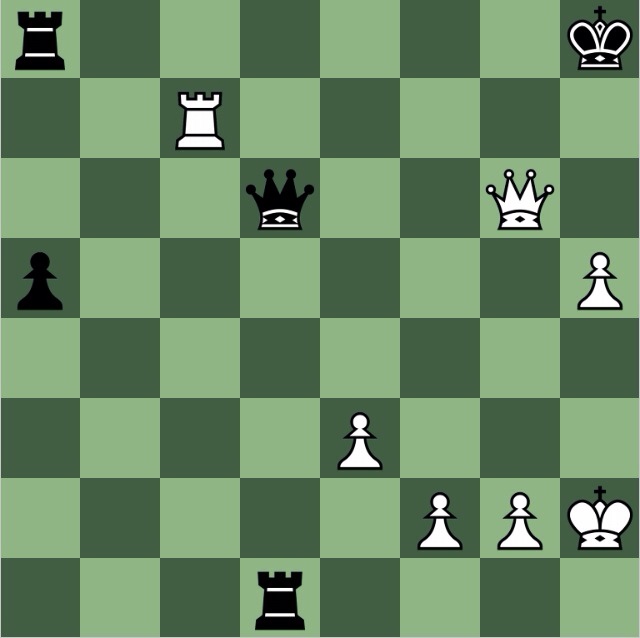
In fact, as Reitstein says in his solution, white could still have saved the game: 2 Qe4+ is perpetual.
(2) how to win
There are two equivalent ways: 1 Qe4, and if say 1…Qh6 or 1…Qg8, 2 Qe5+; or 1 Rcc7, and if either of the same queen moves, 2 Qf5.
I would not be surprised if Dreyer were in time trouble, and thus preferred the easily seen, flashy Rh7+: with more time, the safer ways would have been apparent.
White to play and win
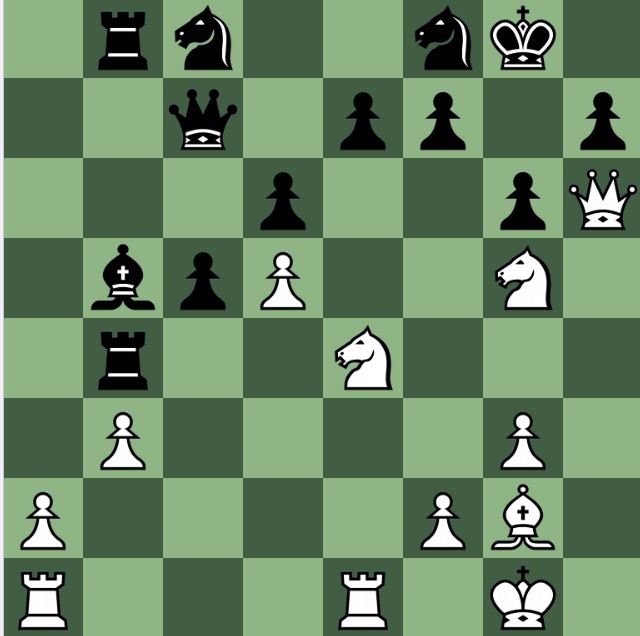
A special problem today, worth giving it time, and setting it up on board and pieces. I didn't (though I did spend a lot of time on it, in my head) and I got part, and not the main part of Reitstein's solution. So null points for me.
See if you can do better. I will be presenting this puzzle as a several part, since there is a lot in it.
K Solomon v K Willenberg 2003
Solution
Reitstein's solution (but, see below, there is better) is 1 Nf7, which I saw, but missed the follow up.
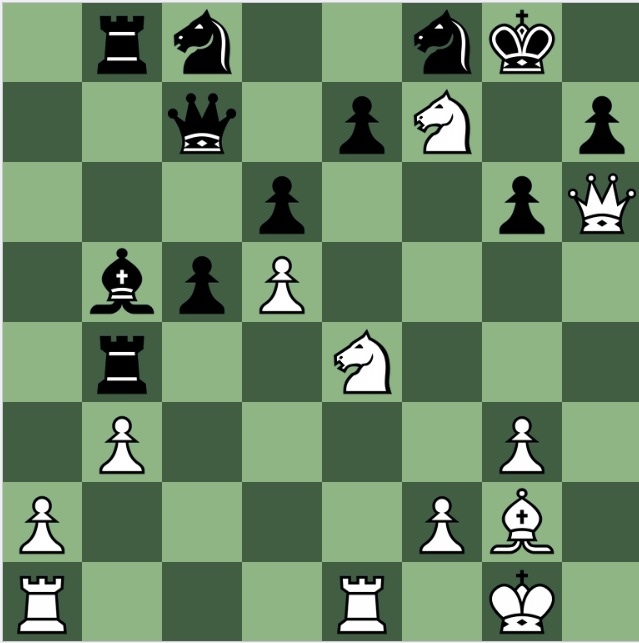
Firstly, 1…Re4 is a spoiler (in the sense of not permitting white to play his main concept) but means white isn't sacrificing anything for his attack: 2 Re4 Kf7 3 Rae1 and white is better.
So 1…Kf7 2 Ng5+ Kg8 (or 2…Ke8) 3 Qf8+!
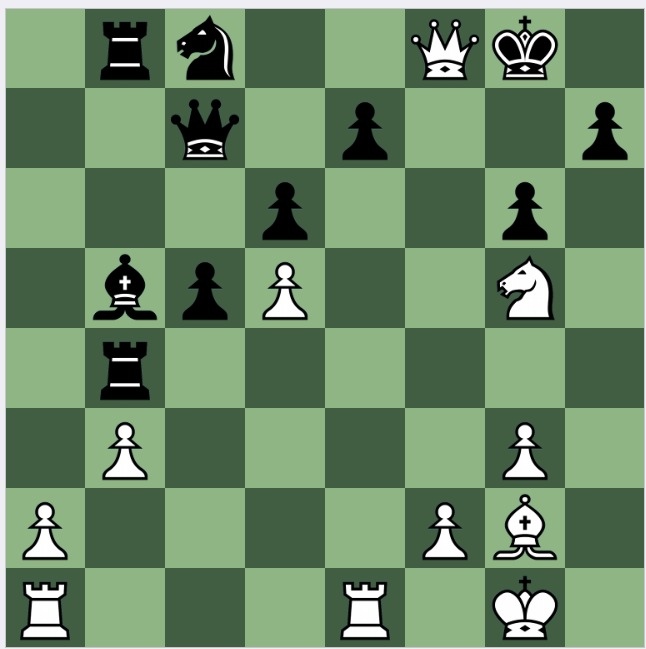
I missed this move, playing instead 3 Bh3 bringing more pieces to the party, and white is better. But 3 Qf8+ is neater, and after 3…Kf8[] 4 Ne6+ Kf7 5 Nc7 white is better:
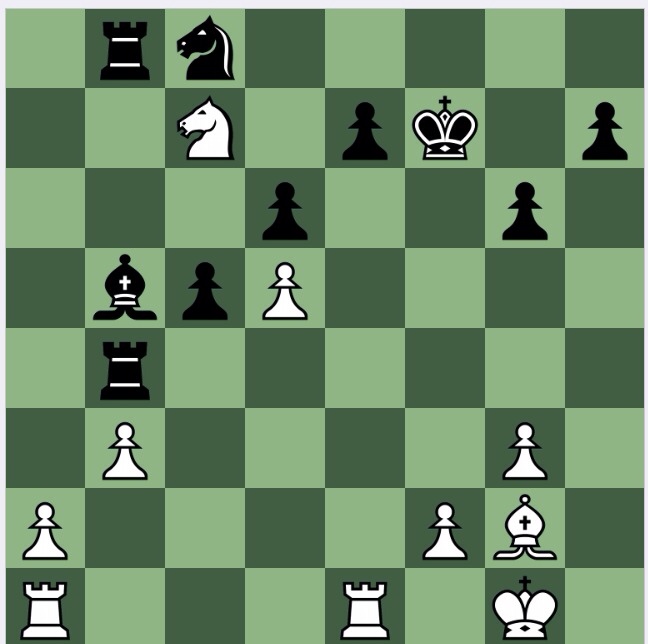
Reitstein's rubric doesn't say 'White to play and win', just to end in an improved position, and indeed he has.
White to play and win
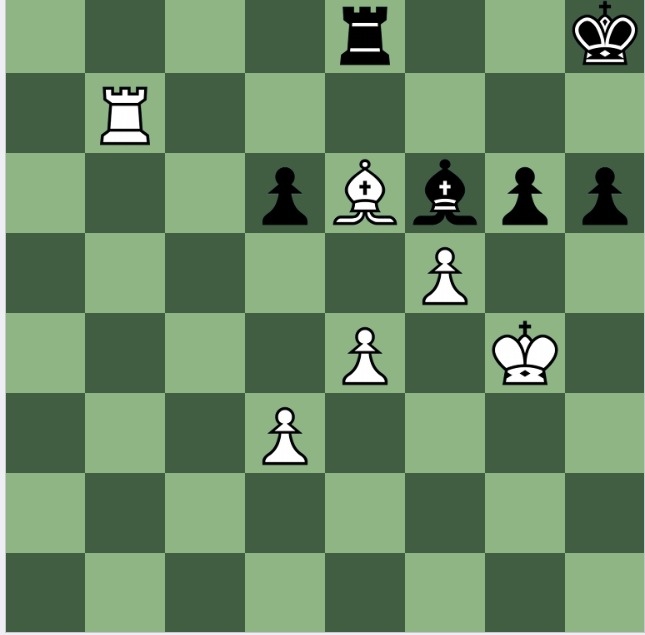
LR Reitstein v V Huang 1963
Solution
White missed the win here, as anyone might, since it was deep, and only careful examination, knowing that there was a solution, made me find it.
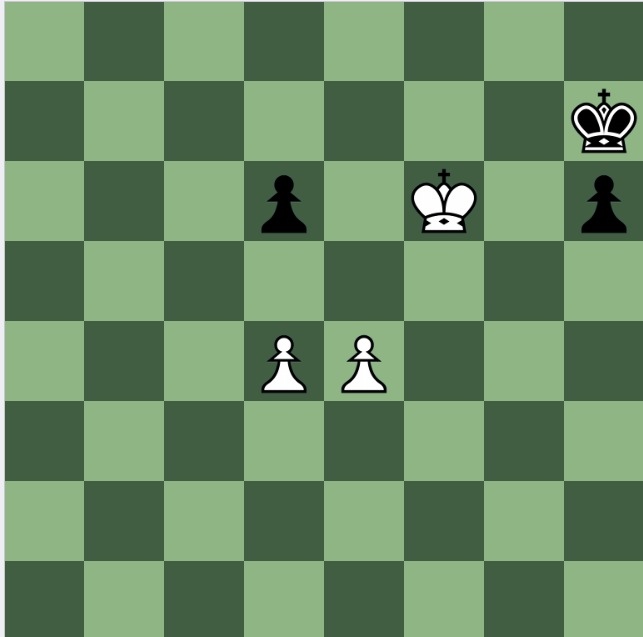
1 fg! (examine all biffs) Re6[] (1…Bg7 would be a way to grovel on, but no more than that) 2 Rh7+! (The key move, setting up what follows) 2…Kg8[] 3 Kf5 Re7 (3…Re8 or 3…Re5+ are trivial after 4 Kf6) 4 Kf6 Rh7 5 gh+ Kh7[] 6 d4! and the tempo means black loses his h pawn, whether it advances (Kg5) or whether black's king retreats (Kg6)
White to play and win
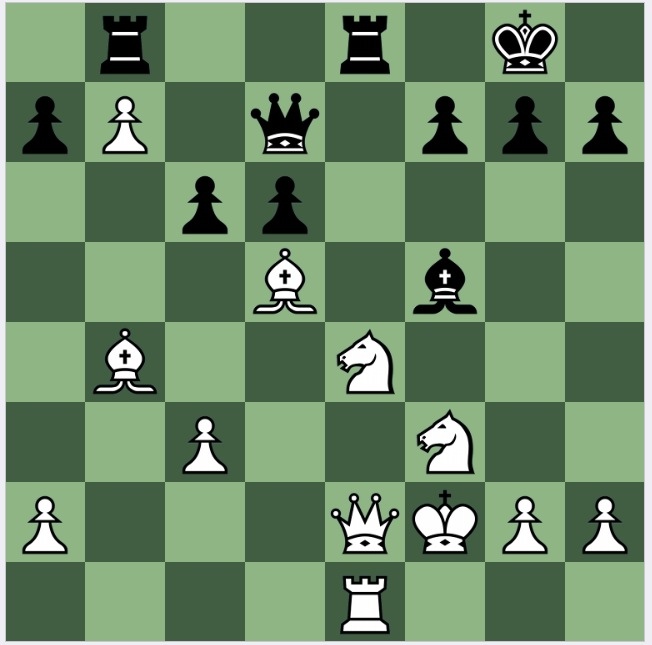
CH Van der Meyden v R Rubin 1962
Solution
Consider all biffs requires that 1 Nf6+! is looked at, and there really is only one line: 1…gf (though 1…Kf8 is best met not by 2 Nd7 but by 2 Qe8+ proceeding as in the main line) 2 Qe8+! Re8 3 Re8+ Qe8 4 Bd6 and black can't prevent the pawn from promoting. (I should add that when as is my way of writing these blogs, then entering the positon into Stockfish, it prefers 4 Bf7+ first, and of course the machine is right- a pawn is a pawn).
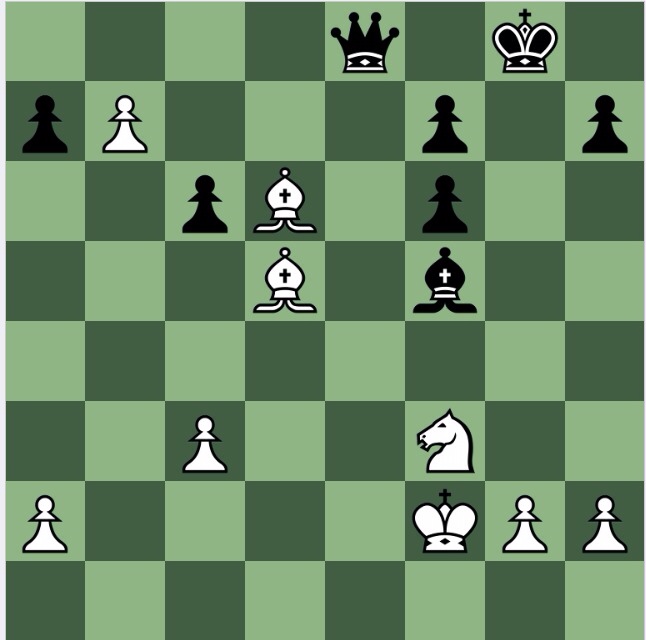
White emerge a piece up.
Black to play and win
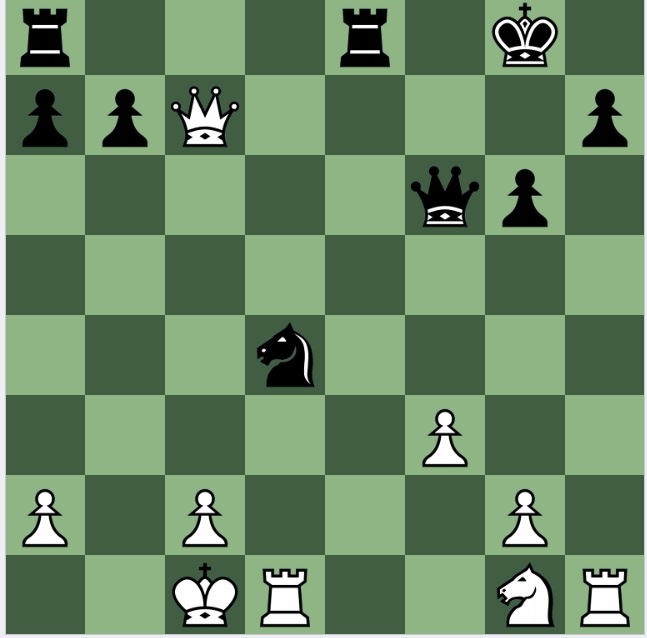
S Stocklose v W Erlank 2004
Solution
Reitstein's rubric says that once you realise that 1…Rac8 is no good for Black, you have to find something else.
With that hint, and after first seeing that 1…Rac8? 2 Qh7+ Kf8[] 3 Qh8+ the queens come off, and black ends up a knight down, it wasn't too hard to try the desperado 1…Nb3+!
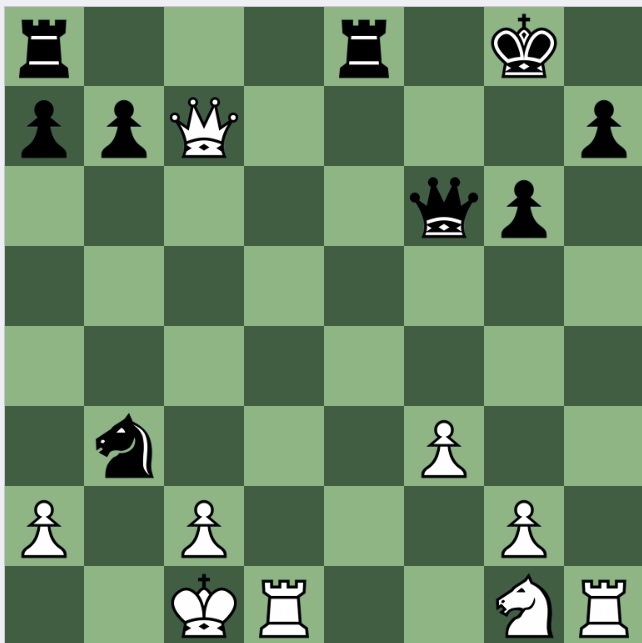
There are only three lines. Trivial is 2 Kb1?? 3 Qa1 mate; 2 cb? Rac8 pinning the queen and leaving the king in the open for black's queen and rook. So 2 ab is best, but then 2…Qa1+ 3 Kd2[] Rad8+ and it is game over.
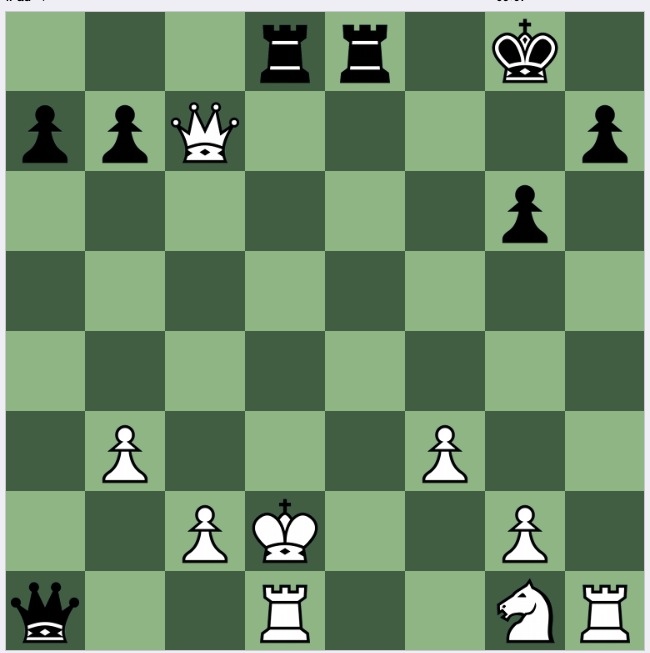
White to play and win
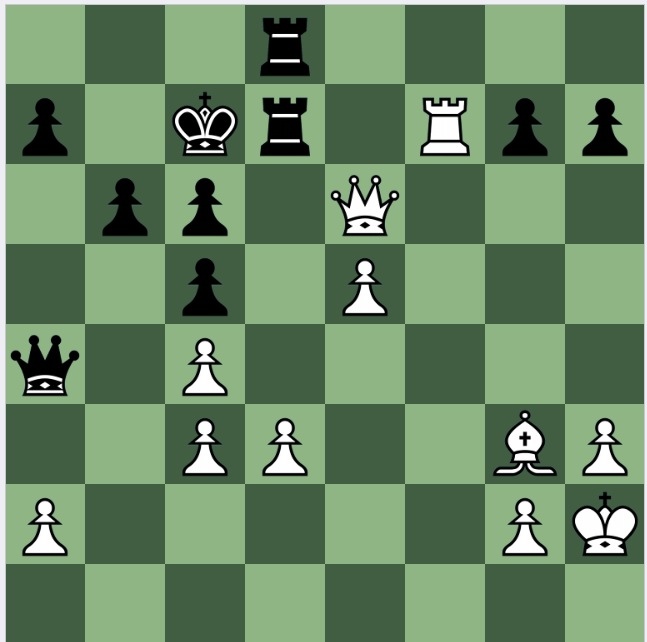
G Meyer v M Keserovic 1995
Solution
The mini sacrifice 1 Qd7+! begs to be examined. The only question is 'does it win' since not much material is shed, and the Bg3 is brought into play. 1…Rd7[] 2 e6+ Kd8 3 ed:
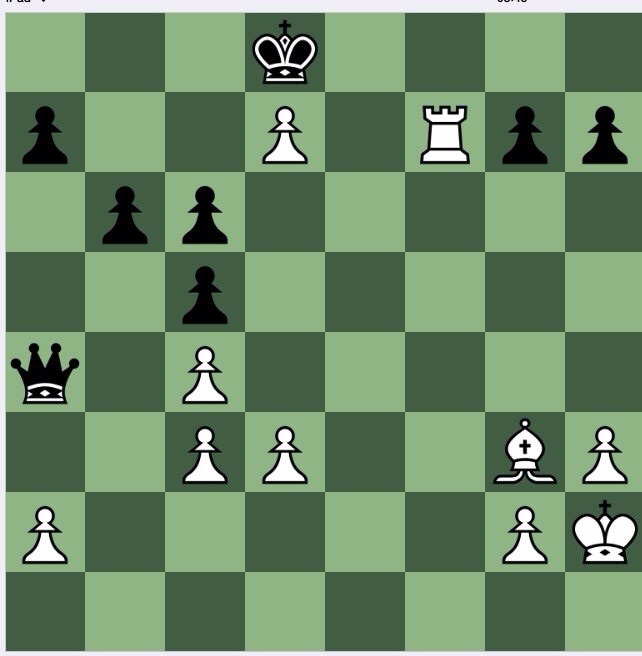
It is not too hard to see that the d7 pawn promotes. If 3…h6, 4 Rg7 and 5 Bh4+; or if 3…g5, 4 Be5 and 5 Bf6+: there are no other lines to look at, with e.g. other king moves (2…Kc8, 3 ed+; 2…Kb7 3 ed) being easier.
For good measure, white doesn't need to play 1 Qd7+!; 1 Qf5 also wins easily, same motif of attack and promotion, but Qf5 is less forceful.
 allanbeardsworth