Black to play and win
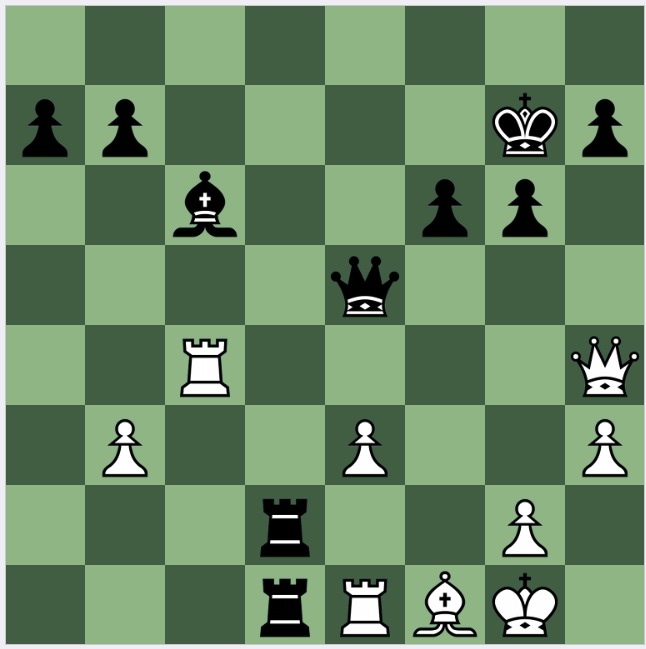
K Mamombe v D Gluckman 1995
Solution
The motif is fairly clear in today's puzzle, with back rank mates being in the air: and attacks on g2.
My immediate, on sight, response was 1….Rg2+!, which wins easily enough. 2 Bg2 Qe3+ and probably best is 3 Qf2 Re1+ 4 Bf1 but the game is over.
I then looked a bit more, and reversed the order of moves- a common technique- 1…Qe3+! which is more accurate : 2 Kh2 (2nRe3 Rg2+ and 3…Rf1 mate) 2..Re1 and 0-1.
 Posted with Blogsy
Black to play and win
White played 1 h4?? here. Why does it lose?
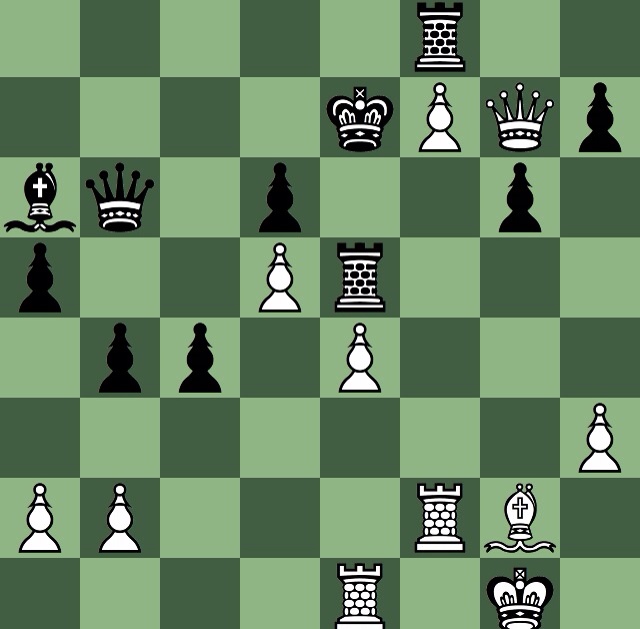
K Dreyer v J Van Dyk 1963
Solution
White played 1h4; why was it a losing mistake?
Fairly straightforward: examine all biffs reveals 1… Qf2+! 2 Kf2 Rf7+ 0-1
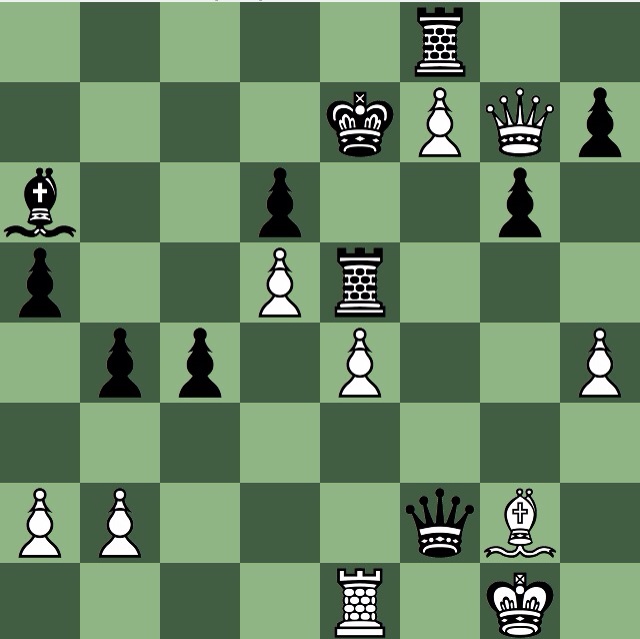
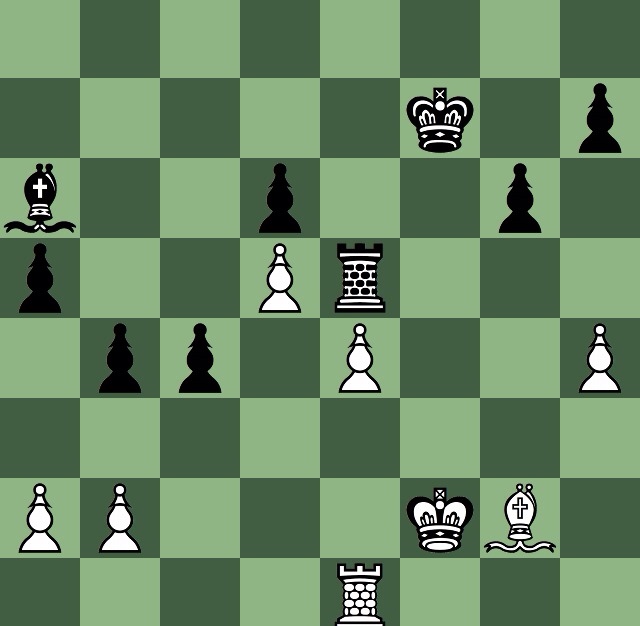
To go a bit further, this position is clearly winning for black, but maybe there are ways to mess it up, particularly because white can get his king to d4 before black's king can reach e5. However, a sample line shows it is not too hard: 4…Kf6 5 Bf3 Re7 6 Ke3 Rc7 7 Rc1 c3 8 bc bc 8 Kd4 c2 and the win is only a matter of time, one tictac being that 9 e5 is met by the zwischenschach 9…Rc4+ and then the e pawn falls.
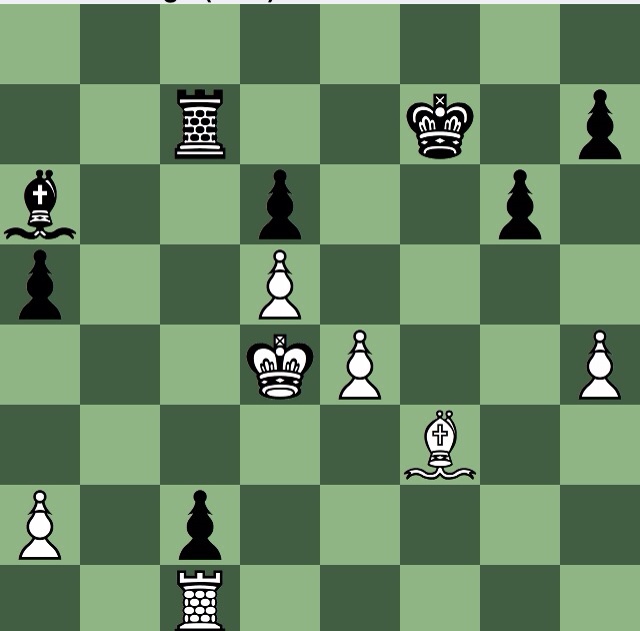
Black to play and win
A good work out today: worth spending time on: read this blog posting after you have looked at my other posting, posted a few moments ago, on the alternative black try 1…hg
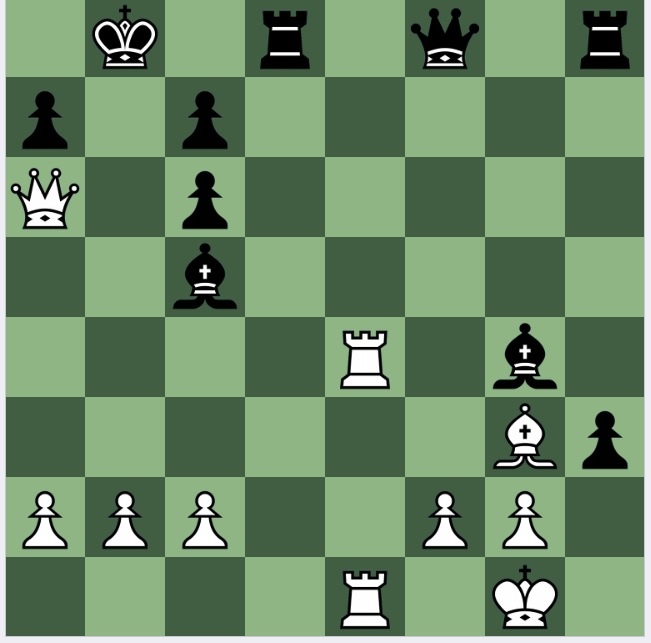
J Baartman v D Morschel 1995
Solution
I spent a lot of time on this problem, including getting the pieces and board out. In fact, it turns out that 'most everything wins.
Reitstein prefers (in the sense 'only gives') the move played in the game, 1…Bf3.
Rather than descend into computer analysis, which this position is ripe for, I shall only give a few lines. If 2 gf not 2…Qf3? 3 Bc7+ with perpetual, but 2…h2+ 3 Bh2 Rh2 (Stockfish prefers 3…Qg7+ 4 Rg4 Qh7! assessing it as overwhelmingly winning for black) 4 Kh2 Qf3 and black is winning. If 5 Re8 black takes on f2, and checks his queen back to g6 or h5.
If 2 Rf4, then 2…hg!
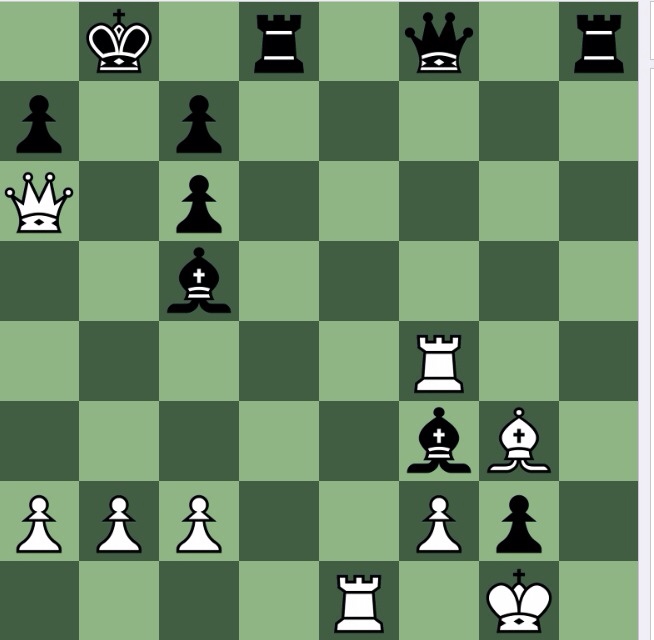
I preferred 1..Rd2, and worked my way through the complications.
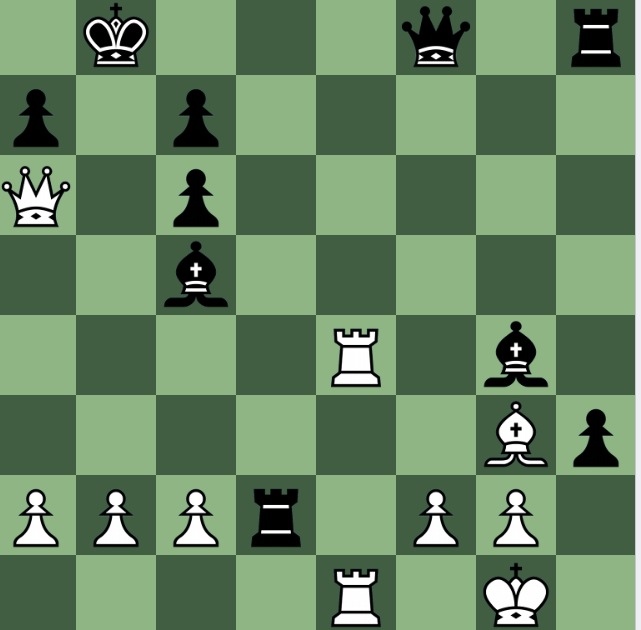
If 2 Re8+ Qe8 3 Re8+ Re8 4 Qc6 we reach the following position:
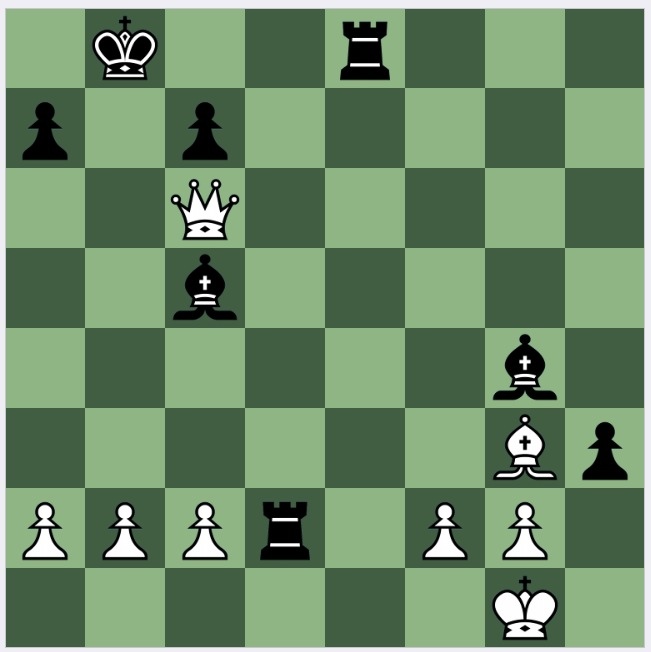
Then 4…h2+! 5 Kh1 Rd1+ 6 Kh2[] Rh8+ 7 Bh4[] Bd6+ 8 g3[] Rh4+ 9 Kg2 Rh8 and white has no perpetual, so 0-1.
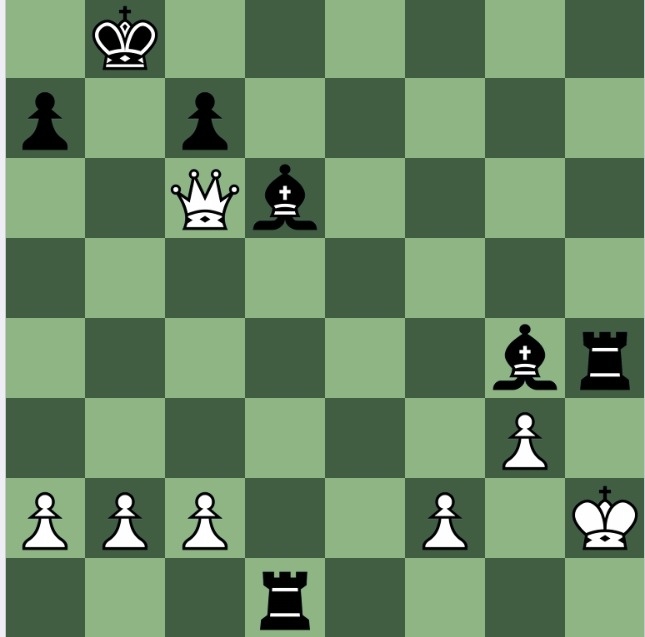
If 2 Qf4, then 2…Qf4 was my intention (Stockfish says 2…Qh6 is even stronger) 3 Bf4 Bf2+ 4 Kf1 when my line was 4…Be1, which wins, but the engine finds 4…Be3!! which is even stronger.
Black to play and win
A good work out today: worth spending time on
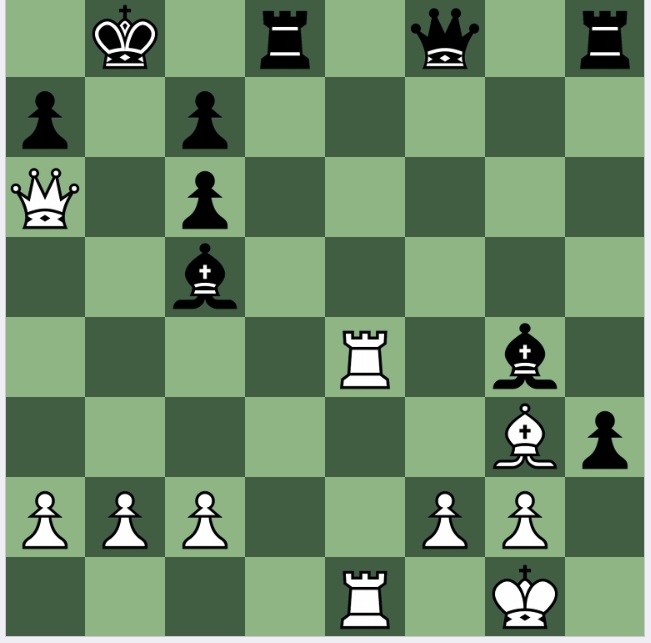
J Baartman v D Morschel 1995
Solution
If your solution was other than 1…hg, well done (especially if your solution works!) Reitstein's rubric says that black discarded 1…hg for a move which won quickly, and he also asks why did black reject 1….hg.
If 1…hg wasn't your solution, consider stopping now and working out why it fails. My next blog posting will go through the actual solution.
This blog is about why 1…fails (in the sense only sufficient to draw).
Solution: the problem behind 1…hg
White has a forced draw, based on perpetual check. In the mainline, the Re1 keeps the K on the queen side, and the queen checks and checks.
First, some sacrifices, the first of which diverts the B from the a7-g1 diagonal so that white can check on a7 and d4.
1 Rb4+!!
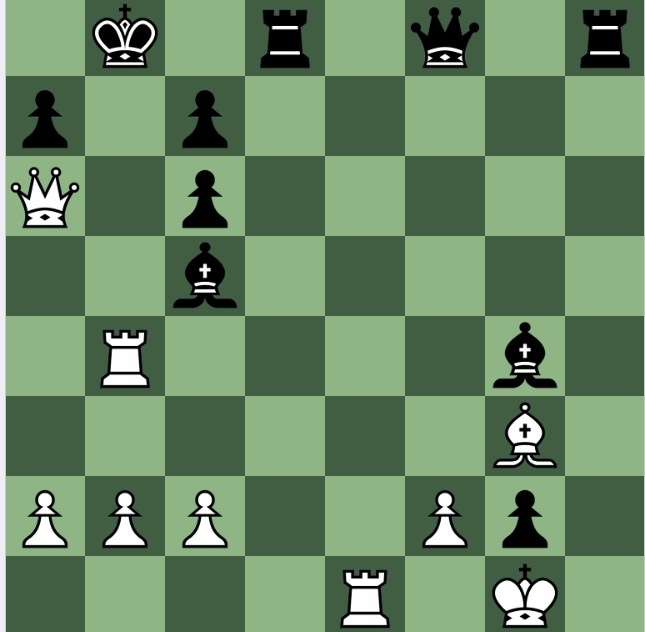
1…Bb4 (1…Ka8?? 2 Qb7 mate; 1…Bb6 2 Rb6+ ab 3 Qb6+ Ka8[] (3…Kc8?? 4 Qc7 mate) 4 Qa6+ Kb8[] 5 Qb6+ perpetual check.
2 Bc7+! (the 'can-opener', forcing the king out)
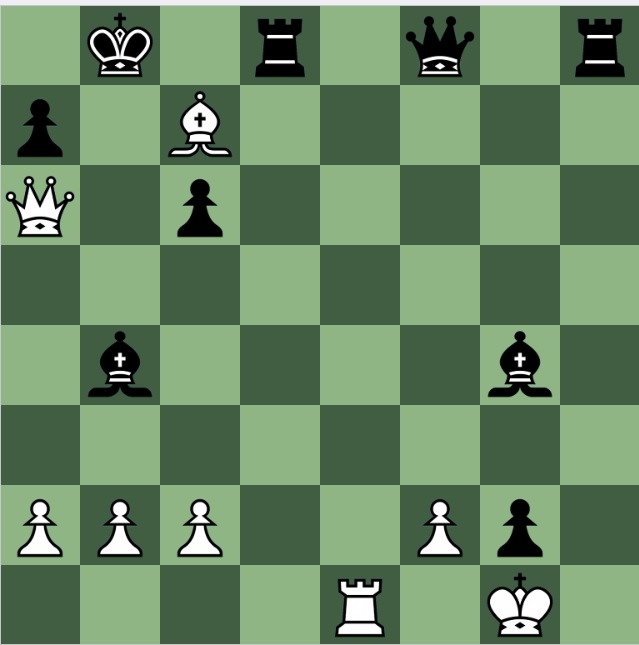
2…Kc7[] (2…Ka8?? 3 Qc6 mate)
3 Qa7+!! 1/2 1/2 perpetual.
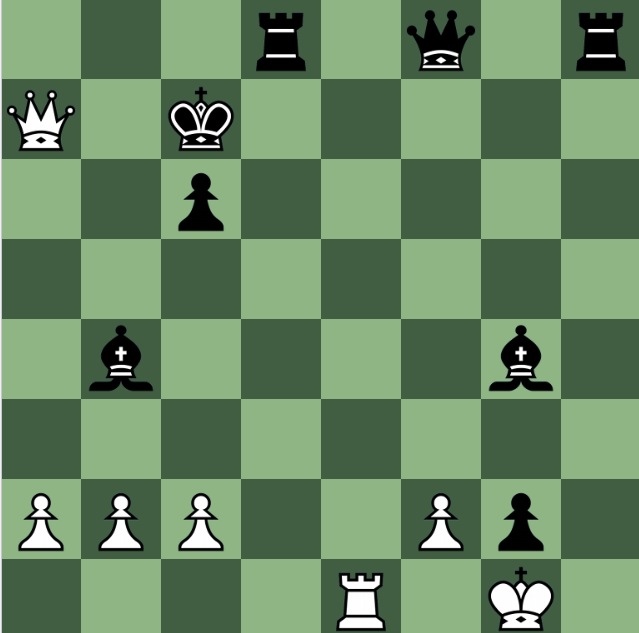
3 Qa7+!! is necessary. 3 Qb7+?? loses: 3…Kd6 4 Qb4+ Kc7 5 Qa5+ Kb7 and there are no more checks, since the Qf8 covers b4 and e7. After 3 Qa7+, the queen can oscillate between a7/d4 and a7/a8 dependent on where black moves his king.
This was a nice solution to find, especially Rb4 and Qa7: it is not an unprecedented solution, but hidden enough to make finding it a pleasure.
Black to play and win
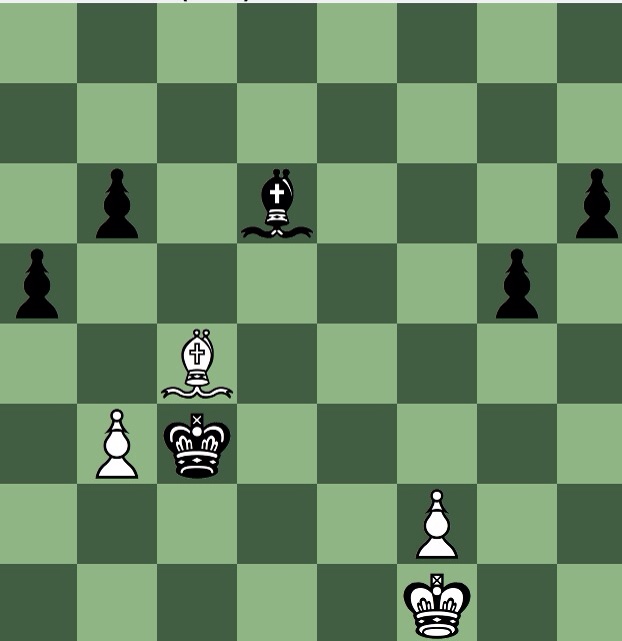
L Ball v E Kromhout 2000
Solution
An easy one today. Black must seize the moment of the Pb3 being tied to defending the Bc4 (again, evidence of CJS Purdy's direction to examine all pins, nets and ties).
So 1…a4! and it is 0-1
Black to play and win
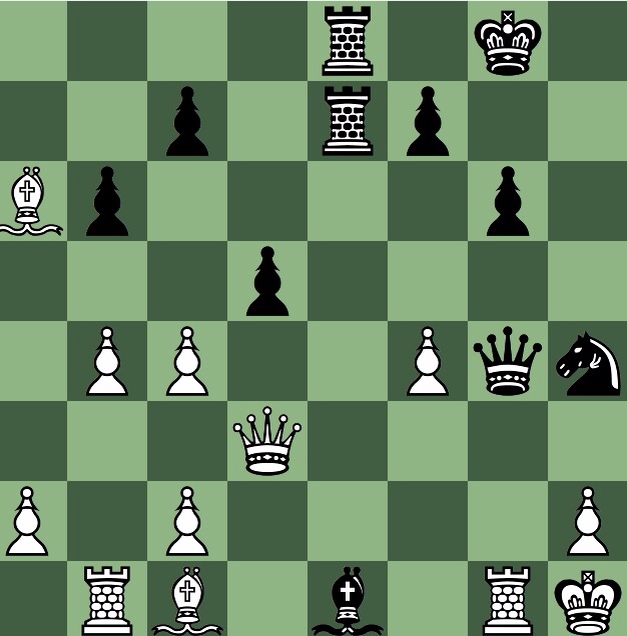
ABC v XYZ 1941 (two unknown players in a Cape Town club match)
Solution
A nice puzzle today. If you remember CJS Purdy's about threats (as part of your thinking methodology, first ignore a threat, consider what you would prefer to do absent the threat, to help establish if the threat can be ignored).
Also, Purdy's examine all biffs maxim is relevant here too, and, for good measure, is direction to look for all pins, nets and ties. Here, the Kh1 is at risk of a bank rank mate (so, is in a net).
Put all these ingredients together, mix then up, and 1…Bf2! emerges. Black wins the exchange and the attack goes on. (In fact, Stockfish says it is mate in five after Bf2).
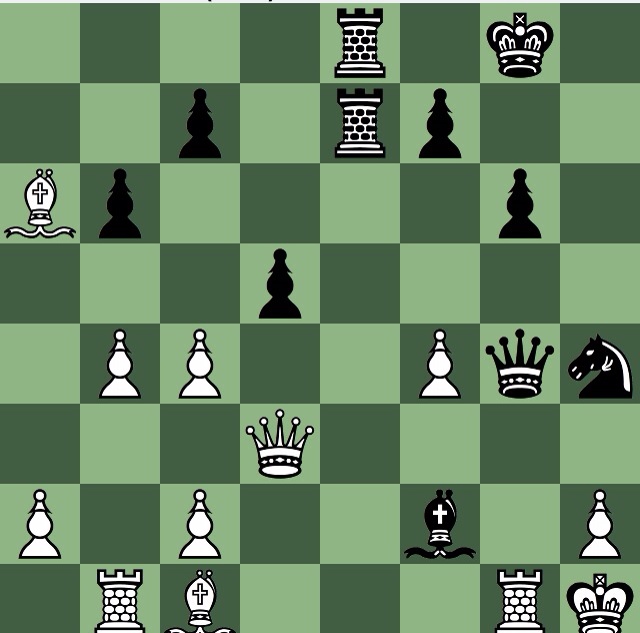
White to play and win
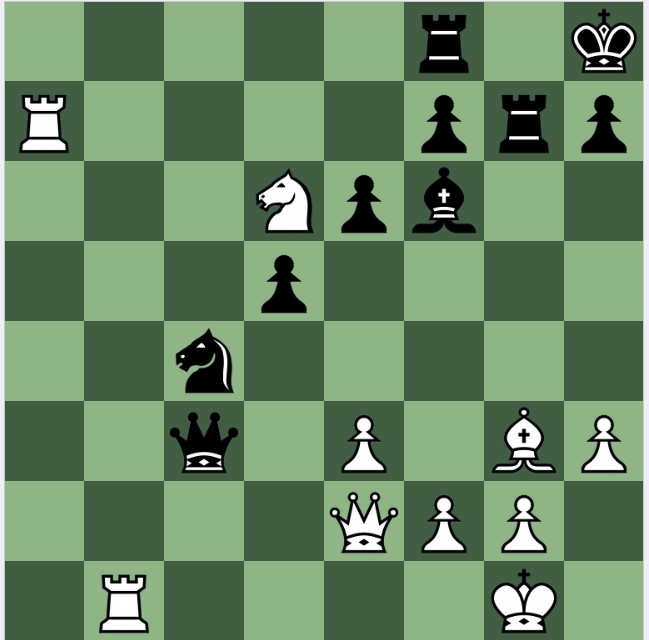
P Künne v C Meiboom 1983
Solution
This flummoxed me for a while. I made the mistake of going on the wrong motif, thinking the black, queen was in a net, and trying to win it by 1 Nb5? Qd2 2 Qf3 with some idea of a follow up. There is none: it is equal.
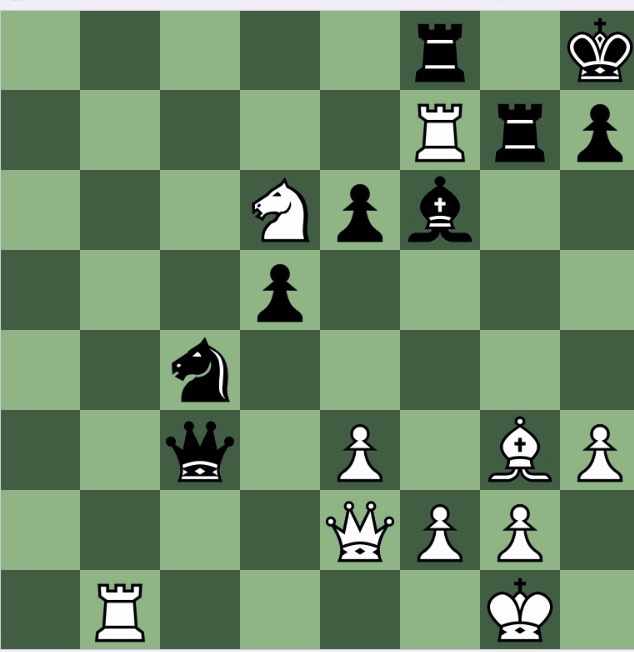
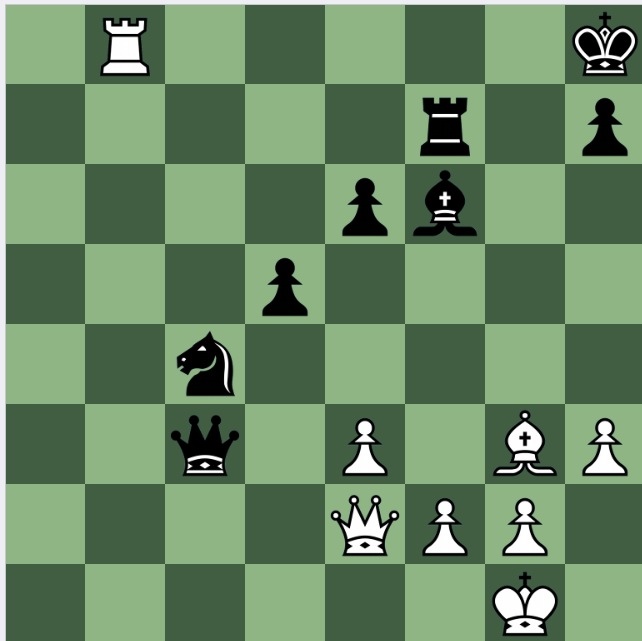
Eventually I took a step back and examined all biffs. I then saw 1 Rf7! or 1 Nf7+!, preferring the former, which wins a pawn. If black takes, then the floodgates are opened: Rb8+, Qg4+, dependent on what black does, and black's king is mated. The final diagram below is typical of what happens if exchanges happen on f7.
White to play and win
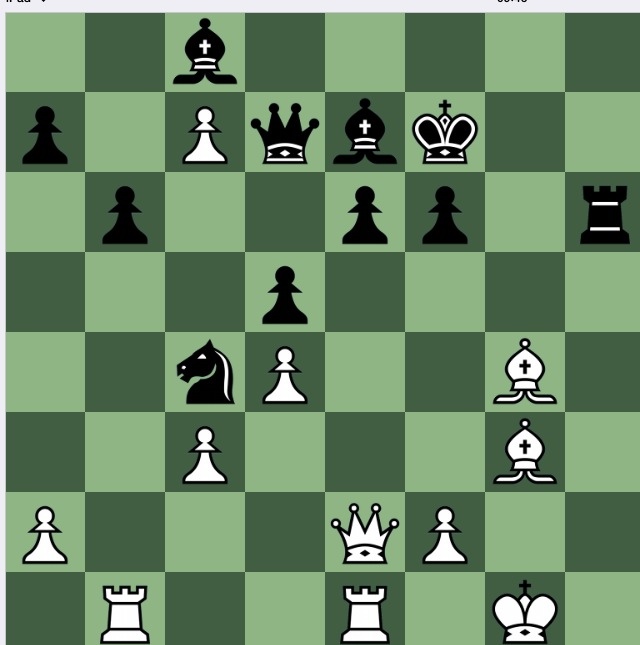
M Keserovic v M Chersich 1995
Solution
The only thing wrong with this puzzle is Reitstein's hint to the reader, and also his solution. His rubric says the solution means the game will be over within a few moves, and his solution says black can't stop the c pawn's promotion. Because of the rubric, I spent more time on the puzzle than I needed to, looking for something better than the fairly obvious 1 Be6+! (or 1 Qe6+! is equivalent) Qe6[] 2 Qe6+ Be6[] 3 Re6
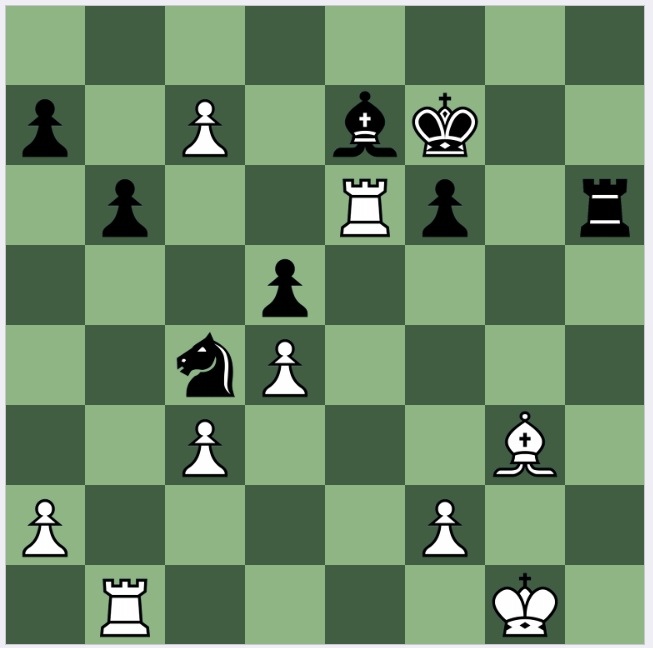
This is where the book's solution ends, saying the c pawn can't be stopped, but 3…Rh8 does that. All it means of course is that there is then a technical phase of exploiting a significant advantage, but it is not entirely trivial. (The definition of trivial is 'would you be entirely confident of winning this position with white against Magnus Carlsen). I would hope to beat Magnus, but would not be entirely confident.
I won't give more, except to say one helpful tactic is that if 4 Rbe1 (natural) Ne5, then 5 de! with the cute point that 5…Ke6 6 ef+ Kf6 7 Be5+ skewering, 1-0.
White to play and win
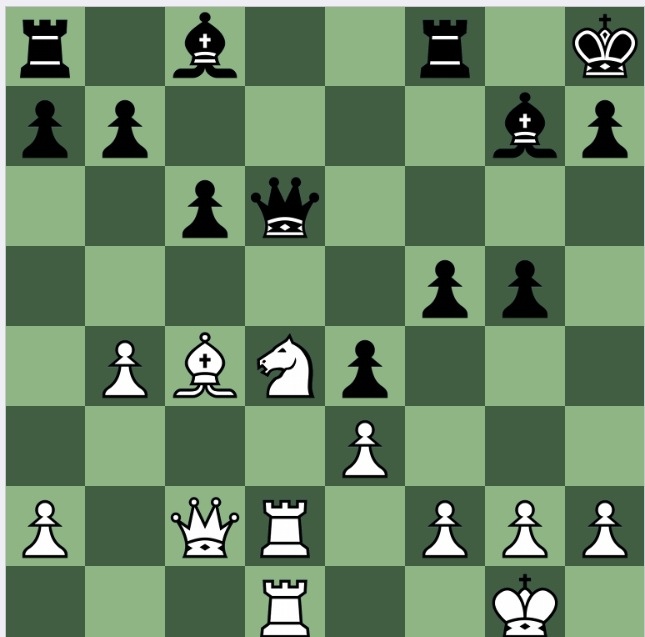
E Kromhout v CC de Villiers
Solution
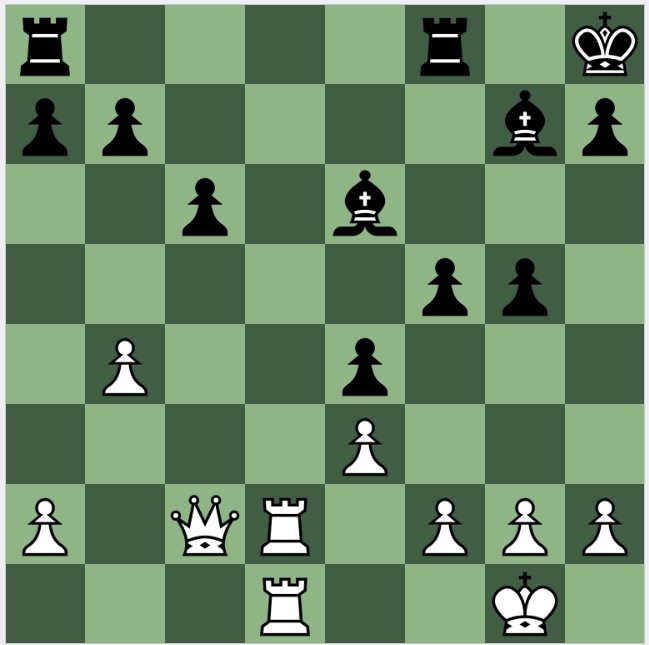
Again not too hard, and it is basically a choice about which discovered attack to make. Since Nf5 only garners a pawn, but gives black the f file and g4 square, it is not too hard to decide upon 1 Ne6! as the stronger move.
After 1…Qe6 2 Be6 Be6 it is just a question of whether white can win the technical phase. Prompt action, for instance 3 Qc5 and if permitted 4 Qe7, before black can build any type of defence, should make it simple enough.
White to play and win
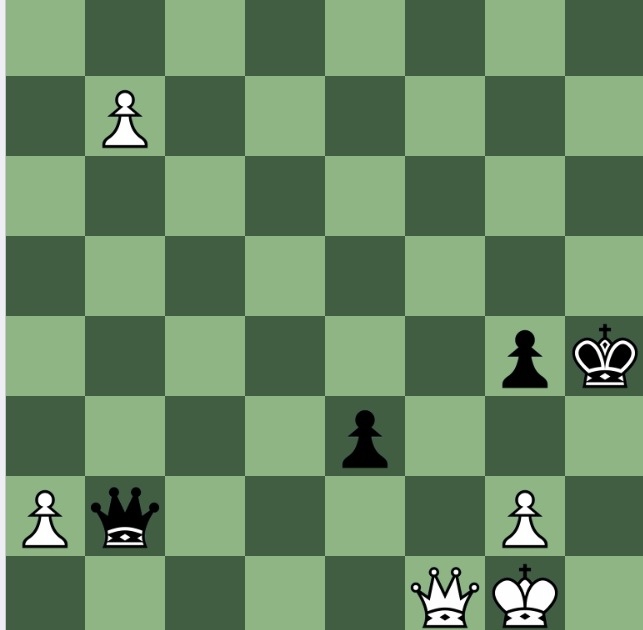
Source: Twitter. Alas, I didn't favourite or make a note of the tweet, so don't know the players' names, or can't credit it. All I recall is that white missed the win, and asked in his tweet if the correct move was hard to find. I would say it is hard to find.
Solution
After trying various moves such as 1 Qe1+, 1 b8(Q), 1 a3 (to try to divert the queen), 1 g3+ and finding none of them work, I eventually ( after setting the pieces out on the board) found the solution.
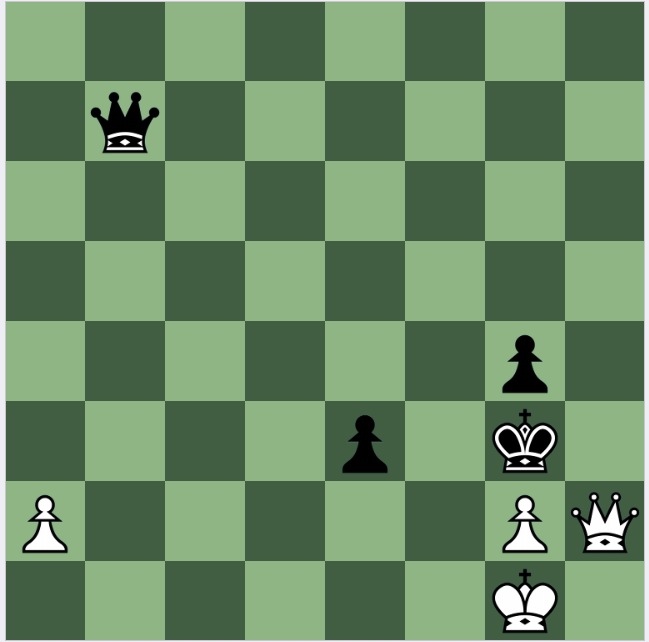
1 Qf4! with the main idea being 1….Qb7 2 Qh6+ Kg3[] 3 Qh2 mate. Very picturesque.
 allanbeardsworth