White to play and win
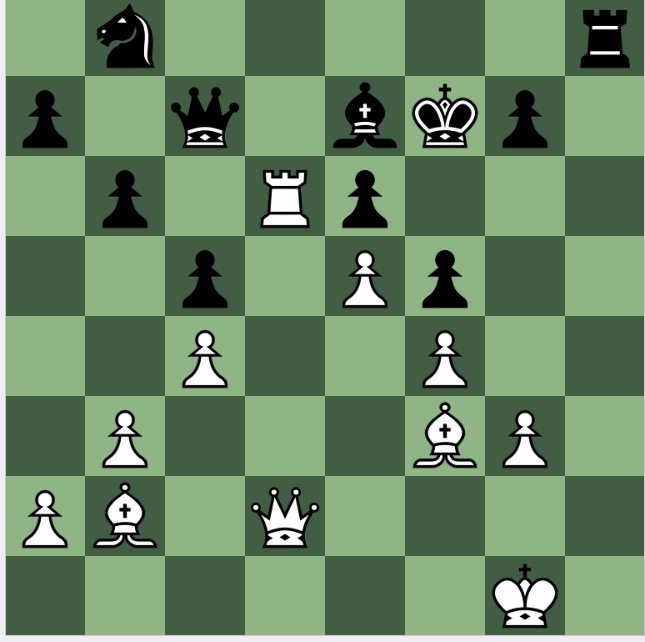
K Dreyer v GS Wallis 1956
Solution
Fairly easy today. The winning move, 1 Re6! came to me 'on inspection' (i.e. the moment I saw the position) and all I had to do was check that black had no sneaky defence like 1…Rd8 (which loses to 2 Bd5) or 1…Bf8 (same win, 2 Bd5). It is therefore simply that if 1…Ke6, 2 Qd5 mate.
If the move hadn't come to my intuitively, then, as is so often the case, CJS Purdy's examine all biffs would have revealed it.
 Posted with Blogsy
White to play and win
Part 2: my earlier posting looks at one failed attempt to win.
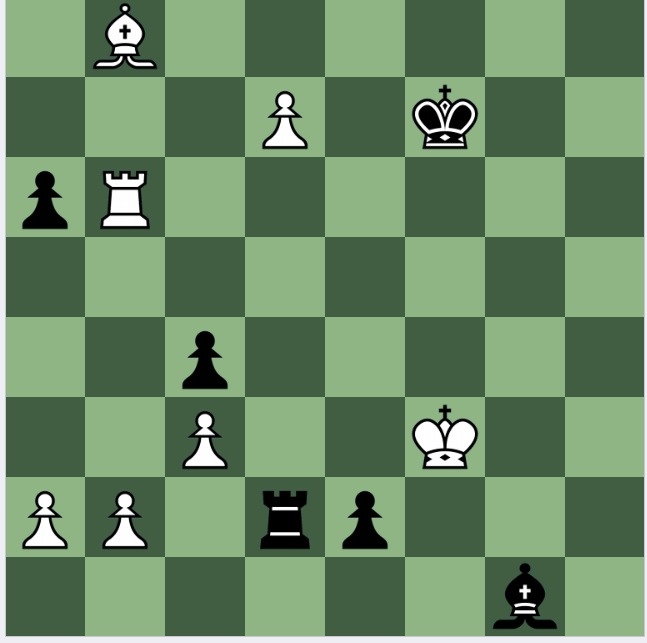
BP Donnelly v S Lewis 1965
Solution
Seeing that 1 Rb7? fails, what is the solution? Alas, since I checked my solution in the book first, I saw that the winning move was 1 d8(N)+!
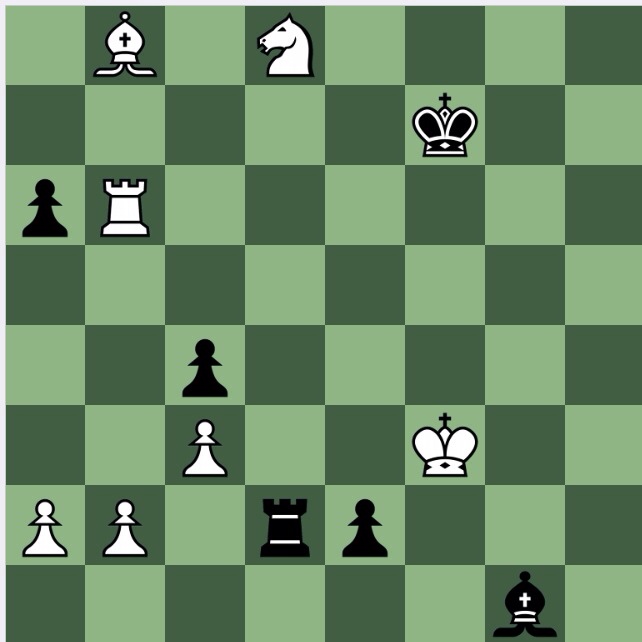
The move has two points. The first one is that if 1…Rd8 (best) then 2 Rb7+, moves the R away with tempo, and 3 Ke2.
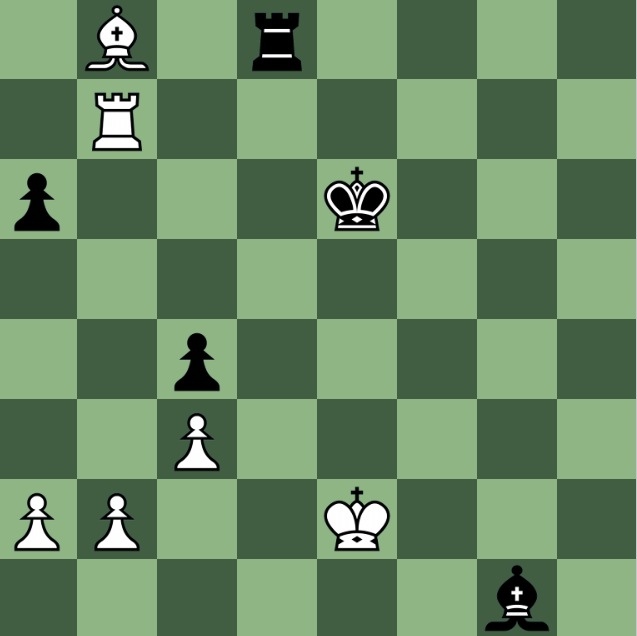
Stockfish suggests this is near winning for white. Certainly, at best black will be tortured. It is arguable that black does indeed have the 'necessary' two weaknesses (one being he is a pawn down, two being the weak a and c pawns) for the principle to apply, but of course chess is more concrete than that. I have tried to defend as black against Stockfish, and failed each time. It is a good exercise, and I also played it as white once, and managed to defeat it, but not that easily. The position is actually a very good training position.
The second point is neater: if say 1…Ke7 then 2 Re6+! since the Nd8 defends the Re6.
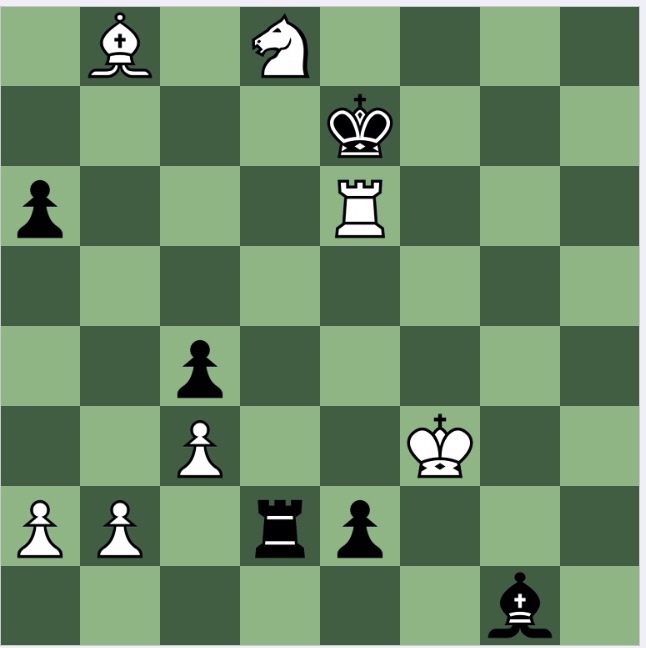
The Nd8 falls, white plays Re2, and we have substantially the same ending.
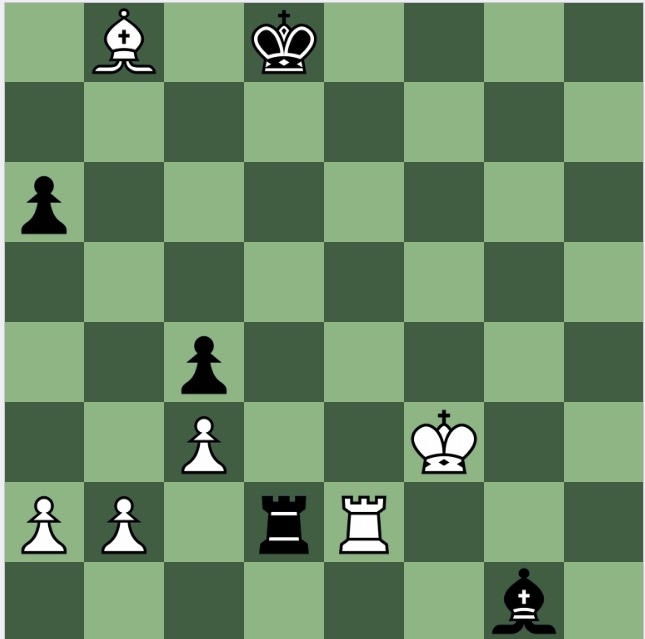
If I were black here, I wouldn't be totally sure whether my chances of a draw are better with rooks on or off. I think my decision would depend on the day of the week, i.e. more or less random.
White to play and win
(A good exercise today: I totally miffed it)
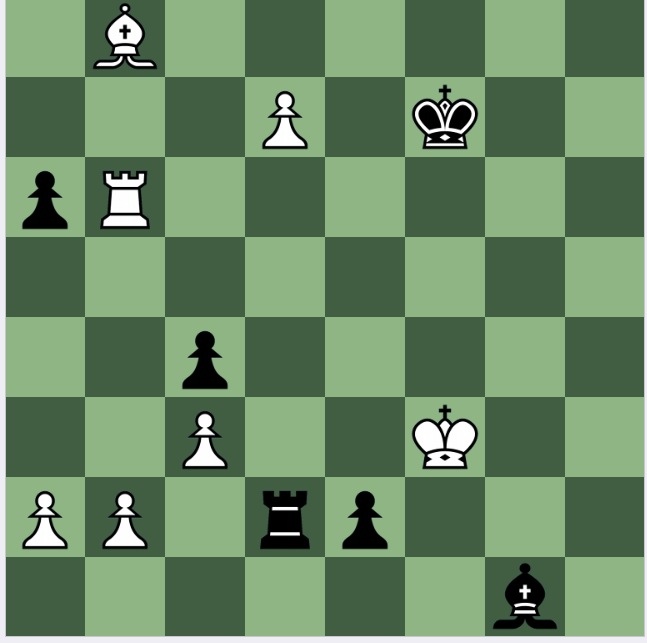
BP Donnelly v S Lewis 1965
Solution
Firstly, like me, did you think 1 Rb7 was the solution? Alas, it isn't.
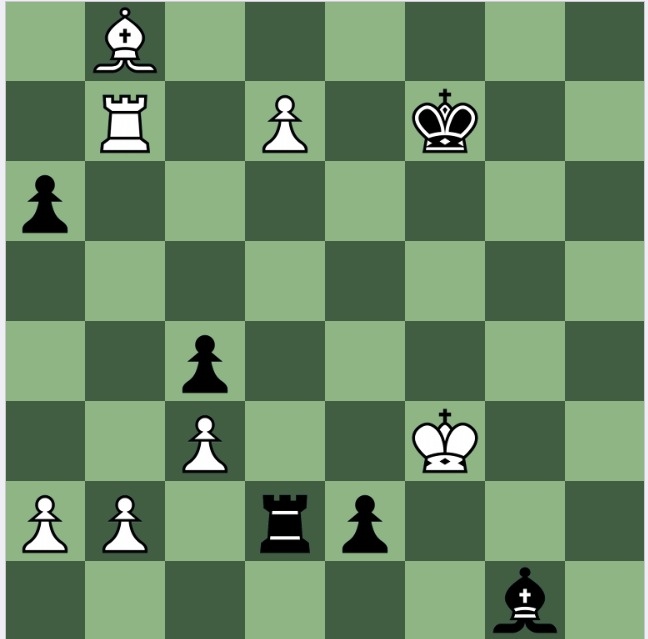
If so, how does black defeat 1 Rb7?
Solution
My idea was 1 Rb7 Ke7 2 Bg3, but simply 2…Rd3+! 3 Ke2[] Rg3 wins the bishop.
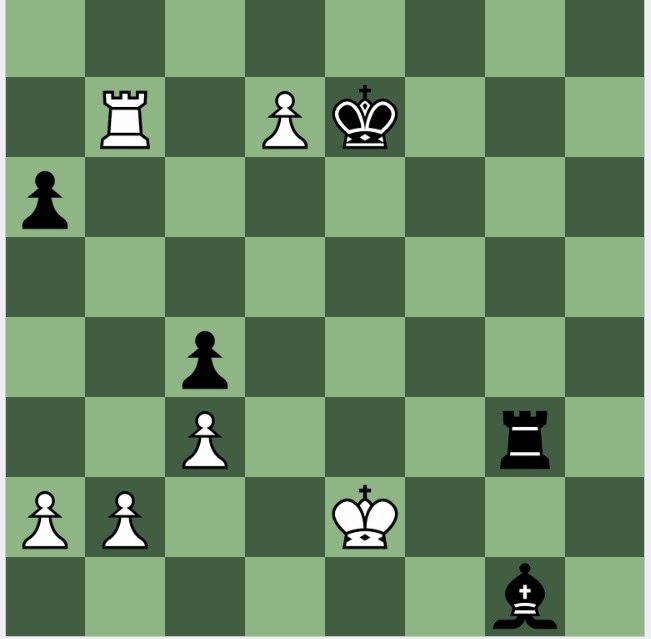
Whilst the engine (Stockfish, on my iPad) gives the position as winning (-1.6) I don't particularly trust that assssment, though I would say that only black is playing for two results. Also, it is far nearer to a win than a draw.
White to play and win
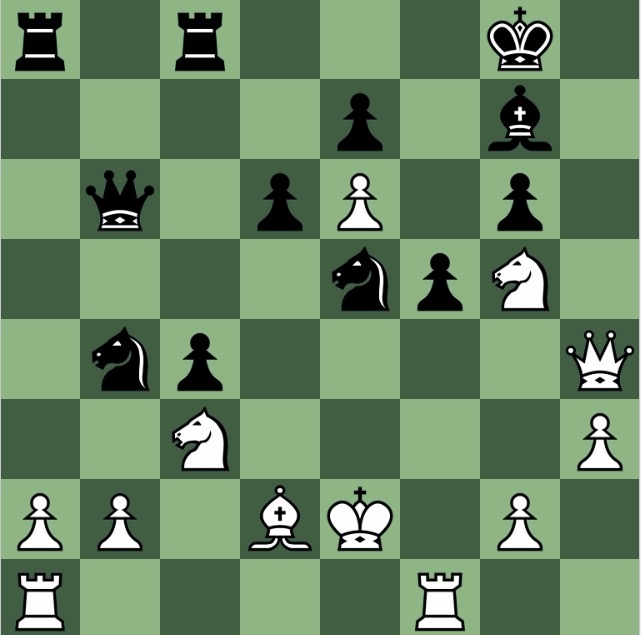
S Bhawoodien v S Pearson 1998
Solution
The motif clearly to prevent the king from running away, and so trying 1 Rf5 is natural, and after the forced 1…gf, 2 Rf1.
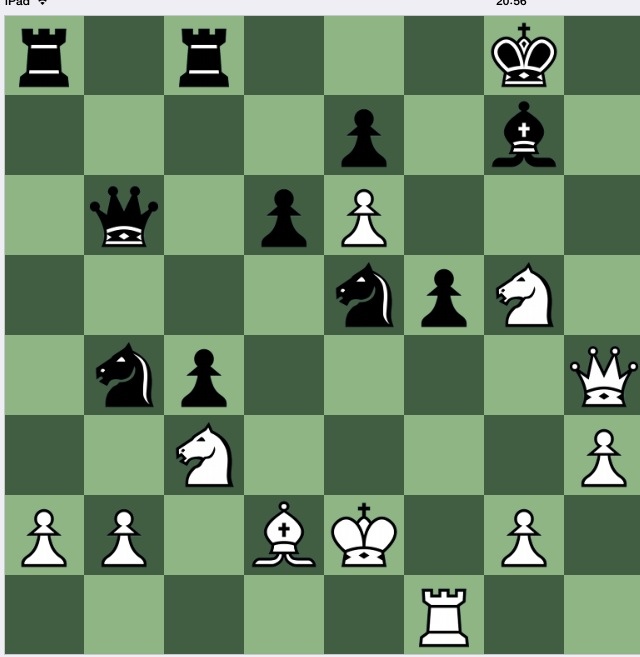
Then it is a question of what black does. His best is the attempt to block with 2…Nf3 but then 3 Rf3 Ra5 is met by 4 Qh5!
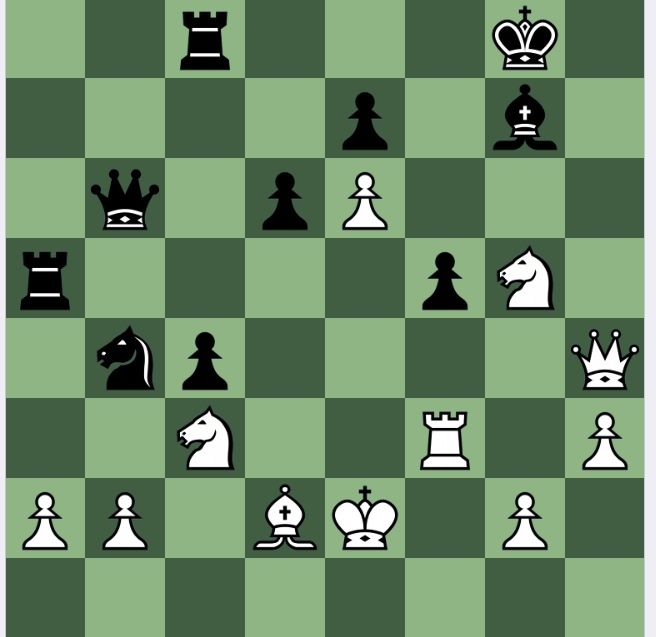
Black can't play 4…Rf8 because of mate on h7, so must permit Qf7+ pushing the king to the h file, which is met by the rook lift Rf4-h4.
Black to play and win
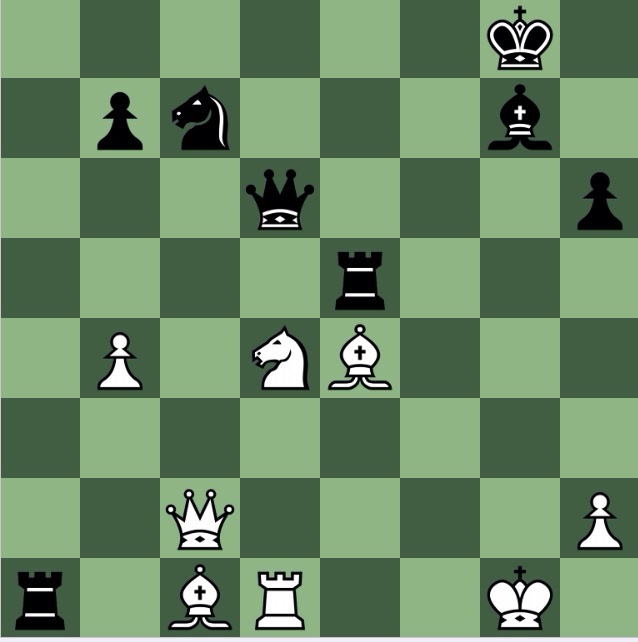
L Bousan v N Van der Nat 2000
Solution
Not too hard today, since the Q and R are overloaded. 1…Rc1! and if 2 Qc1 Re4; 2 Rc1 Qd4+; 2 Bh7+ Kh8.
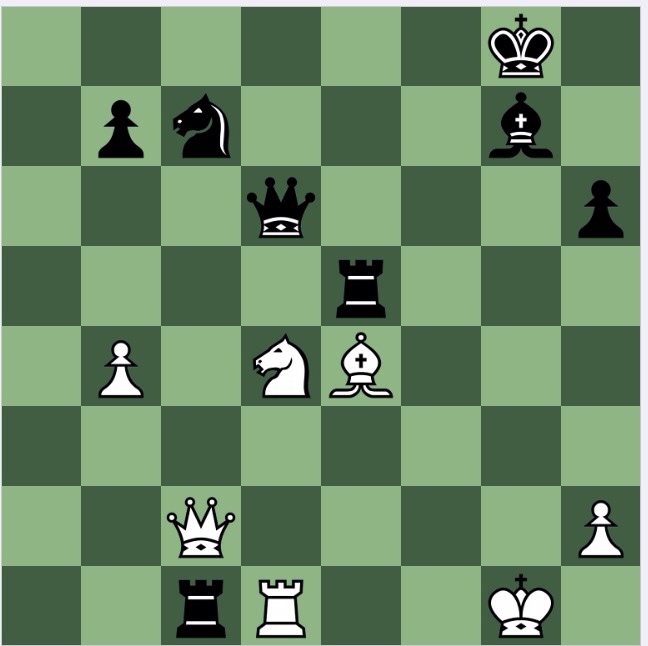
Another reason today is a bit of a rest day is that 1…Re4! wins similarly: 2 Qe4 Bd4+ and best is 3 Kh1 (3 Kg2 Ra2+ etc) when simply 3…Qc6 leaves black a comfortable piece up: but 1…Rc1 is crisper.
White to play: evaluate:
( a good exercise today)
1 gh
1 Ka1
1 Bg3
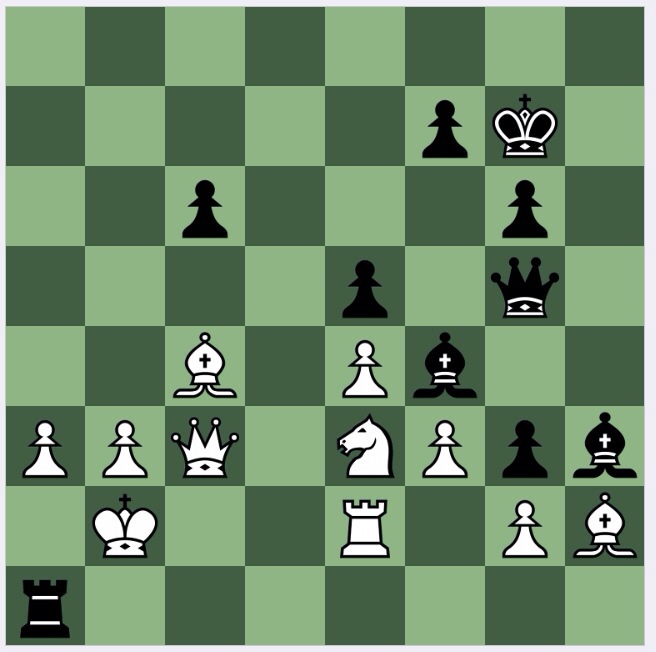
Y Aranov v D Cawdrey 2003
Solution
In practice, I would have chosen the best move, the one white played in the game; but I would have chosen it by feel rather than analysis.
There are some good lines.
1 gh
Intuitively bad, since it gives black a passer on h2. Analysis shows it loses. 1…gh 2 Rh2[] Be3
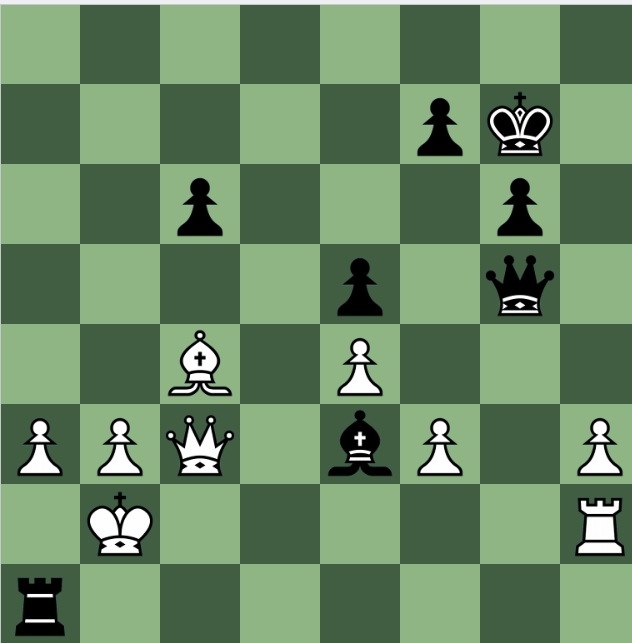
A nasty point is revealed: the threat of Bd4, skewering the king and queen, means that the LPDO Ra1 can't be taken: black wins.
White to play and force a draw
The hint to the reader in Reitstein's book is that whilst at first it seems white has a strong attack, in fact he has to battle for a draw; and that there is a forced draw.

AA Ponelis v K Andersson 2003
Solution
I enjoyed this one: the various moves that need to be played are fairly evident, but putting them in a convincing order is a bit of a task.
Eventually I saw 1 Rd7! (diverting the queen from f6)

After 1…Qd7[] (1…Ne5 2 Re7 Nf3 3 Rb7 1-0) 2 Nf6+! gf [] (2…Kh8?? 3 Nd7 means that gf is forced) 3 Qg4+ Kh7 [] (3…Kh8?? 4 Rh6 mate) 4 Rh6+! and perpetual check on h4 and g4.
Very pretty.

Black to play and win
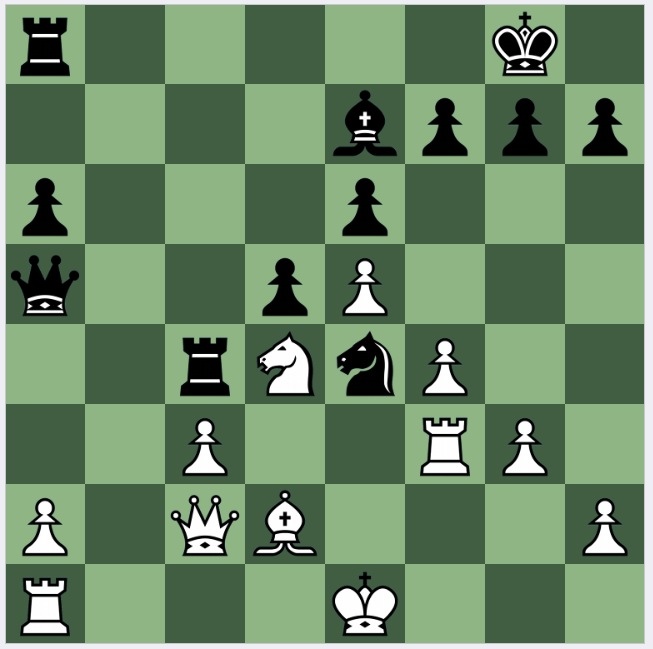
D Mhlongo v G Michelakis 1995
Solution
Not too hard today, especially if you remember CJS Purdy's technique of examine all biffs.
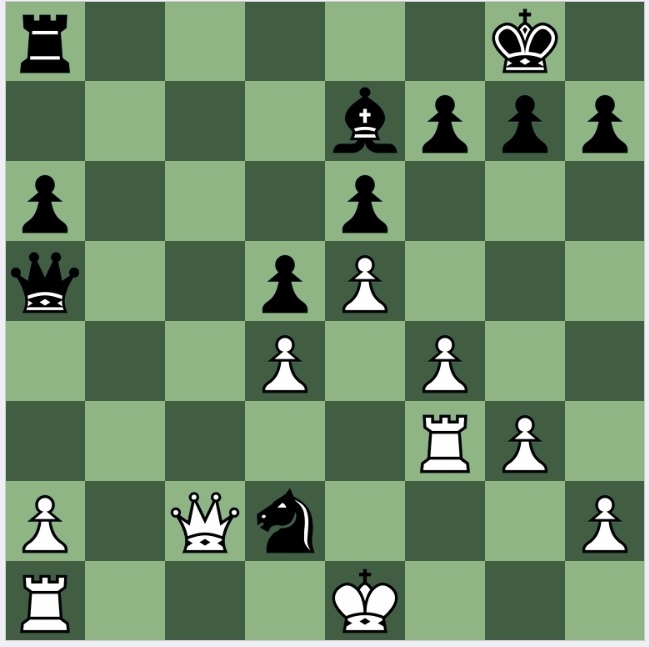
Here, 1…Rd4! 2 cd [] Nd2 is game over: if the N is taken, Bb4 pins and wins; if not, then depending on white's reply, Nf3, Nb3+ or Ne4 wins material.
Black to play and win
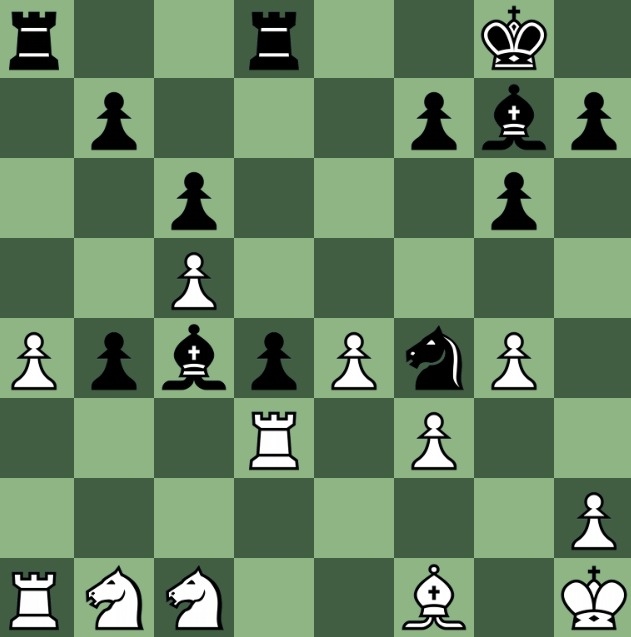
K Solomon v CC de Villiers 1998
Solution
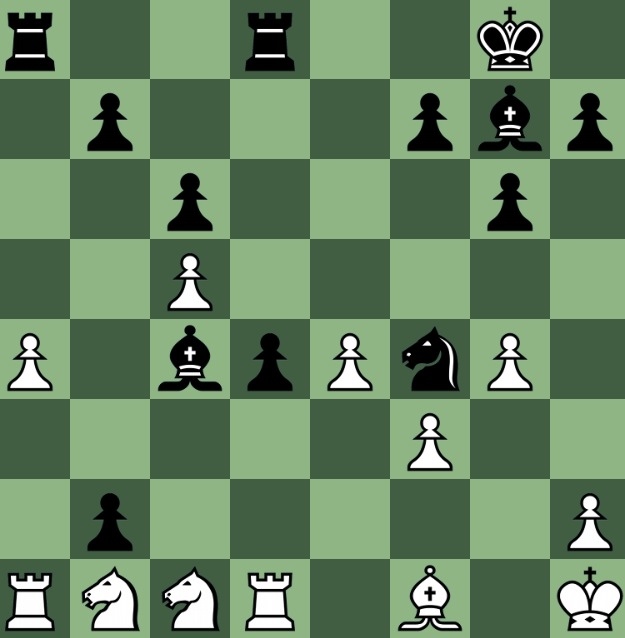
Reitstein's commentary to this clue says that whilst black could win prosaically by taking on d3, he found something better. With that hint, 1…b3! is not too hard to find. White's uncoordinated forces can't prevent either the b pawn or the d pawn from causing mayhem.
Variations are probably unnecessary, especially since Stockfish gives white's 'best' as 2 Rd1 allowing the potassium cyanide fork b2.
Having now finished Leonard Reitstein's first book of puzzles from South Africa, today I start his second book.
I have a dog-eared copy of it, which is falling to pieces. I acquired it second hand, I forget from where, and the binding has splintered and pages are loose. Nevertheless, I am very fond of it, and if was an easy choice of the book to continue my daily practice.
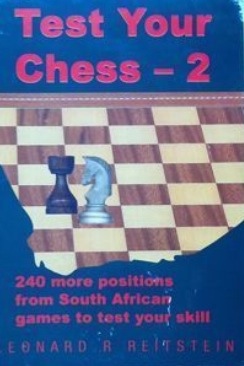
I will continue to blog in the same way, with no changes of importance. I have though changed the daily title since once or twice on Twitter people have asked what a Reitstein problem is, as if it is some chess or problem variant.
 allanbeardsworth