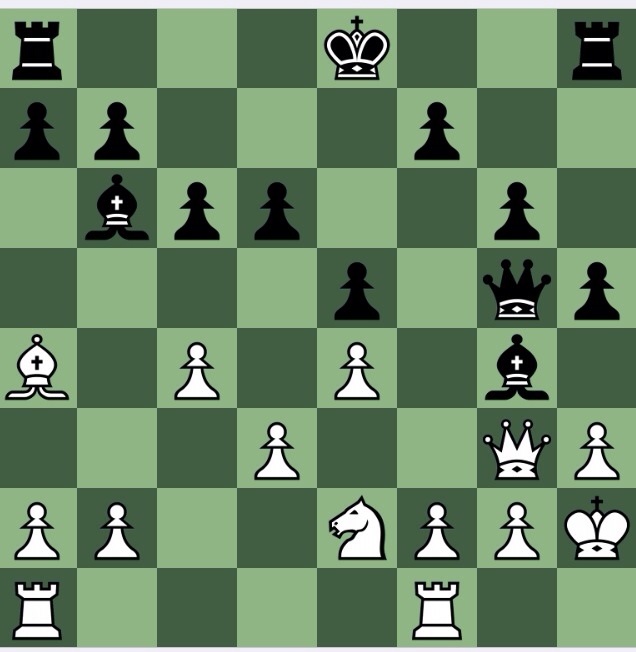
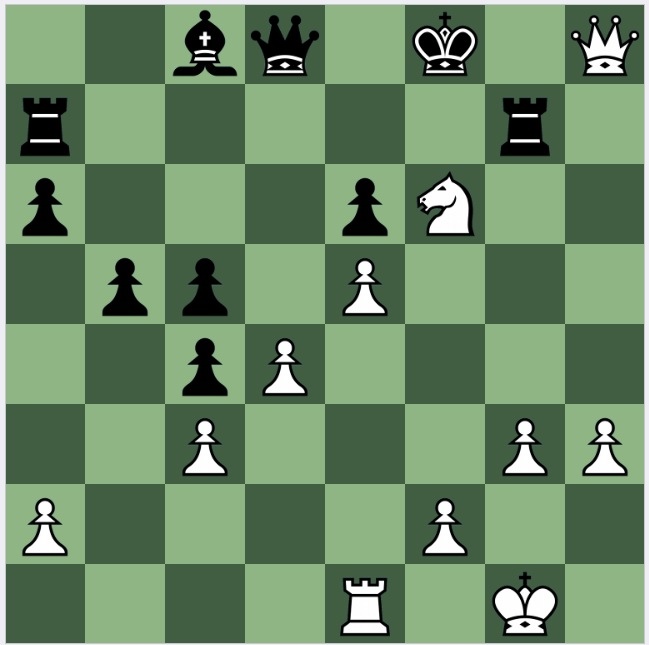
Black to play and win
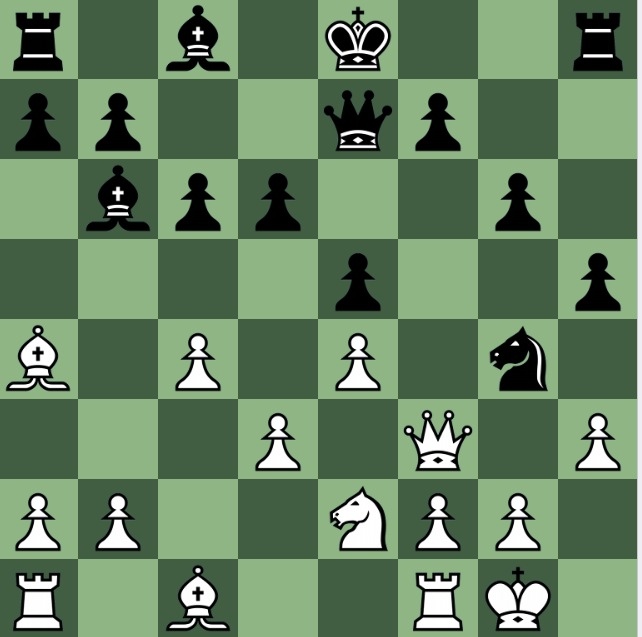
WS Mackie v FH Nel 1955
Solution
It is easy to be tempted into thinking the theme was mate on the h file, and look at 1…Qh4 2 hg hg and 3..Qh1 mate, but of course 2 hg?? is a non forced gruesome blunder, and it is necessary to look elsewhere.
The real theme is that white's queen is in a net, so that 1….Nh2!! wins the exchange – 2 Qg3 Nf1 3 Kf1. The game goes on, but black is winning. Stockfish suggests 3..h4 and 4 Qf3 f5, or 4 Qg5 Be6: in time, black wins.
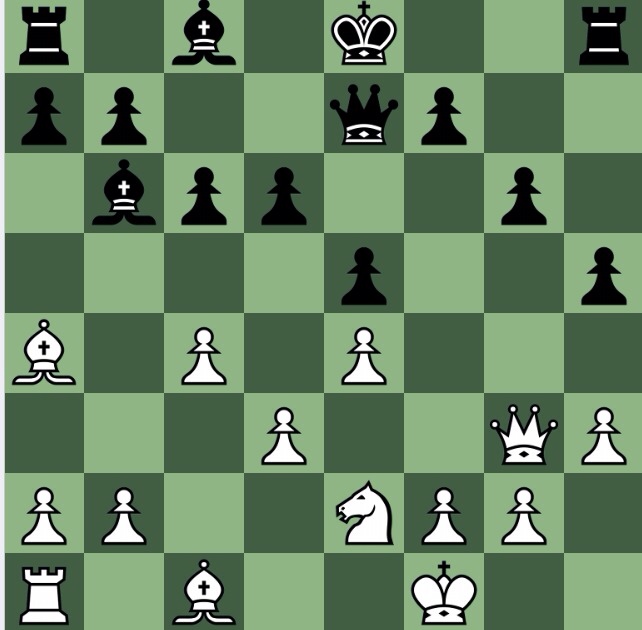
If instead 2 Kh2 then 2…Bg4!! 3 Qg3 (3 hg?? hg+ wins the queen) Be2 4 Re1 and after 4…h4 5 Qg5 the queens come off and then the d3 pawn.
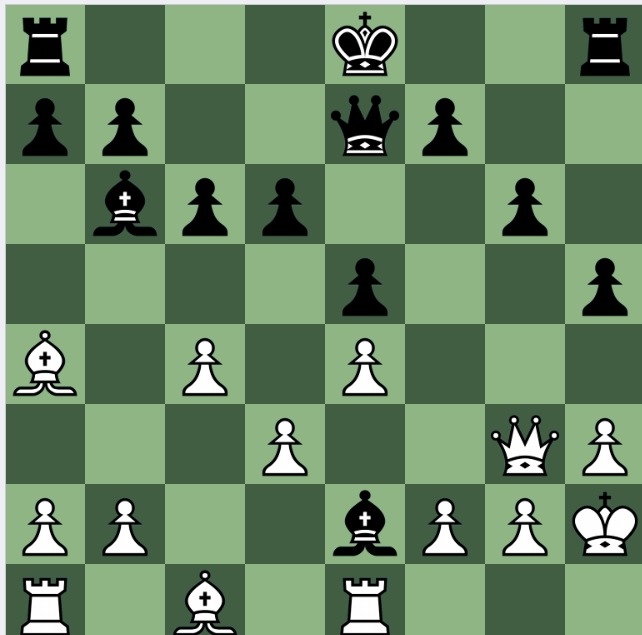
Stockfish finds one small but important improvement in the above line for white. Rather than 3 Qg3 white should remember Purdy's maxim to ignore a threat, think about the position, rather than rushing in to dealing with the threat. 3 Bg5! is better, but still black is better, for a cute point. 3…Qg5 4 Qg3! and the fact that the Qg5 is LPDO means the Bg4 is pinned. This gives white enough time to move the knight from e2: black is better, for sure, but the game is not entirely over.
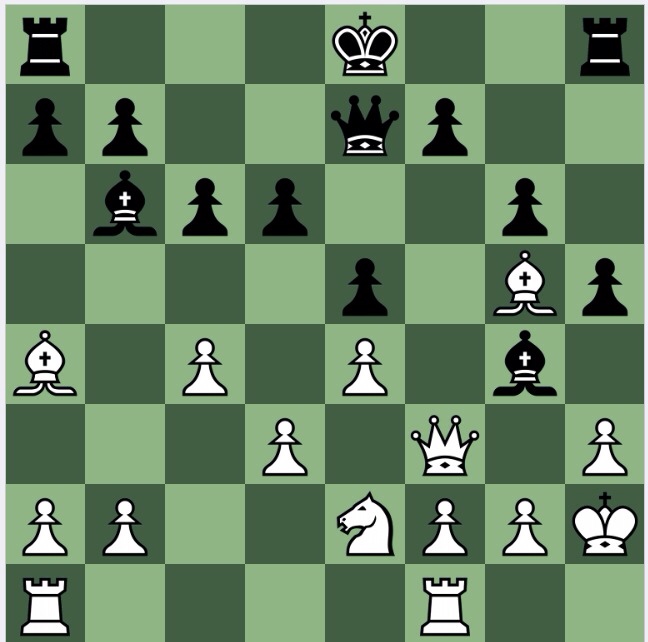
 Posted with Blogsy
White to play and win
The last puzzle in the book, and a classy one.
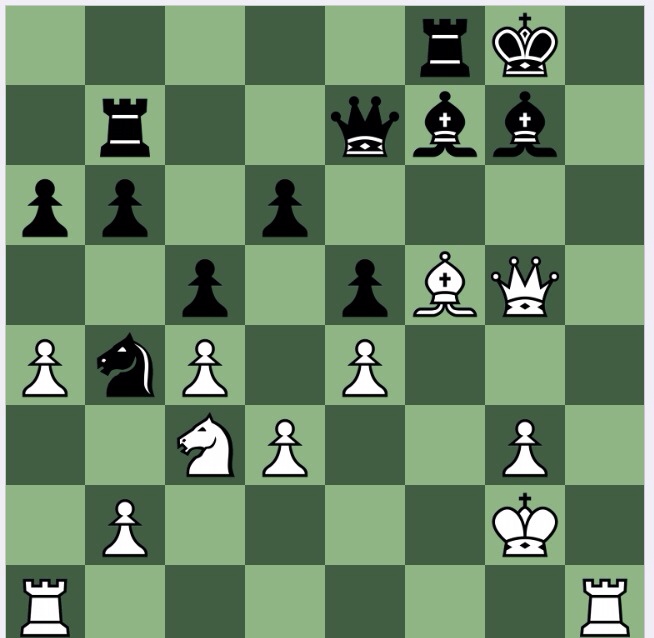
M Levitt v B Levin 1991
Solution
This one took me a long while, a full dog walk, several cups of teas, part of a World Cup match (these blogs are written weeks in advance- they are not all written at 7 am, fortunately Blogsy has a delayed posting facility) before suddenly, I saw it- and it is a thing of beauty.
Firstly, I checked 1 Qg7+, and 1 Rh8+, which are insufficient and the spent a lot of time on Qg4, aiming for Qh3 perhaps, or Rh7: but black can defend with Rfb8 giving luft to his king, and Qf6 or Kf8; and I noted that Nb4-c2 can often be met by Nd1, using an otherwise idle piece. But none of these work.
Then examine all biffs and 1 Bh7+! Kh8 2 Bg6+! Kg8 (a line I had looked at initially, trying 3 Qh5, which does nothing after 3…Bg6) and now:
White to play and win
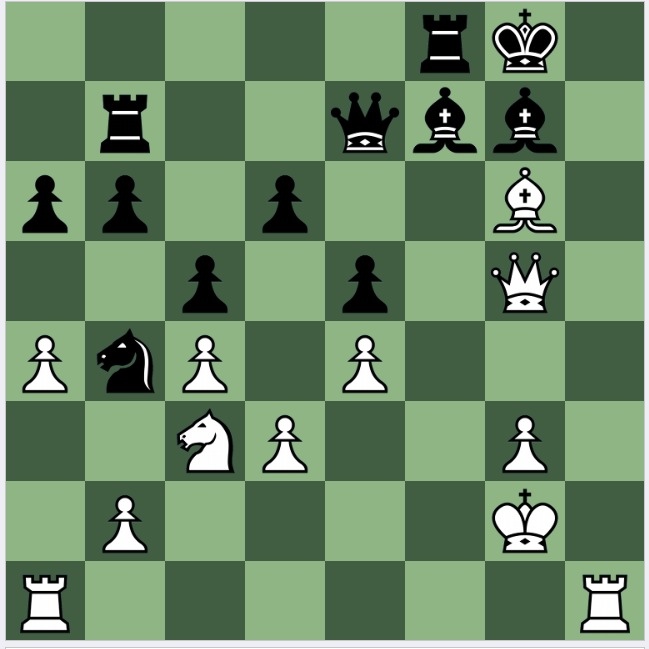
3 Rh8+!! (examine all biffs)
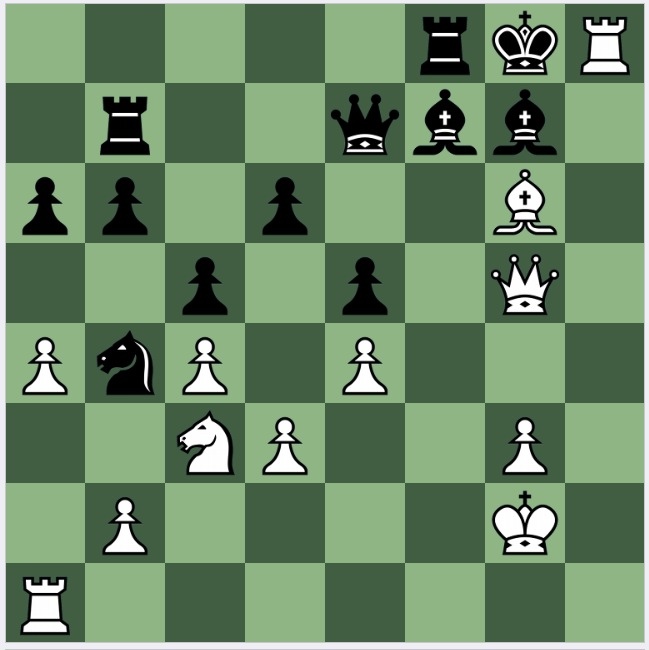
3….Bh8 (3…Kh8 is trivial: 4 Qh5+ and 5 Qh7 mate) and now?
White to play and win
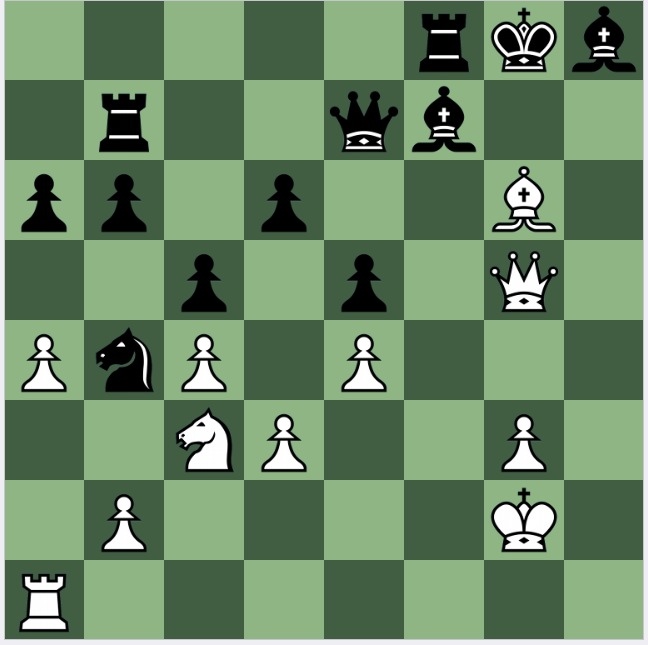
4 Bh7+!! (examine all biffs)
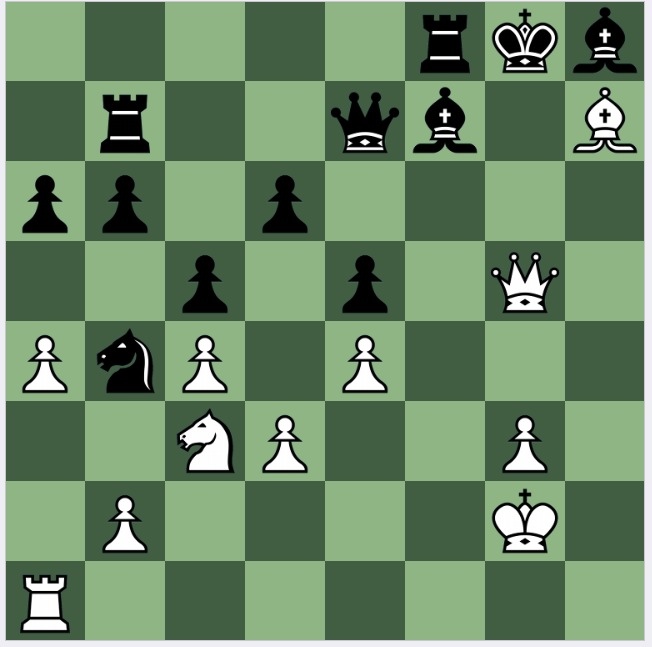
and it is game over: 4…Kh7[] 5 Rh1+ Bh5[] 6 Rh5 mate.
A fitting end to a really good puzzle book.
White to play and win
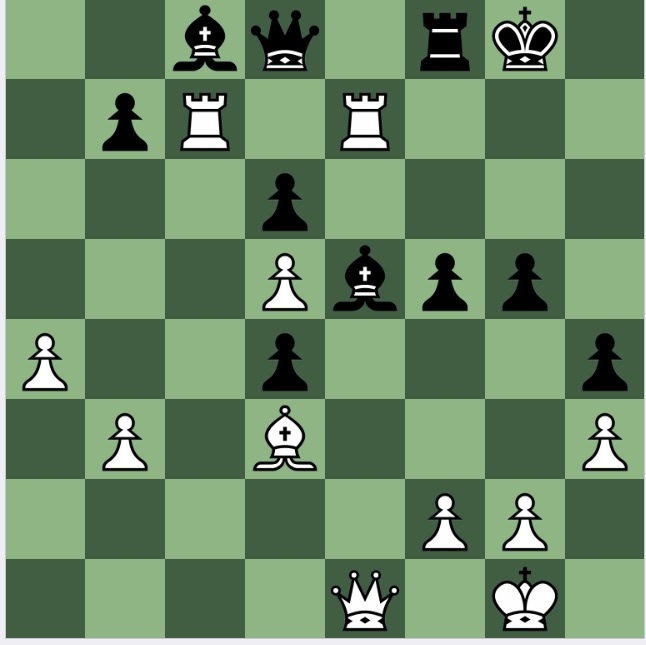
F Korostenski v MC Rubery 1978
Solution
Straightforward today: 1 Qe5, and if 1…de, 2 Rg7+, Rh7+,Rcg7 mate; or if say 1..Qc7, 2 Qg7 mate.
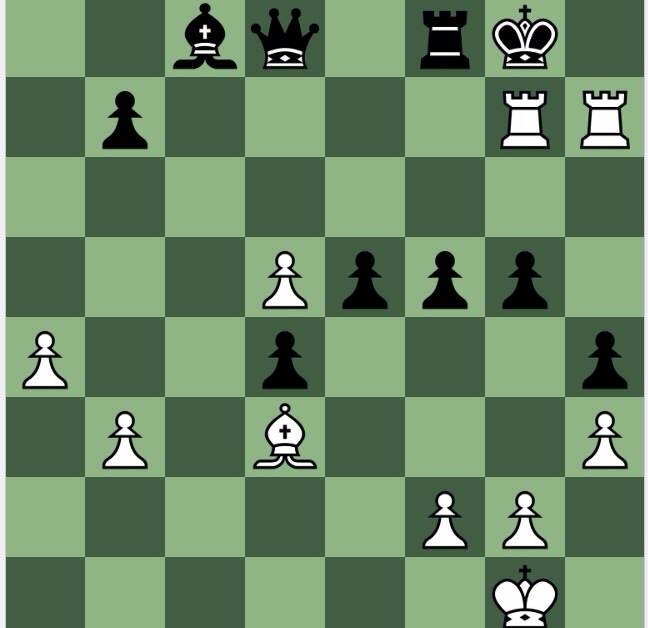
White to play : Rd2 or Nd2?
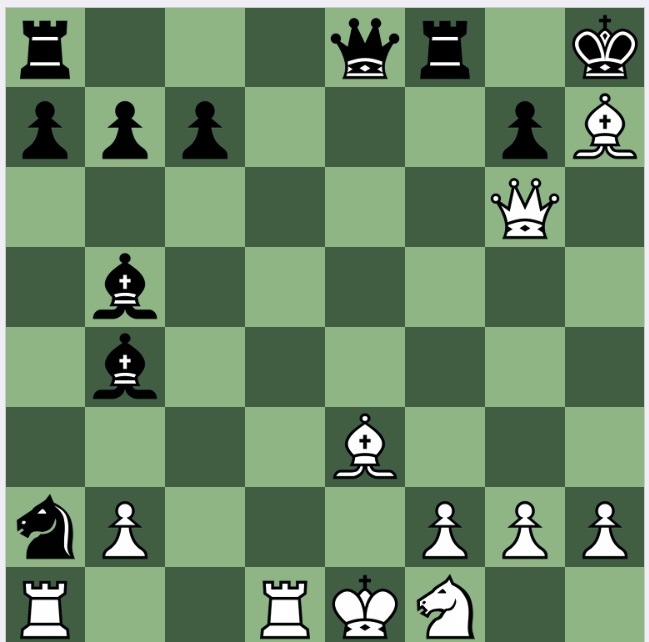
M Bleiden v H Broer 1928
Solution
White played 1 Nd2?? losing to 1…Qe3+ 2 fe Rf1 mate: a rest day today.
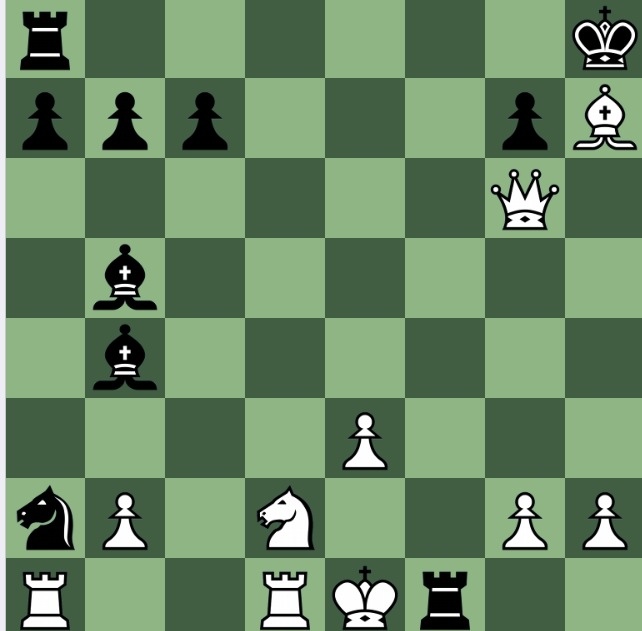
Towards the tail end of round 11 (the final round) of the Tromsø Olympiad, whilst I was watching to see if David Howell could win his struggle, I also watched several other endings. The one which caught my eye most was Mamedyarov-Nakamura, where I was intrigued to see if it was a win for white or a draw: I didn't know which.
The crucial position
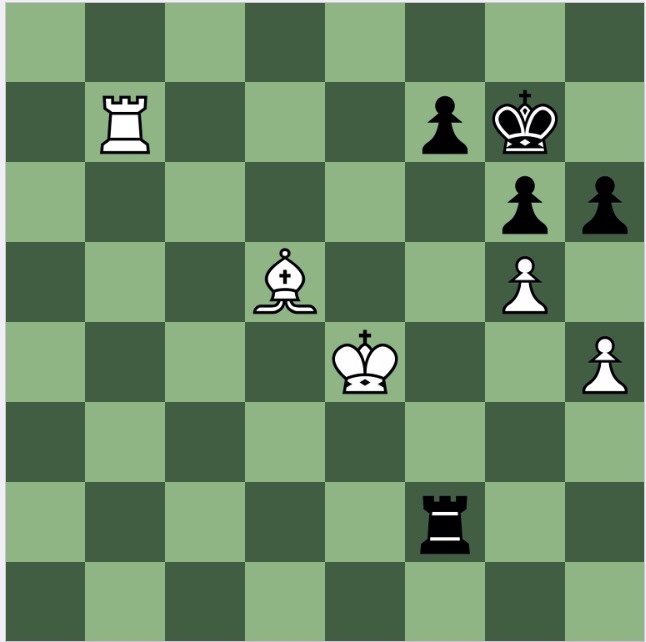
Hikaru took on g5, 40…hg, and resigned a couple of moves later. The point is that white will eventually sacrifice on f7 and the resultant king and pawn ending is won: white's king muscles black's king away from g6, and the pawn promotes.
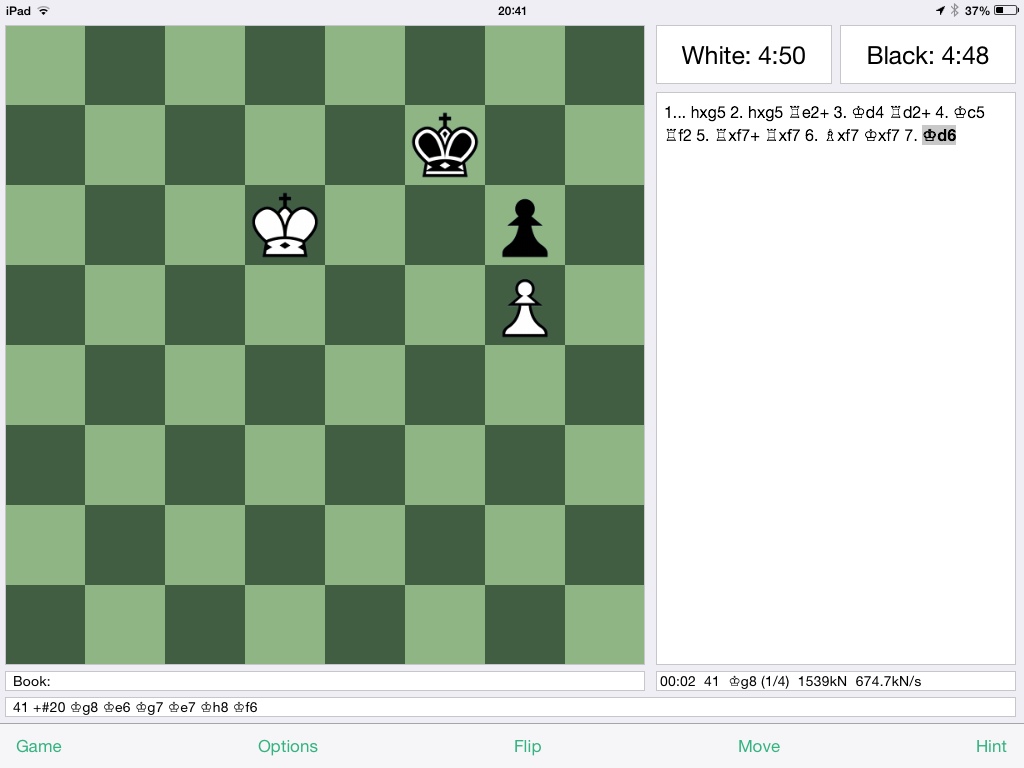
The spoiler
On the evening of the game Hikaru tweeted:

I was puzzled. If 40…hg was the losing blunder, then what should he have played? The only sensible alternative is (perhaps, but we will come to that later) 40…h5.
Before I could look at it, Mihail Marin wrapped his excellent coverage of Tromsø (to be honest, Chessbase were superlative in their coverage) with his round 11 commentary which included this game:
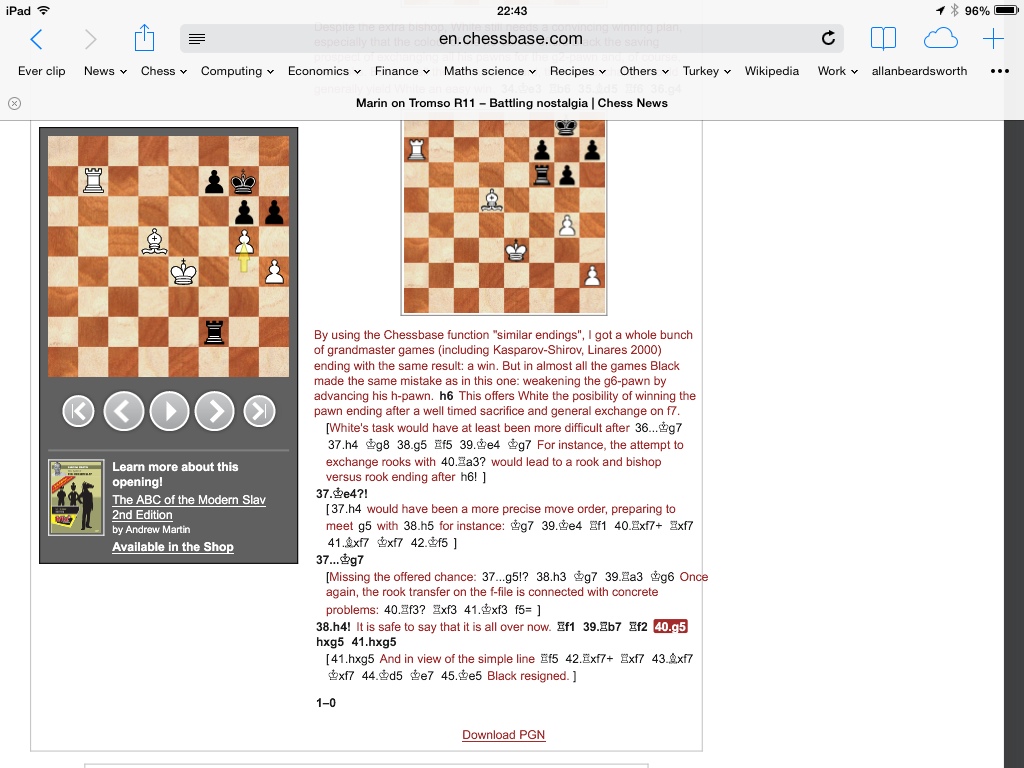
Mihail says that it is all over after 38 h4: so who is right?
40…h5
I have therefore had a look at the ending, and 40…h5 also loses. It is understandable: the sac on f7 and then pushing away of the king from defending g6 doesn't depend on whether or not there are h pawns on the board. Stockfish helpfully points out that after 41 Rf7+, take things off, it is mate in 22.
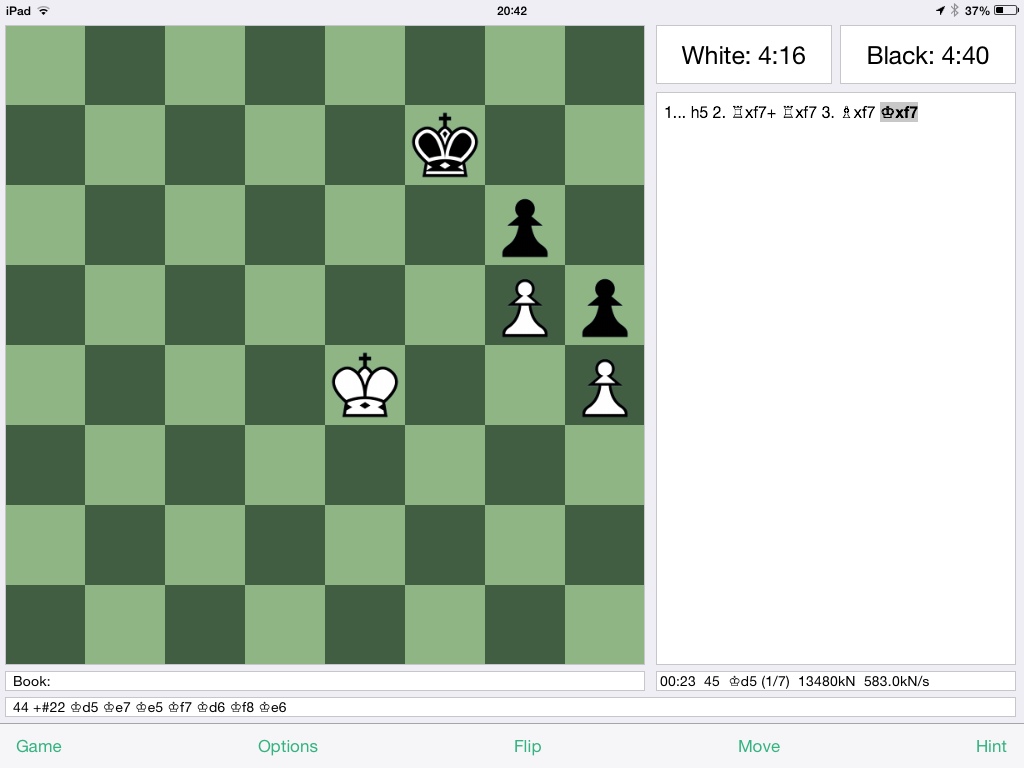
Once I understood this, I re-read Mihail's comments, and understood the wisdom of his earlier comment about the move h7-h6 being an important mistake.
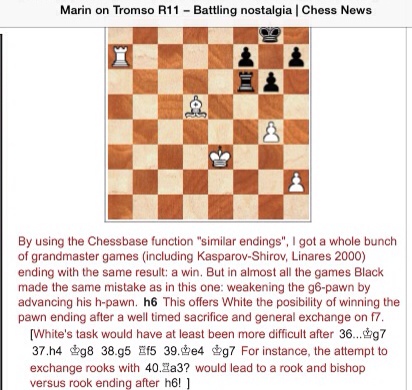
So is Mihail correct? Of course, Hikaru's comment was a post game tweet.
40…passing
So what happens if black passes with say 40…Rf1?
White has two options: either to take on h6 (41 gh+ Kh6 42 Bf7 (42 Rf7?? Rf7 43 Bf7 Kh5=, or even 43…g5=, since h8 is a black square) and try to win the RBvR ending (in which case Hikaru is correct, since that ending is technically drawn- unless the resultant positon is one of those where black is lost) or try to manoeuvre into a positon where the sacrifice can be made on f7. However, he has better.
So, 41 Bc4 Rf2 42 Ke3! Rf5 43 Bd3! (pushing the rook off the f file) Rc5 (I don't think it matters whether it goes to e5, c5 or a5: a key point is that the Bd3 controls f1) 44 Kd4 Rc8 45 Bc4 Rf8
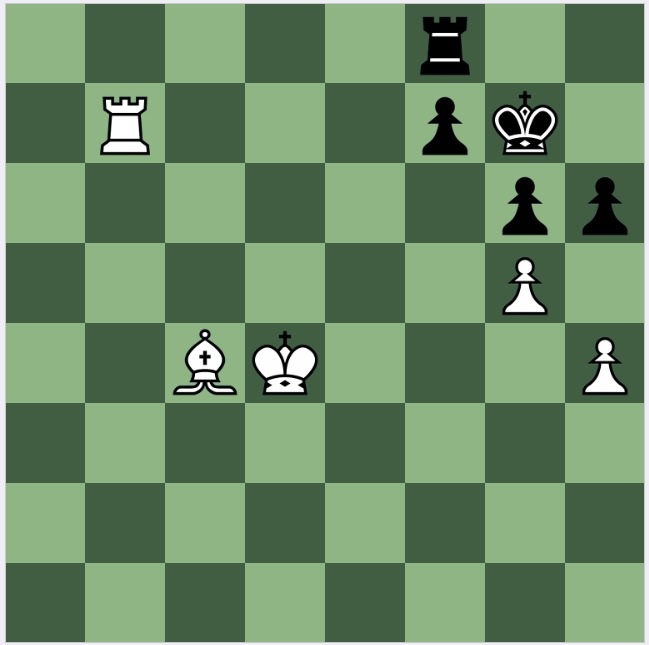
I think this position is won, by zugzwang. I even think the pretty line 46 Be6! wins, since if 46…Kg8 then 47 Rf7 Rf7 48 Ke5! sets up the position correctly so that black doesn't have the opposition, and white can muscle into g6.
Conclusions
Mihail is correct, and Hikaru couldn't have saved the game at move 40. If his game could have been saved it was earlier, by not moving his h7 pawn, for by doing so he weakens the Pg6. Interesting, and instructive.
Black to play and win
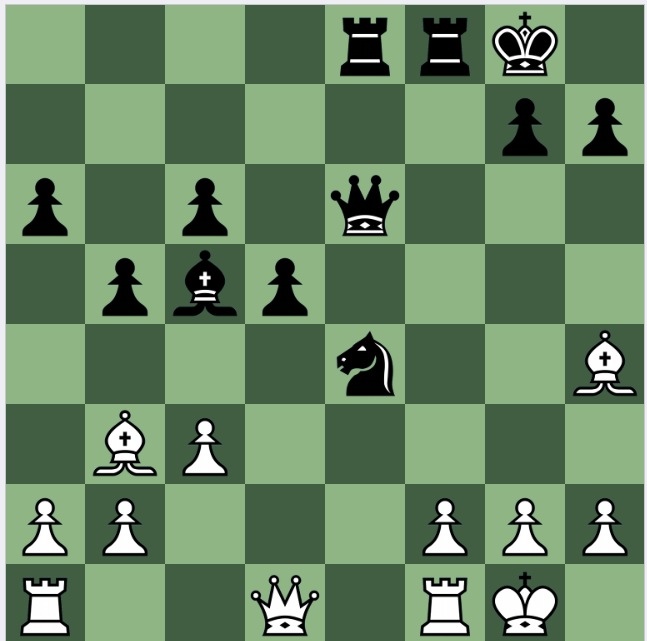
E de Schrijver v LR Reitstein, correspondence 1968
Solution
I got this one wrong, in the sense that I found a good move, but didn't look for (and wouldn't have seen) a better one.
I played 1…Nf2! 2 Bf2 Rf2! 3 Rf2 Rf8 when white's best is 4 Kh1! Rf2 reaching this position.
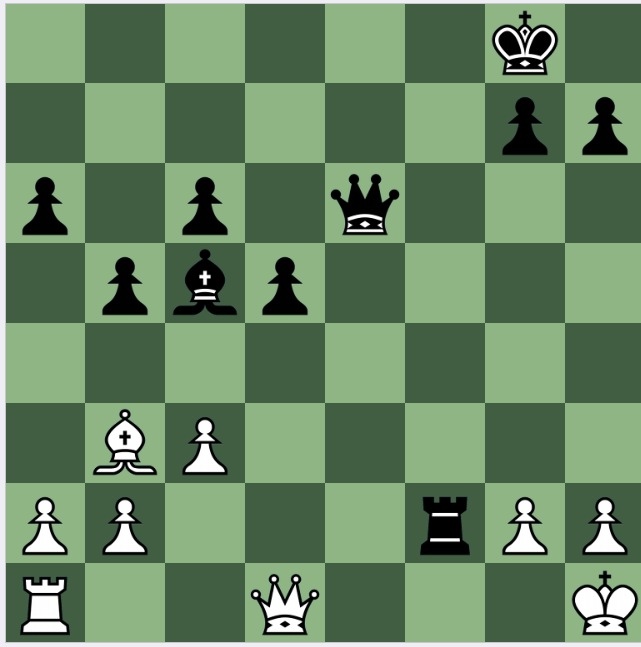
Black is a pawn up, and his pieces are better too: he is winning, but it is not over.
The solution played in the game was 1…g5! the idea being to open the h file by doubling white's pawns. Then h1 is no shelter for the king. 2 Bg3 Ng3 3 hg[] Rf2 4 Rf2 Bf2+! 5 Kf2 Qe3+
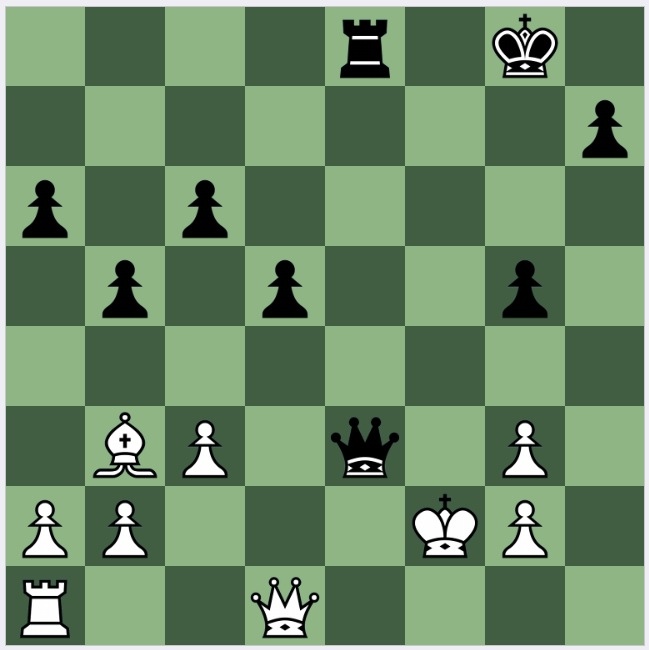
6 Kf1[] Rf8+ etc, 0-1.
Nice: perhaps shows the difference between correspondence and OTB, since g5! carries some 'risk', or at least requires more confident calculation.
White to play and win
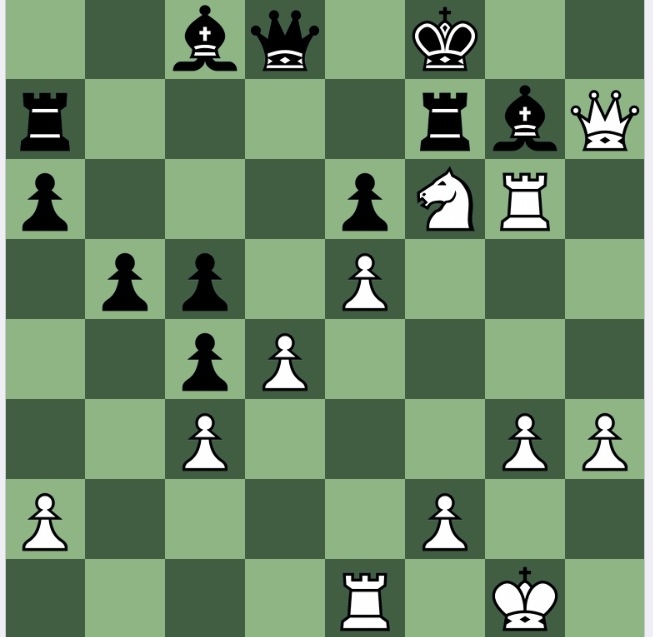
P Kunne v R Faraday 1985
Solution
Fairly simple today, especially when you start with examine all biffs, with the first to be tried being 1 Rg7, which on inspection can be seen to be good. 1…Rg7[] 2 Qh8+ when 2…Kf7 leaves the Qd8 LPDO and so 1-0, or 2…Ke7 when 3 Qg7 is mate.
Last night my wife and bumped into Dominic Lawson and his wife: we are both holidaying in Kas, Turkey.
Whilst Jane and Rosa behaved as normal people do, and talked about our holidays etc (having first checked that they are both chess widows), Dominic and I went faster than the fastest move at bullet chess to the Tromsø Olympiad, and in particular to England's performance.
We both agreed that Mickey's performance was stellar, Nigel's affected by the FIDE Presidential elections, and we also talked about David Howell, and whether he could had won that day's (round 11) game from the England-Cuba match.
Dominic and I had both watched the game live (thank you Tim Berners-Lee, thank you Steve Jobs, thank you Chessbase). I told him I felt the push of the e pawn was misguided, since it provided a shield against checks: instead perhaps there was a mate with the B on e4 and the Q hitting g2: or at least force white into passivity when it should be winning. As the game panned out, David's king was open to endless checks and couldn't get to the protection of the queen since the h2-b8 diagonal was mined: b8(Q)+. So, draw.
Of course, looking at a game in hindsight is easier than having a constant thirty seconds per move, which David had: especially since the crucial time came at the end of a very long and tough session. David has manoeuvred skilfully to reach the endgame where a win was possible.
The crucial postion

Quesada Perez, Yuniesky v Howell, David. Cuba v England, Tromsô Olympiad round 11, 14/8/14
Here, white moved his king, and David played e4, and with time gaining repeated checks black pushed his pawn all the way to e2, whilst white's pawn reaches b7.

This is the position after 74…e2+ 75 Kh1. I think the win has gone by now. In the game, David played 75…Be4 and then there were twelve more checks before David decided he couldn't escape them: the queen is needed to protect the Bishop, and the Bishop is needed to protect the Pe2, so neither can shield the king.
Instead of 75…Be4 black could transpose to an endgame Q+B v Q+PP but this can't be winning. 75…Qa1+ 76 Kh2 e1(Q) 77 Qe1 Qe1 78 b8(Q) and since there is no forced mate (the white queen can always come back or either g3 or h2 to defend g2) it is a draw.
White's queen's placement in the second diagram is key. From e7 it prevents h4 checks whilst threatening endless checks of its own. Knowing this, and going back to the first diagram, the win is to move the Q to d6: so 1 Kh1 Qh4+! 2 Kg1[] Qd4+! 3 Kh1 Qd1+! 4 Kh2[] Qd6!
The perfect placement

The Q on d6 serves two purposes: stops many of white's checks, and defends d7, so that the B can regroup to d7, either hitting the Pb5 or preventing the Pb4 from advancing. If white tries to nobble the Q and B by pinning them by Qd8 he is unsuccessful. The Ph5 is LPDO, and Qd1+ Qh5+ pick it up, followed by Qd1+ and Qd4 centralising the queen. Since the b pawn is only on b4 black wins: there is no perpetual and eventually the king will find shelter.

I posted earlier about a colleague who wasn't sure whether to leave my firm or not. Rightly, in my opinion, she decided to stay , but change roles, and I believe her new role is going really well. That post used the structure of Sex and the City to explore the technique of asking good questions when making difficult decisions.
Black to play and win
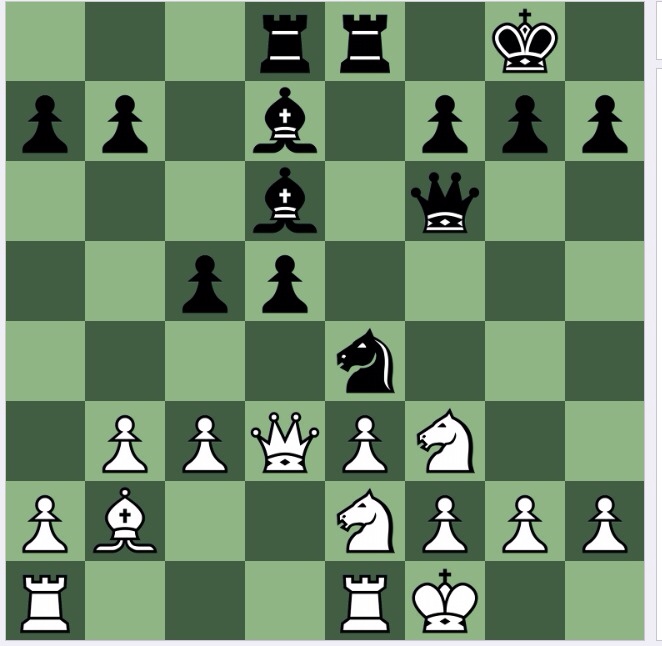
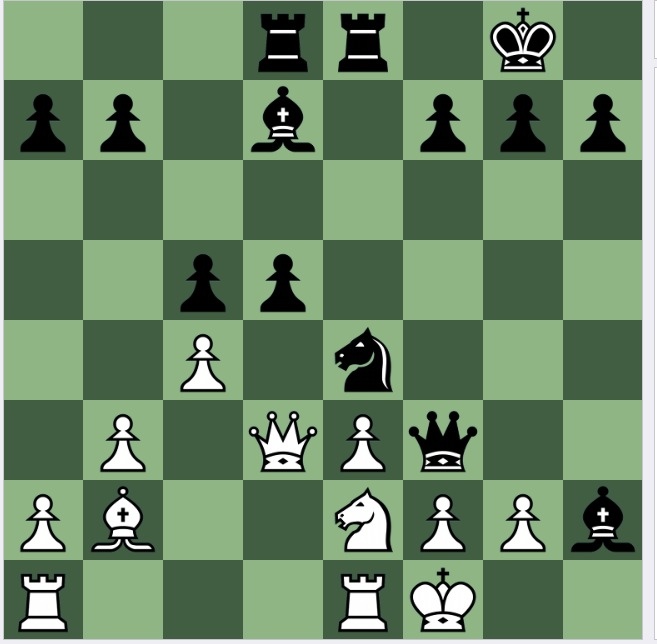
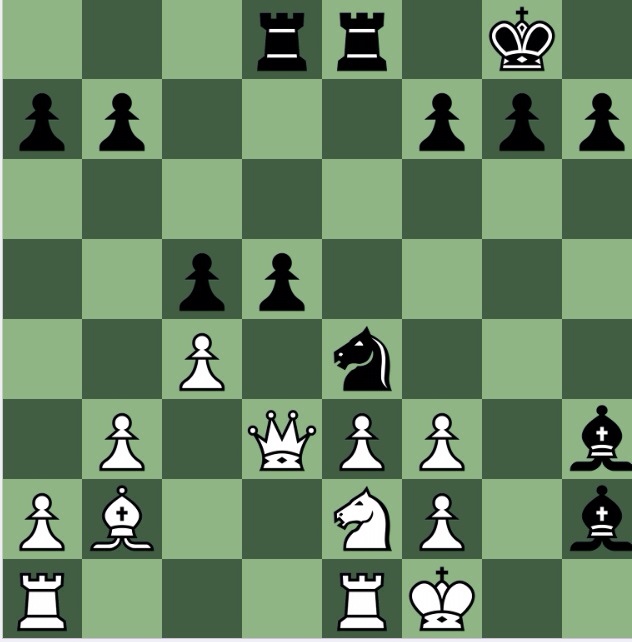
Black played 1..Bh2!, met by 2 c4; what next?
PTR Hodges v BE Siegheim 1906
Solution
Following Purdy, ignore the threat, and think what you would do if the threat could not possibly be executed. So, examine all biffs, 1…Qb2, 1….Nf2 and 1…Qf3!, and see that the latter one leads after 2 gf to 2…Bh3 mate.
Nice
 allanbeardsworth