Black to play and win
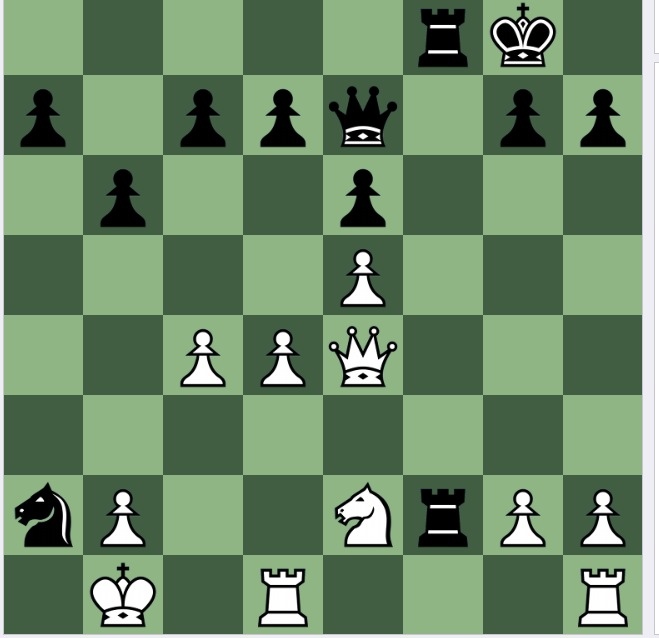
W Witkin v W Heidenfeld 1935
Solution
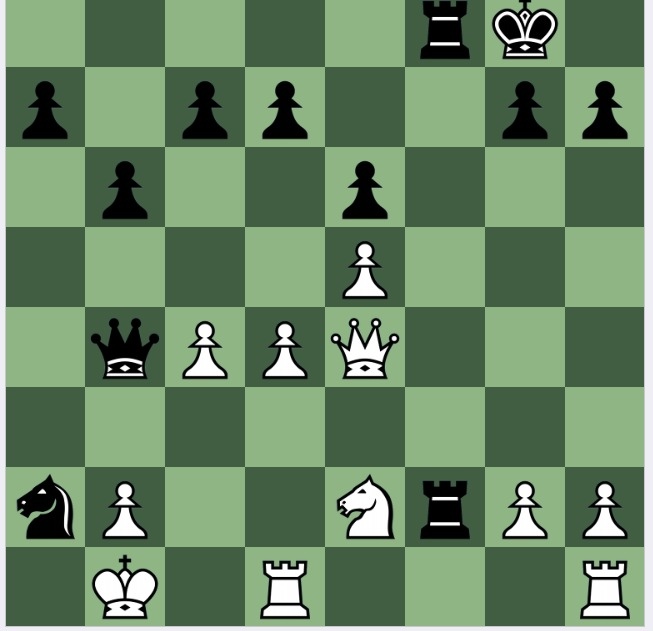
There is a knight fork Nc3 in the air, so after trying Re2, R8f4, Nc3+ and seeing none are any good, 1…Qb4! is a natural try. When it is seen that 2 Ka2 Qc4+ forks the K and N, the rest of the solution is easy: safe in the knowledge that white's main try loses a pawn, and leaves black's pieces in dominating positions.
So, 2 Qc2 Re2! 3 Qe2 Nc3+; 2 Qd3 Re2 3 Ka2 Qb2 mate; 2 Rd2 Qd2; 2 Rc1 Nc1. Each of white's tries loses at least the exchange.
 Posted with Blogsy
One of the players who I most like following is Matthew Sadler. His book, Study Chess with Matthew Sadler is excellent: written from the heart, written for the reader. One reason I enjoy watching his games are that he has returned to competitive chess after a long professional career: and he is competing again at the highest levels. Secondly, I like his style: he seems to be able to place his pieces well, apply pressure, find tactics. The sort of player I wish I could emulate.
Last night, I played through his round 9 game. Watching it live, I thought it was a tough, close battle: I couldn't see how Matthew (on the white side of what turned out to be a typical closed Ruy Lopez) would break through, and in fact, I feared that black's position was better, with white having a bad bishop. In the game, towards the end it still looked to me as if it was equal at best, when suddenly, tactics!, and it was all over: 1-0 to Matthew.
What has I misunderstood?
My appraisal of the position was in fact accurate: white was worse, and it was only a blunder by black (on move 47, so not in time trouble) changed everything. The reason for this blog posting is that the blunder is not obvious and is instructive.
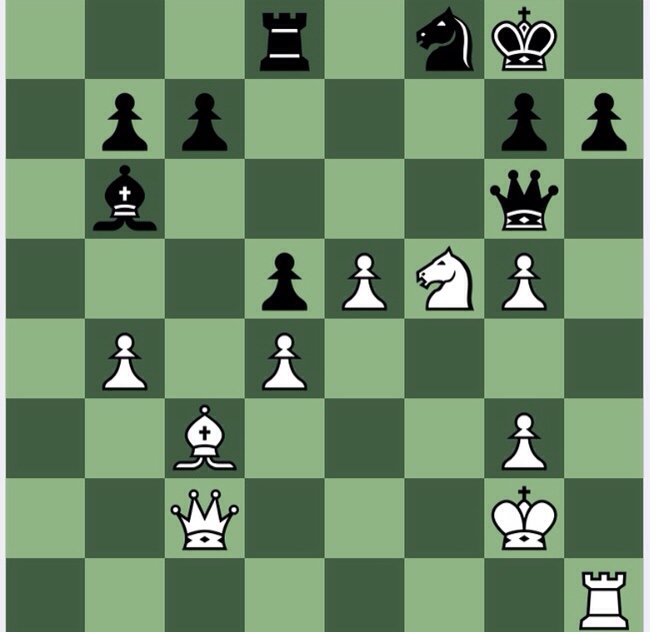
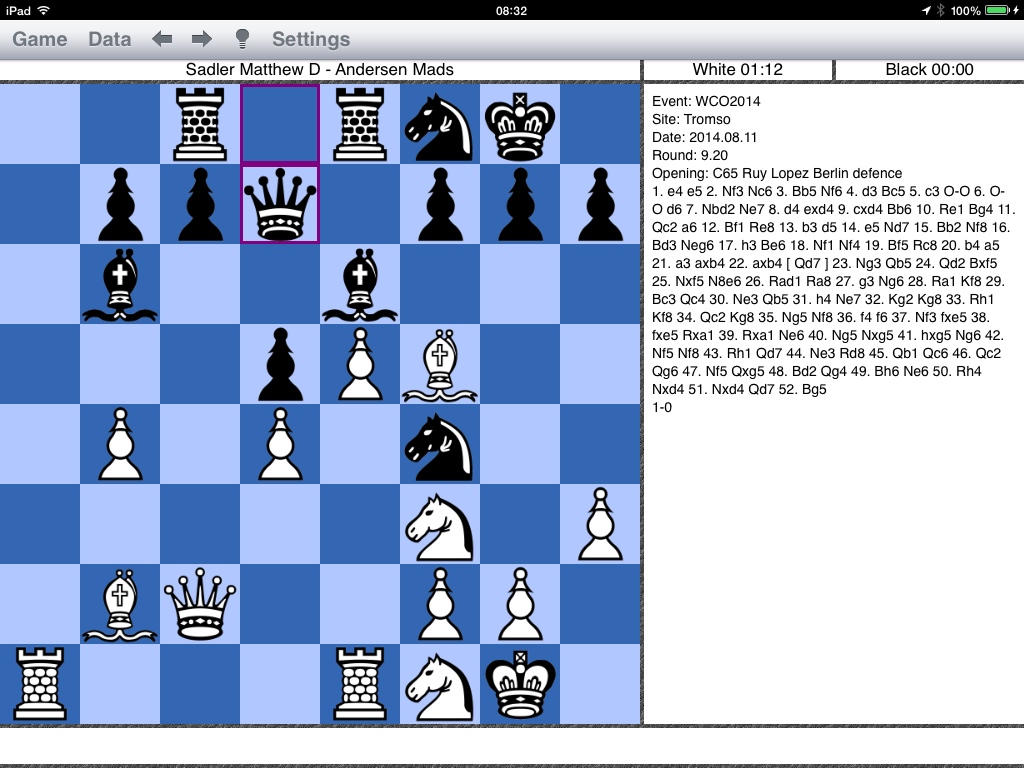
Black to play
Black has everything protected, by which I mean h7. All he has to avoid is the Ne7+ fork. Using the rook would be to waste it, king to the corner moves it away from where it would be needed in an endgame, so black played 47….Qg5??: a very natural move, starting to collect booty in readiness for the next phase of the game.
In fact, 47…Kh8! , with the idea of following up with Ne6 hitting d4, is very strong. The g5 pawn is not going anywhere, the Nf5 is pinned against the LPDO Qc2: black is better, and I would hazard near winning.
However, after 47…Qg5??, white is winning. 48 Bd2! reveals two things: taking on g5 as improved white's bishop considerably, and also black's queen is now in a net. 48..Qg4 is forced, since g6 is hit by the Ne7+ fork. Then, white has the rocket 49 Bh6!! and the game is over.
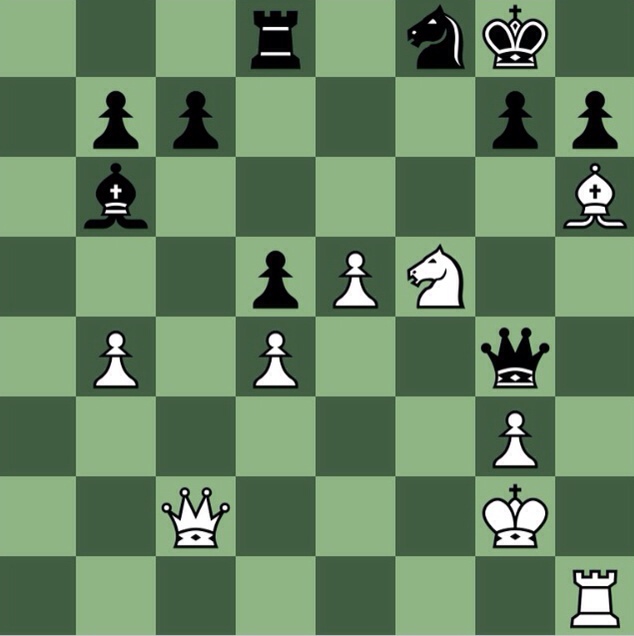
The bishop move has two motifs: the obvious one, is its aggression: hitting g7, and if the B is captured, then there is a Nh6+ fork. The hidden motif if that it threatens to trap the netted queen by Rh4 – so Bh6 also clears the second rank so that ….Qe2+ is not possible.
If 49…g6 black at best has created horrible black squared weaknesses in his king's defences. But 49 Ne7+ Kf7[] (49…Kh8 50 Bf8 and Ng6+) 50 Rh4 and white is dominant: if say 50…Qe6 then Bf8 and Rh7+
Black to play and win: or draw?
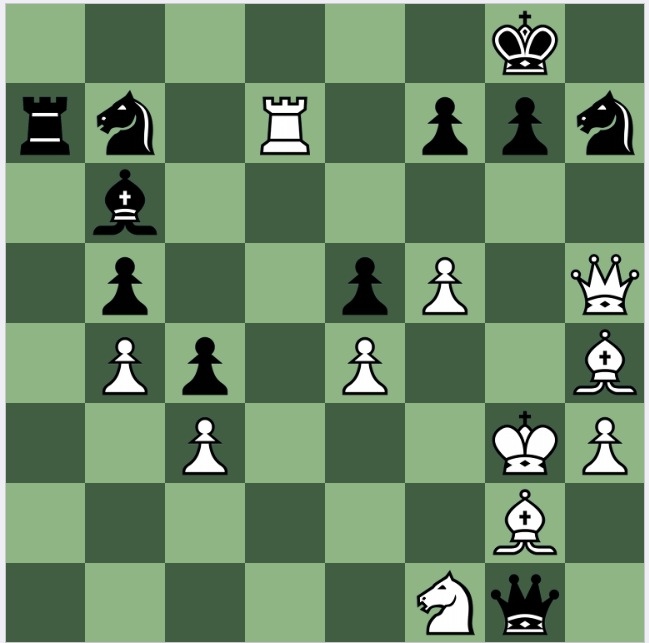
GTD Jones v JJ Leicher 1978
Solution
I found this really difficult. In a game, with the clock ticking down, I would have played as in the game, Qf2+_Qg1+_Qf2+ and draw by perpetual.
Whilst I saw 1…Nd6! I didn't realise how good it was, and this was one of the few problems in this book where I had to get the pieces out, and think it through as if it were a game.
Eventually, I cracked it, or at least got enough for a pass grade. I didn't get all the following lines: the position is an engine's dream, if engines dream.
2 Rd6
2…Ra2! 3 Qf3! Rf2! is very picturesque.
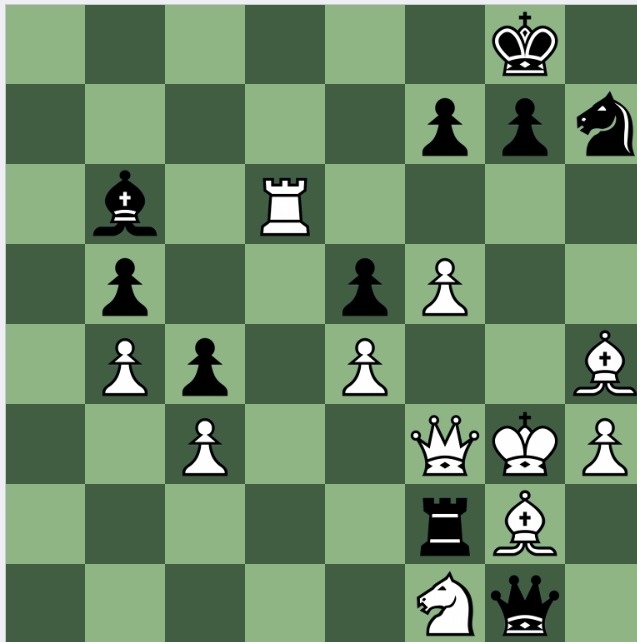
This was as far as I got, noting that if white played 4 Rb6, hoping to collect enough booty, then, alas, after Rf3+ the next move is Qb6, 0-1.
However, 4 Rd2! is more interesting. Black's queen is in a bit of a net itself, and whilst the engine says 4…Rf3+ is good for black! it actually prefers 4…Rd2! 5 Nd2 Qe1+ 6 Kg4 Qd2.
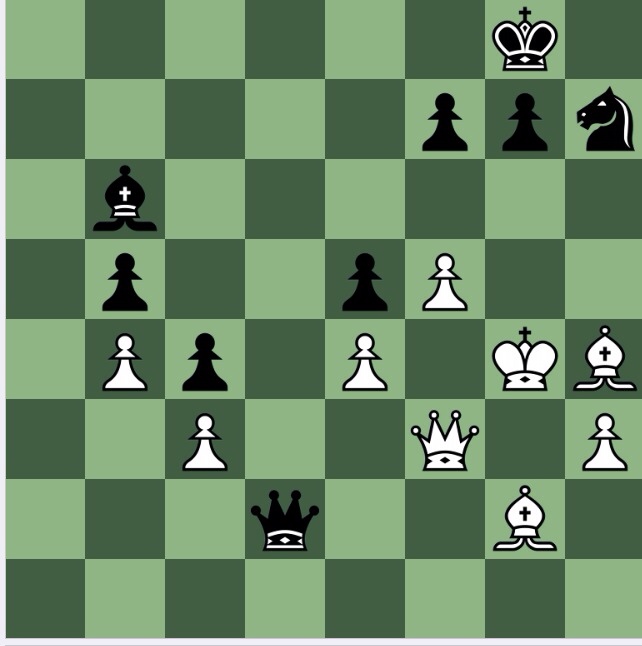
This is one if those positions where the engine's assssmenr of clearly winning is at variance with my human assessment- yes, I can see black is better, but plenty of room to mess up.
2 Ra7
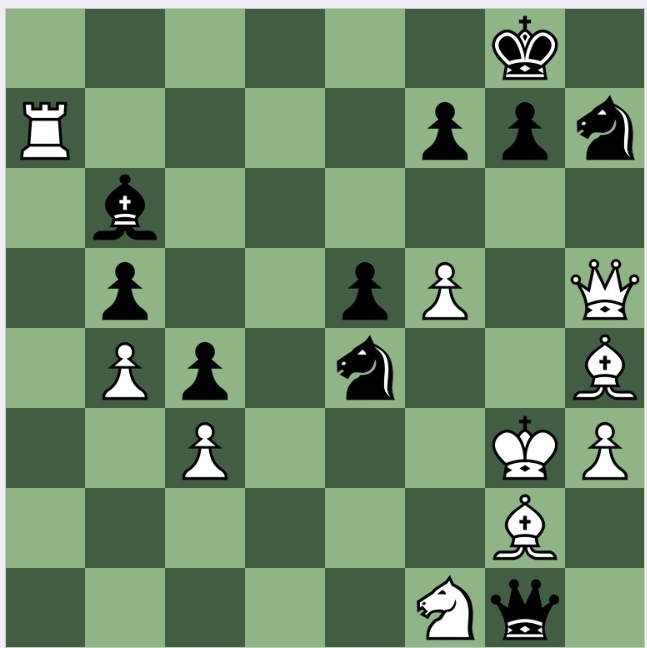
2…Ne4+ 3 Kf3[] when I thought 3..Ra7 was enough for an advantage, and it is, but the engine (and Reitstein) shows that 3…Nd2+! is even stronger.
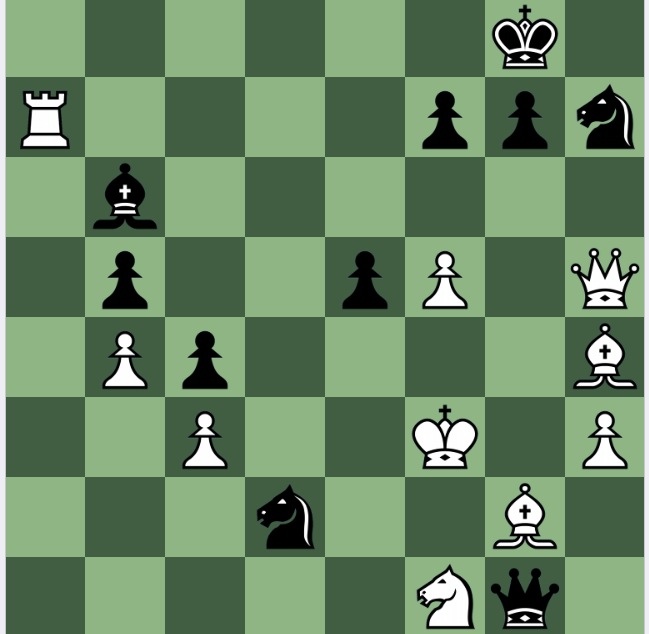
The point is that if 4 Nd2? the knight's control of e3 is lost, so that 4…Qe3+ 5 Kg4[] Qf4 mate; so the king must retreat 4 Ke2[] Qg2+ 5 Kd1 Qf1+ 6 Kd2
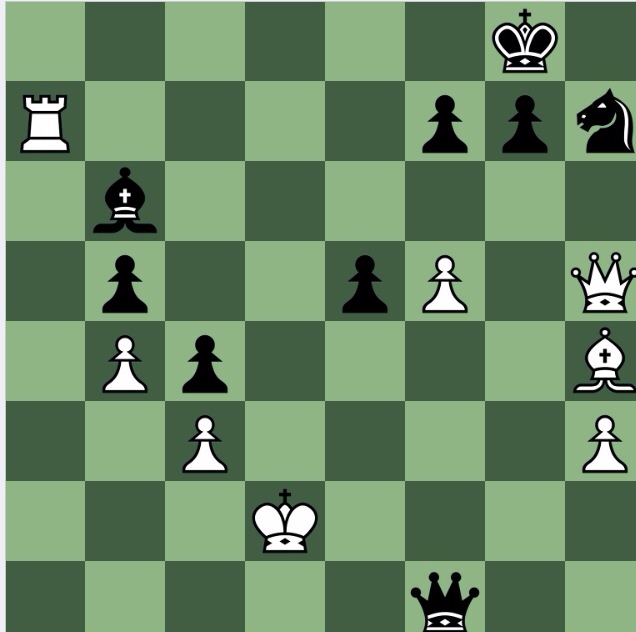
Black takes the c3 pawn with check, then takes the bishop, and is winning.
A reader will have to be a certain age to know what the title of this blog posting is about; and if, like me, they are that certain age, they will also know what
Nano Nano
means.
They will even know, and be able to make the sign themselves, what this means:
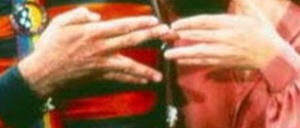
(For the 95%+ of my readers who are younger than me, these are both friendship greetings)
White to play and win
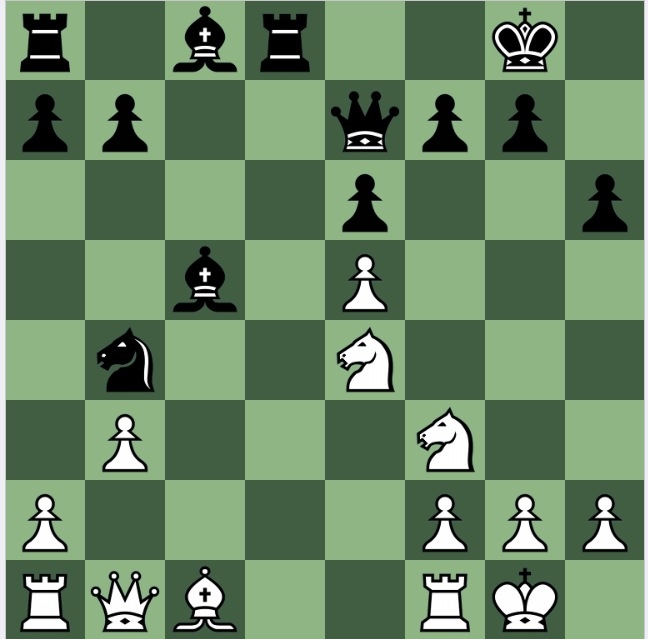
LP Druiff v A Lubowski 1950
Solution
An interesting puzzle today.
Firstly, has it been a game, I am not sure I would have dared to play the winning move, 1 Bh6, for reasons which I will explain, being to do with one of my least comfortable areas in chess. I might well have played a3, b4, Bb2, which probably improves black's position, and black must be better then with the two bishops and such a strong knight (though Ne4-c3 would come next) (Stockfish confirms this: slightest advantage to black after Bb2, though interestingly black's advantage increases if white tries to swap off the Nd5: the engine is happy to exchange the knights).
But it is not a game, it is a puzzle, so 1 Bh6! is the most natural move to try first.
1 Bh6 f6
If black doesn't take, and he didn't in the game, he is at least a pawn down. The game continuation was 1…f6 2 ef gf 3 Nc5+ with Qg6+ to follow. Stockfish finds an even more brutal finish, 2 Nf6+!:
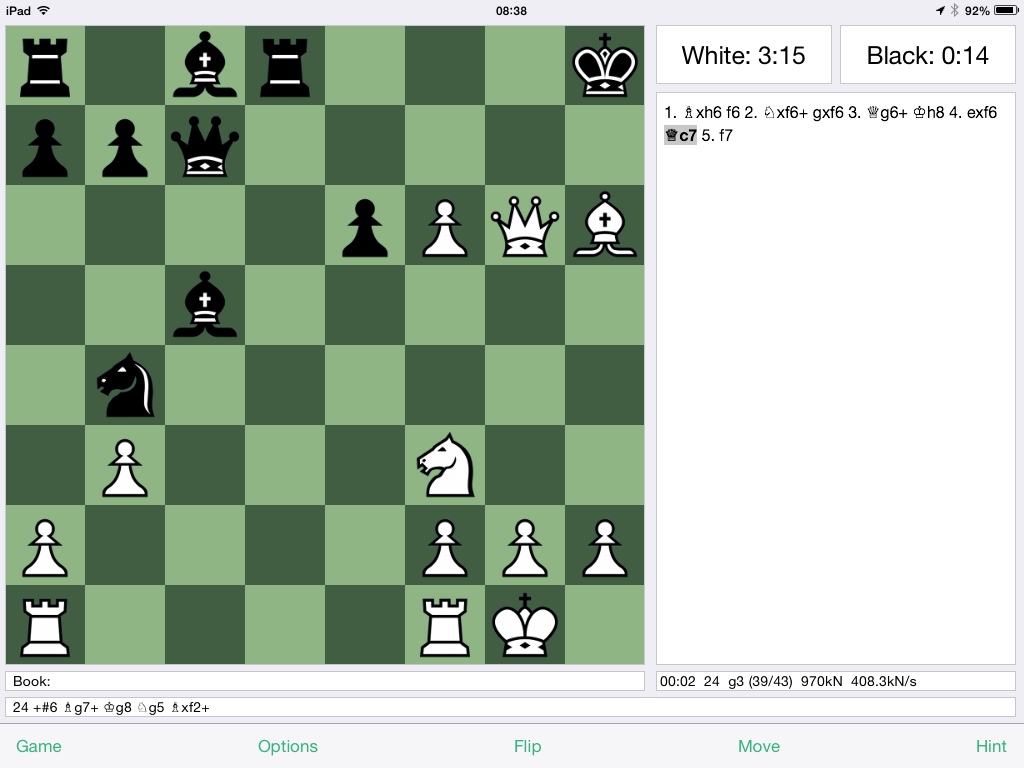
(In the diagram, it says it is mate in six by Bg5+ and Ng5- very sensibly bringing more pieces to the party. I had in mind f7 but the engine says that is only mate in eight after the desperado Qf7).
If after 1 Bh6 f6 2 Nf6+ black doesn't take the N and plays Kf8 instead (Kf7 Ng5+) then 3 Qh7 threatens mate on g8, 3…Qf7[] 4 Ng5, and black kinda knows that his days are numbered.
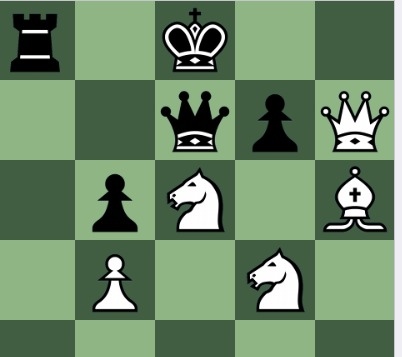
The type of position I could beat Carlsen from
1 Bh6 Rd5
Reitstein's suggested best defence (and there is no better, just alternatives) is 1…Rd5 when he gives a typical line as 2 Bg7! Kg7 3 Nf6 Qd8 4 Qh7+ Kf8[] 5 Ng5 reaching this position.
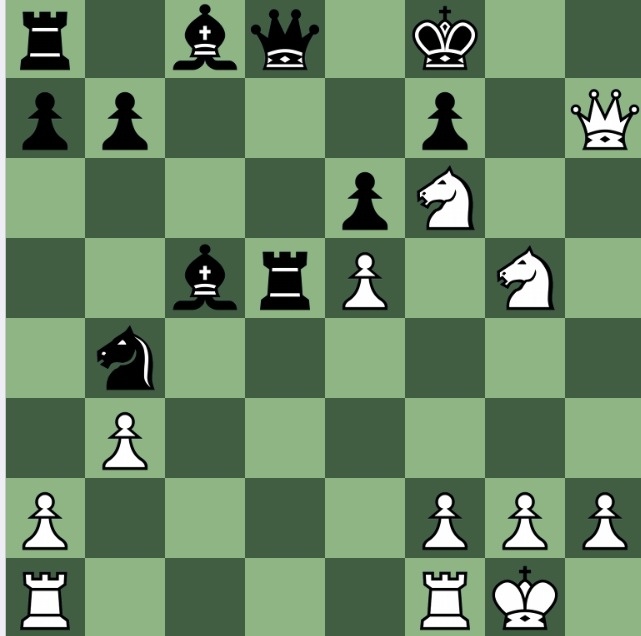
These are the type of positions that I don't like in practice: somewhat uncertain, clearly I know white is better, and clearly I know an engine will say +big, but scope to not play the best moves, and let black squiggle out. Maybe not in this precise position, because white can get material back, but until I can see either a forced mate, a forced way to overwhelming material, a forced way to simplification to a won ending, alas, I don't play like Tal, I play as a bundle of nerves and doubts.
After 5 Ng5, Reitstein gives 5…Rd7 (defending f7) 6 Ne6+! Ke7 7 Nd8 winning the queen etc. if 6..fe 7 Qg8+ Ke7[] 8 Qg7 mate.
What is even better for white after 5 Rd7?
Solution
6 Qg8+ Ke7 7 Qf7 is mate.
1 Bh6 gh
Strangely, Reitstein doesn't even mention the move I worried about most, being the only move I would have worried about before deciding to play Bh6: pawn takes bishop.
Then 2 Nf6+ Kf8 3 Qh7 Qc7[] 4 Qh6+ Ke7[] is forced, but my worry in practice before parting with my bishop would be 'am I certain that it is won?'
I would probably decide to play it for two reasons: firstly the a3, b4, Bb2 line has no prospect of me being better, and every prospect of a miserable eventual loss, so, I suspect on balance I would play it for the main reason 'nothing to lose'. But also I would see that black is trussed up and after 5 Qg5 there 'must be' or 'should be' something.
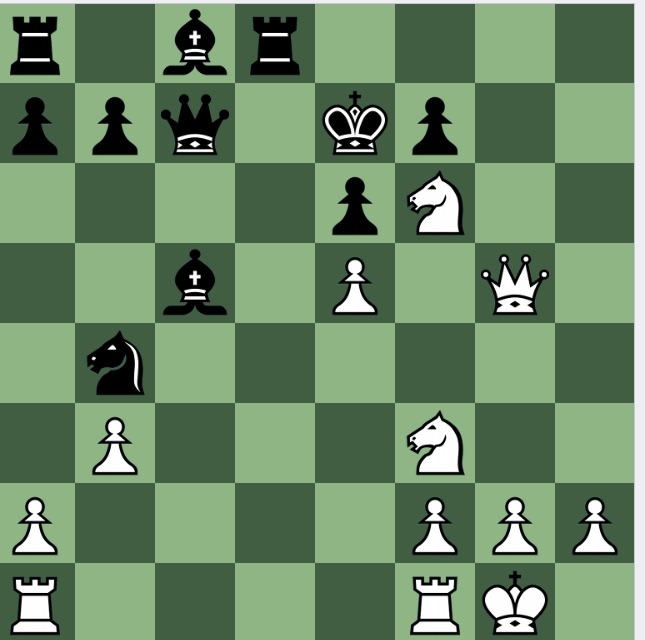
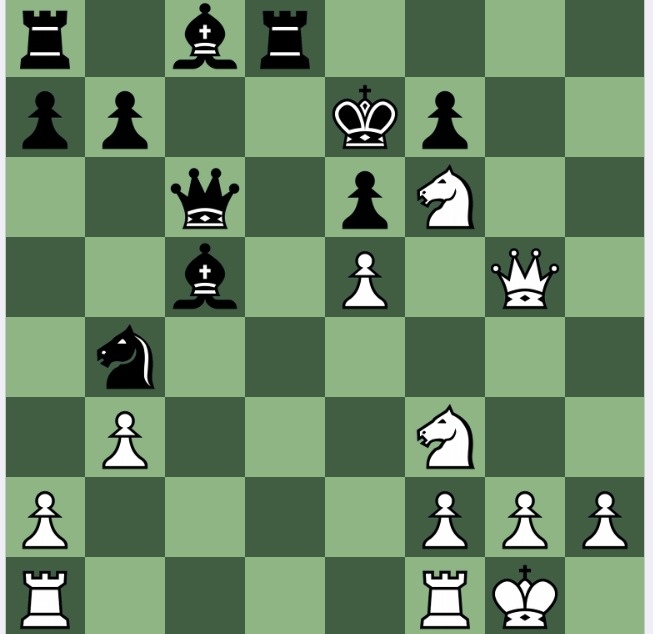
Once the above position was on the board, things would be better. The queen is limited for space, needing to get out of the way of a nasty knight discovered check; the black minor pieces can be pushed back, at a time when d5 isn't available for the N, and white can bring his rooks to the d file. So, once this position is reached I would be at least hopeful, if not confident. And, of course, my h pawn is a passer.
Black can either play 5…Qa5, which at worst gives back the material, with a3, b4 now being a fork, or try something else. The engine says take the bishop, and if is clearly winning.
The move I thought was best was 5…Qc6, when Stockfish surprises me by preferring 6 Nd5+! with the point that it removes the potential blockader of the d file (Nb4-d5) so that a subsequent Rd1+ skewers the Rd8, also attacked by the Qg5, and no longer defended by the Qc6. Neat. And if 6 Nd5+ Ke8, then 7 Qg8+ Bf8 8 Ng5 is gruesome.
However, the engine also accepts that my move, 6 Rad1, wins: a less gruesome variation of Nd5, Rad1 seeks both to prevent black's king from escaping and hits the Rd8. If 6…Bd7 say, many lines win, but one is 7 a3 Nc2 (say) 8 b4 Bb6 and now it is mate in three after Nd5+: the bishop had the function of defending e7.
White to play and win
Position after 27… Nd7-b6
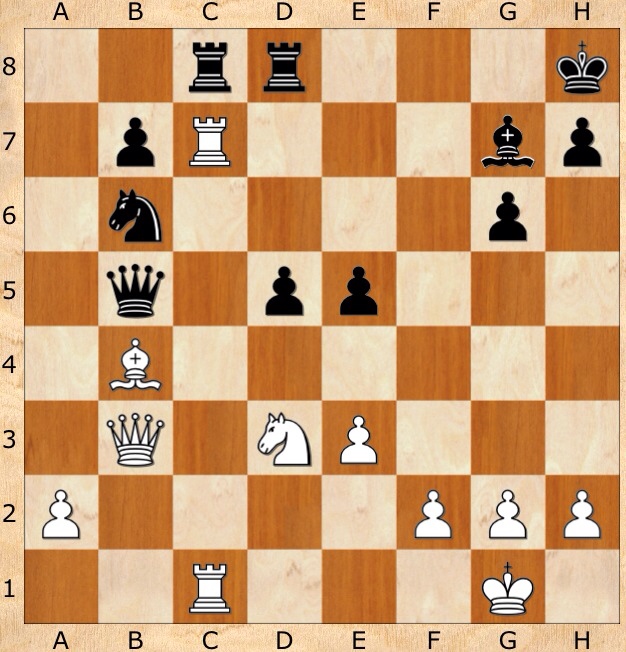
Meier G v Kamsky G, Tromsô Olympiad round 9 , 11 August 2014
Solution
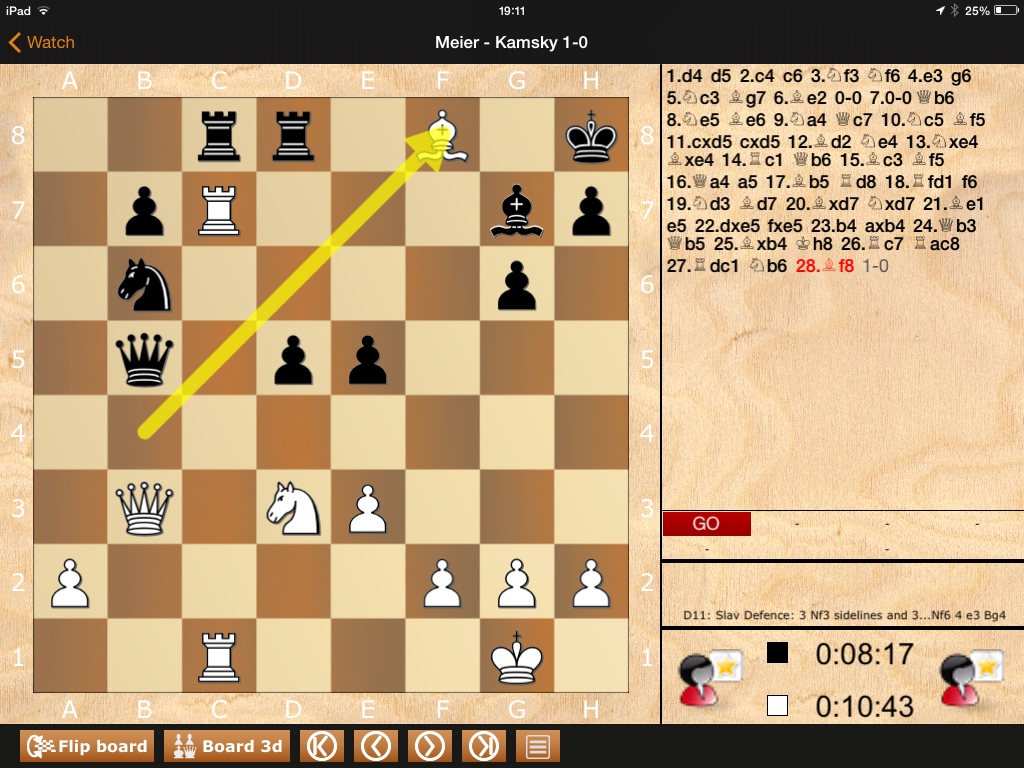
28 Bf8! 1-0
Yet again confirming that John Nunn's LPDO maxim is so often correct, and CJS Purdy's advice to examine all biffs and to look for jump biffs are true.
Iona's only timepiece is her kitchen clock, that is fixed to the wall. One day she noticed that she must have forgotten to wind it, and that It had stopped (but isn't broken).
She runs into town to have lunch at a restaurant, choosing one with a clock. When she runs back home (having waited for her lunch to settle, so she runs back at the same speed) she makes a simple calculation and sets her own clock accurately. Iona is a regular runner, so can keep a steady pace, but doesn't know how far or how fast she ran.
How does she manage to set her clock properly without knowing her travel time?
Solution
Before leaving home, Iona winds up her clock, and sets it going, having first set it at midnight to ease the calculations.
She checks the restaurant's clock on arrival and as she leaves it. Hence she knows the time she was in it.
When she gets home, she notes the time on her clock: this gives her the total time.
Since she knows the total time, and knows the restaurant time, she can work out the time taken there are back for the runs. She halves that figure, to give the one way time. She adds that one way time to the time the restaurant clock showed when she departed, to give the current time.
Source
Puzzle seen in Futility Closet, by Greg Ross, a lovely pot pourri book of maths, history, quirky events.
A wonderful gift for the nerd in your life (thank you, Tom, my son, for knowing what dad is like)

Iona's only timepiece is her kitchen clock, that is fixed to the wall. One day she noticed that she must have forgotten to wind it, and that It had stopped (but isn't broken).
She runs into town to have lunch at a restaurant, choosing one with a clock. When she runs back home (having waited for her lunch to settle, so she runs back at the same speed) she makes a simple calculation and sets her own clock accurately. Iona is a regular runner, so can keep a steady pace, but doesn't know how far or how fast she ran.
How does she manage to set her clock properly without knowing her travel time?
Solution
Before leaving home, Iona winds up her clock, and sets it going, having first set it at midnight to ease the calculations.
She checks the restaurant's clock on arrival and as she leaves it. Hence she knows the time she was in it.
When she gets home, she notes the time on her clock: this gives her the total time.
Since she knows the total time, and knows the restaurant time, she can work out the time taken there are back for the runs. She halves that figure, to give the one way time. She adds that one way time to the time the restaurant clock showed when she departed, to give the current time.
Source
Puzzle seen in Futility Closet, by Greg Ross, a lovely pot pourri book of maths, history, quirky events.
A wonderful gift for the nerd in your life (thank you, Tom, my son, for knowing what dad is like)
Iona's only timepiece is her kitchen clock, that is fixed to the wall. One day she noticed that she must have forgotten to wind it, and that It had stopped (but isn't broken).
She runs into town to have lunch at a restaurant, choosing one with a clock. When she runs back home (having waited for her lunch to settle, so she runs back at the same speed) she makes a simple calculation and sets her own clock accurately. Iona is a regular runner, so can keep a steady pace, but doesn't know how far or how fast she ran.
How does she manage to set her clock properly without knowing her travel time?
Solution
Before leaving home, Iona winds up her clock, and sets it going, having first set it at midnight to ease the calculations.
She checks the restaurant's clock on arrival and as she leaves it. Hence she knows the time she was in it.
When she gets home, she notes the time on her clock: this gives her the total time.
Since she knows the total time, and knows the restaurant time, she can work out the time taken there are back for the runs. She halves that figure, to give the one way time. She adds that one way time to the time the restaurant clock showed when she departed, to give the current time.
Source
Puzzle seen in Futility Closet, by Greg Ross, a lovely pot pourri book of maths, history, quirky events.
A wonderful gift for the nerd in your life (thank you, Tom, my son, for knowing what dad is like)
Black to play and win
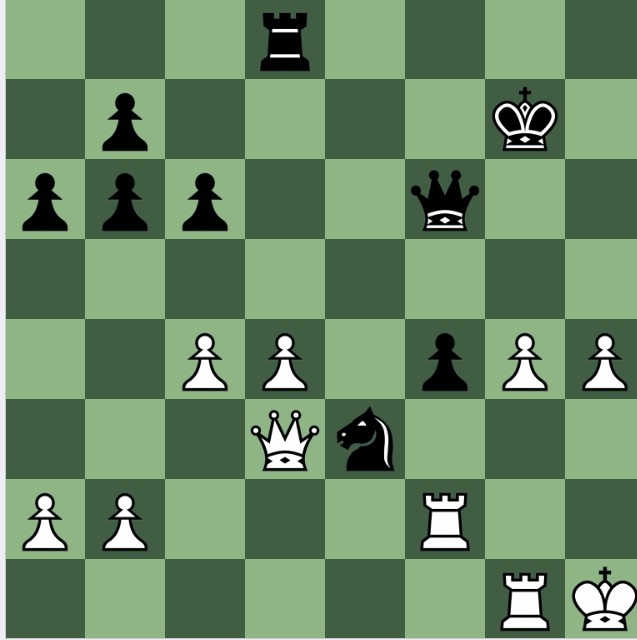
M Blieden v JM Holford 1945
Solution
A standard back rank mate. 1…Qh4+ 2 Rh2[] Qh2+ 3 Kh2 Rh8+ 4 Qh7 Rh7 mate.

 allanbeardsworth