At any one time, certain players seem to be in form. At present, chief amongst these is Caruana, but I am really pleased about Topalov's return to form (I find his style of play exciting) but I am delighted with Mickey Adams' play.
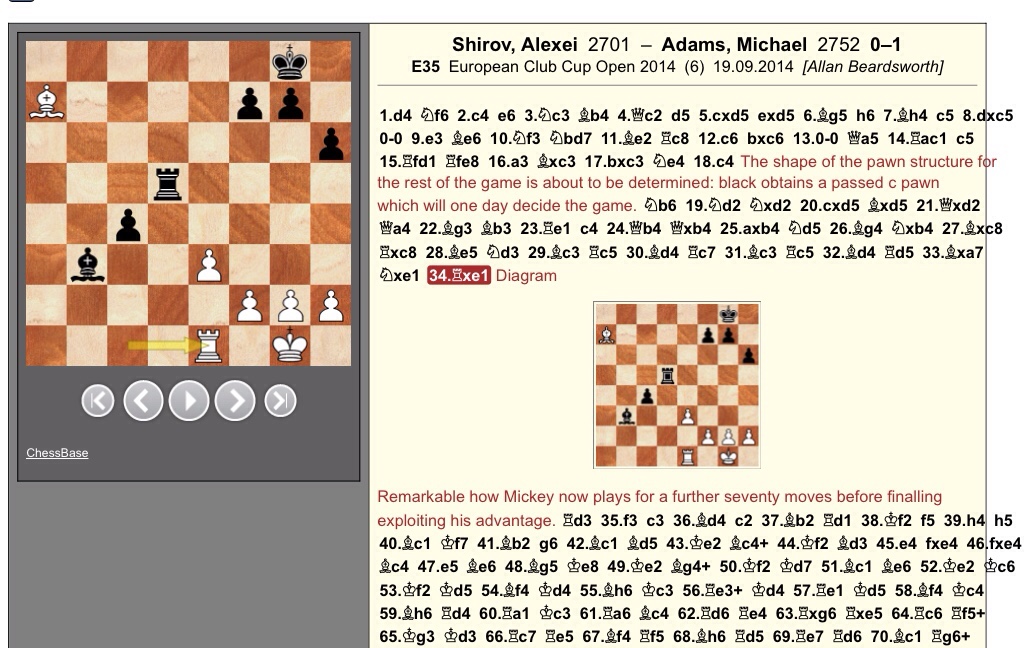
Mickey's games have a controlled beauty about them. I was able to watch the last twenty or so moves of his game vs Alexei Shirov live on Playchess. Shame to say, I had no idea whether the manoeuvring would lead to a result, or whether it was merely wood pushing before acceding to a draw. But suddenly there was s break through and then a quick conversion.
Excellent play by Mickey, annotated here.
 Posted with Blogsy
White to play and win
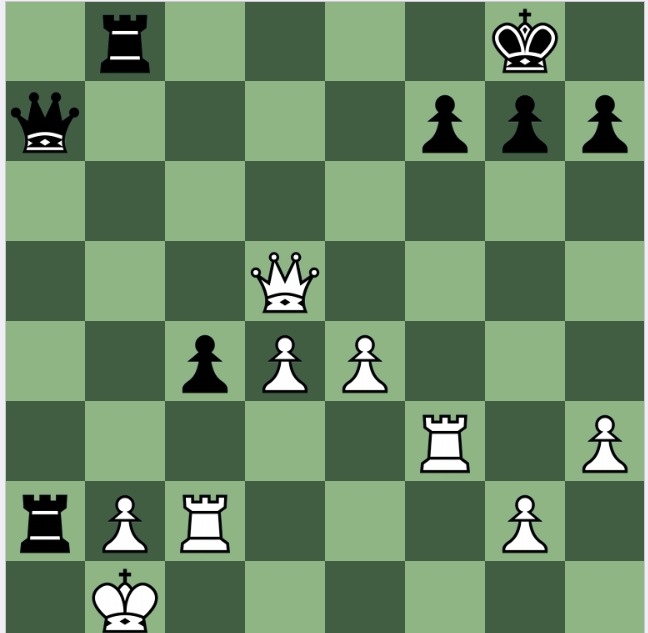
CC de Villiers v D Pick 2000
Solution
Not too hard today, mainly because desperate times require desperate measures. If say 1 Rf2, black mates by Ra1+ and Rb2+!, for example by:
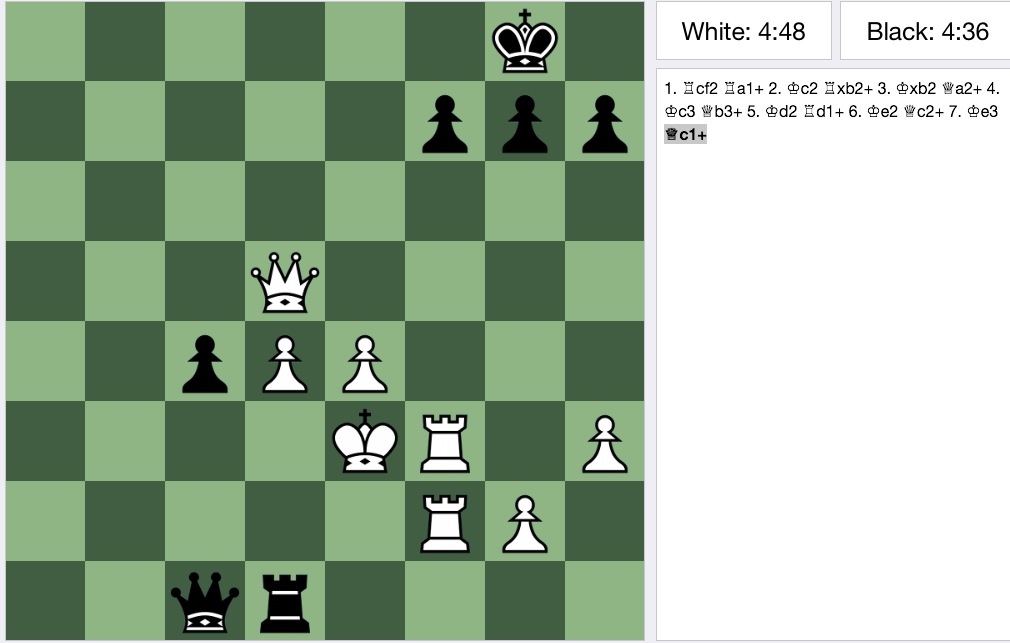
But it is not too hard to find the saving 1 Qf7+!, forcing queens off, and the resultant endgame is winning.
A lovely book: buy it if you use ChessBase, especially if you are like me: only good with the basic functions; or if you are an absolute novice with it.
Jon Edwards has written an extensive user manual based on CB12. (He writes that Chessbase have confirmed to him that their next release, CB13, won't differ in terms of the guidance in his book).
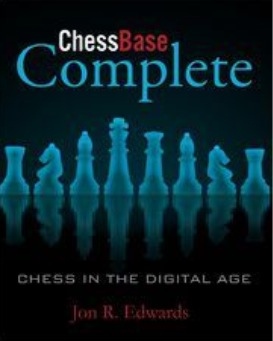
Production qualities are good: a very nice front cover in both design and feel, creates a good first impression of the book. Some of the diagrams in the book could have been produced better (on occasion there is reference to coloured lines or arrows, but the pictures are in black and white) but this would be mere carping.
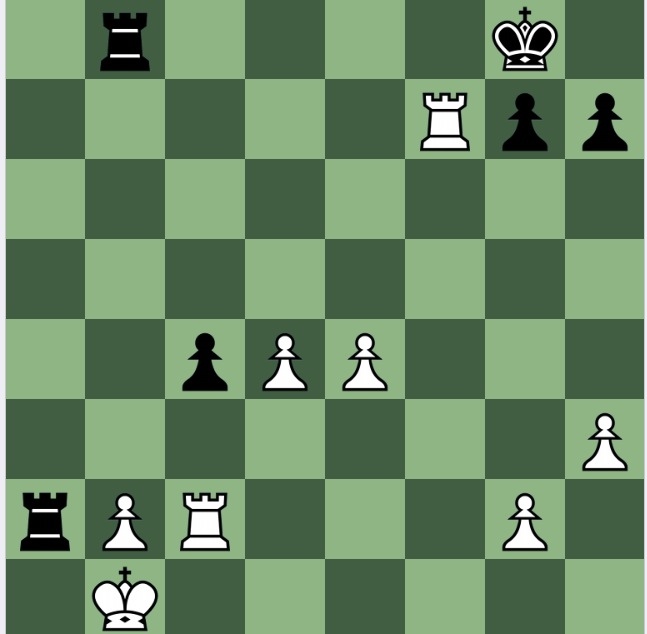
White to play and win
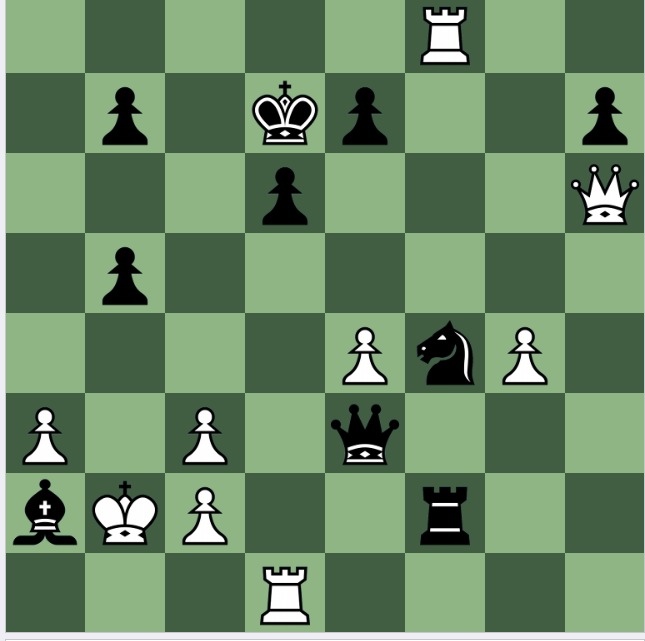
W Kobese v R Van Tonder 2002
Solution
This is a case of 'see where the checks get to' and since the line is more or less linear, it is not too hard to see that white mates.
1 Rd6+ ed (1…Kc7 2 Rc8+! Kc8[] 3 Qf8+ Kc7[] 4 Qd8 mate)
2 Qg7+ Kc6 (2…Ke6 3 Re8 mate)
3 Rc8+ Kb6[] 4 Qc7+ Ka7 5 Qa5 mate.
In fact he doesn't mate: the above was my line, and I thought (when imagining the problem in my head) that 4…Ka6 5 Ra8+ was mate, but it isn't, black can interpose his Q, 5…Qa7. The game is still lost, white picks up the d6 pawn and the Ba2, but it also shows why Stockfish prefers 2 Qh7+, gobbling up one more pawn, giving white a passed g pawn. In fact, this line reveals one of my common failings: I typically prefer a closer queen check, here g7, to a further one, here h7. I suspect this could be a common human failing.
White to play and win
Black has just played Rde8
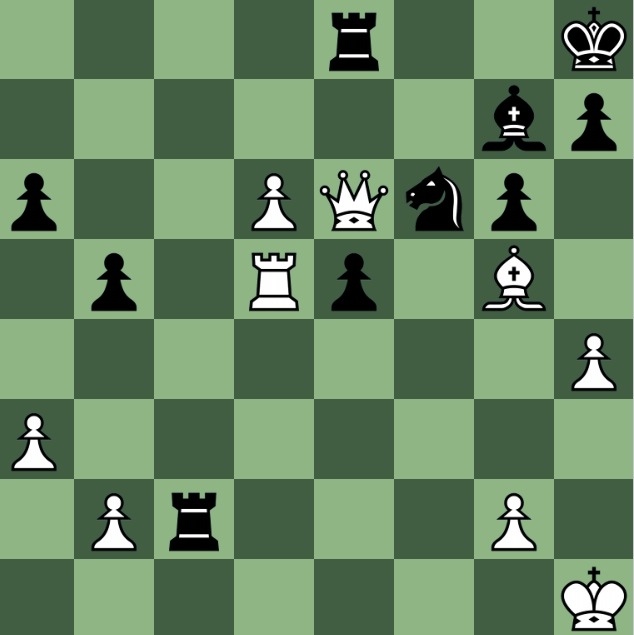
HE Price v J Jacobson 1974
Solution
Not too hard, because the main win is 'standard', and there is an alternative more prosaic win.
1 Qe8+! Ne8[] 2 d7 is a standard double attack, and the pawn promotes.
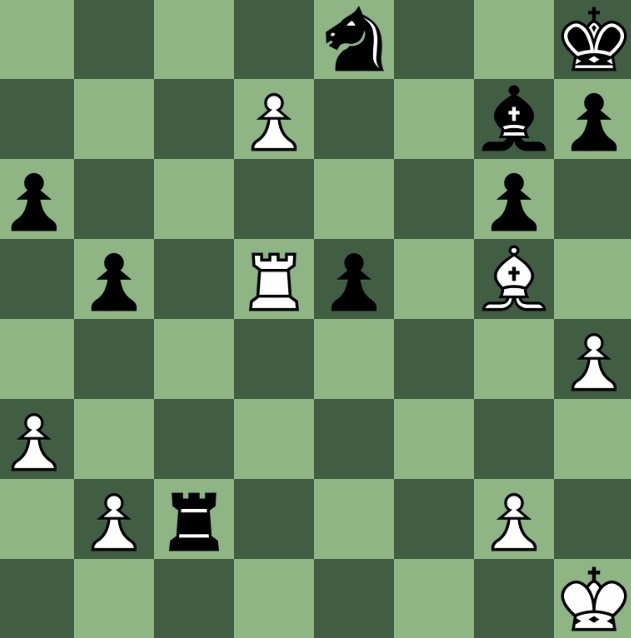
I read an excellent maths book on holiday this year. Yes, I read an excellent maths book this year.
My son, knowing his dad's shall we say peculiar preferred form of reading material, bought me this new book to add to my collection of recreational maths books.
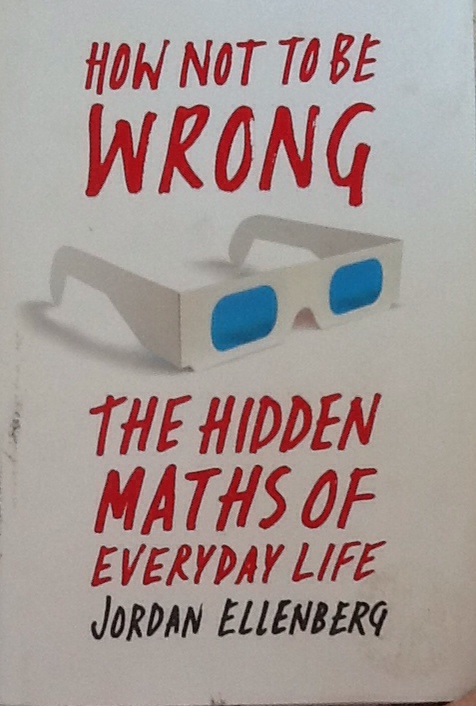
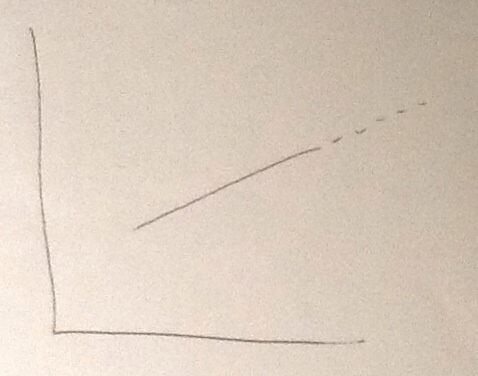
I enjoyed several of its chapters, but most of all his recounting of the recurrent misuse of linearity. The graph below could be the projection of the number of iPhones sold; or a rising population caused by high fertility, or the rise in tax yield caused by raising tax rates.
The last example, tax rates, is the cause of the famous Laffer curve napkin.
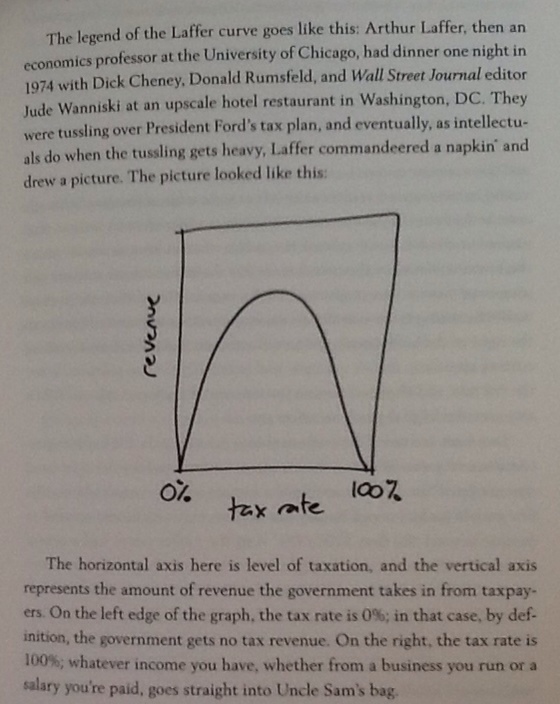
Since reading the chapter, and being reminded of the Laffer curve, I have seen numerous examples of false assumptions about linearity. To give just three:
- Increased turnover is always a good thing: no, there can come a point where over capacity causes quality to fall, or heedless insistence on growth causes risky behaviour; the failure of some of the banks is testament to this;
- High performing individuals, with accomplished technical skills, are given leadership roles; it isn't necessarily the case that the best goal scorer will be the best captain or manager; the Laffer curve is particularly applicable here since neither would the just-good-enough-to-make-the-side be a good leader.
- A woman doesn't need ever more pairs of shoes:

Whatever your business, but particularly in professional services, there is a marriage needed of doing the right work for the right clients.
But how to choose?
There are formal methods: by industry, by geography, by technical need. All have their place.
But there is space for a different one, which, I am so glad to say, fortune has granted me many times over my career, and perhaps particularly so over the last decade. Working for clients whom you like, and I wonderful reminder of this came to mind this week when driving to work:
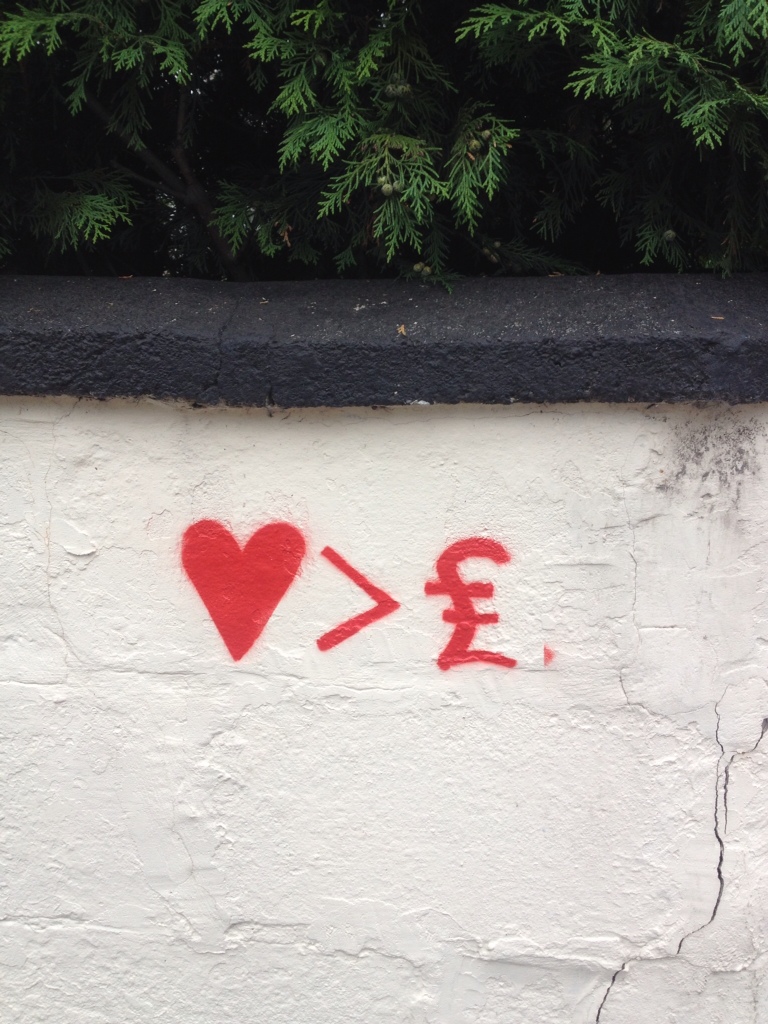
Graffiti seen on wall on Hall Road, Fallowfield
I am sure the artist was thinking of deeper, and more important things than how professionals should choose clients (and vice versa) and I dare say that tax professionals would be thought of as being part of the £ part of the equation, but I think amongst many other factors, it is no bad question for an advisor to ask himself 'how much does he like the client' and 'is it only for the fees'.
As I look at the picture, I count myself fortunate that I have many clients where the equation applies.
White to play and win
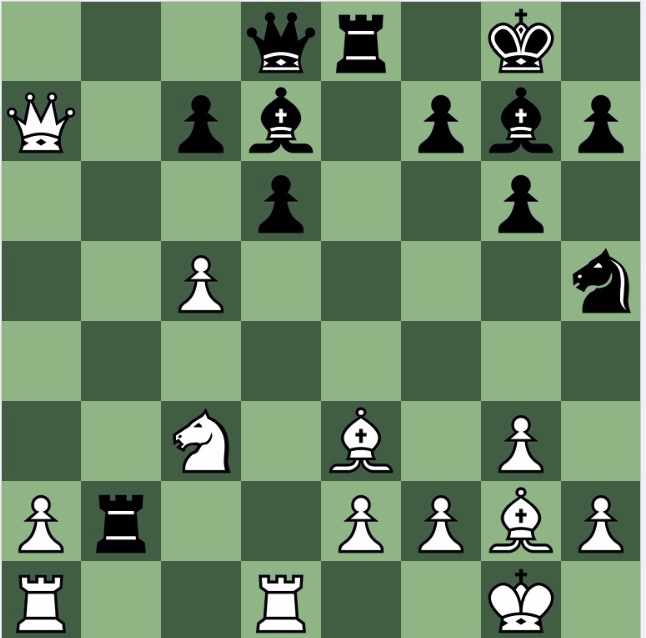
JH Van Dyk v CL Verlinde 1960
Solution
A good exercise today. Had it been a game, and not a problem with a solution, I might not have looked hard enough at 1 cd! but as if was a problem, I knew this had to be the solution. Eventually I cracked it, and was pleased when I did. 1…Bc3 2 dc Qc8 3 Rac1 Be5 (say) 4 Rd7!
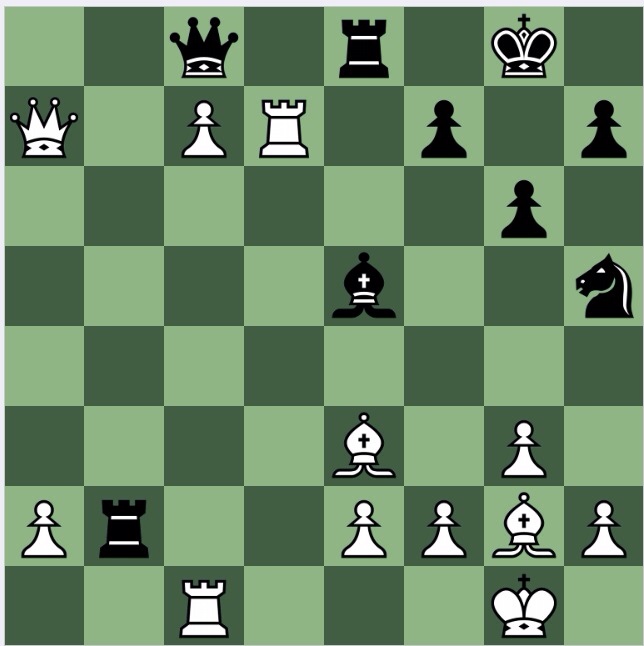
4…Qd7 5 c8(Q) is the main line, and once this is seen, everything else falls into place.
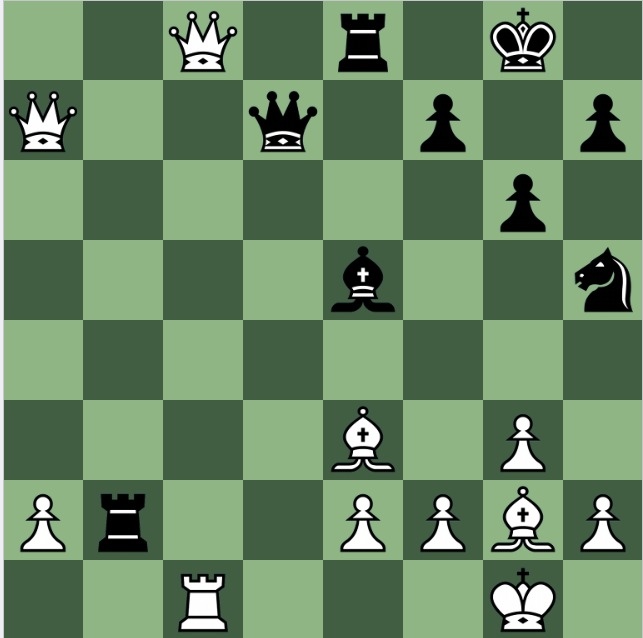
Black has other ways to defend, but a combination of threatening to take on d7, to promote, or sometimes to double attack Rb2 and Bd7 (eg if black plays Bb4) win for white. The only other line worth mentioning is that if black grovels with 1…c6, simply 2 Rac1 to keep control of the position, followed by advancing the a pawn will win.
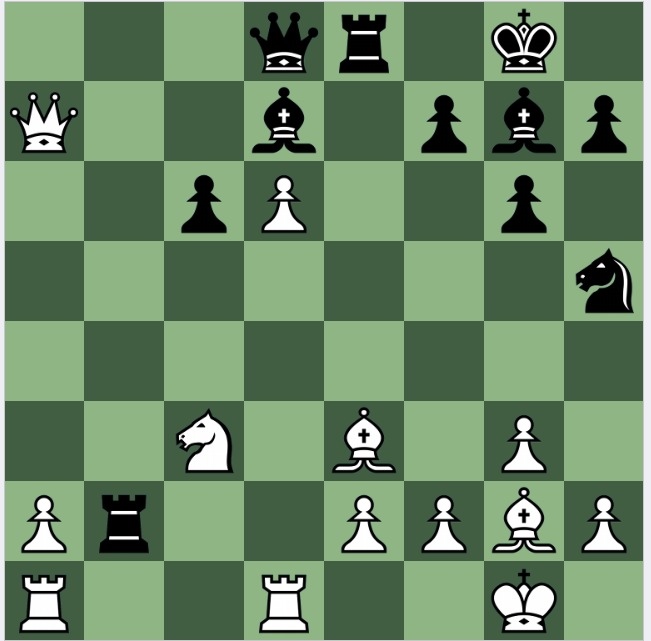
Black to play and win
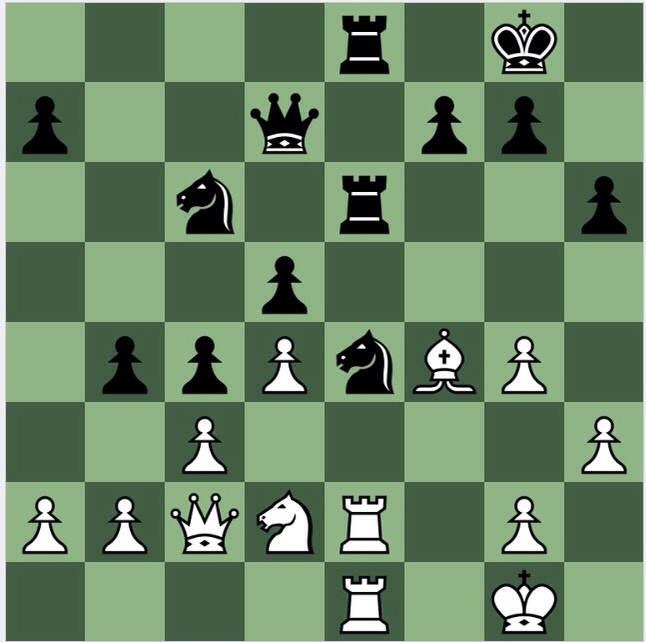
Bakhar v Gleizerov, Chalkidiki 1992
Solution
This took me a while, even though I saw the initial move on inspection. I missed one key aspect in my calculation, and this then took me round the houses. So this puzzle is either easy or hard.
The main idea is clearly how to exploit the four rooks being aligned on e file, and some knight involvement is necessary. Also, the Qc2 and Bf4 are LPDO, and we can probably rule out 1..g5 as the solution, though one minor point is that if the bishop then retreated to h2, there might be a back rank mate motif.
So, back to the move I first thought of: 1…Nc3! 2 Re6[] Re6 3 Re6[] and now because the Nc3 is protected by the Pb4 (the point I had missed in my mind's eye, until I refocused) 3…Nd4! and it is game over. The white queen is, perhaps surprisingly, lost, with Qc1 losing to Ne2+.
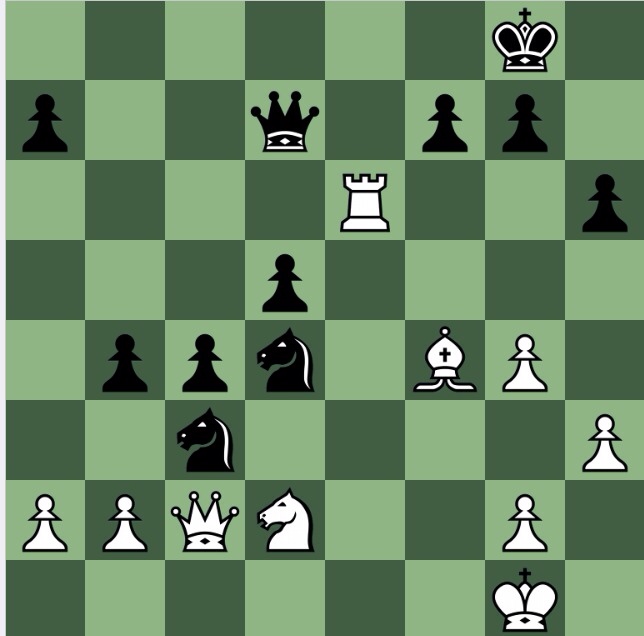
Nice.
White to play and win
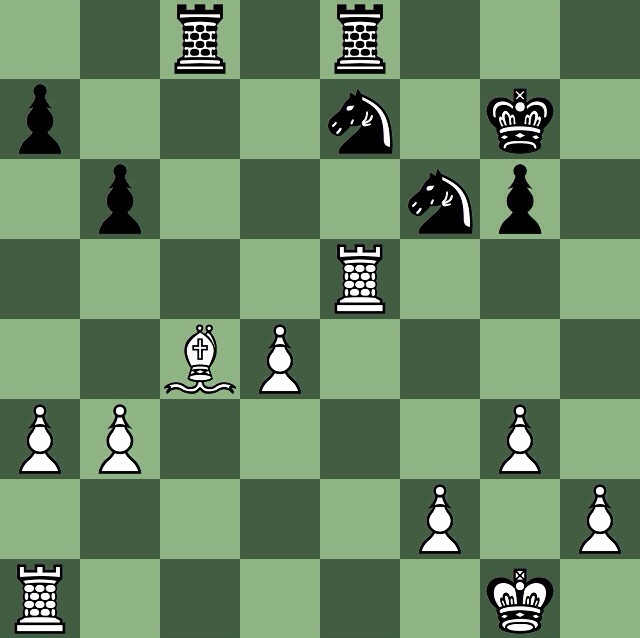
PJ Foley v D Gluckman 1993
Solution
A rest day today. 1 Bb5 and white wins the exchange, at least (though Reitstein says 'loses a piece' meaning he ignores black's 'best' 1…Kf7 2 Be8+ Ne8 when he is 'not dead yet' (but it is 1-0).
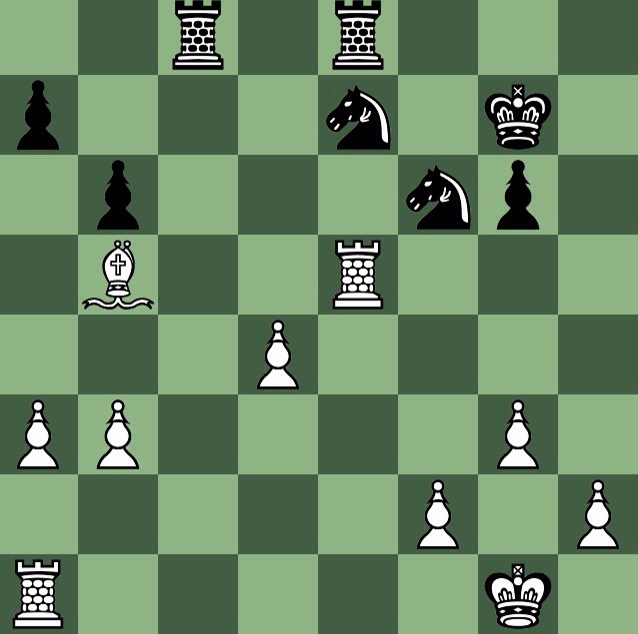
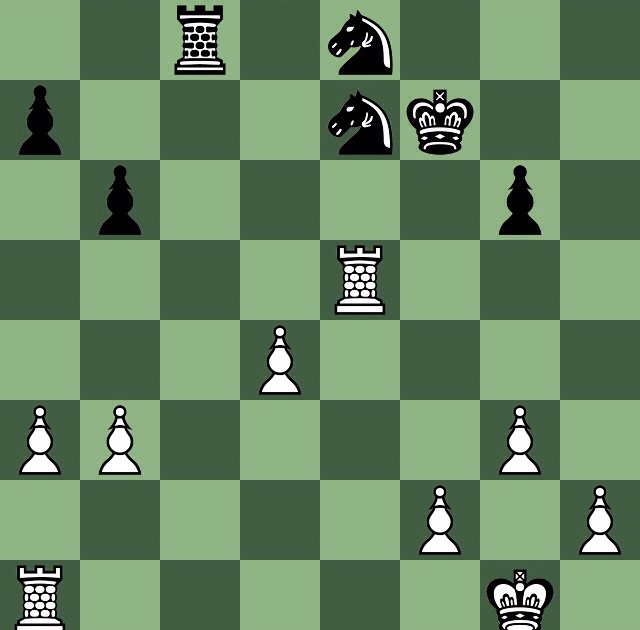
If instead 1…Nc6 then 2 Re8 Ne8 3 Rc1 and the pin wins a knight.
 allanbeardsworth