White to play and win
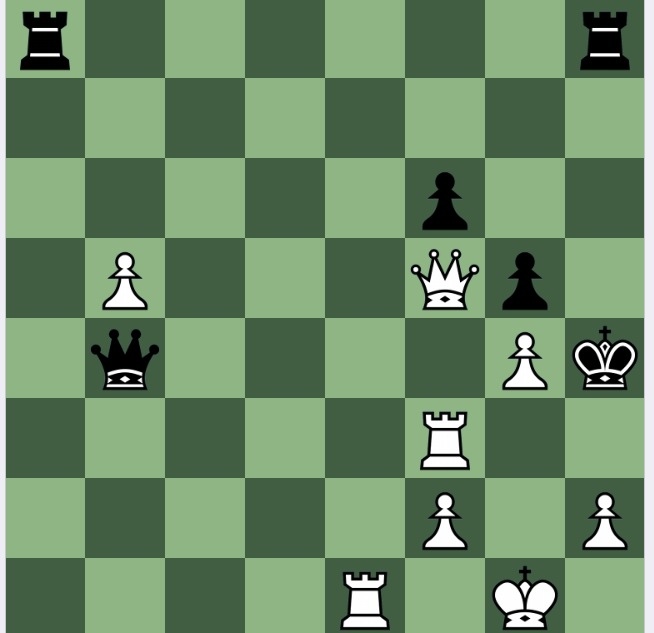
AA Ponelis v B Kerr 1978
Solution
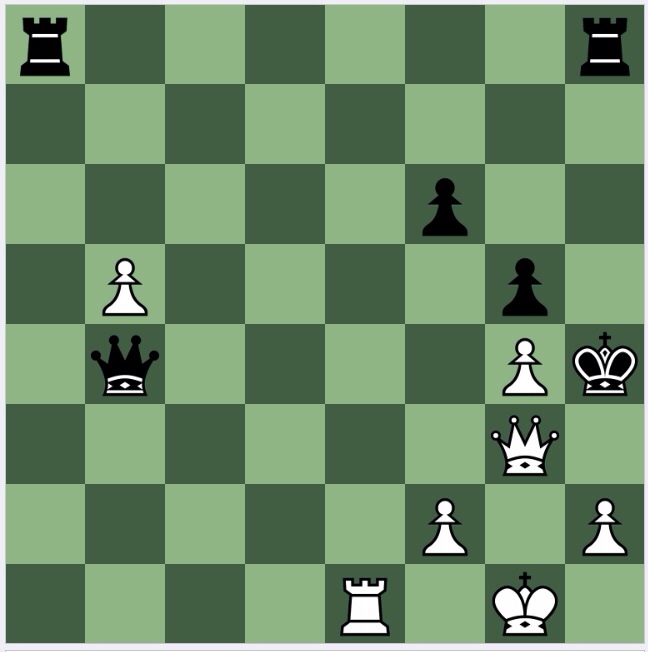
Consider all biffs leads to 1 Rh3+! being looked at, and after 1…Kh3[] 2 Qf3+ Kh4 there is 3 Qg3 mate.
 Posted with Blogsy
White to play and win
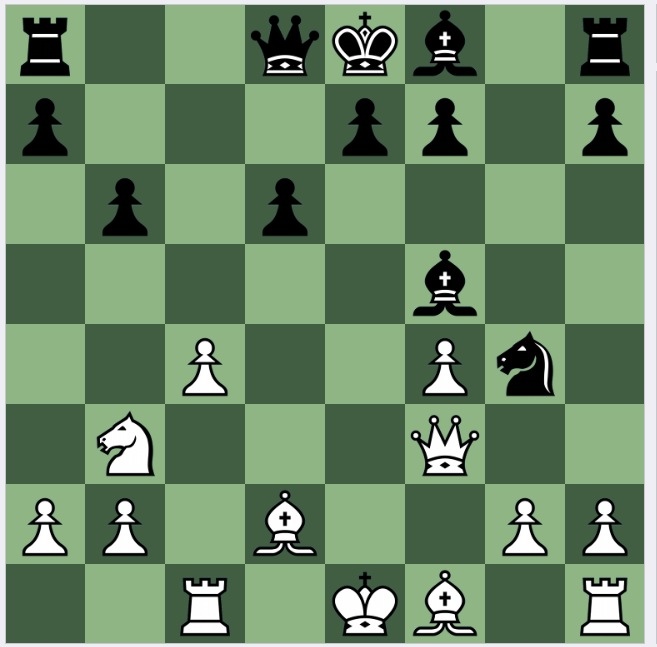
W Heidenfeld v H Lewis 1939
Solution
Reitstein's rubric was that white found an unanswerable move, which made me think of a knock out blow, and having tried the various biffs Qa8, Qg4, Nd4,Qc6+, Qc3, and found them all wanting, I landed on the move played in the game, 1 c5.
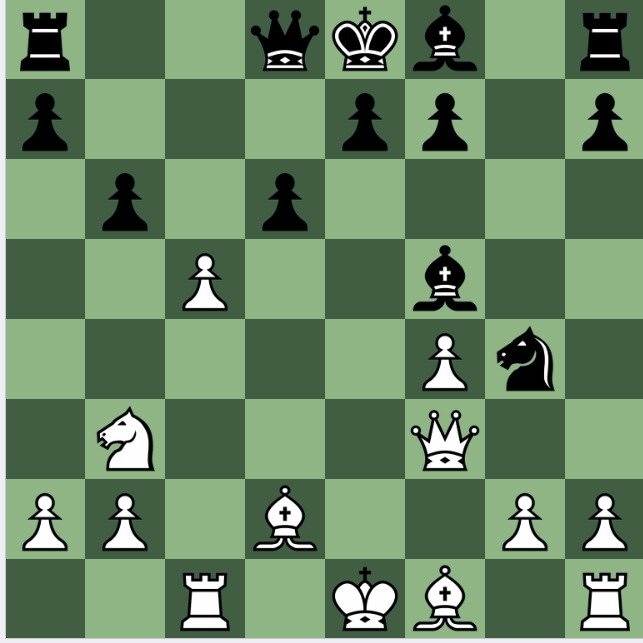
The main line is 1…a6 2 Nd4! when white wins a piece, since 2…Bd7 3 c6:
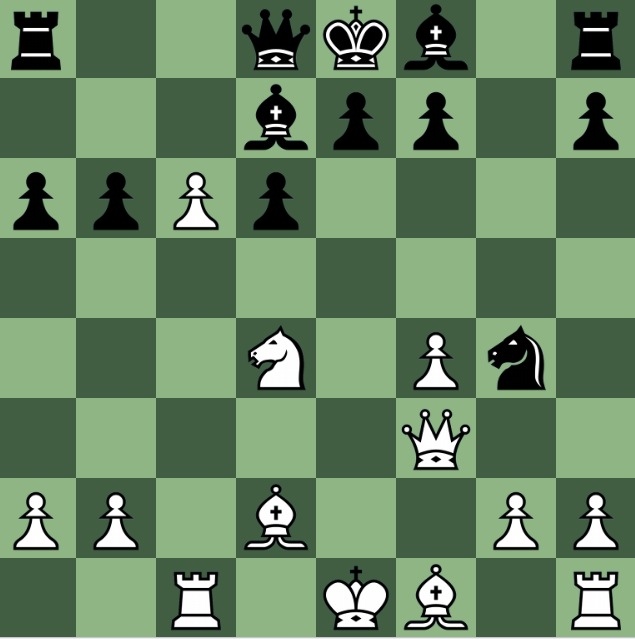
Black can try other lines, such as the horrible 2…e6, when his pawn structure is ruined, and king is in the open.
However, there is a slight fault with the solution: 1…Bg7! and black can play on: he is worse, after say 2 Bb5+ Kf8 3 cd, but not dead: 3…ed and yes, the engines show it is won for white, but in practice, black might be able to do something.
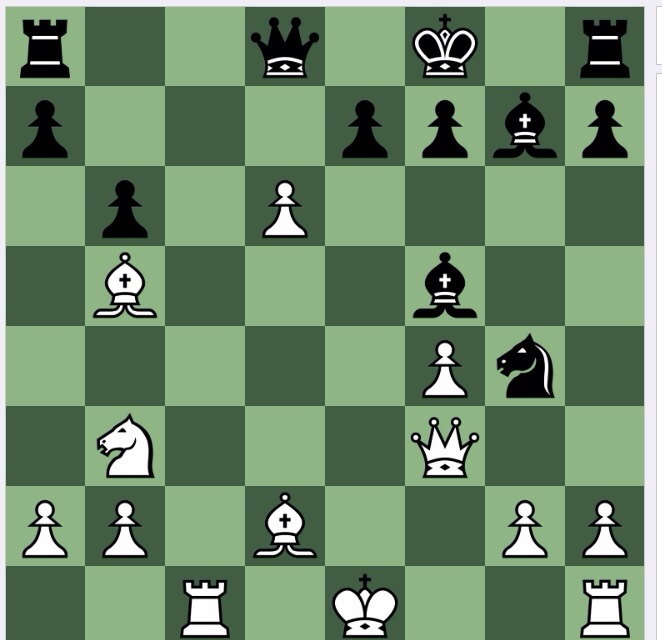
White to play and win
Find the combination, including how to overcome black's best defence
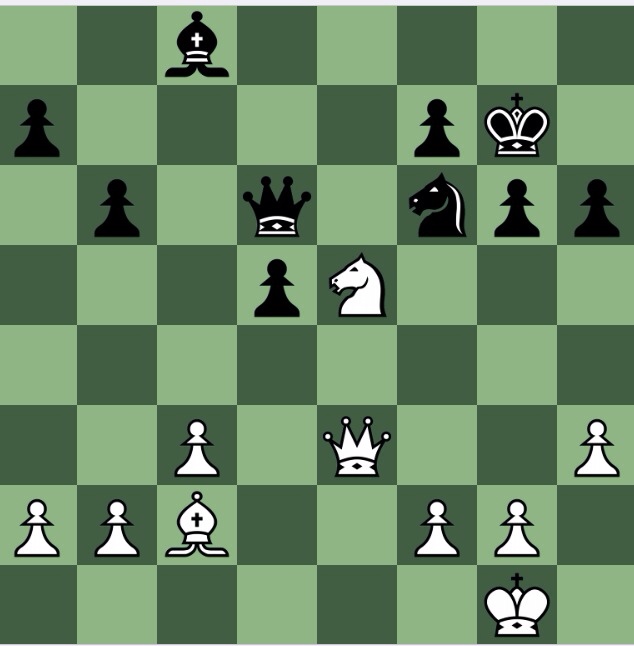
PJ Foley v A Snoek 1989
Solution
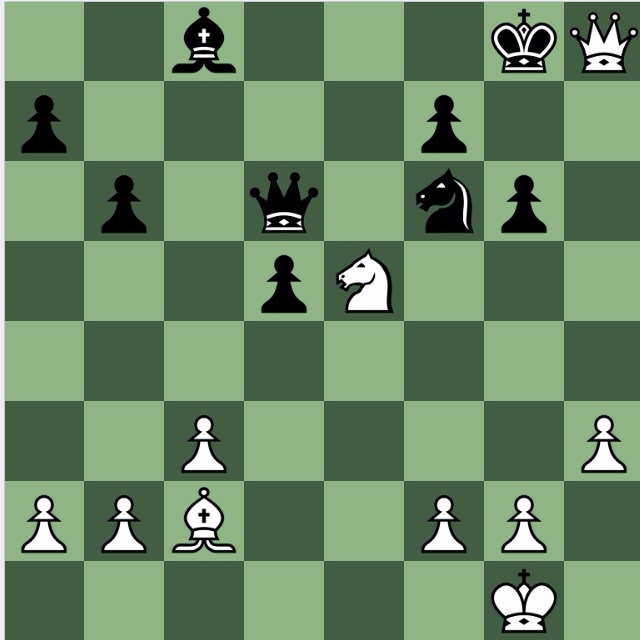
A standard motif: 1 Qh6+! and if 1…Kh6, 2 Nf7+ forks. So 1…Kh8, but then 2 Qh8+! forces the same winning fork.
It has been a hot, sunny, balmy day in Manchester (these three words aren't typical of my beloved city) so what better thing to do than watch Rory McIlroy win the last round of the Open Mickey Adams win in Dortmund.
After year's difficult defeat against the up and coming Fabiano Caruana, unsuccessfully defending a Berlin endgame, today was a delight for fans of Mickey. A very smooth Closed Ruy Lopez.
It was classic Mickey, I first started to have a good appreciation of his style when captaining the England team in the Calvia, Mallorca, 2004 Olympiad. The chance to watch the games close up, and more than the chance, there being not many distractions (I took it as part of my role to be with the players for the vast bulk of the five, six or more hour sessions, in case the players needed me) meant it would have been foolish of me to miss the opportunity to learn. I wasn't foolish.
For Mickey, I coined the term 'Micklet', an ever so slight permanent advantage which, though barely perceptible, would in due course become apparent to all, and then be slowly converted to a tangible advantage, and then, in all probability, converted to a win through tactics. And his game today against David Baramidze was model exploitation of a Micklet. He was able to show, by a clever change of the structure by exchanging his bishop for a knight, that the advanced black pawn on b5 was a weakness, which eventually led to Mickey winning a pawn. Another facet of the structural change caused by 20 Bc5! was that it created a secure passed d pawn.
The next stage was what I used to think was shuffling around, but in fact was the steady improvement in placement and coordination of his pieces. And then, true to form, some tactics.
White to play and win
Worth analysing: the first move is 'obvious' but the lines are quite deep.
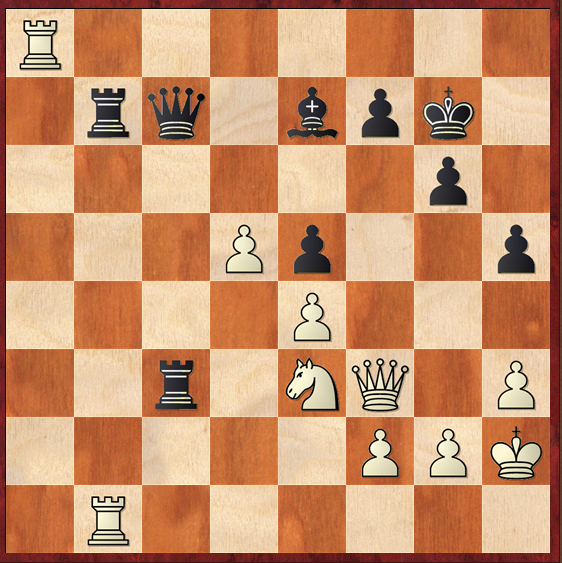
M Adams v D Baramidze 20/7/14 Dortmund
Solution
1 Nf5+! and the combination of various threats, including mating attacks in some lines by Qg3+ and Qg8+, is decisive.
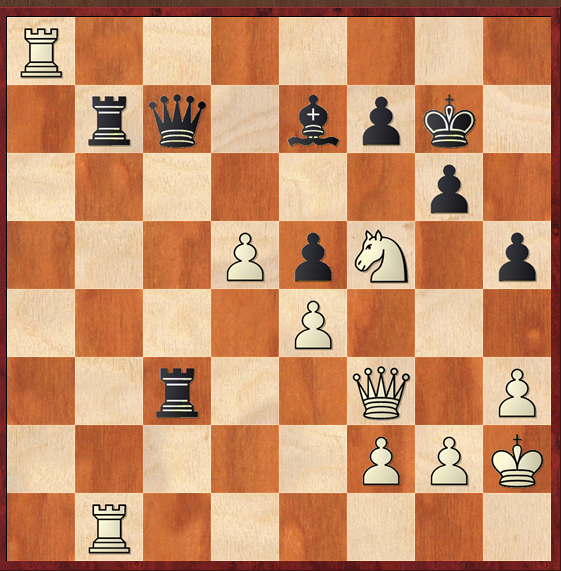
Rather than give the lines here, they are in the attached game file. The game file also includes various comments about the game, including some thoughts on the strength of Mickey's creation and exploitation of a Micklet, and also one chance black had to create approximate equality.
http://www.viewchess.com/cbreader/2014/7/20/Game82707656.html
Black to play and win
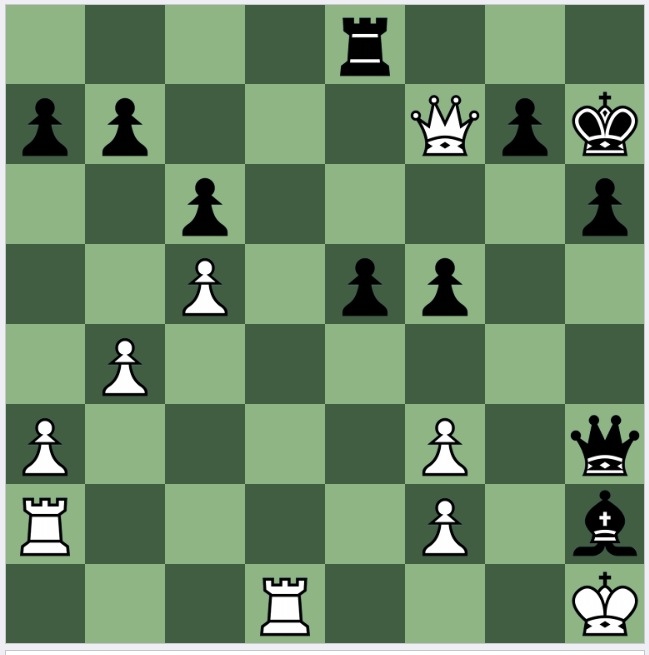
PG van Breda v AJA Cameron 1910
Solution
This position shows the difference between human and engine chess. I chose 1…e4!, as played in the game, and white is simply winning after 2 Rd7 Be5+ 3 Kg1[] ef; the Be5 protects g7, and all is secure. The only other point to note is that 2 Qe8 loses to 2…ef.
Stockfish though says 2 f4, when white can grovel on, but it is hopeless; so it prefers 1…Bf4+!, giving it as mate in nine. All it does is prevent f4: so 2 Kg1 e4! 3 Rd7 Bh2+ 4 Kh1[] Be5+ and so on: so, of course, the engine is more accurate.
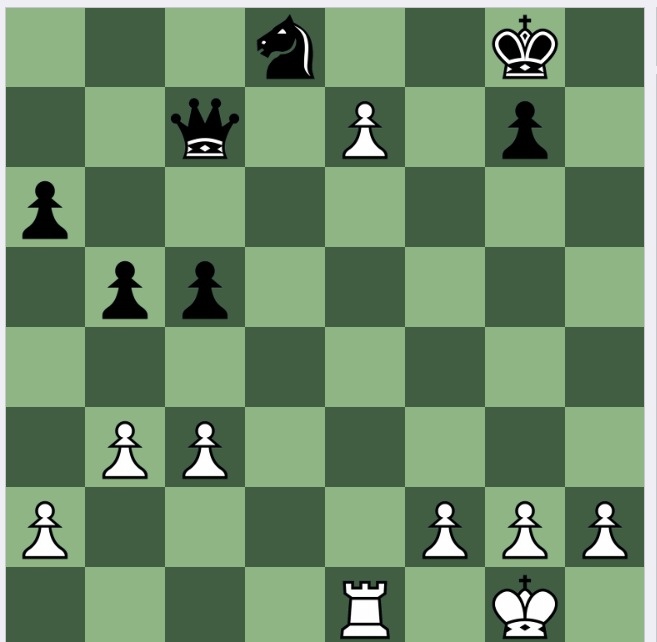
White to play and win
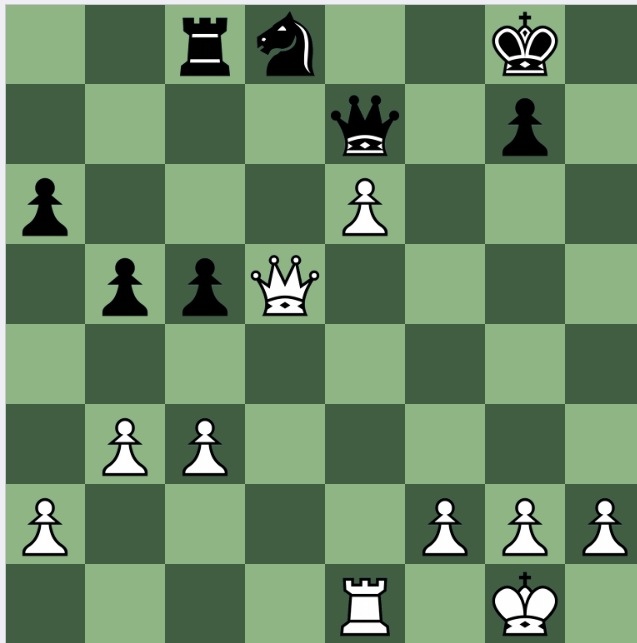
S Lewis v R Rubin 1962
Solution
1 Qd7! Is a double attack on two LPDOs, so black must either take the queen, when 1…Qd7 2 ed Rb8 3 Re8+ and white wins trivially, by slowly advancing his pawns. So 1…Rc7 is forced, except that 2 Qc7! Qc7 3 e7! is another double attack, so the pawn promotes.
Today, the world news is on two dreadful things: yesterday’s shooting down of a Malaysian airlines plane over Ukraine, and the continual fighting in Gaza and Israel. As I was watching the newsreel momentarily in the office, a colleague pondered ‘how large is Gaza’?
The answer is 360 sq km, with a population of 1.82m (Wikipedia); Israel 20,770 sq km, 7.91m; and Wales, by comparison, 20,761 sq km, 3.064m.
(An area the size of Wales is the standard British comparator). Overlaid on a graph (using mapfrappe.com):

So, 60% of the people as compared to Wales, in an area 58 times smaller. Or about one quarter of the people than Israel, in an area also around 58 times smaller.
Of course, the above says nothing about the conflict or its causes. To me, it just adds to the tragedy of the region.
White to play and win
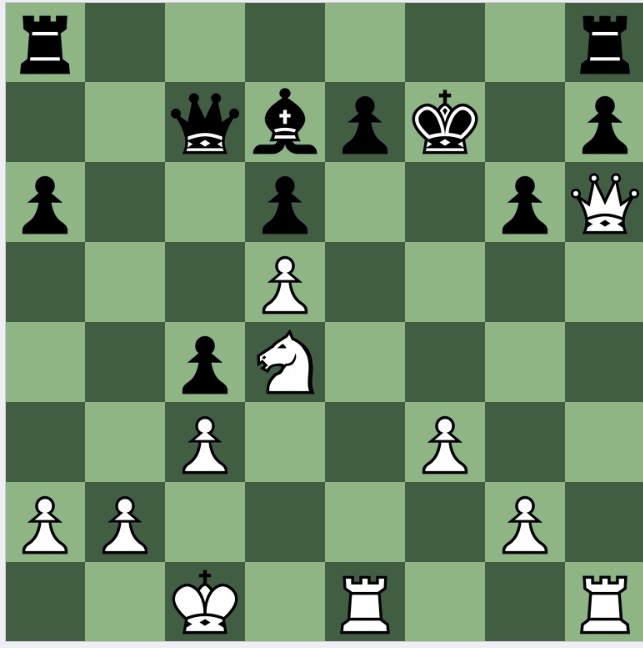
L Ball v J Wilkinson 1977
Solution
Fairly straightforward: 1 Re7+ is a natural biff to try, and after 1..Ke7[] 2 Qg7+ and the LPDO Rh8 drops off, and the attack continues. Black has only a choice between losing his queen to a Ne6+ fork! or being mated.

White to play and win
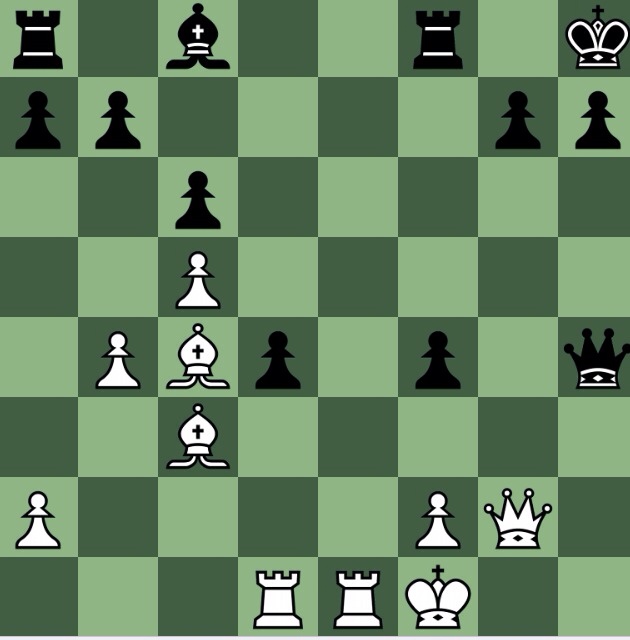
M Bleiden v BE Siegheim 1906
Solution
This position is something of an optical illusion: the threat of 1…Bh3 looks like it will win the queen, but white can ignore it, playing 1 Bd4! since if 1….Bh3?, 2 Bg7 is mate. So white is a piece up.
White to play and win
Find the most precise win

E Bergendorff v D Walt 1940
Solution
White played 1 Rc8 which wins easily enough, but 1 hg+ Kg7 2 Nf7! forces mate, as does the move order I chose, 1 Nf7! with the same idea: 1…Rc1 then either 2 Qg6 or 2 hg+ (better).

'Examine all biffs' would lead to the solution: each of Rc8, or the two better lines, hg and Nf7, come from this maxim.
 allanbeardsworth