White to play and win

KV Grivainis v E Turoff 1952
Solution
A better exercise compared with the last couple of days. This is an exercise in calculation, to see whether 1 Qc6! works: which it does. 1…Bc6[] 2 Bc6+[] Kd8[]
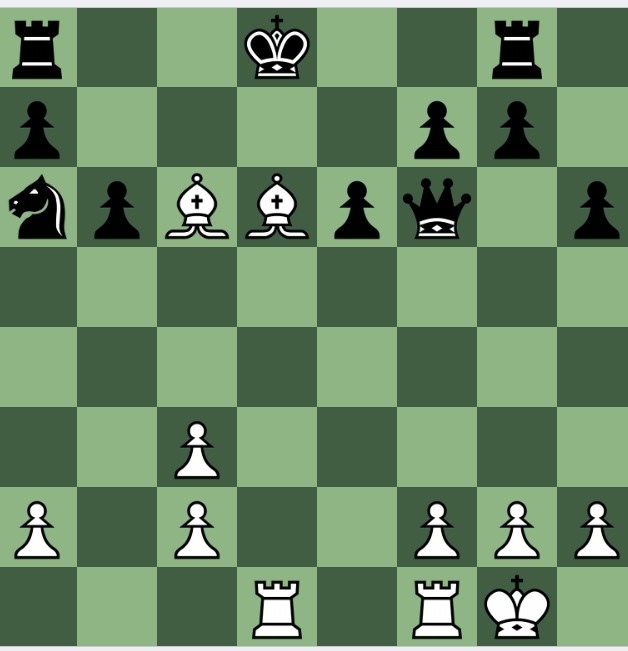
3 Be5+ and the queen drops off, with the Ra8 a LPDO: so 3…Kc8 loses simply to 4Bf6, so instead 3…Ke7 when 4 Rd7+ Kf8 5 Bd6+ and mates.
 Posted with Blogsy
Black to play and win
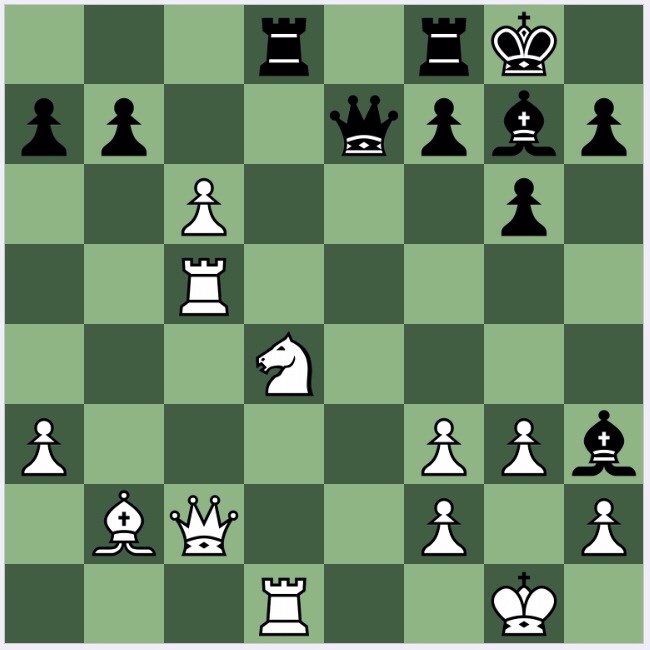
K Dreyer v JE Eriksen 1954
Solution
An easy day. The threat of back rank mate means the Rd1 is tied to the first rank, so isn't defending the Nd4. So 1…Bd4 2 Bd4 (2 c7 Rae8) Rd4 and the game is over.

The Daily Mail maths article I have just blogged about also gives the Monty Hall problem.

I blogged about this problem last month: my attempt to see if it worked in practice had been a dismal failure. If so first you don't succeed, try, try again, so a couple of weeks ago I repeated it as an icebreaker before a talk I gave to my Liverpool colleagues. That trial was a success:

It is remarkable what there is on the Internet. Thanks to following the Daily Mail on Twitter (I have to follow at least some low-brow stuff) I came across this excellent (in the maths nerds sense) video.

The video is a really clear articulation of a standard problem, known either as the dating or secretary problem: I have never though seen it so well expressed.
I hope this person can wait to count 37% (1/e) toilets…

Or that they know that they have the same 37% chance of picking the best toilet by following this approach.

One of my favourite puzzles so far in this daily series of positions taken from Leonard Reitstein's Test Your Chess is number 177.

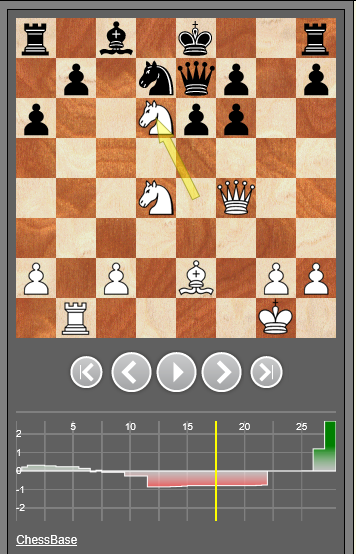
Black to play: Kd8 or Kf8?
The position is from the game Tett v Rubery, and the other day I was contacted by Mark Rubery, who had come across my blog, and passed it also to the winner of the game, Tim Kett. Mark kindly also sent me a database containing many South African games which is going to be a pleasure to dip into. The database gives the Tett v Rubery game, which I have lightly annotated here.
http://www.viewchess.com/cbreader/2014/6/27/Game1215126078.html
Black to play and win
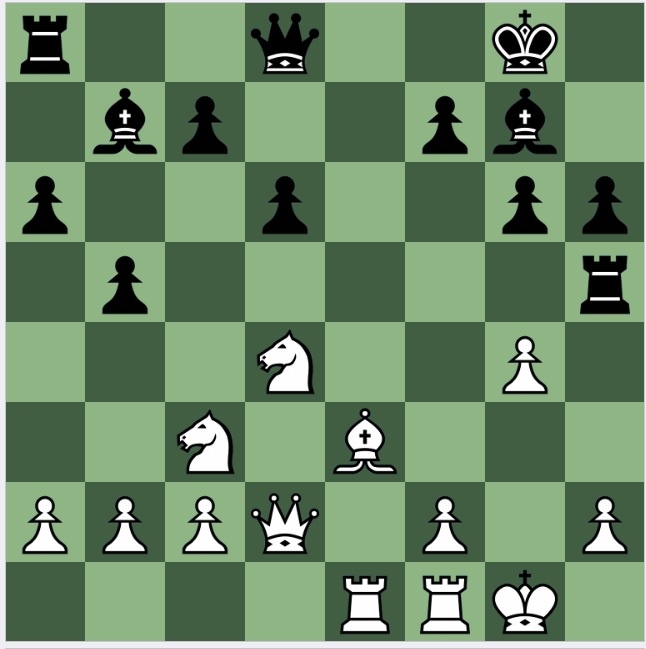
Position after 1 g3-g4
D Endean v MC Rubery 1989
Solution
1…Rh2 is fairly obvious, and there aren't many variations: if the rook is taken, Qh4+ and Qh1mate. The f pawn is pinned to the queen, so it is game over.
White to play and draw
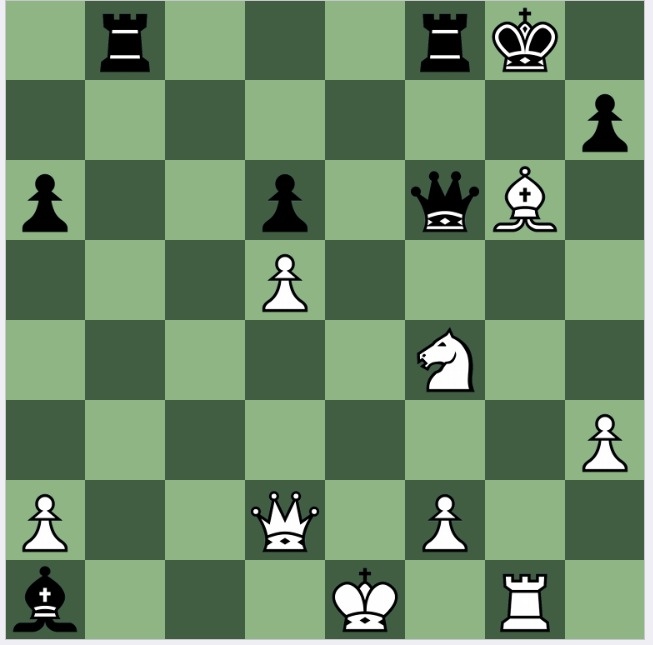
S Pearson v DA Walker 1981
Solution
This one took me a while. I knew the first move had to be B moves, but where? I tried first 1 Bh7+?, with 2 Qc2+, but it is nothing, and 1 Bf7+ and 1 Be8+, before eventually seeing 1 Bh5+!
The point is that the K must be kept on the g and h files, and after 1…Kh8[] 2 Ng6+!
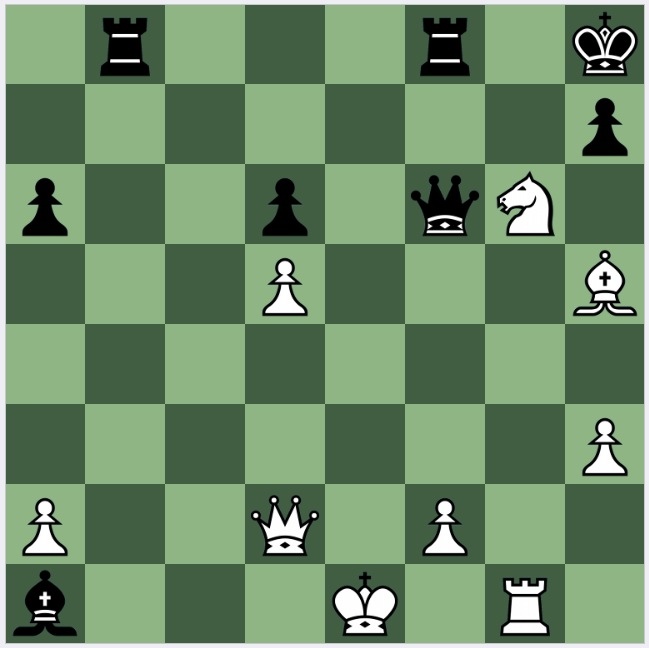
If the N is captured, white wins by 3 Qh6+, so the king must move! when Ne5+ or Nf4+ is perpetual.
White to play and win
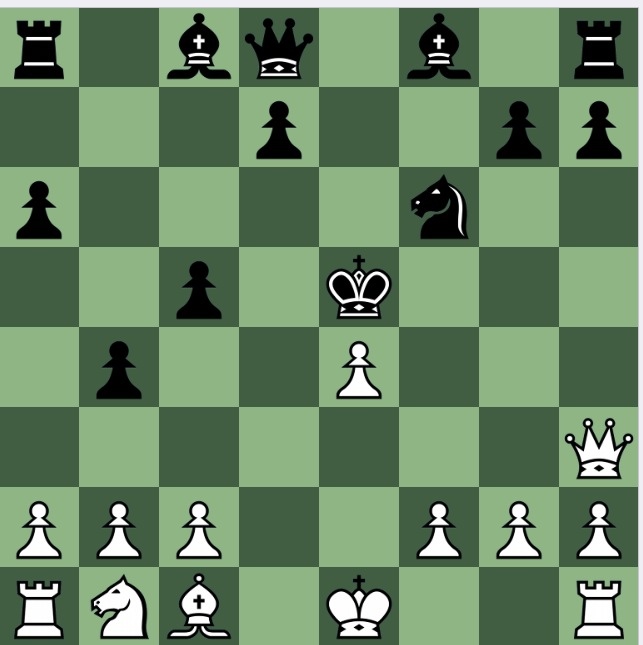
LR Reitstein v A de Oliveira Dias 1960
Solution
1 Bf4+! is more or less the natural first try, preventing Kd6 (so better than 1 Qf5+). If the bishop is taken, then 2 Qf5 is mate; 2…Kd4, 3 Qd3 mate, so the only move is 2…Ke4 when 3 Qf3+ Kf5 (3…Kd4 4 Qd3 mate) and 4 Bc7 dis ch and the game is over.
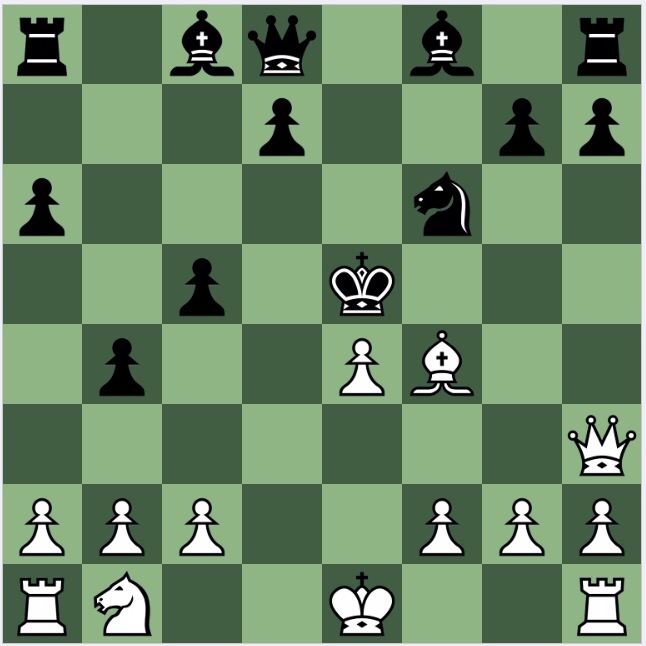
White to play and win
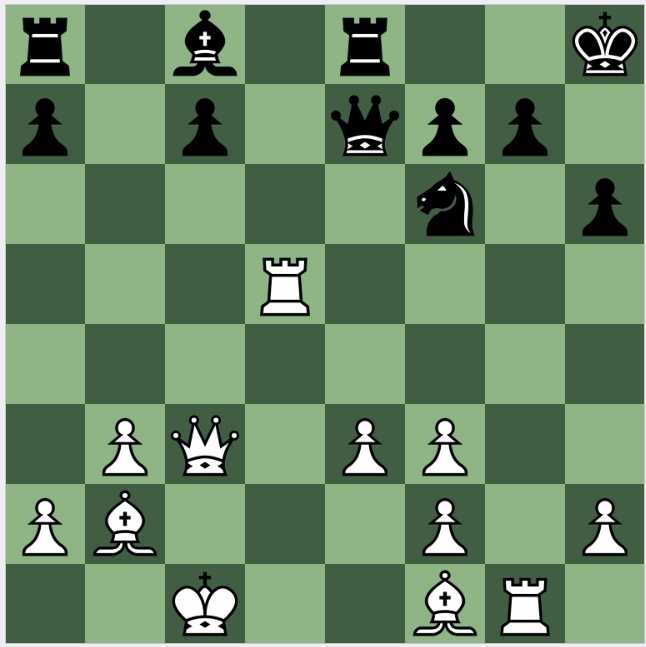
D Macfarlane v S Hirschowitz 1963
Solution
After trying 1 Rg7 and 1 Rh5, and finding them both wanting (i.e. losing) 1 Qf6! is a fairly natural try- it is the most natural candidate moves of the only two biffs in the position.
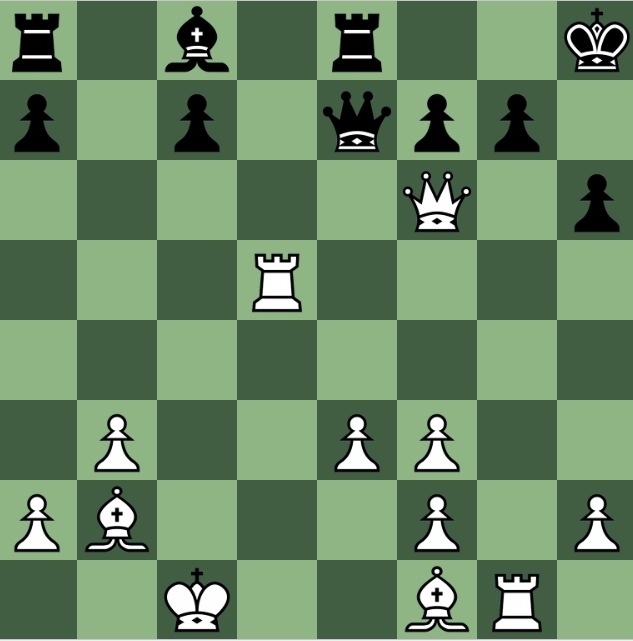
If black takes with the queen, then 2 Bf6 gf 3 Rh5 and the game is over: 3..Kh7 4 Bd3+ f5 5 Bf5+ and the ending is hopeless for black. So, 1…gf 2 Rh5 and again the game is over- for instance 2..Qf8 3 Bf6+ Kh7 4 Bd3 mate.
White to play and win
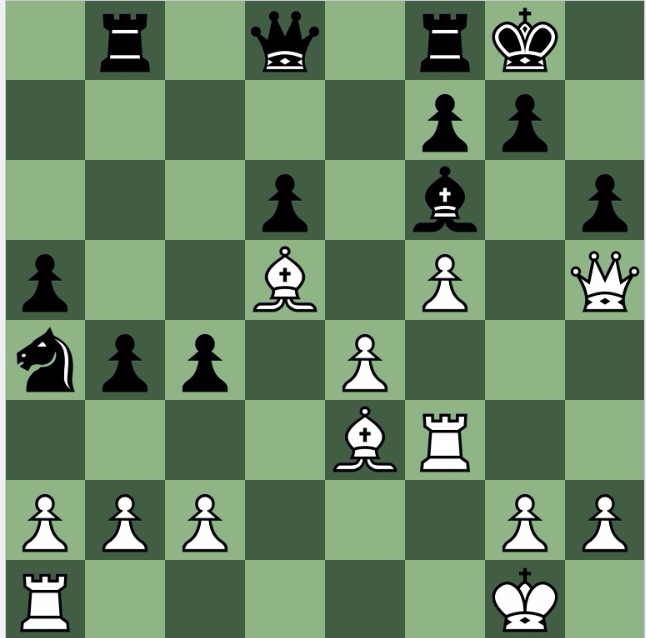
AJA Cameron v E Roberts 1892
Solution
1 Bh6! is a fairly obvious try- examine all biffs in CJS Purdy terminology, and it is not too hard to see it is ruinous. Firstly, 1…Bd4+ is only a spite check, so 1…gh 2 Qh6 or 2 Qg6+ (I would prefer this, the f7 pawn is pinned) and 3 Rg3.
 allanbeardsworth