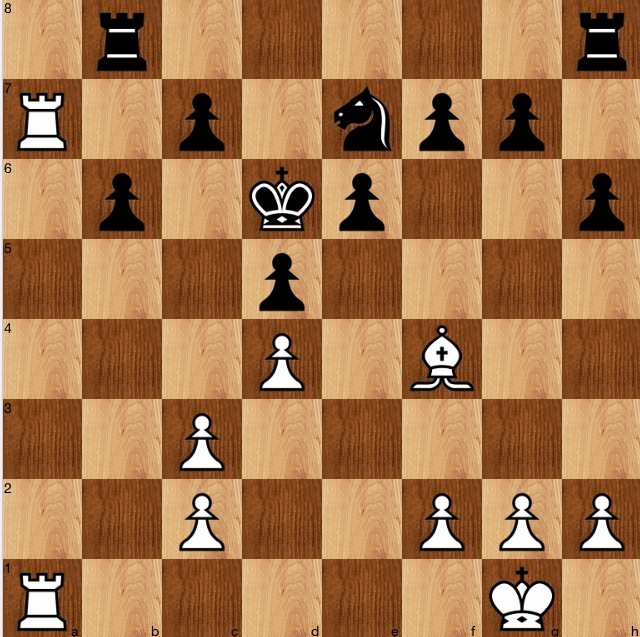
Black to play and win
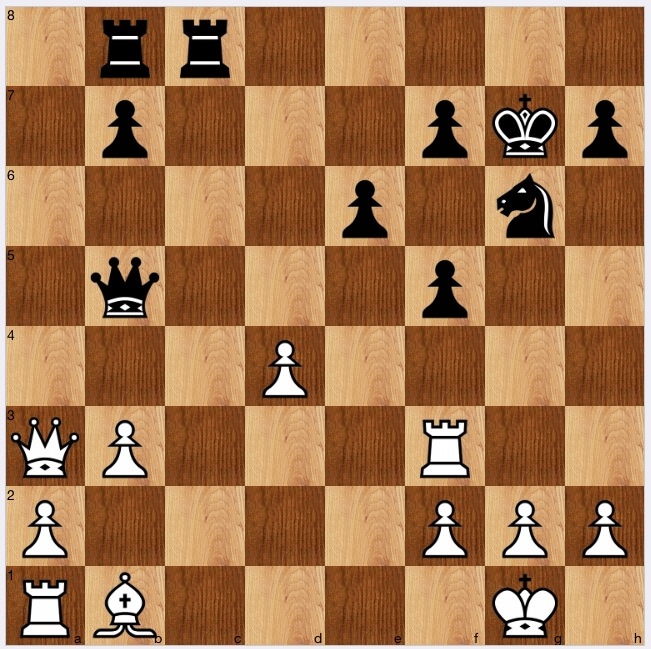
D Morschel v V Blasl 1977
Solution
Fairly straightforward today- I got this one immediately, since it is a fairly standard motif of back rank mate. In Purdy terms, the Qa3 is tied to defending c1, so 1…Qb4 or 1…Qa5 wins the queen. I prefer 1…Qb4 aesthetically, since 1…Qa5 permits 2 b4, but even then 2…Qa3 and if 3 Ra3 Rc1 mate.
 Posted with Blogsy
Black to play and win
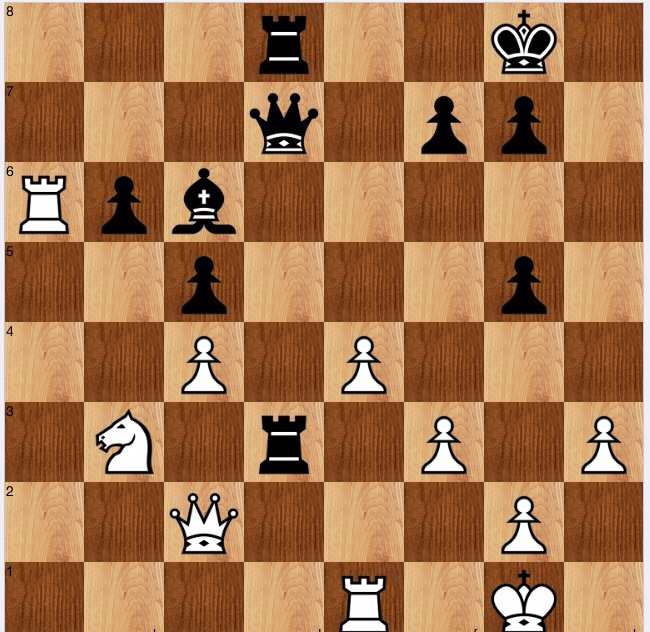
Galliamova-Kosintseva 2012
Solution
This was the second of the two puzzles from Chess Today issue 4237 which I commented on in my 'Another puzzle for an easy Reitstein day' puzzle of five days ago.
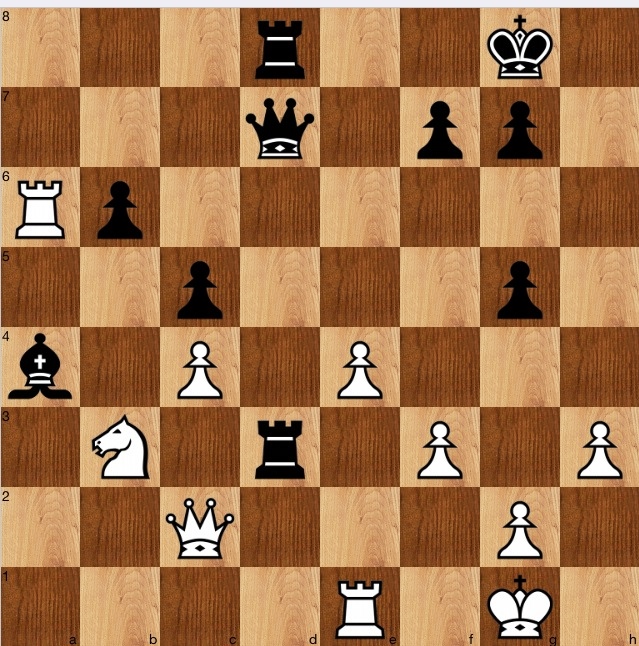
Having stored this puzzle up for a walk, it took me no time to spot: after seeing that 1…Rb3? and 1…Rd1? achieved nothing, I looked at 1…Ba4! pinning the knight, and saw that the maxim 'pin and win' held good.
There aren't many variations. 2 Ra4 simply loses the exchange, and then it is easy; so 2 Rb1 Rb3! 3 Rb3 (3 Ra4 Rb1+!) 3…Qd1+ 4 Qd1[] Rd1+ 5 K any Bb3 0-1.
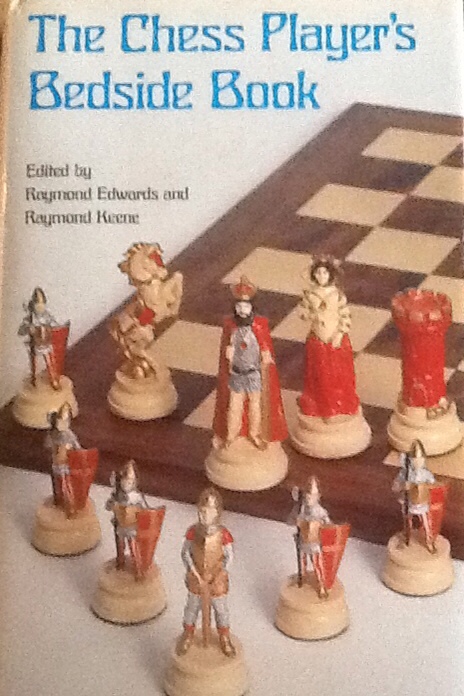
I have recently solved, or in fact, not solved the following puzzle from Raymond Edward's and Raymond Keene's lovely old book 'The Chess Player's Bedside Book'.
White to play and win
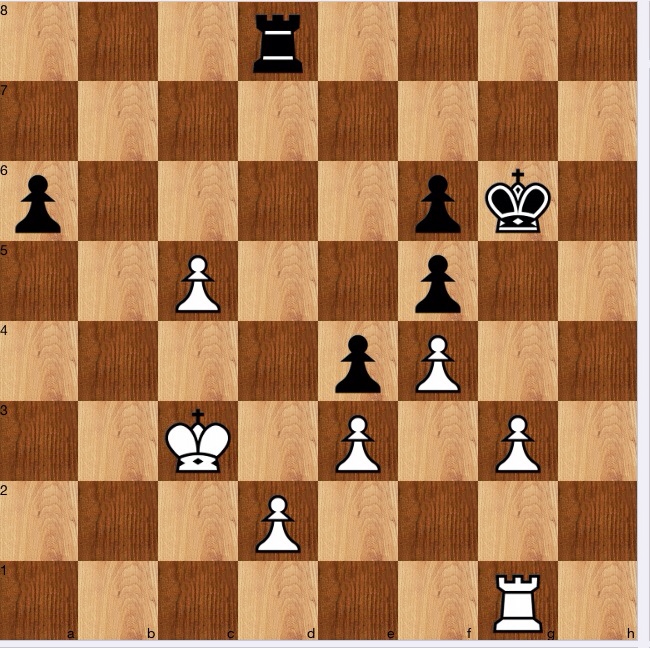
Bent Larsen v Bob Wade, Hastings, round 4, 30/12/72
Solution
I felt pleased with myself when I fairly quickly found the move Bent played, 1 d4, the idea being to ensure that the rook wasn't passive. 1…ed[] 2 Rd1 d2 3 Rd2 Rd2 4 Kd2 Kf7
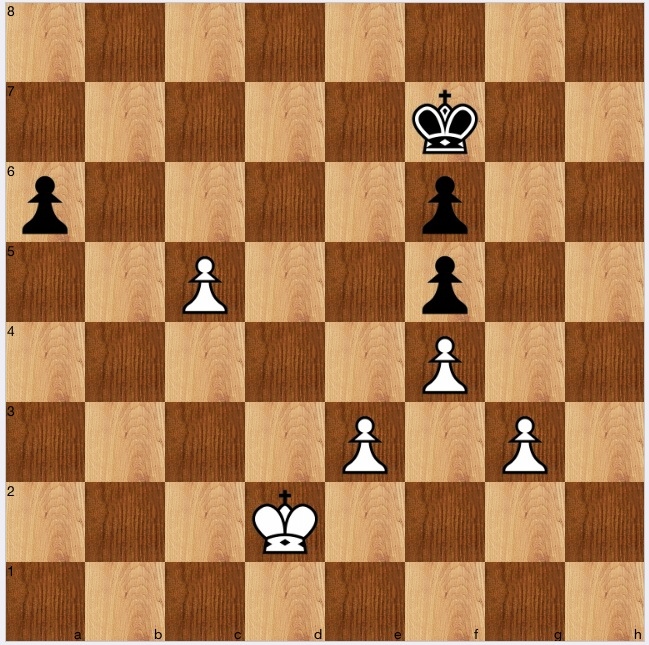
5 e4! the point, 5…fe (5…Ke6 6 ef+ Kf5 7 g4+! and the pawn can't be taken, else the c pawn promotes) 6 g4 and the c5 pawn and imminent passed g5 pawn are too far apart for both to be stopped, whilst the a pawn is too far behind: one line reaches a winning queen ending for white.
However, Houdini thinks different. It regards 1 d4 as throwing away the win: 1…ed 2 Rd1 Kf7! 3 Rd3 Rd3+ 4 Kd3 Kd5 and all the lines I have tried end in a drawn K+PvK ending. I should add that Stockfish thinks 2 Rd1 is the drawing mood, and that white retains some advantage by 2 Kd2, but the various lines I have played out tend to lead to a R+2PvR+P drawn ending. Not conclusive, but I think there is a good chance that 1 d4 is equal.
Both engines, quick as a flash, want to play 1 Rc1! in the initial position, the point being 1…Rd3+ 2 Kb4 Rd2 3 c6 and black's rook is forced back to passive defence on c8, and white mops up the a pawn with his king and then either queens or wins too many of black's pawns.
I have attached a game file, produced with Chessbase12 which I hope supports my conclusion that 1 d4 is weaker than 1 Rc1! It is a pity that it takes an engine to follow the maxim 'rooks belong behind passed pawns' but that's chess, 21st century style.
White to play and win
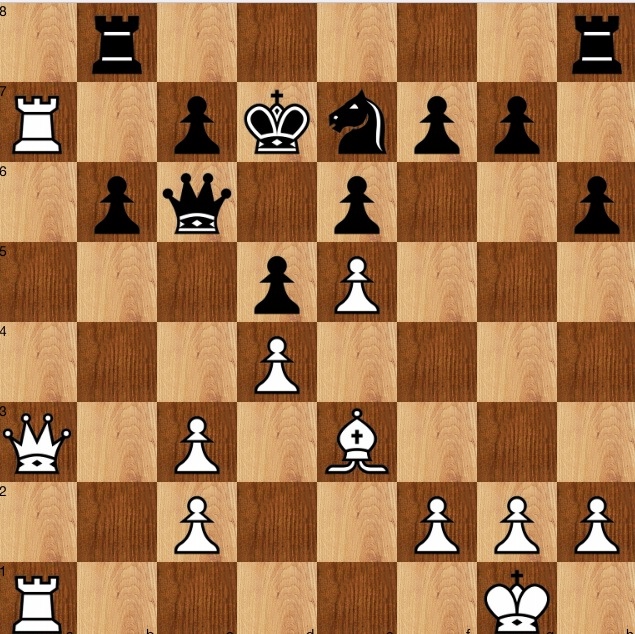
Black has just played Qc4-Qc6
P Aalbersberg v HE Price 1977
Solution
In a game, not knowing there is a win, it would be easy to miss the win, but knowing it is a problem, and by examining all biffs, 1 Qd6+! is not too hard to find.
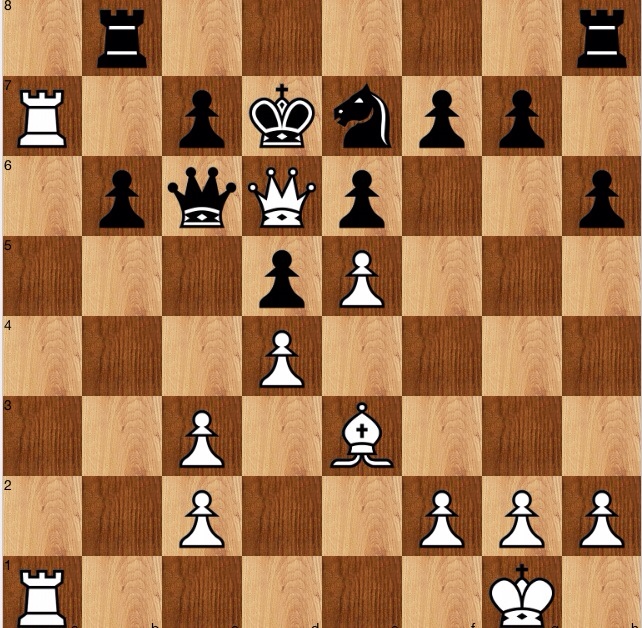
Then 1…Kc8?? drops the knight; 1…Ke8 the c7 pawn, and white commands the a file and 7th rank, so 1…Qd6[] 2 ed. Then 2…Nc6 3 Rc7+ and 4 Rf7 (or maybe 4 Bf4+ if 3…Kd6) so 2…Kd6 3 Bf4+ Kd7 4 Rc7+ 1-0.
Black to play and win
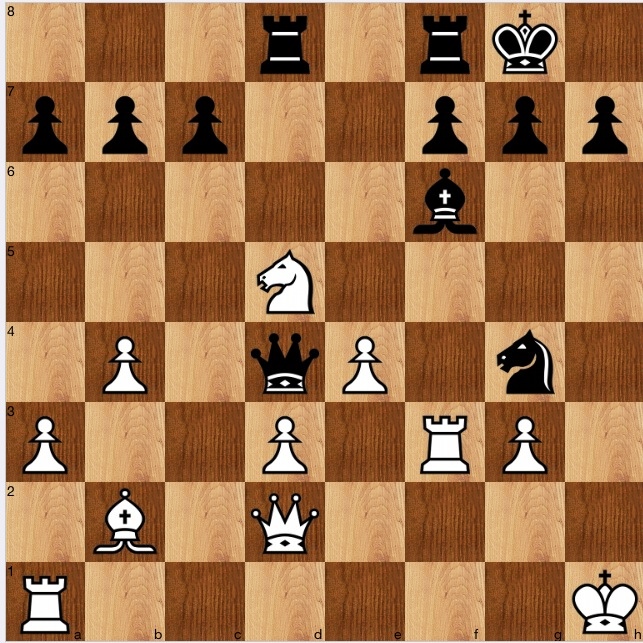
R van Niekerk v G de Villiers 1964
Solution
This position looks frightening for black, with his queen in a net. After looking at 1…Qb2? 2 Nf6+, 1…Qd5??, 1…Nf2+ (examine all biffs) I found 1…Rd5[] 2 Bd4 Rh5+! and then 'knew' the problem had been solved.
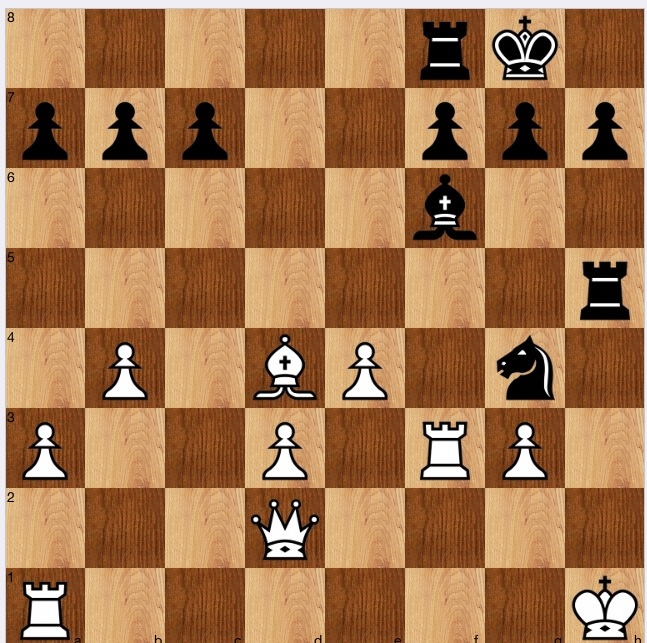
If 3 Kg2 4 Rh2+ Kf1 5 Re2, whilst if 3…Kg1 4 Bd4+ and the queen is lost anyway (rather than just picking up the LPDO Ra1).
Therefore, white's best is 2 ed Qb2, when black wins the endgame.
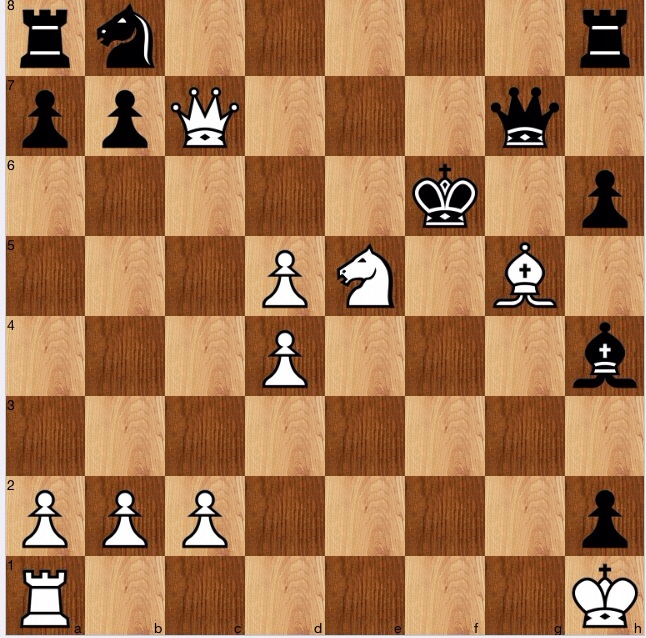
White to play and win
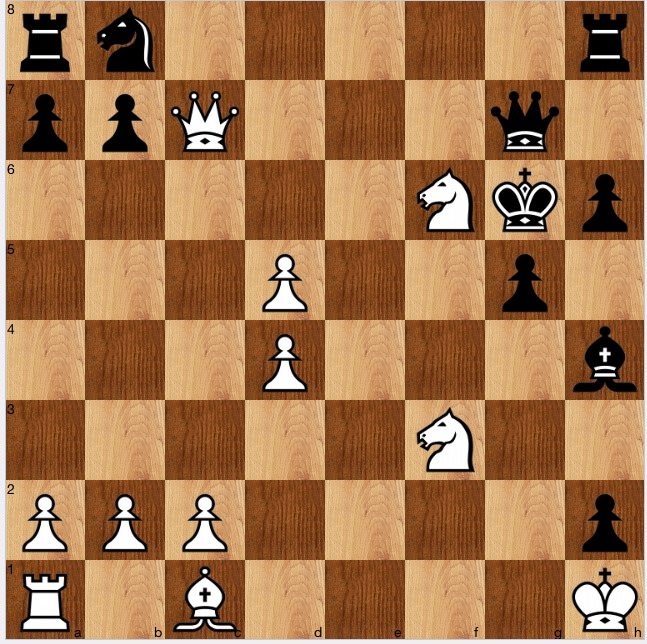
H Goldberg v CJ Ohlson 1977
Solution
A nice puzzle. The motif is quite clear to either mate or to detach the king from protecting the queen. So, 1 Ne5+ Kf6 2 Bg5+! and if 2…Qg5, 3 Qf7 mate, or 2…hg 3 Rf1+ and the queen is lost.
I am lucky that twenty seven years of practising tax, out of my thirty year career, and I still love it as much as I first did: perhaps even more so, or maybe just differently. I always wondered, when I was training, how the then partners could know so much, since the law changed every year and sometimes even more frequently. Now I know that every practitioner is in an endless race of keeping up to date, but knowing something once is a good foundation for understanding its new version, and the next version, and then the alteration. It is hard, but that is what makes it fascinating.

So, for part of today, a wet bank holiday Sunday in the Lakes, I have been engrossed in reading for the third time the recent case of Acornwood LLP and others, better known as Icebreaker 2, better known as 'the Gary Barlow case'; and then reading the latest issue of Tax Journal, one of the two publications I have read throughout my career (or, in the case of Tax Journal, since it started).
One article I always read is the back page one, 'One minute with', when someone eminent in tax answers half or dozen or so questions about themselves and tax; and this week, it is the turn of Patrick Way QC, one of the Counsel I have instructed on occasion over the years, have heard him talk, and generally liked.
I like his answer to the question: what's a key question you've learnt from your career to date?
…to understand a concept, you have to express it precisely, otherwise you have failed to grasp it. ….You must be able to argue your point clearly and exactly otherwise you have not made the point at all and you need to understand tax law absolutely and explain it cogently for the same reasons. Patrick goes on to say, and I can see him saying this: However, despite this rather pretentious answe, one should never forget that whatever happens on a day to day basis, the world carries on spinning. Keep smiling.
My version of Patrick's first point has two aspects. Firstly, I have lost count of the number of internal talks I have given at my firm- in my twenties, I started doing this following a Dale Carnegie course I did, as a way to manage shyness/diffidence, and I quickly learnt that the threat of having to present a topic was a brilliant way of having to learn it. And secondly, if I can't explain something so that Charlie, our cavalier King Charles Spaniel can understand it, then I haven't understood it myself.

Top of King's How, looking down into Borrowdale at Rosthwaite
I could explain Acornwood to Charlie.
Patrick's point is right, and useful to remember, to guard against fuzzy thinking.
White to play
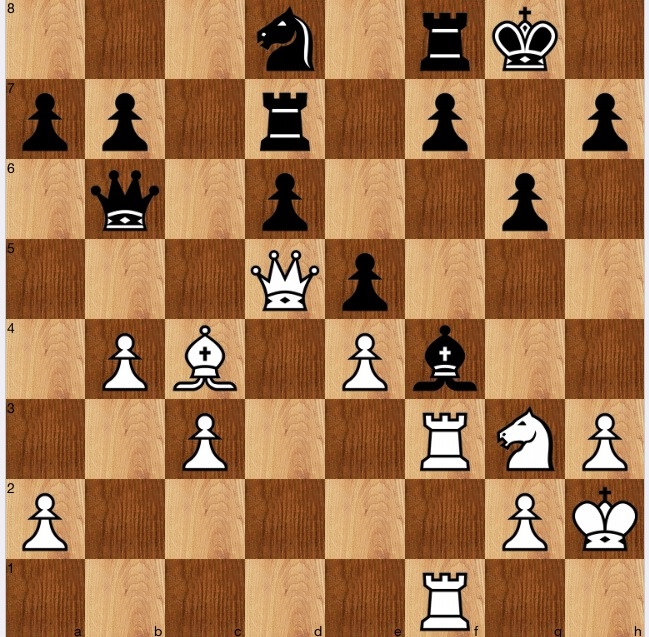
PNJ Smit v G Stahlberg 1964
Solution
This is the sort of position where I wonder whether top players would calculate very far, or whether they would play by instinct, more or less. Here, 1 Rf4! demands to be played (if it doesn't work, then white's position is bad) and after 1…ef[] the choice is between Nf5 and 2 Nh5!, with the latter being intuitively better, since there is a threat of Nf6+ forking the king and LPDO Rd7. I suspect in a game, my only calculation would be to see if 2 Rf4 were any good, but then 2…Qc6: time is of the essence, so the N has to move forward, and the Pf4 can be captured later.
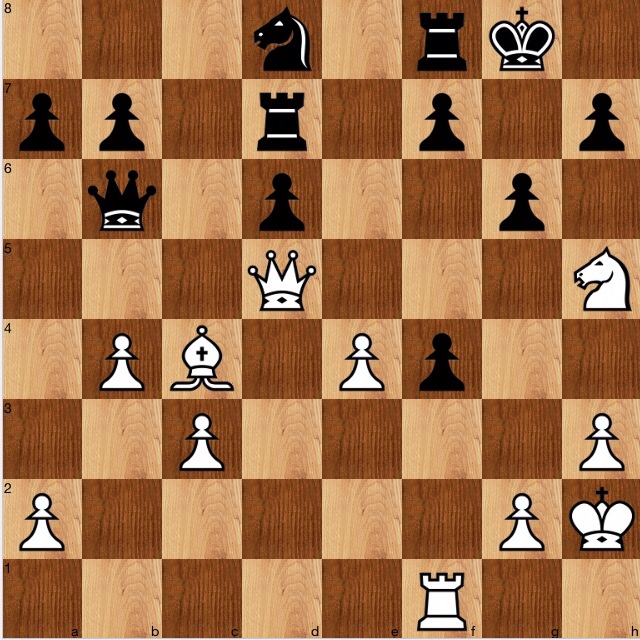
Black's natural defence 2…Qc6 fails to an exchange of queens and 4 Nf6+ winning the rook. So black's real choice is between 2…Kh8 and 2…gh, since 2…Ne6 again drops the LPDO rook (though on further thought, 2…Rc7 and 2…Re7 need to be looked into).
I felt that 2…gh was the move that had to be looked at first- if it is good, then white is lost- So, 3 Qg5+ Kh8[] 4 Qf6+ and then I realised that 5 Rf4 is too slow, since black has 5…d5. I couldn't see anything special for white, and so set the pieces up…and still couldn't find a win, so turned to the solution to find that…it was a drawing line, but in the game (GM) Stahlberg played 2…Re7 which also draws.
My blog doesn't give any hints, and also doesn't say 'and win' so perhaps readers won't feel the same disappointment as I do: I assumed there was to be a win to be found. However, putting that aside, it is a reasonable exercise.
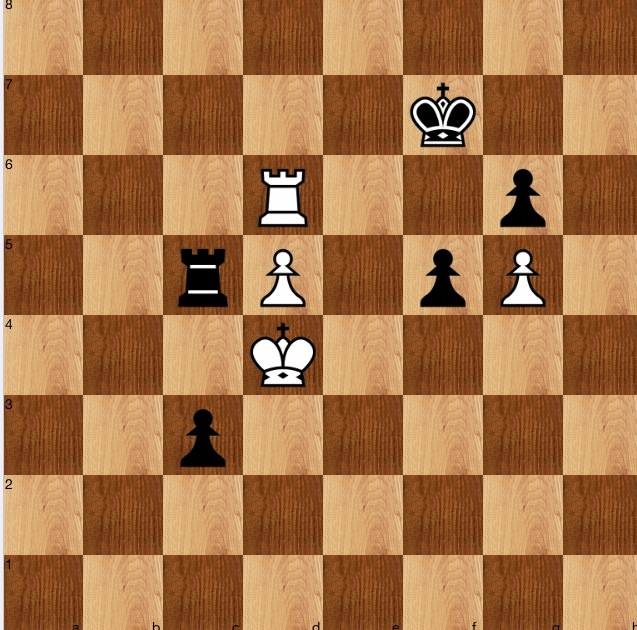
Black to play and win
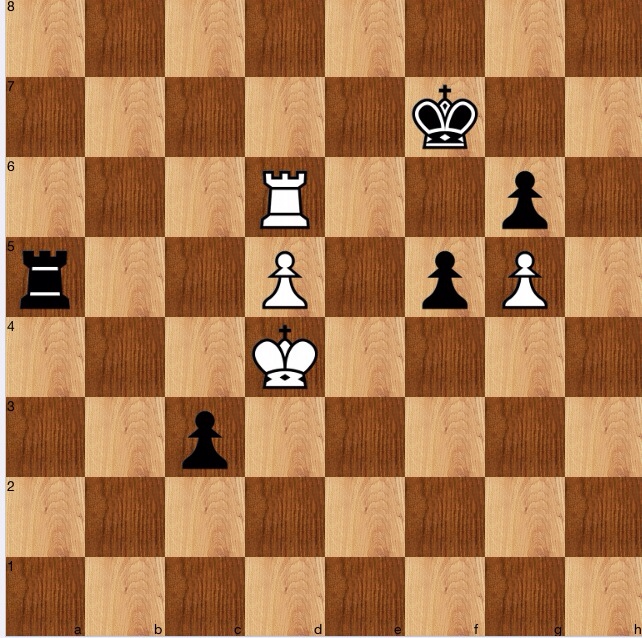
A Karpov v Y Seirawan, blitz, 2012
Seen in Chess Today issue 4237
Solution
As regular readers of this blog will know, I always have a stash of difficult puzzles, and take out a bundle with me when walking the dog or going for walks in the Lakes. They provide something to think about, if I want something to think about.
This puzzle was one of two cut out of CT4237 and taken with me on a walk recently in the Langsrath Valley, near our cottage in Borrowdale, in the English Lakes. I must have thought them hard since I had cut them out. But, alas, I solved this one instantly (instantly in the sense of second time I looked at it, because clearly some months back it must have stumped me).
1…Rc5! and the black pawn promotes. For instance, 2 Kc5 c2 and the rook can't get back, and the king on c5 interferes and negates Rc6.
Alas, the other one was similarly 'easy'. I had better admire the view:

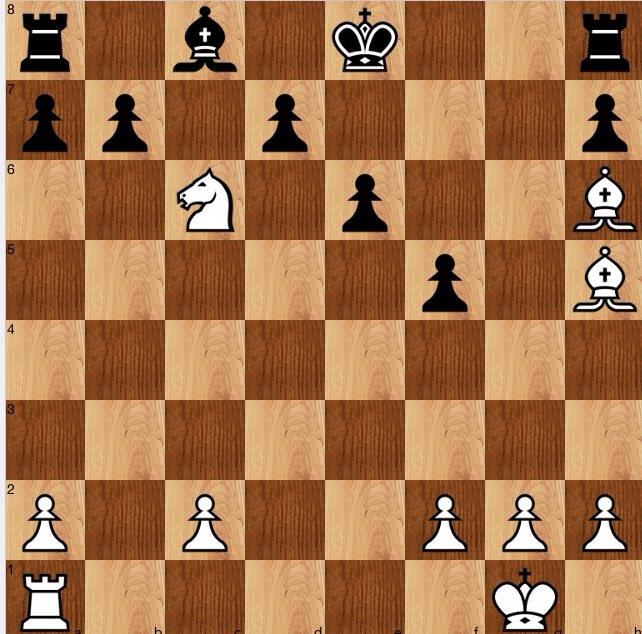
White to play and win
White played 1 Qg5 here; what did he miss?
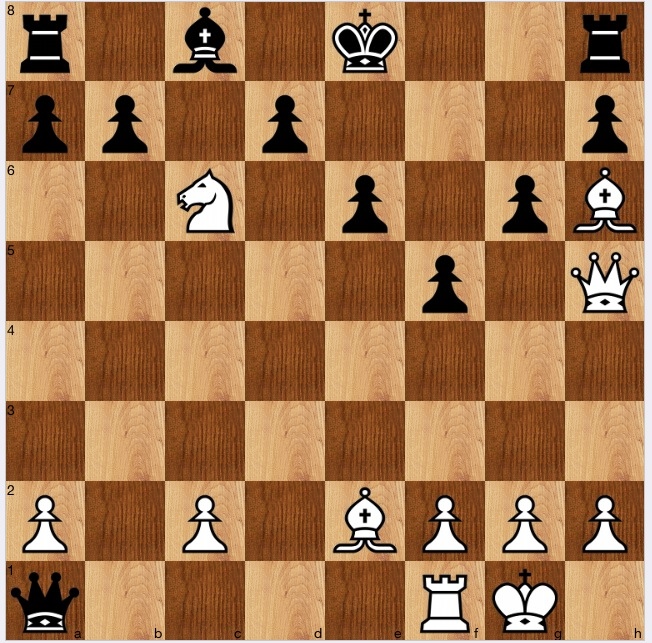
NW King v W Gerber 1964
Solution
Oh dear: 1 Ra1, and if 1…gh 2 Bh5 mate.
Not hard; or, if it were not obvious on inspection, than Purdy's 'examine all biffs' should have revealed the line to you.
 allanbeardsworth