White to play and win
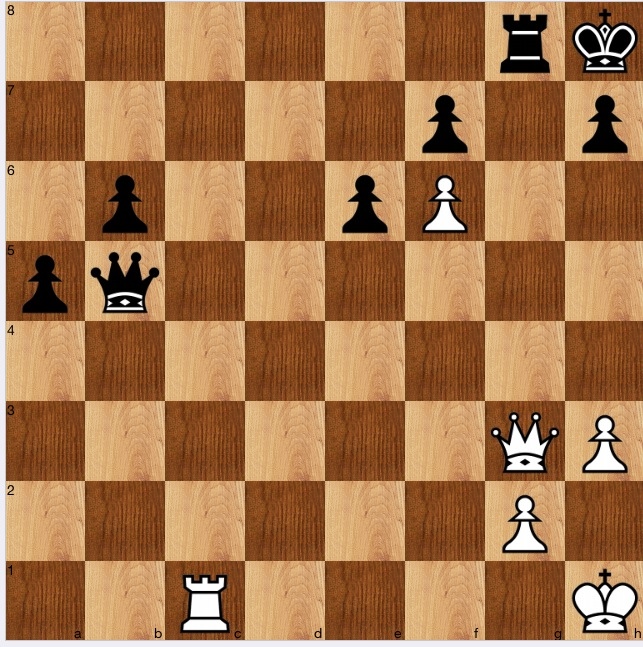
HE Price v P Aalbersberg 1976
Solution
Reitstein says that in desperate time trouble, white played 1 Rc8, allowing black to draw. He doesn't say how, but it is not hard to see that it is by 1…Qb1+ and 2…Qg6. It is equally easy, in fact trivial, without the pressure of time trouble to see that 1 Qg6+ mates after 1..Kg8[] 2 Rc8+ etc.
 Posted with Blogsy
Well, no. Below is an email received today which won't get my business.

I have moaned before on this blog about my dislike for insincere 'I hope you are well' starters to emails; this flyer takes the biscuit in being formulaic. The 'it's a good time to buy signal' that many companies are presently finishing their year ends (really?) making it a good time to test portable appliances is lost on me.
No, it wouldn't be ok to schedule a call with me.
White to play and win
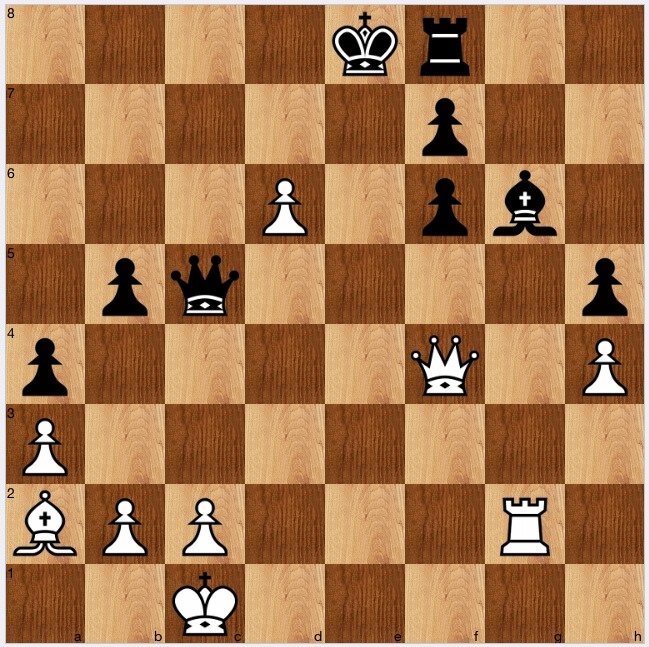
RF Griffiths v G Bouelle 1968
Solution
I saw the solution intuitively, 1 Rg6! whose main purpose is to give the white queen a checking square on the e file; after 1…fg[] 2 Qe4+ black can only choose how to lose:
2…Kd8 3 Qe7+ Kc8[] 4 d7+ and the LPDO Qc5 falls;
2…Kd7 3 Qe7+ Kc6 (3…Kc8 as above) 4 Qc7 mate;
2…Qe5 3 Qc6+ Kd8[] 4 Qc7+ Ke8[] 5 Qc8 mate.
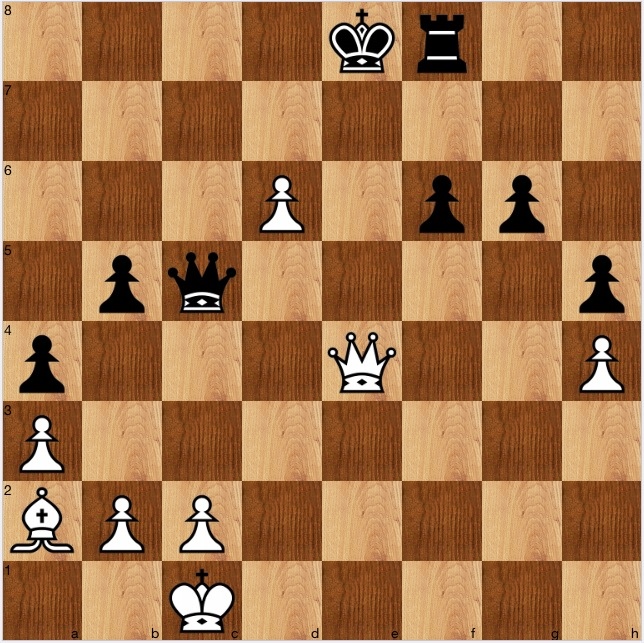
As the parent of three children, aged 16 to 20, I am reminded that language evolves.
When I saw this picture on Twitter, two words, often said by child #2, came to mind.

“True dat”
White to play and win
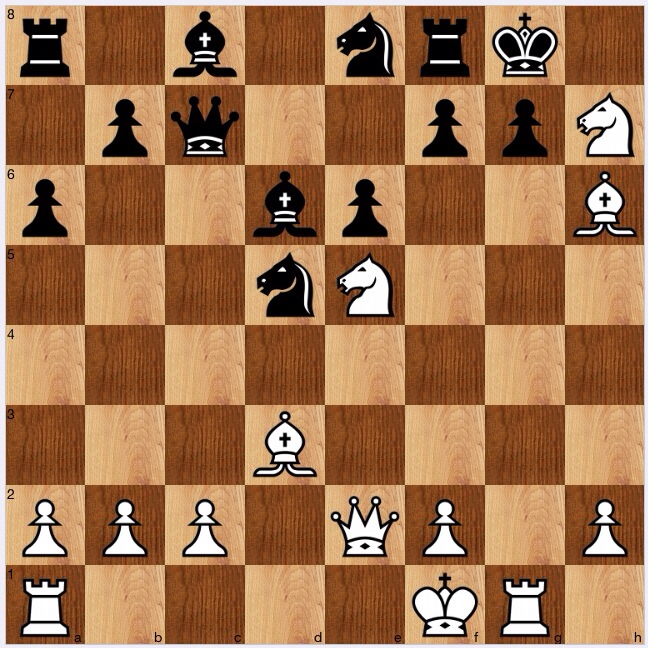
Andreikin-Sjugirov 2012
Source: chess column in the Times
Solution
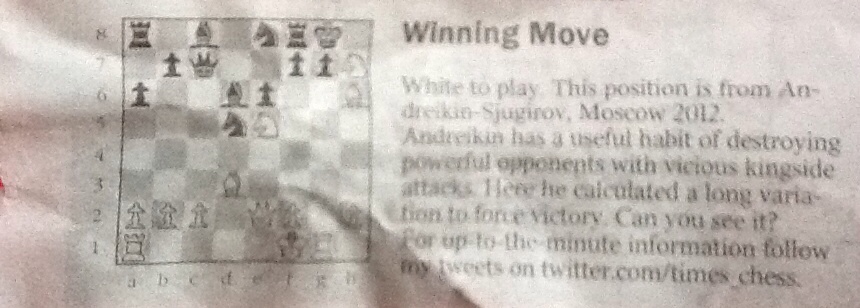
I found this one difficult, and whilst I found the solution, it was at the limit of my calculating ability. The article gave a hint/clue/big signpost towards the actual solution, 1 Bg7! Ng7 2 Rg7+!, and I looked at this line first! before giving up with it as too hard. In a game, I might simply have improved my position by 1 f4!, which Stockfish also assesses as +2.
Despite finding 1 f4!, I went back and looked further into all the variations in the main line. The first stepping stone to implant in my mind was the position below, and the query was 'what happens if black plays 2…Kh8?
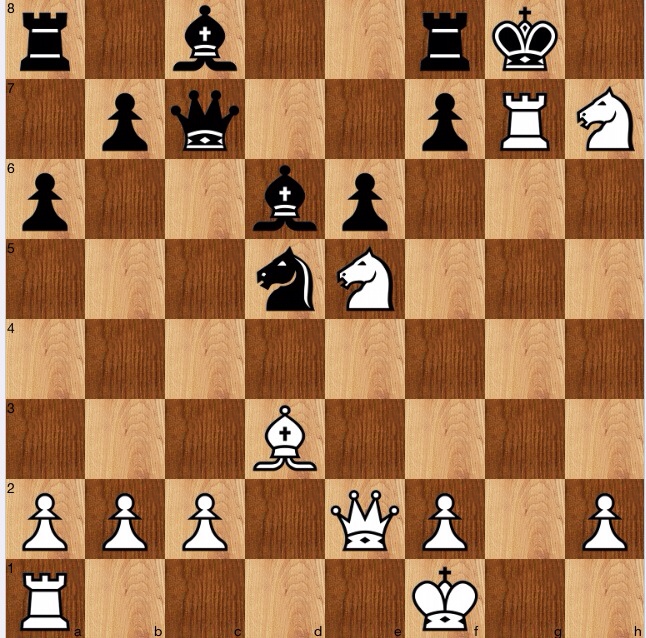
Often, these non compliant moves (taking on g7 is the natural move, complying with white's main line) cause me trouble; here, once I saw that white could play 3 Qh5! and if 3…Nf4 4 Qh6, I knew the line could be discounted. So instead 2…Kg7 3 Qg4+ Kh8[] and then what? Fortunately, I recognised the pattern, and saw that 4 Nf6! was probably mate: and just had to check it out.
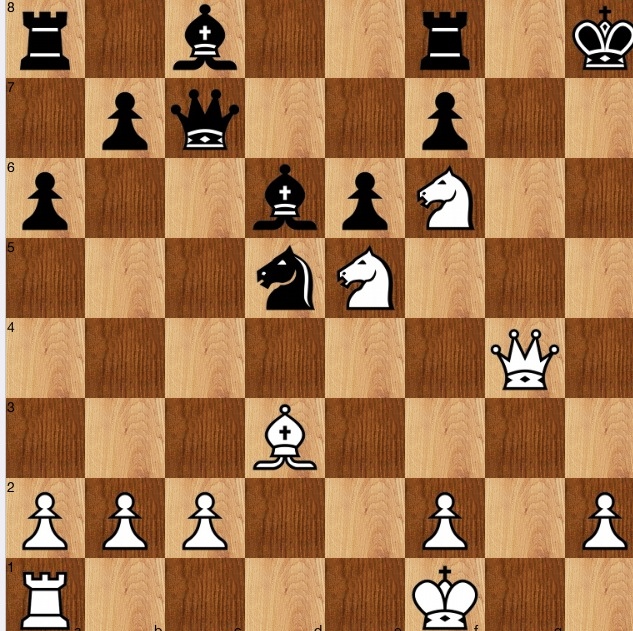
The knight has to be taken, otherwise there is a mate by zig-zagging the queen, checking to h6. But even when the knight is taken, the same zigzag/staircase mate occurs: Qh4+, Qg5+,Qf6+,Qg5+,Qh6+, Qg7mate: my visualisation was pretty good, save that at the end I only foresaw (after Qh6+ Kg8) Bh7+,Bd3+,Qh7mate, rather than the immediate Qh7 mate: oh, well.
Black to play and win
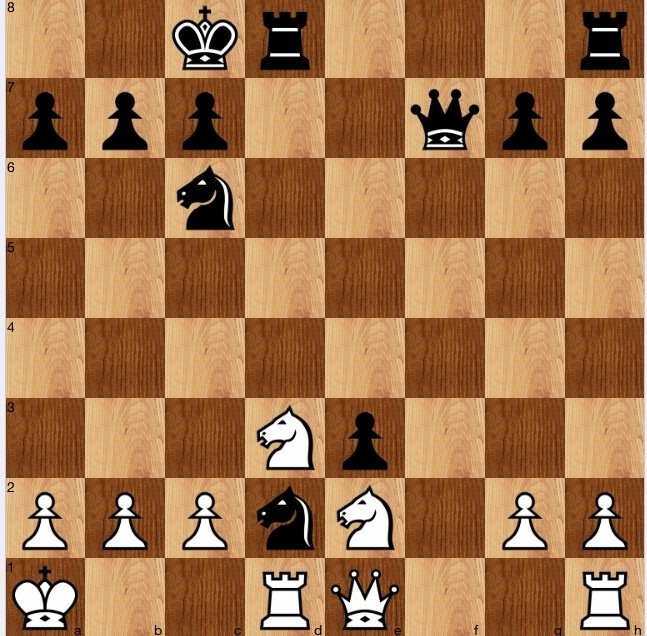
H Pooley v K Dreyer 1965
Solution
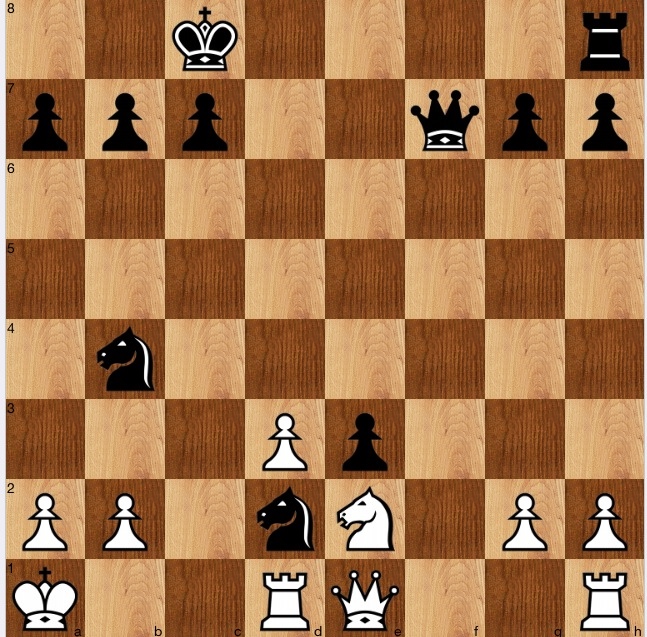
Fairly straightforward, as have many of the recent positions been: 1…Rd3 2 cd[] Nb4 and either Qa2mate follows, or Nc2+ forking king and queen.
White to play and win
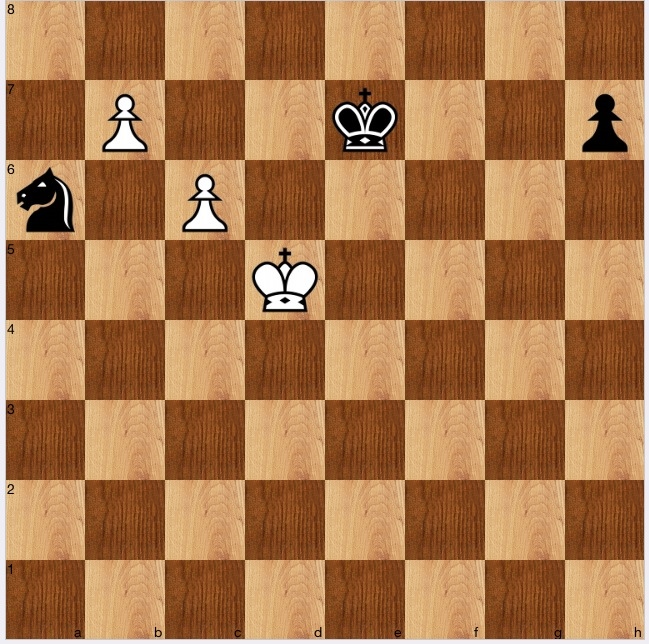
J Glyn v B Kerr 1977
Solution
This stumped me for a while: 1 b8(Q) Nb8[] 2 c7 is a double attack (b8 and c8) but while the pawn promotes, black's knight can fork: 2…Nd7 3 c8(Q) Nb6+ 0-1; and 3 Kc6 Ne5+ 4 Kb7 (4 Kb6 Nc4+ and 5…Nd6) Nc4! and if 5 c8(Q) Nd6+ forks again.
It took me quite a few false starts, such as 1 c7?, 1 Kc4?, 1 b8(Q) again and again, before seeing that it was a 'simple' matter of losing a move: 1 Ke5! and now the N doesn't check: so, e.g., 1…h5 2 c7! promotes.
Very nice.
White to play and win
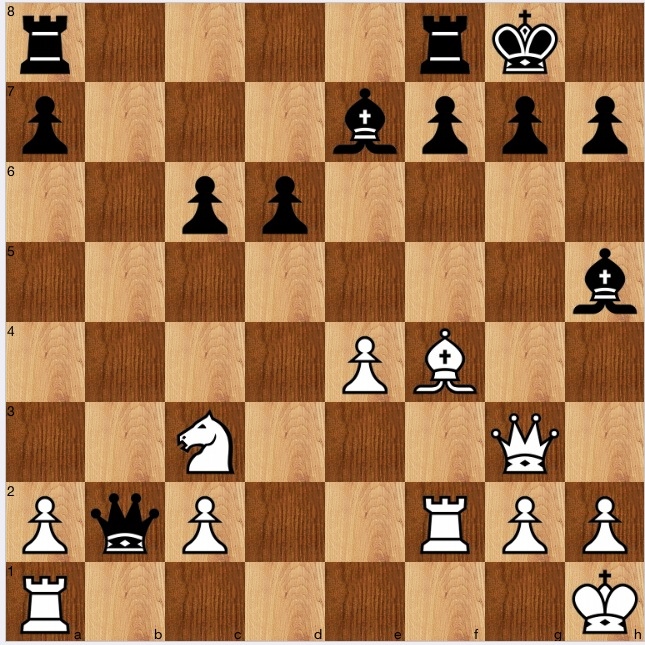
D Morschel v P Kroon 1966
Solution
Slightly harder than the last few days' problems, but not much. 1 Rb1 Qa3 2 Nd5! and if 2…Qg3 the zwischenschach 3 Ne7+ wins a piece. If 1…Bh4 2 Qh4 Qc3 3 Qh5 white wins a piece, simply.
Black to play and win
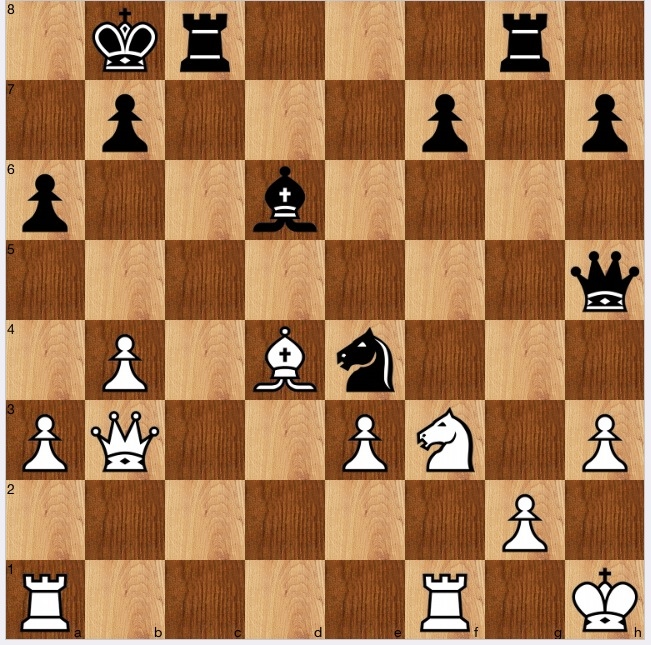
P Abbott v M O'Sullivan 1979
Solution
1…Rg2 is the move you first thing of, and on checking that after 2 Kg2 Rg8+ there is nothing sensible for white to do, then that is the end of the problem. Three days of straightforward problems, alas.
White to play and win
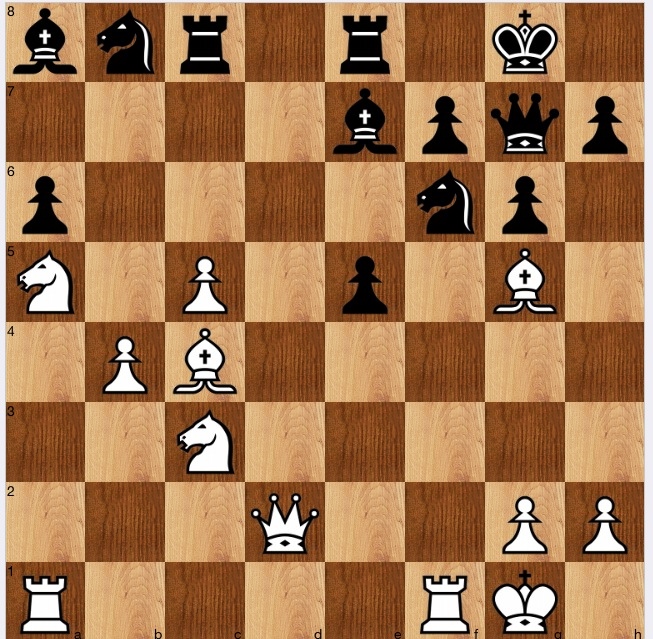
Drozdowski-Mejak 2013
Puzzle seen in Chess Today CT4810
Solution
Two Purdy maxims come into play here: his concept of never failing to consider nets (here, the Qg7 is in a bit of a net, and soon the Kg8 will be too) and examine all biffs.
So, 1 Bh6! Qh8 (for 1…Rcd8!, see below)
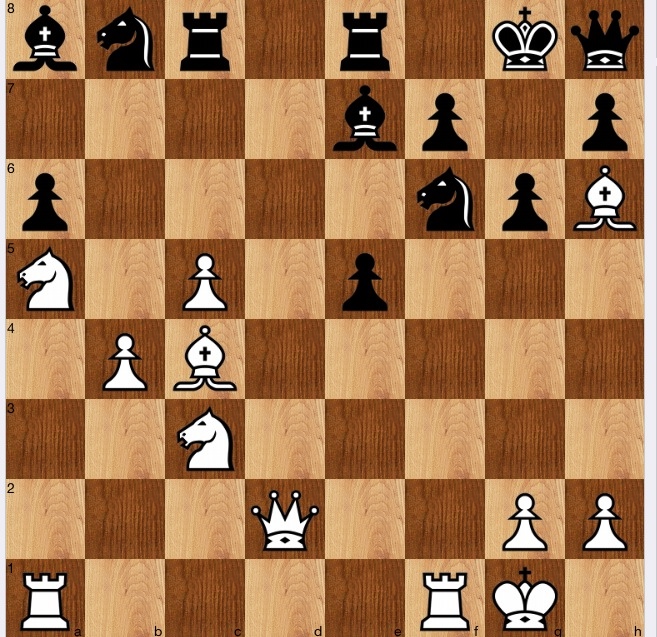
and again, examine all biffs 2 Bf7+! Kf7[] 3 Qa2+! Bd5 4 Qd5 mate.
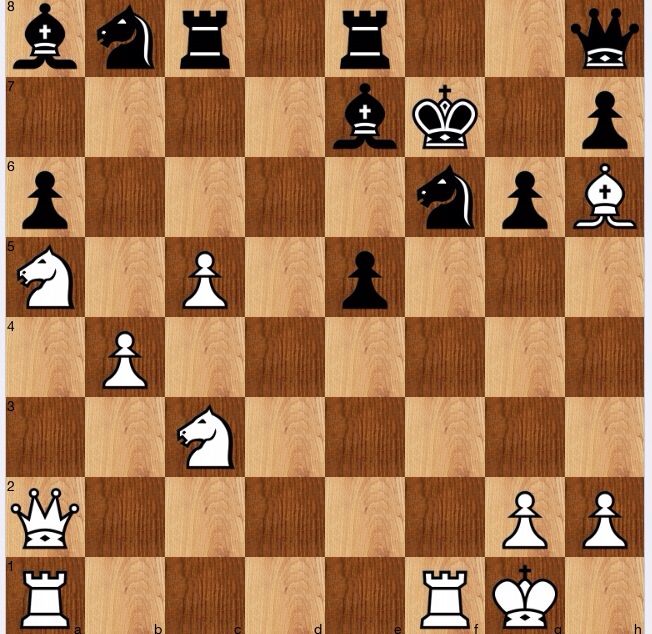
The harder defence is 1…Rcd8!. At first I thought white had no better than 2 Qd8! winning the exchange after 2….Qh6 3 Qd3, when after 3…Qg5 4 Ra2 protects everything, but the game still has to be won. In this line, I also looked at 3 Qe8+? Ne8 4 Rf7, but 4…Kh8 5 Re7 is met by 5…Qe3+ 6 Kh1 Bg2+! 7 Kg2 Qg5+ and the LPDO Re7 drops off. Also, whilst 2 Qc1 must be better for white, with black's queen stuck at h8, the simple (but optically hard to play) 2 Bd5! wins just like after 1…Qh8: 3…Rd5 4 Nd5 Qh8 5 Ne7+ 1-0, or 2…Qh8 3 Bf7+! all the same: 3…Kf7[] 4 Qa2+ Bd5 5 Nd5 1-0
 allanbeardsworth