Earlier today, I was fortunate in the inaugural Salford Rapidplay tournament to have three minatures out of my six games. Two of these were included in my earlier blog about the event- cases of quite similar double attacks against h2, threatening mate, and a LPDO N.
The third, a win in the 150 Attack (4 Nf3, 5 Be3, 6 Qd2 against the Pirc) against Ali Janoouby, was the first time in a proper game (since I have no time nowadays to play chess at classical time limits, Rapidplay has to count as proper) that I had played a game entirely with preparation. This isn't surprising, since I don't have a formal repertoire, I just play whatever takes my fancy, as white and black, as my mood takes me. Today, it was 'cautious', develop my pieces and see what happens. Here, Ali played 6…Ng4, a line I have met a lot.
Ali played right into a line I have played over forty times: the game was lost after my opponents' predominant reply, which Ali thought was stronger than the two safer moves, both of which he saw. The line I played, with Ng5, is probably pretty poor, though in practice has served me handsomely.
The game, with annotations, is here.
The key positions are below.
Position before …e5??
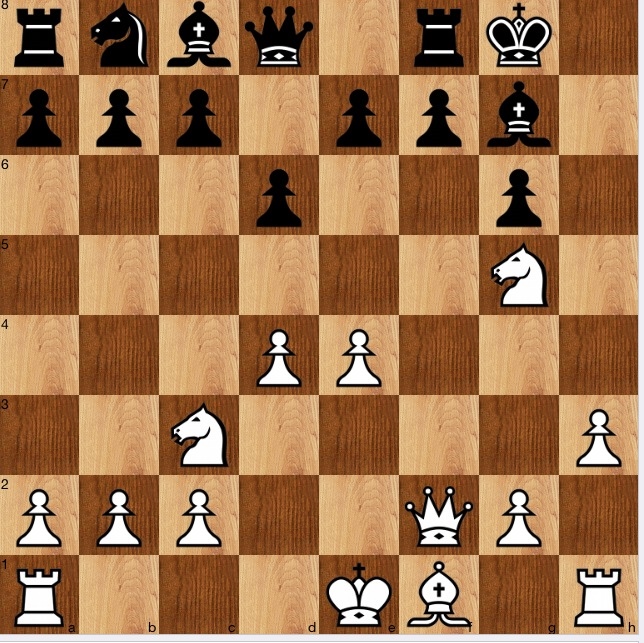
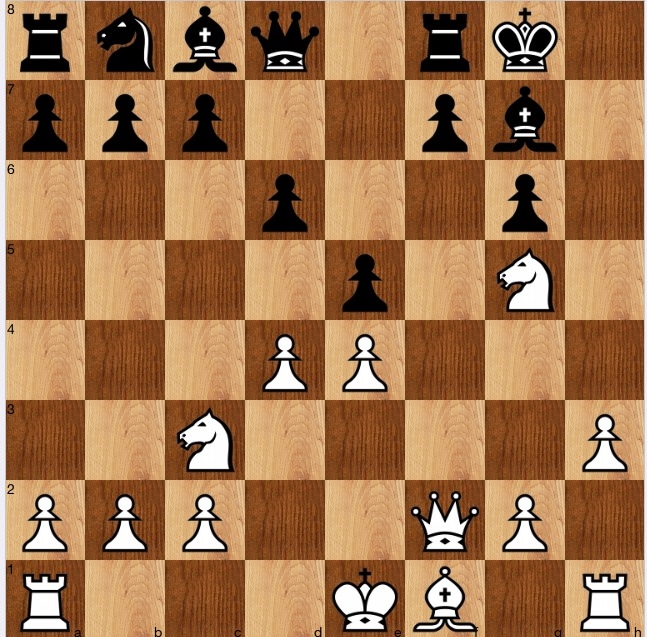
White plays Qh4, followed typically by Bc4, 0-0, depending on black's reply.
 Posted with Blogsy
In this position, from one of my games from today's inaugural Salford Rapidplay, at the Salford Grosvenor Casino, very well organised by John Reyes of Urmston Chess Club and ably controlled by Rod Middleton, there was a nice hidden tactic had black (Mike Surtees) played the natural 1…Rc8, challenging for control of the c file.
Mike didn't play 1…Rc8, fearing that after the rooks are exchanged, the Qd3 comes in to b5, hitting black's weakness on a5; so be played 1…Nc7, and, to cite Jon Speelman, 'the game goes on', eventually drawn in the ending after a close fight.
What happens if black plays 1…Rc8?
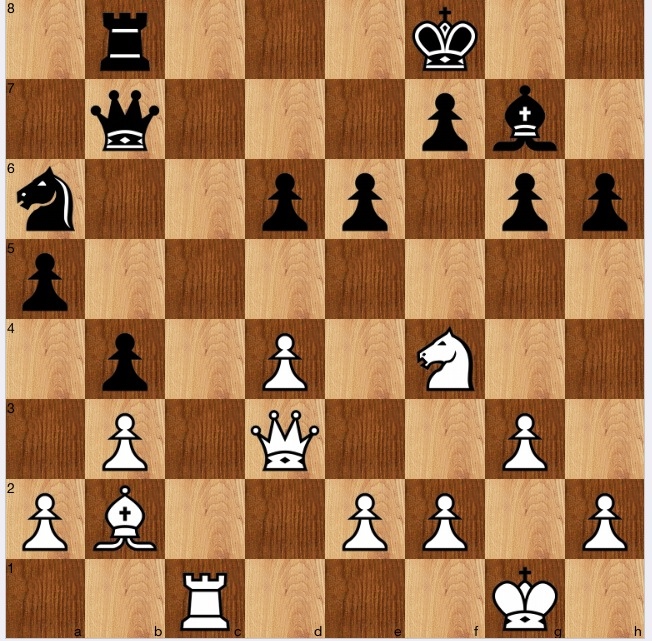
Allan Beardsworth v Mike Surtees, Salford Rapidplay, 11/5/14
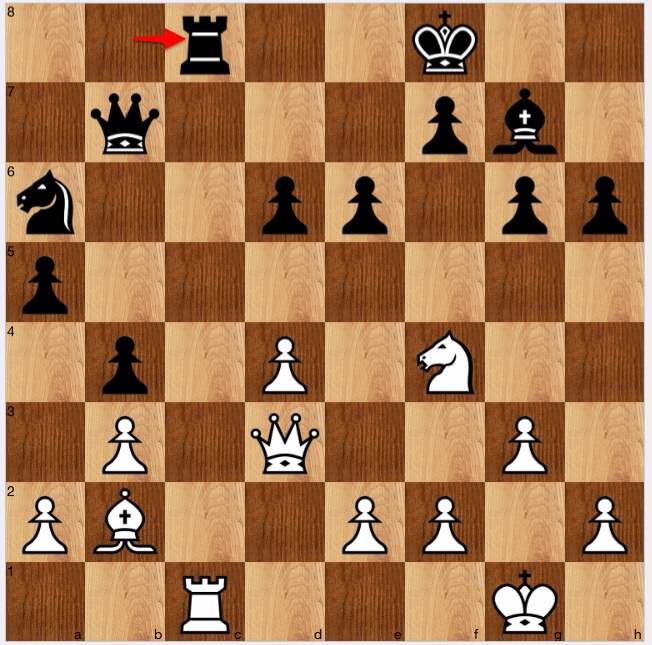
For the minute or so Mike was considering his move, I was hoping, hoping, hoping….that he would play 1…Rc8??. I noticed a lovely tactic which is pure CJS Purdy. Firstly, this tournament was played at 20 minutes plus 10sec per move increment (the first time I have ever played with an increment) which was a nice time control, since no one should lose due to absolute lack of time. I decided before the tournament to play 'fast and reasonable' and I also decided to, after the opening, to make sure I looked for LPDOs (John Nunn's acronym for loose pieces drop off); examine all biffs, and look for pins, nets and ties, following my favourite (however naff) poem (by Purdy)
Some things are hooey,
and most others lies;
But forks you mustn't miss,
nor pins, nets, ties.
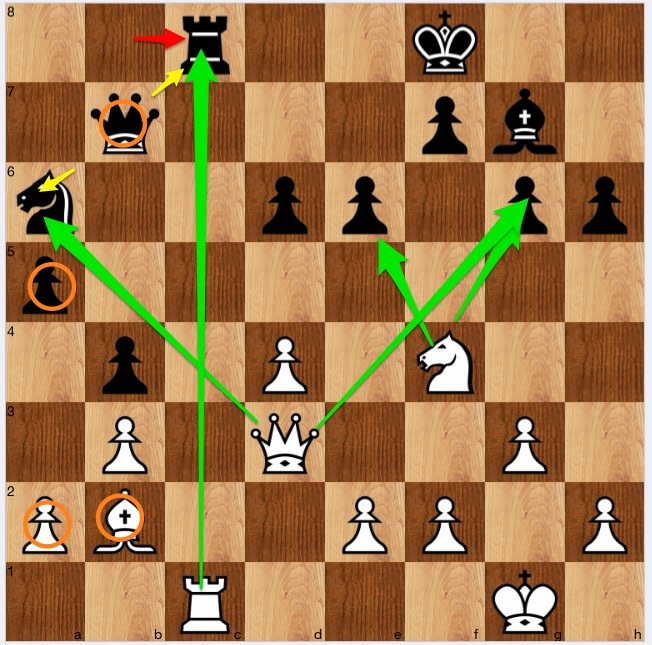
The orange circles are the LPDOs, and green lines the biffs. The yellow lines are the ties.
Solution
Hence 1 Ne6+!! fe 2 Qf3+! Qf3[] 3 Rc8+! (zwischenschach) and white white wins the exchange.
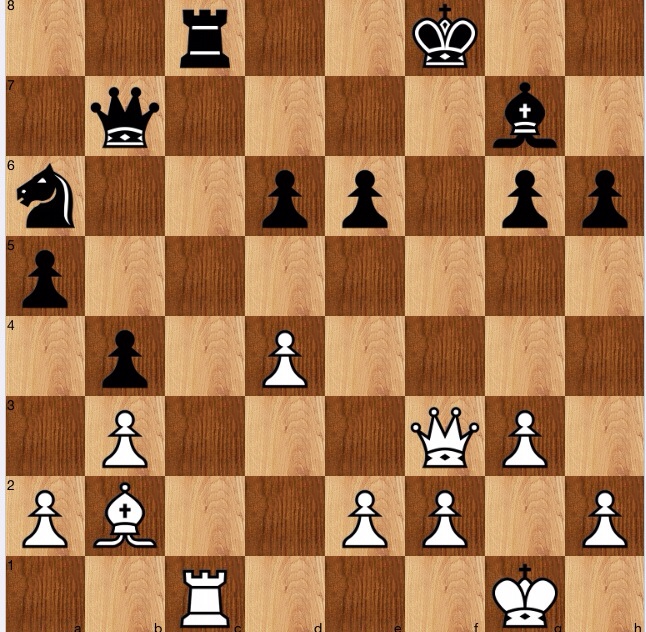
That would have been the goal tactic of the day had it been played. When Mike played instead 1…Nc7, he managed to consolidate and my position became worse- often the case where the attacker tries too hard-before levelling out.
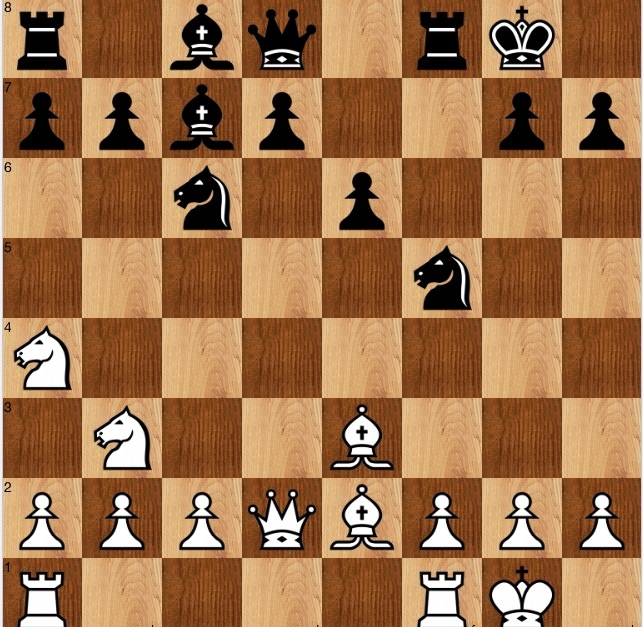
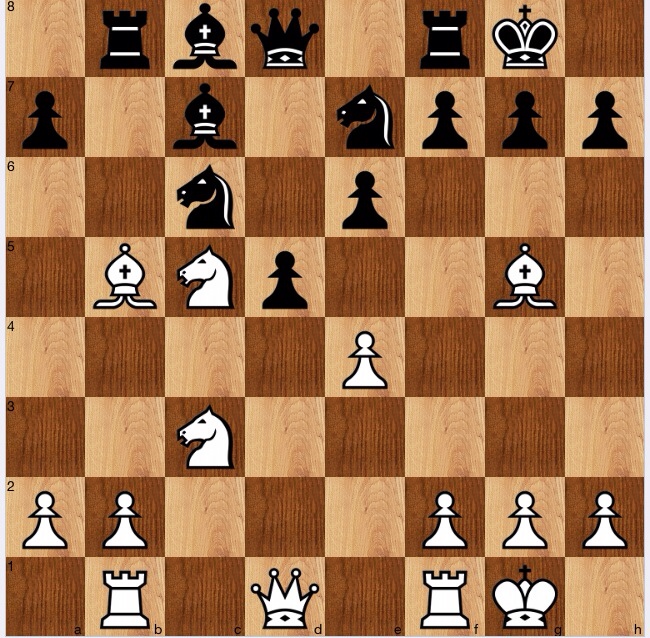
As it was, in the remainder of the tournament (which I was pleased to win with 5.5/6) I had an unusual echo with two occurrences which show that Loose Pieces do indeed Drop Off, and the power of double attack.
LPDOs: black to play and win in both diagrams
Solution
In both cases, from the same opening, black hit both h2 and LPDO knights. 1..Qh4 and 1…Qd6 respectively.
White to play and win
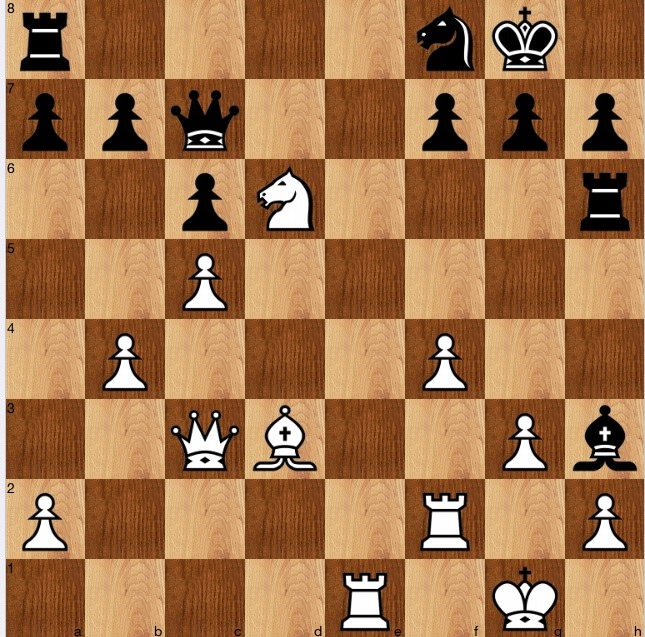
BE Alegheim v AJA Cameron 1906
Solution
Ouch: just like yesterday's, today's problem is trivial (and letting you have a peek into the future, so is tomorrow's).
1 Ne8 wins the exchange; nothing more.
White to play and win
(finding the first move is not enough: need to go deep enough to prove a convincing win, or at least an overwhelming position)
V Gashimov v B Gelfand, Spanish team ch, 2009
Solution
1 Ng7! is an obvious try, but does it work? 1…Kg7 2 Qh5! (2 Bh6+? throws too much wood away) Rh8 (2…f5, see below) 3 Bh6+ Kg8 is the 'key' position.
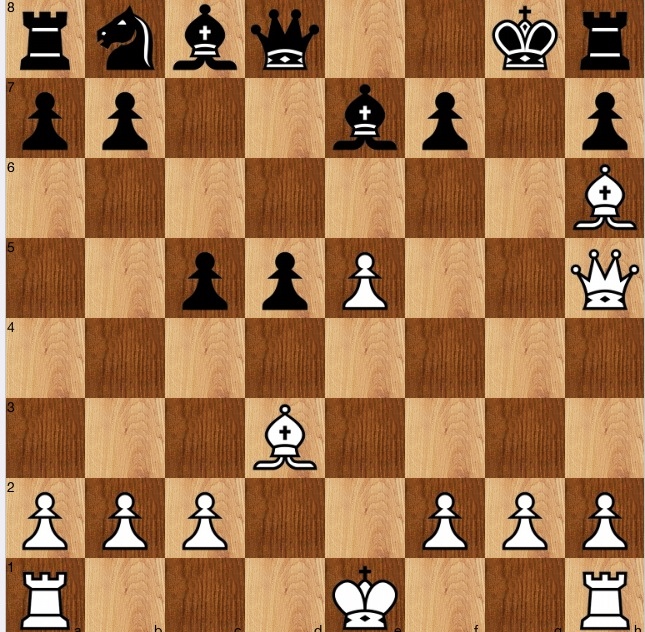
White has no good checks, since g4 and g5 are covered; by a process of elimination I found 4 e6! Be6[] 5 Qg5! 1-0, since both Qg7mate and Qg3+ are threatened, and both can't be prevented. Very nice.
Black to play and win
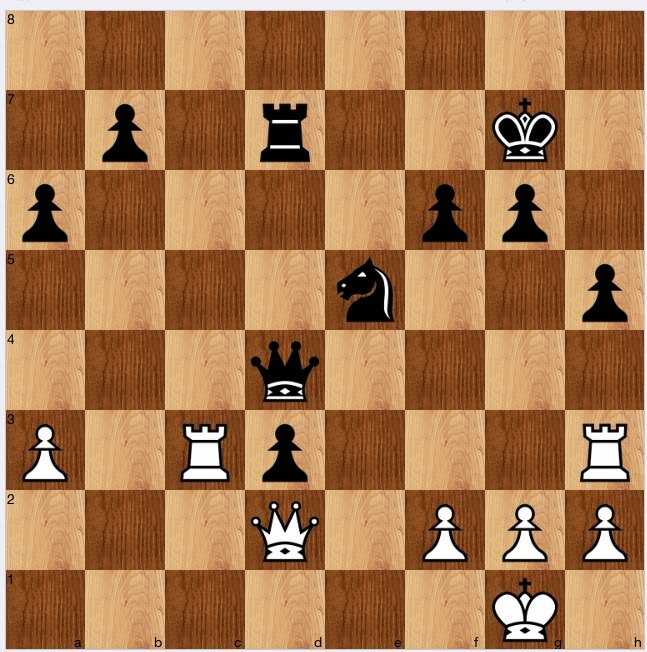
W Heidenfeld v KF Kirby 1947
Solution
Reitstein actually starts his problem a couple of moves earlier, showing 0…Qd6-d4 1 Kf1, and asks 'then what', but it is still ridiculously easy: 1…Qc3, and the pawn promotes, or white must give up his queen.
White to play and win
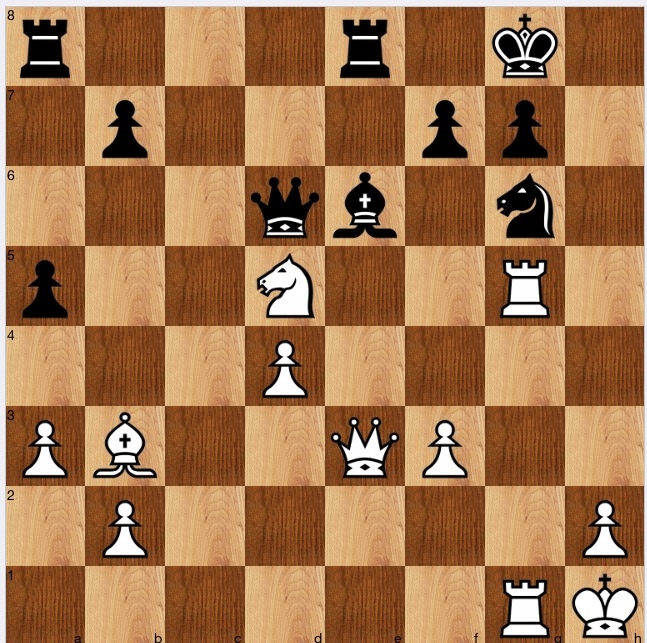
Miezis- Luke Z. Li , Melbourne 2013
Solution
The move I first thought of was 1 Rg6!, though at first I couldn't see how strong it actually was, and quickly changed to my next thought, 1 Nf6+!!.
1 Nf6+!! wins: if 1…Kh8?? 2 Rh5 is mate, and 1…Kf8 drops the exchange, so 1..gf[], when 2 Rg6+! crashes through. The key line is 2…fg:
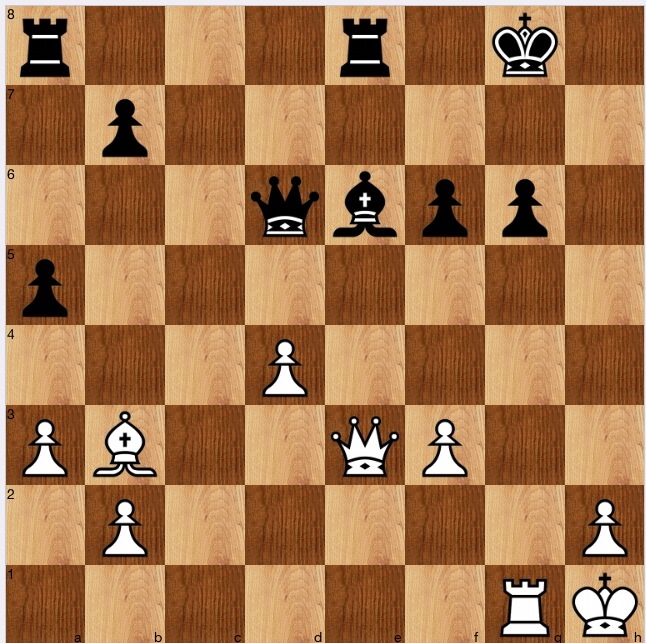
I quickly saw that the obvious 3 Rg6+ might not be good enough, and that 3 Qh6 is stronger: if 3…g5 4 Qg6+ followed by Qf6+ and the house falls in; and 3…Bf7 doesn't defend g6 since the B is pinned by the Bb3 to the king: so 1-0.
Other black defences are weaker, so I then loaded the position into Stockfish, and also tried 1 Rg6!: it turns out it is more or less equivalent since if 1…fg 2 Nf6+! Kf7, white has 3 Ne4! hitting the LPDO Qd6 and then playing 4 Ng5+: the bishop falls since if 4…Kf6 (3 Ne4 Qd7 4 Ng5+) 5 Qe5+ forces 5….Ke7. So, 1 Rg6! is equally winning.
Black to play and win
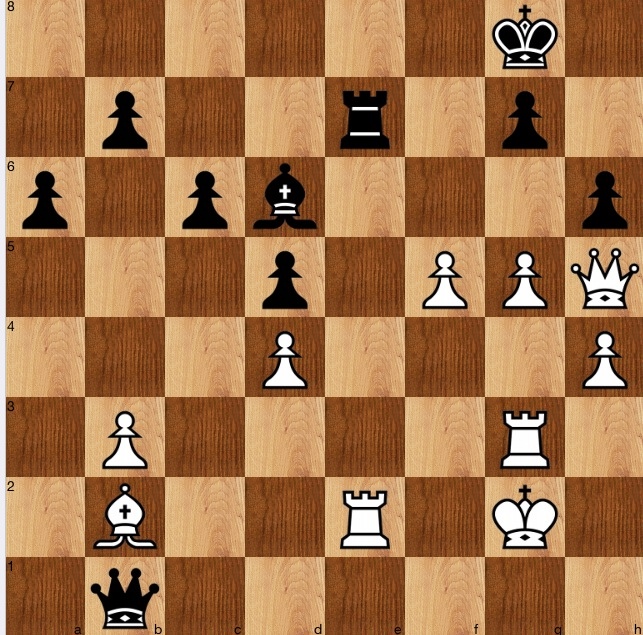
PJS Robbertse v A Haller 1967
Solution
Black's situation looks dire, and Reitstein says that he resigned in this position. But knowing that it is a problem (and I think that is key: it would be so easy to give up here in practice) the solution is simple: 1…Qd1, pinning the LPDO rook against the LPDO Qh5, and if 2 Kf2, 2…Bg3+ wins.
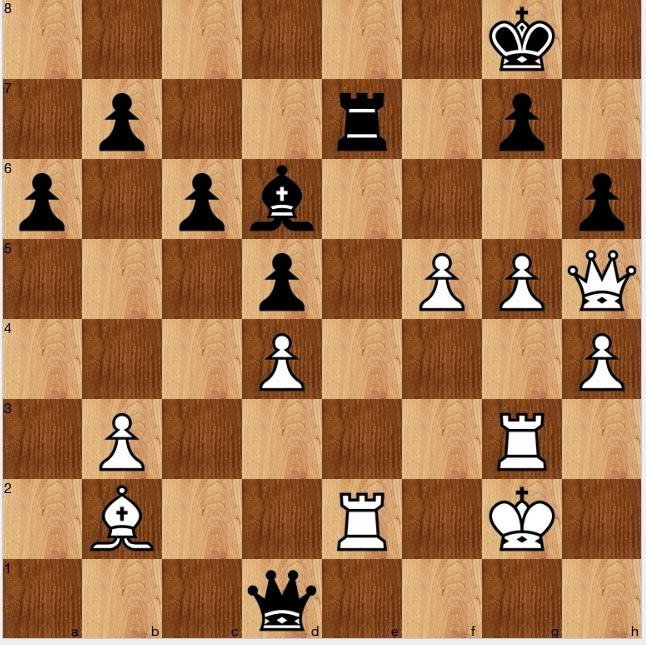
White's best is 2 Qe8+, playing for tricks. 2…Re8[] 3 Re8+ Kh7?? 4 g6 mate, so 3…Kf7[] when 4 Rge3 Qg4+ scoops up the pawns, when black wins, eventually, with Q+B and more pawns v RR+B and fewer pawns.
What is black's best resource?
(White threatens both Qh6+ and Bb3, winning the queen)
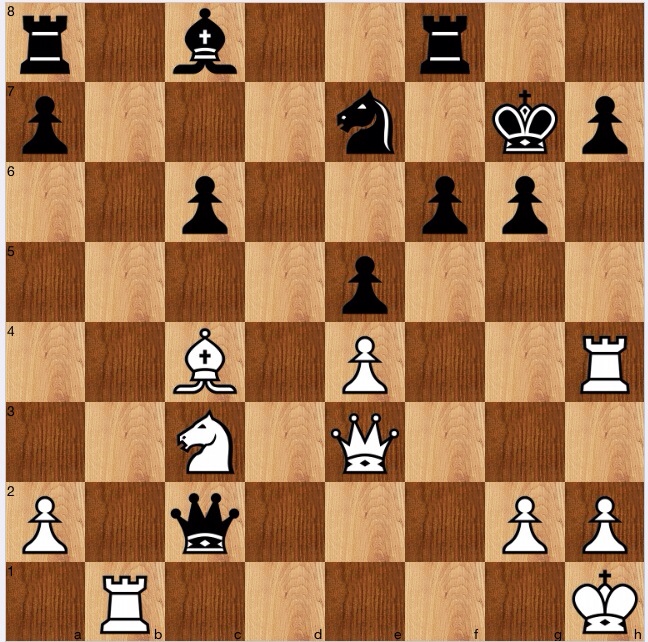
LR Reitstein v D Isaacson 1960
Solution
May be I don't 'get' this puzzle, since 1..g5 is a natural try, and likely the only one: and the game goes on. If 2 Bb3, black gets both rooks for the queen by 2…Qb1+ and 3…gh4.
Black to play and win
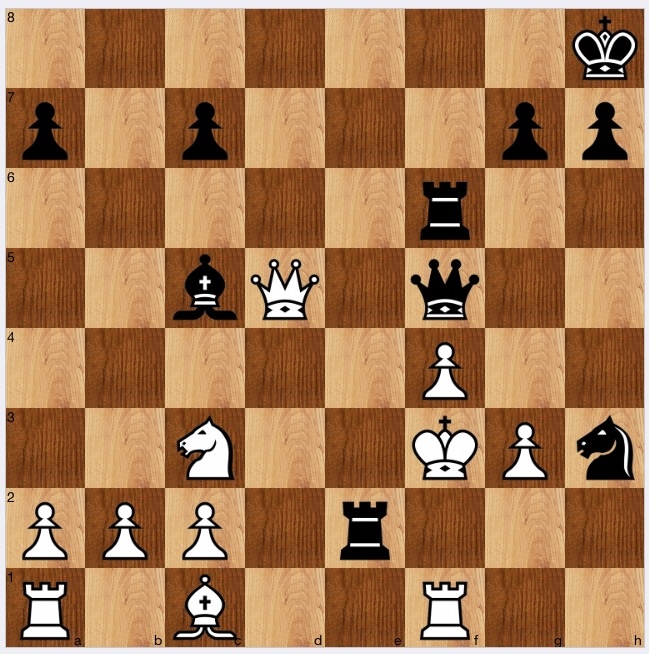
RW Borders v JH Clark 1910
Solution
Very pretty: 1….Ng1+! 2 Rg1[] Rf2 mate. In the game, black played 1…Re5 and won eventually.
White to play and win
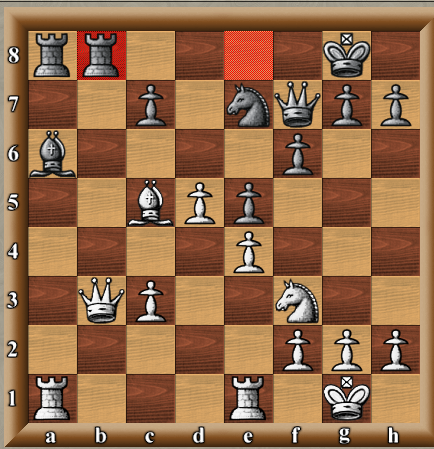
Allan Beardsworth – MaxE, ICC, 3 min pp
Solution
Examine all biffs, or Purdy's mantra to ignore threats, and decide what you would wish to play if the threat couldn't possibly be played, leads to the threat of Rb3 being ignored, and instead 1 Ra6! being considered, when the threat of back rank carnage means that white is a piece up, 1-0.
 allanbeardsworth