White to play and win
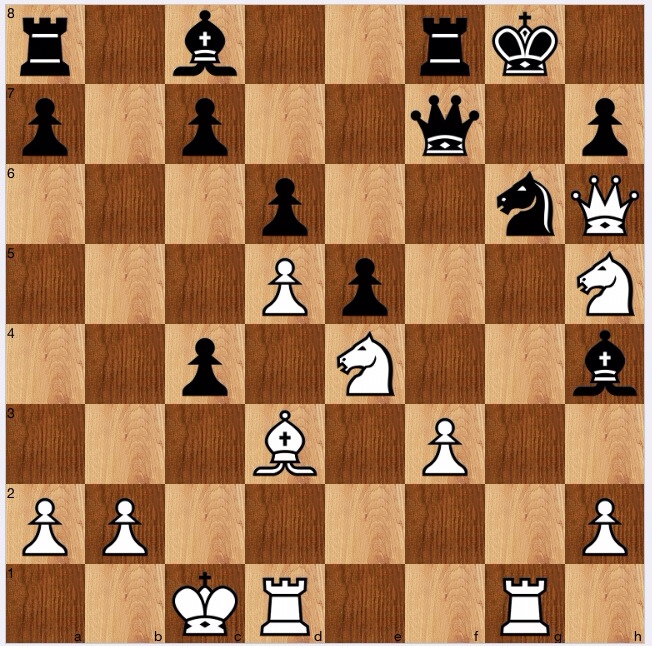
RT Spencer v BP Donnelly 1967
Solution
Straightforward, but strange: Reitstein only gives the move played in the game, 1 Nd6!, which wins (though black can struggle on with 1…cd 2 Nf7 Rf7, but of course it is 1-0. However, 1 Nef6+! is even stronger, with no real bale out, and, being a check, is more forceful. Stockfish gives Nd6 as +9, Nf6+ as +100, whatever that means.
 Posted with Blogsy
White to play and win
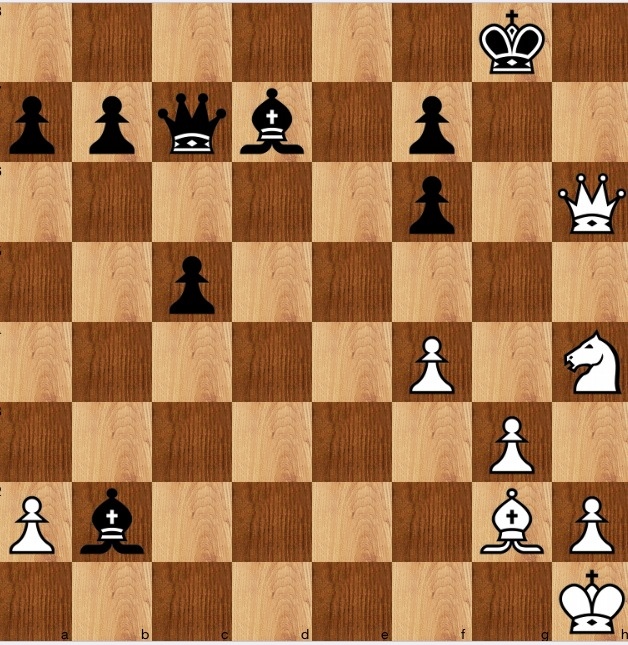
C de W de Klerk v A Schobi 1954
Solution
Straightforward: 1 Ng6! has to be tried, and the only things which need to be seen are that it threatens both Ne7 mate and Qh8 mate, and that if 1…fg 2 Bd5+ wins easily: 2…Be6 3 Be6+ wins the house.
White to play and win

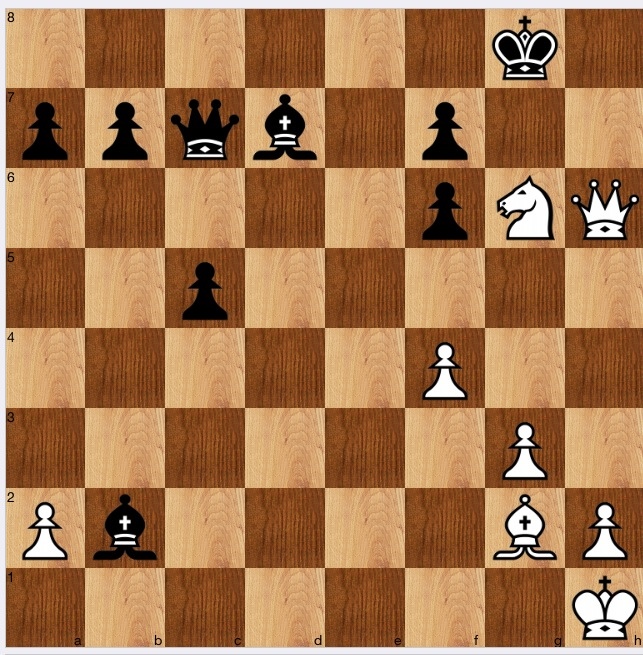
Allan Beardsworth (allanbeard) v April 24 1915, ICC 20/3/14
Solution
Not too hard, and no prizes either for working out that this position arose from my beloved (but rubbish) Morra Gambit against the Sicilian. Black is an unknown (i.e. I don't know his name) IM from Armenia.
1 Bf7+! is a little zwischenzug which seals the game. If 1…Kd7 then either 2 bc or, even better, 2 Ne5+! the main line being 2…Ne5 3 bc Nf7 4 Qb5+ and the LPDO Nf7 drops off when the king moves to the c file, since 4…Ke6?? 5 Qf5 mate.
In the game, black took the bishop, and after 2 Nh8+ Qh8 3 Qf3+ Kg6? 4 Qf5 mate. 3…K-other would have prolonged the game.

The puzzle probably isn't worth a blog, though I was pleased to have seen Bf7+! and not just done the rote recapture 1 bc. What is more interesting was that I asked black what his handle meant, and he explained that April 24th 1915 is the accepted start of the Armenian Genocide, the Ottoman government's extermination of its minority Armenian subjects from their homeland in what is now Turkey.
I presume that next April, the 100th anniversary, will be a big event in Armenia and Turkey.
My working day typically means driving home late; and for me, it is typically a choice of music or radio, and if radio, live or podcasts. I series I follow is Matthew Parris' Radio 4 series Great Lives, in which Matthew, a celebrity and an expert discuss the celebrity's chosen Great Life: last night, Gyles Brandreth chose Sir Arthur Conan Doyle.
It was a first rate episode, helped in no small part by Gyles being such a great communicator (arguably the best after dinner speaker I have ever listened to, and he was also a great compère for an awards evening I went to some years back).
Sir Arthur, born 22/5/1889 near Edinburgh trained as a doctor, seemingly because of parental persuasion; he married on 6/8/1885 in Settle, near Carlisle, Louisa Hawkins. Louisa was poorly from early on in the marriage and the discussion explained that Sir Arthur commenced a close relationship with Jean Leckie. Gyles said there was some doubt whether their relationship was platonic until after Louisa died, when Sir Arthur and Jean then married. The expert, Andrew Lycett, Sir Arthur's biographer, explained to Gyles that it had ever appearance of being non platonic, including the key fact that he and Jean were staying at the same hotel on the night of 31st March 1901.
Wikipedia is more cautious:

When not to take your mistress to a hotel
(I suspect if I had made this the title of this blog posting, it would attract more readers: by far and away my most read blog is about wives and blondes)
31/3/1901 was the night of the 1901 census. As a keen genealogist, I subscribe to services which give me access to census records, so here is the record:
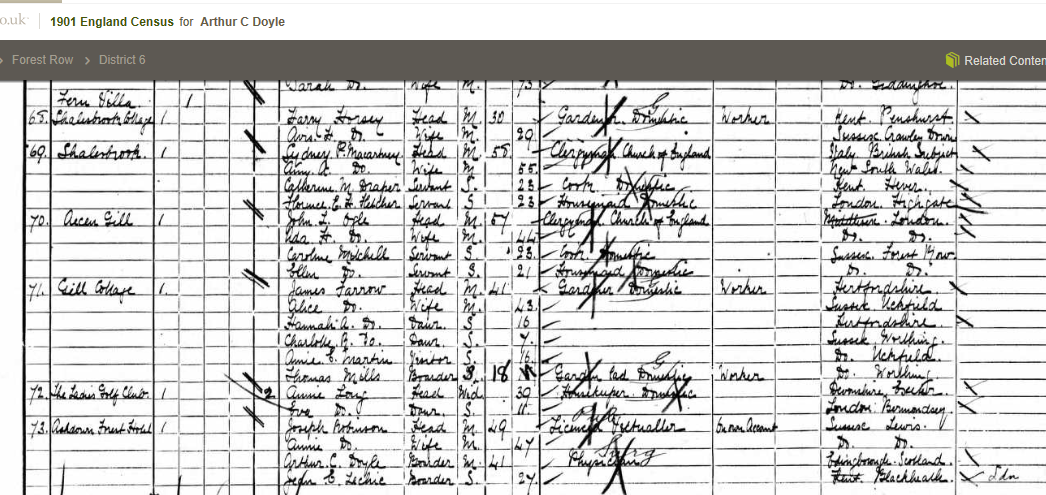
They are in the lowest address; in close up:


Case solved. Of course, this is now Sherlock Holmes thriller: writing a story where the reader has to wait 100 years before solving a crime would not be a best seller.
White to play and win

R Breedt v A Nel 1986
Solution
I was pleased with this one. Reitstein's rubric said that white found a beautiful move, and 1 Qd8+! is fairly obvious, or at least it is a try you have to look at, and after 1…Kd8[] 2 Rd8+ Kd8[] 3 fg+ Kc7 (3…f6 is no different) 4 Qh8 white is a piece up. A key point is that then if 4…Qg2, 5 Qe5+ defends both bishops with tempo, so that white keeps his piece.

However, I decided to look further (when you see a good move, look for a better one), and found 1 Bf3!! exploiting the LPDO Qc6 and the LPDO Ra8: the key point being that if 1…Qf3 2 Qa4+! wins the queen. Also, if 1…Qc7 2 Qa4+ Bd7 then 3 Rd7! wins, since 3…Qd7 4 Bc6 mate.
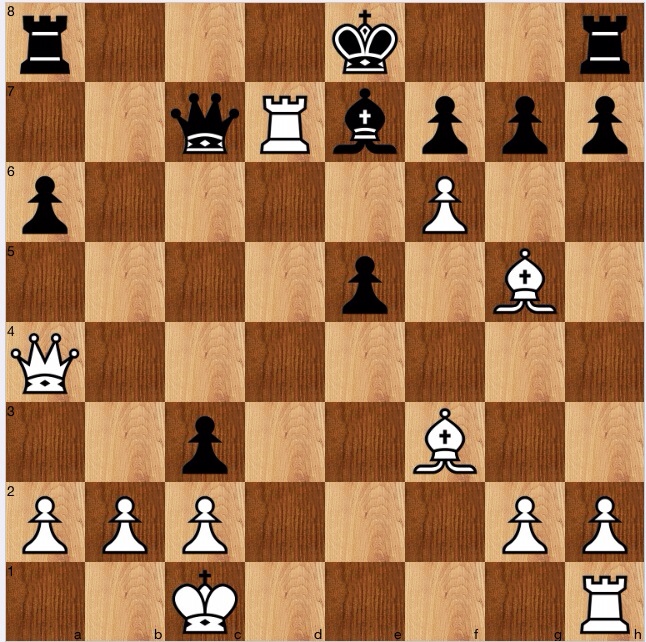
Reitstein only gives the game continuation, 1 Qd8+, but 1 Bf3 is better, but only in the sense that +10 is better than +7: in reality, or human reality, 1 Qd8+! is both prettier and more straightforward.
White to play and win
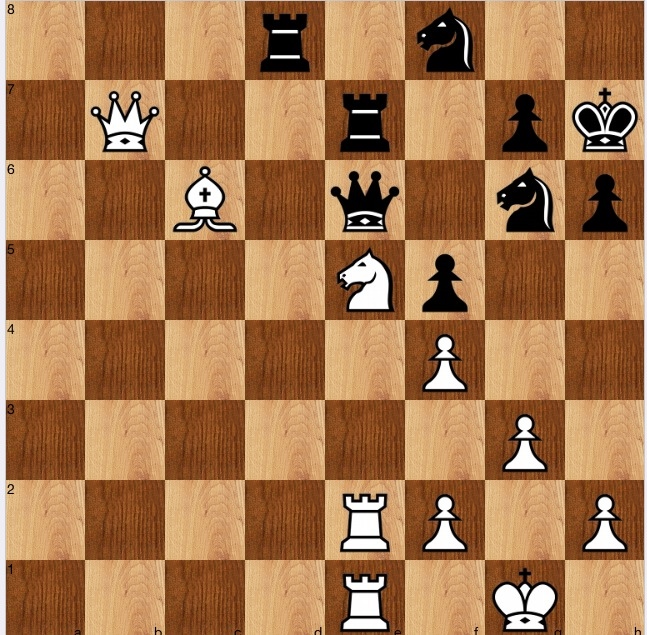
P Kroon v K Dreyer 1967
Solution
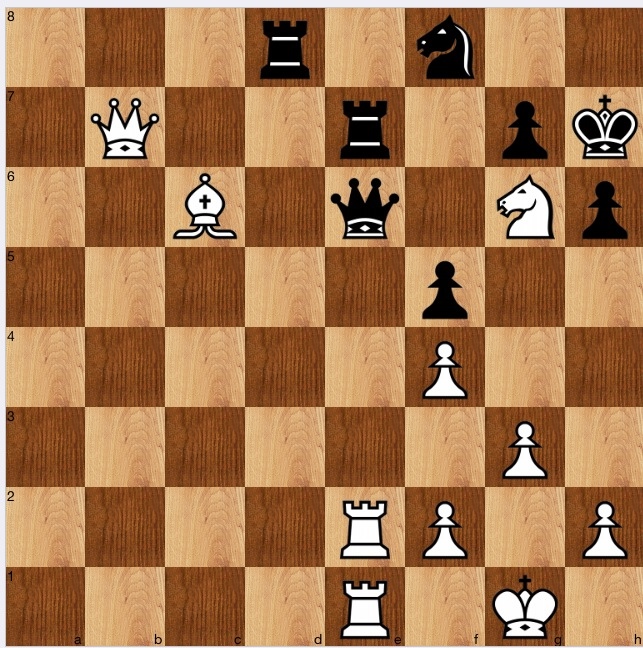
Fairly simple today: 1 Ng6 and the zwischenschach 2 Nf8+ ensures white wins a piece. It was one of the biffs I saw instantly, but in fact Reitstein's rubric made me think there might be something even more special: 'after Kroon played his next move in this position Dreyer tried on vain for nearly half an hour to find a satisfactory reply. What was White's decisive move?'
I have blogged before about my perennial liking for 'one minute with…' articles, where publications invite an illustrious person to answer a dozen or so questions, always ending with 'tell us a secret about yourself'….
I read one over the weekend in which one answer struck a strong accord with me.
What advice would you give to someone entering the profession? (so, by illustrious person, I don't mean film star, CEO or sportsman, but a senior figure in the accountancy world, if that is not an oxymoron)
Don't be afraid to ask dumb questions. I often see people getting involved in deep technical analysis without having really understood the transaction. I always ask my staff for a 'Janet and John' explanation. If they can do this, I am confident that they will get the tax right.
Well said.
Black to play and win
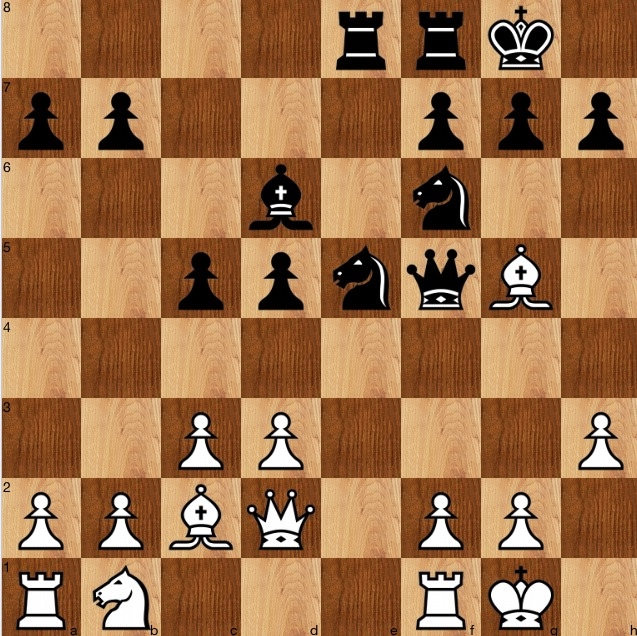
J Ojermark v G de Marigny 1977
Solution
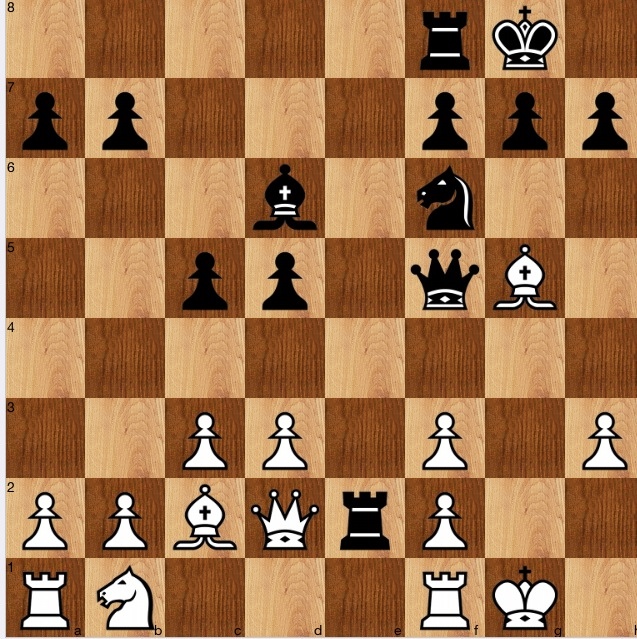
Quite an interesting one, and it showed the limitation of my calculating ability, or, at my limits compared to am engine. I found the line played in the game, but Stockfish (the app I typically use on my iPad) showed me that the line I couldn't quite get to work was actually better- better in the sense of having an even higher assessment (though, to be honest, it is not always true that an engine assessment of say -6 can really be compared with say -10: the -6 line can sometimes be 'more human'.
So, the first move is obvious: 1…Nf3+! 2 gf[]. Then what?
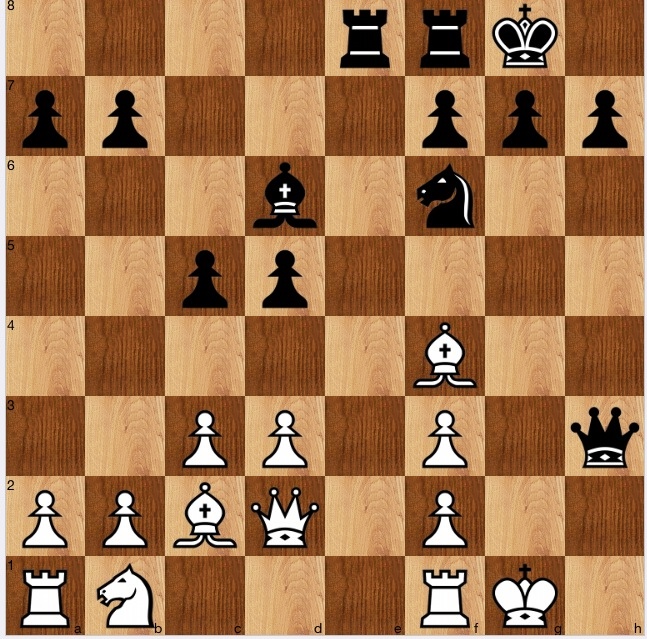
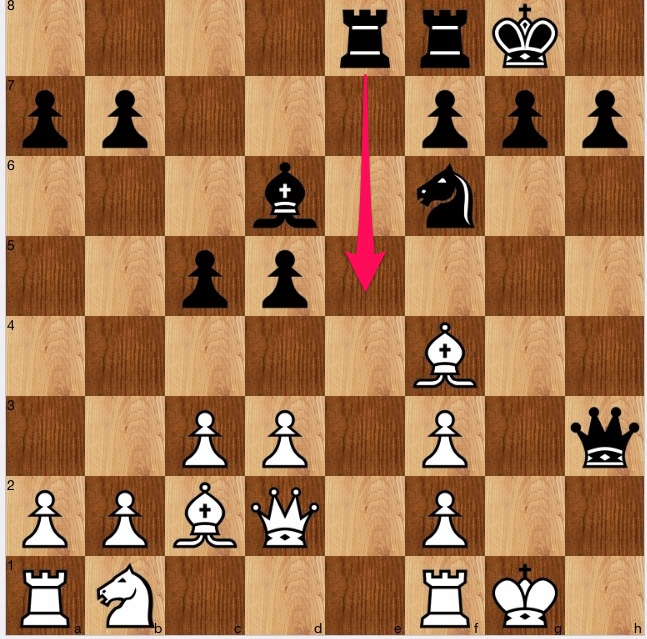
I tried and tried to make 2…Qh3 work, but couldn't crack 3 Bf4. Stockfish showed me 3…Re5! which, as soon as the engine showed it, I felt I should have been able to find. But Reitstein also didn't see it, or, more likely didn't bother to find: my solution was 2…Re2! which was the move played in the game, and it wasn't hard to see the resultant lines: for instance, 3 Qc1 Rc2! 4 Qe3 Re2! 5 Qc1 and now many things win. However, and this is why Stockfish prefers other moves (see below) after 2…Re2!, white can grovel with 3 Kg2!, when the positon is winning for black, but white could prolong the finish.
Finally, Stockfish's first move, which it rates higher than 2…Re2!, is 2…Nh5!, a move I never thought of, but again, when seen, is logical: it improves the positon of the N, threatening to come in to f4 either with the N or, better, the B, and just shows how tied up white is. Once Stockfish is given more time, its assessment changes, and the order is -6 for Re2, -9 for Nh5, -9+ for Qh3: essentially, many things win. The assessments are, to repeat, pretty meaningless. The lessons to draw are the recurrent advantage of remembering principles: 3…Re5! in the Qh3 line shouldn't have been hard, it is 'a rook lift' or 'bringing more pieces to the party'; and 2…Nh5! is also 'bringing more pieces to the party'.
A good exercise, well worth exploring.
The title of this blog posting tells you absolutely nothing about what the post is about.
White to play and win
Find the winning move AND overcome the best defence.
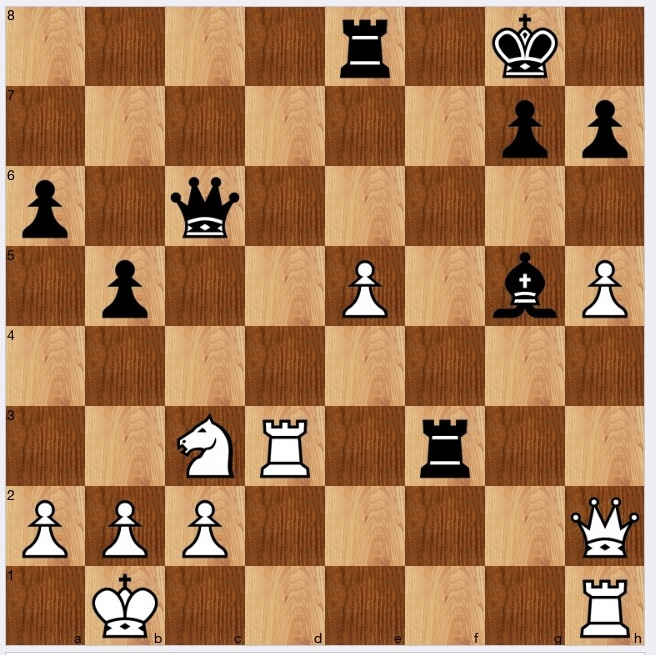
D Kokarev v S Dvoirys Khanty-Mansiysk 2013
Puzzle seen in Chess magazine.
Solution
Yesterday, we walked along the eastern shore of Derwentwater, near our home in Borrowdale.

As is my wont, I took a handful of chess puzzles, photocopies and cut out into singles, to be able to solve during quiet times, for instance when the family has broken into a long line, or when I have nothing else that I want to think about (I do a lot of my best thinking for clients when walking in the Lakes).
The above puzzle was the nicest of the day, and gave me great pleasure to solve and especially to overcome the best defence.
In this highly tactical positon, black's pieces hang by a thread, or, in an acronym, LPDO, to use one of my key chess tools, loose pieces drop off, as coined by John Nunn. Here, black has two LPDOs:
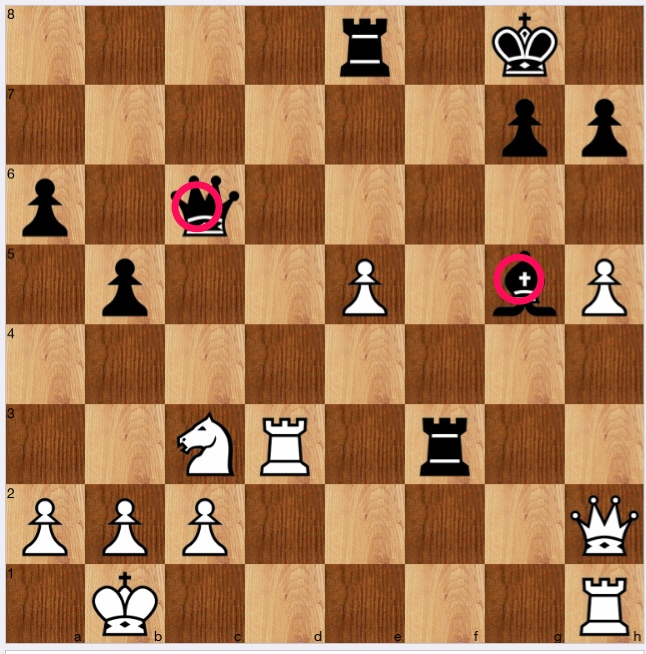
So, 1 Qg2! is a double attack, hitting the LPDO Bg5, and hitting the once-defended Rf3, which is pinned against the LPDO Qc6 (or, Purdy's jump biff notion applies here: from g2, the jump biff Qc6 is 'threatened'. At first, all I needed to check was that 1…Rd3 or 1…Rf1+ didn't cause a back rank nasty, which they didn't…so is that the solution?
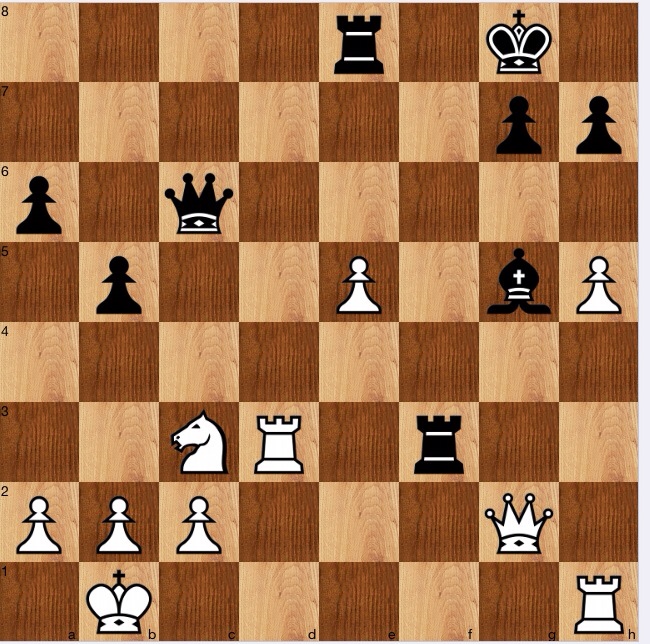
Fortunately, realising that I only cut out the hardest puzzles from Chess magazine (I always solve the 'easy' page more or less by inspection, the 'middle' ones normally fairly routinely, and then get down to the 'tougher' ones, cutting out those with which I struggle), I knew there was more, and then saw 1…Rf6!
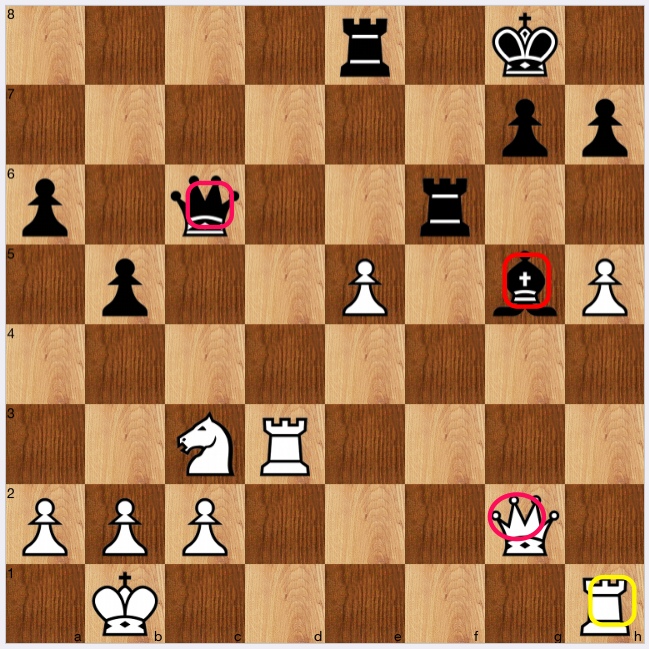
Here, the Bg5 and now the Qg2 are LPDO; and there is a jump check, Qc6-h1, if white plays Qg5 (leaving the h1 as a. LPDO).
So, 2 Qc6? is routine, 2…Rc6 means that nothing is protected, and, to quote Jon Speelman, 'the game goes on'. Black might well be better, since he can attack the e5 pawn which may fall, and, if rooks then come off, black has the better minor piece. I checked 2 Qg5? and 2 ef? (examine all biffs) before seeing 2 Nd5! when it is game over. The threat to biff on f6 blocks the h1-a8 diagonal, reopens the threat to take on g5, so black's best is to struggle on in a lost ending after 2…Re5[] 3 Nf6+ Qf6[] 4 Qa8+ Qf8[] when I would be tempted to play 5 Qf8+ rather than the move Stockfish prefers, 5 Qa6. Taking queens off is likely to safer, whatever that means, and after the forcing line 5…Kf8[] 6 Rd6 a5[] 7 Ra6 a4[] 8 Re1+ Ke8[] 9 Ra8+ Ke7 10 Ra7+, the g7 pawn drops off. The line, whilst long, is calculable, since all black's moves are forced: it is also quite cute, since the aim of Rd1-d6-a6 is not to win the a pawn, but to take on g7.
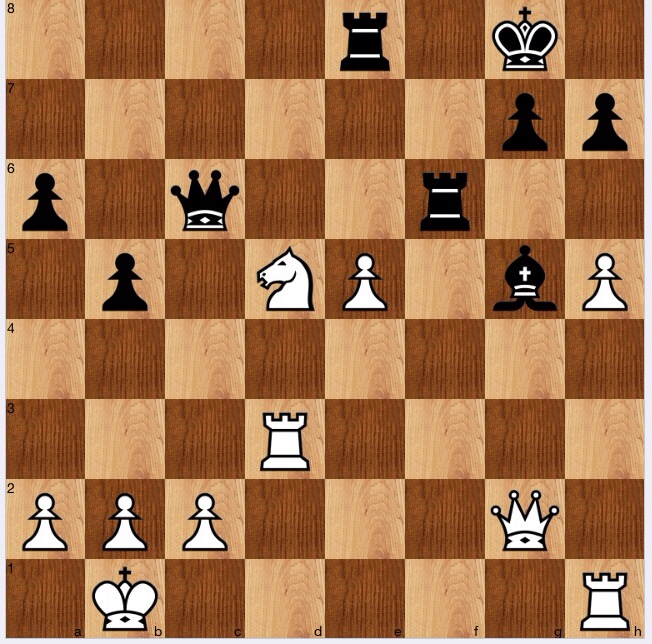
To possibly extend the LPDO concept too far, in the endgame, the a6 pawn is LPDO, biffed by Rd6; when on a5, it is still LPDO, biffed by Ra6, and then the g7 pawn becomes LPDO, and, indeed, it drops off.
“Love LPDOs is are all around” as someone might sing.
 allanbeardsworth