White to play and win
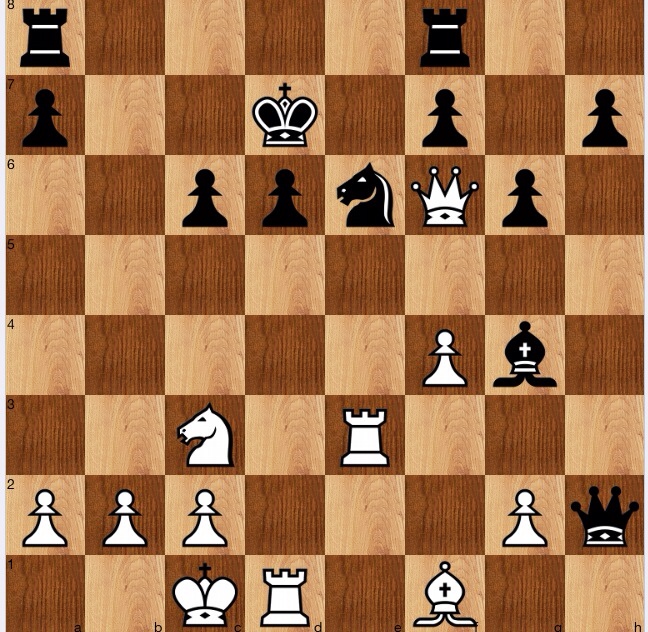
R van Kemenade v V Huang 1968
Solution
This is one of those positions which I can't see to the end in every line, but can enough to know that 1 Rd6+! has to work, or, if it doesn't, white's might have a perpetual bail out.
After 1…Kd6 (other K moves are trite) 2 Rd3+ Kc7 the question is 'how to proceed‘. I felt 3 Qe7+ Kb8 4 Nd5! but Stockfish says 3 Nd5+! is even stronger, and of course the engine is right. 3 Qe7+ still wins! but 3 Nd5+ gives black fewer options.
Alternatively, if 2…Kc5 then 3 Na4+ and mates somehow: I am not sure that it is necessary to look at all lines, only to see that white has three or four pieces in the attack against a sole king.
 Posted with Blogsy
I really believe in the importance of having a principles approach to business. When I became a partner, I wrote my principles down, and they have largely remained unchanged for two decades: and I aim to live by them. I published them on my blog last year.
I saw a review in the FT this week of a book Things a Little Bird Told me, by Biz Stone, one of the founders of Twitter. (With a name like Biz Stone, he had to be either a snow-boarder or dot.com founder, and definitely not an accountant: your name defines your career). The book is not out in the UK yet (i.e. not on Amazon, including not on the kindle store) but the review makes it appeal to me.
I like the six principles which he came up with for Twitter:
1 We don't always know what is going to happen.
2 There are more smart people out there than in here.
3 We will win if we do the right thing for our users.
4 The only deal worth doing is a win-win deal.
5 Our co-workers are smart and they have good intentions,
6 We can build a business, change the world, and have fun.
I don't think a UK tax advisor can change the world, but he can play a useful part in it, and help others; the rest of the principles I think are applicable to most businesses, including my own.
I particularly like number two, which I think is something we forget at our peril.

Black to play and win
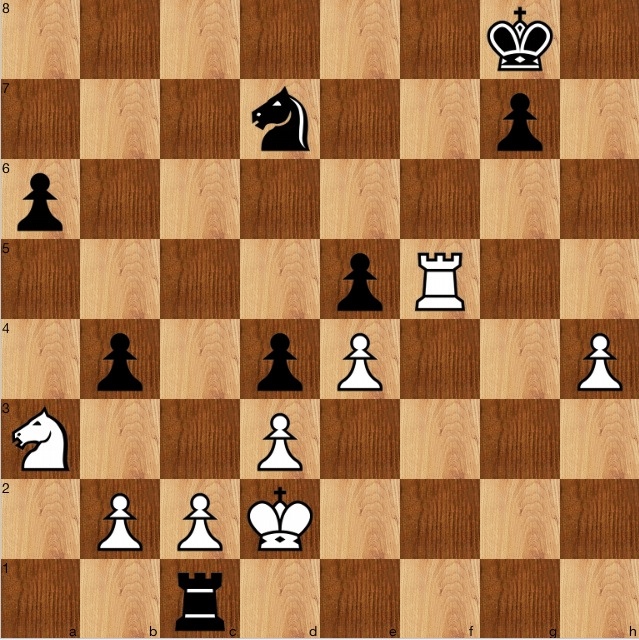
E Pein v ED Hill 1958
Solution
Fairly straightforward, especially since it is a problem (and Reitstein's hint [not repeated here] makes it pretty obvious).
1….ba! 2 Kc1 a2! and the pawn queens.

White to play and win
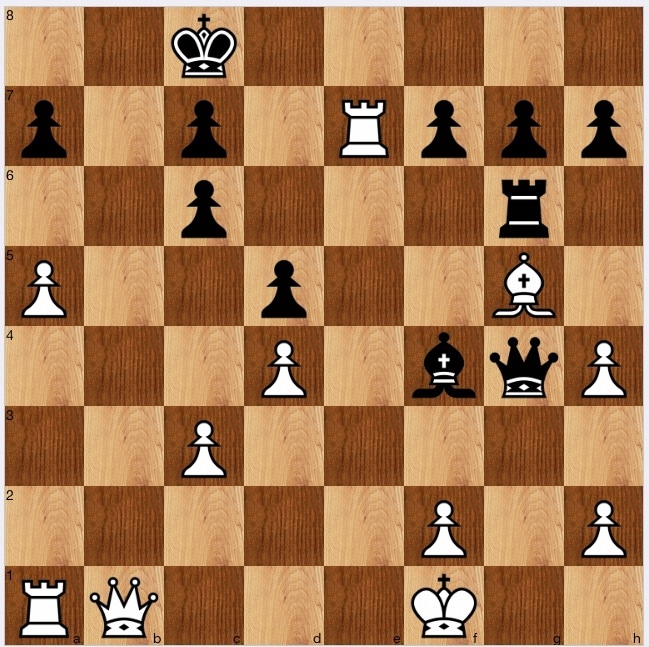
D Isaacson v B Rabinowitz 1955
Solution
Reitstein's hint is that it is a mate in four, so 'just winning' wasn't good enough. The solution is quite pretty, with the rooks combining nicely.
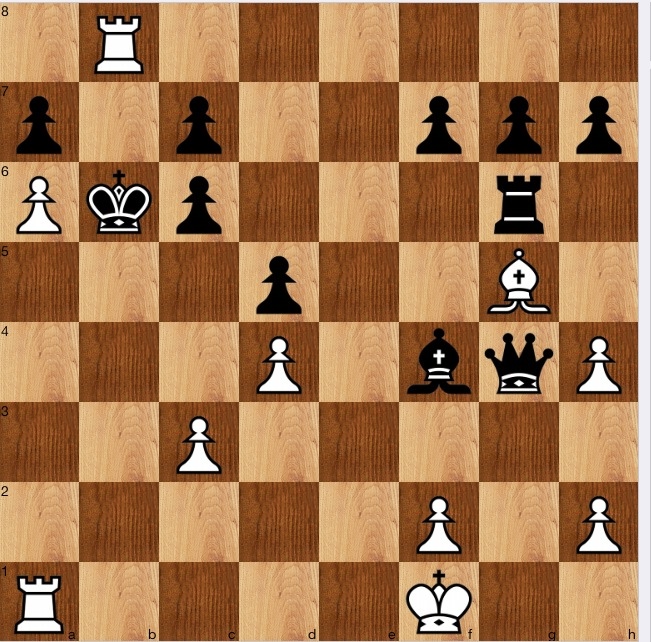
1 Qb8+! Kb8[] 2 Re8+ Kb7 (2…Qc8 3 Rb1+ Ka8 4 Rc8 mate) 3 a6+ Kb6 4 Rb8 mate.
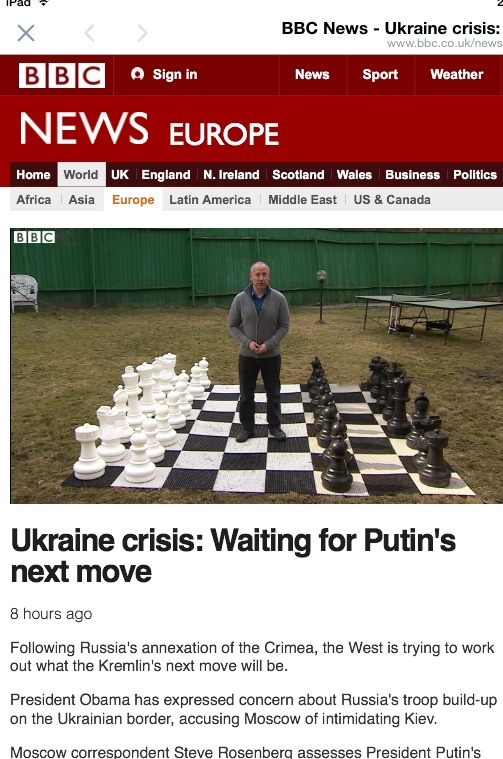
What do normal people see? The BBC using chess as an illustration of the annexation of Crimea and the uncertainty in the Ukraine. Tim Harford tweeted this, saying it was a good exposition, but:
What do I see? Chess board set up incorrectly, with white's right hand corner being black: it should be, has to be, can only be white. As a result, the message from the clip was lost on me.

Some Dilbert cartoons miss me, but most make me chuckle, and this one is a bull's eye.
I am a sucker for reading 'a minute with' 'last word' 'a coffee with…': newspaper articles, typically full page, with a dozen or so questions to some successful business or sports person. Some responses are blatantly self aggrandizing; but normally there is something that can be taken away from such articles (and things more than 'don't like him' or 'he seems nice'.
This blog is written follow if one such article, in which a partner in an accountancy practice was asked, inter alia, Give us a tip which you think is invaluable to anyone in life or business?
His answer was:
Understanding why whoever you are dealing with is doing what they are doing. If you can do this, it will help you to better advise them.
Very true, words, well worth remembering. I had a big and unusual example of this early in my time as a partner. The chairman and main shareholder of a large private company asked my audit partner, who led our relationship, if he could meet me, the new tax partner on his account. I was given a difficult problem,cod how to extract funds tax efficiently, particularly for his brother, a co-shareholder, who had benevolent intentions for the money. Some years back, my predecessor partner had failed to solve the problem, but I took on the challenge, and came up with a workable solution. I met the chairman again, and went through the detail; he focussed on the areas of doubt, and as a result he asked me to go to leading Counsel. I did, and Counsel concurred with my thoughts. I saw him again, and this time he felt that the stamp duty cost was too significant, and could I try to reduce it. I did, or rather my colleagues did, told the client, suggested we move on to implementation, and…was promptly sacked. The chairman was furious with me: he really didn't want his brother frittering away the company's well earned money on a charitable mission.
Based on this, I think the answer to the question should be: Seek to understand, try to understand: we are all different, and whilst this was an extreme example, most people have complexities, irrationalities, and secrets.
White to play and win
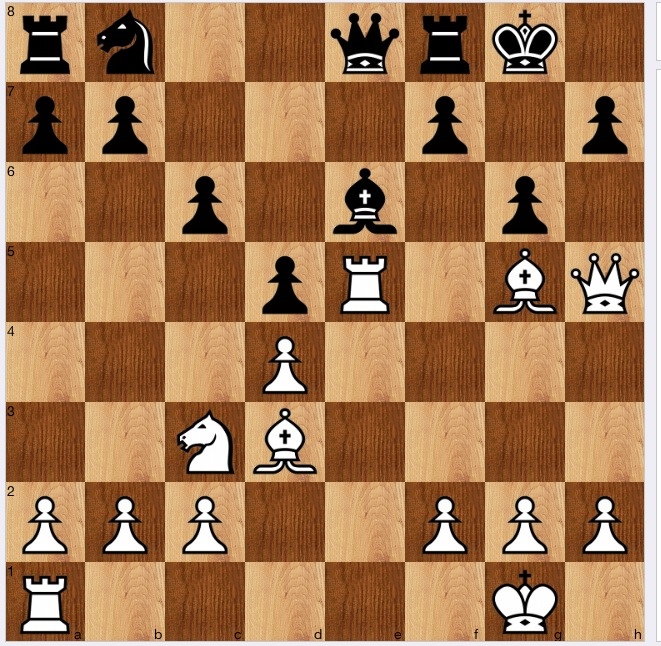
D Morschel v I Low 1963
Solution
After trying 1 Qh7+?, which fails, a change of move order leads to the solution: 1 Bf6!, and the queen can't be captured because of 2 Rg5 mate. If 1…Bf5 (say) 2 Qh6 and mate next move, so 1…Nd7 when 2 Qh7+ Kh7 3 Rh5+ Kg8[] 4 Rh8 mate.
Pretty standard, so not hard.
Black to play and win
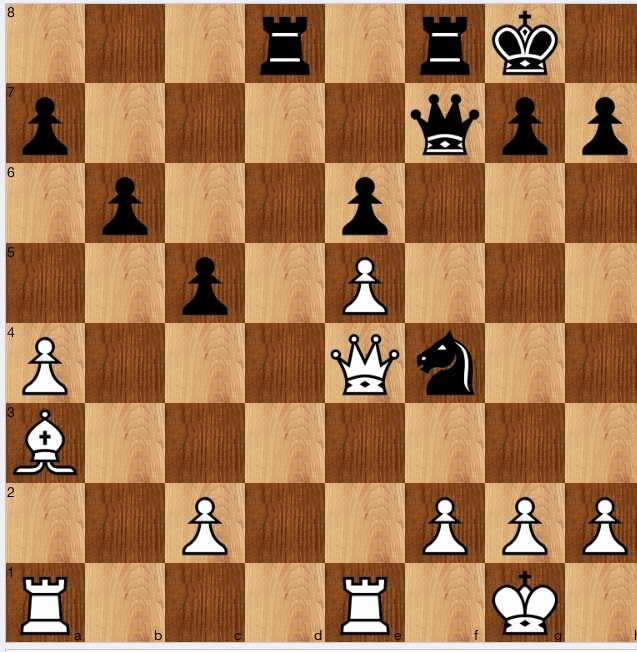
MC Rubery v K O'Sullivan 1979
Solution
Not too hard: 1…Nh3+ is a fairly obvious try, when not capturing loses trivially, but 2 gh Qf2+ 3 Kh1 Rd2 and mate follows.
White to play and win
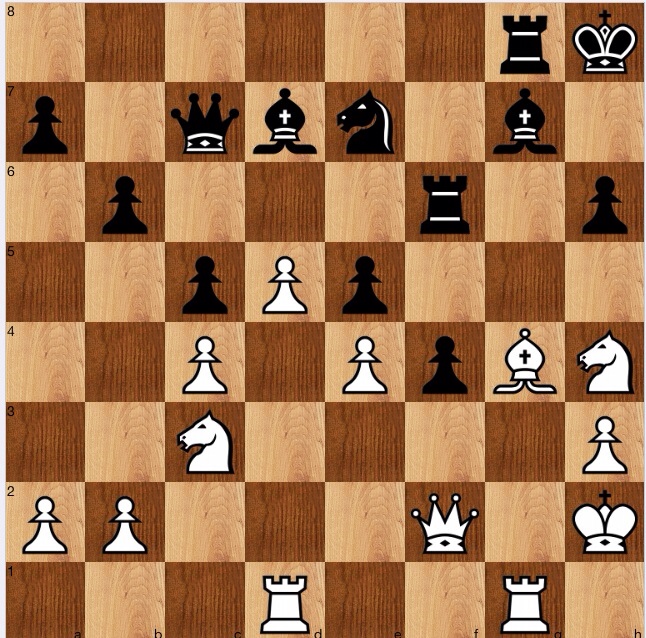
L Wilken v K Dreyer 1955
Solution
Again, my Purdy reading helped here, solving this one instantly.
If I had to pick one piece of advice Purdy gave beyond all which for me is memorable, was his advice to always look out for two pieces on the same rank separated by one file: here, the Qc7 and Ne7: potassium cyanide he called it, especially as here where there is a pawn on the file in between, as here, on d5.
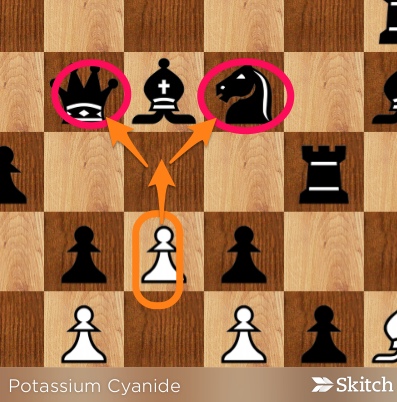
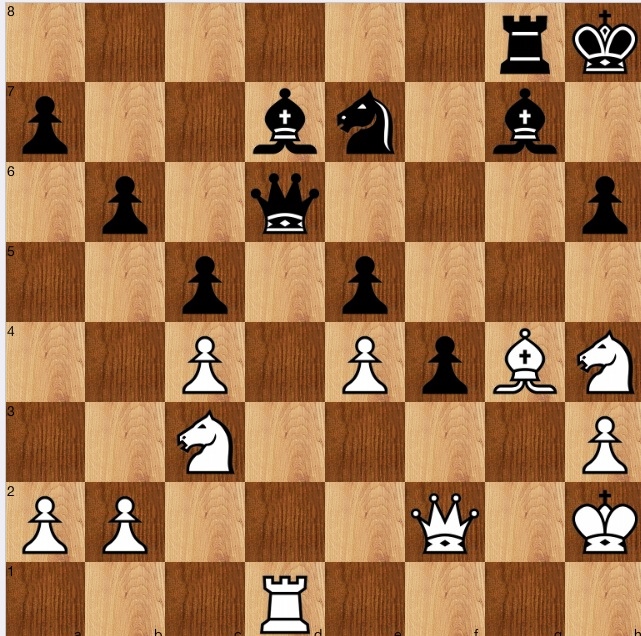
So, 1 d6! Rd6[] 2 Rd6 Qd6[] 3 Rd1 skewering the Q and B, so the Bd7 drops off, 1-0.
 allanbeardsworth