White to play and win
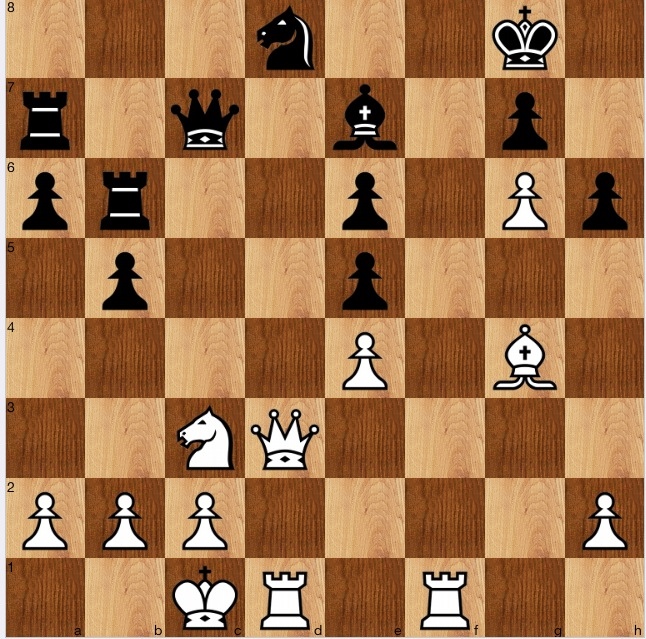
J Tsalicolgou v RF Griffiths 1975
Solution
As a teenager in the 1970s I devoured the few chess books that were available to me at the time. One of which was David Levy's Sacrifices in the Sicilian:
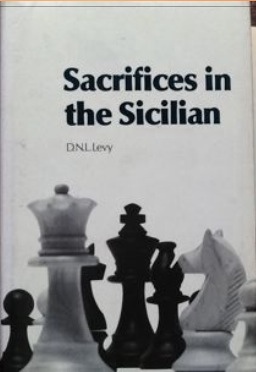
I haven't checked, but think it is true to say that I never played the Open Sicilian with white; or, if I did, I never played any of the miscellancy of sacrifices David taught me: Bb5!, Nb5!, Nf5! or Nd5! (I did though as black play Rc3!).
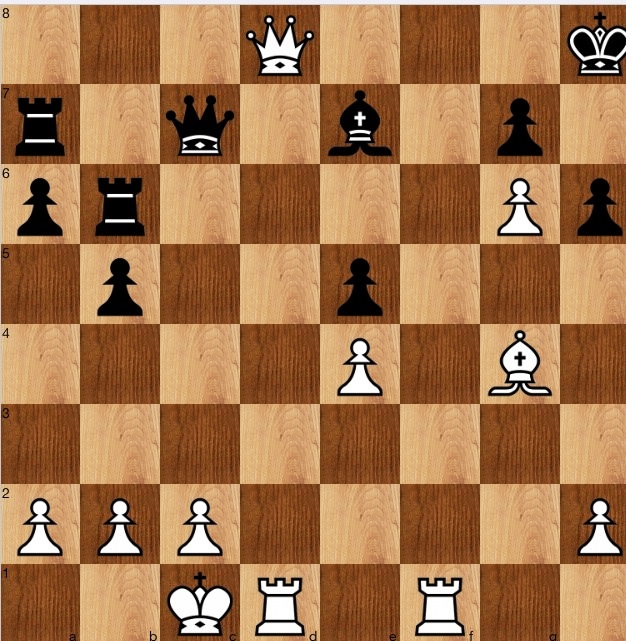
Forty years on, this puzzle, which could easily have arisen from an Open Sicilian- in fact, I would lay good odds that it did. So, 1 Nd5!! and it is game over. Black has two defences. Moving the queen, when 2 Ne7+ and Qd8 mate, and 1….ed 2 Qd5+ Kh8[] 3 Qd8+! mating: 3…Qd8 4 Rd8+ Bd8[] 5 Rf8 mate.
Thank you, Sacrifices in the Sicilian.
 Posted with Blogsy
Risk: blogging about a Kramnik game before it has finished.
However, with twenty four moves having been played, I don't like Kramnik's position today, against Andreikin. He seems to have no compensation for the pawn: in fact, to quote Yasser Seirawan, black both has a pawn and the compensation.
The critical moment seems to be the position below.
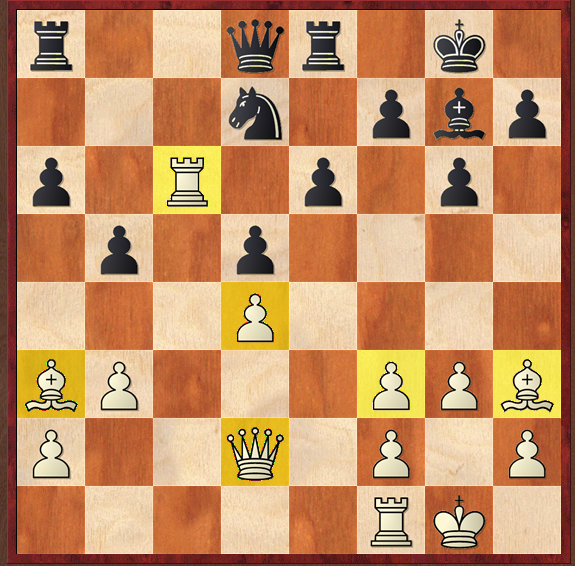
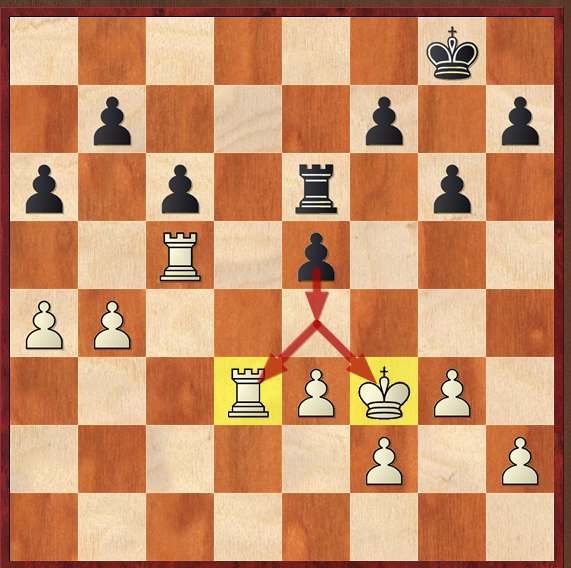
I have highlighted in yellow the LPDOs. White played 17 Rfc1 which is either a sacrifice or an oversight, since 17…Qf6 hits two of the LPDOs.
An oversight, I suspect?!
Yesterday I took the day off work, to drive for a total of about seven hours (longer on the way back, due to a series of accidents on the motorway) to pick my elder daughter's things up from Durham University. The astute, eagle eyed reader, will note that I didn't say 'to pick my daughter and her things up…said daughter and her friends departed, a nanosecond after my car was loaded, for the ferry to Amsterdam. Note to readers who are pregnant, or with babies, young or pre-Uni children: this, too, will happen to you).
Not that I minded. The journey over was a pleasure, weather was glorious, and through Instacast I had plenty of things to listen to. I also set my travel times to enable me to get to somewhere near Durham (I was under order from Alice to be flexible about arrival times at college, since she was busy with lectures and packing, and parking on the North Bailey was time restricted) so I found a café with wifi and got an hour or so's work in. No I didn't, I watched the key couple of hours of round 7 of the Candidates tournament in Khanty-Mansitsk.
Note to Chessbase: on a future upgrade of the otherwise excellent Playchess iOS app, please can we have the facility to view say four games at once, or at least two games. Round 7 was particularly good, in what so far has been an excellent tournament of fighting chess. I loved Aronian's smooth win over Karjakin (and loved that he won too) and hadn't the foggiest as to who was winning in Kramnik v Mamedyarov.
This blog, though is about a move from an earlier round which caught my eye: a little move by Topalov (who got crunched yesterday, quickly and badly, by Andreikin).
Comsider all biffs, LPDO and Potassium Cyanide
(Alas, as happens on occasion, and I can't correct it, the formatting has gone awry: sometimes this happens with the app I use, Blogsy: it creates endless false formatting. Fortunately this occurrence is very rare)
I wonder if Topalov has read CJS Purdy? Probably not, and of course he has no need to, such instructional writers are far beneath the elite. But the following, what I thought was a quite dull position, in fact sparkled.
Black to play: what would you play?
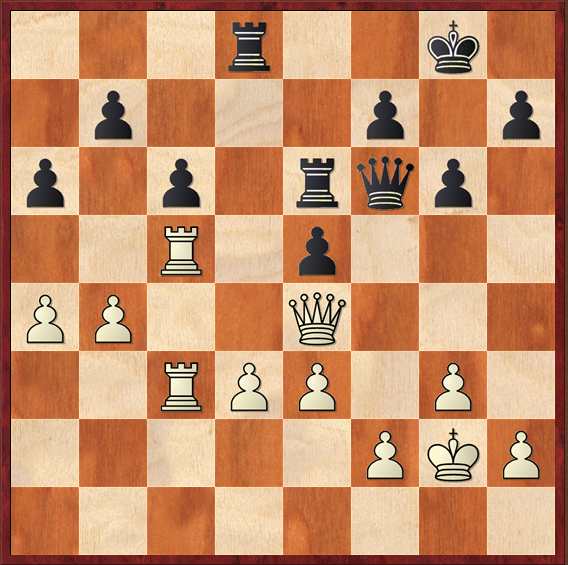
White's last move was a3-a4.
I had watched this game on and off live, though it wasn't the most interesting game of the day (is Karjakin modelling his style on Leko?) and I thought we were in for a standard minority attack, which was either nothing, if Topalov could defend, however painfully, or would result in say a rook plus four vs rook plus three ending: so, dull, or should I say technical.
I never imagined for one instance Topalov's move in the above position. Shame on me, in my quest to be a Purdy player.
Consider all biffs
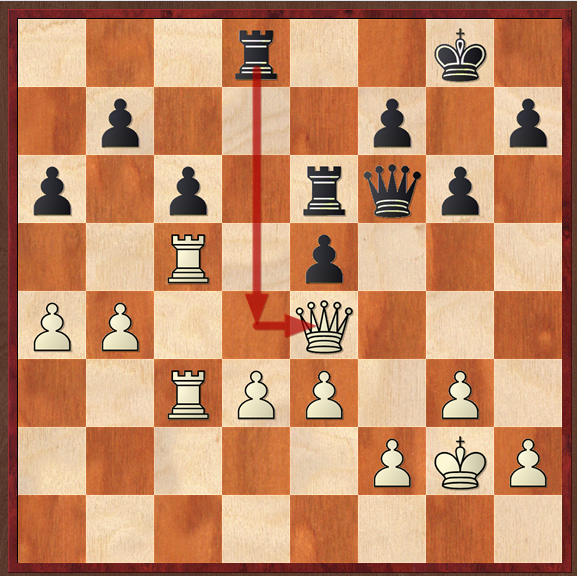
Topalov played 1…Rd4!! (exclams for imagination) and as soon as I saw it, I (a) understood why (b) was annoyed with myself. Karjakin took the rook, so 2 ed ed and then chose to create a minor imbalance, 3 Qe6, rather than simplify into a rook and pawn ending.
Instead, if white had played the much weaker 2 Qf3, two motifs come into play. The major one is again consider all biffs, since 1…Rd4! not only biffs the Qe4, but also biffs the LPDO b4 (note to myself: I would never have noticed that a3-a4 created a LPDO on b4).

Potassium cyanide
There is also a potassium cyanide motif here in this position. Not that it is a particularly good example, but (after 1..Rd4 2 Qf3? Qf3+ 3 Kf3 Rd3 (Rb4 is better) when after 4 Rd3 e4+ forks the rook and king: here, though, it only leads to equality.
For those interested, the game file is attached. http://www.viewchess.com/cbreader/2014/3/22/Game403454812.html
White to play and win
Reitstein's hint: white found a pretty move to force the issue in this position. What did he play?
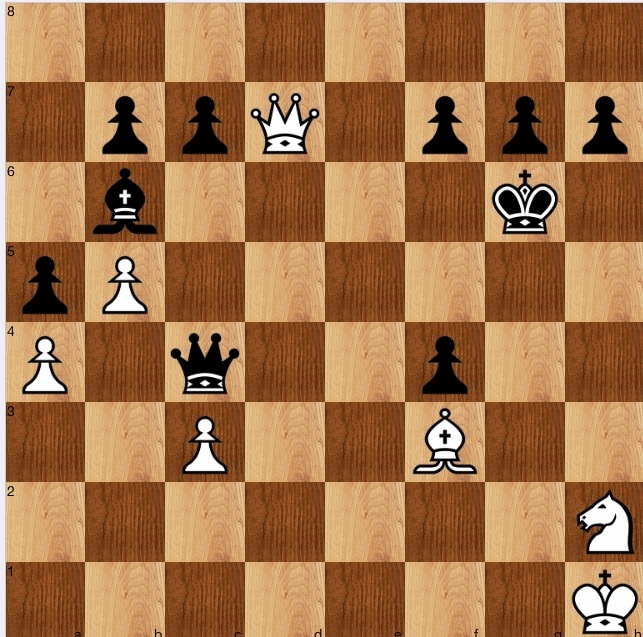
PNJ Smit v J Wolpert 1964
Solution
Alas, if, like me, you followed the hint, you would have been misled, since the problem is cooked.
First, the correction solution is 1 Bd5!, the obvious move which in a game I would play quickly. All I would need to check is that black has no checks (he doesn't, the Nh2 protects f1) and a cursory look at 1…Qc3 2 Qf7, seeing that if black doesn't move Kg5 then his f4 pawn drops off, and, if he does, Nf3+ comes next. And Stockfish says white is then significantly better, as seems fairly clear.
However, influenced by the hint, I saw 1 Bh5+!?, exclam since it is flashy (but Purdy's consider all biffs means it would be found), question mark because it throws away the advantage. I will come to why in a moment, but how it is meant to work is:
1…Kh5? (the move played in the game) 2 Qf5+ Kh6 (2…Kh4 3 Qg4 mate) 3 Ng4 mate: simple enough;
1…Kh6 2 Qh3! (I was pleased to find this move)
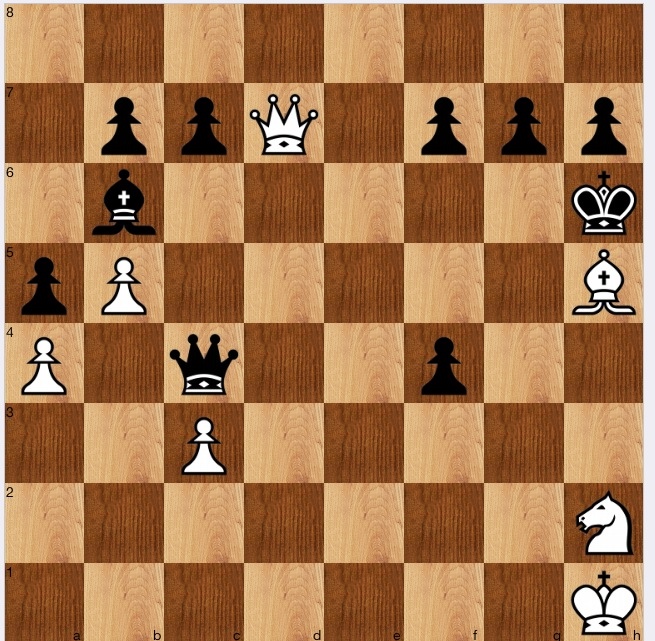
The pin after 2 Qh3 is horrible. 2…Kg5 3 Nf3+ Kf6 4 Qh4+ Ke6
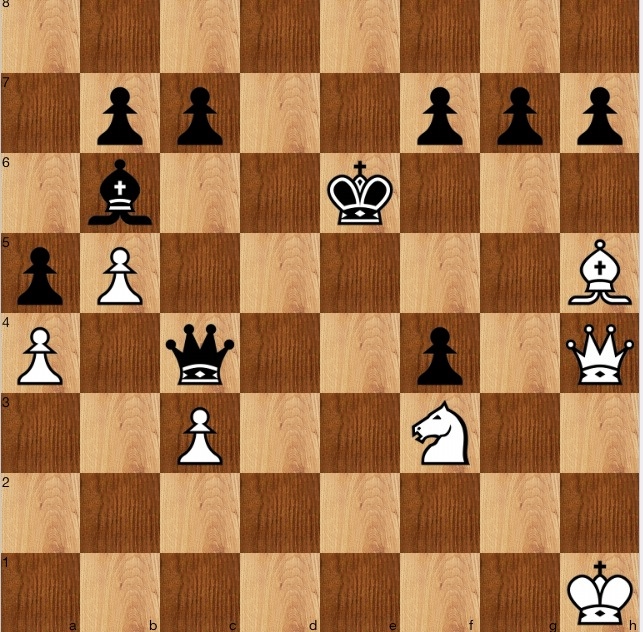
5 Bf7+ and black can only choose to lose his queen by either the bishop skewer or knight fork on e5.
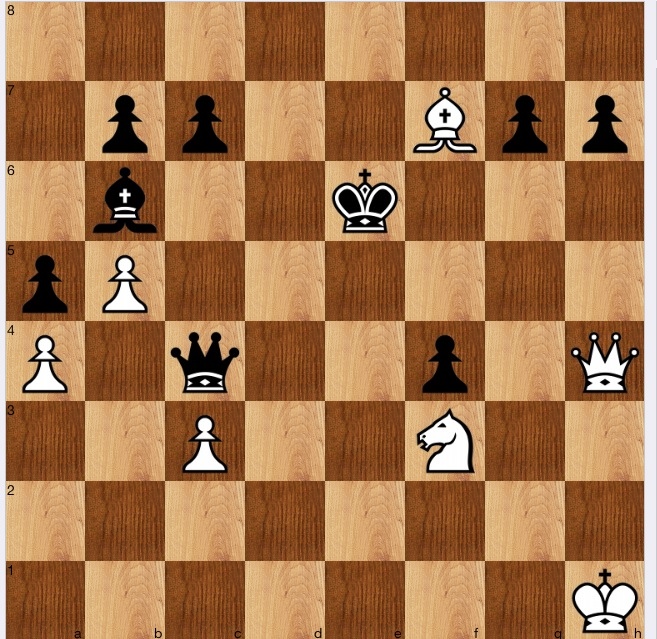
I was pleased to see all this line, though it is not too hard, when you notice in your initial appraisal that the Qc4 is LPDO and that on that square it is in checking distance of the knight when on f3- so g6 and f7 are mined squares for the king, once the N is on f3.
1..Kg5 2 Nf3+ Kf6 (2…Kh6 3 Qh3! transposes) 3 Qd8+ Ke6[] and the same skewer 4 Bf7+! again decides.
But, why encourage the Nh2 onto f3 where it is clearly improved, which is what 1..Kg5? does. So, 1…Kf6! and the game is level, or, rather, any result is possible. Note that the otherwise pretty 2 Bf7 (which plans 2…Qf7 3 Ng4+ Kg6 4 Ne5+ 1-0) loses to 1…Qe4+.
White's best after 1…Kf6! is the tricky 2 Qd8+! when only 2…Kf5![] holds the balance. Both alternatives lose, both in pretty ways, showing the great geometry of the chess board and the importance of LPDOs.
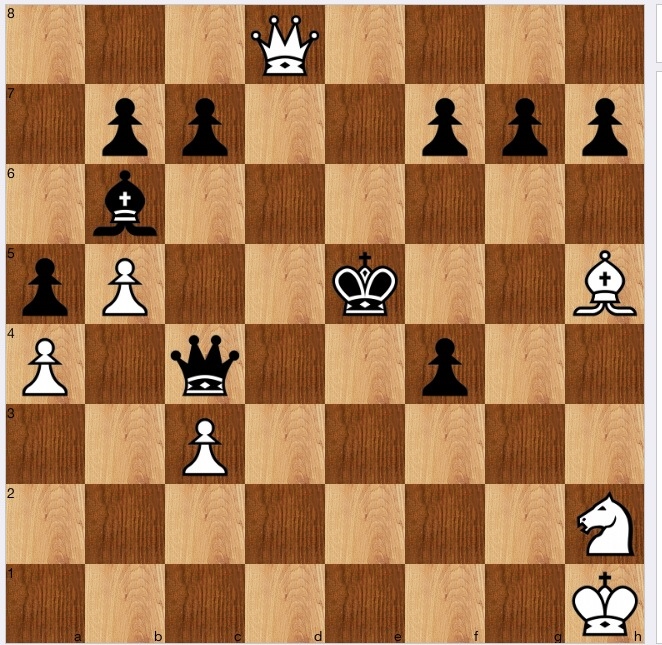
First, 2..Ke5, when 3 Nf3+ Kf5[] 4 Bg4+!! Kg4[] 5 Ne5+ forking the king and queen in a different way.
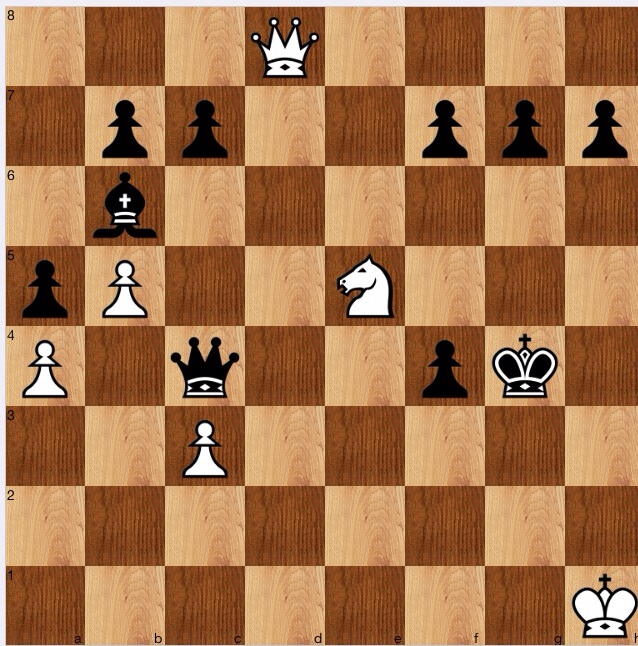
So, 2…Ke6 3 Bg4+ f5[] 4 Qg8+ skewering the king and queen in a different way.
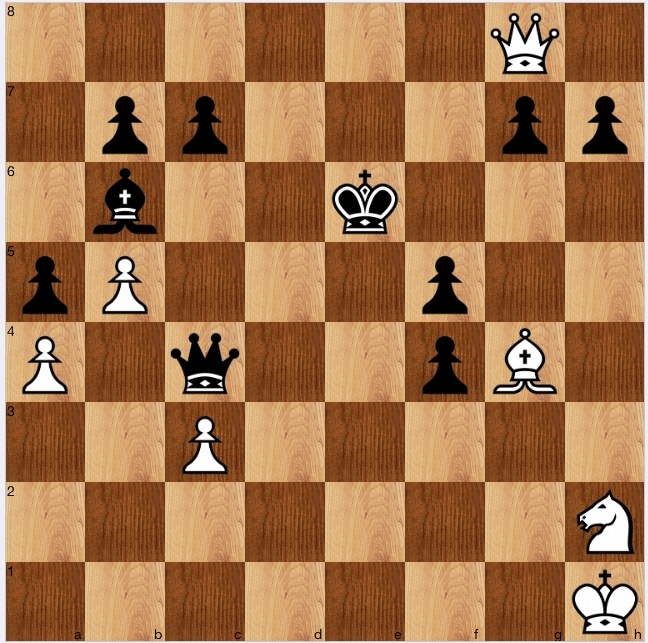
When such things work, chess is certainly a magical game.
Reitstein's solution is too brief. He gives the game continuation and says that if the bishop isn't taken, black loses quickly. By so doing, some very pretty lines are missed, and, an incorrect solution is given. 1 Bh5+ draws with best play, whilst white is better after the simple 1 Bd5.
White to play and win
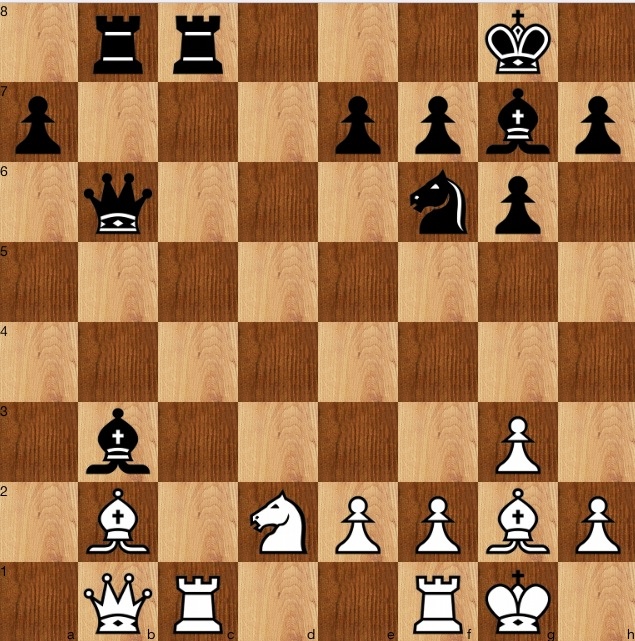
K Dreyer v J van Dyk 1958
Solution
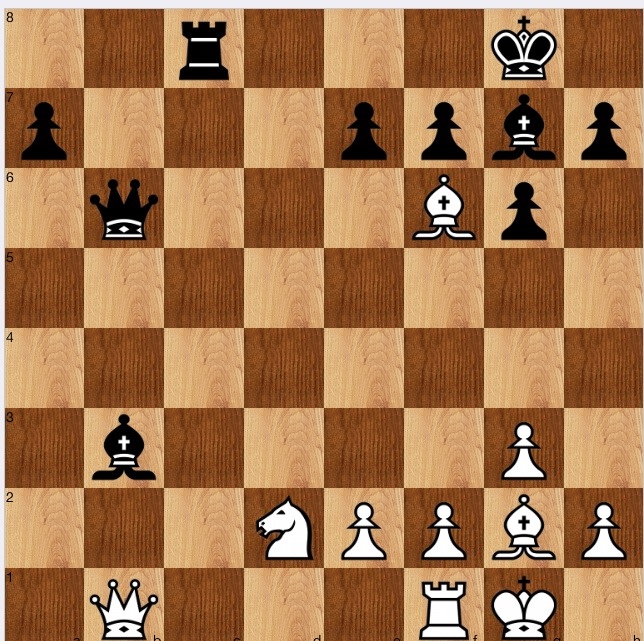
In the game, Reitstein says that Dreyer played Be5, winning the exchange, but eventually losing the game. Black's pair of bishops and his passer proved too strong. I can well see how Dreyer would have played the natural biff Be5- I can imagine that the problem position was after a sacrifice of a queen side pawn in return for the exchange. However, as a problem, and also any Purdy player would examine all biffs, noting that the Bb3 is fairly loose, particularly with the jump biff Qb1-Qb3: these thoughts lead to 1 Rc8+ Rc8[] 2 Bf6 and the Bb3 falls off.
White to play and win
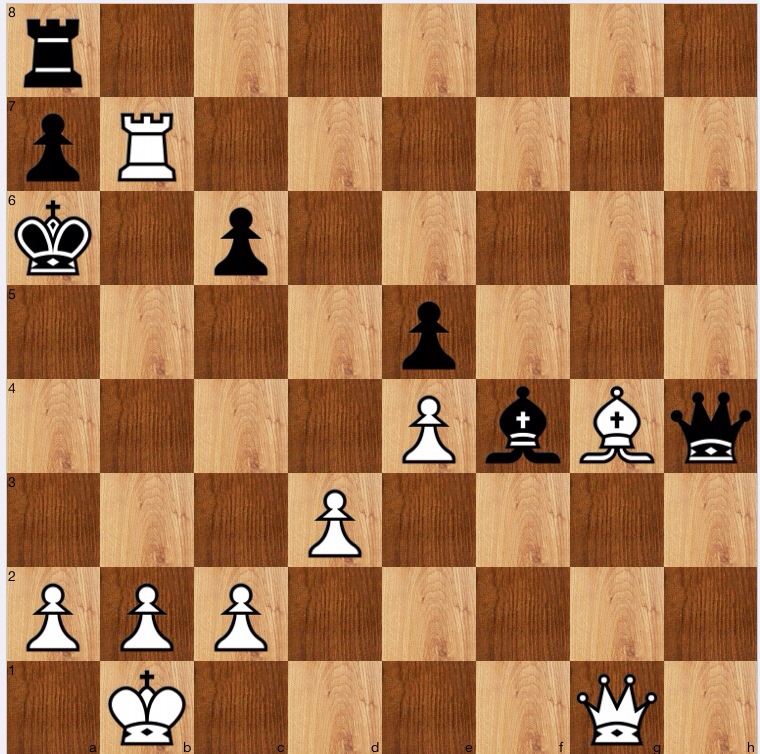
D Friedgood v S Rubin 1961
Solution
An easy one today, or at least I found the solution immediately. I saw 1 Bc8! instantly, and rationalised it afterwards, in Move First, Think Later, style.
(An excellent thought provoking book)

The Rb7 and Qg1 are both biffing a7, so the Ra8 is tied to its defence. The Rb7 is LPDO so either must move or be defended, so Bc8 comes to mind. The bishop can't be taken since the rook is tied, so next move there will be a horrible discovery. 1-0
Black to play and win

IM Zsivko Bratanov v Allan Beardsworth, ICC, 3 min blitz 27/2/14
Solution
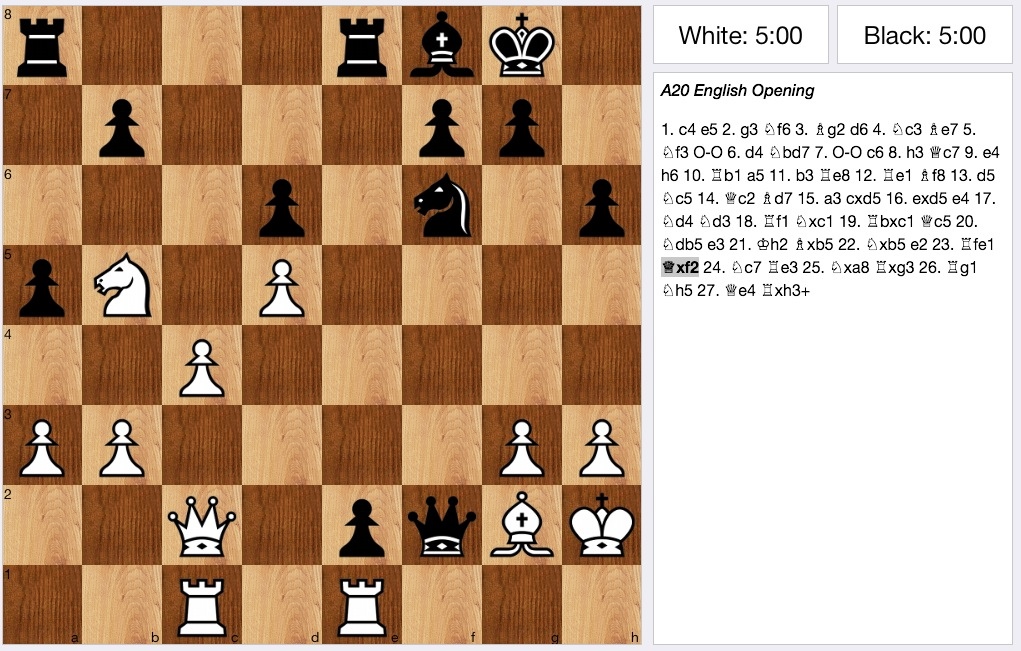
White, a Bulgarian IM, has just played 1 Qc2-e4, but 1…Rh3+! is game over: 2 Kh3[] Qg3 mate. (If instead white had played 1. Kh1, then e1(Q) decides: Qe4 prevents this move but permits a nice deflecting sacrifice.
Not too hard, and I am pleased to say I saw it several moves earlier, when sacrificing the Ra8, playing the manoeuvre Nf6-h5 in preparation.
White to play and win
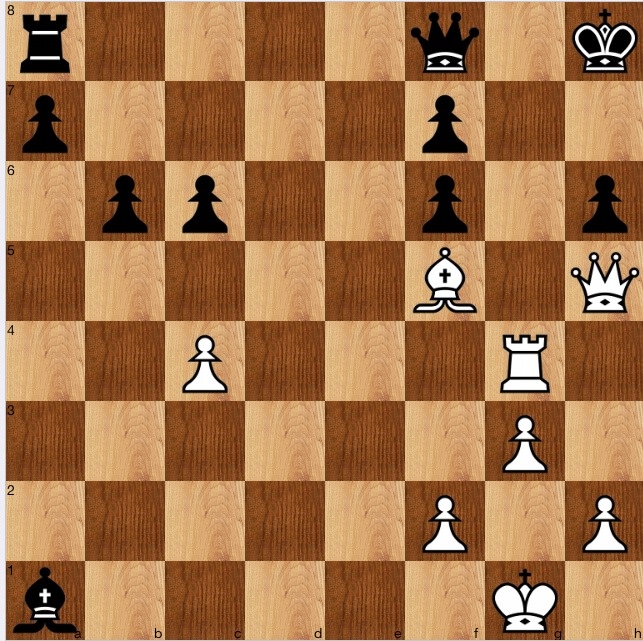
CCA de Villiers v S Hamman 1980
Solution
A rest day, today. The immediate obvious plan is to set up a Q+B battery on the b1-h7 diagonal, then playing Qh7mate. So the only question is where to retreat the bishop to, so that the queen can come in front, to f5.
Since Be4 can be biffed (Re8 and exchange sac next move), as can Bd3, as can Bb1 (Rd8 Qf5 Rd1) the clearly best move is 1 Bc2, hiding the bishop away from the nasty rook. Black is then helpless against the battery.
White to play and win

J Tsalicolgou v WS Mackie 1973
Solution
Intuitively, the Qd3-Kg6 is 'obvious': if it weren't obvious, then Purdy's jump-check concept would help a player spot it. The question is, how to exploit it?
I looked first at 1 e5, but, try as I might, I couldn't make it work. I then looked at all the N moves, getting the knight out of the way, eventually (but not very quickly, alas) landing on 1 Nd6! As soon as I saw it, I knew that it won. Black's best is to lose the exchange and block e5, but in the game he played 1…cd 2 e5 f5 3 e6 and black is mated or suffers ruinous loss: 3…Re6 4 Qf5 mate, for instance.

I am allowed, I hope, to occasionally not blog about chess, maths, tax, science, anything sensible.
 allanbeardsworth