Last night, Jane and I watched the first episode of the new BBC1 series, the White Queen. We really enjoyed it, and whilst I know it isn't (and doesn't claim to be) historically accurate, I look forward to gaining some understanding of the Wars of the Roses; I have already started my googling and Wikipedia searches.
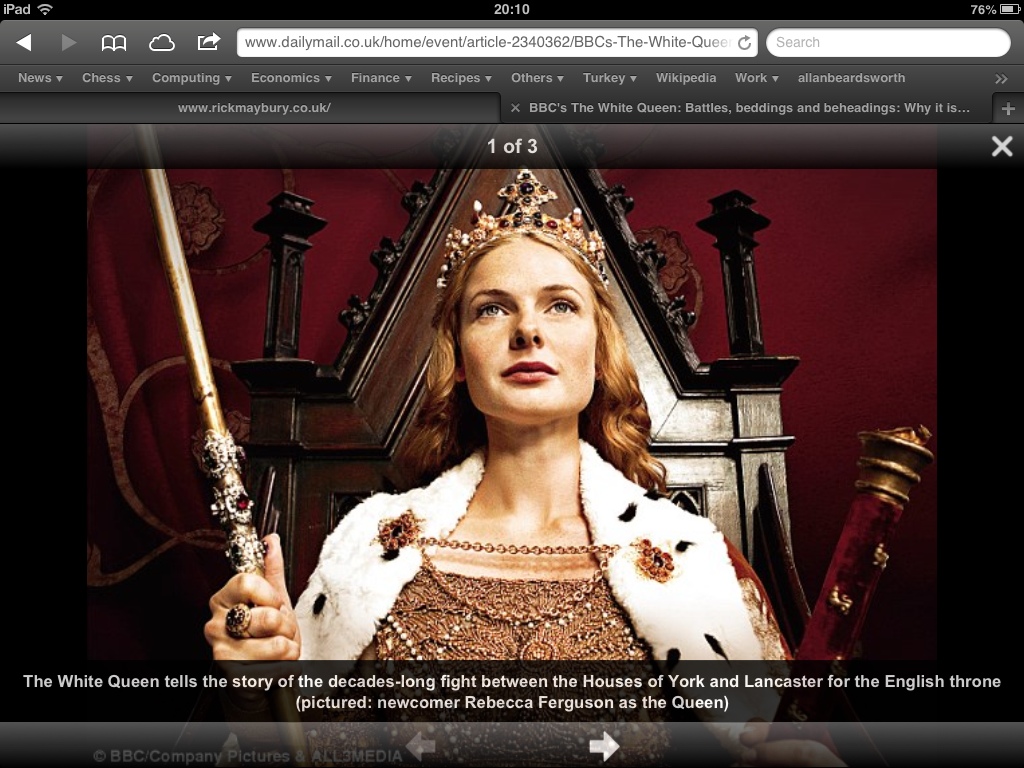
Before I come to my main point, on the sex chess scenes, a diversion. I note that the programme was filmed in Belgium, apparently because the architecture there is more unscathed, and also because of the tax breaks which are said to be there, and (according to the article) weren't available in the UK. Both reasons sound somewhat implausible to me.
Second, angry viewers have apparently vented their spleens because of several historical inaccuracies in the episode: bricks; zips; and sheer white clothes: http://www.telegraph.co.uk/culture/tvandradio/bbc/10125616/The-White-Queen-brings-zips-bricks-and-manicures-to-the-15th-century.html
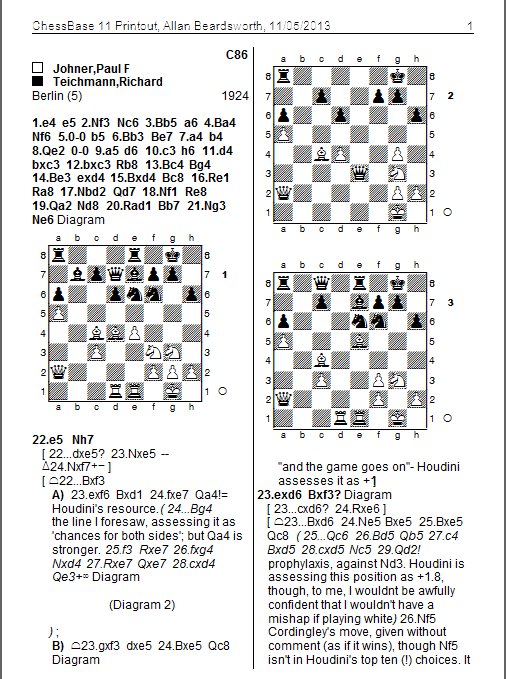
My interest was heightened when Elizabeth Grey, the future 'white queen' asks whether any of her family want to play chess with her. Alas, the production is also failing in its depiction of chess:
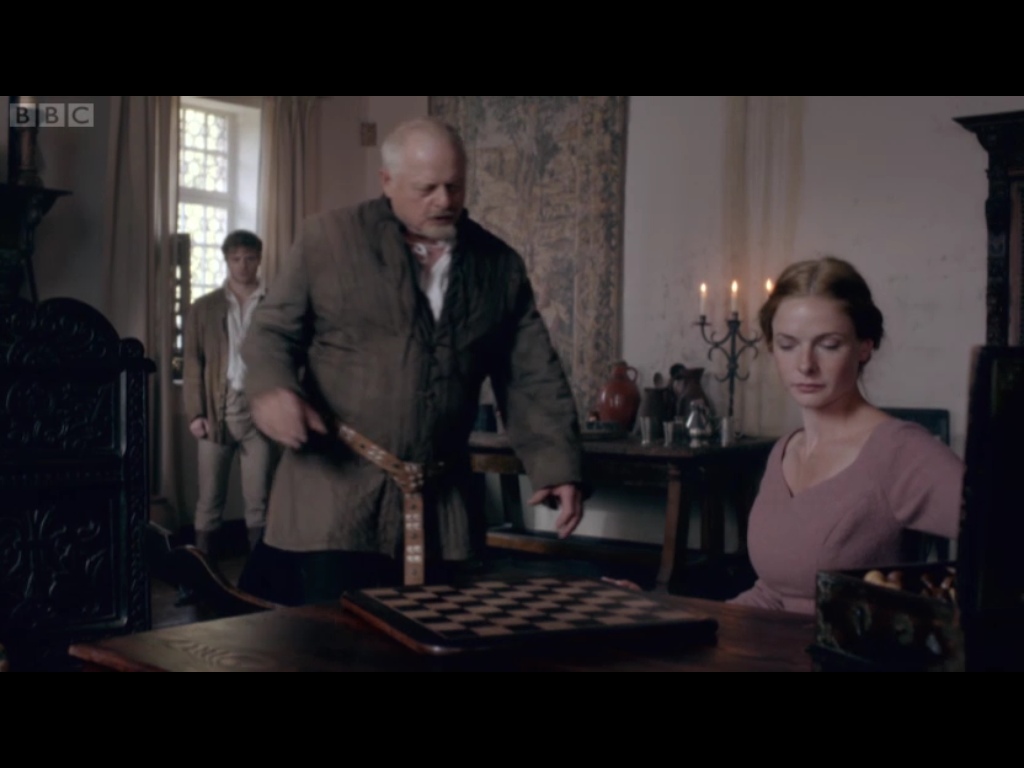
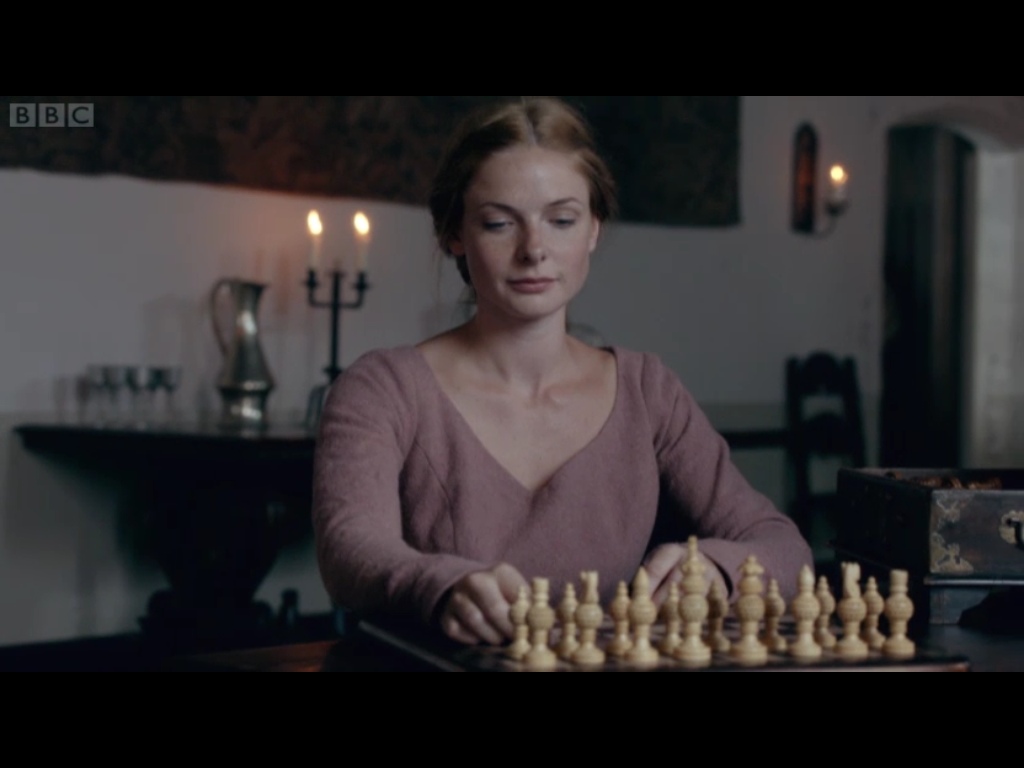
Using the above pictures, and also another which is on fleetingly and I couldn't capture, in which she places the first piece, a white pawn, on h2, Elizabeth has set the prices up wrongly, with a black square on h1, and also has the king and queen in the wrong places.
I have also done a bit of research on the board and pieces; but more could be done. Certainly, the producers haven't made the crass mistake of using the ubiquitous Staunton pieces which have only been in use since the mid 19th century; the pieces she uses could be of the correct period; I also think it is probably correct that by the 15th century the board was black and white, or at least coloured- rather than plain, as it is to this day e.g. in Chinese Chess. The other thing which mildly interests me is that it was about the very time the drama is set, the second half of the fifteen century, when the power of the queen dramatically changed from her weak one-squared antecedent to the most powerful piece she remains now: quite apposite, given the title of the series.
If Rebecca Ferguson, the Swedish actress [yes, English history filmed in Belgium starring a Swedish actress] wants chess lessons, she can apply to me through this blog.
 Posted with Blogsy
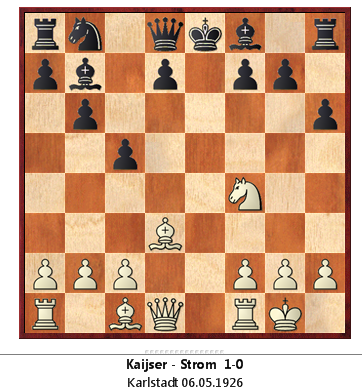
White to play and win
Solution
I enjoyed solving this one. In bullet, blitz and probably classical, I would play 1 Re1+, and hope to make some use of the pin, but knowing full well that if black survives, develops, and advances his d pawn, it is anyone's game.
So, time is of the essence, so I soon saw 2 Ng6. Alas, I couldn't get it to work: I found ways to sacrifice too much to get the black queen, but the end result was 0-1, so I kept looking, until I thought of the maxim 'reverse the order' after which 1 Ng6! brought a smile to my face. It was easy to see the game continuation line, even visualising that after 4 Qh5 white's threats include 5 Bg5+, 5 Qf5 mate, and 5 h4!
A really nice puzzle.
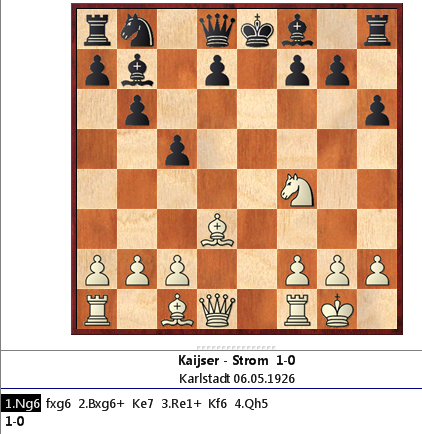
Houdini tells me that whilst 1 Ng6!! is clearly best, both 1 Re1+ (followed by Qg4) and 1 Nh5 are over +2: in both cases, hitting g7.
White to play and win
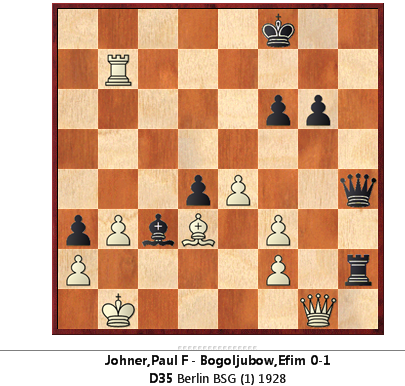
(in the game, white missed the key move, and lost)
Solution
This one made me struggle, and my approach to solving it, which I eventually did, was certainly not Kotovian.
So first, 1 Qg6, but no, 1… Rh1+ and mates. Nor 1 Qg3 (the move played) because, if nothing else, black exchanges, plays Rb2+, and it is curtains. I spent a lot of time looking at 1. Rf7+, 1 Rb8+, hoping that one of these would turn to something, but none did. Even moves like 1 e5 were examined, trying to create surprise mating nets, but no, nothing. And there are no 'sacrifice everything and stalemate' lines.
So, rather than a Kotovian tree of variations, analysed once, in turn, it was more a case of round and round the mulberry bush, try and try again. Then I hit on the winning line which was indeed 1 Qg6! and after 1…Rh1+ 2 Bf1!!, and the king escapes to say c4 or d5, when it is at least safe, and in some lines even takes part in white's revenge mating attack.
A nice puzzle.
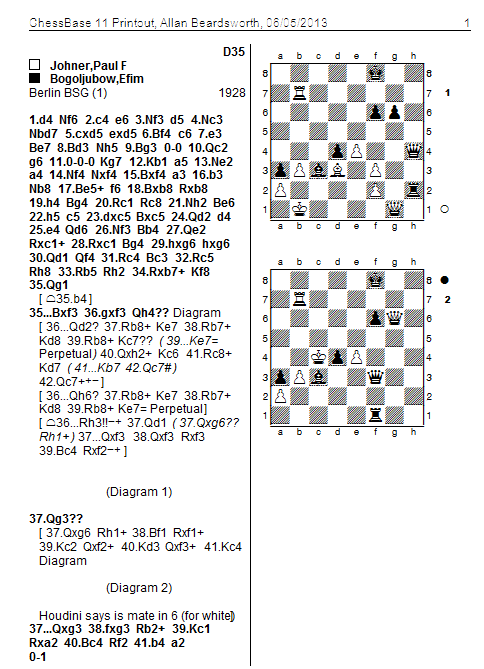
White to play and win (or, not, if Houdini is defending)
(try to find some lines, but Houdini finds some good defensive possibilities)
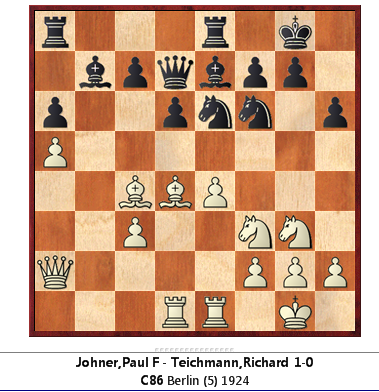
Solution
The problem is cooked, with Teichmann not playing the best defence.
When I attempted the puzzle, I quickly hit on 1 e5!, but more in hope than confidence that it won. It was clear that 1…de? was the worst defence, with murder coming on e6/f7; less clear was whether Nh7 or Bf3 were the better defences: Houdini suggests that 1…Ng4 has some chances, too. I decided that 1…Bf3 was the weaker of the two, wrongly, missing a …Qa4! defence in the line: in fact, 1…Bf3! is black's best defence. Instead, I chose the move played in the game, 1… Nh7, when I felt white was better, but found the lines too uncertain. Houdini shows various better possibilities for black.
@allanbeard: Oxford Union elections descend into row over blackmail, hacking and sexism via @Telegraph http://t.co/Jr7VibrRMV
(Not that I tweet much, but not every day your son gets a by-line in the Telegraph).

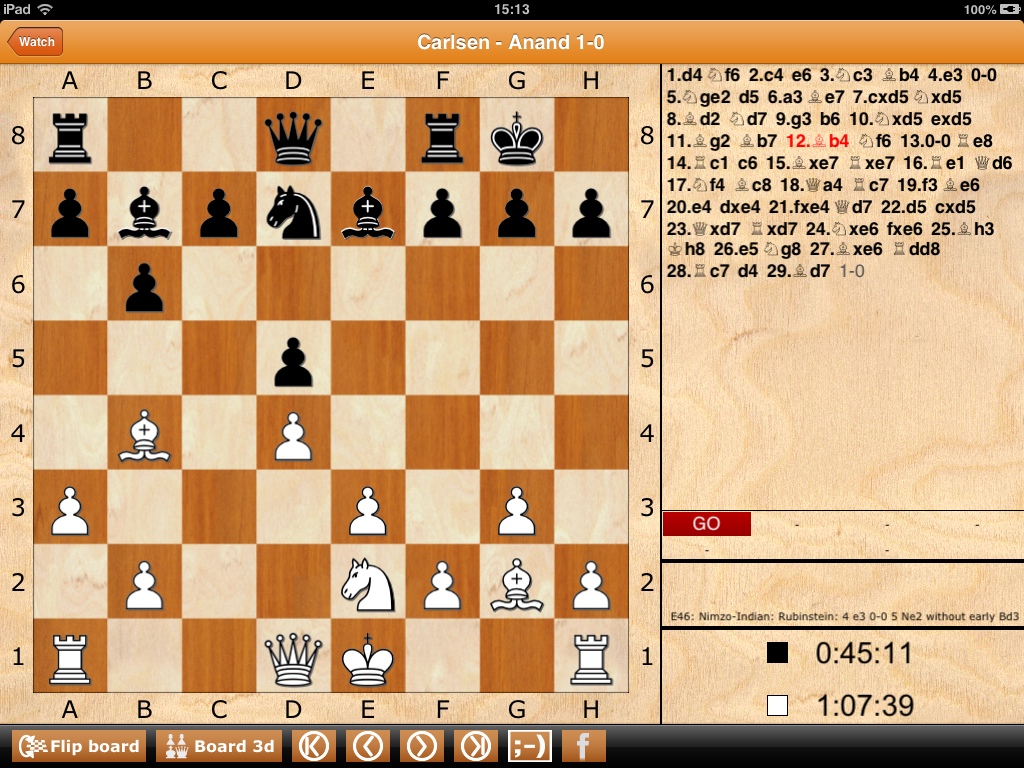
Wow. Today, Magnus has trounced world champion Vishy Anand in 29 moves, in 2 hours. His style is supremely simple, his pieces are placed on good squares and somehow something emerges.
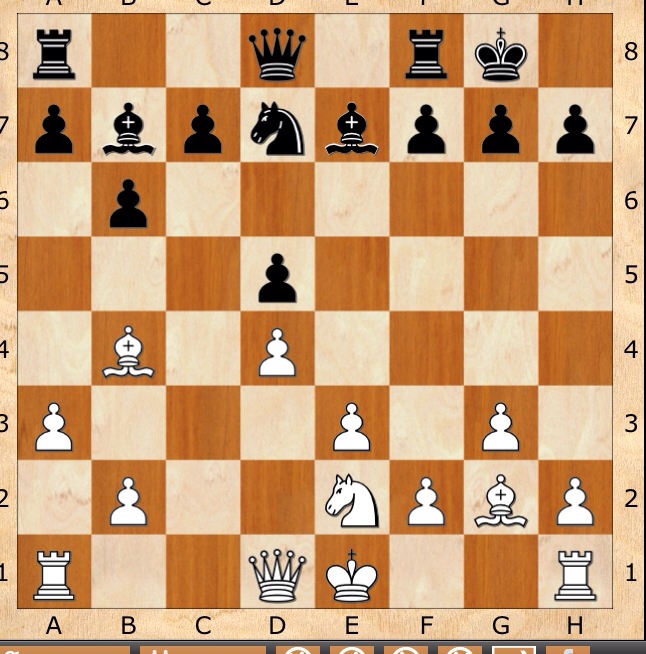
This was the position when I logged on for a minute at lunchtime. ’draw today'. Amused/intrigued by his Bb4, willingly offering to double his pawns; something I would never have done: but then I appreciated that the b4 pawn would not be a weakness, and will advance to b5 and either be exchanged off or cramp down on black.
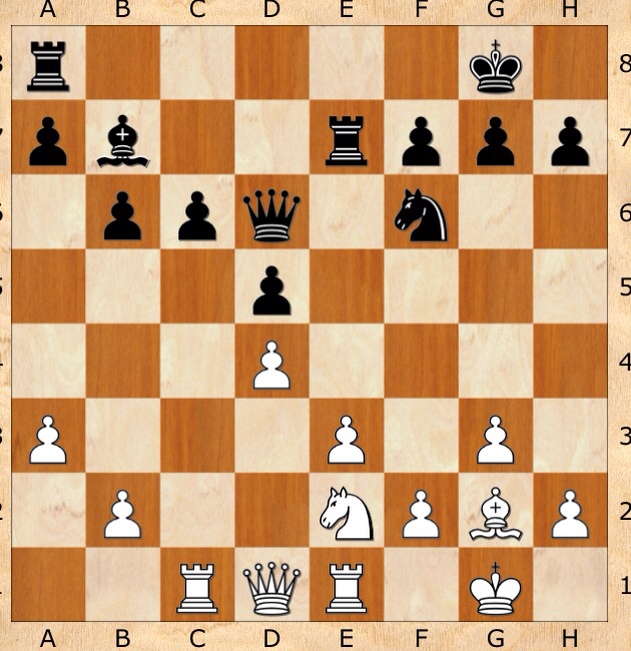
Logged on again: 'draw soon'. I would never have guessed that the e pawn is about to roll forward, nor noted that the Qd6 and Nf6 are in 'potassium cyanide' danger from that pawn. (See my previous logs on Purdy's potassium cyanide term).
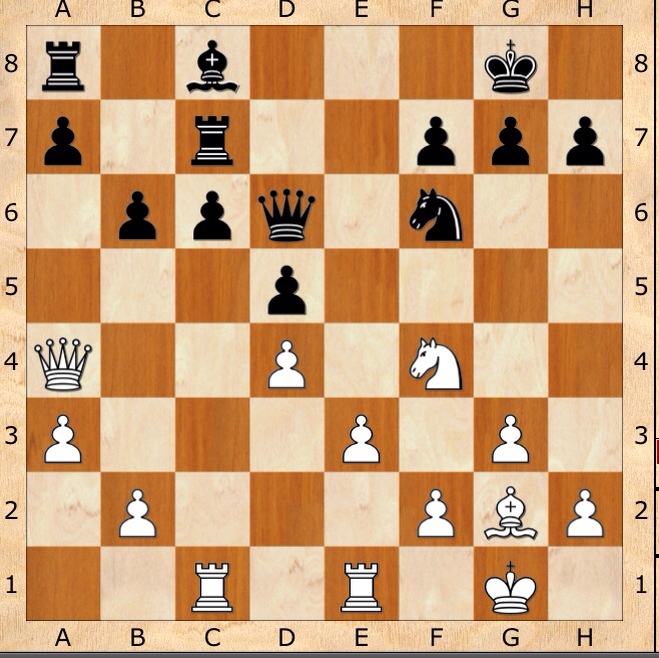
Trouble mounting, perhaps, but as black I wouldn't have appreciated the full extent of the danger. (Cue: the music to Jaws).
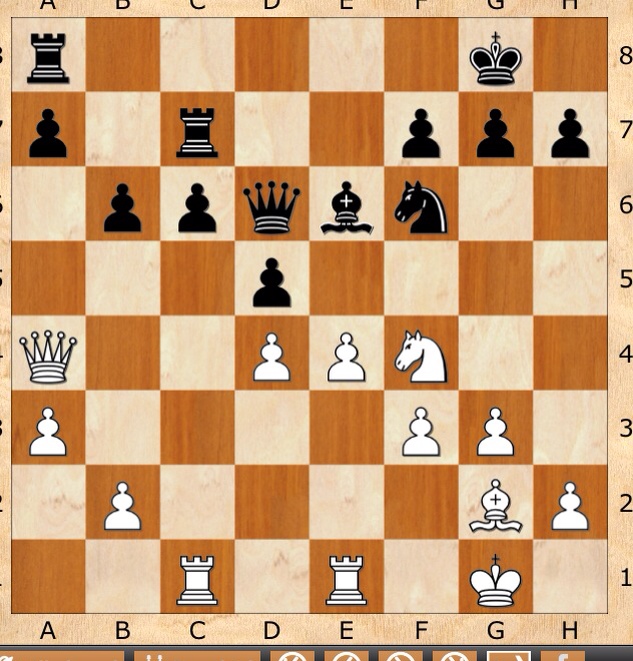
It is now going seriously wrong for black.
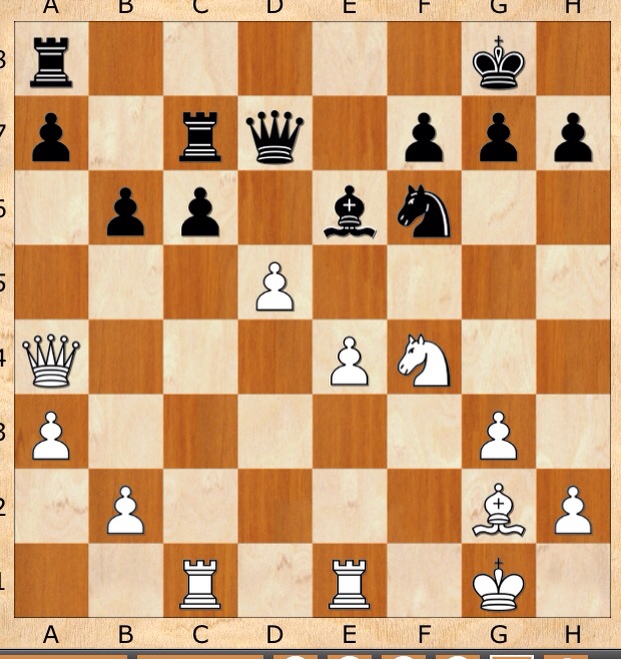
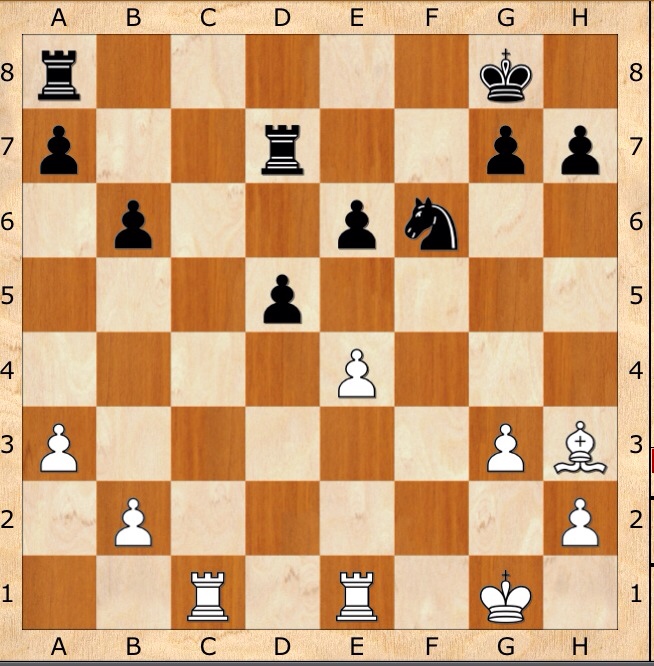
Awesome. The sheer simplicity belies the power; and underpinning it is Magnus's tactical ability: to see his way through the exchanges after d5 and how strong Bg2-h3 is, is beyond me: and, beyond the champion.
PS, at lunchtime, I has assumed that Gelfand-Morozevich would be the 'game of the day', after Moro sacrificed the exchange in a Benoni: when I looked at the position immediately after the sac, I thought 'interesting' 'odd' 'might be sufficient': Boris showed, by playing a few only moves- quickly trebling on the f file, that Moro's plan was in fact just 'bad'. But it took Boris's incisive play to show this.
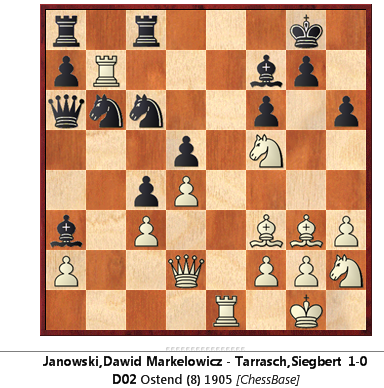
White to play and win
Solution
Again, straightforward. The Rb7 is attacked, and is desperado, so has to inflict maximum damage, and the Nf5 clearly portends trouble. Black's queen is offside, and all that is needed is to appraise how much force white has after 1 Nh6+, 2 Rf7, 3 Qh6. When you see that the remaining rook controls the e file, and moves like Bh5+ are in the air, with obvious defences like 3…Rg8 losing to 4 Bh5+ mating, 3…Rh8 4 Bh5+ Kg8 5 Qg6+ and 6 Qf7 mate, and that black has no prospect of a back rank mate (if nothing else, Nf1 is available), then it is game over.
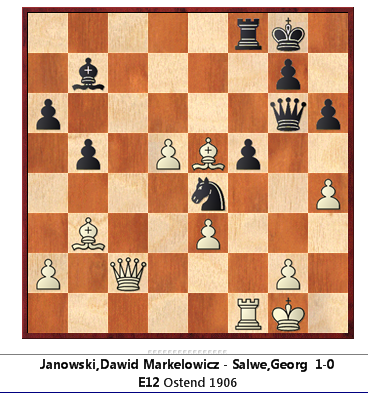
White to play and win
Solution
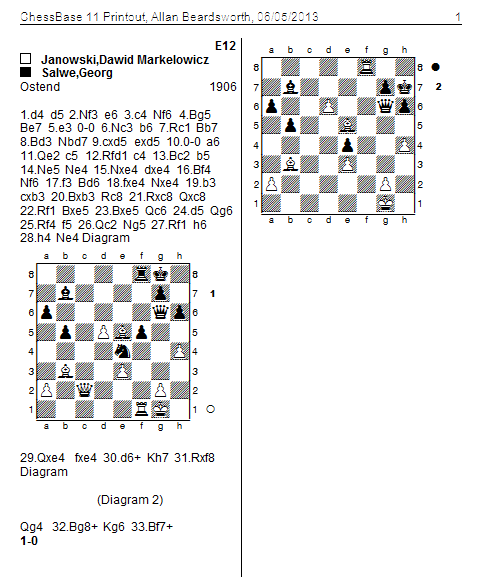
Again, straightforward. The first move, 1 Qe4, is a move you have to consider, with 2 d6+, 3 Rf8 being the forced follow up. The only test is to evaluate the end position, and to check that black can neither win one of the three white pieces, all of which are LPDOs, or give a perpetual. When you realise black can't, then the only task, and not to hard, is to secure and coordinate the pieces, using also mate threats.
A pleasant enough puzzle.
For years, no decades, I have torn out or copied and kept difficult problems from magazines and newspapers. By difficult, I mean problems I couldn't solve at the time: I like to have one or more of these with me for spare moments… I hate to be stuck waiting, stuck somewhere, with nothing to do, and sometimes having a go at these stinkers can be the solace (time waster) that I need. I will blog these on an occasional basis.
Yesterday, I couldn't watch round 3 of the Tal Memorial, firstly because I was out at my firm's family fun day (a roaring success: the weather demons held off, it was a perfect afternoon for everyone) followed by my son arriving back from university, and a family meal for his return, my birthday and Father's Day.
I have not had time to play through the shock-of-day loss by Magnus Carlsen vs Fabiano Caruana (the main shock being he lost in what Chessvibes say is a drawn rook endgame- that's what I want to (try to) study, but Naka's fine victory over Karjakin was the game which caught my eye ( I haven't looked at the others, but am pleased for Vishy too).
This position caught my eye; white to play.
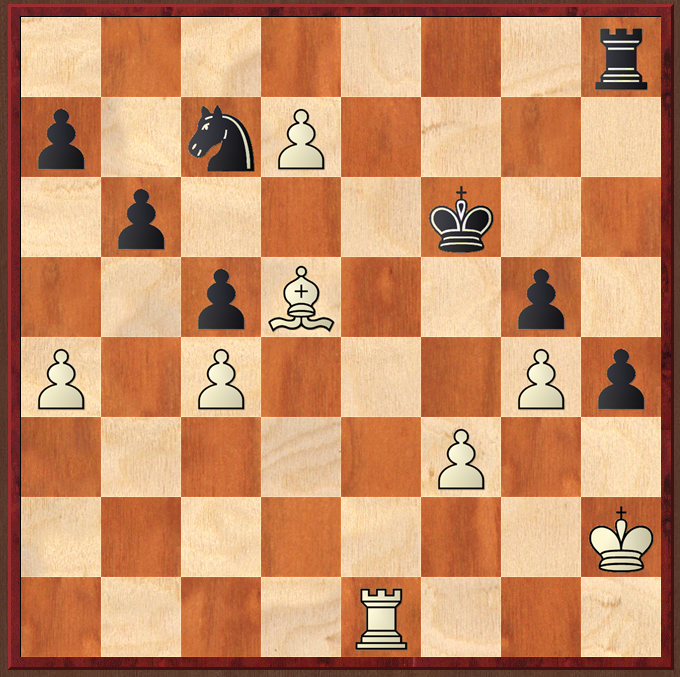
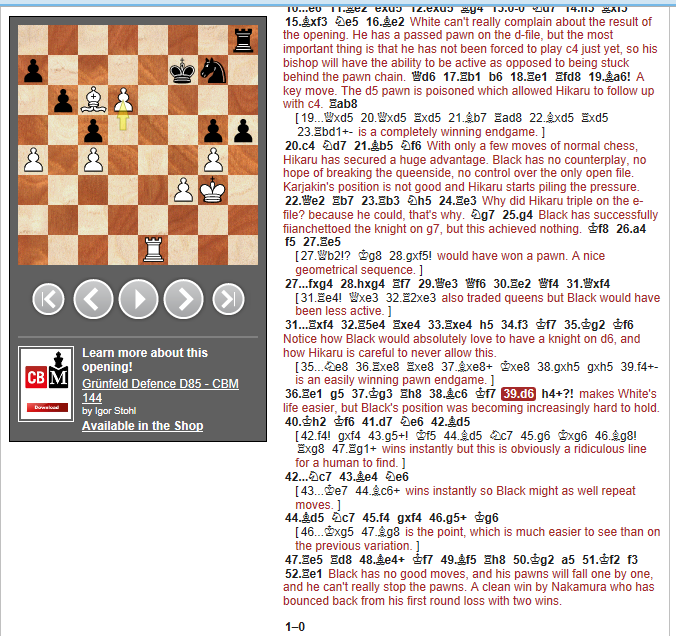
What would I do? I think ten times out of ten I would play 1 Bc6, the move Naka played the first time this position came up- I don't know whether this was because it was in time pressure, so repeated (Sergey couldn't avoid repeating) or because he didn't see the incredibly deep line at first. I would never have seen it, and had this been a Cordingley puzzle, I would have assessed it as fiendish: Bg8!!/Rg1 skewer as a motif would not have come to mind.
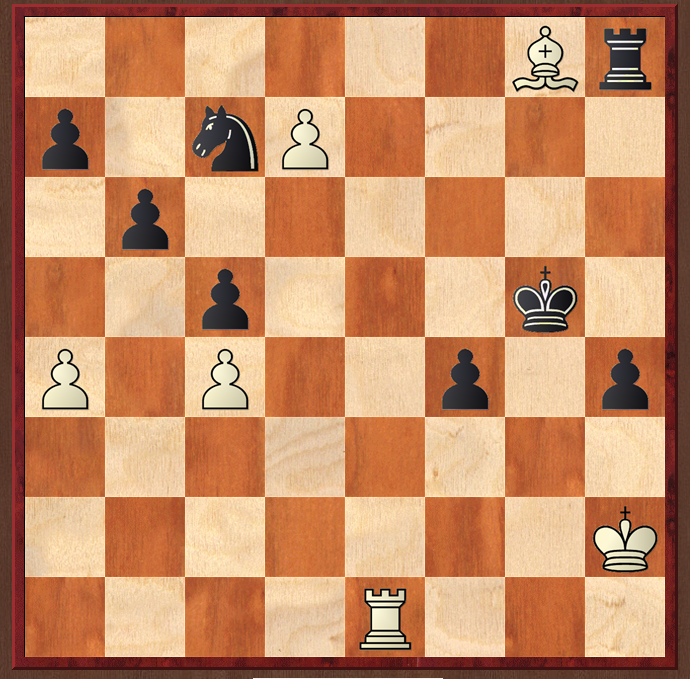
So, 1 f4!! gf 2 g5+! and only after 2…Kg5 is on the board, I can 'see' 3 Bg8!!- had the position after 2…Kg5 been a Cordngley, then I would have assessed it as nice, maybe even easy.
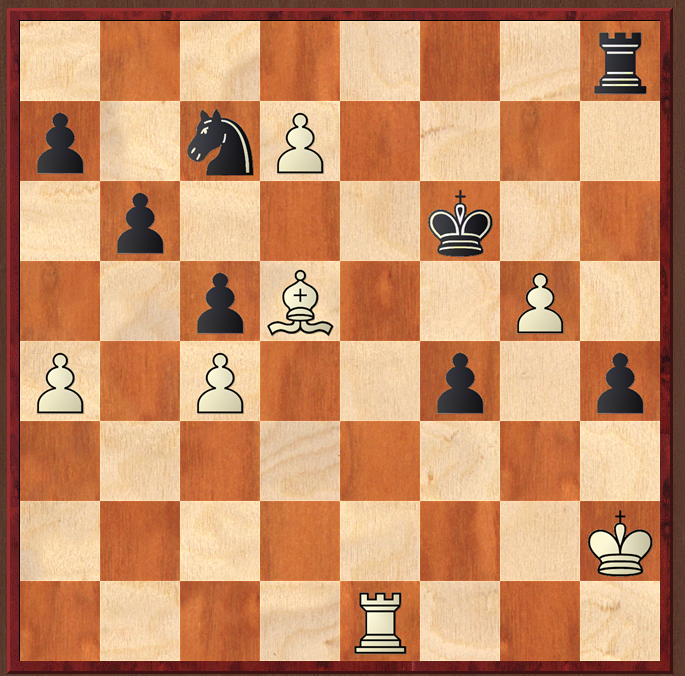
As it is, I assess it as fantastic, beautiful. I am reminded of a quote by Rustam Kazimdzhanov in one of his excellent Chessbase DVDs (on tactics) where he stresses the importance of having optimistic imagination when seeking out tactics. I might have looked at 1 f4, for which 2 g5 is the only follow up, but I would have stopped (not being optimistic nor imaginative) after 2… Kg5.
 allanbeardsworth