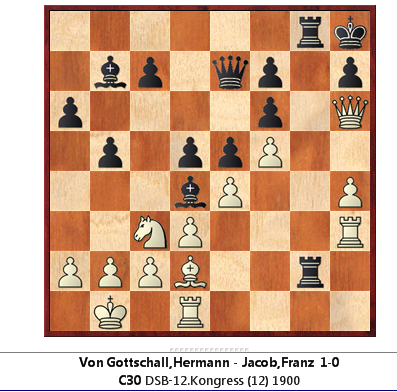
White to play and win
Solution
Oh dear, nil points for me on this one. Of course I saw the first move, 1 Bg5, immediately, but then I got carried away, committing mistake number 8:
#8 seeing an illusory brilliancy, and not checking it.
After 1 fg, I saw 2 hg, but also saw 2 f6, with the idea of 2…Qf8, 3 Qh7+: but alas, this line is rubbish, with the king having a bolt hole ( a gaping door) on g6. I made the mistake of thinking 'this was an easy one' and not taking any care whatsoever
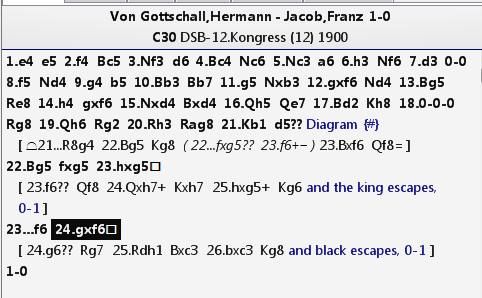
Even if I had taken care, the path to victory is narrow 2 hg f6 and now only 3 gf wins: but it isn't too hard to see- it is the same motif as lies behind the move I played.
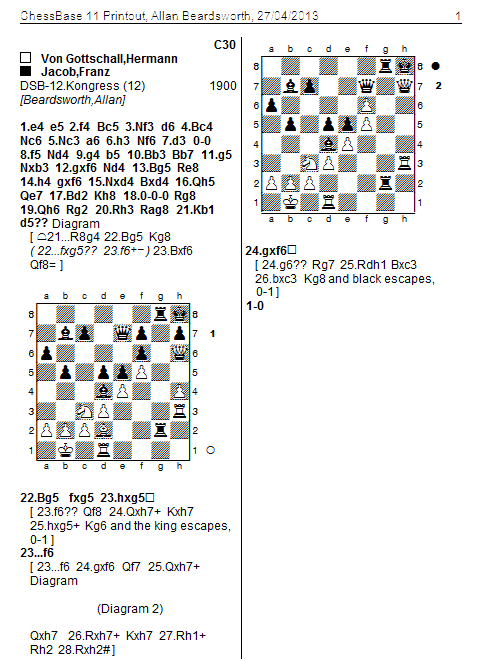
Not my finest hour: this one hurts.
 Posted with Blogsy
White to play and win
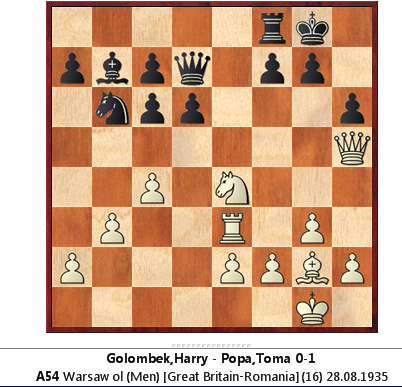
( in the game, white blundered and lost, prettily, see below)
Solution
Fairly straightforward, at least the first few moves. The first move, 1 Nf6+, is more or less the first move examined, and 2 Bh3 is also obvious. It is only the third move which needs thought, and to me, 3 Re4 is clearly better, 'bringing one more piece to the party', as Jacob Aagaard says, though 3 Qh6 is best of all, blocking black in. There is then time to bring up reserves, dependent on black's response.
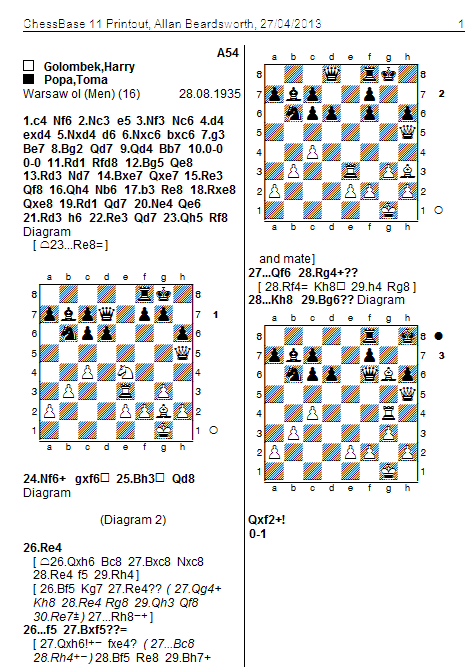
That's all I calculated. Alas, in the game, white then blundered the game away. I suspect, but have no reason for saying so other than intuition, that the last few moves were in time trouble.
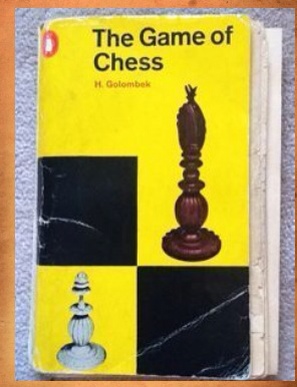
I never met Harry Golombek OBE (1 March 1911- 7 January 1995, but am ever grateful to him. It was his book which was my introduction to chess: I treasure the dog eared copy, which I read and read until it fell apart.
The loss to Popa was in round 16 of the Olympiad. I can well appreciate the effect of such a reverse: so I was pleased to see that in the remaining two games he played, first he drew, then he won a nice but scrappy game against another illustrious author, Al Horowitz, in England-USA.
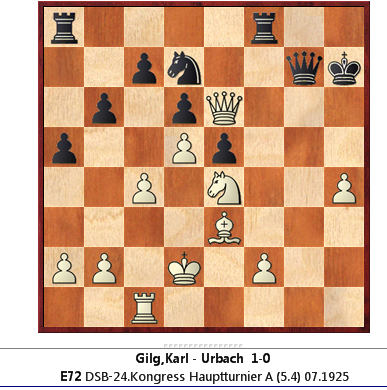
White to play and win
Solution
Clearly, the theme has to be mating; so at first I tried 1 Ng5+, which is insufficient, then the nice (but also insufficient 1 Bh6+ Qh6+ 2 Ng5+ Kg7 3 Qd7+ Kg6 and white has nothing; and then I saw the solution, the decoy, 1 Rg1.
After black captures (there is nothing else- Qf7, Qh6 mate) 2 Ng5+ and it is game over. If black doesn't take the knight, it is mate in three, and if he does, white's advantage is overwhelming.
Not a particularly hard problem.
White to play and win
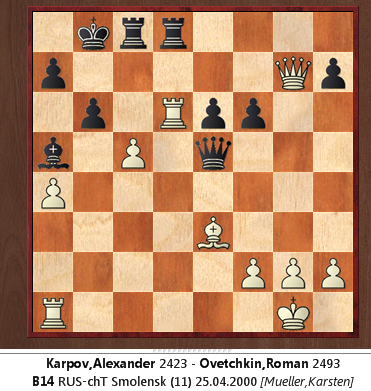
Solution
I came across this lovely puzzle in Emmanuel Neiman's 'Chess Tactics Antenna' (New In Chess, 2012) which I am presently working through. A trivial point is that white is indeed Alexander, not Anatoly, Karpov, a player whom I have not previously heard of.
There is a clue given, since the puzzle is in chapter 10 on 'Alignment': the book comprises a primer based on typical motifs, and this chapter instructs the reader to look for geometries, pieces on the same ranks, files, or diagonals.
This puzzle stumped me for a good while. On second or third sitting, I thought of looking instead based on CJS Purdy's maxim:
Purdy on threats, In Search of Chess Perfection, pg 289
You must see all real threats. That means you must also see the unreality of real threats…. When in doubt, you can always save time by remembering it is really your move. Try then the following way of thinking:
Imagine the threat could not possibly be executed. Then what would be my best move? Try out each attractive move separately, considering each one as follows. Visualise the whole position as it would be after this move of yours, and then work out whether the opponent would gain by executing his 'threat'.
Previously, and with the alignment clue, I had looked at 1 Bf4 Qa1+ 2 Rd1 dis+, but 1…Qf4 spoils it, and also 1 Qg3 Qa1+ 2 Rd1+, to no avail; and also the line (diagonal) clearance 1 Rb6+, again without success. So, re-focus, look at Purdy's maxim, and ignore the threat of 1…Qa1+: imagine that it couldn't possibly happen. Then 1 c6 is a move that I would like to play, threatening mate on b7, and if 1…Rc7, 2 Rd8+ and mates. So 1 Bf4! and if 1…Qf4 2 c6!! and mates.
All that was needed was to deflect the queen, to give the tempo for the move I most wanted to play.
Beautiful. Simple. Not simple.
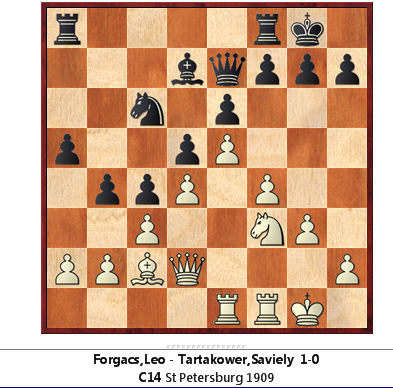
White to play: how to create an attack?
(note: not 'and win', since black has better defences than in the game. Not a puzzle to spend much time on, but perhaps just to see what ideas you have)
Solution
The position is more or less even. If I were playing white, I would play 1 f5 on positional grounds; after it is captured, I probably wouldn't play 2 g4, but I might if I were playing blitz. A move like 2 Nh4 provoking the weakening 2…g6 would be an alternative. In the game, black played …g6 voluntarily.
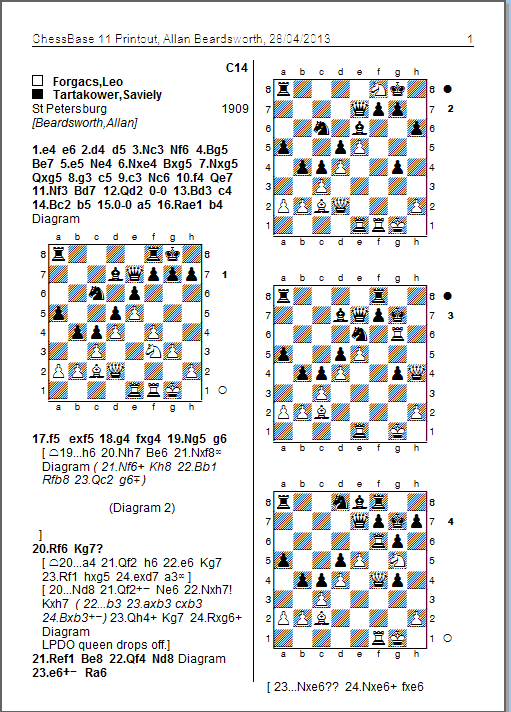
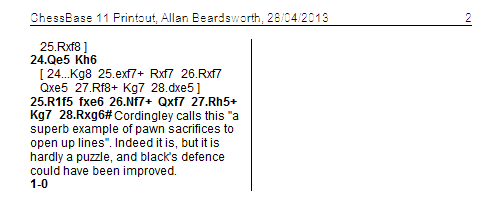
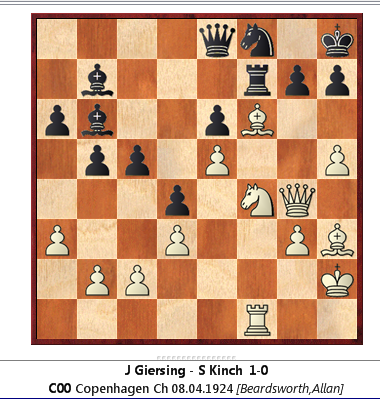
White to play and win
Solution
Another puzzle which stings me. Of course, I saw the winning move, 1 Ng6+, which was the first move I thought of, but I couldn't see how to follow it up.
I need my bumper book of excuses here, but the honest answer is, I totally messed up. Firstly, I didn't look hard enough at 1…hg: as will be seen in the solution below, there is a simpler version of the flashy line played, and the simpler version, starting with a check, is obvious enough. But more annoyingly, I didn't look properly at black's defence 1…Kg8, which I thought was his best line: I wasn't convinced after 2 Nf8 Qf8 3 Qe6 about if white had enough after gf, but I had already noted that the Bb6 was a LPDO.
Not being convinced by 1 Ng6+, I looked instead at 1 Ne6, and got distracted by nice lines. I thought that 1…gf 2 Rf6 was pretty close to winning, and 1…Ne6 2 Qe6 likewise, with h6! happening in some lines. Alas, 1 Ne6 is flawed, and had I noticed the flaw, I no doubt would have returned to 1 Ng6+, but I didn't.
I suspect my error was:
#8 seeing an illusory brilliancy, and not checking it.
I have though added a further one to my list of errors:
#9 awful calculation and mis assessment.
Charlie and the pooh stick
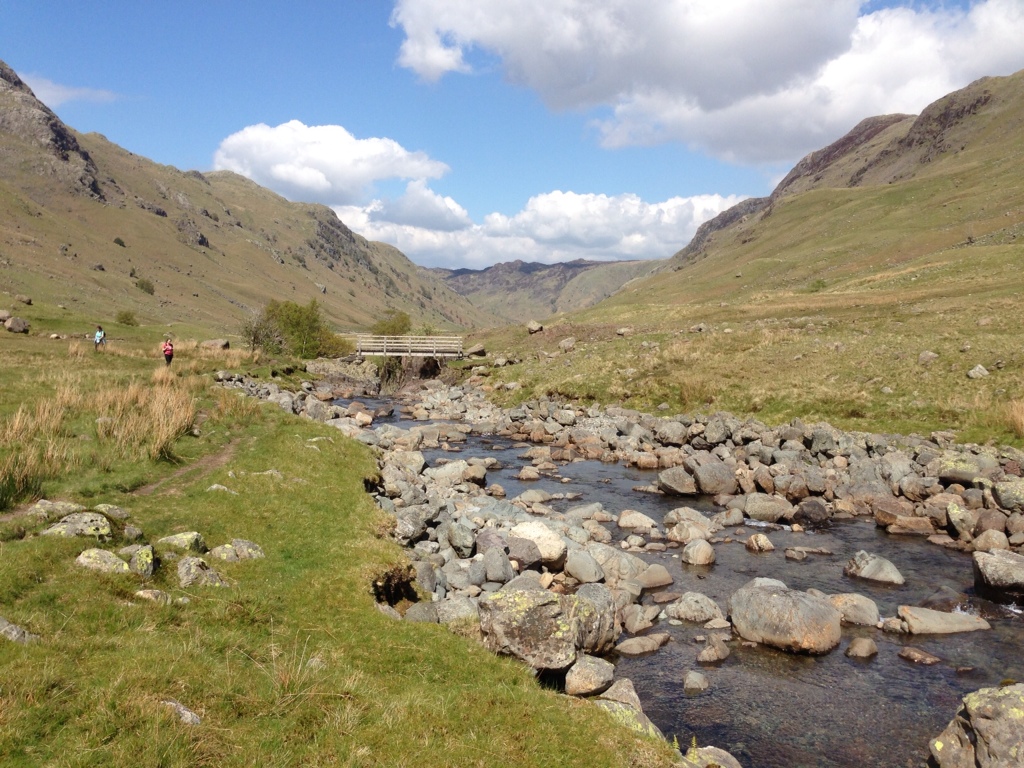
Langstrath valley, on a typical Sunday morning. Typical if you ignore the other 51 Sundays of each year, when it is pouring down there.
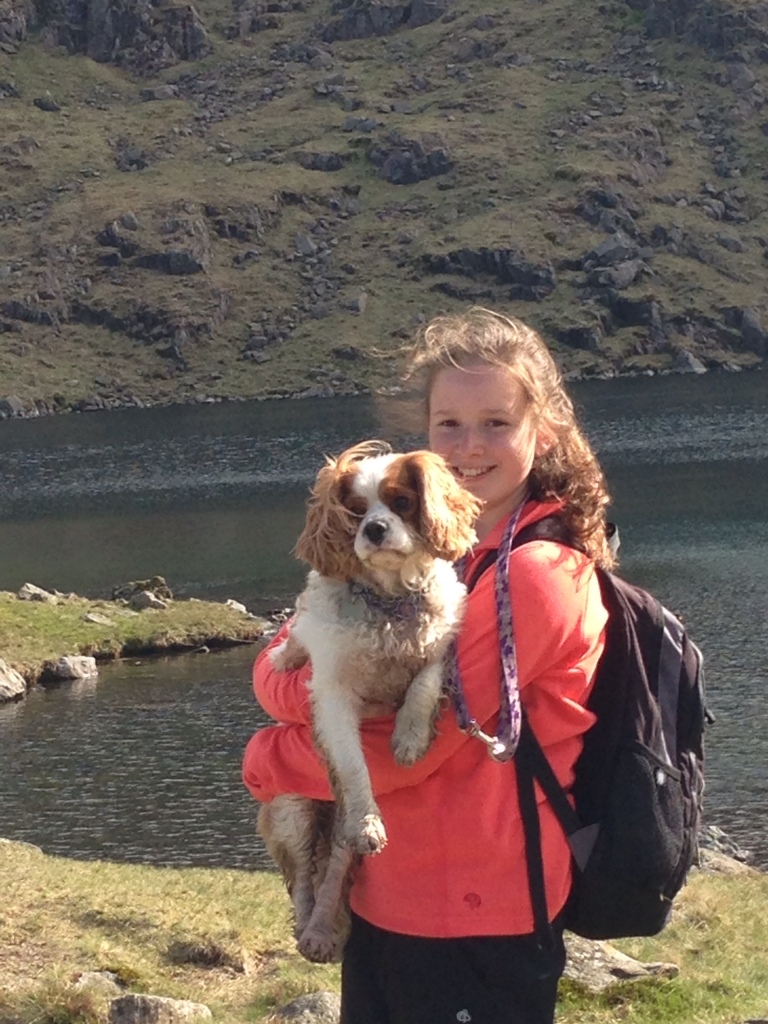
Charlie, our Cavalier King Charles spaniel, with my younger daughter at Angle Tarn.
Maths
Maths is all around us. Imagine we were to drop a pooh stick at the head of the Langstrath (which we found on Sunday) and Charlie was asked to chase it. The Langstrath river curves down the valley in typical S shaped fashion. Charlie is a clever dog and knows that if he runs down the valley in a straight line, he can run slower and still get the pooh stick. It's a few miles to the end of the valley, but a pooh stick is a pooh stick, so it is still running.
How fast should Charlie run, if the river runs at v miles per hour?
The answer is 2v/pi : yes, 3.14159… is in the Langstrath valley, as well as everywhere else on Earth. On average, a river flows in semi-circles: one above the horizontal diameter, one below, one above, and so on. The curved line of one semi circle is pi * d/2, half the circumference of a circle, and the Charlie runs the diameter d: divide one into the other, and Charlie well get the pooh stick by running 64% as fast as the river.
Clever Charlie.
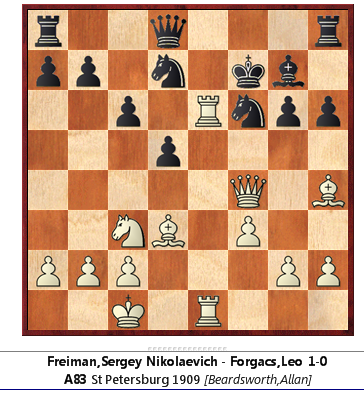
White to play and win
Solution
Oh dear: another puzzle which could be 'find a plausible move for white which doesn't win'.
Here's how I addressed the problem. Firstly, my immediate thought was 1 Re7+ Qe7 2 Bg6+, and this turns out to be Houdini's first preference. It is the way I would almost certainly- in fact certainly- play in practice. It is clear enough: at the end, the white queen dominates, and e.g. mops up the b7 pawn.
Secondly, I looked at 1 Bg6+ Kg6 2 Re7. I thought this was likely to be good enough, but wasn't sure (Houdini tells me it was): in practice, there was too much to calculate, with confidence, and I would be frightened of missing the one saving line.
Finally, I looked for something more imaginative. Drawing an idea from puzzle 43, Eliskases-Stahlberg, which I had painfully fluffed, and where the key is the change in diagonal of a white squares bishop (from d3, I fact from hitting g6) to another diagonal (there h1-a8, hitting d5) I came up with the move played in the game, 1 Ne4, the idea being to reroute the bishop to c4, if the N is captured: and if not, the Nc3 enters the party. I spent some time on 1…g5, thought it should win, and decided it was the same more or less as 1 Re7. Because it is a puzzle book, I plumped for 1 Ne4, though as said, in practice I would have played more simply.
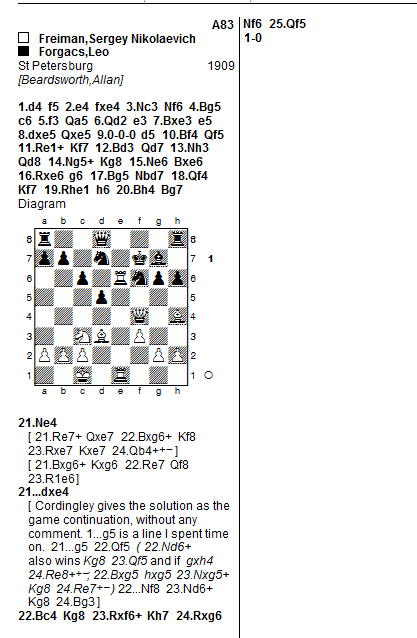
White to play and win
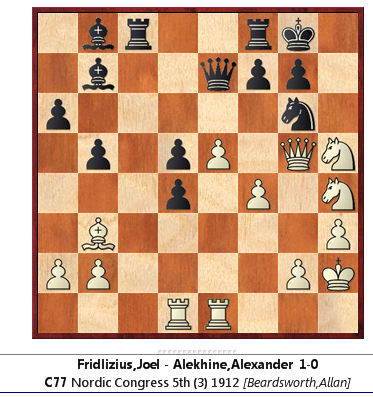
Solution
I have learned enough about the selection of puzzles in Cordingley that I knew were to stop. In a modern puzzle book, there would be a strong presumption that the winning line ends in mate or overwhelming advantage. With The Next Move is… , I know that often the main lines lead to a good or strong advantage, but not an immediately terminal one.
So, here, after the obvious 1…Nf6+, and the forced line included ..Bf4+ Qf4. I assumed black would then take the queen (in the game, Alekhine played Qe1 instead) and then I was choosing between fe or Re7: in my visualisation of the end result, I tended to prefer Re7, for qualitative reasons: hits the Bb7; the f6 pawn locks in the black kings, control of the e file/seventh rank; but recognised that fe was likely also good, with in both cases there being the imminent capture of the d4 pawn. I assessed either position as strong advantage to white; Houdini assesses them as around +3, and after it shows me a few lines, I can see where it is coming from, but the great extent of the advantage isn't obvious to me.
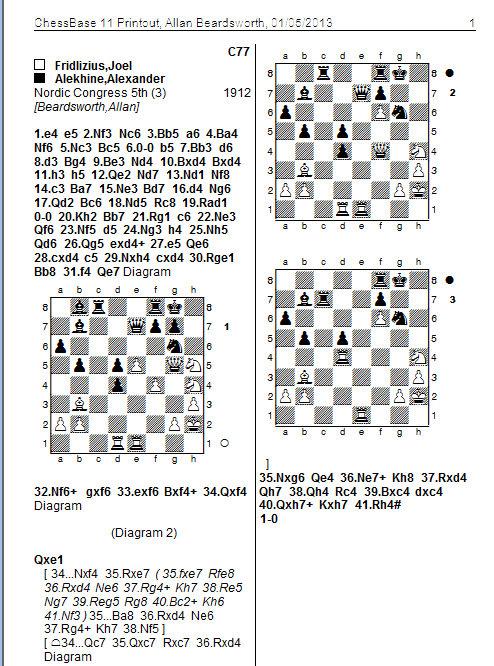
As a puzzle, then, not great: the main line is transparent. Of more interest is that the loser was Alekhine. He was then 21, so getting near his peak, so I also checked what could be found about his opponent. A quick google resulted in:
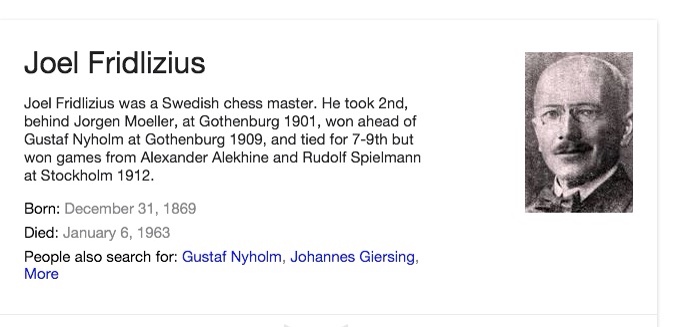
His game versus Spielmann seems to be more prosaic: but clearly a very strong master, to defeat two such titans.
Black to play and win
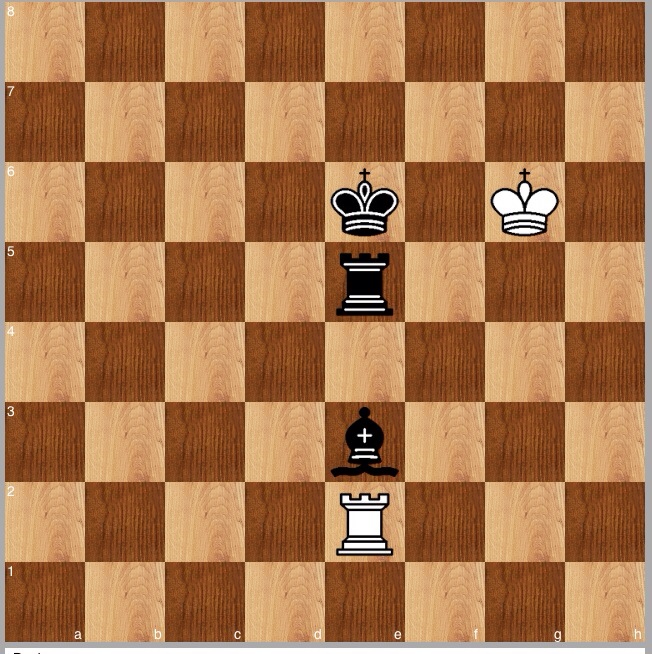
(Puzzle first seen in Chess, May 2010: the game was played in the European Individual Championships in Rijeka, 2010)
Solution
I found this surprisingly hard, at least whilst dipping into it. At first, I thought 1…Rg5+ was too simple to be the solution, so I looked at 1…Re3, hoping it has a clever point, but couldn't see anything, and 2 Rg2 permits white to seek to set up the second line defence.
So, 1… Rg5+ and white has two moves. 2. Kh7 Kf7 3 Kh6 (forced) Re5-+ and mates; so 2 Kh6 Rg3+ 3 Kh5 Kf5 4 Kh4 Rf3 and the point is finally revealed: black's next move is Bg3+ and Rh3 mate, unless white plays 5 Rh2, in which case 5…Rg8! and it is game over. The same idea, of pushing the king to the h file followed by Rg8 also wins against 4 Re1.
I haven't bothered to check this position with Houdini or another engine: just used Beardsworth 1.0, a 50 year carbon based one. It is quite galling, in a way, that I find such four piece positions every bit as difficult, if not more so, than some middlegame puzzles.
 allanbeardsworth