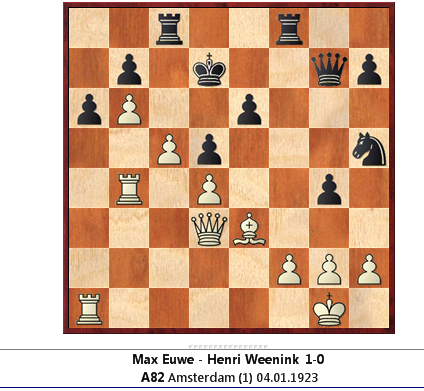
White to play and win
Solution
First you try 1 c6+, easily dismissed; then you try 1 Ra6, which wins. I played 2 Qa6 which Houdini assesses as equivalent to the move played, b7: the two lines come together, with black's uncoordinated and cramped pieces being unable to stem the tide.
A fairly straightforward puzzle.
 Posted with Blogsy
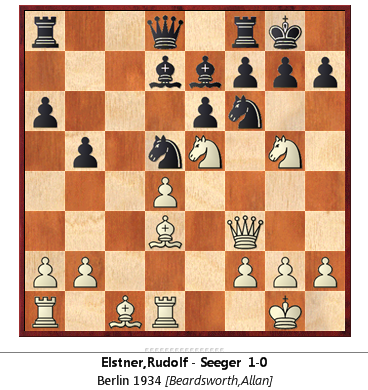
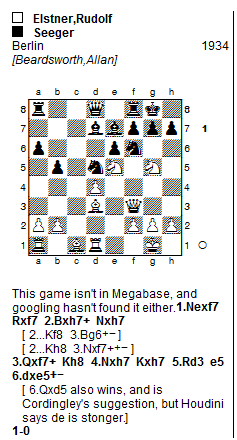
White to play and win
Solution
For a while, this stumped me.
Since it s number 50, the position is in FEN notation in my Cordingley book (as a recap, every fifth puzzle is in FEN, to save wartime paper). So I had to set it up on my board, and chose to set it up on me of my favourite chess sets, the one Jane bought me for my fortieth:
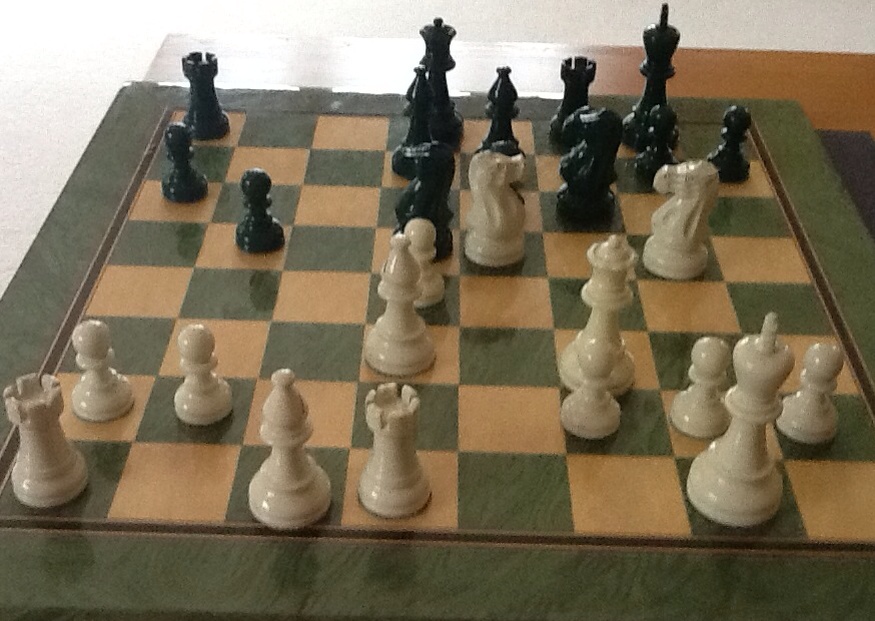
My scan of the position clearly showed the possibility of a capture on h7; that the knights were both hitting f7; and black had no LPDO.
I first tried both 1 Bh7+ and 1 Nh7, which come to the same thing. I think black has at least a draw after this: the Nd5 comes back to f6, and sometimes to h7. So I needed to find something else.
Next I exchanged twice on f7, and then played Bh7: I felt this might be better for white but it is not decisive: the game still goes on. In looking at this, I noticed (and had I followed CJS Purdy' advice to look for jump checks) that the Qf3 also eyed f7: and then the solution became apparent. Quite pretty, really.
The Daily Telegraph on Thursday had an article which caught my eye.
Firstly, the reigning Miss USA's declaration of her intention to marry Prince Harry:

And also, the figurehead sculpture of the wife of the owner of the polo club at which Prince Harry was playing.
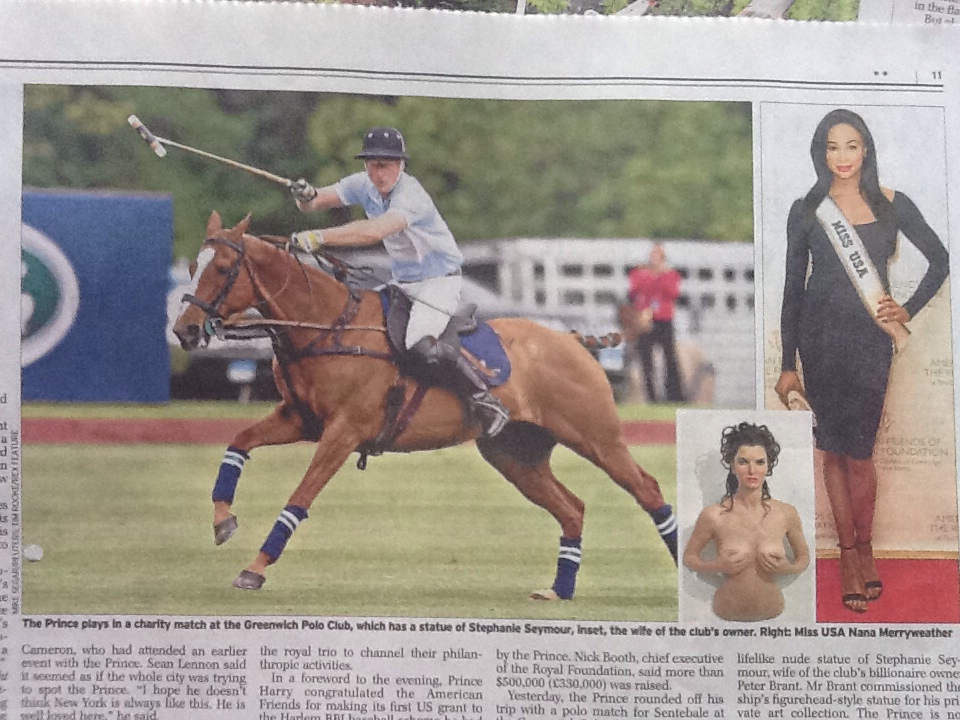
Words fail me.
(First photo from the Telegraph iPad edition: second from the print edition)
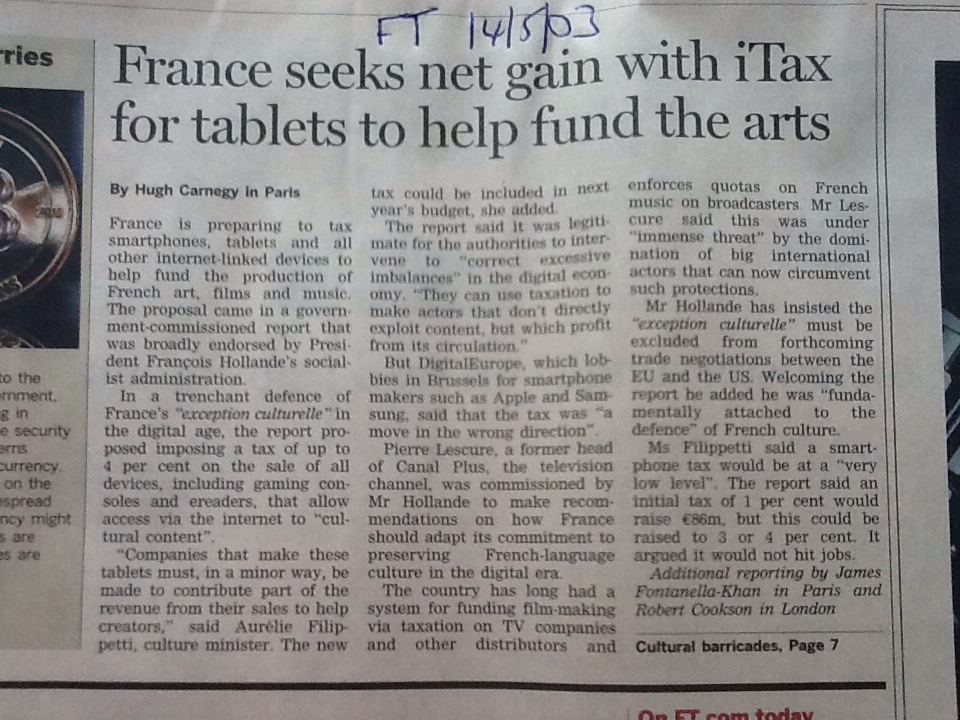
The article below caught my eye. It appears there is a proposal to impose a tax of up to 4% on the sale of Internet linked devices, including tablets and smartphones.
This could be a smart move in terms of revenue raising. It is no different in structure to 'luxury taxes', such as different rates of VAT on luxuries: those with long memories will recall that when VAT was introduced into the UK, there was a different (higher) rate for luxuries.
Each year I give talks to both colleagues and clients about UK taxation: often seeking to take a broader view, rather than focus on specific measures. For some years now I had thought there might be luxury rates re-introduced; I have also postulated that a 'stamp tax' on text messages might be a worthwhile revenue raiser: it won't happen of course- definitional problems – what is a text- is instant messaging covered-technological changes-unpopularity with young voters- cost of systems changes for e.g all inclusive tariffs- there would be issues galore; where iTax scores is that it is one off and arguably an impost on something which a person doesn't need to buy. The exception culturelle is a nice Gallic way of making the new levy seem acceptable.
Chessbase have now published their GM analysis: very brief indeed, and not mentioning Topalov's comment about 'not 29…Ke7 30 Nd4!’. So, curious, I decided to check my analysis of 29…Rg8 30 Qe1 Ke7 31 Nd4, with startling, or humbling, results. In brief, two major mistakes.
Firstly, after 31…ed, Houdini instantly the position after 34…Bc1 as +4: indeed plays 35…Be3, but then improves considerably on my play, with the mating tactic 36 Bd3! Nd5 37 Bb5, when the threat of the same mate that I spotted in a similar position, forces the passive 37…Nc7, when it is game over: the h pawn will fall.
However, black has a vast improvement, 31…Bd2!!, exploiting the LPDO Rg4. White is then suffering: best seems to be 32 Nc6+ Rc6 33 Rd2 Rg4 34 dc d5, but even here Houdini keeps finding tactics. 35 Bf3 Rf4 36 c7! Qc7 (Kd5 37 Bd5!) 37 Bd5 Nd5 38 Rd5 Qc4 39 Rd1 with a queen and rook ending in which probably black is better, but it really would be anyone's game.
So, my 31 Nd4 was, in short, a poor move. At least I have enjoyed the thinking about the position.
Black to play and win
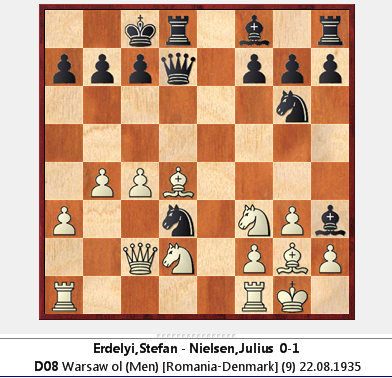
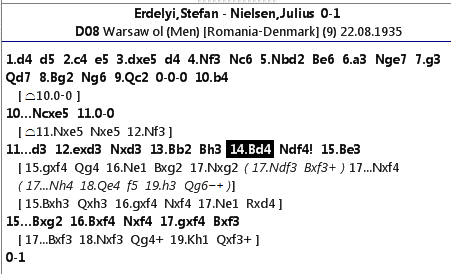
Solution
The winning line is fairly transparent, N to f4, and penetrate on the white squares, but I found the precise calculation difficult. It took me a while to decide which knight to move to f4, eventually settling on moving the d3 knight, as in the game, and more or less getting the calculations right. I chose 1… Ndf3 for two vague reasons: so the Nd3 isn't en prise in some lines, and so that the Ng6 can control e5, preventing Ne5. However, Houdini somewhat prefers Ngf4, its reason being that a later defence by Ne1 isn't possible, because the Nd3 controls e1.
I have just been looking at the current postings on yesterday's last round in the Norway Chess 2013 tournament. Chessbase's just has its express report, but Chessvibes has some analysis. I was struck by Topalov's comment in the diagram below.
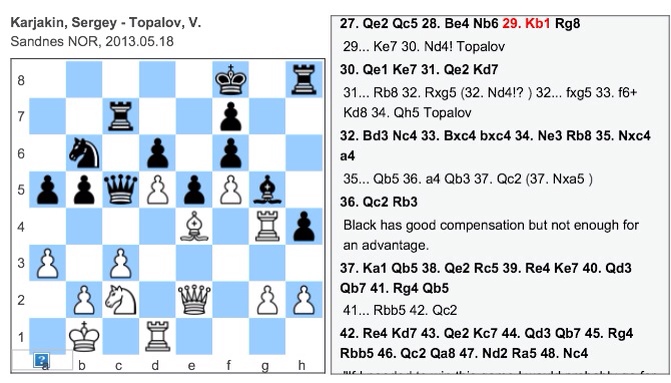
Why does 29…Ke7 permit 30 Nd4! ?
This stumped me for a while. Clearly, the knight has to be taken- it would be a monster if it reaches c6; but (after 30…ed4) 31 Bd3+ isn't anything, but instead 31 cd forces Qd3, after which 32 Bd3+ picks up the queen.
But why is 30…Ke7 possible? (After 29…Rg8 30 Qe1)
Because now, after 31 Nd4 ed 32 cd black isn't forced to play 32…Qc4?? but can instead play 32…Qc1+!!, and now with the white queen on e1, all it becomes is a piece swap.
Comment
This tactic reminds me, once more, how much there can be in such 'fiddling about' positions. It is so easy to think 'nothing is happening' and walk into a trap: and of course sometimes one's opponent will instead be the hapless victim.
Further detail
I was pleased to be able to find the small nuance that makes all the difference: the geometric alignment of the Kb1 and Qe1 makes Qc1+! succeed, when otherwise it would fail, and also note that white can't fiddle his K out of the way, since a1 is still on the first rank, and a2 permits Qc4 with check. But in pondering all this, I wondered 'is it clearly level even after the pawn swap?' I decided to set the position up:
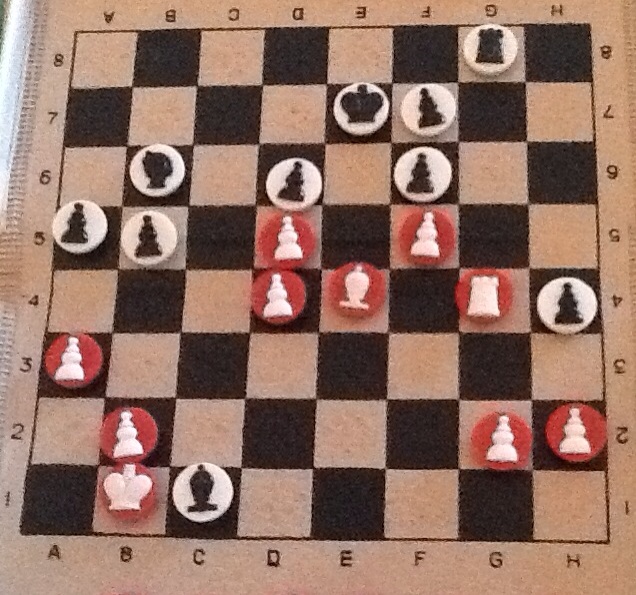
(position after 32…Qc1!! 33 Rc1 Rc1+ 34 Qc1 Bc1). White's best is clearly 35 Rg8, when he is the exchange up: my first thought was that 35…Bg5 holds, but then 36 Rb8 and after 36…Nc4 37 Bd3! (37 Rb5? Nd2+ picks up the LPDO Be4, though I suspect even then white might be winning: black's bishop is 'a pawn' and the Ne4 can't get over to the queenside fast enough). However, 35…Be3! is the move: 36 Rb8 Bd4 or 37 Rh8 Bf2.

I would suspect this position is tending to a draw: but isn't drawn for sure. White might first play b3, seeking to keep the Nb6 out of c4; with the hope of Kc2-d3. But black can play a4, either before or after white has played b3: and later, in some lines, Kc3 can be answered by Be1+, keeping white's king away from b4.
However, maybe white is better: Bd3, perhaps prefaced by b3, exchange the b5 and d5 pawns (if black does play a4 in response to b3, white doesn't exchange pawns, leaving that option to black, so black has to retain his weak pawn on b5). White has more shuffling around possibilities than black, with black's freedom being harmed by his king being locked in, so that sometimes Be4-d3-b5 comes with check. There's even a mate in one line:
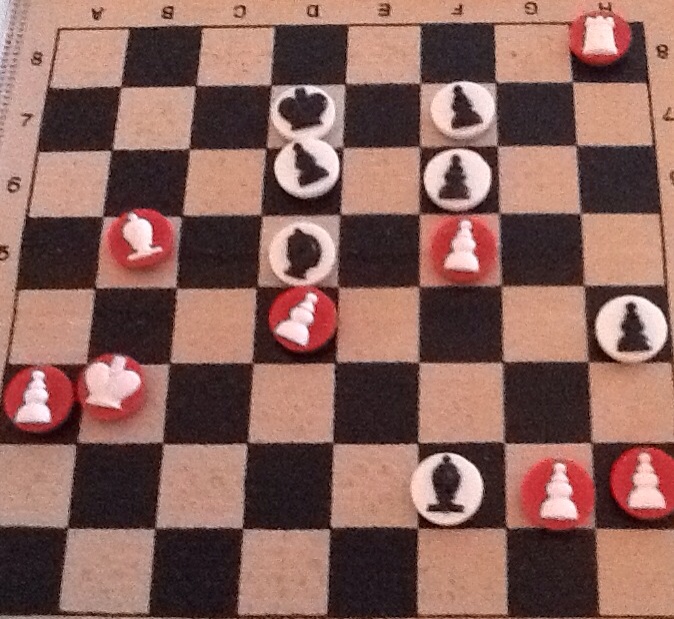
(Position after b3 a4 Kc2 Kd7 Bd3 ab+ Kb3 Nd5 Bb5+): if Ke7?? Re8 mate, so Kc7 is forced: white might then be winning, first improving his bishop, say to f3 or e4, though black's knight does cause problems, for instance on e3, hitting f5 and g2; and if white plays the prophylactic Rg8, then Ne7 forces mass exchanges.
Magnus Carlsen would win the position after 34…Bc1 in practice; Karsten Mueller would be able to work out if it was winning in theory. Maybe it is true to say that the position after 34…Bc1 is an improvement for him when compared with the game continuation, and he can hardly be losing….so maybe (ending with doubts of my analysis/abilities, and not wanting to check with engines) I have simply missed something. Perhaps others will comment on the game.
This post is fairly (for which read 'very') trivial. Today is the last round of the Norwegian Super GM tournament, and, as I write, the games have been on for an hour. [today being a Saturday, and the round starting at 11am UK, I know I am going to be in trouble with Jane in a few hours time when our friends arrive mid afternoon, just as some of the games will be at their 'peak']
Sergey Karjakin is leading by half a point, and has a typical Najdorf as white against Topalov.
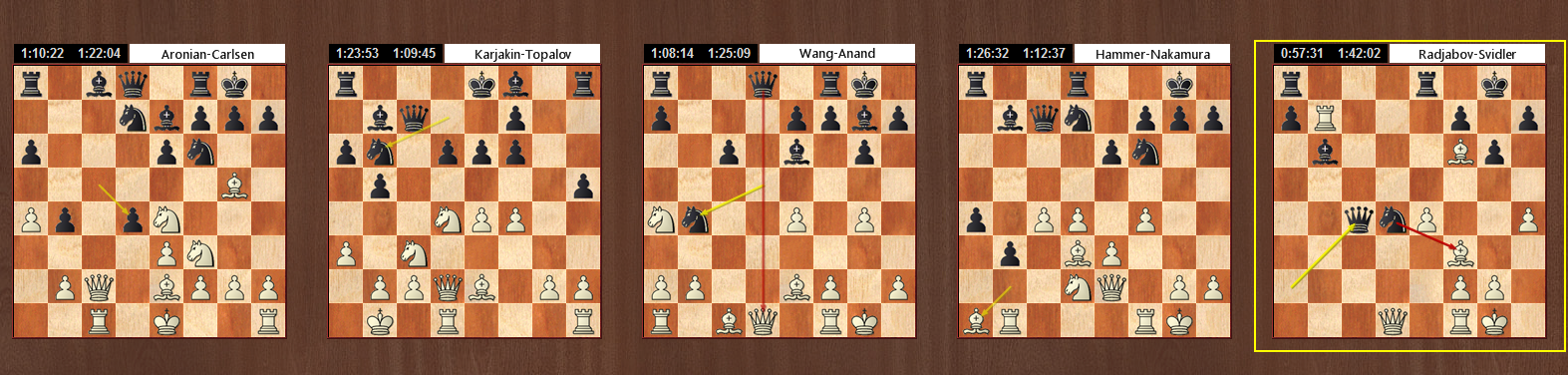
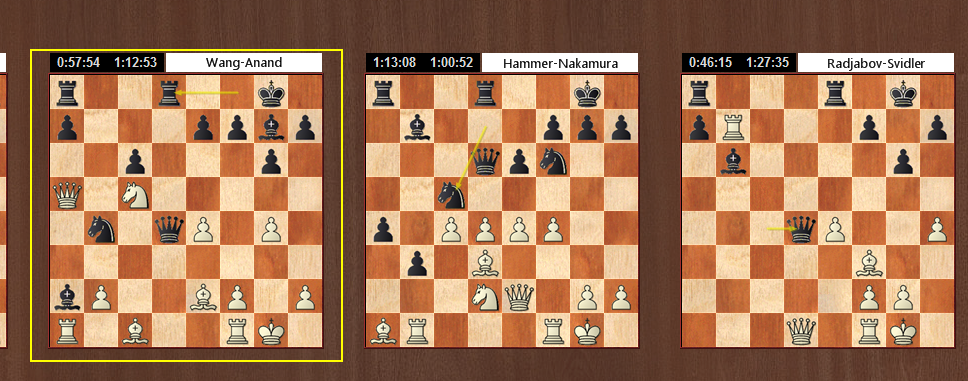
Magnus, half a point behind Sergey, has the toughest task, black against Aronian; whilst Vishy, also half a point behind, is black versus Wang. It is far too early to say, but Vishy's game in particular could go either way. Anand has had a good tournament (I loved his game yesterday versus Hammer, where he played coffee-house, though in *$ (Starbucks) terms, the flavour of his coffee was world-class), but Wang best Magnus yesterday, and both sides have weaknesses. We will see if Naka can outclass Hammer, but the position which presently appeals to me is Radjabov-Svidler.
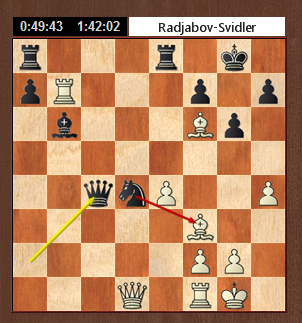
Peter is playing his beloved Grunfeld, and, due to the increment (30sec/move) has two minutes more than when he started: so, of course, will almost certainly know this position. So I 'know' that black must be safe- Peter wouldn't have played Bb6 otherwise- but I can't help but look to see if Qd2 works, or why in particular it doesn't. Too much blitz playing, perhaps.
So I played it through on Stockfish, and black can indeed defend, in more than one way, but has to be careful. Exchange on f3, play Qc6 to hit the Bf6, play Bd8 if necessary, and everything is defended.
Playing a bit further, and playing a lot of natural moves, to see what happened, in one line I got to:
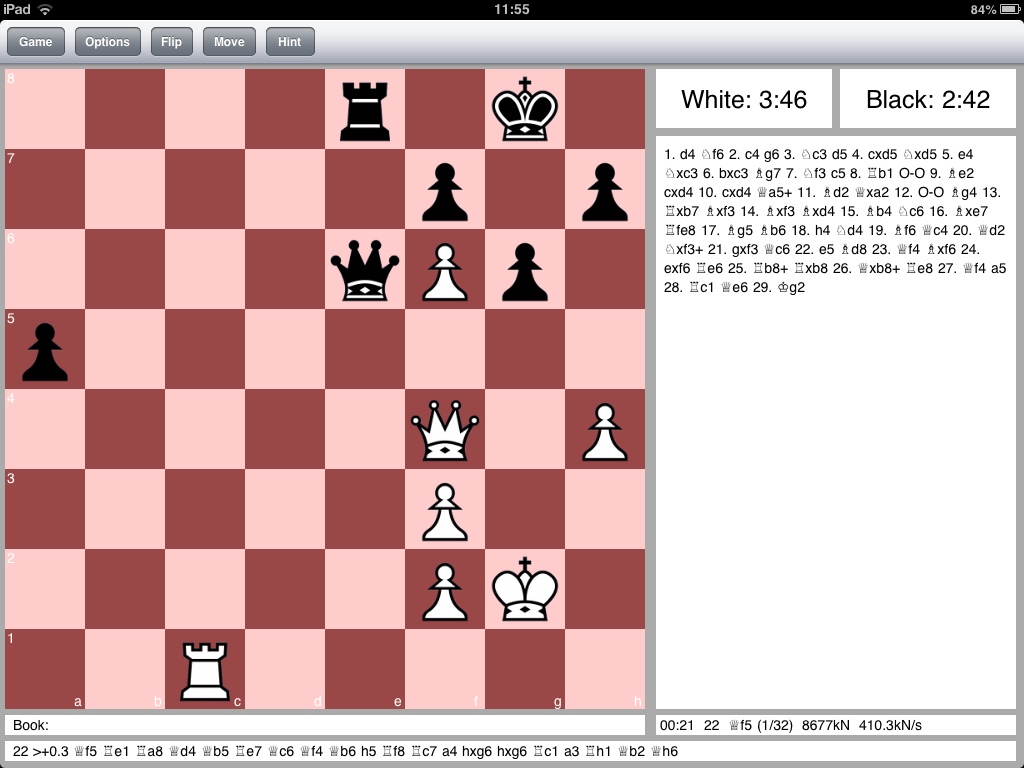
Stockfish gives this as equal (the present screenshot says +0.3 after the odd 1…Qf5, but it says 0.0 after 1…Ra8 for instance). Since white might be threatening h4-h5 I played the natural 1…h5 only for Stockfish to respond 2 Re1!! and +6.0: white's last move, before the diagram, Kg2, which I played just to permit a Rh1 move at some time, and to stop a Qh3 (I was playing both sides, making 'first thought' moves) contains venom. It is easy when the engine hits you with it: the Queen is overloaded: in CJS Purdy terms, it is also easy, with the Q tied to defending f6, and his thinking process of considering all smites.
Also, 1… Rc8 loses similarly: 2 Qh6!, for the same reason. There are not too many more losing moves in the position (1…a4? Is poor, and might lose, since after 2 Qa4, black's queen is tied to defending the Re8, so white just wins a pawn) but the position shows me once again that even the simplest of positions can contain poison.
Having written this blog, there have been some further moves: Radjabov took the knight, 1 Bd4, and Peter played 1…Qd4. So I guess the question is 'is the game anything other than a draw'.
Meanwhile, there has been drama in Wang-Anand, where according to the engine-armed kibitzers, Wang has just missed 17 Rd1 winning: I can more or less see what the engines are saying; but now will turn the Playchess 'chat' box off, since I much prefer to watch whilst thinking for myself.
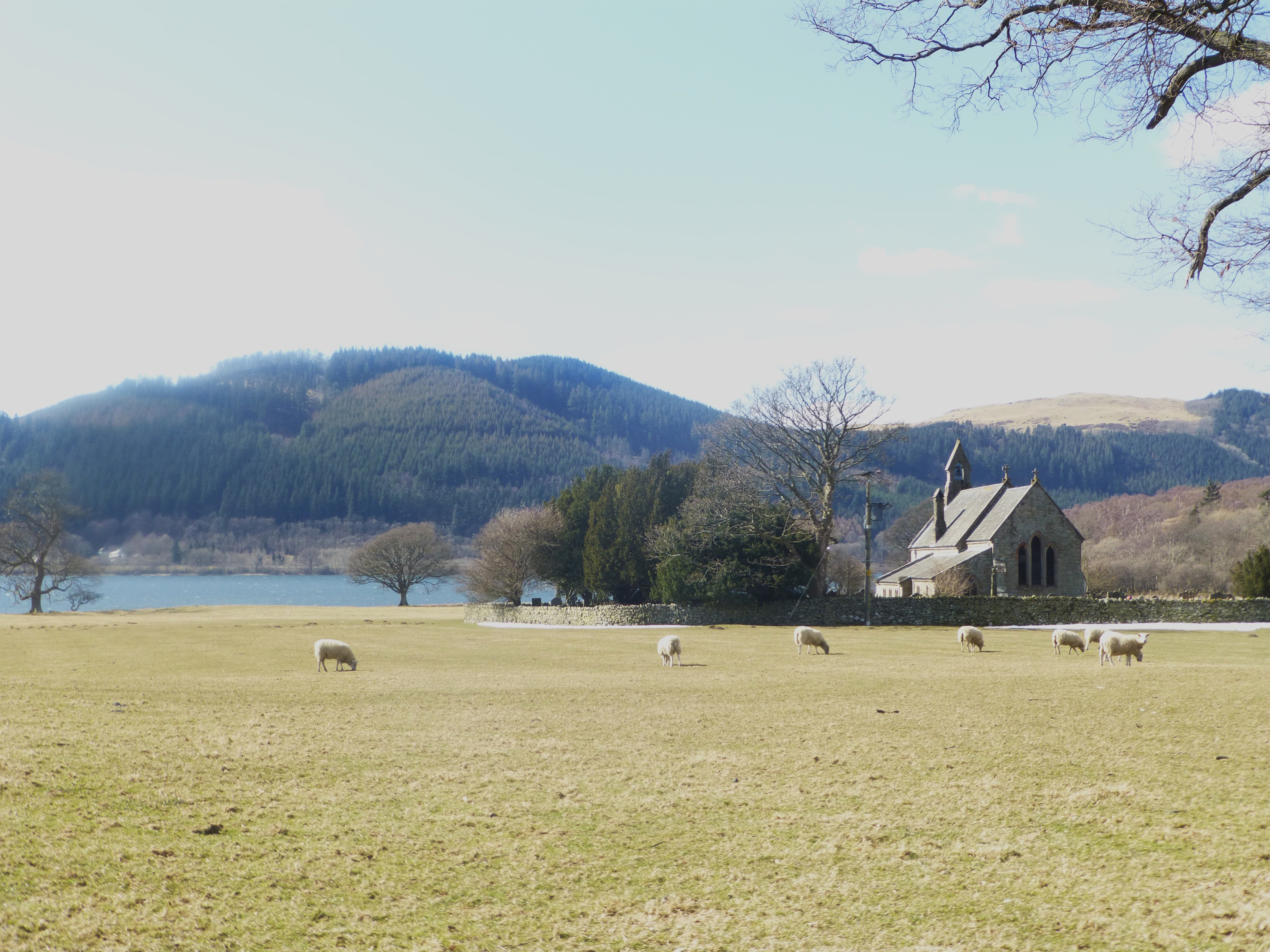
We have owned a cottage in Rosthwaite, in the heart of the Lake District, for some years now. We think we know the northern lakes pretty well now, but on a recent visit found a new, lovely, walk.
Parking at the Forestry Commission car park near the Mirehouse estate, on the road from Keswick to Bassenthwaite, there is a level- hardly any ups and downs- walk to the lakeshore by St Bega's church. We had a perfect day there, with ideal weather conditions.
For those interested in the history of the church, some details are at:
White to play and win

( in the game, white failed to win)
Solution
Three years ago, when I dipped into the book, this is one of the puzzles that I looked at, finding a solution, 1 Rd8+ Rg8 2 Rd3 and so on, though I failed to find the precise move later on. I then looked at Cordingley's solution, which was far neater.
Now, in 2013, I recalled there was a 'trick', but couldn't recall what it was; but this knowledge helped me quickly find it: 1 Ra8+ Rg8 2 Kf7! and mates. Very pretty, and at least I found it this time.
Checking with Houdini, it also shows that 1 Rd3 wins simply enough. Poor Englisch.

 allanbeardsworth