I recently gave a talk to my colleagues in Liverpool about my career. Not for self aggrandisement, but since they asked me, as a change from my regular talks on technical matters; and I was requested to include pointers to help my colleagues’ careers.
Giving the talk was a very rewarding experience: it seemed to be enjoyed, but the icing on the cake was that several people asked to see me afterwards to discuss further certain matters, and I also got a number of emails asking me to elaborate certain points.
A common request was to give more details or a list of some of the books that had influenced me; so I thought I would blog about them. This is my first blog, and there is no better place to start than the book which has had more impact on my career than all other books put together, Dale Carnegie’s How to Win Friends and Influence People.
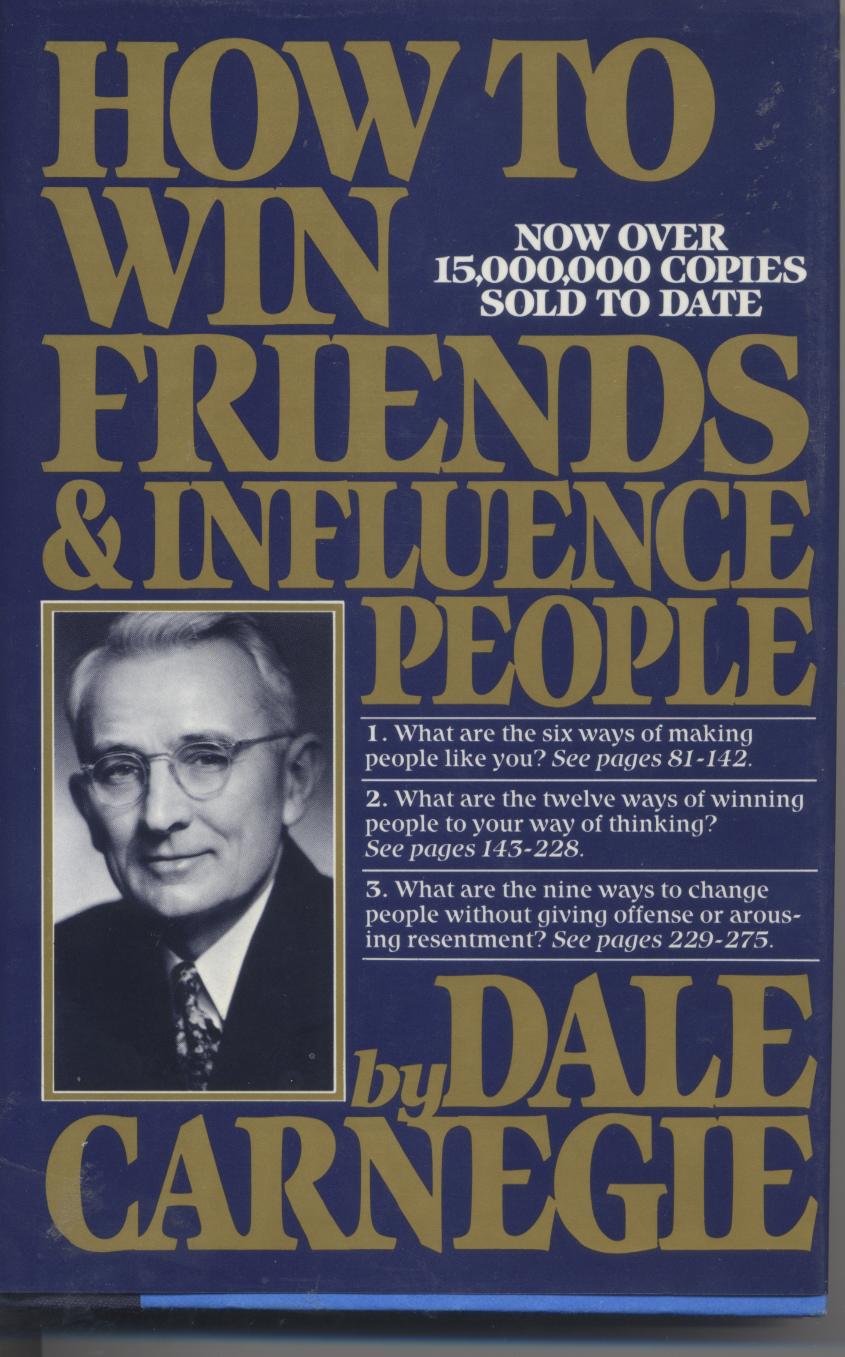
The title sounds rather naff today, but reflects the time it was written, 1936; and mustn’t put people off. There is a twenty first century version (which I have on my iPad, but have not read yet) which is meant to update the text to today’s language and also email, social networks and so forth; but the 1936 edition is timeless in its principles.
The book, and the course I did with Dale Carnegie Associates, at the end of my 20s, brought me out of my shell and gave me increased confidence. I have used its principles continually since then. I whole heartedly recommend it.
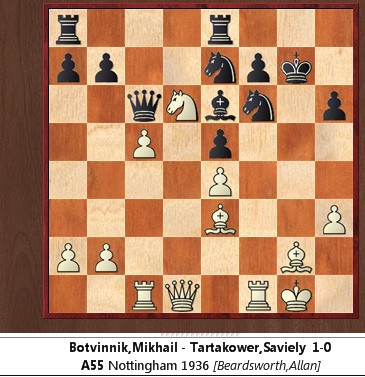
White to play and win
Solution
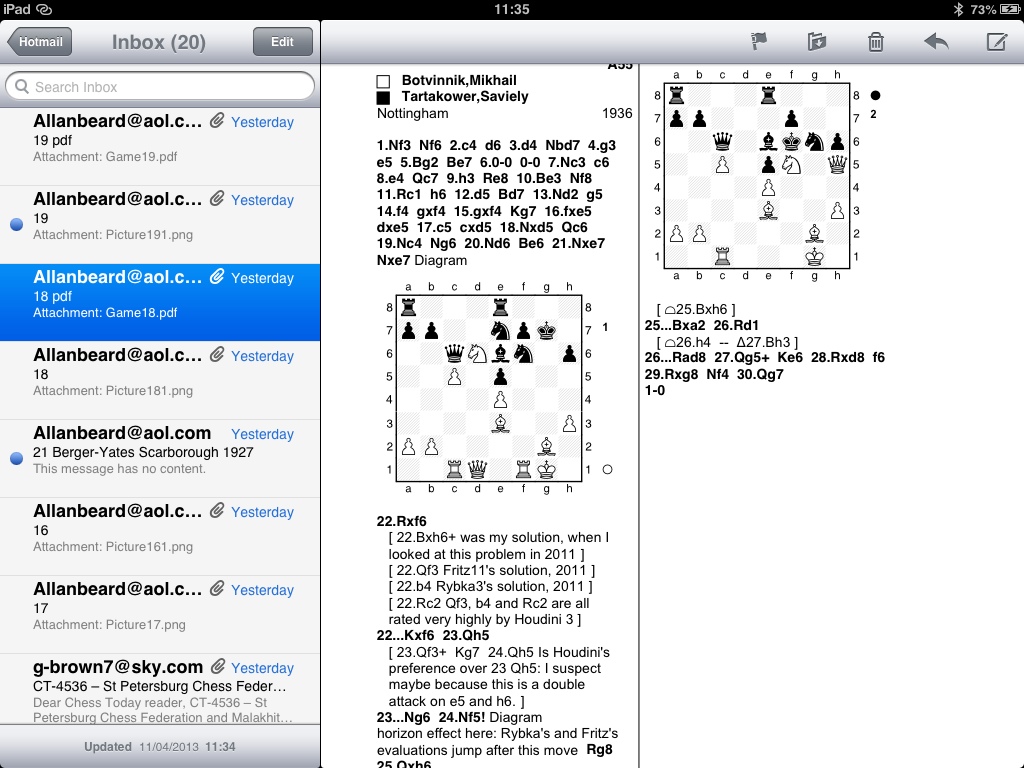
In some ways, this is an Aagaard position: capable of extensive analysis. As the attached analysis shows, many lines win, and Houdini prefers various moves to those chosen by Botvinnik. The line I preferred, sacing on f6 and then bringing the Queen out to h5, is good enough, but maybe not best.
I haven't looked at the position deeply: I suspect further analysis is needed.
 Posted with Blogsy
I think I have gained a lot, and lost nothing, by having certain principles which I have stuck with since becoming a senior practitioner, and then a partner, at my firm.
Fifteen years later, they have stood the test of time. Amended for when my mother died, and one or two minor tweaks, they remain unchanged. I decided a while ago to post them on my blog: since there is no downside in so doing.
In the early 1990s, I read a book, Taxes- Burden or Blessing?, by the then Bishop of Manchester, Stanley Booth-Clibborn. I haven't read it since, but should do so, though reading it helped me formulate much of my beliefs about my particular profession. It was around this time I worked out for myself my principles, which I first wrote down in 1997, on becoming a partner, and kept in my Filofax.
My present formulation is below. I can, as I write this blog, think of numerous cases where they have kept me in good stead, and still rue two occasions where I broke my rules, one from weakness- a domineering senior partner, and one from trusting where I knew I shouldn't.
My principles of doing business
Rabbi Hillel motto [6/03] – my fundamental principle
Rabbi Hillel, who lived at the time of Jesus, was challenged to explain the whole Torah while standing on one leg. He replied:
“What is hateful to yourself, do not do to others. That is the whole Torah; the rest is commentary. Go and study it”.
Full and frank with clients;
…with Revenue
When clients tell me something which makes me know that there is tax to pay (which hasn't been paid), clients must pay the tax.
“Sunday Times” test: how I would feel if I was mentioned in relation to a clients affairs by the Insight team; if the client was mentioned.
Or: how I would feel if Jane or mum [now 11/02, my children] found out: would they regard it as proper (or, if they didn't, is the difference solely because of not being commercial).
Bishop of Manchester book
David Bookbinder morals/hospital test.
How do I explain what I do? How to explain to my children etc that being a tax advisor is something worthy.
Try and be comfortable with our fees: hope that clients accept that much of what I do, and what our best colleagues do, come from thinking about them; always have a value for money check, but recognise the hours of thought from which ideas come.
Don't work for fees which I believe are below what is fair, particularly far below, or where price is the predominant factor.
Never let Deloitte interests outweigh clients
Preference to explain to clients; in sufficient detail to give them the facts and experience as much as they need to make a decision
Preference to explain “what I would do”; “if you were my best friend/dad/family”
Never to recommend a colleague just because they are colleagues (unless e.g due to geographical location it is obvious I don't know them)
Not to upset existing good relationships which are working for the client (i.e particularly incumbent tax advisors: if potential clients have good incumbent advisors, help, not displace; entirely different if the incumbents aren't good)
Not to accept rudeness to colleagues, including/especially junior staff/secretarial…
Open book approach to fees; prompt payment required; a smaller amount which the client is happy with, rather than a larger one that they are not.
Try hard not to let colleagues, particularly specialists, overcharge [two client experiences- one for TP, whether CF partner (LCSP) dominated, and the other where specialist partners convinced me that their proposal was market norms ] nor to be too hungry for work.”overselling” [6/07]
Preference for repeat business, from people I enjoy working with, rather than one off work: and preference against one off work just for schemes sake.
Preference for clients who want to minimise but pay the right amount of tax; but acceptance that some clients will adopt schemes- in that case, must know the risk.
Will not sell short lived schemes unless client knows it could be short lived, and that unwind can be costly. Only for savvy clients.
Preference for clients who are willing to let me get to know them, to some extent, rather than those who just want a e.g minimum cost service.
Preference for clients who I like [added after JA experience 2/99- though 5/10 can't remember who JA was]; who when I am reading articles or books in the evening etc, I will think of.
Preference against inter-office (particularly international) referred work; preference for NW [6/07] business.
An interest in charitable/not for profit work, or for clients with benevolent or community benefiting intentions.
Not sure where I stand on Co-op type areas (arms, testing animals….). So far I have never had to work on such cases, but of course Deloitte does, and therefore I benefit.
AWB 6/97 updated 6/07 and 5/10
White to play and win
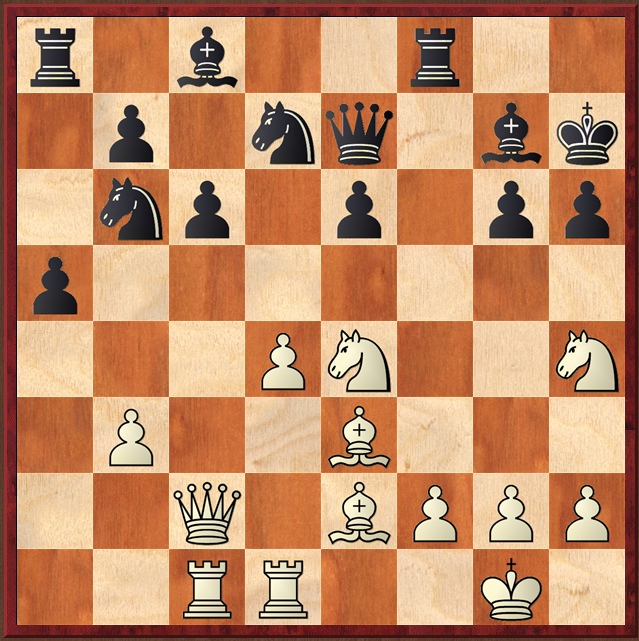
Botvinnik-Judovitch Leningrad, 1933
Solution
I am afraid I knew this puzzle, so I can't tell whether it is easy or difficult. I think the first move is an obvious smash, 1 Ng6+, and the second move 2 Bh5+ becomes necessary once it is clear that discovered checks with the Qc2/Ne4 battery don't achieve anything.
I have been lucky with my career – I first wrote choice of career, but that isn't true, I meandered into what I do now, and what I have been doing for more than a quarter of a century.
A colleague saw me yesterday for career guidance. ( Jane, if you are reading this, don't laugh, some people do come to me for advice). I gave an impromptu talk yesterday to our regular departmental technical meeting about 'tax under Mrs Thatcher', drawing out some of the changes in tax law during the early party of my career, which tied in with Mrs Thatcher's tenure at 10 Downing Street. I was telling my younger colleagues [deleted the unnecessary word-they are all younger] about how things change, about reliefs which come in and go out, about the planning environment and how it has changed.
A few people saw me during the course of yesterday and told me they had enjoyed my talk. One, asked to have a word because she saw that I had enjoyed, and still enjoy my work, and she was struggling to decide what to do.
Cue picture:
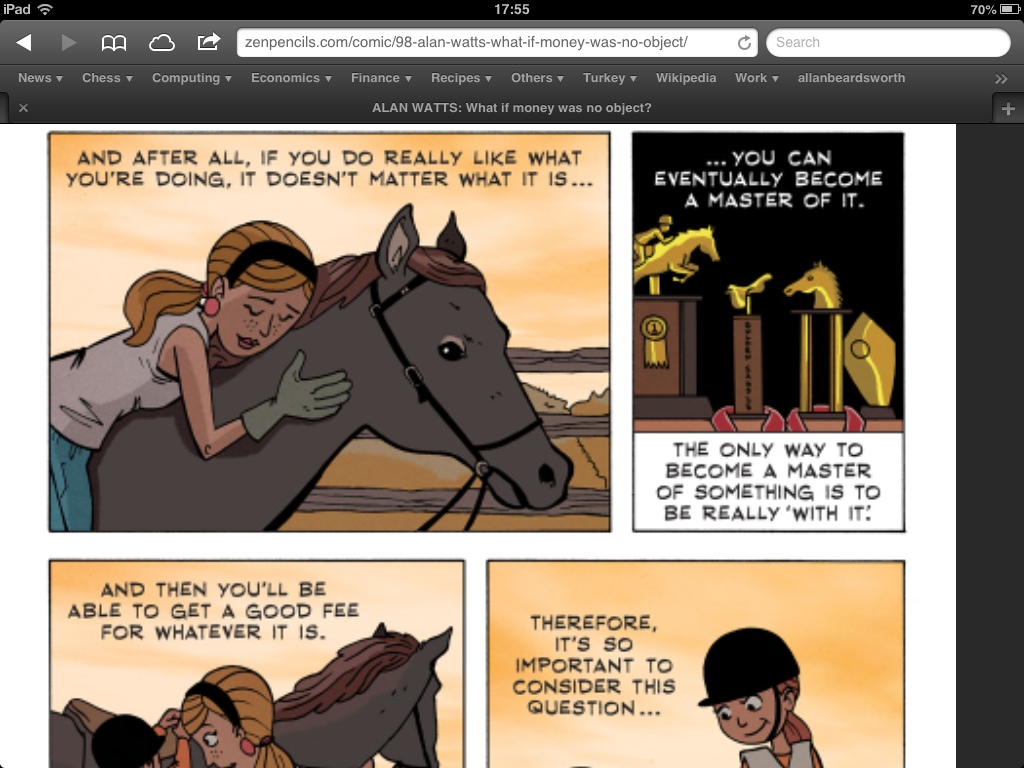
This is an extract from a cartoon http://zenpencils.com/comic/98-alan-watts-what-if-money-was-no-object/
which resonates well with me.
I have never tried to encourage a colleague to stay with my firm when in their heart they know they want to leave. There might be short term gain in doing so, but at a long term cost: and it isn't the right way to do business. Far better, or at least I think it is, is to be straightforward with people, say what you mean, say what you believe; the world is a small place (Manchester certainly is… there are probably only a couple of degrees of separation between all Mancinians) and doing right by people brings its own rewards.
This 'letter' is doing the Internet rounds at present:
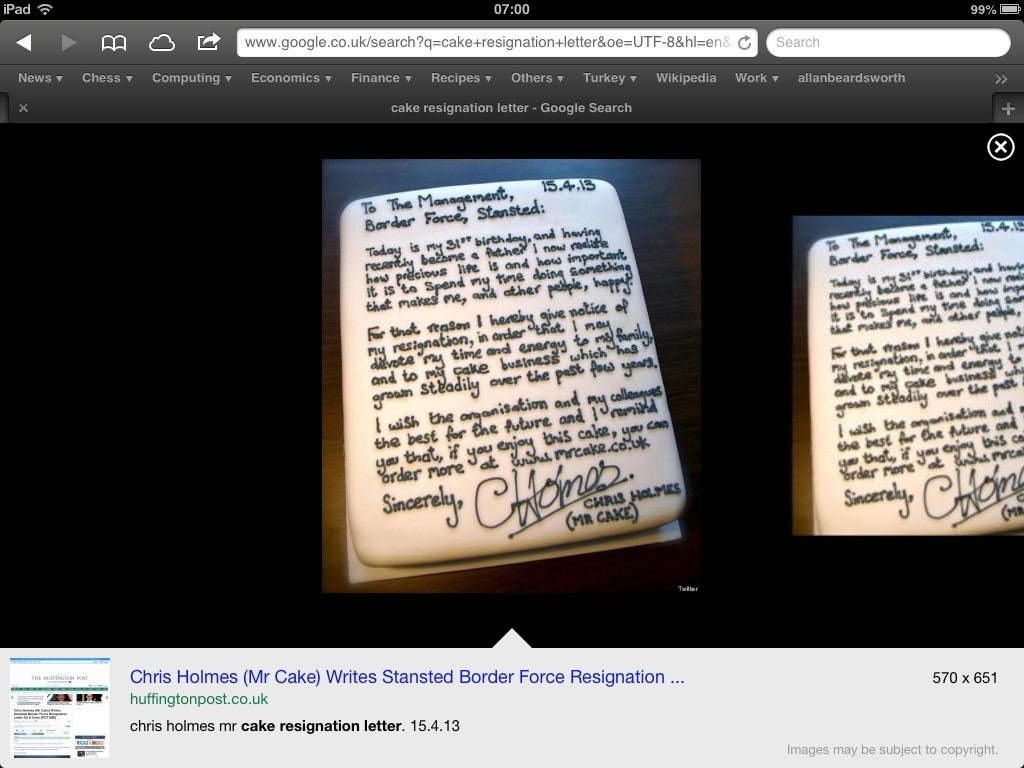
I first saw it, on an extract of it on the BBC news website.
Googling it, to find the whole letter, produced the following search results:
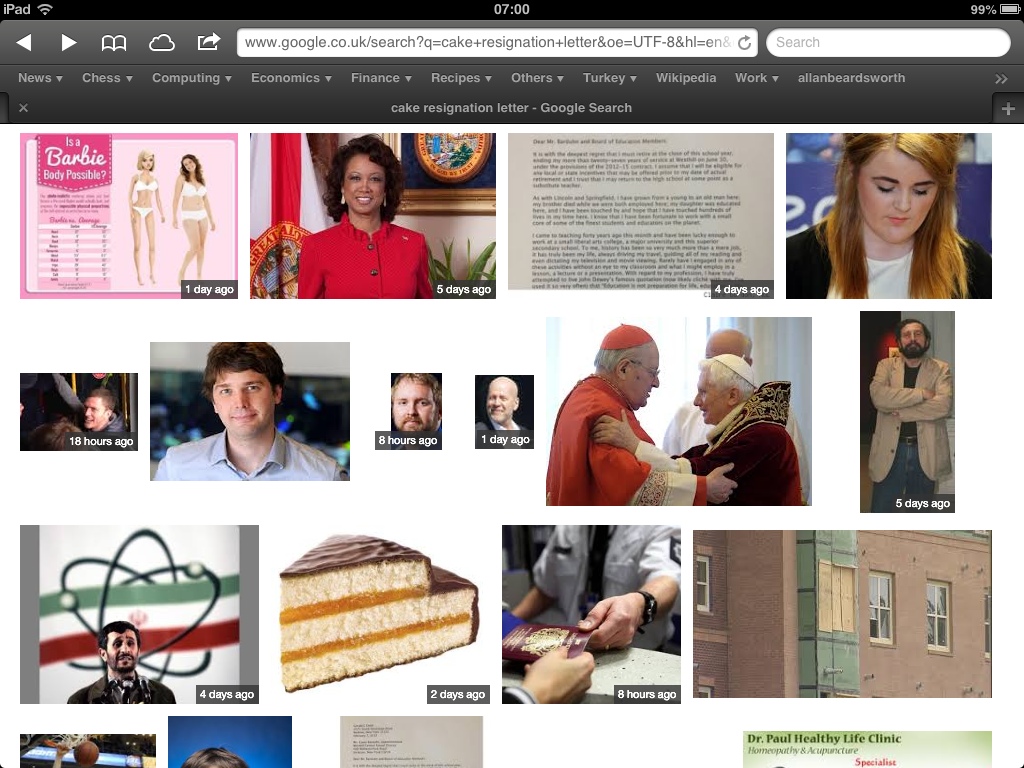
Isn't googling a wonderful thing? I can see why the two Popes might come up ”resignation”, and presumably some of the people shown have either (I) resigned (II) like cake; but, why should 'Is a Barbie body possible' come up?
The answer to that question is: Not if you eat cake, and probably not anyway.
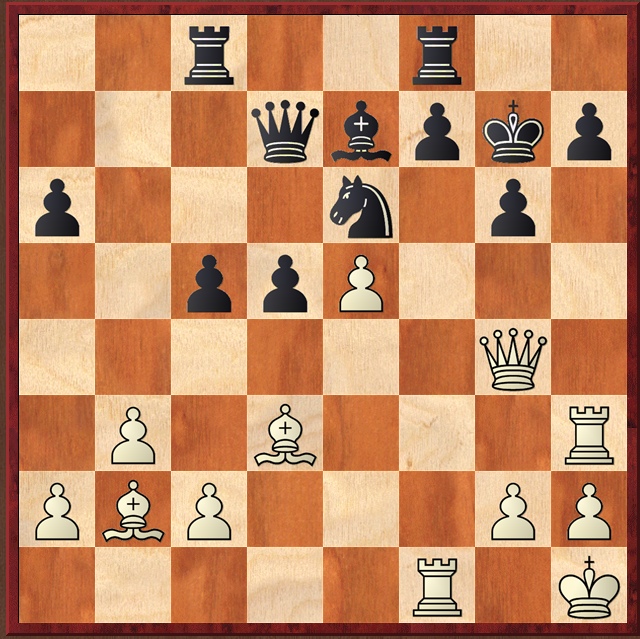
White to play and win
Solution
I think this is straightforward, or at least fairly so. The only calculation needed is to check that after the double rook sacrifice (1Rh7+, 2 Rf7+) and the captures by the queen on g6 and f7, that black can't avoid mate. The fact that the Qd7 is LPDO (as might be seen from my previous blogs, this is one of my favourite chess terms) means that the Be7 is pinned, so the only move to avoid Qh7 mate is Nf8, when e6+ wins the house.
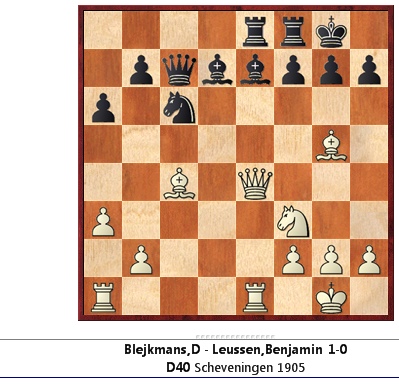
White to play and 'win'
For win, it is more 'and improve his position, against the best defence'
Solution
This one had me fairly stumped; I enjoyed it, taking a few sittings, to try to suss it out. First glance suggested white might have some advantage, but his queen is exposed, and black didn't have too many things to be concerned about.
At bullet, not that I play 1 minute chess, I would play 1 Qh4: and I made several attempts to make it work, but couldn't. At blitz, I would also probably play 1 Qh4 but at rapid, I would choose between it and 1 Bd3, so I tried this, and quickly saw this must be the 'solution'. In my prior thinking, I had also looked at LPDO ( the Qc7 being the only loose piece, but hardly an issue, or so I thought, and also biffs such as Bf4, Bf7, Bh6, none of which are anything.
After 1 Bd3, 1…f5 2 Qc4+ the 'point' is revealed: loose pieces do indeed drop off, and the knight is pinned, so doesn't protect e7: see the attached analysis.
Therefore, only 1…g6 had to be checked, and I could only see with certainty to as far as swapping the black squared bishops off, weakening his black squares by his pawn advances g6 and h5, and improving my knight by Nf3-g5-e4. This was where I stopped, assessing the job as done, knowing white's position had improved since the start: and my judgement was right. In the game, black then played a crass error, but Re6 would have shored up his defences and left everything to play for.
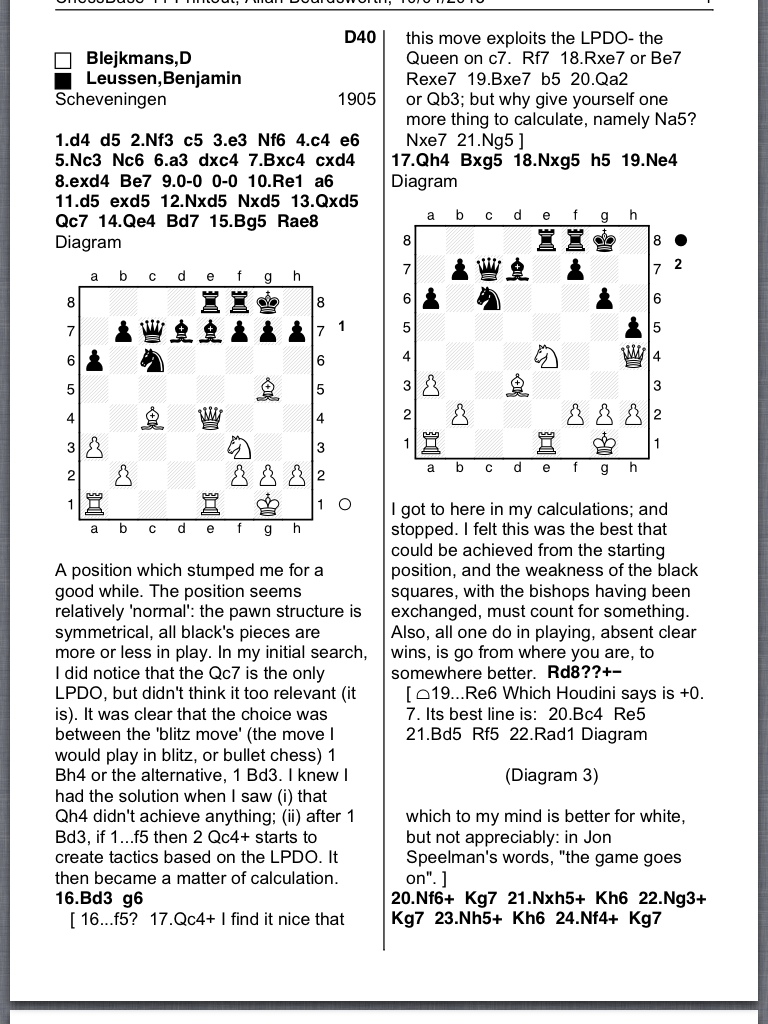
An enjoyable, if flawed, puzzle.
I haven't been able to decide how to approach the question of the algebra behind Dutching (and don't want to look it up on google, on Wikipedia, or on YouTube) but it seems to work best when:
- There are two or three close favourites;
- The odds are fairly decent.
With yesterday's Masters, the three overnight leaders were approximately 2:1; 3:1; 4:1; hence I suspected it could be Dutched, even including Tiger, at 6:1.
The actual maths was:

Which ties in with the app's calculations, as it of course should:
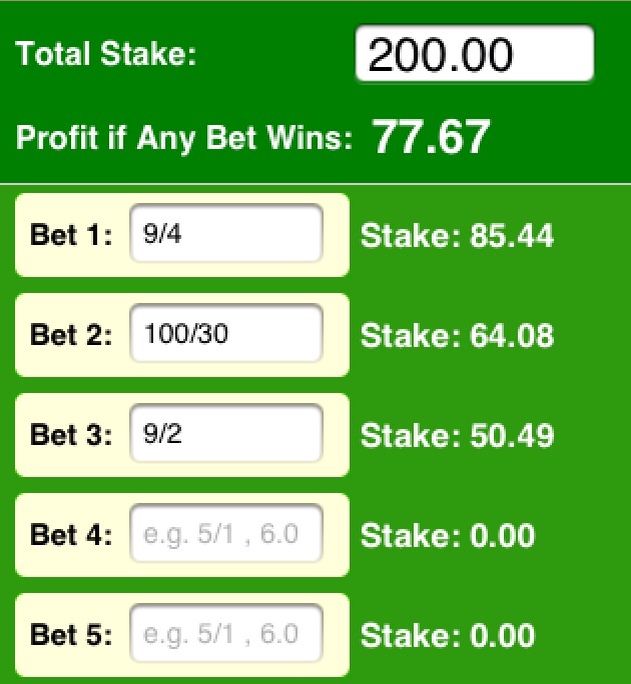
Not being a bettor, I don't know whether Dutching has any appeal in practice. If you are a golf fan, would you rather get £667 on a £200 bet if Adam Scott wins; or even more on the same stake if Angel had won; and nothing if your player lost; or would you rather have a 'guaranteed' £78.
Question to golfing fans: how often does one of the three overnight leaders not win the Masters?
 allanbeardsworth