I was recently asked by a friend 'why did you choose 'The Next Move' by EGR Cordingley for your project, rather than a better or more modern puzzle book.
Firstly, it is not that I don't have any other puzzle books: at last count, I had forty four others (I catalogue my chess books using the excellent My Library app). (Small print for the number of books, in case Jane happens to read this blog: for a further discussion, see my blogs about the maths of handbags and chess books)
I picked up The Next Move is at a second hand book stall for a very few pounds. I liked the fact that it was published during WWII, and that it was given as a gift to someone in 1944:
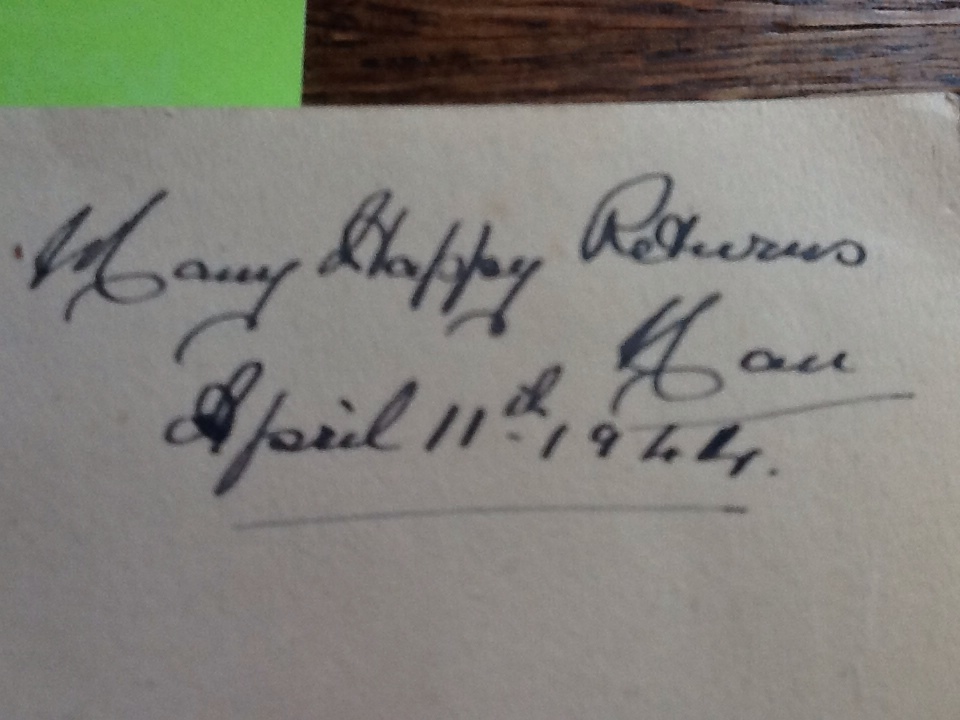
I can't read the recipient's name, perhaps Stan or Alan, but it touched me that someone hoped this book would give pleasure. No-one could possibly have know that shy under seventy years later, it would again give pleasure.
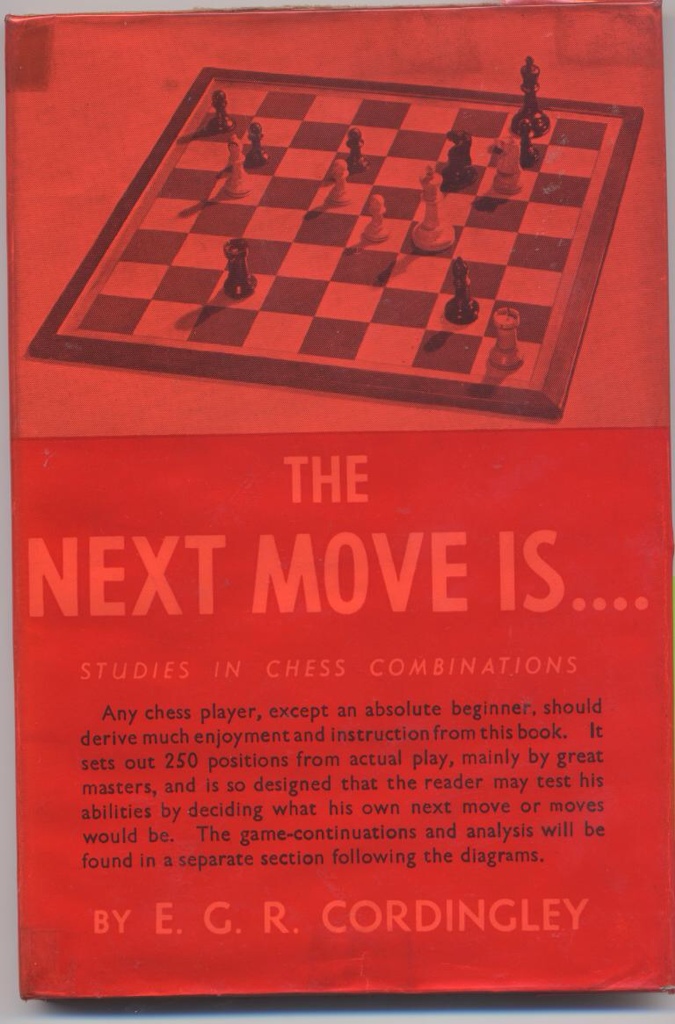
Secondly, someone, perhaps the first owner, had covered the book in a red plastic type cover, to protect it. The cover puzzle is also quite a special one, and one where there is still some mystery (see a previous blog)- no-one to date has been able to find the game score.
Thirdly, the book is dedicated to the National Chess Centre and to the John Lewis Partnership- which apparently hosted the centre, until it was bombed by the Germans, never to be reopened. John Lewis is one of my favourite shops, and it pleased me to learn that they once had an association with chess, I think through the eponymous Mr Lewis.
One of my other hobbies is family history, and through some of the programs I have, and websites I subscribe to, I decided to find out something about EGR Cordingley: little seems to be available through google. I had hoped to find that he had a child or grandchild who was alive, whom I could contact, to let them know about the project, on the off chance (perhaps very off chance) that they would be interested in chess.
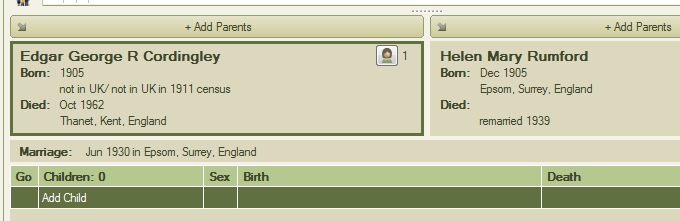
Alas, Edgar's marriage didn't last, and was childless: so he probably had no survivors; there are also two minor mysteries, what 'R' means, and also where and precisely when he was born: he was born outside the UK, and came to England after the 1911 census. We will have to wait until 2021 when the 1921 census comes out, before we can perhaps answer these points (though I will be doing some more googling on this when I have time).
To end with an aside, the 1921 census is the last I will see unless I live to a ripe old age: the 1931 census was destroyed by the Germans in the blitz, and no census was taken in 1941. Expect genealogists to be very excited in early 2021 and a boom in business for ancestry sites at that time.
 Posted with Blogsy
I was struck by a particular move whilst watching one of yesterday's games.
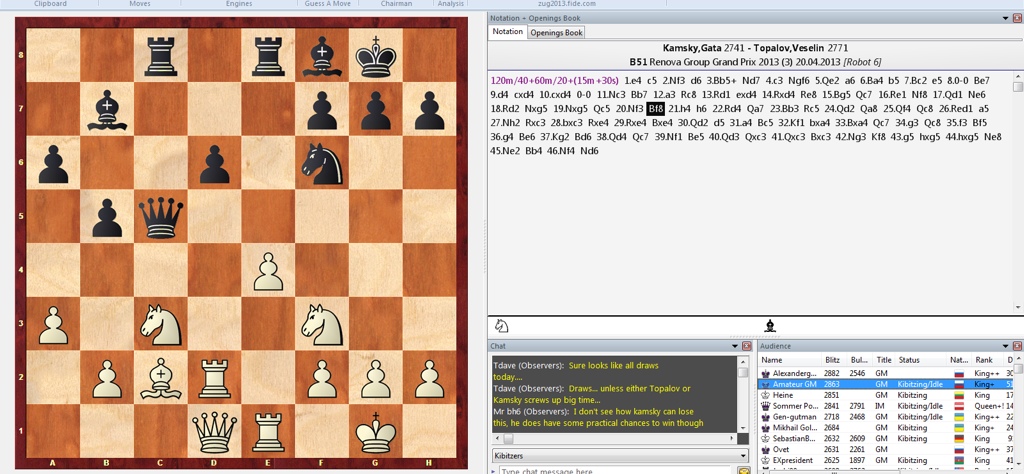
If I were playing white, and had the above position, I would never even consider h4.
It reminded me of a similarly puzzling move earlier this year:
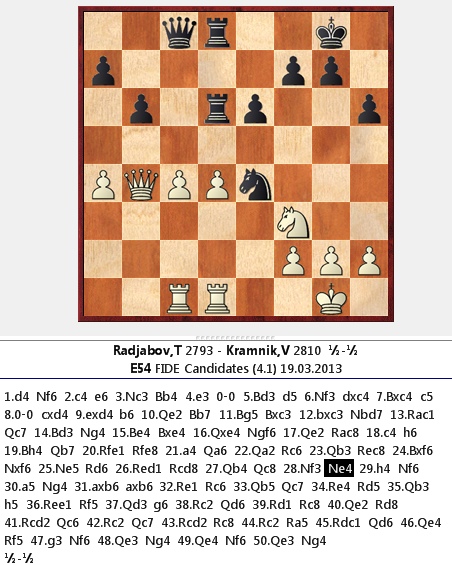
Again, at the time I was amazed at Radjabov's move, but after reflecting upon it, decided it was a type of prophylaxis, stemming an advance of black's king side pawns.
I am still puzzled by Kamsky's move.
White to play and win
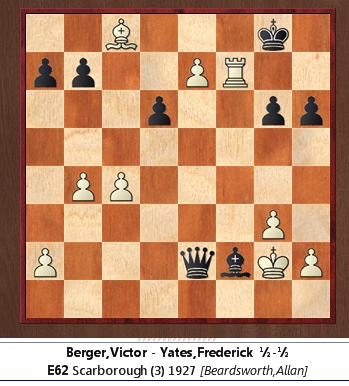
Solution
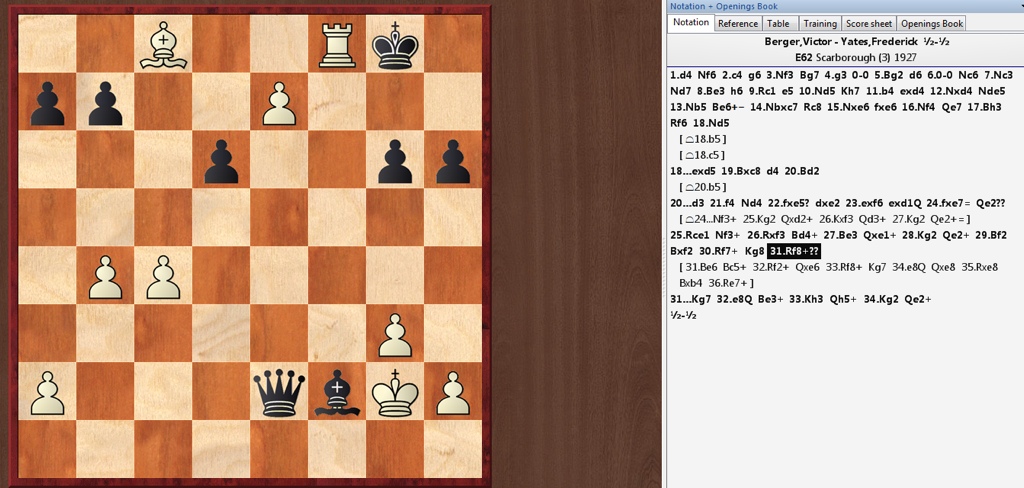
In the game, white erred, playing e8(Q), allowing a perpetual.
I suspect this is an occasion where it is easier to know that it is a puzzle: so there has to be a trick, a catch, something special. So the solution was fairly straightforward.
When I looked at the game briefly with an engine, I saw that it was fairly error strewn: a tense, double edged game; maybe the ending was in time trouble.
Today, has been a fascinating day for watching chess, with both the Alekhine Memorial and Grand Prix tournaments being held. It is great to be able to watch games live- my preference being on Playchess.
Several games are still going on. As I write, Mickey Adams is beating Vishy Anand, or so the kibitzers, armed with Tablebases and engines are saying: though to me, the practical difficulties for Mickey seem high: I am reliving the tension of captaining the England team, hoping for my players.
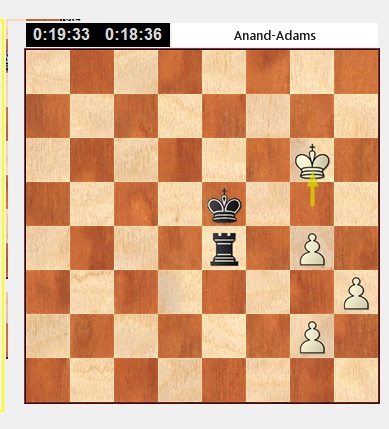
Would I be confident of winning this against Anand? With 18 min? With 18 hours? As I write this, Mickey has played Re2, but the kibitzers say Re3 with the idea of Re2 was best. We shall see.
Meanwhile, Leko, with 1 min on his clock for two moves, has just missed a pretty stalemate.
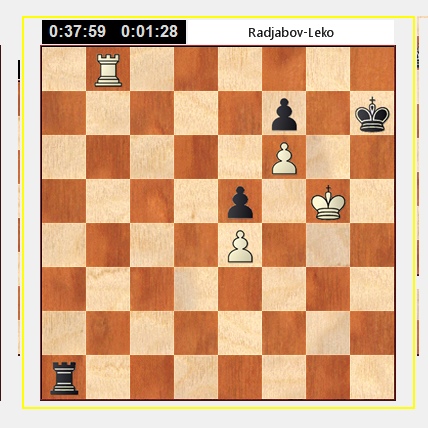
1…Rg1+ 2 Kf5 Rg5+! 3 Kg5 stalemate; instead, he played Rh1 but should still draw.
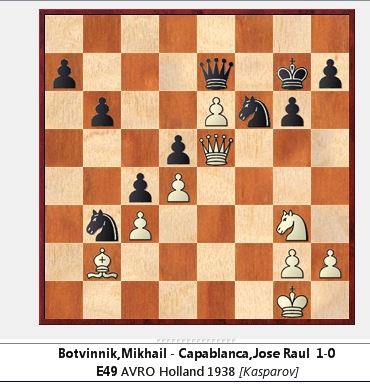
White to play and win
Solution
Firstly, this being puzzle 20, it was one of the puzzles printed in FEN notation, to save paper in war-time Britain. [idle thought: was publishing chess books a good use of scarce resources during the war?]. So I had to set it up on the board, and instantly recognised it as Botvinnik-Capablanca, Avro 1938: the position, and the solution, is part of my ‘chess culture’.
So, 1 Ba3! Qa3 2 Nh5+ gh 3 Qg5+ and Qf7+, e7: and the white king can escape the checks, so 1-0.
Of some interest is what happens after 1…Qe8? Then 2 Qc7+ Kg8 3 Be7!! (not a natural move, at least not to me) the point being that if 3…Nh5, white exchanges and then plays 5Bf6 mating. White is effectively a piece up, given that the Nb3 is not contributing.
I have received a question about my recent blog on the Masters odds, and Dutching.
Firstly, as is my wont, an aside at first: my blogs now have a daily readership of sixty, but by far and away the most read blog was my 'cheating your wife with a blonde' post. What does this tell us about what people search the web for?
The question I received was about Dutching as a betting strategy. If you understand that I hardly if ever bet, hardly if ever watch sport, and just like maths, then my answer is 'don't apply it as a strategy'. The spreadsheet below, of Betfred's odds a few hours before the final round, shows that the bookies are laying their bets on a 110% outcome: so that the top three, have a less than 72% chance of winning.
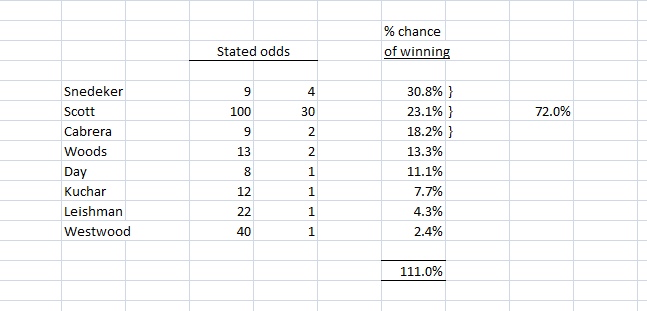
One time in three Dutching the Masters will lose.
This is an over-simplification, but is broadly correct, to the extent that the bookies have good information. Dutching could be considered where you really think one of the top three ( or your chosen selection) will win, or in cases where you want your club to win, but some monetary compensation will salve the pain if your team loses: you have to do the math for the two or more specific teams/runner/, and sometimes you will get the answer you want. But as a dispassionate strategy, I think it won't succeed in the long run.
The upside:downside ratio is one of the mental tools that I use more or less all the time. At one level, there isn’t too much in it, but over the years I have helped numerous colleagues and clients by applying it to their problems.
Firstly h/t (hat tip to, to prove I am young enough to be on twitter) the Bearbull column of Investor’s Chronicle, who taught me the model. Bearbull applies it as part of his methodology of choosing whether to buy or sell shares. Assess how much a share might go up in value if things turn out as promised, if the right things happen; and assess how much the share price might fall, on realistic or possible downsides. Then compare the ratio of upside to downside, and decide if you are comfortable with that ratio; or compare the ratio with other investments you could make instead.
I apply it basically in two ways, to client problems, and to helping colleagues and others, such as with their careers or other choices.
For instance, when assessing whether to adopt a particular tax strategy, be clear what the upside is- this can be a saving, or certainty, or assurance; the downside isn’t just fees; but the management time in understanding and implementing, the possibility that the consequences might be around for years, the need to handle complexity (when choosing between the complex method which you don’t really understand, and the simpler one that you do, it is surprising how many people choose the former, and not surprising how many of those later regret their choices, or whose successors regret the choices); essentially it is no more than thinking in the round, weighing up all options.
Or, for a colleague not sure whether to leave the firm, move offices, take a new role, put themselves up for promotion. The upside downside ratio is again here little more than a way of looking at pros and cons and then making a decision.
I recommend you try it out: anyway, what’s the downside in giving it a try?
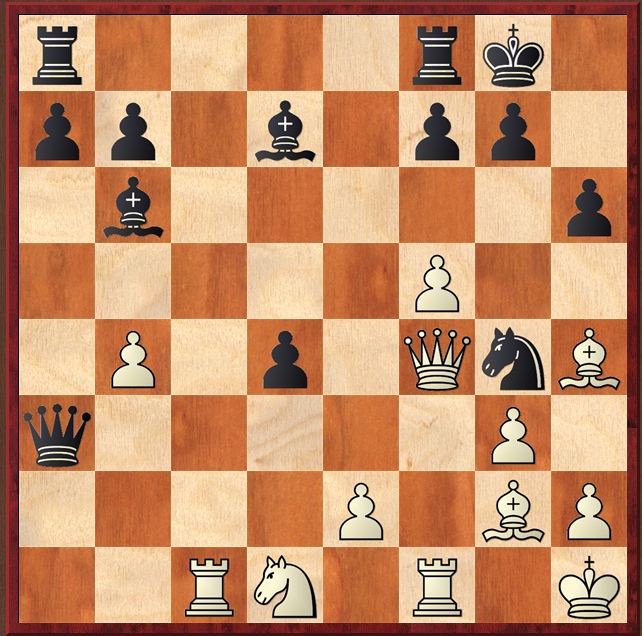
White to play and win (well, not quite)
Solution
Another Aagaard position: this is too deep for me to analyse, and Houdini shows that black has defences, and that the line Cordingley shows, the line which was played in the game, wasn't as good as he thought.
I looked at the position twice: once, a few years ago, when I bought the book, and again now, in 2013, when doing this blog. Interestingly, I choose the same line this year as last time: alas, checking with Houdini, the line I chose 'loses', but black's defence is narrow and not obvious: I think, in fact, in practice there were 'chances for both sides'. My move, was (after sacing the exchange, 1 Qg4 Qc1 2 Bf6 g6) was to bring another piece to the party, 3 Nf2, whereas bringing another piece 3 Bd5 is better.
This position is capable of far deeper analysis.
David Maister has written voluminously on various aspects of giving professional service. I haven’t read all of his books, but those that I have, and the many articles.
I see from his website that he has now retired, and that many of his articles are on the site. Heartily recommended. The first book of his that I read, in my run up to partnership, was:
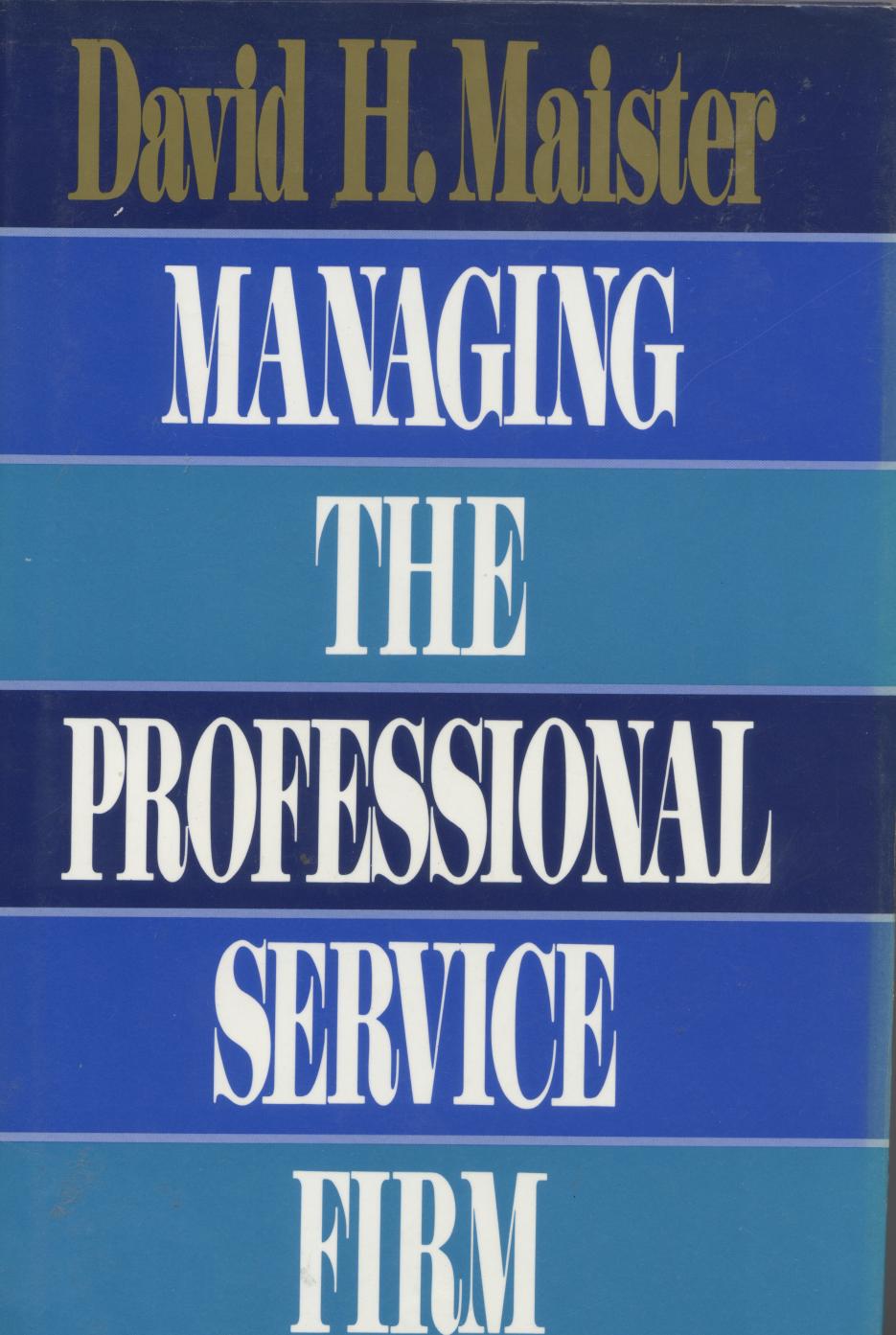
That, or his book the Trusted Advisor, would be my recommendations of where to start, to see if what and how he writes resonates with you.
In my twenties, I was a voracious book reader. One which still matters to me is Lord Benson's autobiography.
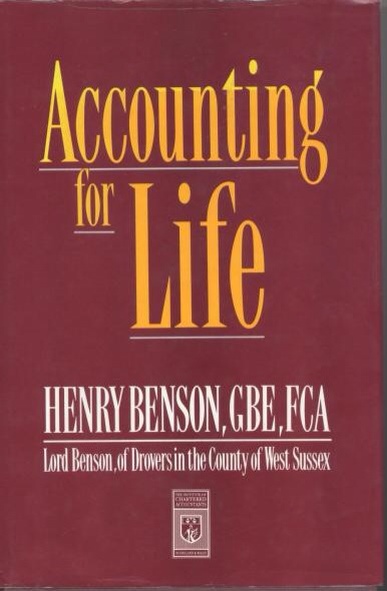
Lord Benson was one of the founding partners of Coopers, which has since become the #2 accounting firm, PwC, behind my firm. I have shown the front cover and not the back, because twenty five years ago I thought it was a picture of an old bald guy in a suit, whilst now it looks like me; so front cover only.
Lord Benson has an eminent career, with many varied and important roles. But what stuck with me was a chapter in which he published the guidance he gave to his junior partners. I have included some extracts below, but the full chapter is worth any professional's attention.
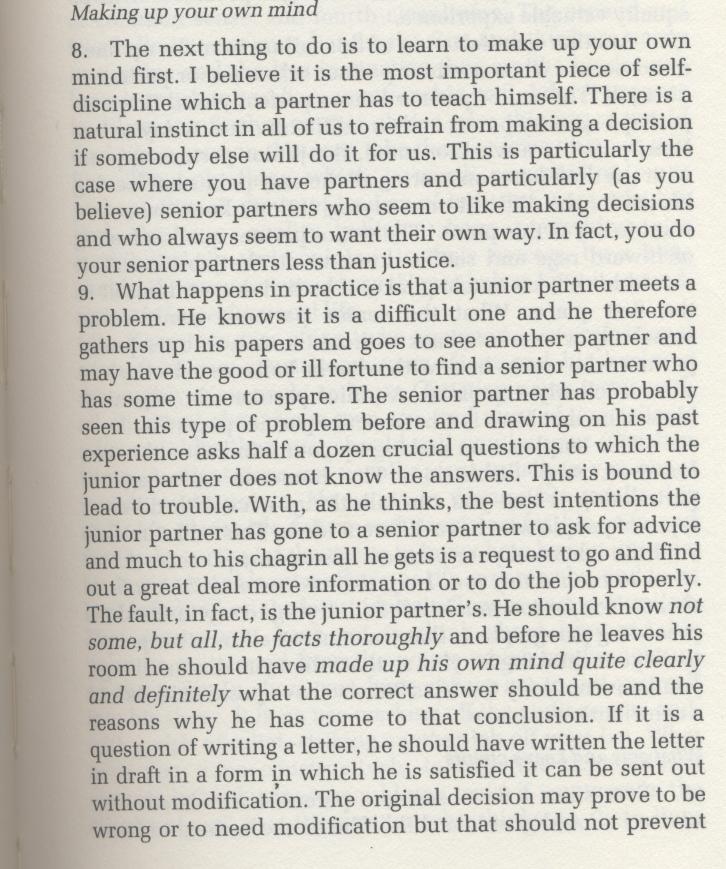
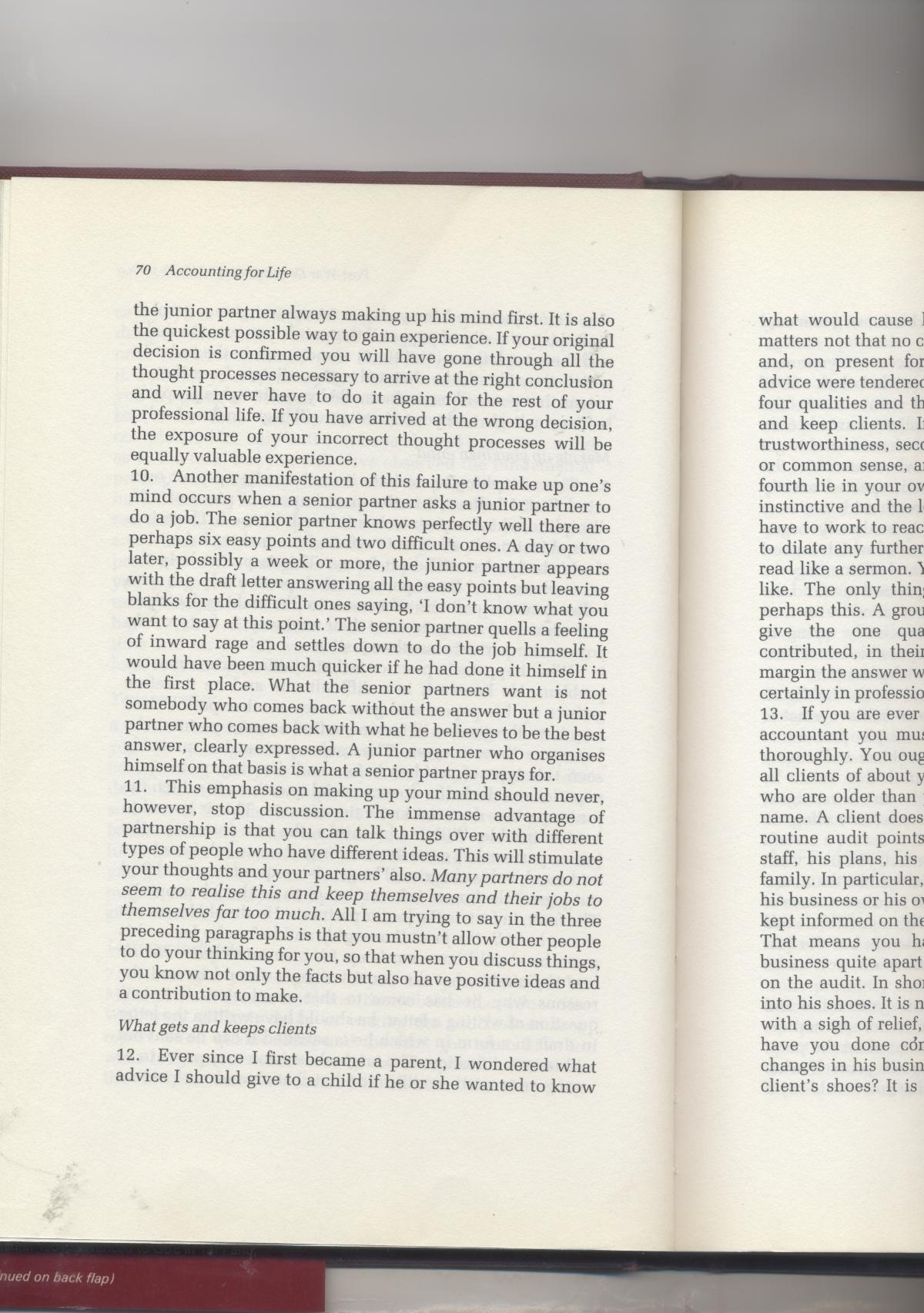
I think the above two points are pearls: make up your own mind, form your own judgement; and come up with your draft advice, well written, rather than (as so often happens) just saying 'what do you want to do'.
 allanbeardsworth