…they can be dangerous.
Today, I was the guest of LexisNexis UK – Butterworths – Tolley Innovative Business, Legal Solutions at the Candidates Tournament at the IET, Savoy Place http://savoyplace.theiet.org/. In terms of fostering good relations, LexisNexis's Sean Farquharson's invitation to this event couldn't for me be beaten. Another guest was my former fellow England junior Gary Senior, now a very senior lawyer and UK managing partner at Baker & McKenzie.
In chess terms, but not in other athletic terms, Gary and I were wolves in sheep's clothing suits. GM Robert Fontaine, who I understand has a relationship with the event's organisers, came into the LexisNexis suite to mingle with the guests, and after a while someone suggested it would be entertaining for all the guests to see the GM play two of the guests in an informal simul. Clocks weren't available, so when I was pushed forward (with absolutely zero reluctance…I doubt I have a poker face and I suspected everyone could tell I was a willing participant), and Gary also volunteered, it was game on.
Robert asked me what my grading was, and I told him the correct, if slightly misleading, answer, that I don't have one. [True: alas, I haven't played classical time limit chess for a decade]. Maybe, this gave Robert some confidence. He have us both white, and we rattled our some moves. I played my beloved Morra Gambit against his Sicilian, which he declined, and I quickly got to a very comfortable Maroczy type position. I didn't hear him say this, but one of the guests told me that Robert had said around this stage that I clearly knew how to play chess.
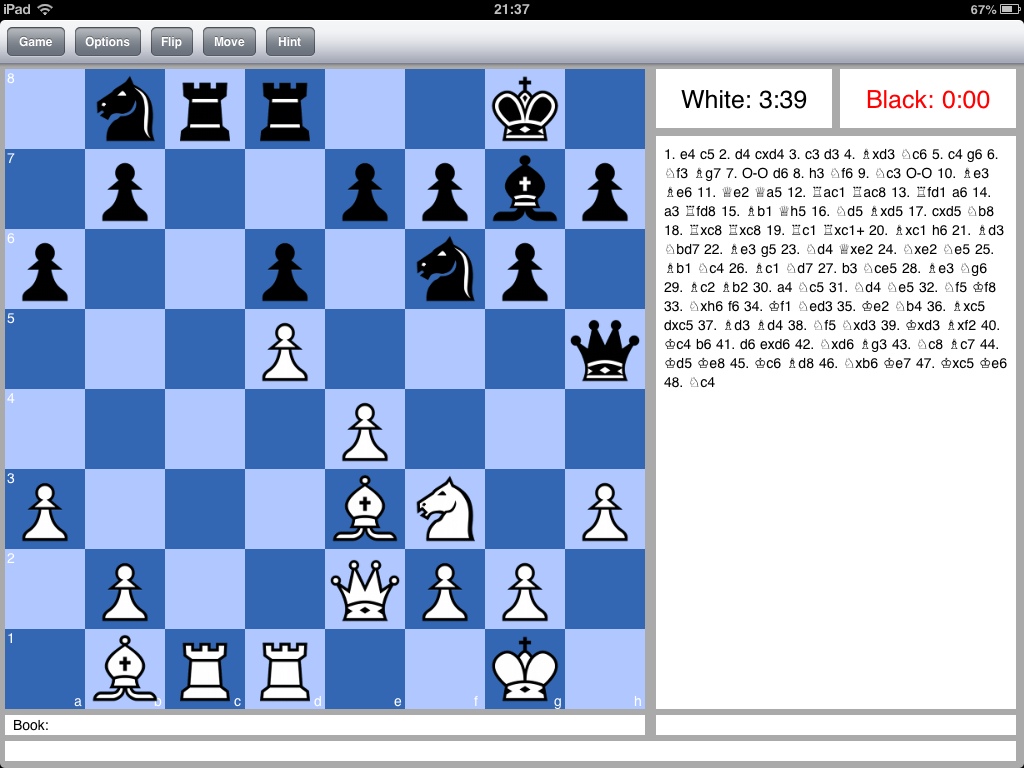
I had a bit of a think here, and decided to swap off both pairs of rooks: if black avoided the swap, he would cede me the c-file. I felt by swapping off the rooks I might be able to take advantage of his queen being offside.
Robert sought to make use of his queen being on the king side to launch an attack with h6 and g5: but I forced the exchange of queens, and placed my knight on the f5 hold created by his pawn advance. Meanwhile, Gary's game was heading to a draw.
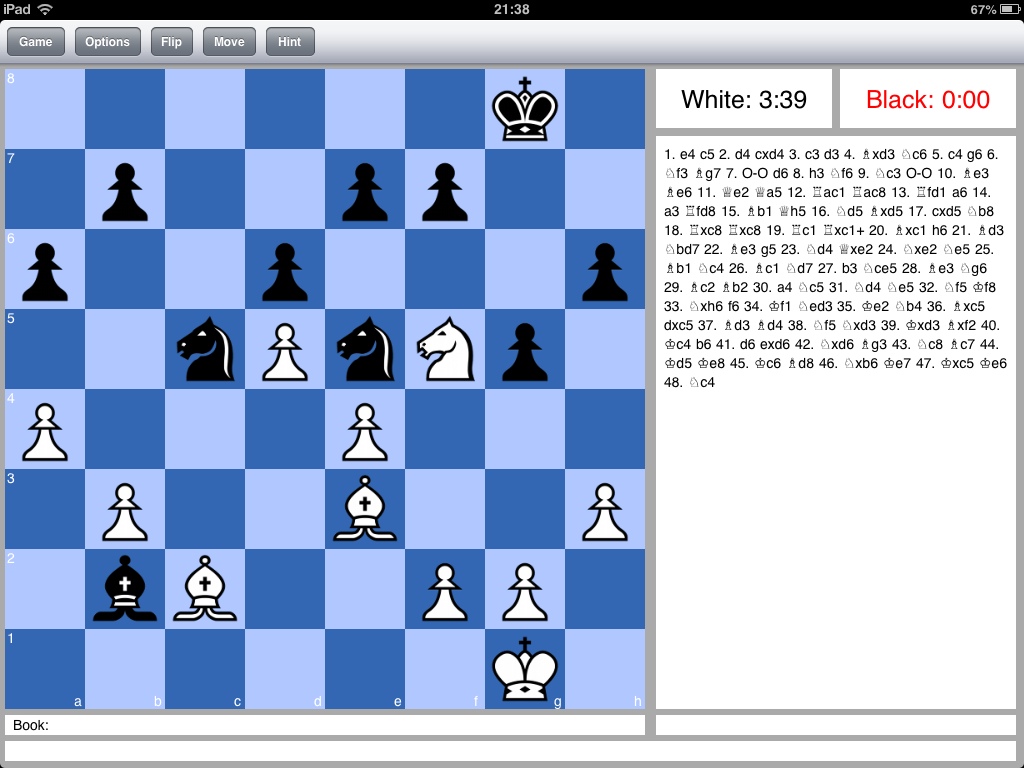
Here, I felt I was playing for two results, a draw or a win, which is a nice position to be in when playing against a GM with an audience watching. The procedure was fairly simple: in the above position, one of his pawns falls, so I just needed to be careful, returning the N into play (because black took the obviously better choice to let the h6 pawn fall), centralising the king, and swapping off as appropriate.
The game was effectively over after the nice (but not hard) tactic 41 d6, the point being that if 41…e6, then 42 e7! and the pawn promotes.
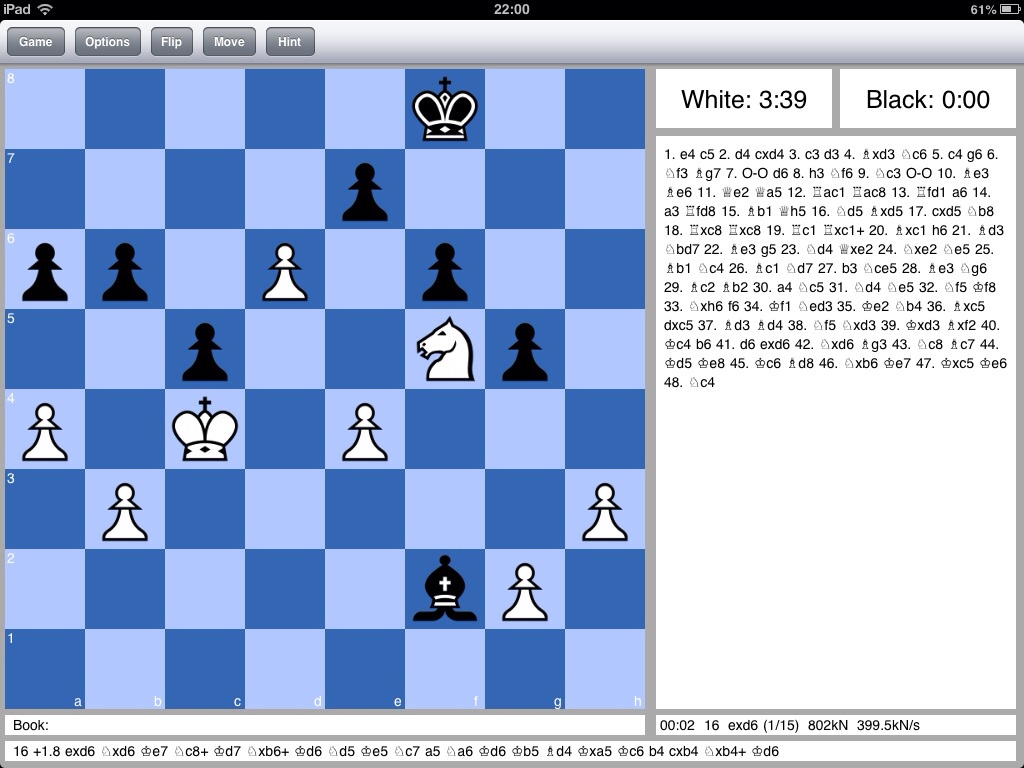
After this, the game was over quickly.
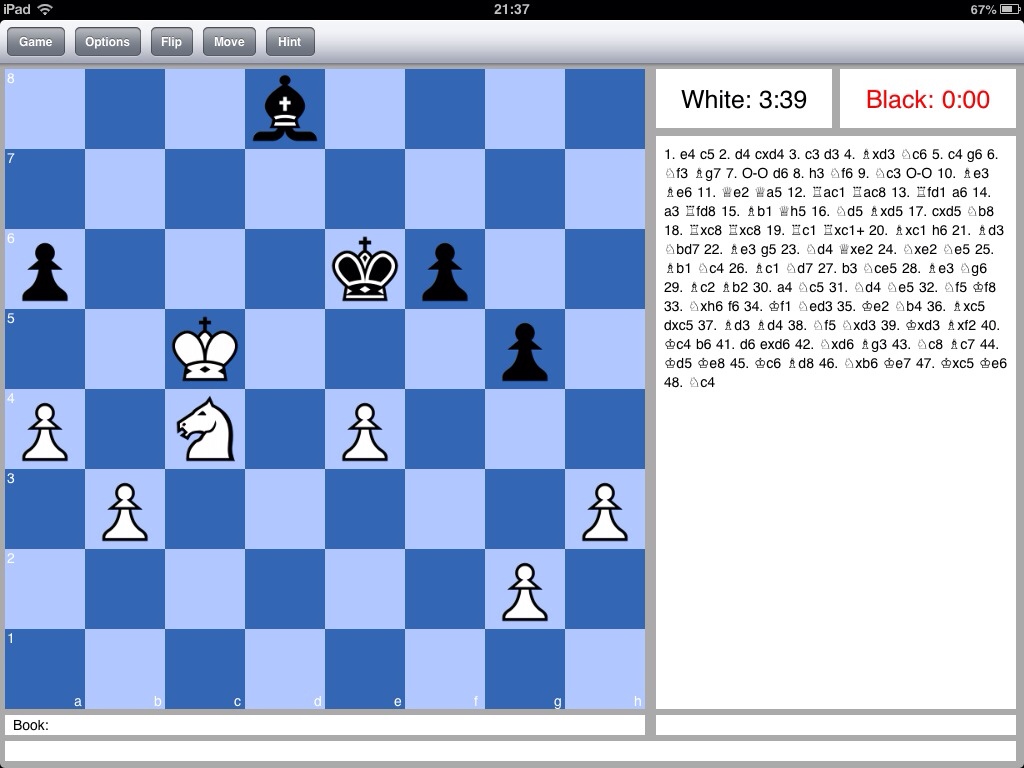
What better way for me to thank LexisNexis for their invitation? Thank you, LexisNexis, for giving me one more memory for a lifetime.
 Posted with Blogsy
Iceland trip, July 2012
(notes drafted during a 2 hour delay at Reykjavik airport: I don’t do duty free, and needed to kill time; and finished off on the plane home with a few changes (including checking Icelandic spellings 🙂 ) done afterwards)
( I sent this note to friends last July; but a colleague told me today that she was soon off to Iceland, and now that I am committed blogger, what more excuse do I need to post this online)
How to fall in love with a place and its people in a weekend…
We had an amazing long weekend in Iceland; it really couldn’t have been better. Arrived mid afternoon Friday 20th July, departing very early on Monday 23rd July, 2012. But in those two and a half days we did a lot, enjoying it immensely.
We arrived in Reykjavik late Friday afternoon, just in time to settle in and walk down to the harbour, to the new (2011) Harpa Concert Hall, for dinner at the fabulous Kolabrautin restaurant, with views over the harbour.

The sun was still high in the sky at 10pm, even 11pm; and when we went to sleep some good time past midnight, it was still light. We were later told it never gets dark at this time of year.

Dinner at Harpa Concert Hall: late evening, but broad daylight
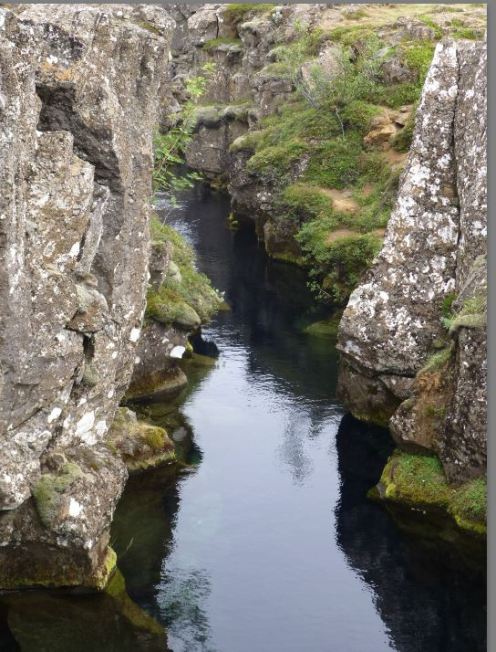
Saturday was an early start with http://www.superjeeps.is on a Jeep tour of the ‘Golden Circle’ of attractions, plus a drive into the highlands, and some serious ‘off-roading’. Whilst the weather forecast had been for rain from mid morning onwards, in fact we had near perfect conditions: not sunny, but warm and very pleasant for touring. First stop was at Thingvellir, the seat of the ancient Icelandic Parliament, the Althingi, but also where the American and European continental plates meet: we saw the two crack lines, and walked round the historic site in lovely sunshine.
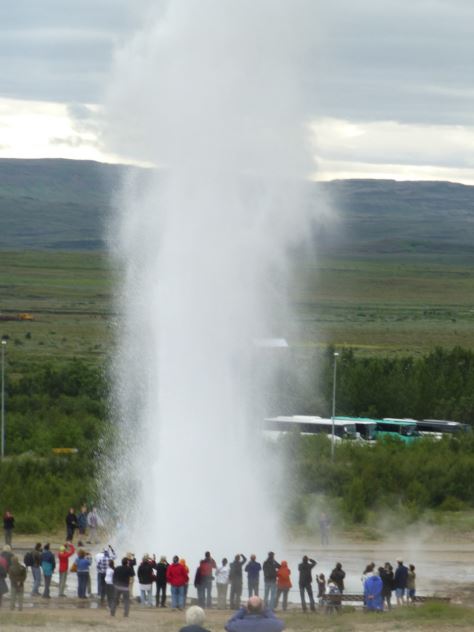
From there, we went to Geysir, which I think for Jane and I was the highlight of the trip. Geysir itself has been near dormant since 1916, but another one, Strokkur, erupts every four minutes or so. It was great to watch it from afar, and also to get soaked by it. The other abiding memory of the Geysir site was the smell of sulphur: in fact, that was the smell of Iceland; that and the fresh air.
Next, and the last visit on the Golden Circle trio, was Gulfoss, which our guide, Borgpór Stefánsson, told us was the largest waterfall in Europe. Certainly the largest falls we have ever seen.

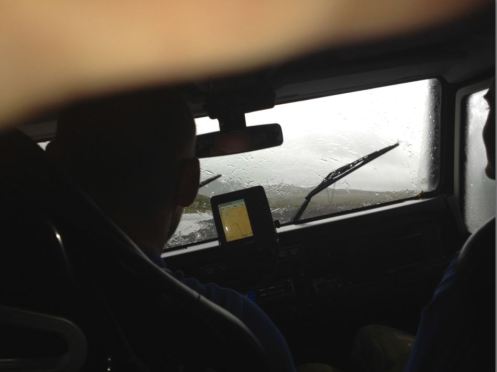
Then, and we didn’t know this was in the itinerary, we drove up north, eventually going off asphalt roads onto gravel tracks; which sometimes became what I would call off road, but were shown on the GPS as routes. The bouncing, jostling and turning made this part of the day great fun. Eventually, we reached the Langjökull and Hofsjökull glaciers: from quite a distance, but still very clear to see. To see volcanoes, waterfalls, geysers and glaciers in one day made Saturday special, but for me there was more to come.
I had asked Borgpór whether we went near Selfoss, to be delighted to be told we would not just going near it, but actually would be driving through it, on our return part of the journey. I therefore asked him, and he asked the rest of the people in the jeep (a lone Swedish guy, Anton, a single Canadian geologist, Marie, and a Boston couple) and they all had no problem with taking a detour to see ….Bobby Fischer’s (9/3/43-17/1/08) grave.

Borgpór didn’t know where it was, but some googling and calls to his colleagues, tracked it down, and it was only perhaps a 5min each way detour from the main road, to the church at Laugardælir, but one I shall remember for ever. Everyone liked it: the gravestone was a beautiful marble, with newly laid flowers by its side; the church was small, Lutheran, Scandanavian yellow, and by chance open, so we all liked seeing inside it.
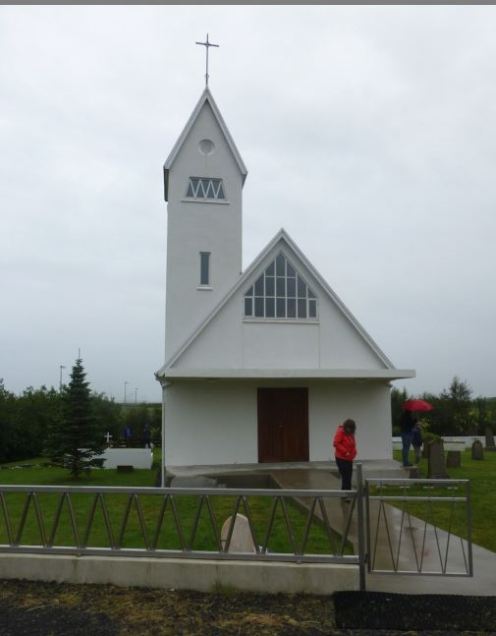
The church at Laugardælir, where Bobby Fischer’s grave is
For me, though, I was surprised how moved I was by the experience of being at Fischer’s resting place. It was an enormous moment for me, with mixed emotions about the man himself (arguably, the best ever chess player, though Garry Kasparov might pip him to this title) but in the second half of his life a bigot with despicable views about religion and the US; but it was because of him that I came into chess, because of him that it has given me a life’s enjoyment and endless pleasure, intellectual pleasure, enjoyment, challenge, friendship…. It may only be a game played with 32 pieces on a 64 square board, but for me it a massive source of happiness.
Had I not been ten in 1972, at a good age to be receptive to it, when Fischer played Spassky in Reykjavik for the World Championships, I may not have found chess. It was Fischer, not Spassky, being the first Western player to have a serious chance of challenging a Soviet player, who brought publicity and prominence to the game. I am one of the Fischer boom players. Standing at his grave, I couldn’t help but think of Mum, who would have loved to have known where I was.
Whilst not the highlight of the trip, being there was certainly a highlight.
From there, we headed back to Reykjavik, but this time for some serious off-roading- though yet again, following a road marked on the GPS. At speed, we went across and along countless rivers, flew over bumps, spun round bends, climbed up a volcanic ash mountain, sped down it…for someone like me, who hates big dippers, this was fantastic, and I managed to be more excited than queasy. High up, we were right next to one of the vents out of which steam booms night and day, and then we travelled by the side of the thermal water pipes which powers Iceland. Borgpór told us that all the power in Iceland is geo-thermal; no carbon burning, and (it occurred to me) certainly no solar power.
That evening, Jane and I dined at Fiskifélagiõ (Fish Company), one of the finest restaurants in Reykjavik (though we later learned that the capital is a gourmet’s paradise, with diners spoilt for choice). I think it is fair to say that both Kolabrautin and Fish Company were amongst the best restaurants I have ever been to.

If Saturday was great, could Sunday be as good? It was. Again, the weather forecast turned out to be entirely wrong- strong storms were predicted, throughout the day, with heavy rainfall. As it was, we had light rain in the morning, but it didn’t matter, because we were in the Blue Lagoon; if anything, the cool rain added to the experience, contrasting with the deliciously hot water and steam; by lunchtime, the rain had stopped, with even some sunny spells.
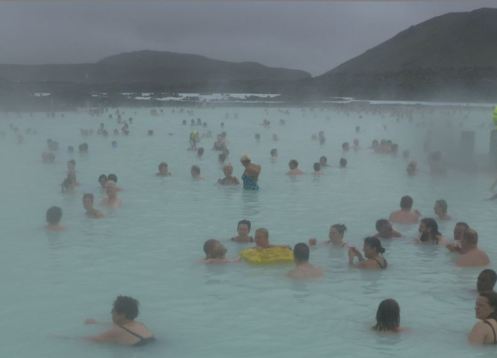
Not being a strong nor confident swimmer, I was delighted to find out that the Blue Lagoon is never more than chest high, and the water very buoyant, so I can frankly say I think the hours in the pool, particularly lying on my back dozing, were some of the my most relaxing moments ever. I don’t know if the Blue Lagoon is a ‘wonder of the world’ but it is certainly a wonder of my world.

If this note sounds like one superb thing after another (or, at least, superb for us) Sunday had a further highlight. When Jane told me she had booked for us to go to Iceland, I emailed the office of the Icelandic Chess Federation (chess is big in Iceland, maybe because of the short day light hour for much of the year). I was staggered that the recipient of my email to the office was the current chess federation President, Gunnar Bjornsson, who remembered me from 2004, when England played Iceland at the Olympiad in Calvia, Mallorca. I had bought small silver pocket chess sets as gifts for the captains of each team we played against (and for my players, and for my family) and Gunnar treasured his: he also told me that we had had coffees together during the match, and he remembers the friendliness of the chat we had. Anyway, as a result, Gunnar organised a GM tournament (blitz, seven rounds of seven minute per player per game) at the old Opera House, to which Helgi Ólafsson, one of Iceland’s strongest ever players, and seventeen other top Icelandic players came, including three of their top juniors. Gunnar told me that in winter months they tend to have weekly blitz tournaments, but having one in the summer, and on a Sunday, were special, so they had hired a grand venue for the occasion, the first time they had played in such great surroundings.
Gunnar used his PC for running the seven round tournament: the tournament name was Reykjavik Afmælismót [birthday tournament] Allan Beardsworth 22 July 2012: I hope none chess players reading this note can imagine the enormity for me of playing against their top players in the city which I have wanted to visit for all of my life (or at least all my adult life).
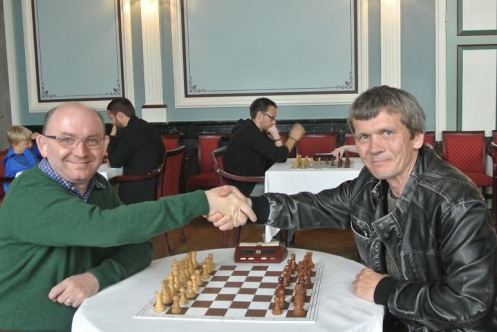
Start of round 1: at the end of the game, which I won, Black said, with a lovely smile “this is happy birthday from all of Iceland”
I had brought a copy of one of Kasparov’s books as a prize, inserting a frontispiece showing the scoresheet of game 6 of the 1972 match, a game which was played on 23 July 1972, forty years (less a day) to when we were playing: game six was, arguably, the finest game of the match- so good, that (and this is unheard of in chess) Spassky joined in the applause for Fischer- something which the Soviets criticised him for, but he has always been a sportsman. I also stuck in what for chess players is the most famous position of the match, when Fischer played the inexplicable Bh2 in game 1, losing when he needn’t have. I gave a speech at the start of the tournament, thanking Gunnar for organising it, and for the players for turning out for me.

Presenting prizes: a small talk, and a great deal of happiness. Gunnar behind me
Then the tournament began. It was actually surreal, I was in a different mood to what I have been before, being the star of the event: I suspected everyone tried double hard to beat me, because I was the visitor, not from their crowd. Jane watched my first game, and I will remember it for ever, because I won a nice, solid game- I played to opening in quite a boring fashion, not trying for too much, just wanting to play sensibly; but soon I realised I had the advantage, and could easily pressurise black; which I proceeded to do, playing a succession of simple but powerful moves, which, as sometime happens in chess, led black, Hrafn Jokulsson to crack and blunder. Game over, I had won my first game in Iceland. That was actually all I wanted to do: my pre-tournament ambition was to win at least one game, and maybe get a draw or two more- in short, not to be out-classed. My first game was the first to finish, and a confident victory. I wonder what Hrafn said (in Icelandic) to his friends? I will though remember forever what he said to me: with great kindness and charm, he said I should regard his blunder as a birthday present from him and from Iceland. Magical. (Hrafn also took several photos of the event, I am delighted to say).
Next game, Helgi brushed me aside. I wasn’t pleased with how I played in that game, but wasn’t surprised with the result. The remaining five games were generally good, one loss which is going to annoy me for a long to come, but one draw, and three wins, one a very strong game against one of their very top players, another a squash of the top Icelandic girl. So, I ended up in fourth place, out of eighteen, with 4.5/7, or ‘plus two’ (two more wins than losses): because I am annoyed with how I lost my second defeat, at the time of writing I am a bit upset about 4th (a draw would have made me second, and a win, first) but of course I was in a tournament with some very strong players. One of the pains of chess (maybe of all sports?) is that some defeats really hurt.
And what about Jane, who hasn’t been mentioned in the last paragraphs? I’m delighted to say, that after watching my first game, two of the other spectators, Andrea Margret Gunnarsdottir and Arora Hronn Skuladottir, mums of two of the juniors (Andrea is also vice president of the Icelandic Chess Federation), offered to take her out into Reykjavik, which they did, showing Jane some of the sights, and also going to a bar with her.
In truth, perhaps the best thing about the Reykjavik Allan Beardsworth tournament was its sheer friendliness. The Icelanders were super hosts, chatty, warm and friendly really made us welcome. At the end, I gave another speech, and presented the winner with Garry’s book, and was delighted that Gunnar had prepared a surprise for me, namely a selection of chess magazines and a souvenir book of Iceland in photographs. They couldn’t have done more for me.
We said our goodbyes, and then went to the favourite restaurant, Tapas Barinn, of one of the ladies who had taken Jane out; a tapas bar, hidden away, with a very nondescript front door, but inside, a great spirit and super food. Super food except for the puffin, that is: neither of us wanted to eat Minke whale, which was on the menu; I didn’t like the puffin, either.
Monday morning, up early ( I can’t say before dawn, because it never goes dark), back to the airport, to return to reality. A good test of the weekend was that even those things which went wrong didn’t matter, or turned out to be positives. The paperwork from our (UK) travel agents wasn’t great (I won’t be using them again) but Gray Line (Iceland) sorted matters out speedily and without stress to us; and our jeep lost its drive shaft, but only a few hundred yards from our apartment, so we were able to go to a coffee shop and grab an early breakfast; such was our good fortune.
I couldn’t have asked for a better 50th birthday. A brilliant party at home, breakfast with Tom with Garry Kasparov, followed the next day by the afternoon with him, then a trip of a lifetime to Reykjavik.
What will Jane plan for my 60th? Another trip to Iceland, perhaps, or lessons in how to say Eyjafjallajökull, perhaps? (the volcano which erupted in March 2010). At least I can say the Icelandic for chess, skák.
Post script: the Icelandic players have added a piece about the tournament, together with some photos, to their website. http://www.tinyurl.com/bnmlgbp for the pictures, or http://skak.blog.is/blog/skak/ for the story (or http://www.tinyurl.com/c9bry5x), together with some further pictures, including a very nice one of me and Jane. For me as a chess player, though, the fact that the tournament is on the official listing site chess-results.com (at http://www.tinyurl.com/c2j8hy6) means that the tournament, Afmælismót Allan Beardsworth, is recorded for posterity.

Vladimir Kramnik played a nice true sacrifice in his beloved Catalan opening game against Ivanchuk last week.
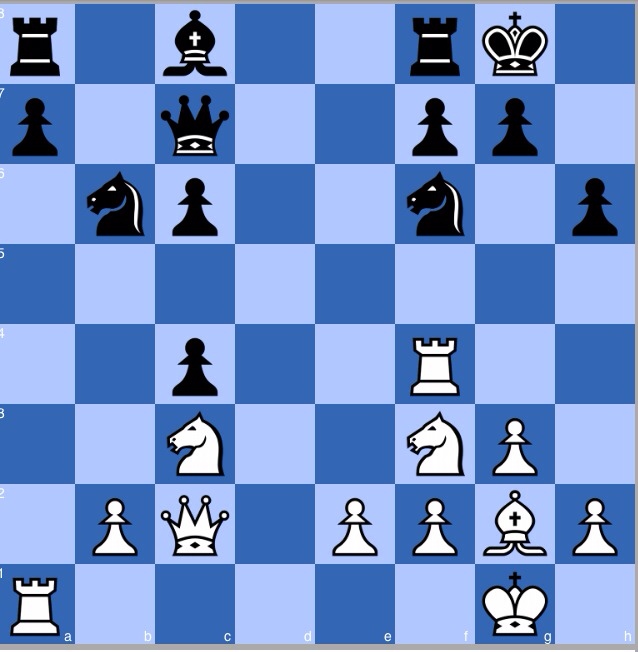
Vassily had permitted Vlad to play 19 Rf6! by his previous moves (17..b5 18 ab Ndb6) and Vlad took the opportunity; I suspect he would have done so anyway, but in addition Vassily had only a very few minutes to reach the 40 move time control. After a few moves we reached the following position.

I saw this position live and concentrated on trying to mate by 'bringing more pieces to the party'. Vlad played 21 Qd2 and after 21…Kg7 22 Bc6! Bc6 23 Nf5+ it turned out that he has no more than taking a perpetual- the game is worth seeing in full. It was annotated in Chess Today CT4517 by Mikhail Golubev and Mikhail mentions the move I would probably have played, 21 Ne4, without analysis (and I would have played it without analysis, on the general principle of bringing pieces over as fast as possible, before black can develop his pieces; but my sloppy thinking was unsure how to proceed after 21…Kg7, even thinking of 22 Nc5; the other mistake being I couldn't work out how to play the move I wanted to play.
The move 'my hand' wanted to play was 21 Ra5 which also looks equal after 21…Rae8! (planning Re5) and black seems to have enough time to organise his defences. I would however rejected 21 Ra5, not seeing how white should progress after 21…Nd5, blocking the 5th rank, whilst discovering an attack by the queen on the rook. Alas, having been intrigued by whether Vlad has enough to justify the sac, and having set out the pieces, it pretty soon became clear that 21…Nd5? loses quite prettily to 22 Bd5! after which black has nothing better than to take the bishop, after which white's rook takes on d5, with a balanced unequal position. The point of 22 Bd5! Is that it pins the f7 pawn, so that if 22…Qa5, the move I feared whilst waiting for Vlad to move, 23 Qg6+ wins easily: take the h6 pawn, and then 25 Ne4 is game over.
It is hard for me to see the true worth of such disruptive, pawn structure breaking, indeterminate, sacrifices. Hopefully analysing positions such as this game will aid my understanding.
Since 1993, I have been well aware of the so-called Monty Hall problem, on which I might blog some time. For now, this cartoon is well worth sharing.

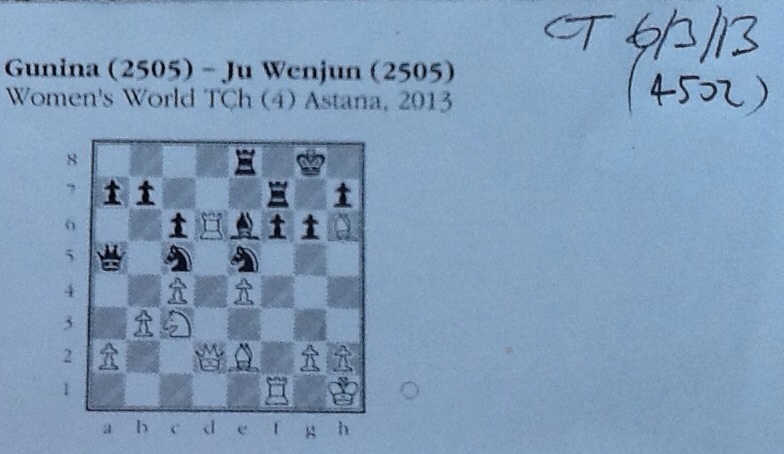
I can't decide if the above puzzle is easy or difficult. Certainly it took me several sittings to solve, and in fact, I had to get a board and pieces out to be really satisfied with that I had solved it.
Solution below
The annoying thing to me was that the first moves of the solution are pretty obvious. The motif is clearly back rank mating, but the jumble of black's pieces make it hard. I think by inspection (I.e. at first glance) I saw 1b4 diverting the queen from its control of d8, and after 1…b4 2 Rd8. It was then that I struggled.
I think in practice I would have played 1b4, partly for want of something better, but also because after 2 Rd8 my position hasn't worsened much….though I would be nervous that the pc4 will fall, and my position collapse. I struggled more with the response to 2…Bd7, but once spotted, the continuation 3 Re8+ Be8 4 Qd8 looks in hindsight fairly obvious. So, 2…Re7 instead, and then 3 Rf6 is the natural follow up, and indeed was played, followed by 3…Ncd7 4 Nd5 and game over. Also, after 2…Re7, 3 Qd6 wins, for if 3…Ncd3 4 Rf6! and if Qd6 5 Rf8+ mates quite nicely, or 4…Nf7 drops the Nd3.
So, all told, the disturbing thing for me and my chess is the lack of clarity of calculation. The intuition was right, but I clearly find calculating through a tangle of pieces hard.
Well done, Gunina, for finding the win.
Gelfand-Carlsen was played yesterday, 17th March 2013, a Sunday. Why do I mention this? Because we were out walking the dog, since it was a glorious day, and I had to sneak glances at the progress of the games with my Playchess app on my iPhone. Uphill, I am a fair bit faster than Jane (think hare and tortoise) and this gave me the chance to sneak glances. Hush, Jane mustn’t know.
Well, my first glance was after 25…Nf8, when I felt reasonably confident we were going to see an endgame crunch from Magnus: the N is far better than the bishop, which is just a bit more than a pawn; and I didn’t see what Boris saw, namely his way of creating his own passed pawn.
Later, I saw the position just before Magnus played Qc1: I had presumed Qd3, centrallising, controlling some white squares and in particular taking f3 under command. However, Houdini finds a fatal blow to my logic.
I have done some light annotation of the game in the attached file.
It is rest day after three rounds of the Candidates; Magnus has started to get going, after two draws; so he is now just behind the leaders. Yesterday’s game was typical Carlsen. I have not seen any comment on it yet, since Levon Aronian’s and Peter Svidler’s wins are more entertainig, but I was struck by the flow of Magnus’ play and also how, somehow, exchanges result in him having the right combination of pieces.
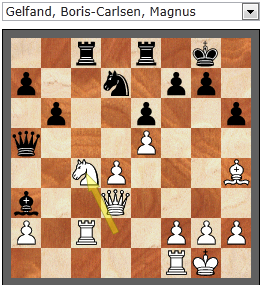
The scene is starting to be set. Once the white knight is exchanged for the black bishop, of the remaining minor pieces, which is better? Can’t be definitive, but if the rooks come off as well, then Q+N is normally better than Q+B.
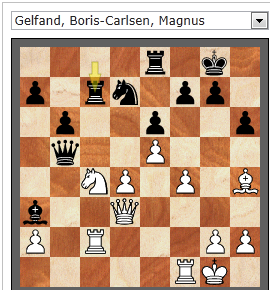
Here, the pin on the f1-a6 diagonal is a bit awkward, and black is getting ready to challenge control over the only open file, the c file. The white bishop’s control over d8 doesn’t count for much; and the f1-a6 pin means that typical blitz chess, of f2-f4-f5-mate, won’t work.
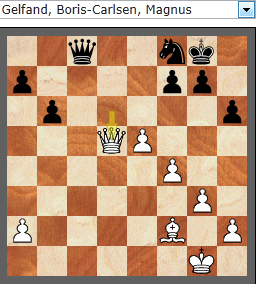
Here, a thought Magnus was now playing for two results: a win or a draw; and Boris, for a draw or a loss. Note that it is inevitable that white will be pushed back, and that the main question is whether the black pieces can shepherd the queenside pawns forward: referring back to the very first diagram, note Magnus’ 2-1 advantage on that side. On the king side, black can block on the white squares, though Boris played superbly in giving himself chances.
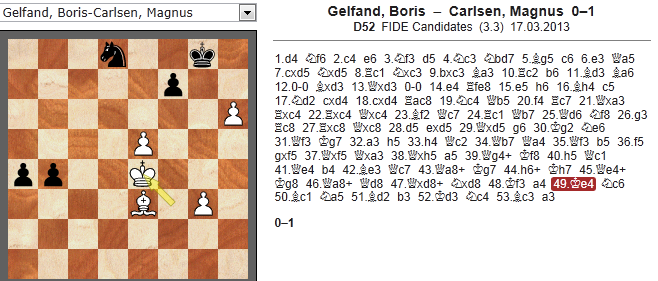
Game over, Magnus style. However, I should add that when I was watching it live on Playchess, trying hard to ignore all the inane chattering (I think in future I will close the comments box: there is so much nonsense talked, and so much engine analysis), I found it hard to calculate this to the end. When Magnus played Nc6, I was thinking that my move would be Ne6: which Houdini tells me is only equal. The fact that Magnus’ games flow so inevitably hides his sheer calculating ability.
Maybe this game wasn’t “brilliant”, but I think it was “awesome”.
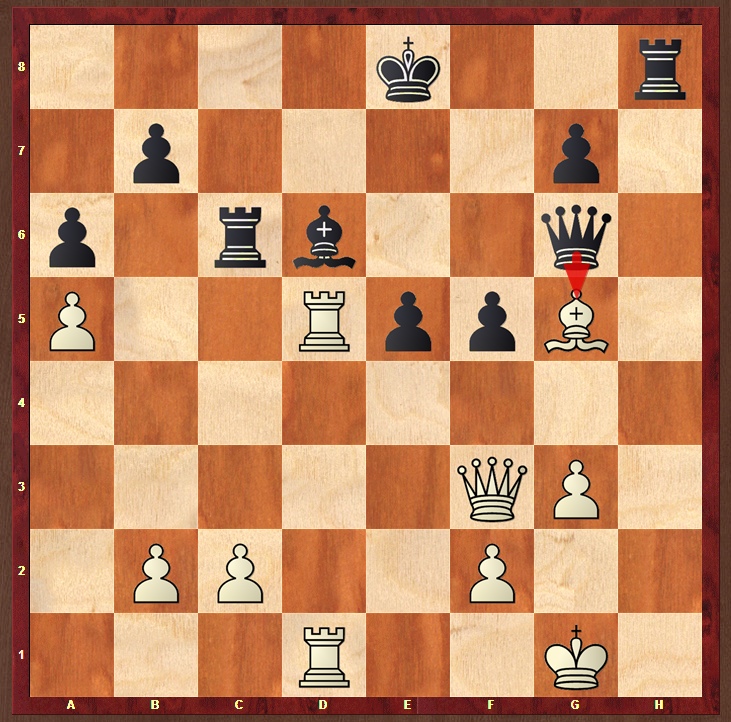
Sjugirov-Blomqvist
This puzzle, with white to play, stumped me. (source Chess Today, edition 4498). It is one of the annoying type of puzzles where I know in practice I would never even have considered the move.
Pause now, and attempt to solve it, before reading further
Worse than that, I actually thought I had solved it, and actually thought it was fairly staightforward, but when I looked at the answer, and found it was entirely different from mine, alas, my ability to calculate several moves ahead was shown by Houdini3 to be what it is: poor.
I thought 1 Re5+ won, my line being 1…Be5+ 2 Rd8+ Kf7 3 Qd5+ Qe6 (Re6 4 Qe7+ mates), swap the queens off, take the rh8, and…I had 'mis-visualised' the end position, not realising that black still had a bishop on, on e5, so that after 5…Bb2 black is no worse- I say this because I suspected black was better in the end position, but Houdini says it is virtually equal.
To end to my tale of woe, Houdini shows how my line could have been a draw, by perpetual. 3 Rd7+ and the king has nowhere to run: if it goes to e6, then Qd5 mates, and if it runs via g8 to h7, then the pretty Qh1+ mates. So, draw, but again I know that if I had played 1 Re5+ in practice, I doubt I would have noticed I need to bail out. Perhaps I am being too harsh on myself though.
Solution
Sjugirov played 1 Qb3 which is surprisingly effective. I think it has two points. The first, which tallies with my line, is to strengthen the threat of Re5+ since the Q now blocks the king's escape square, f7. The game continuation was 1…Qg5 2 Qb7 Qh5 3 Qc6+ Kf7 4 Rd6 1-0: a quite nice echo is that in the end position, the Qc6 defends the same square, h1, as earlier.
Victory on the white squares.
One of my favourite Radio 4 programmes BBC Radio 4 – From Our Own Correspondent I have listened to the programme on and off more or less each week for decades.
Now, the Beardsworth family have our own Moscow correspondent, seen here reporting from (face timing from) his hostel, the Safari Hostel in Petrovka St, which Tom tells us is very central.
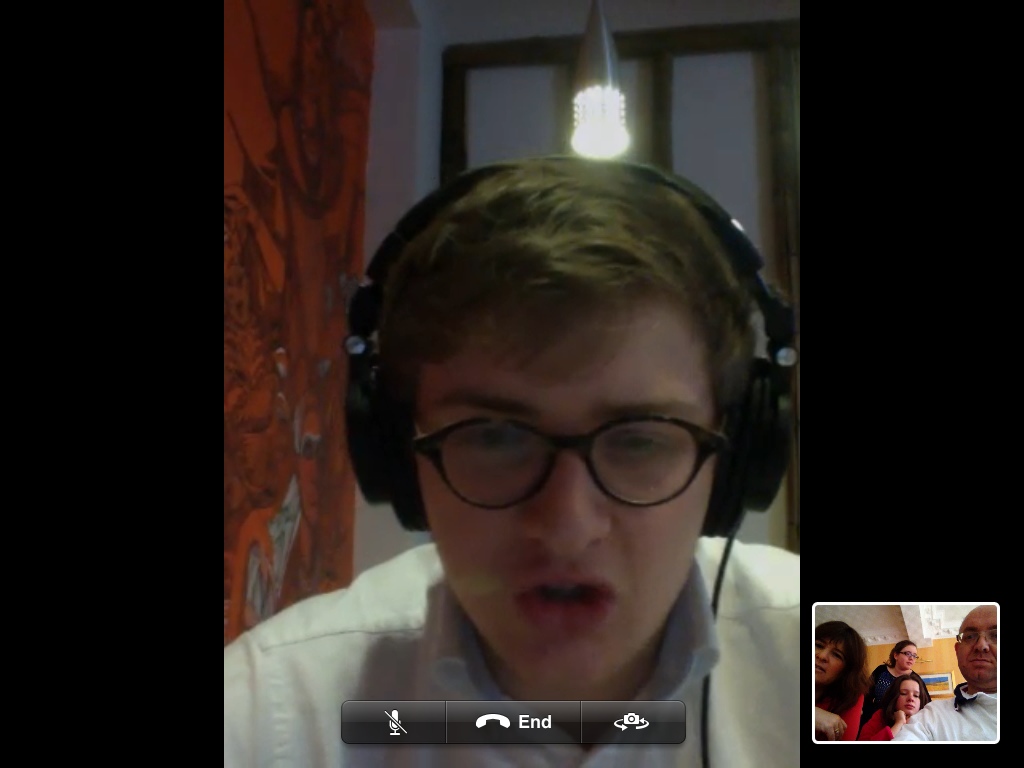
Enjoy your trip, Tom, and your internship at The Moscow News. We are all very proud of you.
No, this isn’t about apostrophes, but about maths and odds. Yesterday, Bobs Worth won the Betfred 2013 Cheltenham Gold Cup, costing, per twitter, my client Betfred £2.5m.
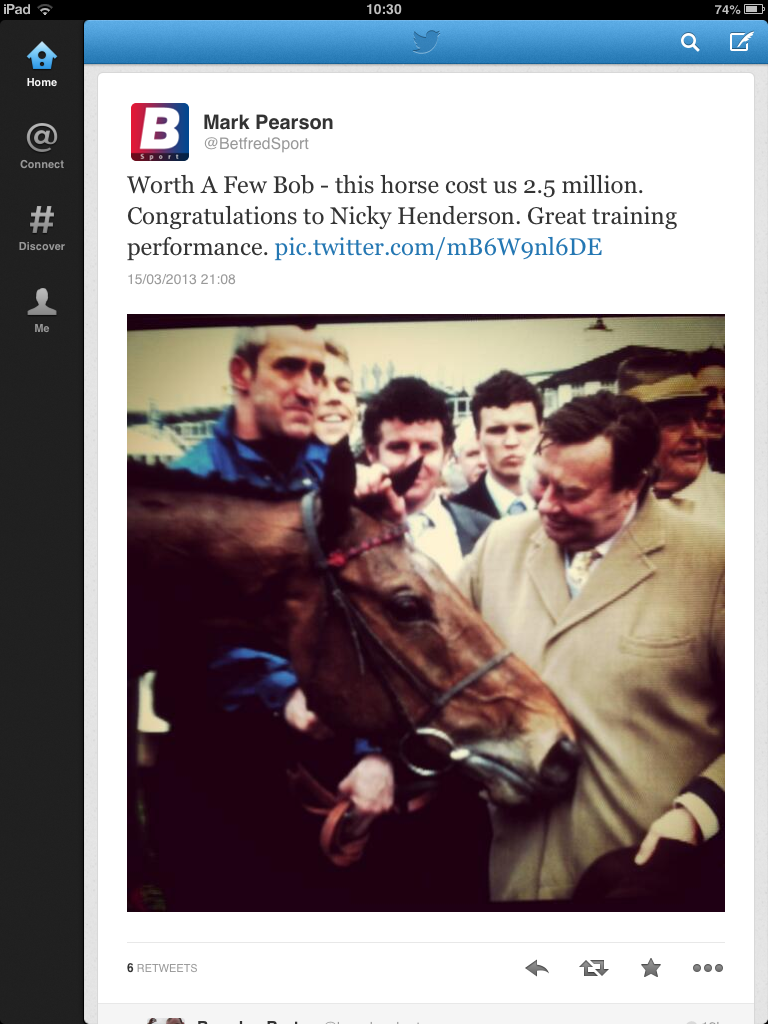
What interested me was that a few hours before the race, it was possible to ‘Dutch’ the favourites.
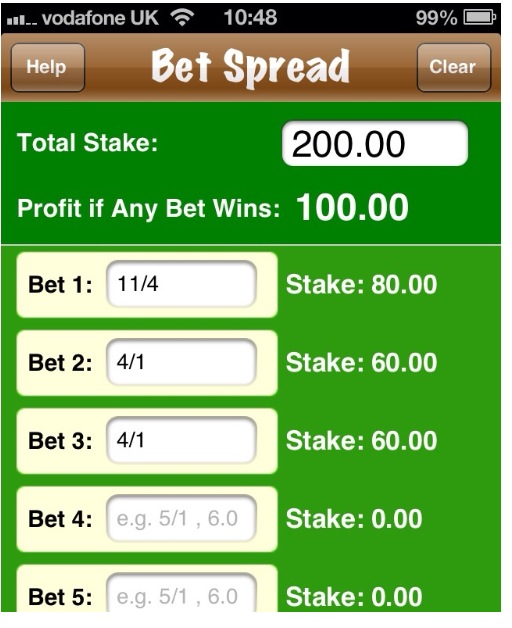
If you were sure that one of Bobs Worth, Sir Des Champs or Silvaniaco Contini would win (but not sure which one, and not caring which one) it was possible to back each of them, in appropriate proportions, and have a guaranteed return. This is called ‘Dutching’, and is not always possible, but sometimes is, and when I saw the odds being offered (not that I bet, I am just interested in the maths and my client) I intuitively knew this race was Dutchable, and indeed it was, as the screenshots below from the Bet Spread app show.
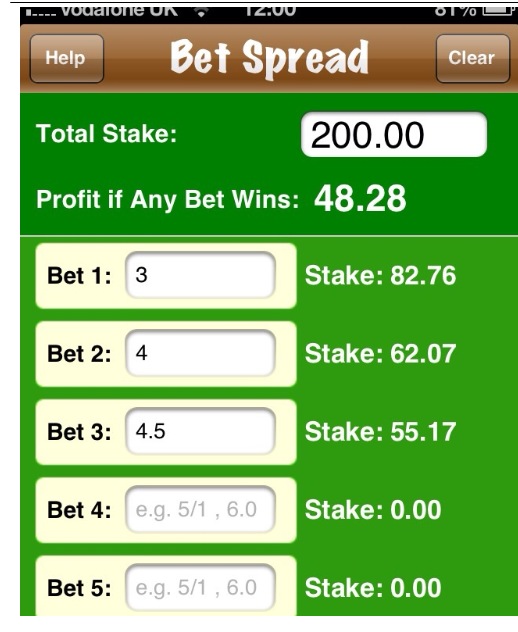
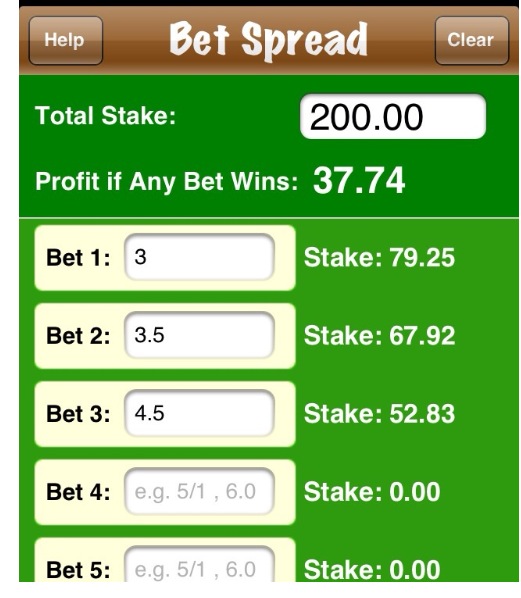
If instead your views were different, and you also felt that Long Run had a chance, then the race wasn’t Dutchable.

As it turned out, Bobs Worth, with a Starting Price (SP) of 11/4 came first, followed by Sir Des (4/1), Long Run (7/2) with Silvinaico (4/1) trailing in at ninth. Had you Dutched Bobs Worth, Sir Des and Silvanaico, you’d have made 50%, even at the SPs.
What seems quite poetic to me is that at the SPs, the individual stakes are all whole numbers. What is not immediately obvious to me is that the guaranteed return more than doubled as the odds moved. I think the answer is that the highest payout is when the horses are neck and neck in the odds, so that there is not one favourite which needs a high proportion of the allocation of the stake to give a return.
 allanbeardsworth