I have been reading everything which comes to my attention about Viktor following his death on Monday.
My favourite tweet is by @stuthefox, my friend GM Stuart Conquest.
Stuart Conquest (@stuthefox)
“Against some people you should not play the King’s Indian” – Viktor Korchnoi (to Alex Wohl, after their game @GibraltarChess 2011).
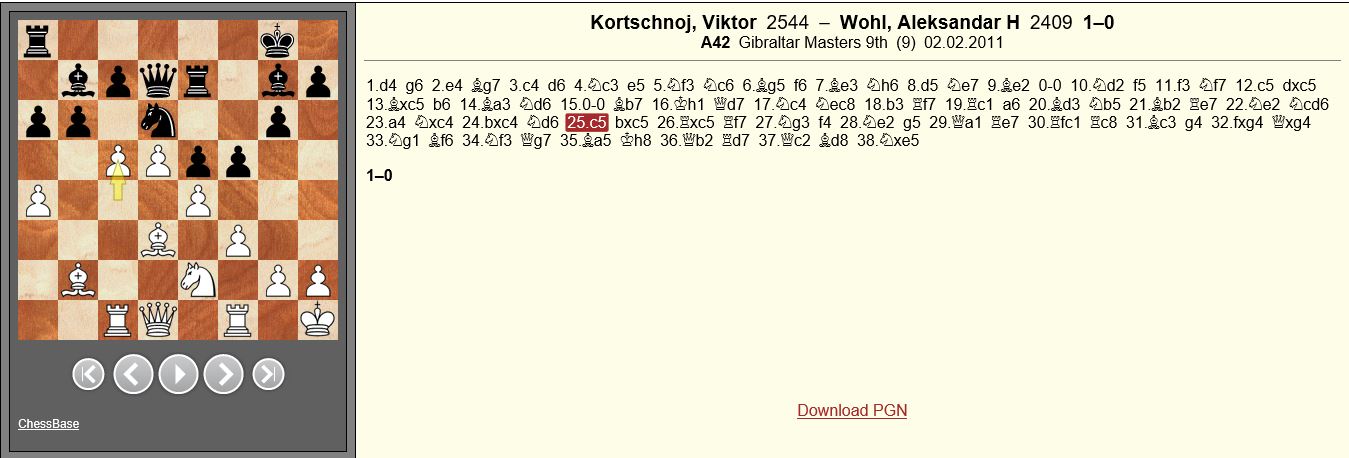
I had to have a look at the game, and thanks to the one-click ‘publish to web’ feature in @chessbase, it is here.
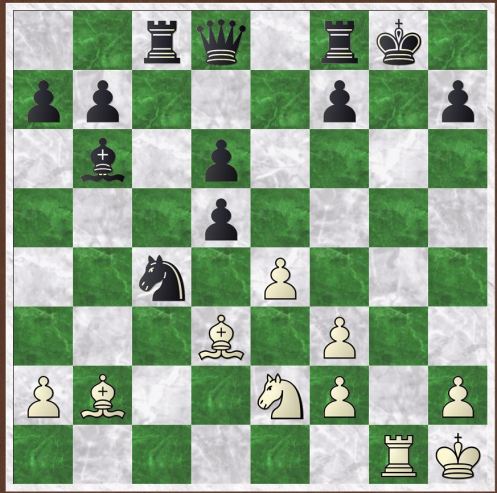
Playing through it, you can feel the discomfort Black would have had throughout, as Viktor’s controlled play piled up pressure on Black’s queenside, helped by the moves c4-c5 and c4-c5 (sic) and how Viktor’s Ne2-g1-f3 puts paid to Black’s king-side activity. A few hours of discomfort for Black, followed by Viktor’s trademark, to the point, accurate, post mortem comment.
Another puzzle from Dragoslav Andric’s 1981 book “Matni Udar”.
White to play and win
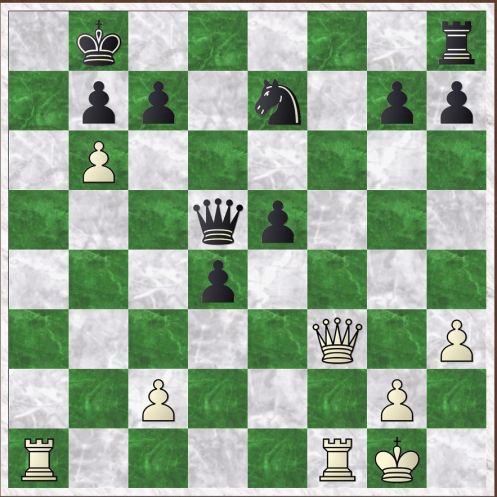
Morphy v Nepoznati, New York 1857
Solution
Fairly straightforward, but pretty nevertheless. 1 Qf8+! Rf8 2 Rf8+ Nc8[]
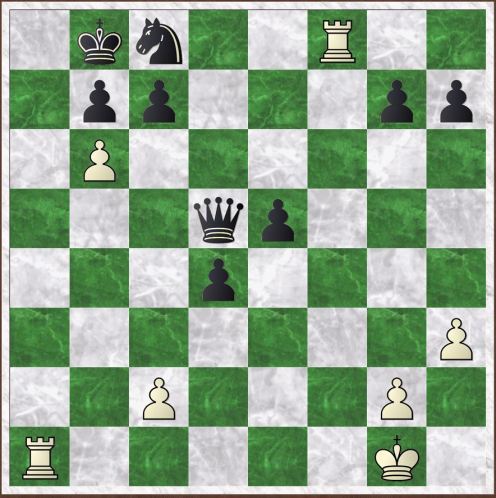
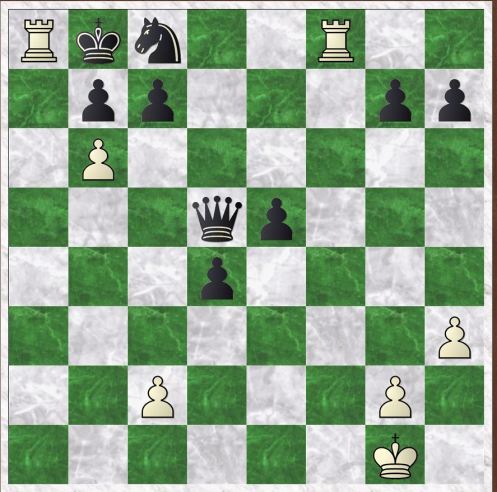
and 3 Ra8+! followed by 4 Rc8 mate.
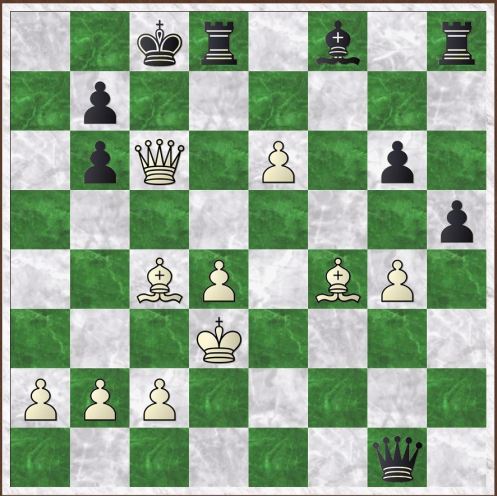
Another puzzle from Dragoslav Andric’s 1981 book “Matni Udar”.
White to play and win
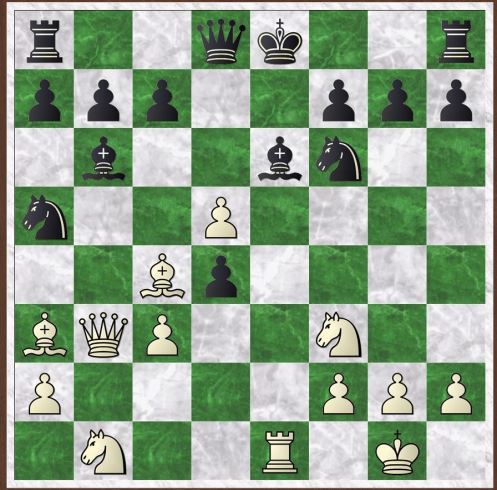
Morphy v Nepozanti, New York 1857
Solution
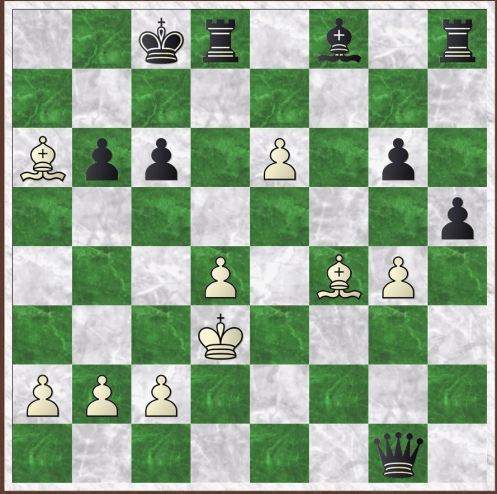
Because it is Paul Morphy, you know the answer has to be 1 de!, meeting 1…Nb3 with 2 ef7+, when 2…Kd7[] is forced.
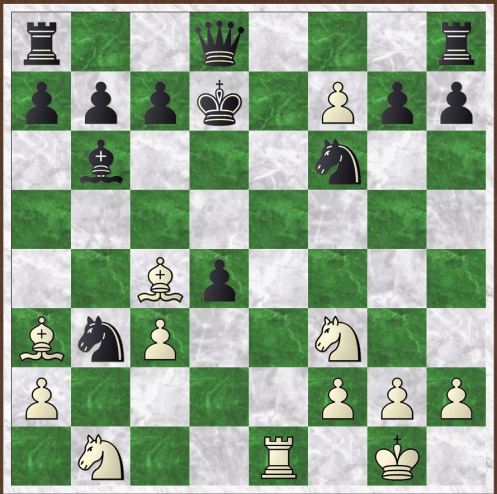
But then how to win?
Again, since it is Morphy, you ‘know’ it is 3 Be6+ Kc6[] 4 Ne5+ (just keep on checkin’) Kb5[]
when 5 Bc4+ Ka5 6 Bb4+ Ka4 7ab+ is mate.
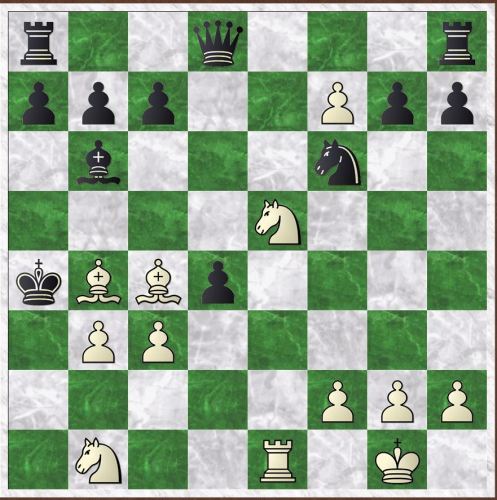
Note that this must have been a rook odds game (and, of course, an Evans Gambit)
Nepoznati
I wonder who Morphy’s opponent is? I assumed at first he was an amateur, with Morphy giving him rook odds. But he appears in many more of the following days’ puzzles, so I am less sure. It might of course be that the spelling of his name has altered, but my search of Chessbase hasn’t revealed who he was. (I am also finding that my Megabase 2012 has very few of these 19th century games- I am having to enter diagrams manually).
If anyone knows who Nepoznati was, please reply to this post; similarly, if anyone knows a good source for mid 19th century games, to save my blogging time.
Update: I suspect ‘nepoznati’ means either ‘amateur’ or ‘unknown’, though google translate hasn’t enabled me to confirm this. Having looked several pages ahead, I spotted that Mr Nepoznati was an extremely well travelled person, with a very long playing career. 🙂
Update
One of my readers has kindly told me that nepoznati means “unknown”. I prepare blog postings several days or more in advance. I won’t amend those already prepared (it is a bit of a chore) but I will change any future ones featuring this player/
It was with great sadness that I have just learnt of Viktor’s passing.
Viktor Korchnoi 23/3/1931-6/6/2016
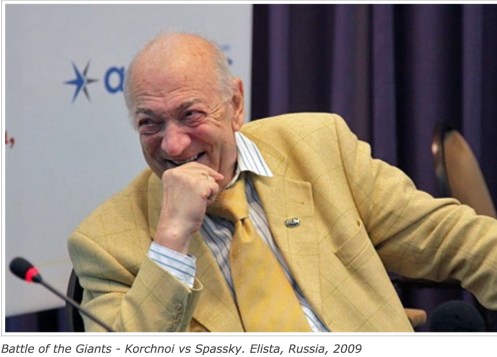
He was one of the most influential players in my life as a chess player. I would put him on the highest level, with Fischer, Short, Kasparov, Karpov and Carlsen. (Nigel Short because of my lifelong friendship with him, and my love of his style of play).
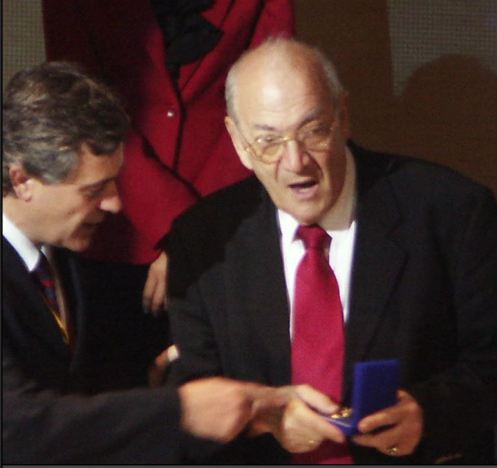
I met Viktor several times. My memory is cloudy, but I think the first time was at the 2004 Olympiad in Mallorca: that was the time I first heard him speak, in a short q&a session which I shall remember for the rest of my life. Viktor talked about his time as a child in the siege of Leningrad, of dragging dead relatives to the mortuary, and that, the reason he continues to play chess was because of that, to live. It was deepest, rawest, emotion.
Picture taken at the closing ceremony of the Calvia Olympiad, 30th October 2004
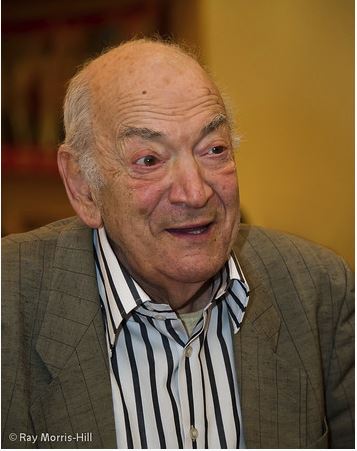
It is hard for me to decide which was my favourite meeting with Viktor. In 2011, he came to sit next to me in the VIP room at the London Chess Classic, and, not being able to see the display screen easily, asked me every so often to explain where the pieces where, and soon I was giving him a move by move announcement. What was remarkable was how much in awe the other GMs were of Viktor: when he gave suggestions, or rubbished the suggestions of others, people listened, with respect, and time and again he suggested or discounted moves just on general principles. The only time Viktor was deferential, or at least listened to others, was when it was an elite GM like Vallejo Pons, Garry Kasparov, or the players themselves. Otherwise he was imperious.
Viktor at the 2011 London Classic
I attended the Classic on two consecutive days that year. On the second, I was delighted when Viktor came into the room, he found me, and I had the sheer pleasure of spending a second afternoon relaying the moves to him. With his partial sight of the screen, and my relaying of the moves, he could follow, analyse and comment all the games that were going on. Two wonderful days.
Another time was when I visited the Gibraltar congress in 2011: one of the days I visited was when he was playing black against Fabiano Caruana; Nigel Short was playing nearby, and I stationed myself permanently in a great location, the corner between their two tables, from where I could see both games. Viktor won very nicely, and it would seem effortlessly; once his game was over, I went to the commentary room to listen to Viktor’s analysis: he was quite dismissive of the passive way in which Caruana defended.
Playing through this game, it is noticeable that even after Fabiano lost a pawn, the game wasn’t entirely over: it took a player of Viktor’s strength to overcome Fabiano’s resistance.
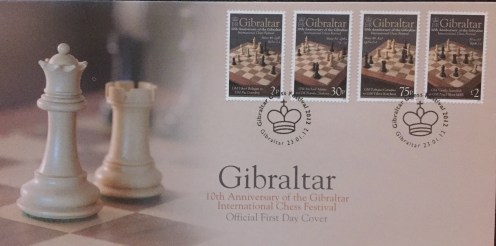
First day cover, including Viktor’s game vs Fabiano Caruana
And, finally, of course, I shall always remember my game with Viktor, played at his simultaneous display at the London Classic. If I had my time again, and could only play one game, it would be my victory over him: the fact that I grew up following his matches against Karpov, his struggles with the Russian state, his fight throughout his life, makes that game my pinnacle.
Viktor, RIP.
 Posted with Blogsy
Another puzzle from Dragoslav Andric’s 1981 book “Matni Udar”.
Black to play and win
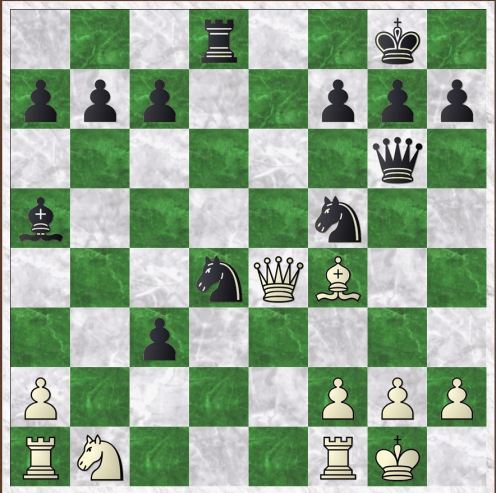
Marache v Morphy, 1857
Solution
Solved instantly, I suspect because, deep down, this position is from my chess education. I ‘feel’ I have seen it before.
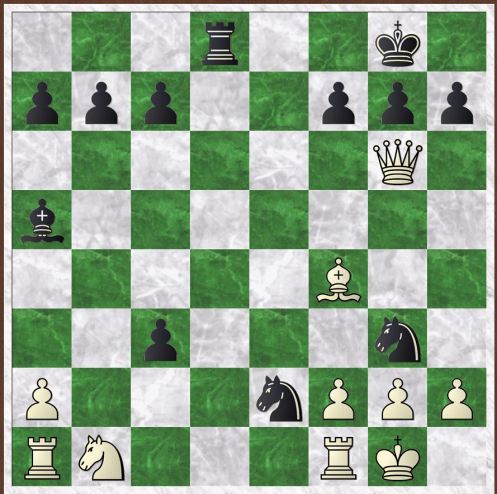
1…Ng3!
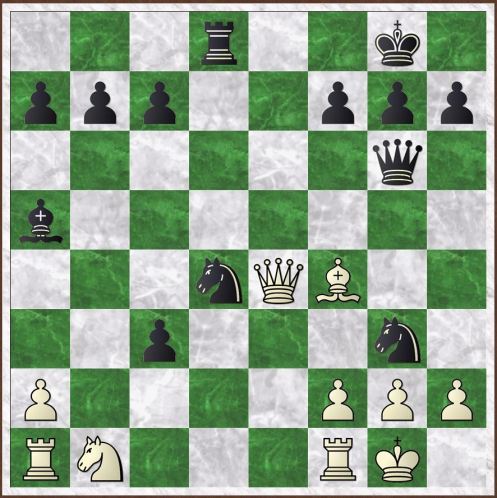
and if 2 Qg6, Nde2 mate.
Another puzzle from Dragoslav Andric’s 1981 book “Matni Udar”.
White to play and win
-the famous Evergreen game
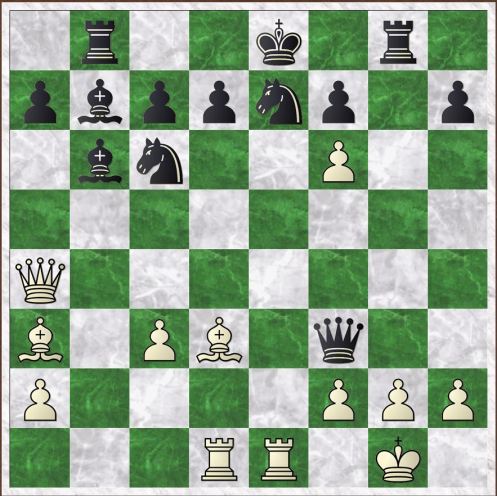
Anderssen v Dufresne, Berlin 1852
Solution
1 Re7+! Ne7 (1….Kd8 is better, surviving to a lost endgame in the longest line, given by Kasparov in Megabase 2012)
2 Qd7+!!
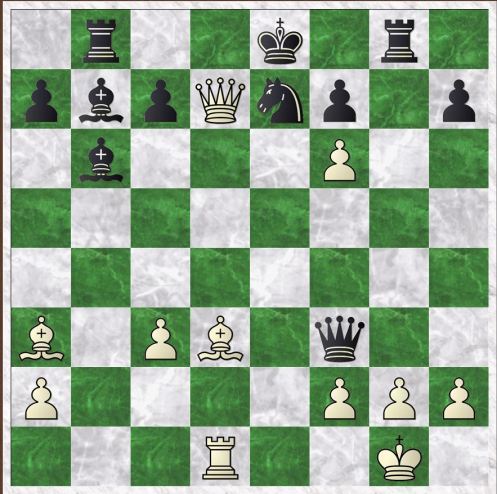
2…Kd7 3 Bf5++ Ke8 4 Bd7+ and 5 Be7 mate.
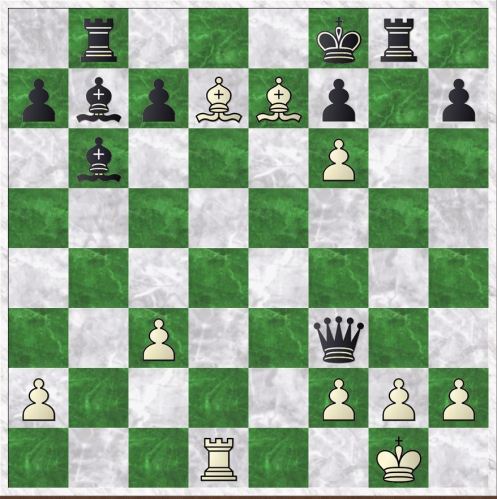
Another puzzle from Dragoslav Andric’s 1981 book “Matni Udar”.
White to play and win
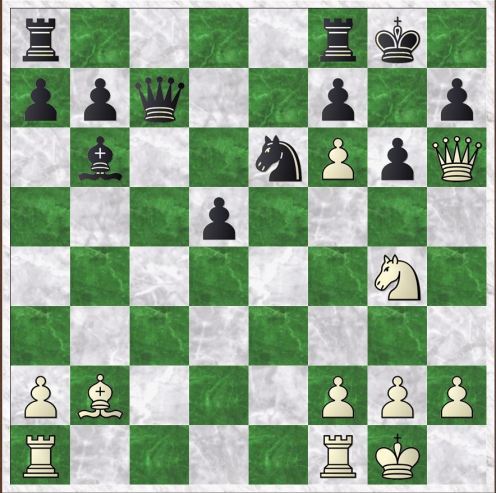
Bird v Pinkerley, London 1850
Solution
The first of the book which is in Megabase, which means it took about the same time to get the positions to include, as to solve it. Straightforward again: 1 Qg7+ Ng7[] 2 Nh6+ Kh8[] 3 fg mate.
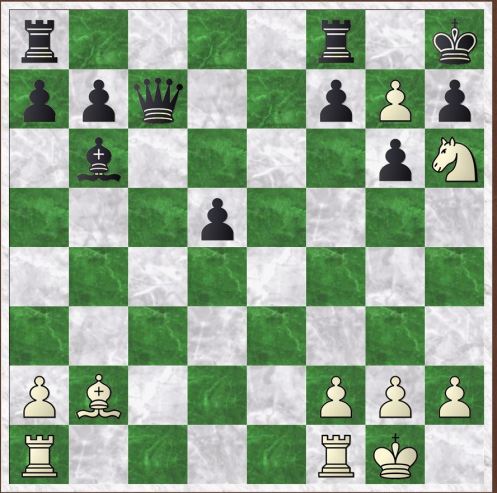
Another puzzle from Dragoslav Andric’s 1981 book “Matni Udar”.
White to play and win
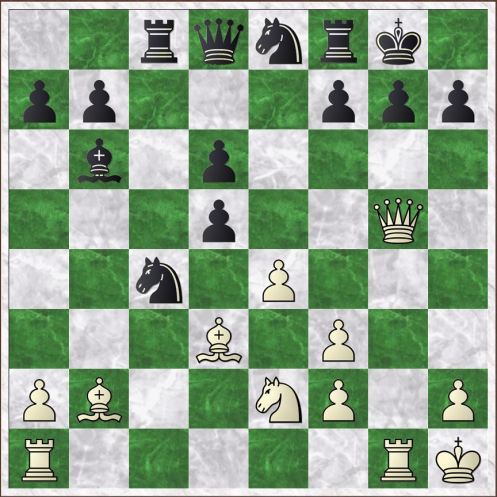
Anderssen v Harrwitz, 1848
Solution
Simple again (believe me, the puzzles in the book do get harder) and the same motif as #1. 1 Qg7+! Ng7[] 2 Rg7+ Kh8[] 3 Rg8+! and 4 Rg1+ mates.
Another puzzle from Dragoslav Andric’s 1981 book “Matni Udar”.
Black to play and win
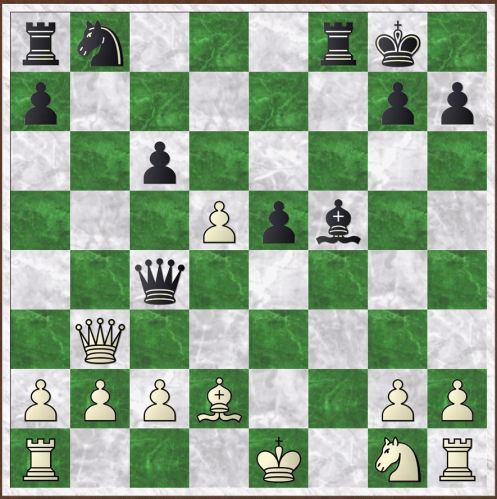
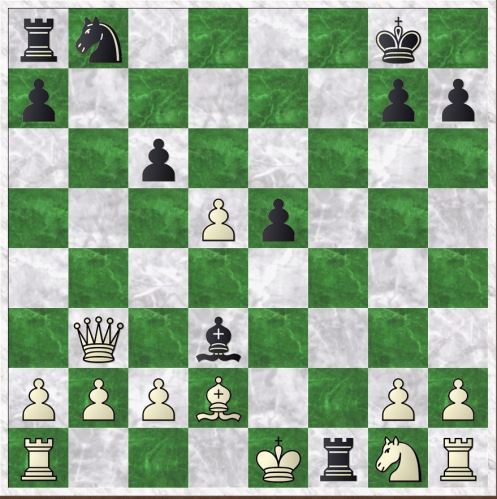
Schulten v Harrwitz, London 1846
Solution
Again, a standard motif: 1…Qf1+! 2 Kf1[] Bd3++ 3 Ke1[] Rf1 mate.
Another puzzle from Dragoslav Andric’s 1981 book “Matni Udar”.
White to play and win
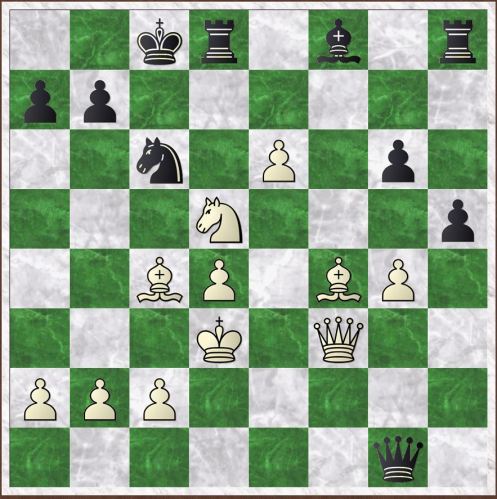
Kieseritzky v Dumoncheau, Paris 1844
Solution
Elementary today: Nb6+ Qc6+ Ba6 mate is a “standard” motif: but it probably wasn’t a standard motif in 1844.
 allanbeardsworth