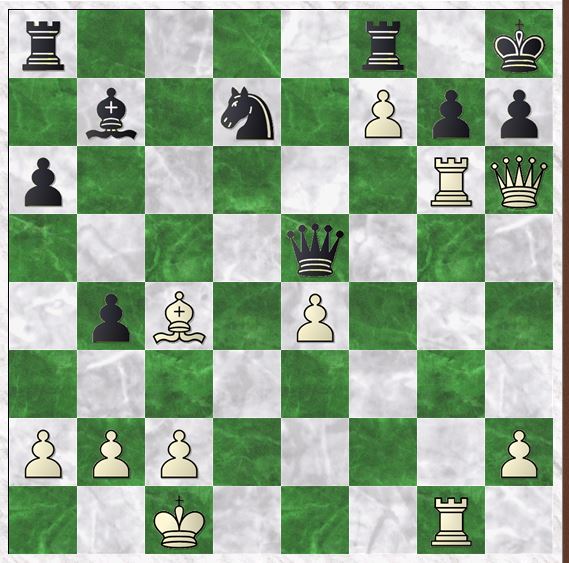
White to play and win
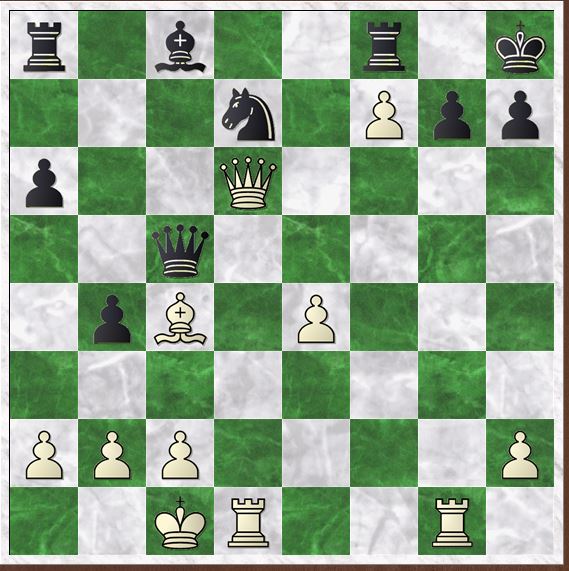
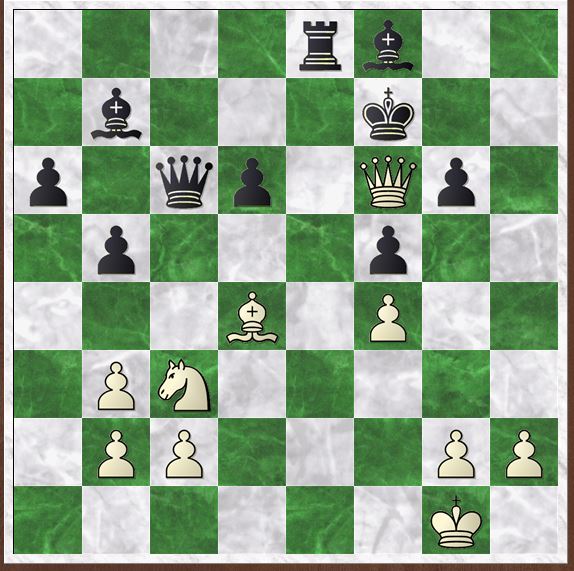
Schöneberg v Tukmakov, Zinnowitz 1967
Solution
A really hard puzzle, which I only got partly correct; and only after several cups of tea, a long dog walk, putting the pieces out on a set….without full success.
I will discuss 1 Rg7+ at the end, but the move I eventually settled on was 1 Qh6!
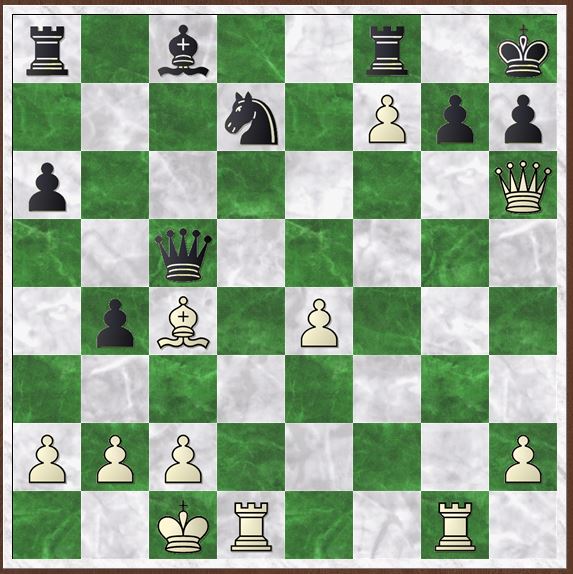
Black’s reply is forced, 1…Qe5 (though having said that, the engine suggests giving up a rook by 1..Rf7 2 Bg7 Qf8 is slightly less losing).
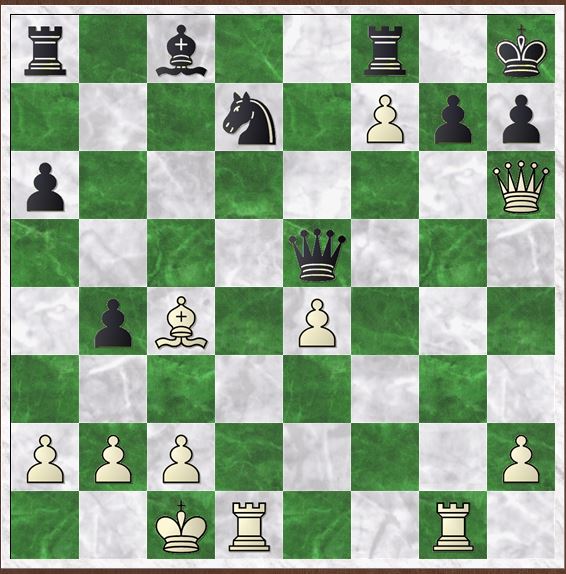
Now what? I tried many things, including 2 Rg6, before settling on 2 Rg5. To my small credit, White gets the advantage after 2…Qf6 3 Qf6 Nf6 4 e5 Ne4 5 Rg2, which was my main line, assessed as unclear, but the engine says White is somewhat better.
I saw the better move 2 Rd6!! but didn’t assess it correctly.
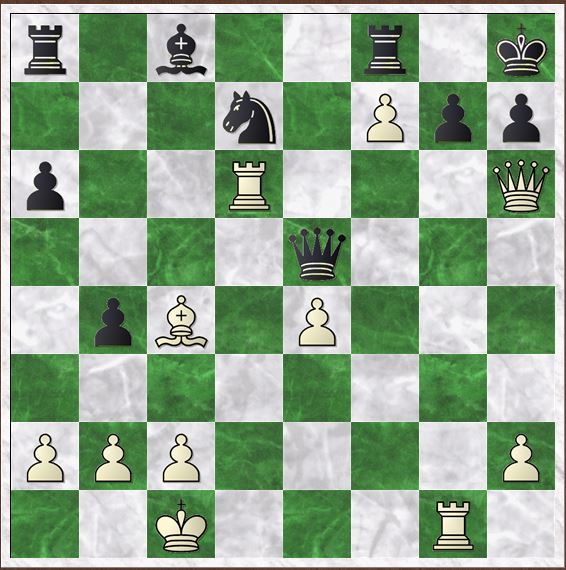
In particular, whilst I saw it as prophylaxis against Qf6, I didn’t see what to play against the natural 2…Bb7: but 3 Rg6!! is super strong.
After 3…Be4 4 Rg7 Nf6
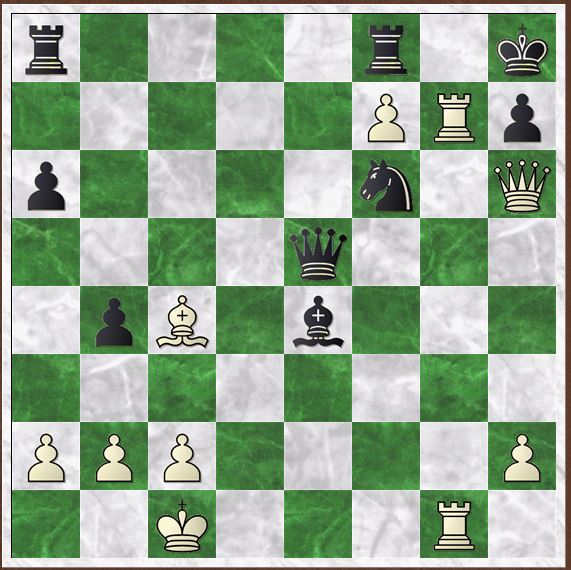
White wins by the thematic 5 Qf6! (thematic in the sense that many lines are aiming to land a rook on g8).
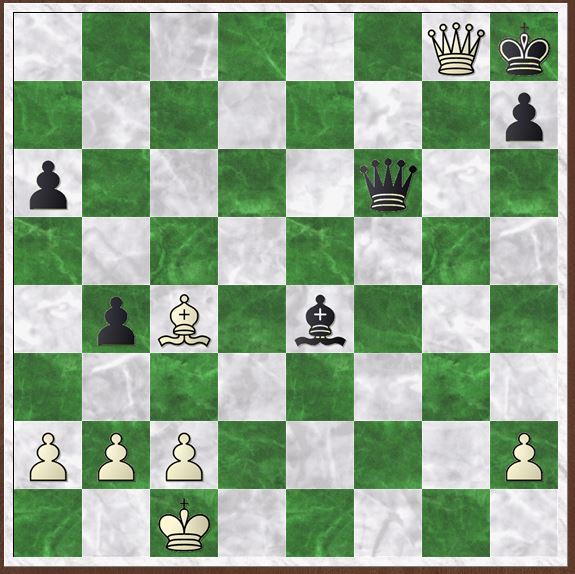
Very nice; and very hard.
—-
Finally, I personally spent a lot of time on 1 Rg7, before settling on 1 Qh6. I kept looking at 1…Kg7, which actually loses to 2 Qg3+ Kf6 3 Qf4+ Kg7 and the surprisingly quiet 4 e5!! wins- the Q is tied to g1, so can’t take the N, and if 4…Ne5 then 5 Qg5+ and the N is pinned to the LPDO Qc5, or 5…Kh8 6 Qf6 mate.
However, eventually, after spending far too long analysing 1…Kg7 lines, I saw that the simple zwischeschach 1…Qe3+! wins: Black first controls all the key squares before taking on g7.
 Posted with Blogsy
Black to play and win
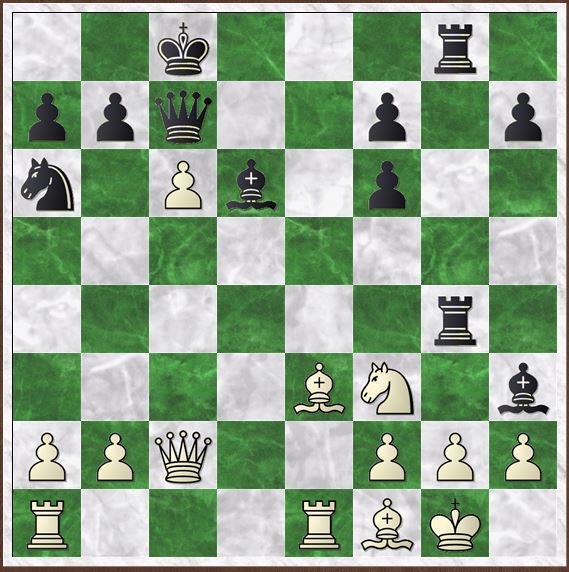
Westman v Walther, Havana 1966
Solution
Fairly standard today. Aim is to break through with maximum effect, and after a moment’s thought, 1…Bh2+ seems right. White can grovel by 2 Kh1 Bg2+ 3 Bg2[] Rg2, when it is 0-1, or play 2 Nh2, when 2…Rg2+

White must capture the rook, else 3…Qh2 mate; so 3 Bg2 Rg2+ 4 Kf1

and now noting the LPDO Qc2, the neat 4…Rf2+ skewers the QandK after 5 Kf2[] Qh2+

Black to play: resign (as played); or?


I owe a lot to Jim Slater, who died this week, as reported in many places, such as here.
Jim is best known as a great investor; and well known as someone who rose to prominence in British industry, lost a fortune, and rebuilt it. I was lucky enough to meet him once, in 1993 (thank you, google, for enabling me to be precise on this year) when he came to Manchester to promote an investment service (Company Refs) which he was launching. I was able to thank him for the main two things he did for me, namely:
- sponsor the 1972 Fischer-Spassky match in Reykjavik;
- sponsor myself and other England juniors in the 1970s and 1980s.
Without Jim’s finance, the great Fischer-Spassky match, which brought me into chess, would never have happened.
But the great lesson he taught me was not about investment- even though I have always read whatever article of his I come across, and really liked his book, the Zulu Principle; no, it was far simpler.
In 2003-2004, I made great efforts to raise money for England chess, and specifically for our Olympiad team for Calvia, Mallorca, 2004; not entirely successful, not entirely unsuccessful. I managed to find Jim’s address, and wrote to him there, asking if he would be minded to sponsor the team. I got a very courteous reply saying “no” and we had a phone call as well: alas, no-one in the chess world ever thanked him for sponsoring the 1972 match, and, worse, the (then called) British Chess Federation had never thanked him for supporting the junior team; and neither had either any of the players or any of their parents. Ever; not one.
Looking back, I did thank him myself in the 1990s; but as a 14 year old, when I joined the England squad, I only had vague ideas about money and the Slater Foundation; now, as an adult, I can see the importance of thank yous.
Jim wasn’t to be persuaded, and neither did I try too hard.
So, the most valuable lesson he taught me was the power of saying thank you. It is a life lesson I hope I have learned, and one of great importance. It is so often not said.
White to play and win

Espig v Pietzsch, Zinnowitz 1967
Solution
Fairly straightforward today: examine all biffs, and 1 Rg6+ speaks for itself. Then 1…hg 2 Qh8+ Kf7[] 3 Qf6+!
And 4 Qg6+ and 5 Qg7 mate.
White to play and win

Cuellar v Reshevsky, Sousse 1967
Solution
As with puzzle 178 two days ago, ignore the threat, as part of your thinking. Black is threatening the queen, but 1 Re4! is a double fatal attack: a threat of Qg5+, Qg7 mate if the queen isn't captured, and Re8 mate if it is.

White to play and win

Unzicker v Dückstein, Krems 1967
Solution
A difficult one. I knew instantly the answer had to be, and it is, 1 e5, with the idea of 1…fe 2 f6 and 1-0 (I think the main line is 2…gf 3 Qg6+ Qg7 4 Qe8+ Qf8 5 e7!) but 1….Qe5 is clearly the move to play, with the hope of a perpetual.
Play continues 2 Qd8+ Kh7[] when:

White can either take the Nb6, or push the e7 pawn. I chose wrongly, to take the N, and hope that there is to a perpetual, and my engine analysis confirms it: White is winning, and after playing a few checks, the engine's assessment rockets from +1.5 to sky-high. But 3 e7 is stronger: I 'feared' 3…Nd5, with the N coming into play, not looking hard enough: after 4 e8(Q) some of Black's checks are taken away from him, by White's promoted pawn watching the e line. A bit more analysis shows that it is easier for White to avoid the checks.
Would I play 1 e5! in a game? Of course, since either the King side is prised open, or, by taking the Nb6, White can't lose. Would I be sure that 3 e7 was better than 3 Nb6 after Black's second move? Don't know, depends on how much time and my emotion at the time.
White to play and win
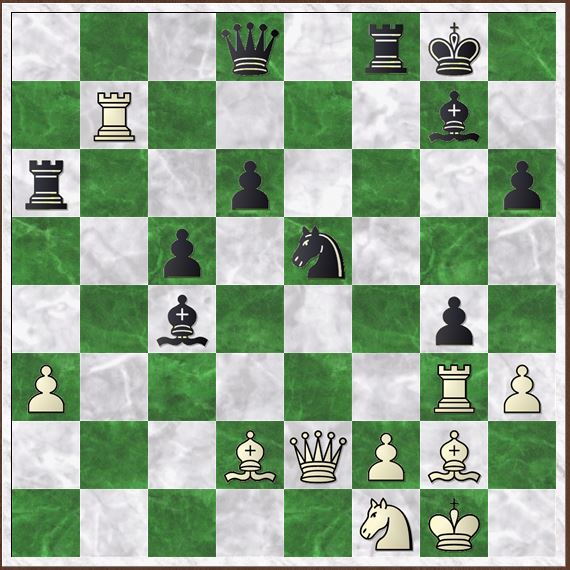
Hübner v Süss, Kiel 1967
Solution
As CJS Purdy tells us, as part of the thinking process, spend some time ignoring threats, imagining that they can't possibly be implemented. What would you want to do absent the Bc4 threatening the Qe2?
The answer is to try to mate on g7/h7 with the two rooks: so 1 Rg4! Be2 2 Rgg7+, 3 Rh7+, 4 Rag7 mate.
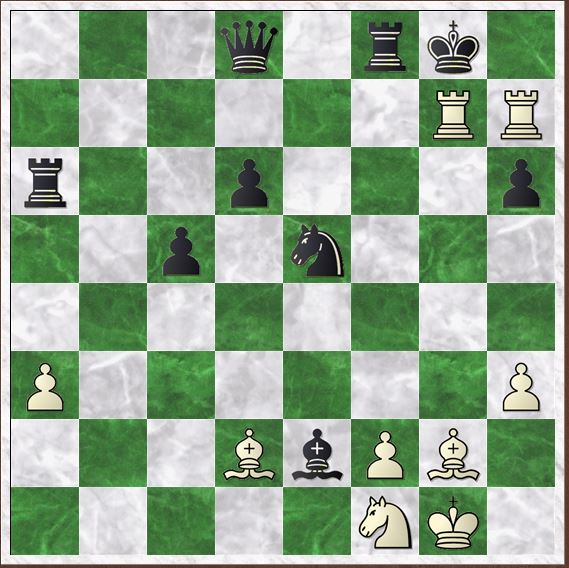
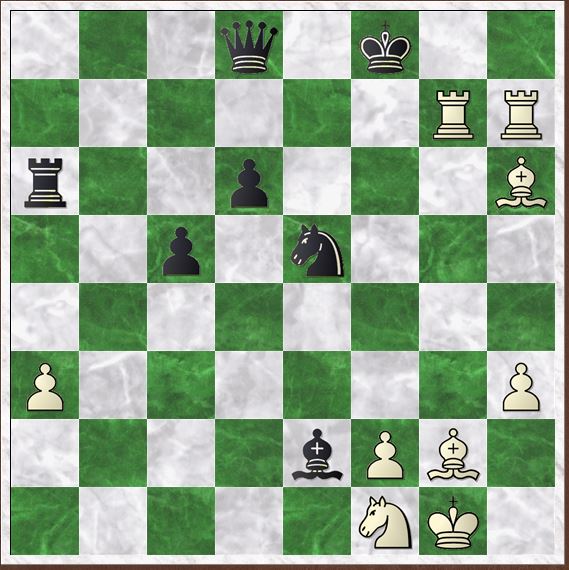
And if 1…Ng4, then 2 Qc4+ and Qg4. So Black's best is probably 1…Rf7 when 2 Rf7 Be2 3 Rgg7+ Kh8[] 4 Rh7+ Kg8 5 Rfg7+ Kf8[] 6 Bh6 +-
White to play and win
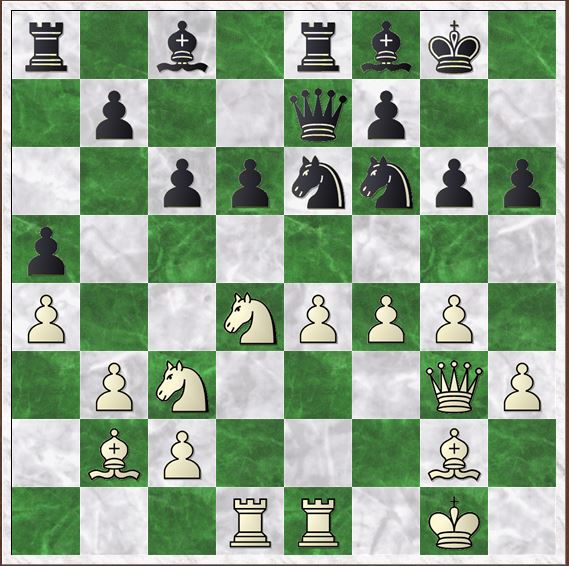
Shamkovich v Barcza, Salgotarjan 1967
Solution
A few things work here: White can convert his space advantage to either opening Black's King up to attack, or winning the d6 pawn. The prosaic 1 Ne6 Be6 2 Ba3 does the latter. It threatens 3 e5, so (say) 3 …Qc7 when 4 f5 is a double attack on the Ne6 and Pd5.
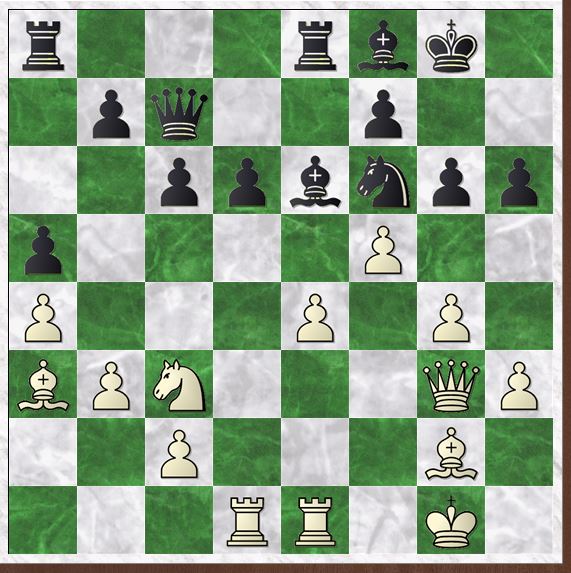
But 1 Ne6 isn't a puzzle book solution, so it has to be 1 Nd5! cd 2 ed
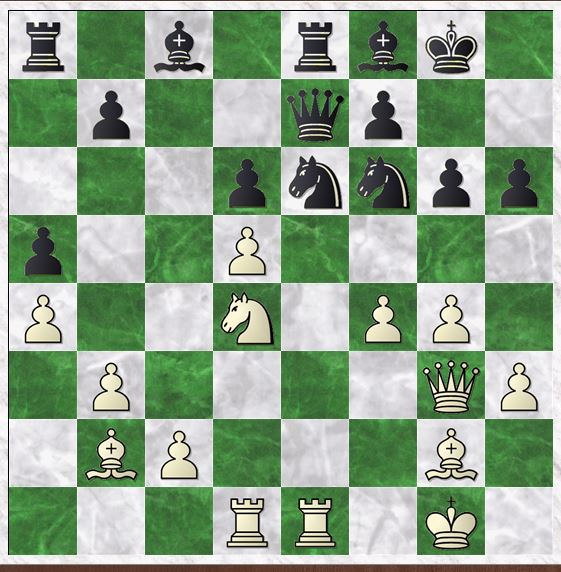
There are no clever unpins with the Ne6, so Queen moves, a few exchanges on e6, and Black has at least two weaknesses: the Pg6, Pd6; Pb7; and opened King.
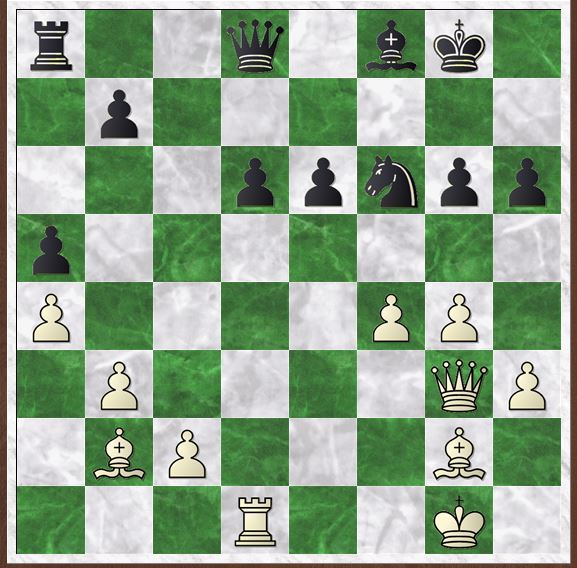
In the game position, White continued with Qd3 and f5, winning.
White to play and win
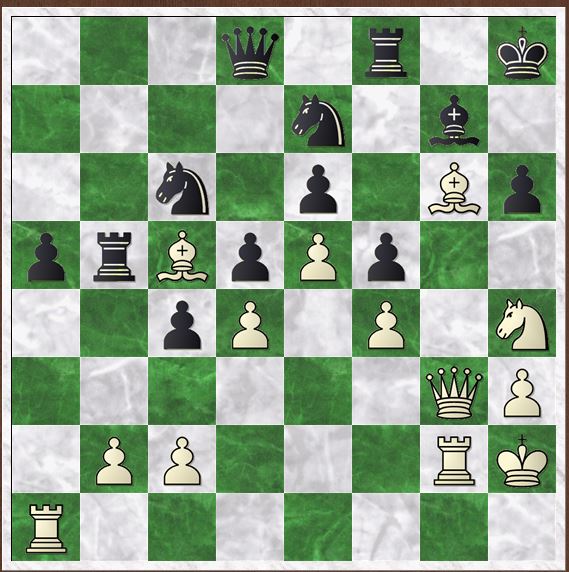
Medina v Slisser, Amsterdam 1967
Solution
Line clearance is needed, on the g line, so that the Qg3 Rg2 battery can hit the Bg7. So 1 Be8!!:
1….Rg8[]
Now, 2 Bf7! wins prosaically, but 2 Bc6 Nc6 (2…Rc5 3 dc Nc6 4 Rag1 and piles on the pressure) 3 Ng6+ Kh7[]
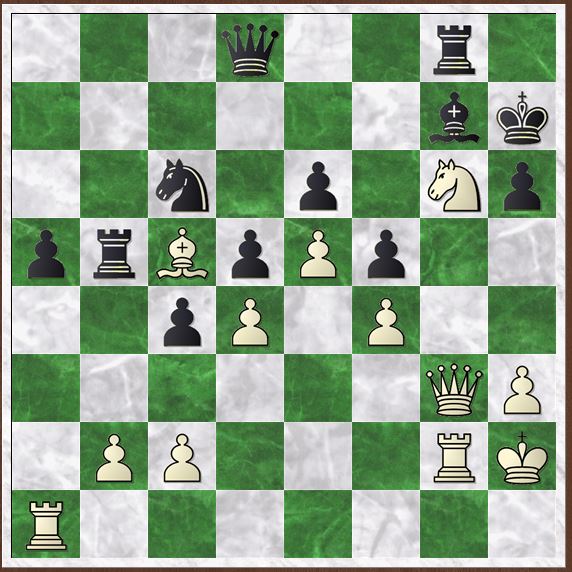
4 Nf8+! Kh8 5 Qg6 1-0
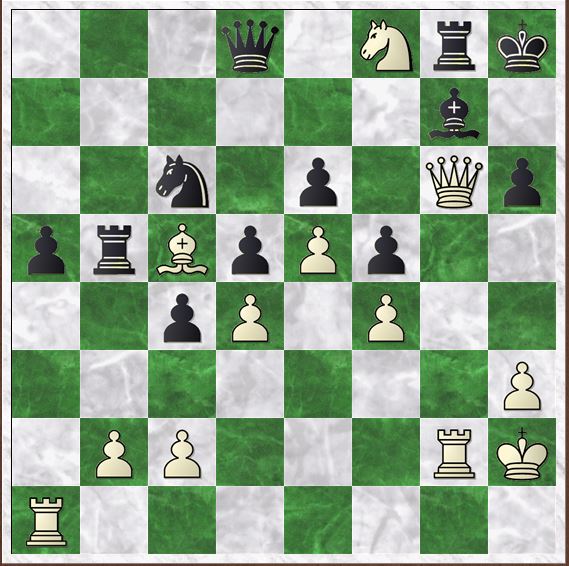
Note that the similar motivated line, (1 Be8 Rg8) 2 Be7 isn't as good because 2…Qe8! 3 Bf8!? fails to 3….Rb7! defends.
 allanbeardsworth