Black to play and win
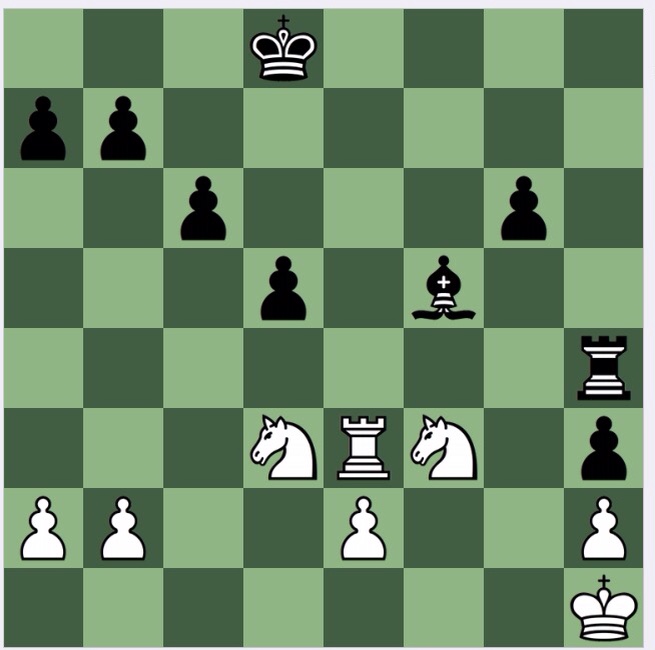
Dean v Wallis, Johannesburg 1962
Solution
I solved this one instantly, recognising it, and when I saw that the game was played in Jo'burg, realised why. The position was in Reitstein's puzzles from South Africa, my first series of blogs.
So, 1…Re4!
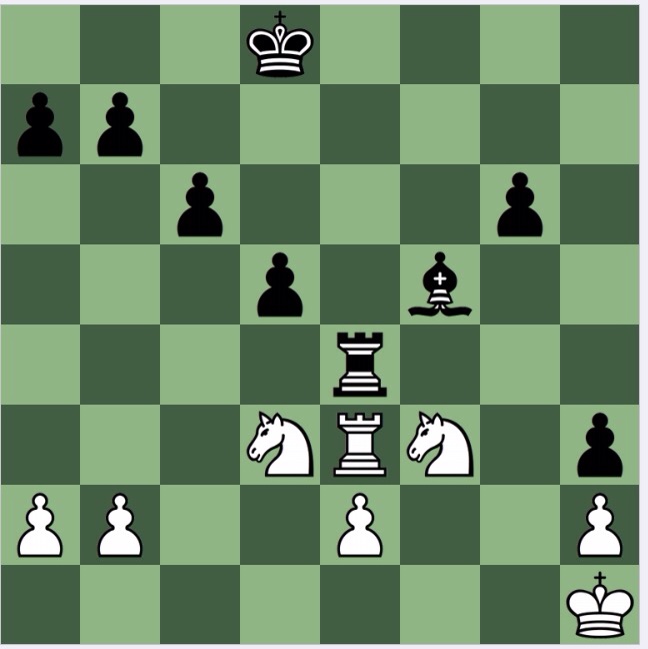
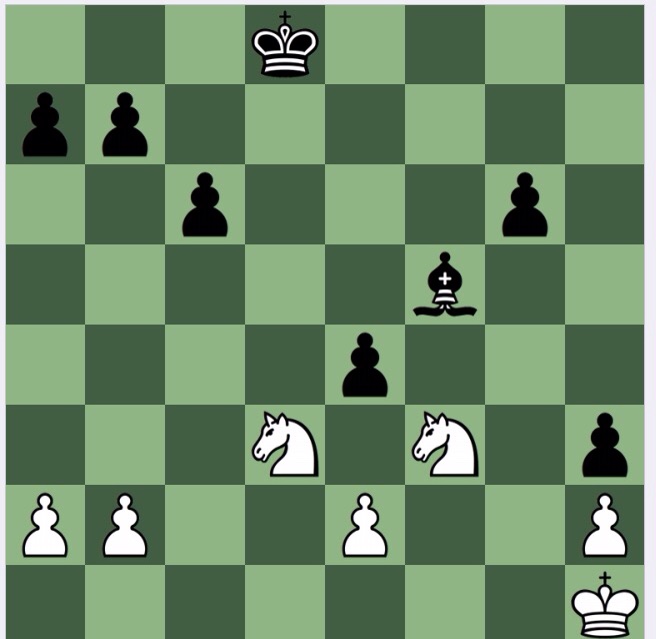
and when white takes the Re4, which he is forced to, 2…de pins the two knights, in Purdy's potassium cyanide motif.
 Posted with Blogsy
Can White save himself?

Friedmann v Paterson, Johannesburg 1962
Solution
Well, actually, no.
The question is almost 'trick', since when you realise white is in schtuck, with g5+ Kh5[] Qh3 mate threatened, the save 1 Qh6+! comes to mind.
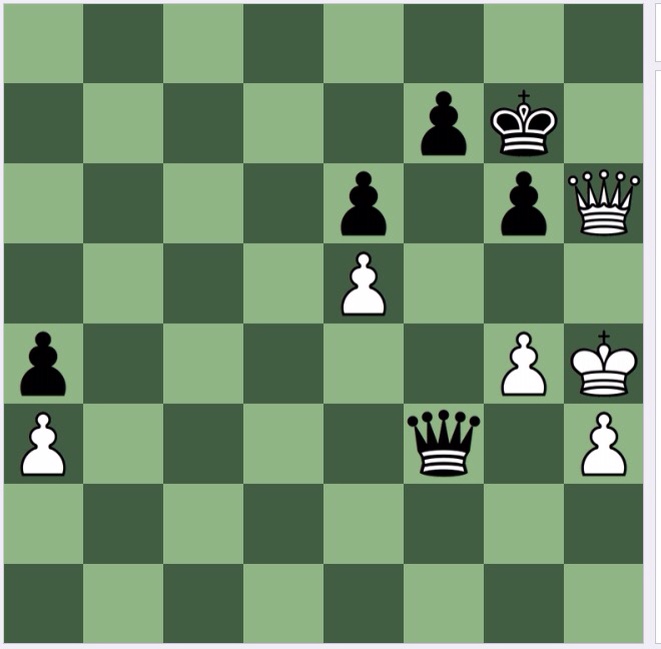
The point of course is that 1…Kh6?? 2 g5+ K moves is stalemate, but Black can instead play 2…Kg8! Then White has to retreat his queen, and c1 is best, to defend the Pa3.

As a child, I might assume it is a draw, but having seen countless Carlsen or Caruana grinds, I now know you have to play on, and see what happens. The best start is to improve the queen, moving it to d4. 2…Qf2+ 3 Kg5[] Qd4:
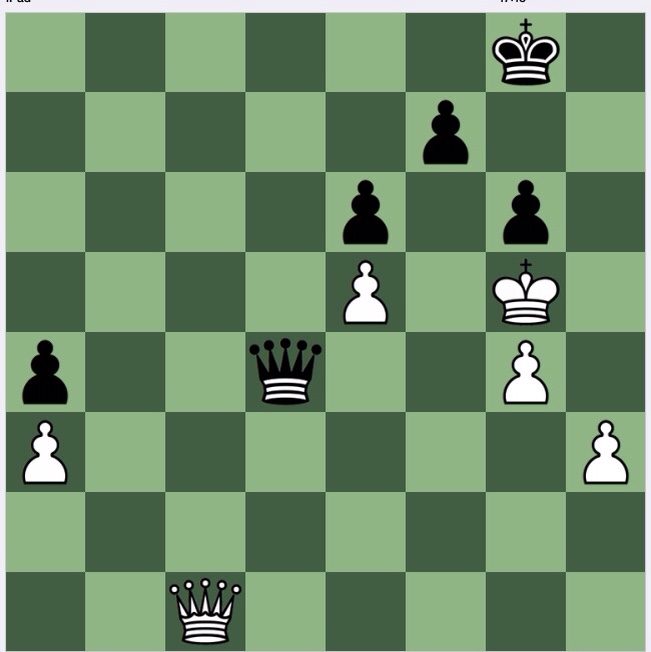
The queen now biffs the Pe5. If white defends it with 4 Kf6 he is mated by 4…Qd8; and same after 4 Qf4 Qd8mate.
If white defends the e5 pawn by Qc7, the a3 pawn is a LPDO, and, as we know, loose pieces drop off. Here after 4…Qe3+ 5 Kf6 (say) Qf3+! 6 Ke7 Qa3+ (nice that it is with check) 7 Kf6 Qf8, defending everything, and the a pawn will advance.
(Thinking about it, 4…Kg7 is even better, spoiling white's chance to cause a bit of a problem with Kf6/e7)
So, by elimination, 4 Qe1, when Black simply improves his king, 4…Kg7, and white's king is still in danger of being in a lethal net. White is in fact lost. One sample line, quite pretty, is 5 Qg3 (re-defending the Pa3) 5…f6+! 6 Kh4 (6 ef+ Qf6 mate) Kh6!

and white might then be gentleman, and play 7 ef permitting 7…g5 mate, which would be a fitting end, or else he loses the e5 and the win is trivial.
Teschner's answer is 1 Qh6+ Kh6 2 g5+ and stalemate, and if 1…Kg8 2 Qg7+, but if that, then 2…Kg7 isn't stalemate!
White to play and win
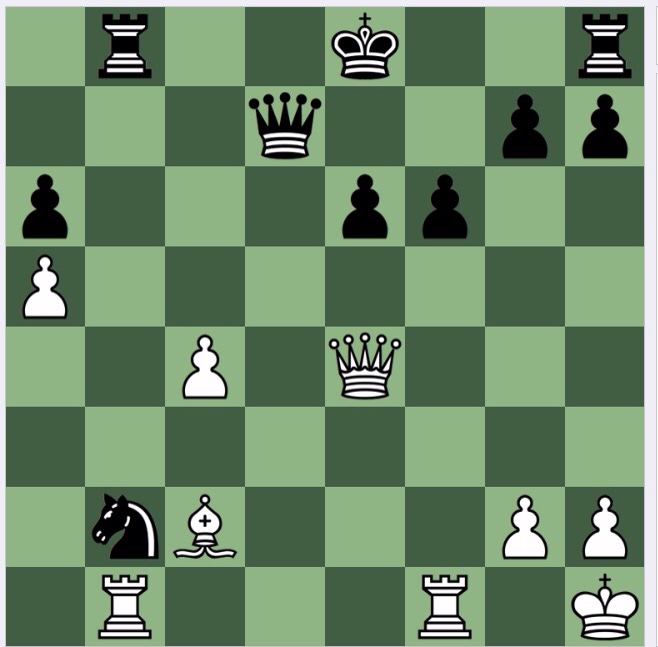
Dückstein v Pachman, Varna Olympiad 1962
Solution
I couldn't quite get this puzzle, which, really means, I couldn't get it. I found the winning move, but not the subsequent key rook lift.
So, 1 Ba4!!
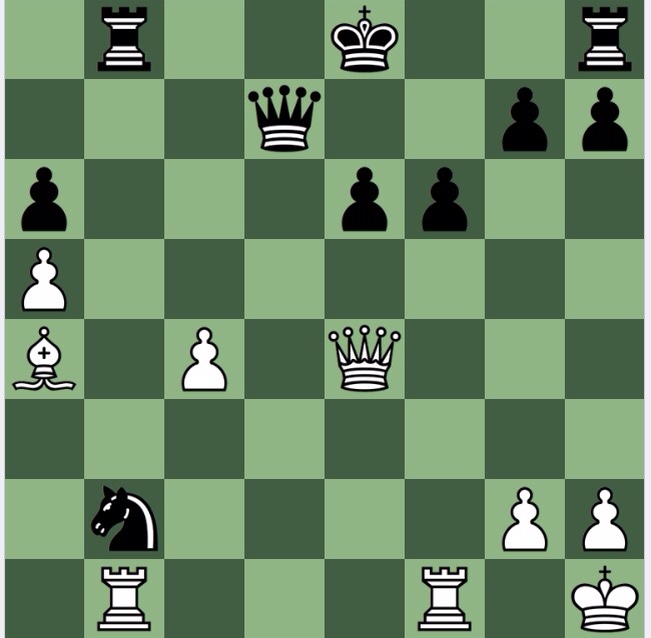
The Rb8 is LPDO, and the threat of a jump biff (a jump check) Rb1*Rb8 means that 1…Na4? loses simply, so Black must play 1…Qa4[], met by 2 Qe6+.
If Black's king goes to f8, then 3 Rf6+ breaks through, and it is more less clear that the Q and remaining rook will mate, partly because at some stage there will be a Q check forking the K and LPDO Rb8, and also that a king move to the seventh rook will let the R move upwards.
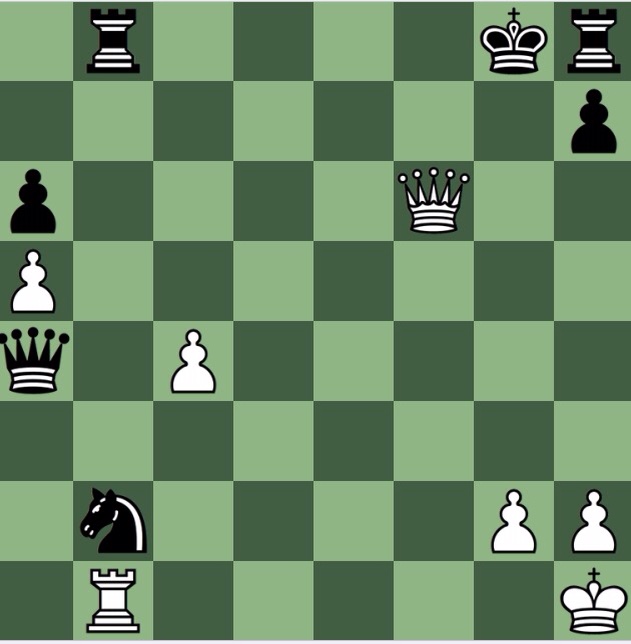
I will leave it to my readers to either compute every line, or 'see enough', or see that white must have at least a perpetual.
What I couldn't break was 2…Kd8. The best I could find was 3 Rfd1+ (?) Qd1+ 4 Rd1[] Nd1[] 5 Qd6+ Kc8[] and white either has to settle with a perpetual, which I would take, or play 6 Qd1 with the forlorn hope that somehow the Q can defeat the two rooks.
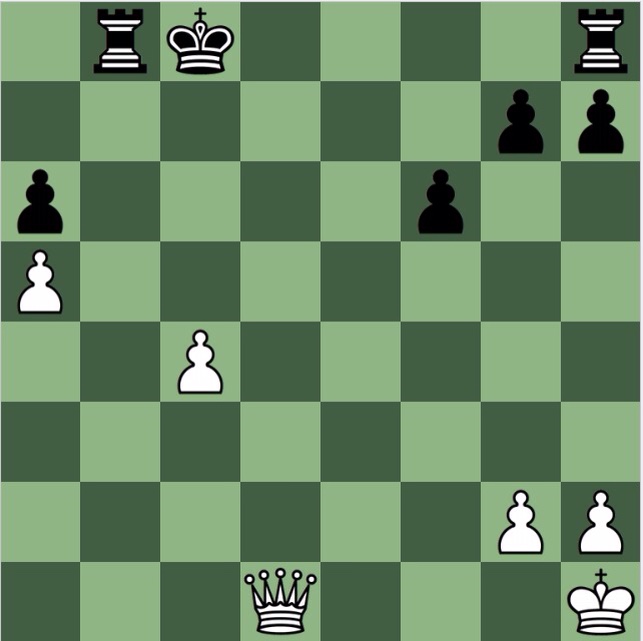
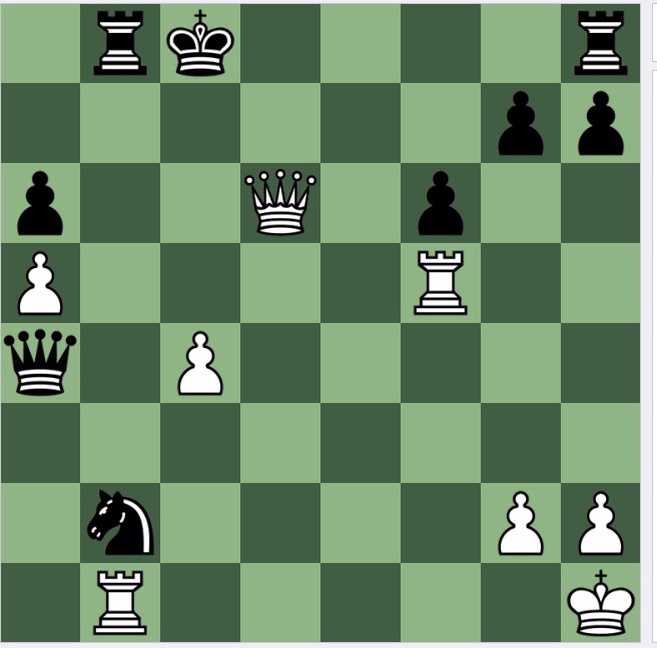
I would like to think that I would play 1 Ba4, with the intention of going into the perpetual or 6. Qd1 line, but then, when 2…Kd8 is played, think, and see 4 Rf5!. I would like to think that.
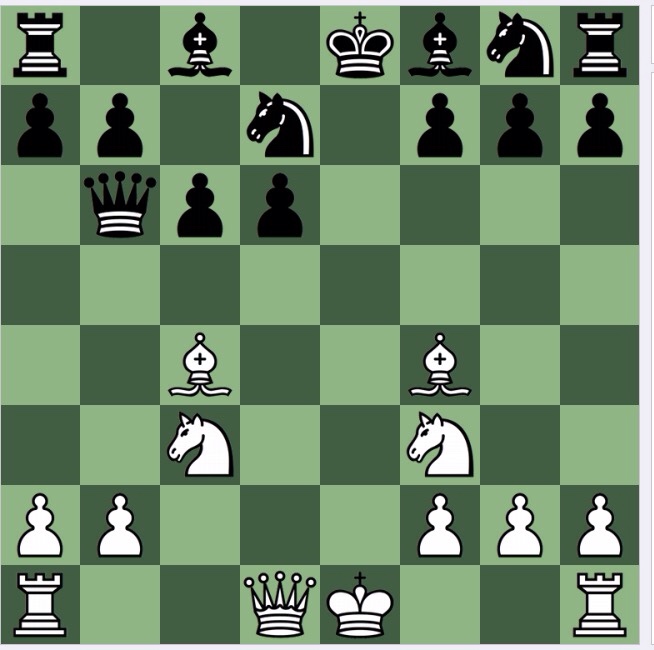
Should White take on d6, even though the loss of the Pb2 follows?
(the question as posed in Teschner's book)
Rubin v McLennan, San Francisco 1962
Solution
No.
No.
Are the two answers to the question. No he shouldn't take on d6, and no, Black needn't take on b2. (If he does, carnage follows on f7).
If 1 Bd6 Bd6 2 Qd6 Black needn't take on b2, but can play simply 2…Qc5 and the game goes on.
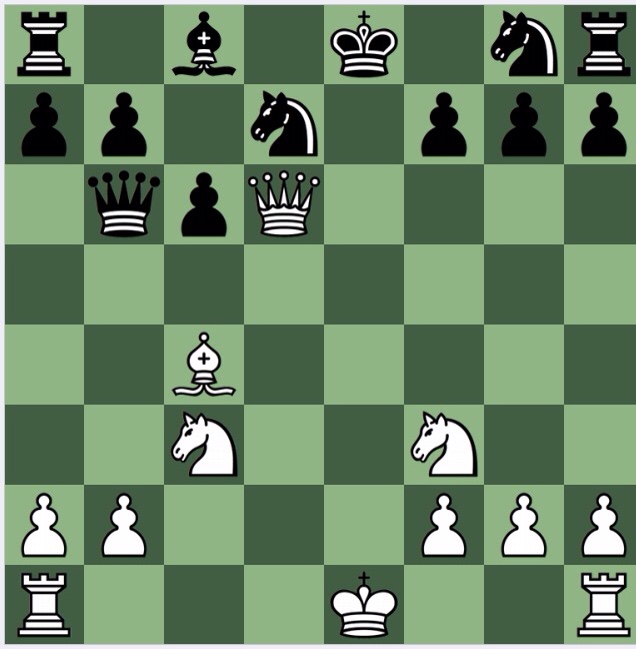
But White can cause Black some distress with the simple 1 Qe2+ and if a piece goes to e7, then Bd6; and if 1…Kd8 then 2 Bf7 restoring material equality and he is positionally winning. 1…Be7 2 Bd6 and White has plenty of compensation. Even Leko would have a crushing attack.
I have just finished the truly superb second volume of Judit Polgar's three volume games collection/autobiography. The first volume was excellent, the second – if it is possible- better still; the third volume will be in my flight bag for my summer holiday reading.
I haven't quite finished it though. I still have a few of the problems to solve. Judit interspersed a few pages of problems throughout her book, and I have a few toughies to solve. This blog is about one particularly interesting one.
She headed the following blitz game, from Honolulu in 1998, with the heading to my blog- Sofia is quite good at tactics too: that's a compliment, but the 'quite' makes it barbed.
The position is given as a Black to play and win. Have a go at solving it, before reading on.

Solution
The main themes are fairly obvious. There is a possibility of black back rank mating white (1…Bd3 2 Re5?? Rf1 mate), but if nothing else, 1 Rdd1 defeats it; and Black's position is somewhat loose, with the pin on the e file and also weak pawn structure.
So, I next tried 1…Bg2!?; but I couldn't defeat 2 Qh4.
Black to play and win
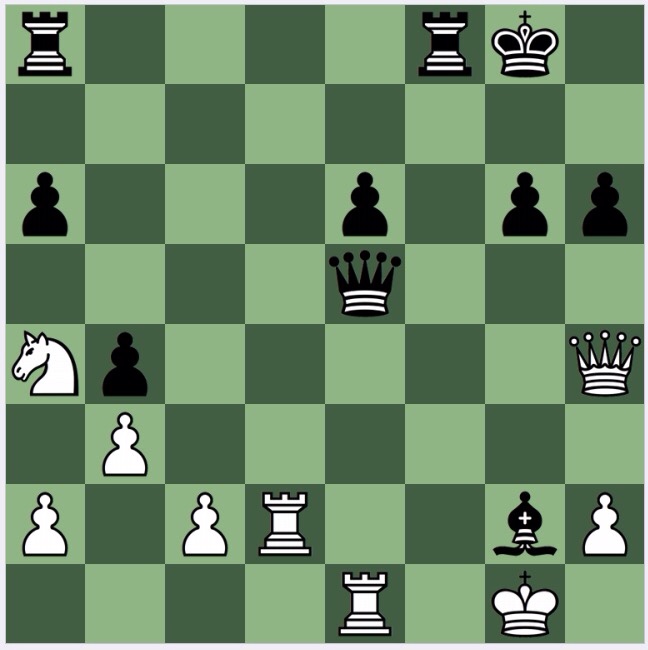
I couldn't solve this one, and having tried for too long, turned to the answer.
Sofia played the superb 2…Bh3!! and it was game over, 0-1. She clearly knows the CJS Purdy rule of ignoring threats.
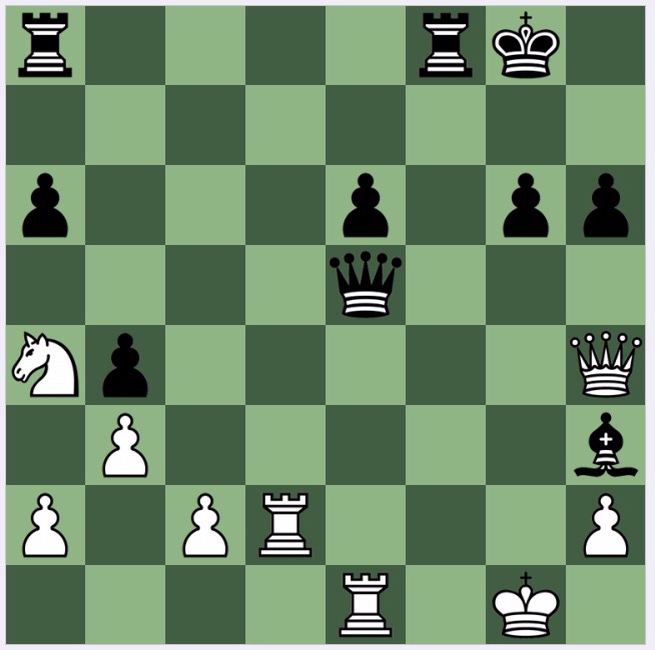
Beautiful. Or is it?
Having been overwhelmed by the beauty of this (and humbled: it is only a blitz game, and Sofia is only quite good at tactics) I decided to blog about this puzzle. So I loaded the position into the Stockfish app on my iPad and was startled to see 1…Bg2 is good (it took the iPad 30secs or so to find it) but only -0.8. What is going on? It prefers 2 Qg3! which somehow I had dismissed in favour of 2 Qh4. Since Judit makes no comment other than giving the 2 Qh4 Bh3 line, presumably 2 Qh4 is the more human move? It would be interesting to know if any of my readers saw 2 Qg3. I saw it, but dismissed it, thinking 2 Qh4 turned the tables on Black.
I have explored the resulting position a bit more. In fact, it is, to my mind, more equal than advantageous to Black, since playing some human moves as Black enable white to simplify the position to equality. After 2…Qg3 3 hg my first try as Black was 3…Bd5, thinking centralisation is good, but in thinking that I also felt Black's bishop would have no stability (the word I learnt from Mihail Marin's annotations for Chessbase) on d5. 4 Nb6, or, since it simplifies more, 4 c4! bc 5 Nc3 is well night equal, often because if there are exchanges on d5, white can put his e1 rook on e6. So, to try to keep some advantage, Black has to play 3…Bh3.
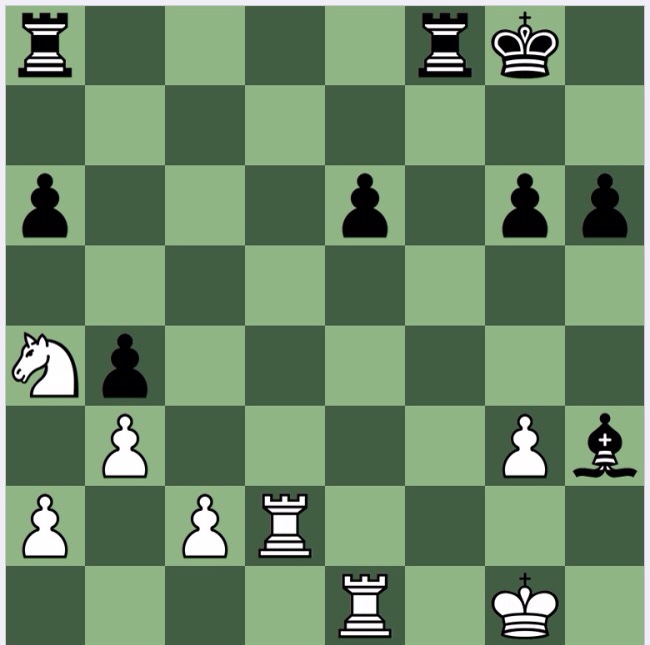
Carlsen, Caruana et al would no doubt grind the win out, so, ultimately, 1…Bg2! does win, but the position is both beautiful and complex.
This blog continues the occasional theme of what every chess player should experience once in their careers.
Today: resigning when winning.
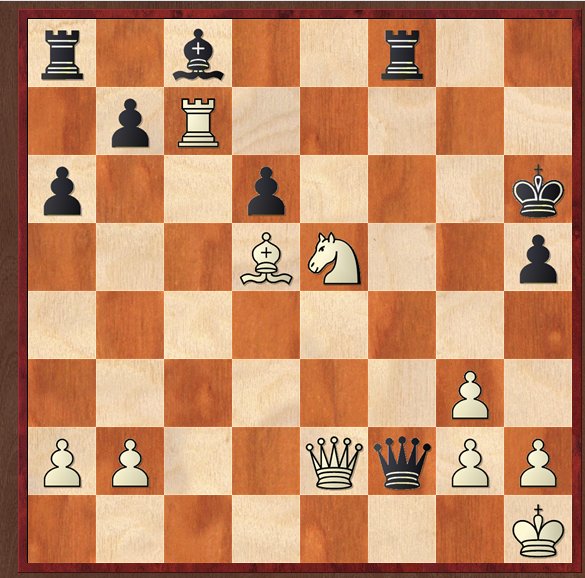
The above was a blitz game, last few seconds of a typical scrappy 3 min Morra gambit, and I resigned. With a bit more time, or some composure, I would have found 1 Rh7+, when the lines are not too hard. The main one is 1…Kh7 2 Qh5+ Kg7[] 3 Qg6+ Kh8[] 4 Qh6 mate.
White to play and win
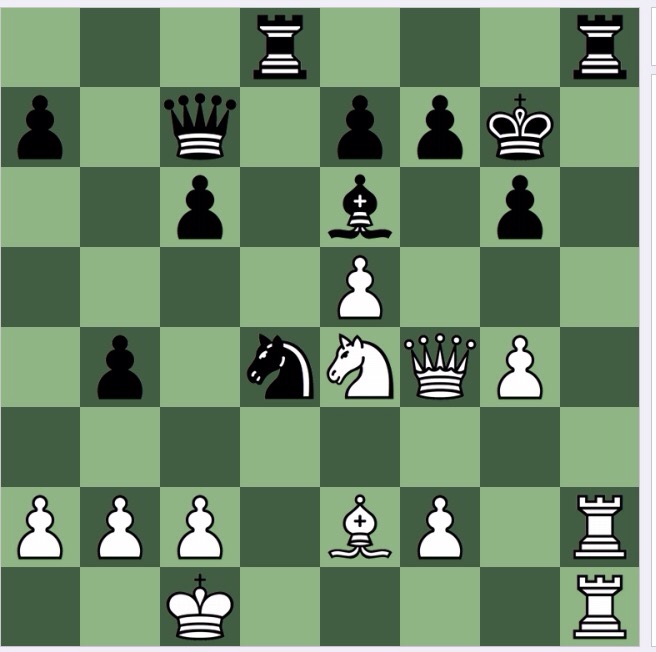
Wennerström v Malmdin, Ornsköldsvik 1962
Solution
A rest day today. I saw the solution instantly on inspection, but if not, examine all biffs, and 1 Qf6+ mates. 1…ef 2 ef+ and 3 Rh8 mate.
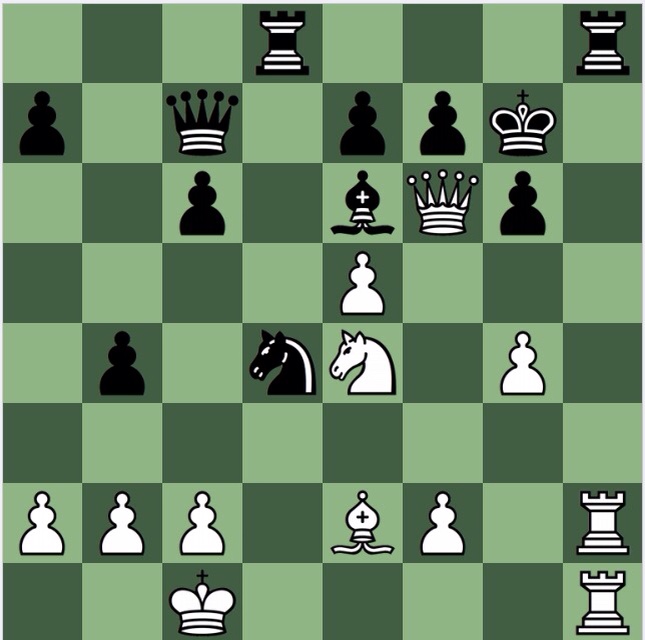
White to play and win

Padevsky v Belkadi, Varna Olympiad 1962
Solution
Slightly 'disappointing', this one.
I spent a lot of time, unsuccessfully, as it turned out- and correctly- trying to make 1 Rg6+ work. But it doesn't, with white only having the better part of equality after 1…Kg6[] 2 Rg1+ Kh6[] (2…Kf7?? 3 Bh5 mate) 3 Qf3 Qe8[] (3…Be8?? 4 Qg3! mating- the black rook can't move to g8) 4 e6 Bc6[] (4…Bc8?? 5 Qg3 mates for the same reason). So, Black has a narrow path, but not a hard path to keep the game alive.
Eventually I settled on 1 Rg2, following the principle 'do not hurry' with the intention of a slow build up, using the space advantage. When checking, Stockfish gives this +4; the app gives my second preference, 1 e6, slightly less, +3.8, which means they both win comfortably.
Stockfish gives 'only' +2.4 to the move played in the game, 1 Ne4. Black isn't forced to take the N, and he can if he wish grovel with 1…Qe6, taking queens off if white exchanges twice on d6. Of course he is lost, but white has the alternative more controlled way of winning.
If (after 1 Ne4) Black takes the N, then 2 Rg6+ now works better, since if the K moves back to h6, f5 comes with check. So 2..Bg4 3 Qe4+ and so on.
I recently blogged my king walk up the board, in homage to Nigel Short’s famous win against Jan Timman.
It set me thinking: what else should every chess player have the chance of, at least once in his career?
A smothered mate:

Alas, my opponent resigned, which is akin to poor form. So not quite a smothered mate.
White to play and win
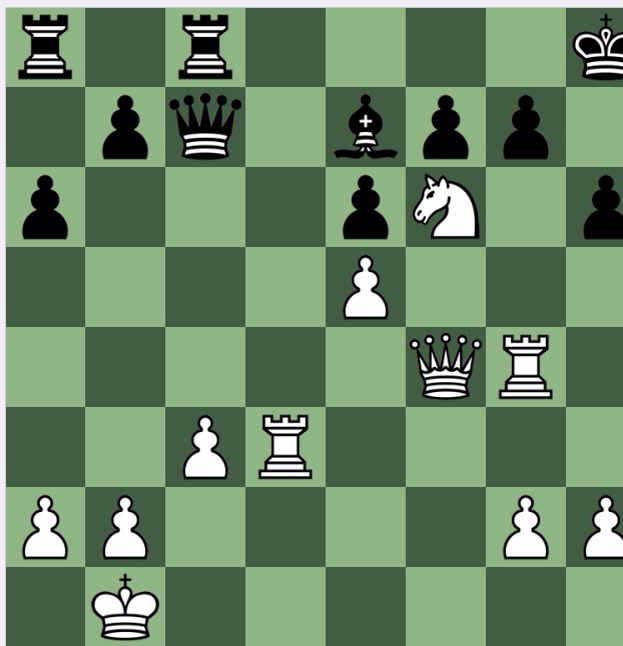
Konci v Golombek, Varna Olympiad 1962
Solution
I will always have a soft spot for Harry Golombek, the author of my first chess book, The Game of Chess, which I read so many times that the pages fell from its binding (but which I restored last year, since I treasure the book).
Here, the denouement is fairly straightforward, but it also gives me utterly convincing proof that Stockfish isn't human. It fails the Turing test because it plays 1 Rh3 Bf8 2 Rh6+ 1-0 whereas every human on the planet would play 2 Qh6+ (or, in truth, some would reverse the move order and play 1 Qh6+!!- that would be my preferred move order.
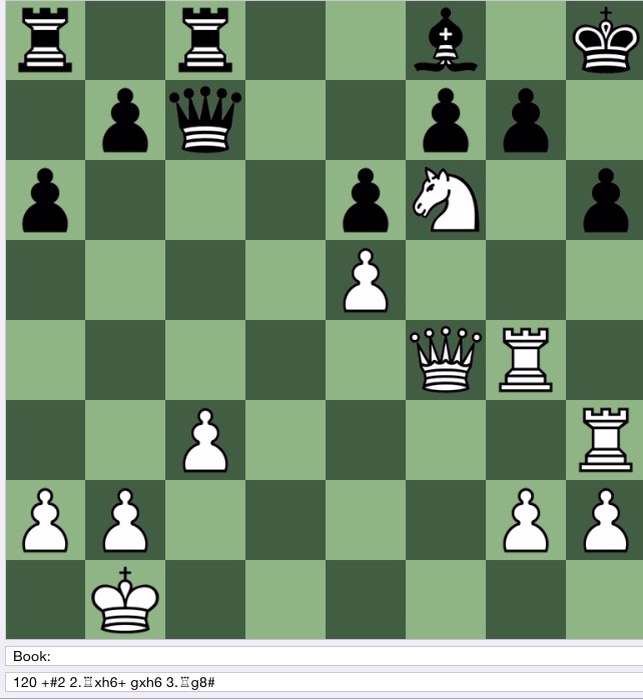
Note the engine suggestion: Rh6- no humour

 allanbeardsworth