Black to play and win
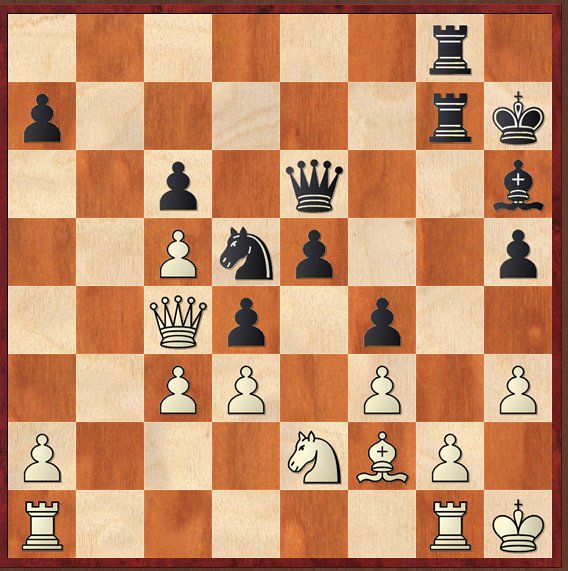
NN v allanbeard, Playchess
Solution
As a child, we all want to be world champions; then we realise that isn’t going to be possible; so GMs; so IMs; so….just win some games or the occasional tournaments. Now that I am retired from my work of the last thirty years, the ambitions are to win some blitz games, and I have also started playing in the Playchess Wednesday afternoon 3min+2sec blitz tournaments.
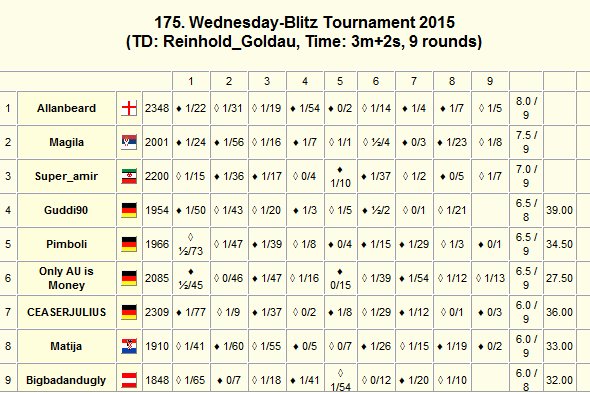
The above position is the best tactic (and relatively easy) from the 175th Playchess tournament, which I managed to win. Most of my games were pretty routine, decided either by a simple blunder or my more typical positional pressure approach.
1….Rg2! is fairly easy to see; and after 2 Rg2 Qh3+ 3 Rh2 Qf3 mate.
 Posted with Blogsy
White to play and win
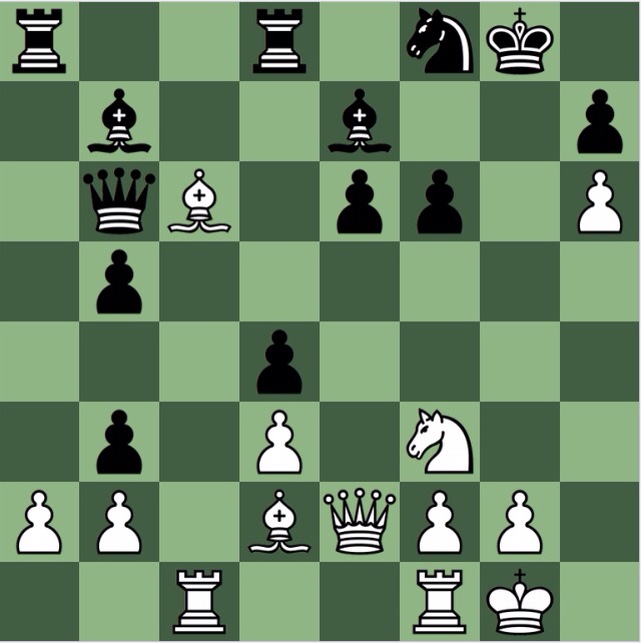
Wei Yi v R Dimitrov 2013
Solution
This puzzle, seen in one of Malcolm Pein's Daily Telegraph column, stumped me. I couldn't solve it on inspection, so as I always do, tore it out, without the solution, and put on my pile for future solving; and did it whilst walking the dog. It took me a while, so was good exercise for both body and mind.
Of course, the aim, of white's queen getting access to black's kingside, was clear enough, but how to achieve it? At first, I looked at Purdy factors: functions, nets, ties….noticing in particular that the Qb6 is tied to defending the Bb7, and then saw that if white could play Qf3 he would be able to shift to g3 with gain of tempo, because on f3 it reinforces the attack on the Bb7: so 1 Ne5! came to mind.
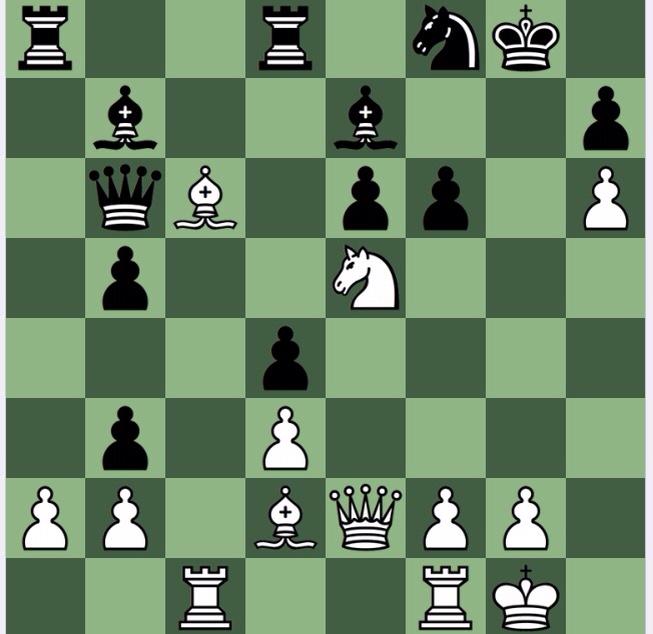
Once seen, 1 Ne5 is obvious. If the knight is taken, not 2 Qg4+ which is blocked by 2…Ng6, and black is better, but 2 Qe5! aiming at the square the Nf8 doesn't protect, g7; it is all over.
So instead 1…Kh8 when 2 Nf7+ Kg8[] 3 Qg4+ Ng6 (3…Kf7 4 Qg7 mate) 4 Qe6 and it is game over.
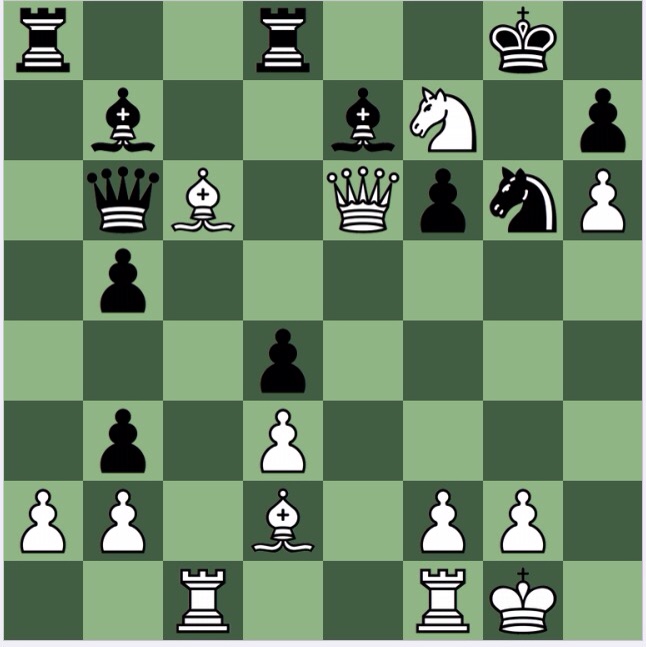
Also, after 1..Kh8, 2 Qg4 wins: it transposes, after 2…Ng6 3 Nf7+ and 4 Qe6.
Black to play and win
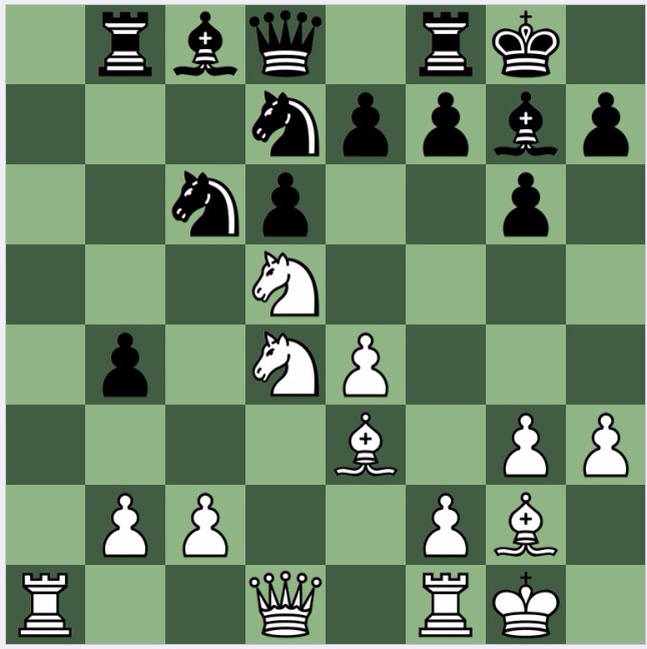
From: many games, see below
Solution
The position was the weekend puzzle in last weekend's Financial Times column by Leonard Barden. He wrote that it is a Dragon Sicilian opening trap which has deceived three grandmasters.
On inspection, I couldn't solve it: 1…Nd4 just simplifies into a position where white has a space advantage, and I couldn't see how to trap up fork a minor piece; so as is my wont, I tore the article out (sans solution), and took it with me on a dog walk….and the solution quickly came to me.
1…Bd4! is a surprise exchange, but once seen, is easy: 2 Bd4 e6 and if the Knight retreats to e3, 3…e5 traps the bishop, or if 3 Nf4 e5 is Purdy's 'potassium cyanide' and forks the minor pieces.
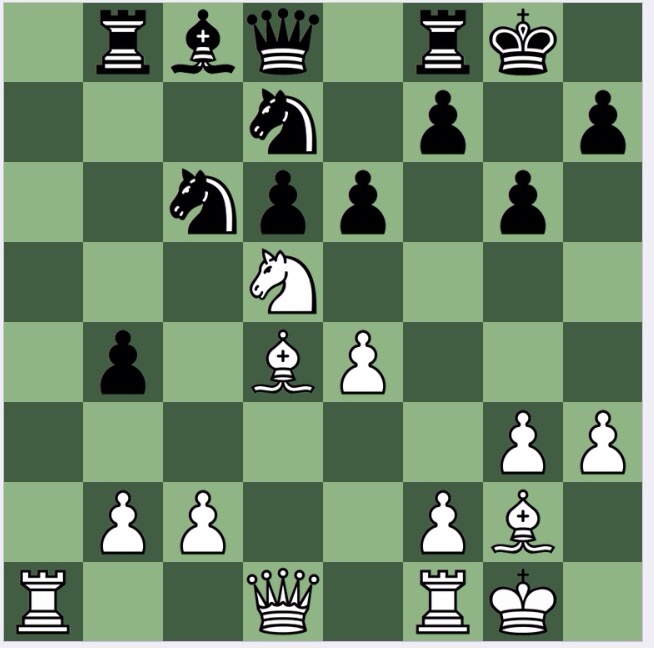
Having thrown away the solution, I don't know which three GMs Leonard was referring to, but a quick search of Megabase 2012 showed the following:
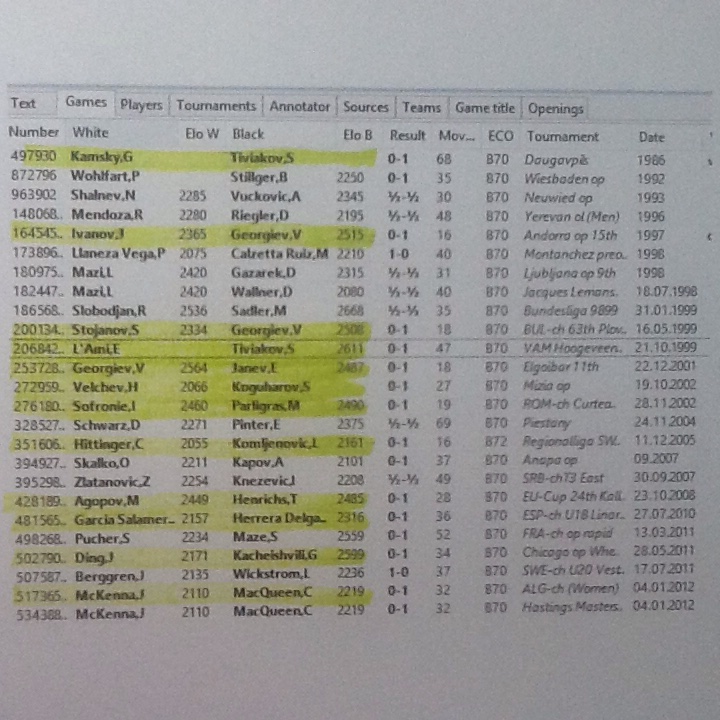
The games highlighted were those in which black found the tactic. In the others, he didn't, playing 1…Bb7 or 1….Nd7e5. A further search in my TWIC database shows two more occurrences in 2014, in only one of which 1…Bd4 was played. I have a lot of sympathy for all those black players who played routine moves: I suspect I would have done so too.
Three final points:
Gata Kamsky fell into the trap against Sergey Tiviakov; Gata then put up the stoutest resistance, the game lasting 68 moves;
Sergey won with the trap twice, with a gap of 13 years, the second time with white being Erwin L'Ami: two top scalps;
Vladimir Georgiev, a c 2,500 player, won with the trap in May 1999, and then fell into the trap, playing white in December 2001. This strikes me as curious. An eighteen move win followed by an eighteen move loss?!
Black to play
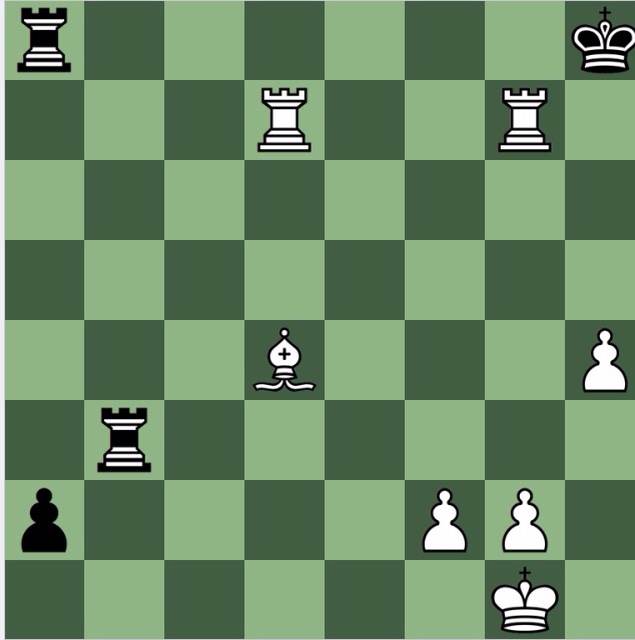
Allanbeard v Hamelech, Playcess 7/5/15 3 minute blitz
Solution
I had been cruising to victory, sweeping black's king side pawns up with my doubled rooks, and with 31 Bd4?? came in for the kill. 31 Rh7+, 32 Rdg7+, 33 Bc5+, 34 Rh8 mate would have been better 🙂
Black had in fact offered a draw after his last move, before I played 31 Bd4; which I rejected. Had he been able to offer a draw after Bd4 then his draw offer would have been !!; since 31…a1(R)+ (or Q, rook is prettier) 32 Kh2 Rh1+! 33 Kh1[] Ra1+ 34 Kh2 Rh1+! 35 Kh1[] Rh3+ 36 Kg1 Rh1+! is 1/2. If white's bishop takes on a1 there is no difference.
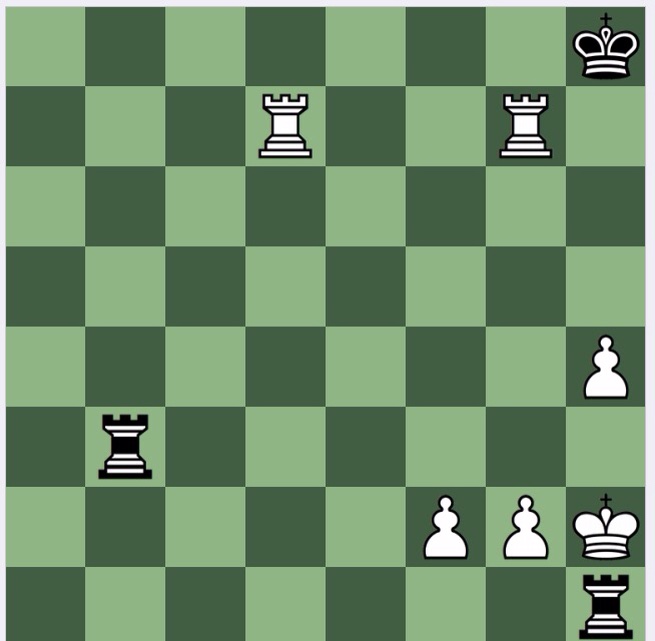
Pretty, and worth an 'applause' on Playchess for my opponent.
Black to play
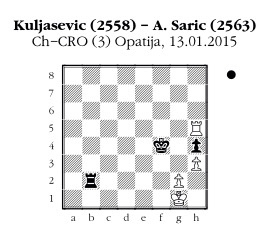
Source: Chess Today, CT5189
Now that I have finished the second book of Leonard Reitstein's South African puzzles , for the next few days I will post random puzzles, mainly those which I struggled with or enjoyed, from a variety of sources, including some from my own games. When ready, I will choose another puzzle book to continue with.
Today's puzzle is from the daily chess newsletter run by Alex Baburin, to which I have long subscribed, and long enjoyed. It is a pity that in 2015 there seem to be publication difficulties…at one stage earlier this year it was weeks behind schedule, and presently it often comes out daily, but not always. I hope Alex and his team surmount whatever difficulties they have, since Chess Today has a place in the chess world.
Solution
1…Kg3 is the first try, partly to defend the Ph4, partly with a back rank mate threat. But 2 Rg5+ Kf4[] 3 Rg4+ and 4 Rh4 is 1-0; similarly 1…Rb1+ 2 Kh2 tucks the white king away snugly so that 3 Rh4+ follows.
But 1…Rb4! 2 Rh4+ Kg3 3 Rb4 is stalemate; and 2 Kh2 Ke3 protects the pawn, and is a theoretical draw; and 2Kf2 Rb2+ is a repetition.
Black to play and win
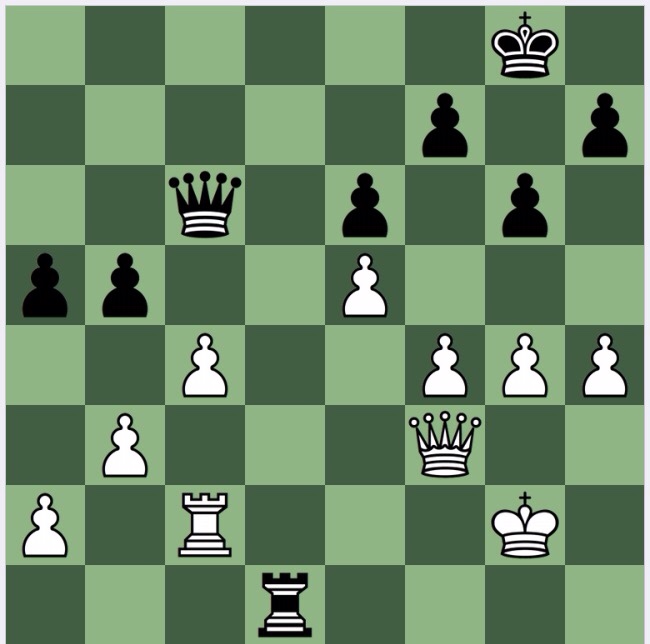
T Mohale v F Odendaal 2005
Solution
I was hoping the book would end with a corker, but instead it ends trivially. 1…Rg1+ and the queen falls off one way or the other,
Black plays either 1…Kd8; or 1…Kc6: how does win against both?
A 'good' exercise: would also be a good exercise to decide, if you were playing black, how would you defend, to make white's task most difficult?
Good if it were correct, but it isn't! Having spent a lot of time, and finding good lines, I looked at the solution, one of which lines included Bc2-a4+. Oh dear, the B is on c2. So could use this as an exercise under both bishop placements.
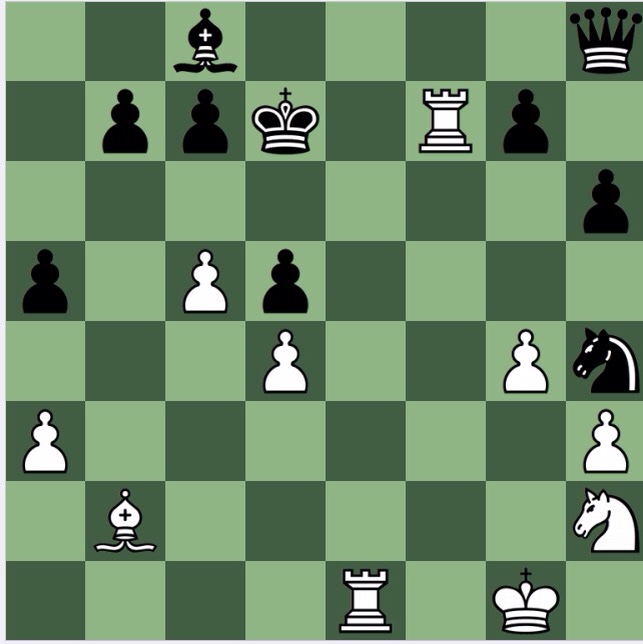
D Friedgood v K Van der Meyer 1966
Solution
1…Kd8
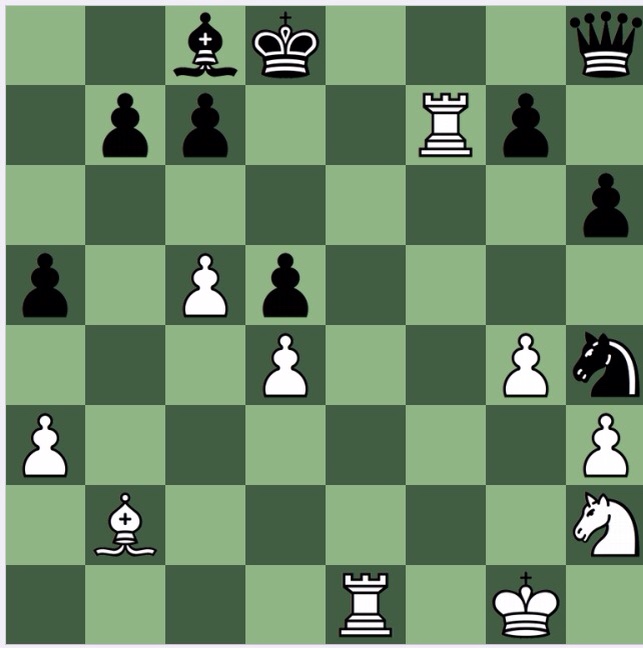
With the B on c2, 1 Ref1: the threat of Rf8+ can only be met by 1…Ke8, when 2 Rc7+ starts to mop up. With the B on b2, 1 Ref1 is less strong: 1…Ng6 defends, but 1…Qh7! is stronger activating the queen, and Stockfish's assessment is +0.6, which means to me the position is just unclear. And instead of Ref1, there is not much better, perhaps 1 Bc3, but it is still unclear.
1…Kc6
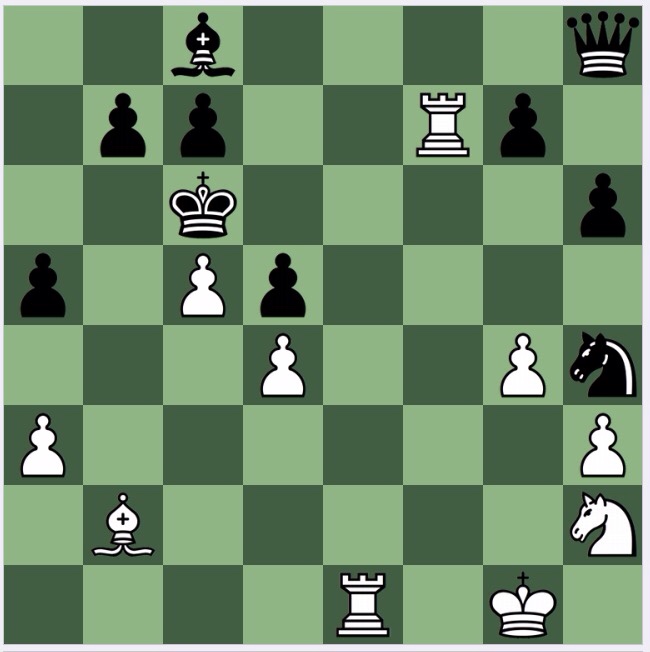
With the B on c2, Re8! is pretty. The Q can't move to h7 (the Bc2 looks at it) so 1…Qe8[] when 2 Bc4+ skewers.
With the B on b2, again it is less clear: 1 Ree7 and the position is a mess.
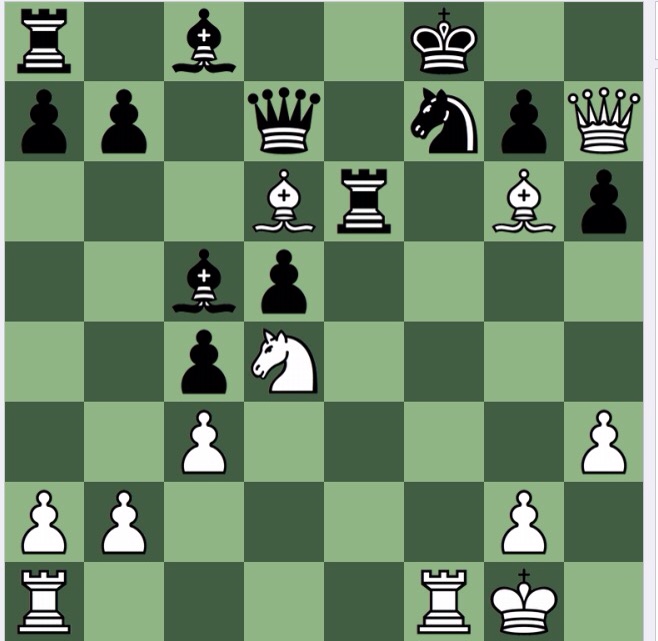
White to play and win : mate in three
By contrast to yesterday's mate in six, which I think isn't worth finding, this definitely is worth solving, and is pleasing to do so.
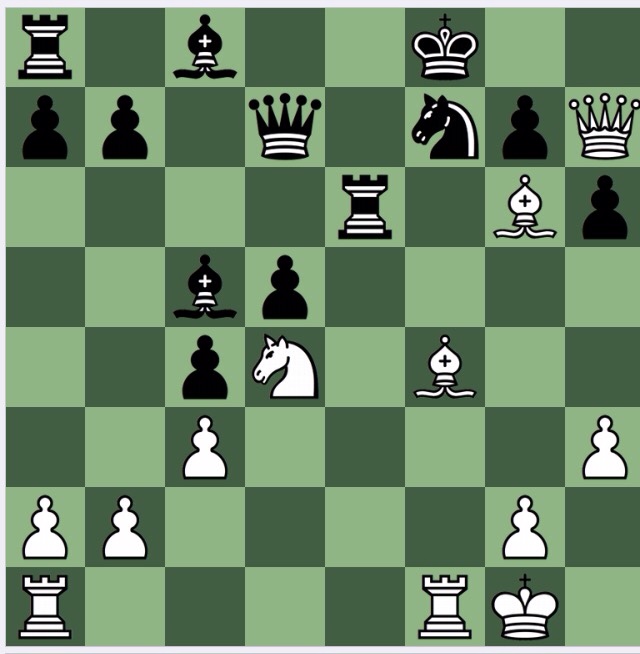
FH Nel v A Broeksma 1974
Solution
Having tried various biffs, such as 1 Bh6, and the pretty 1 Qh8+, which works against 1…Nh8? because or 2 Bd6++ Kg8[] 3 Rf8 mate, but fails to 1…Ke7: fails in terms of not being a mate in three. So, reverse the moves/examine all biffs, and 1 Bd6+!! comes to mind, and it all falls into place. If the bishop is taken, 2 Qh8+ forces 2…Ke7[] when because d6 is now blocked by a piece, 3 Rf7 is mate.
Pretty.
White to play and win
Mate in six (if you want to find it)
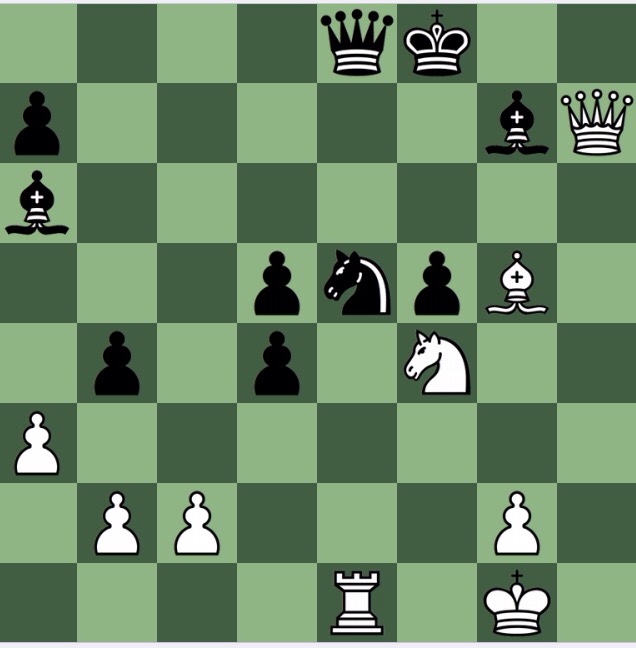
S Pearson v CC De Villiers 1998
Solution
Reitstein gives this as a mate in six, which indeed it is, but it is hardly worth finding it, since black has several defences, all mated in slightly different ways. Instead, 1 Re5! is obvious and strong, and all that is needed is to see how white defeats the major defences, such as the two alternative captures of the N. I managed to find the mate in six in the hardest line, but I don't think it is interesting nor worth giving,
White to play and win
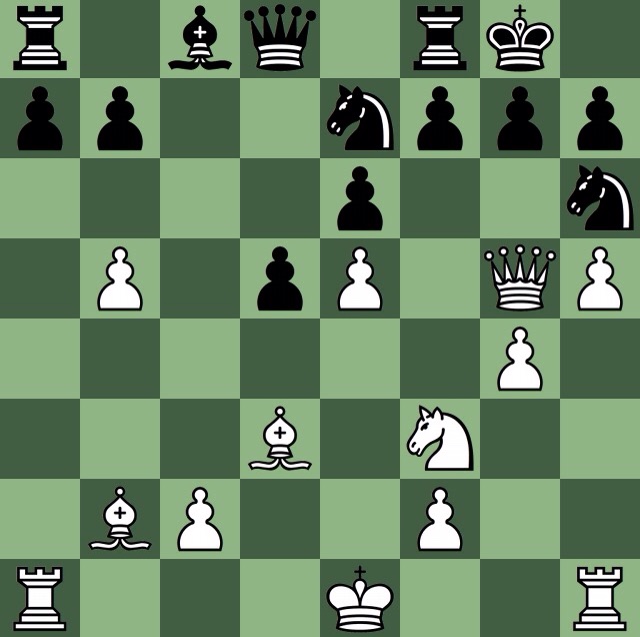
B Rabinowitz v A Schobi 1955
Solution
I struggled with this puzzle, eventually settling on the small retreat 1 Qf4! planning 2 Ng5, hitting h7: and I felt it gave white a strong advantage. Turning on Stockfish it gave the move as its first choice initially, with +1 advantage, hardly startling, before switching to 1 Qd2!, which I will come to below.
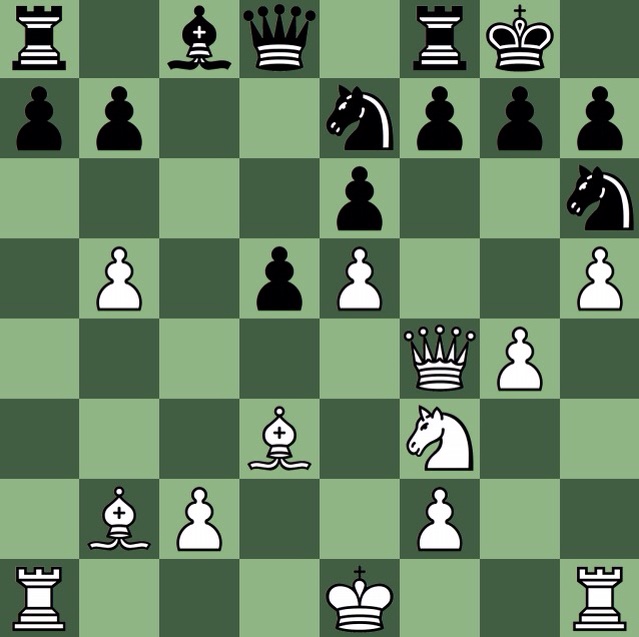
There is one, nice, unforced line after 1 Qf4. If 1…Qc7 2 Ng5 f5 then 3 ef!! Qf4 4 Bh7+ Kh8 5 fg mate. In the game, black played 3…e5 and resigned after 4 Bh7+ Kh8 5 fg+ Kg7 6 Be5+.
However, 1…Bd7 is better (after 1 Qf4); 2 Ng5 Bb5 3 Bb5 Qb6 4 c4 and white is better, but it really is a computer position: 4…a6 5 Bd4 Qc7 6 Ba4 Qc4 is unclear to me, with black having three pawns for the piece. Yes, I know that white's activity is good, but to me 'unclear'.
Stockfish prefers 1 Qd2!, and I think the idea is that in the line with Qb6, after white plays c4 the Qd2 defends the Bb2; an impossible detail for me to see in the original position. And if 1…Ng4 then 2 h6 and if 2…g6 3 Qf4 the Ng4 is lost, 3…Ne5 4 Be5; or better 2 Rg1 since 2…Nh6 3 Qh6 because of the pin.
In writing this posting, I also loaded the game into Deep Fritz 13: it initially preferred 1 Qf4; then after a minute switched to 1 O-O, both of which it thinks are +1.5 or so, before after several minutes eventually choosing 1 Qd2, assessing it as winning.
 allanbeardsworth