White to play and win
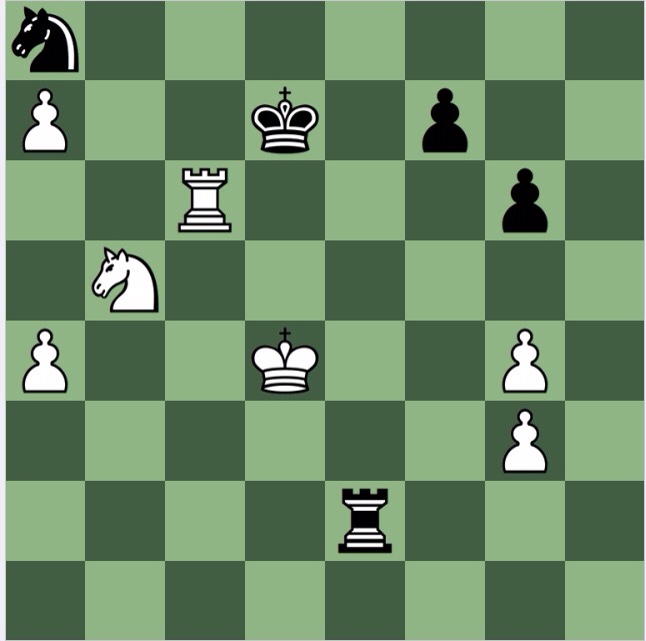
M De Wit v KT Solomon 2003
Solution
Examine all biffs leads fairly quickly to 1 Rc7+ and if 1…Nc7, 2 Nc7 and the pawn queens, and black doesn't have a fortress (if nothing else, because of the Pa4). If 1…Kd8, 2 Rf7 not only wins another pawn but threatens Rf8+, and if 1…Ke6, 2 Rc8 threatens both Ra8 and Re8+ skewering the king and rook.
 Posted with Blogsy
White to play and win
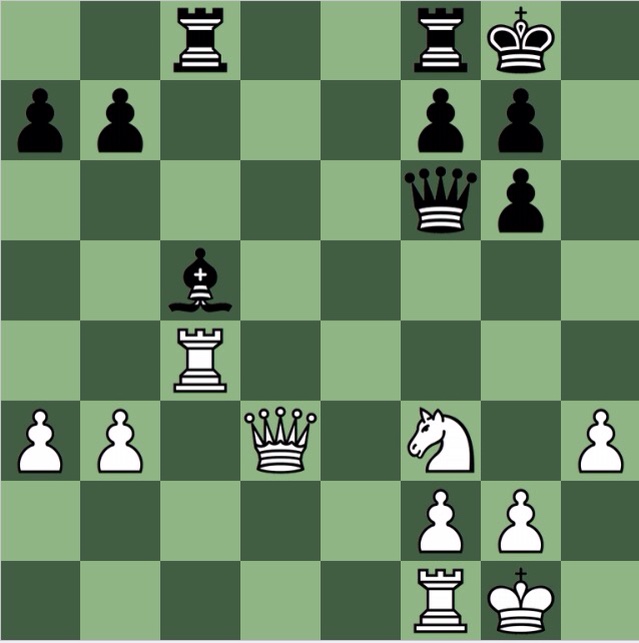
K Dreyer v M Blieden 1940
Solution
Black has just played Qa6-f6, taking a bishop on f6, whereas gf would have been equal. Now, the pin is decisive: 1 Qc2 and if necessary 2 b4 win, fairly simply.
In the game, white accepted the draw offer that black made after Q*f6: Reitstein says white was short of time, and probably only saw that the natural 1 Rfc1 is nowhere near as good, since 1…Rcd8[] biffs the queen and unpins.
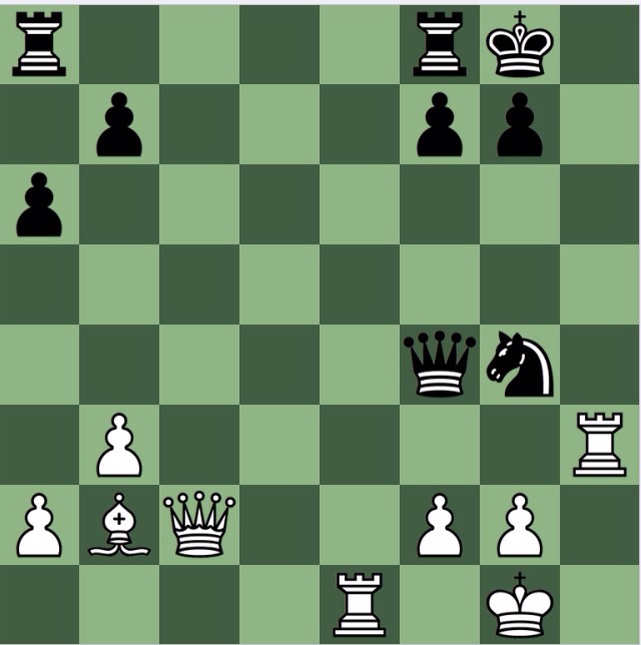
White to play and win: black has just sacrificed 1…Be6-g4
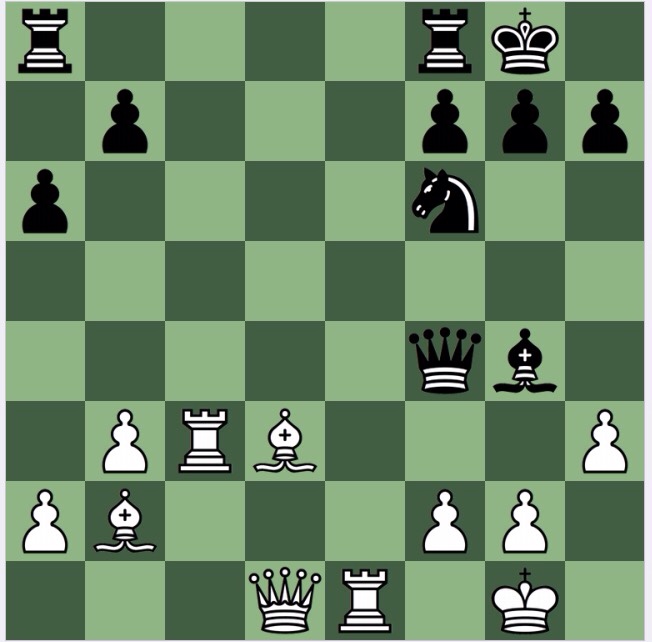
L Wilkin v B Rabinowitz 1955
Solution
In the game, white played 1 Qc1, and the game went on. However, the sac is unsound and 1 hg Ng4[] 2 Bh7+ defeats it. 2…Kh8 3 Rh3 is trite, so 2…Kh7 3 Rh3+ Kg8 4 Qc2 with a strong, near winning, position.
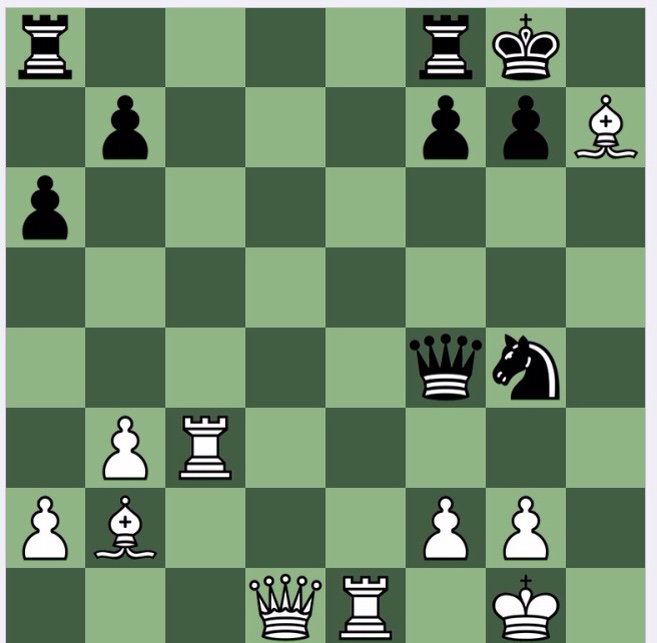
White to play: mate in two;
And, why is the position illegal?
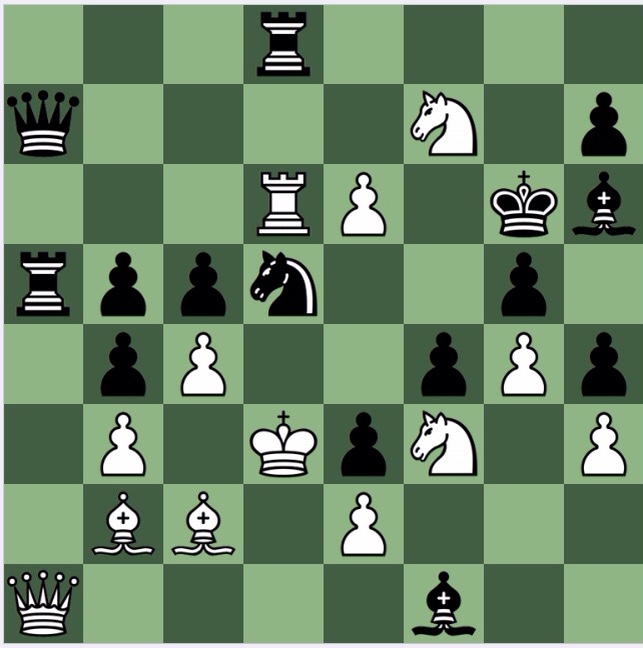
John J Dolan, 1938, SA Chess magazine
Solution
An oddity in a games puzzle compendium, but actually a welcome one, for the second part. It took me a few minutes to realise that black's pawn positions required more captures than there are white pieces off the board, so, as this is not shogi, the position is illegal.
The puzzle itself just needed a bit of work before finding 1 Bh8!
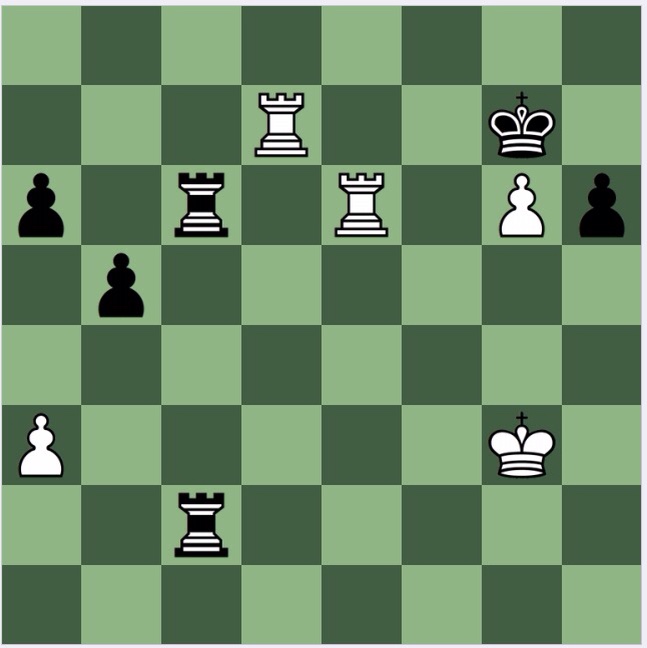
Black played 1…R8c6: why was this a blunder?
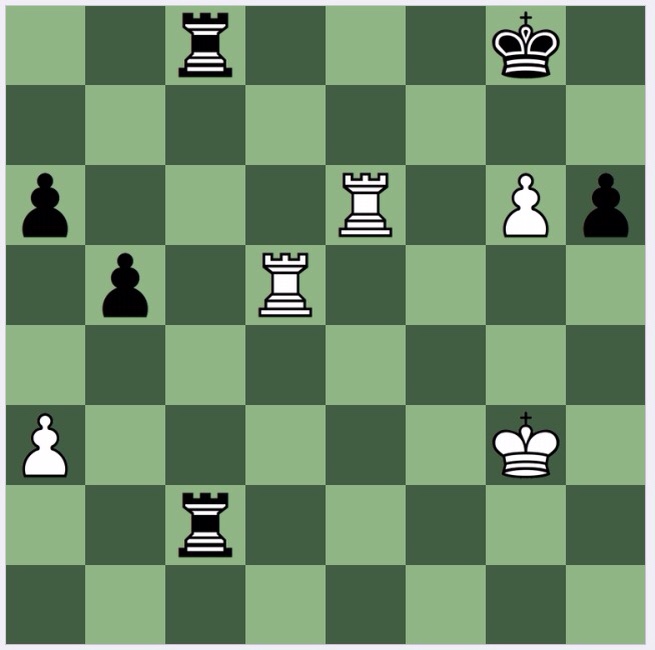
H Stander v CC De Villiers 2005
Solution
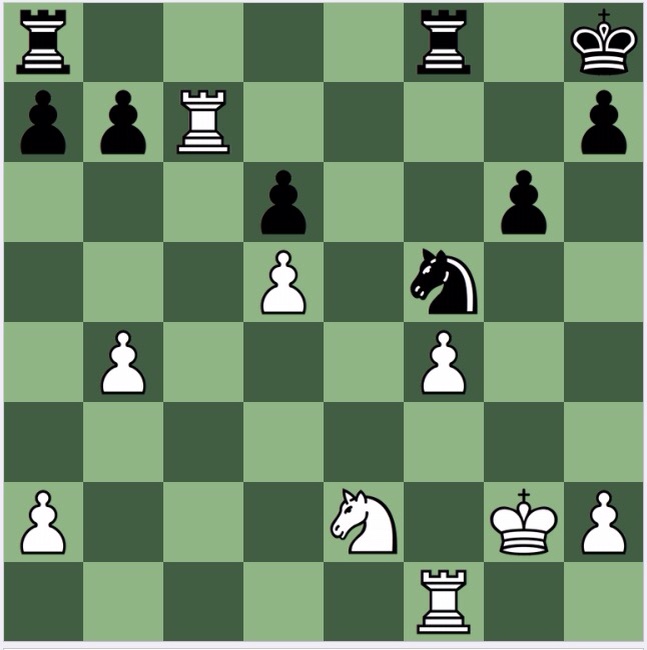
Fairly easy again today: 1 Rd8+ Kg7[] 2 Rd7+ Kf8 3 Rf7+! and 4 Re8 mate.
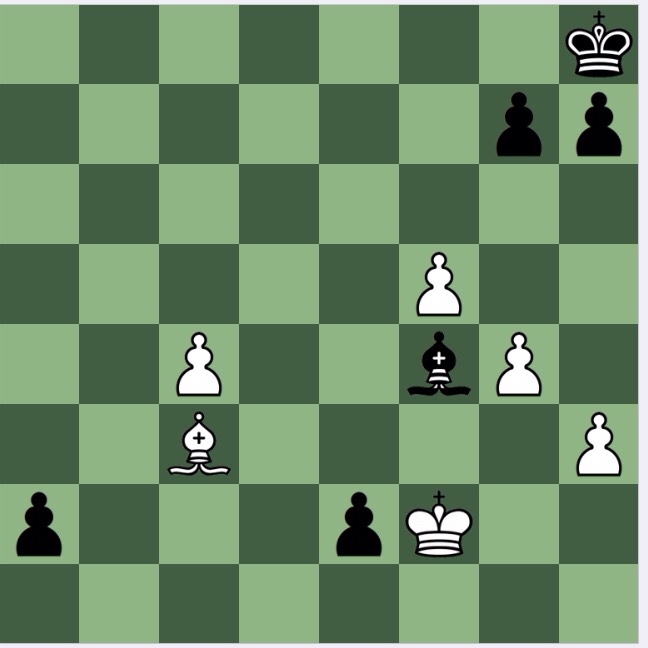
Black to play and win
VJ Meiring v FN Barnett 2005
Solution
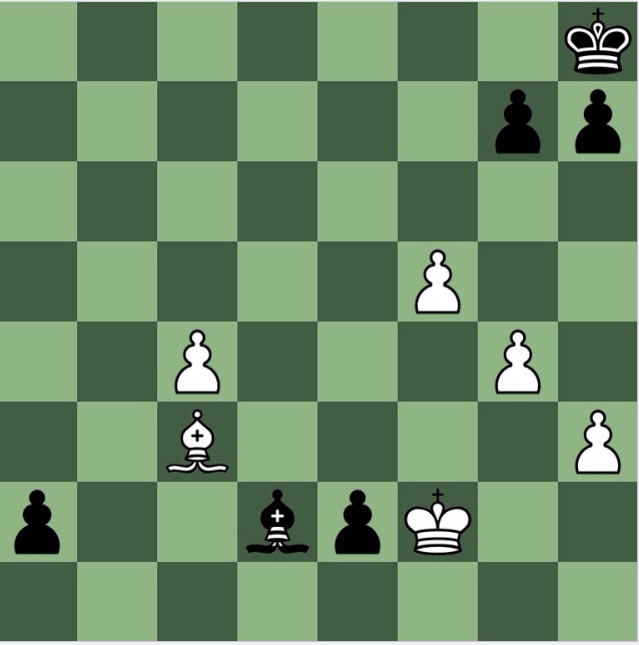
There is one motif here, and black would do anything to promote a pawn, so 1…Bd2! isn't too hard to find. The Bc3 is, in CJS Purdy language, tied to a1, so 0-1
Black to play and win
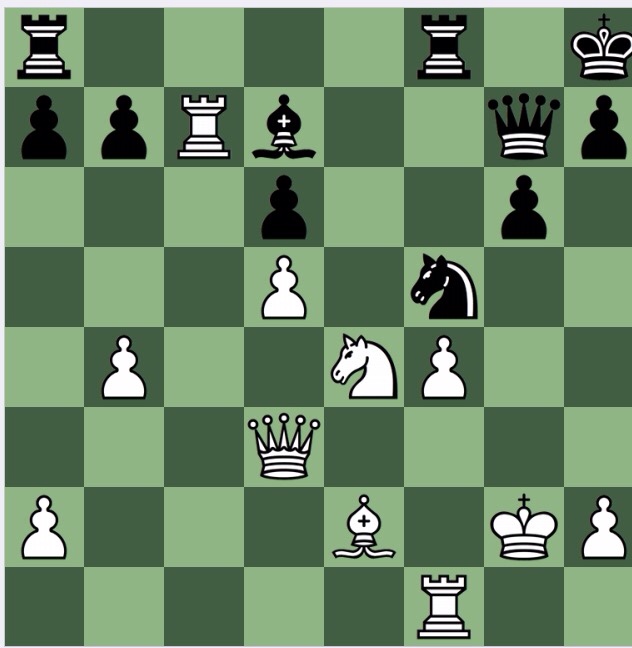
JJ Steenkamp v Y Aranov 1997
Solution
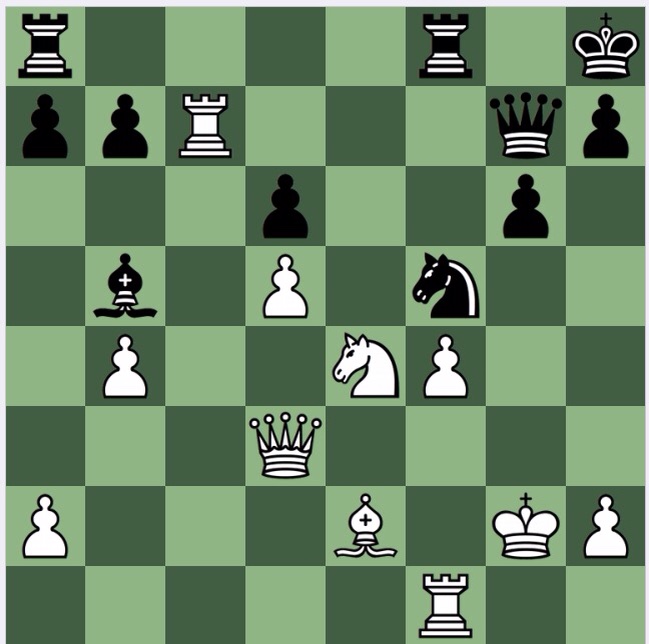
Loose pieces drop off (LPDO, John Nunn) and examine jump biffs (CJS Purdy) (here Qg7*Rc7) so that 1…Bb5! wins.
Black resigned here: should he have done?
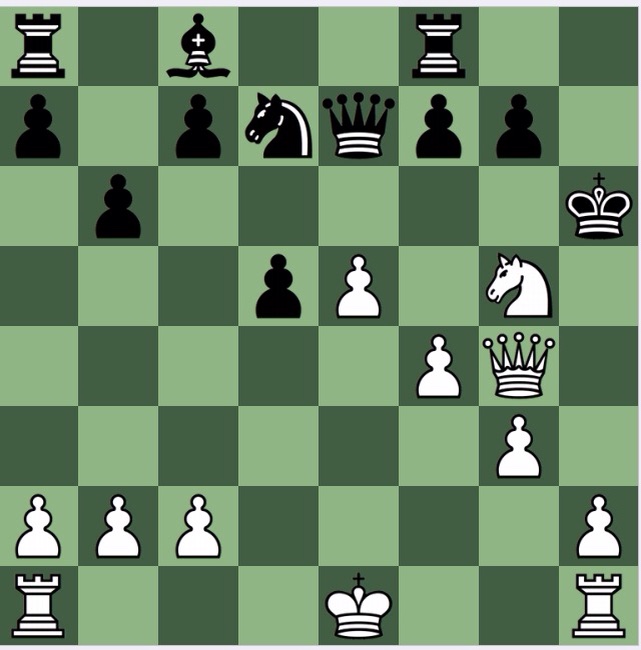
D De Vos v C de W de Klerk 1945
Solution
With questions like that posed today, you know the answer has to be 'no'; unless the question is deviously tricky. This one isn't: it is straightforward, and the answer is no.
1…Ne5 or 1…Nf6 both defend.
1…Ne5 2 Qh4+ Kg6 3 0-0-0 Nc4; or 1…Nf6 2 Qh4+ Nh5.
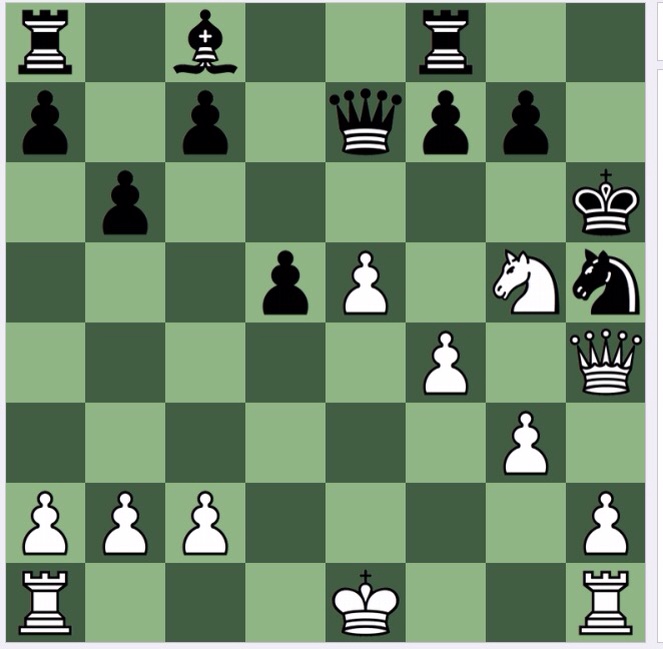
Black to play and win
White played 1 Qf4?? here: why was this a mistake?
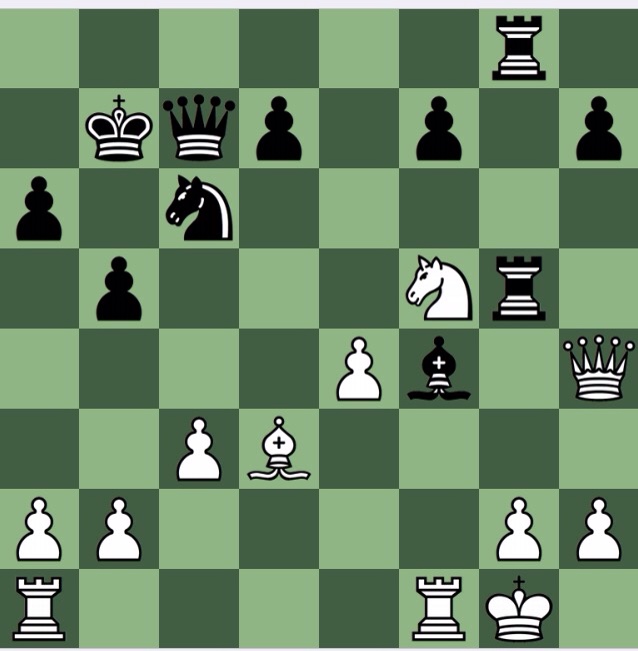
V Huang v M Fidos 1984
Solution
White could have kept the edge, by say 1 g3, but instead his 1 Qf4?? is a gross blunder, losing his queen to a standard manoeuvre: 1…Rg2+ 2 Kh1[] Rg1+! and the queen loses her protection.
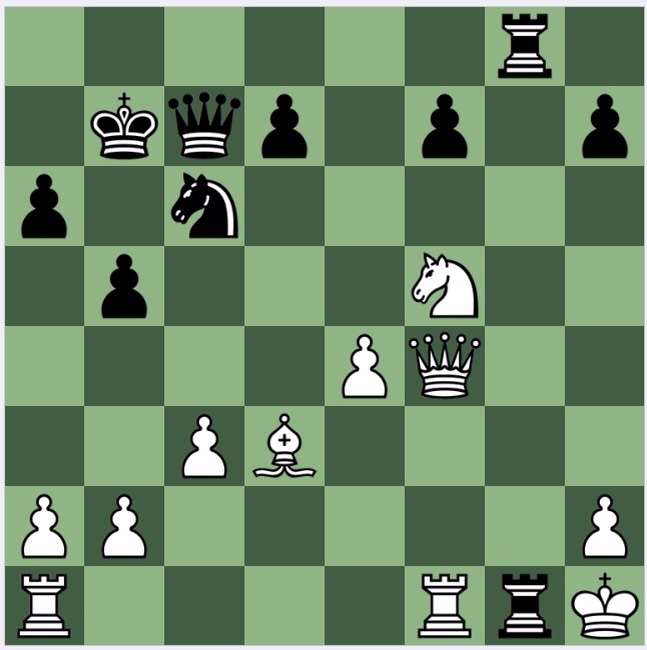
Black to play: how should he defend?
(Not worth spending much time on: somewhat flawed; I have posted a separate item, refining the position somewhat, and it is worth understanding this position, then looking at my next posting.
White plays the Greek sacrifice here:
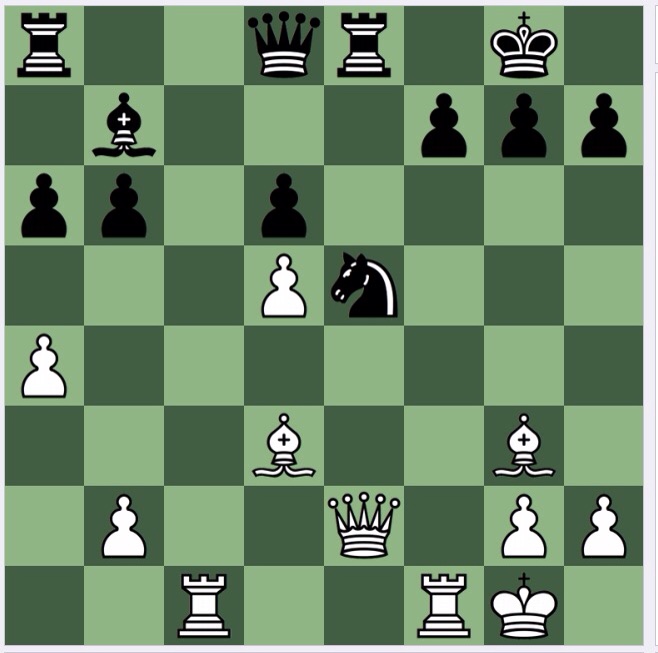
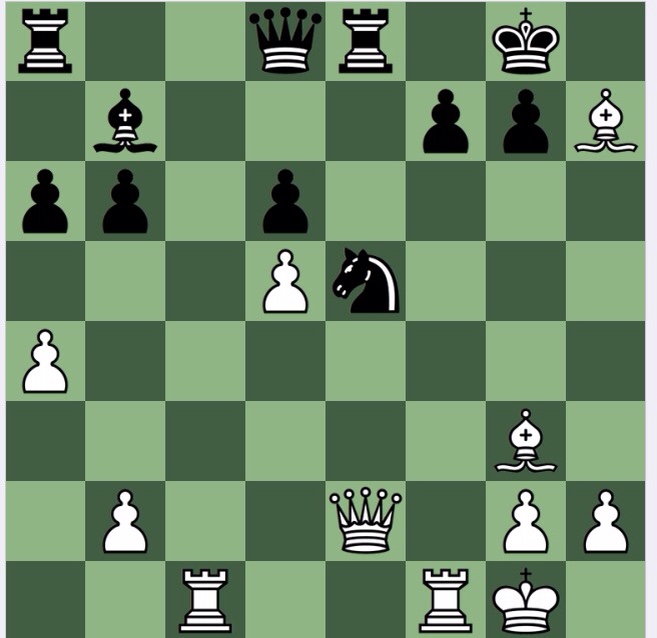
D Friedgood v A Snoek 1961
Solution
The easiest move to reject is 1…Kh8?, which does nothing: 2 Qh5 and it all over.
Reitstein prefers 1…Kf8, but both this and the game continuation 1…Kh7 are losing. I actually chose 1…Kh7, as did the player in the game.
1…Kf8 2 Qh5 Bd5 and rather than Reitstein's 3 Bg6 (which is still better for white after 3…Ng6 4 Qd5) better is 3 Rcd1. There is then a tictac 3…Be6?? 4 Be5, so black should play 3…Bc4, when 4 Be4 and white is better- Stockfish says +3.
1..Kh7 2 Qh5+ Kg8[] 3 Be5 and white is better. If 3…Re5, 4 Qf7+ and 5 Qb7. If 3…Bd5, 4 Bg7 Kg7 5 Qd5. If 3…f6, 4 Bf6 gf 5 Qg6+, 6 Qh6+, 7 Rf6 1-0.
 allanbeardsworth