White to play and win
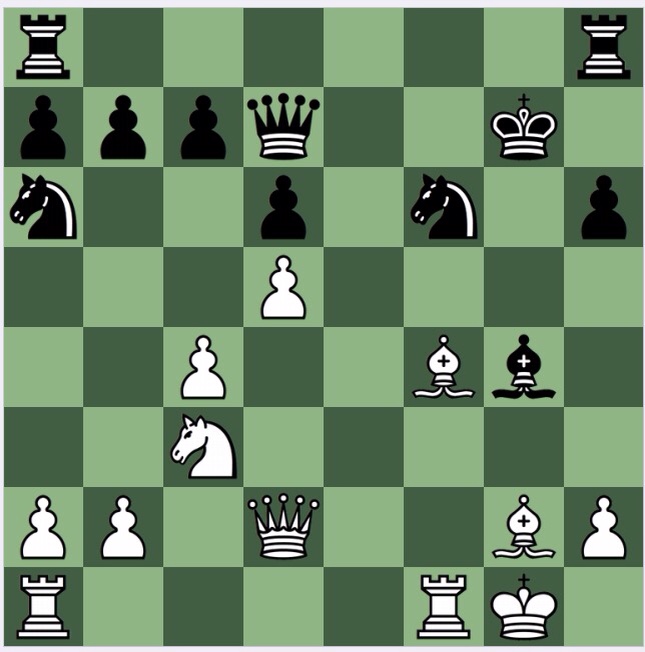
KT Solomon v R Van Tonder 2003
Solution
Examine all biffs again. 1 Bg5! and if:
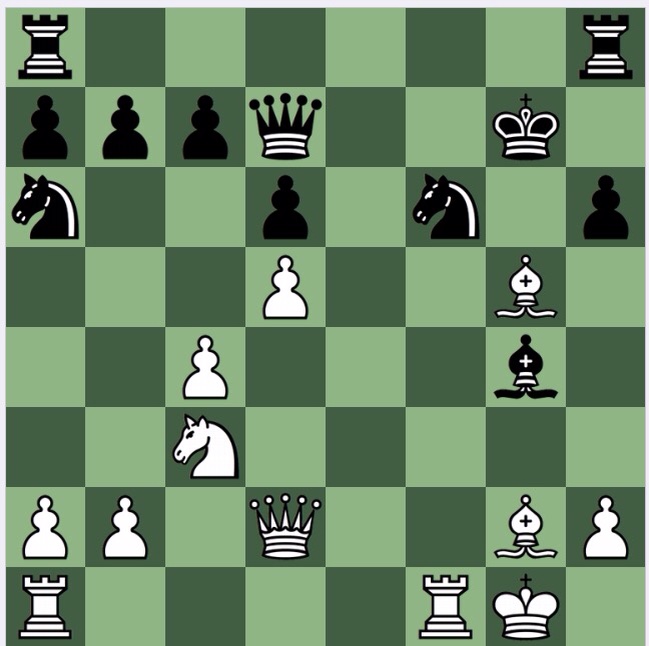
- 1…hg 2 Qg5+ and 3 Rf6 +-
- 1…Raf8 2 Bf6+, 3 Rf6, 4 Qd4 skewering the LPDO Rh8 and King
- 1…Rhf8 3 Bh6+ and wins the exchange, with an ongoing attack.
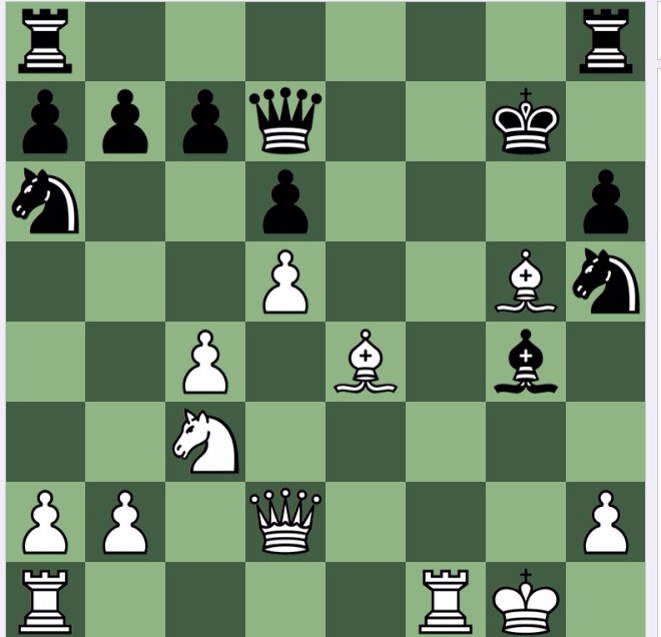
So, best is probably 1…Nh5 when 2 Be4 brings more pieces to the party, and white dominates. He threatens 3 Bh6+ and 4 Qg5+, for instance.
 Posted with Blogsy
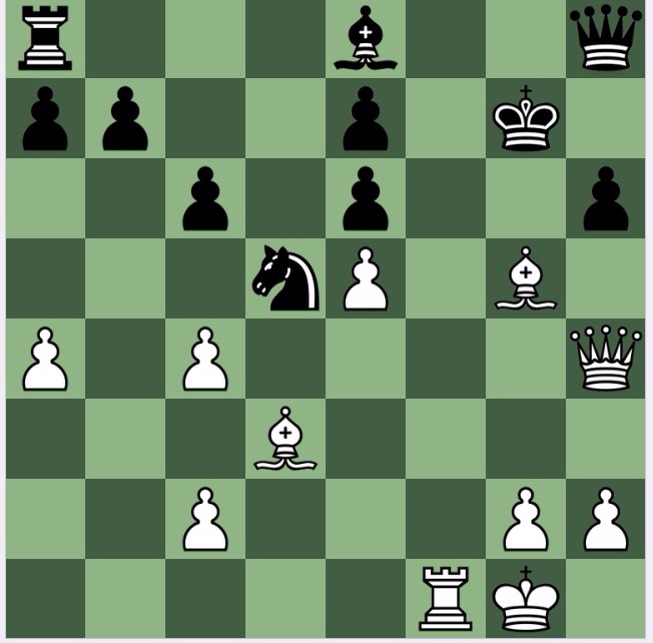
White to play and win
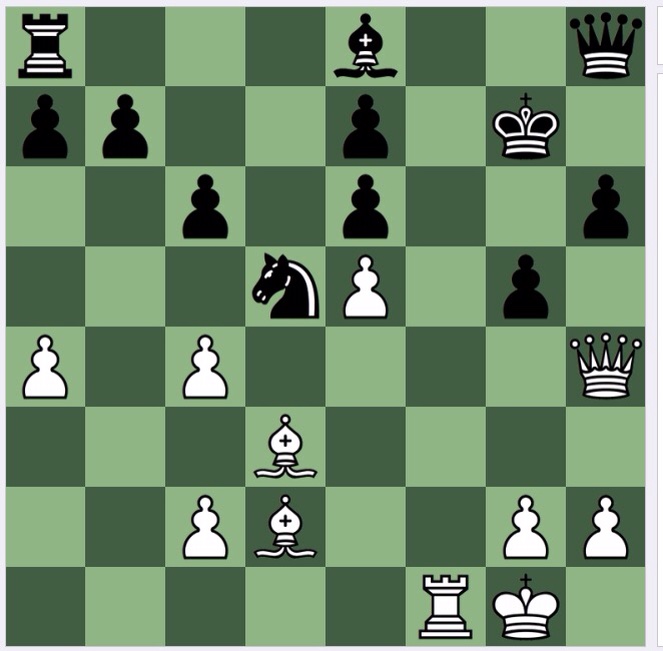
D Gluckman v A Goosen 1986
Solution
The first move is obvious, and even if it weren't, following CJS Purdy's advice to examine all biffs means that it has to be looked at. 1 Bg5! and the bishop can't be taken, else 2 Qg5+ Bg6[] 3 Qg6 mate. But if say 1…Nb4 then 2 Bf6+! either wins the queen, when the game is over, or after 2…ef 3 Qf6+ Kg8[] 4 Qf8 mate.
Black to play and win
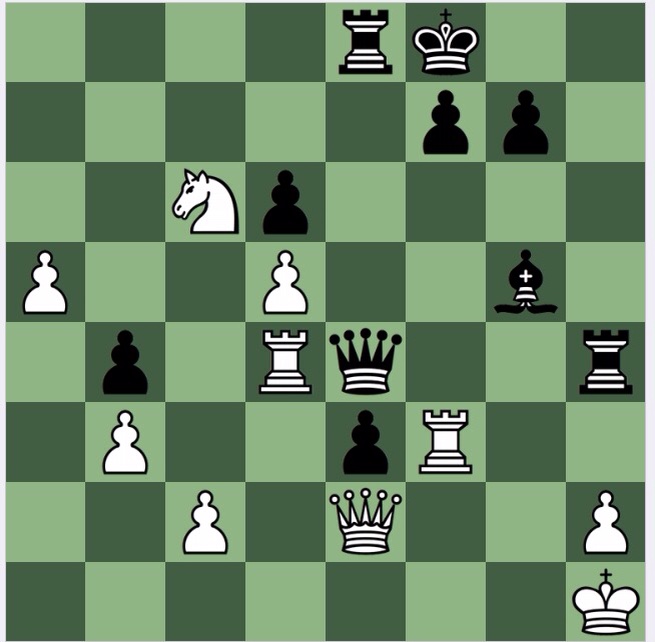
DJ Cawdry v G Michelakis 2003
Solution
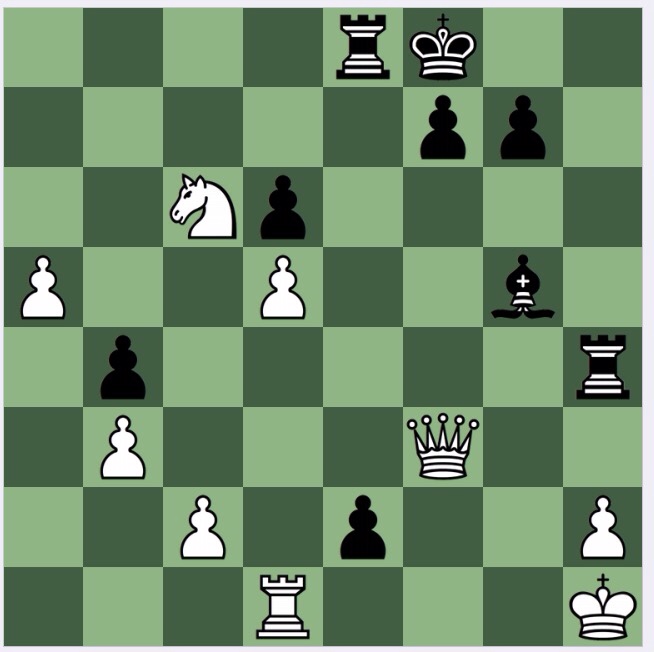
Straightforward today: examine all biffs leads quickly to 1…Qf3+ with ruinous consequences. 2 Qf3[] e2 3 Rd1[] ed(Q)+ 4 Qd1 Bf4 is a win (the rooks enter before the a pawn can get too far); or 3..Re3! which is technically even stronger.
Black to play and win
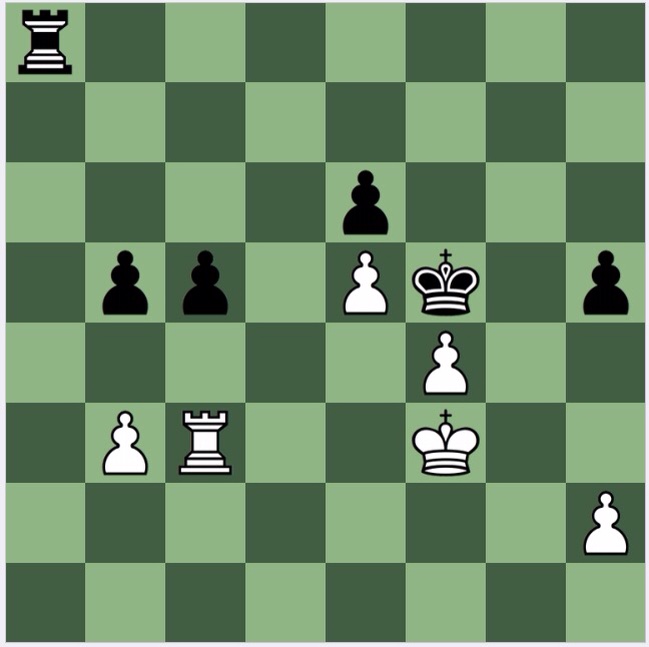
K O'Sullivan v A Van Tets 1973
Solution
A nice change in type of position: this is pure endgame, but with some tactics.
If I were playing this as black in blitz, I might play too passively with 1…Rc8, which I will return to below, but with the time I have as a problem solver, and because it is in a puzzle book, it is easier to see that there must be something more tactical, and 1…Ra3! and 1..c4 !? jump out.
First the latter, which was my first choice. After some sensible moves (see diagram) the following position is reached, which I suspect is a draw. So 1…c4 which would be cute after 3 Rb3? Ra3! is insufficient. (Not that it matters, but black wins after 3 Re3, queening first, and then mating).
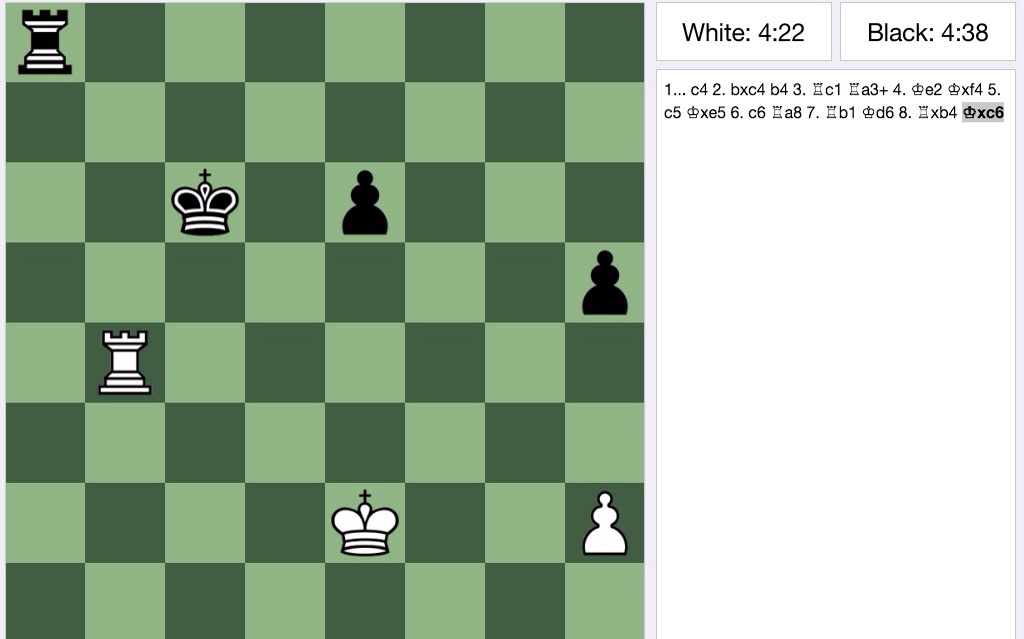
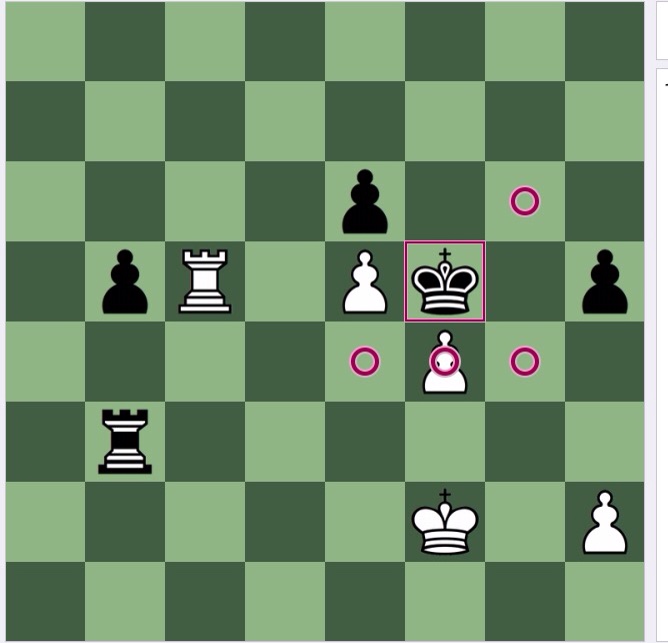
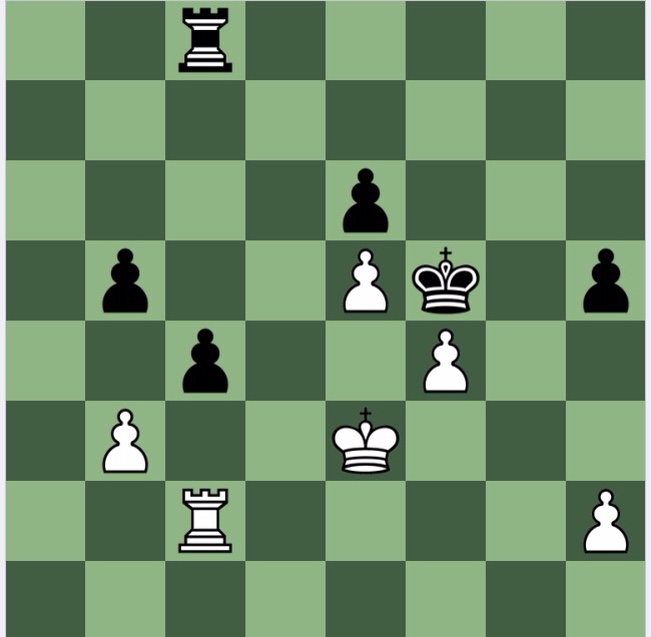
Black to play: evaluate 1…Ra8
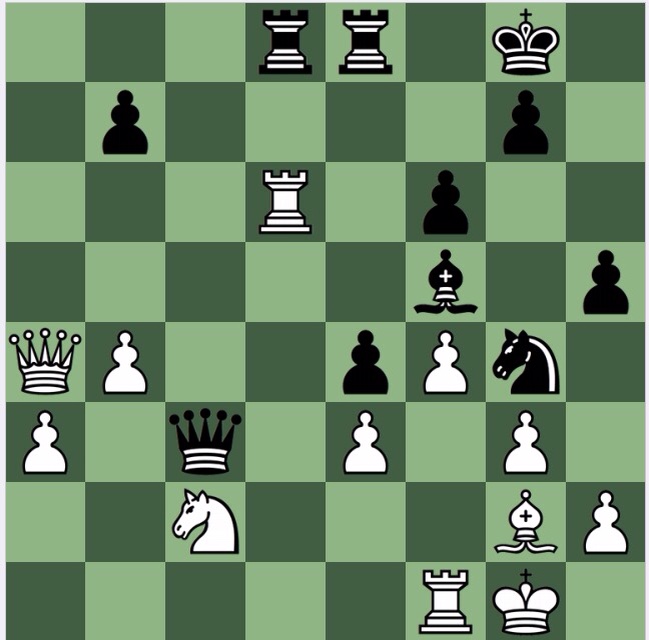
A Van der Walt v L Reitstein 1974
Solution
Not too hard, but pretty: 1 Qb5[] Qc2 2 Qf5[] (else white is just a piece down) Qg2+! and the combination ends with white being a piece down nevertheless.
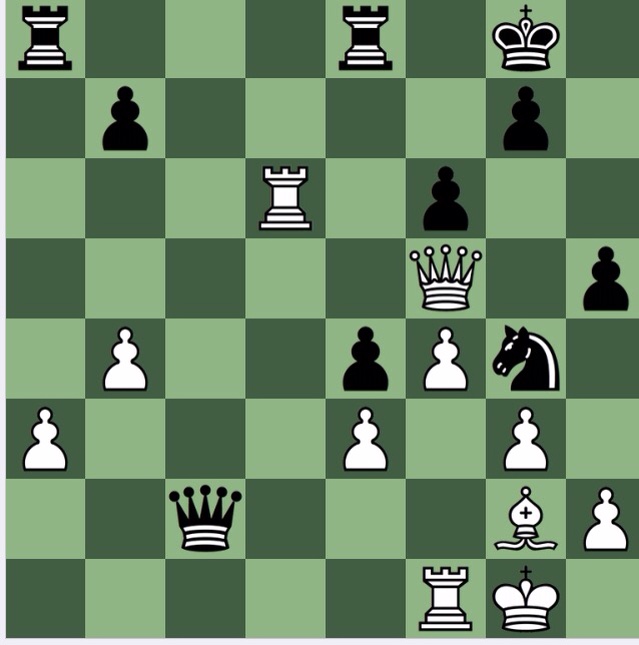
I should add that strangely (to my eyes) Stockfish prefers winning the exchange by 2…Ne3 3 Qh3 Nf1, giving -10 compared to -6 for taking queens off: I haven't spent time trying to understand why: maybe there is a near forced mate if queens are retained, but simplification is far more human. Equally, the machine suggests 2 Qd5+, though not with much hope (its plan is to then play Qd2, and struggle on a piece down) and after 2..Kh8 3 Qf5, it then does prefer 3…Qg2+: I suspect these lines are of no consequence.
Black to play and win
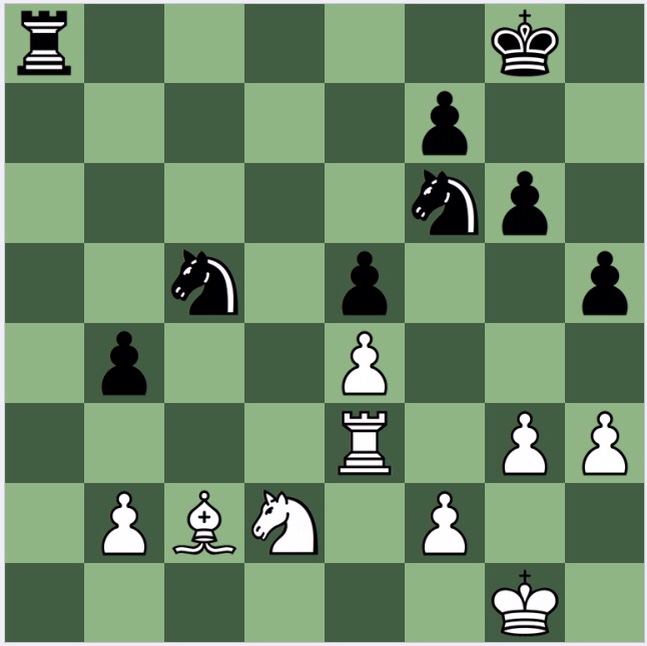
White has just played 1 Nf1-d2.
W Kobese v J Gluckman 1996
Solution
In a real game, black might not spot the winning manoeuvre, which takes advantage of white's mis-aligned pieces. But in a puzzle, it is fairly straightforward. 1..Ra2 (examine all biffs) 2 Nc4[] Ra1+ (again, examine…) 3 Kg2 Rc1 (again…) 4 Re2 b3 (yet again), and a piece drops off.
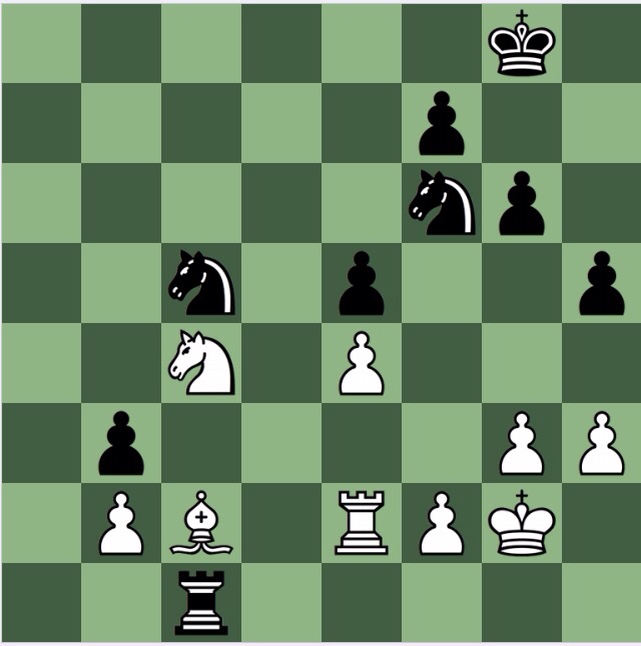
I am enjoying occasionally peeking at the daily games at Hastings. ‘Peeking’ because time doesn’t permit to spend too much time watching them. But such a venerable English tournament deserves showing some interest.
Two days ago, I logged in when Englishman Peter Sowray (2365) was playing the Israeli GM Maxim Rodshtein, and white (Peter) has just played the very sensible move f3, giving luft to his king and taking a pair of pawns off.
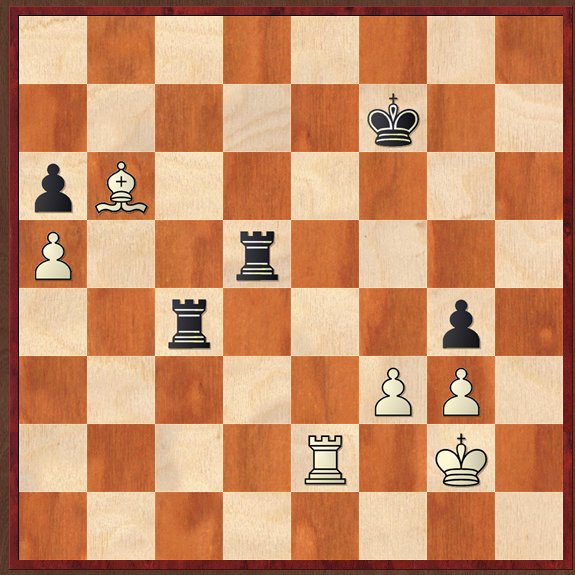
Could he draw? It would be a success for Peter to hold a super GM to a draw.
Alas, it was not to be, and in the end black showed considerable skill and took the full point. Intrigued, I have looked at the game (more strictly, the ending, in some detail) and my conclusions are attached:
http://www.viewchess.com/cbreader/2015/1/4/Game192049625.html
http://cloudserver.chessbase.com/MTQxNzI4/replay.html
The first link is to the game file itself, the second to the Chessbase cloud database: both created using the one click function in Chessbase13.
My conclusion: earlier, he could have drawn: defending the above position was a near impossible task.
—
Luck in chess
Yesterday, I also glanced at Peter’s game. He had a tough fight, in which both players thought hard, but th last thirty or so moves, it was only white who was playing for two results, and the best Peter could hope for was a draw, until:
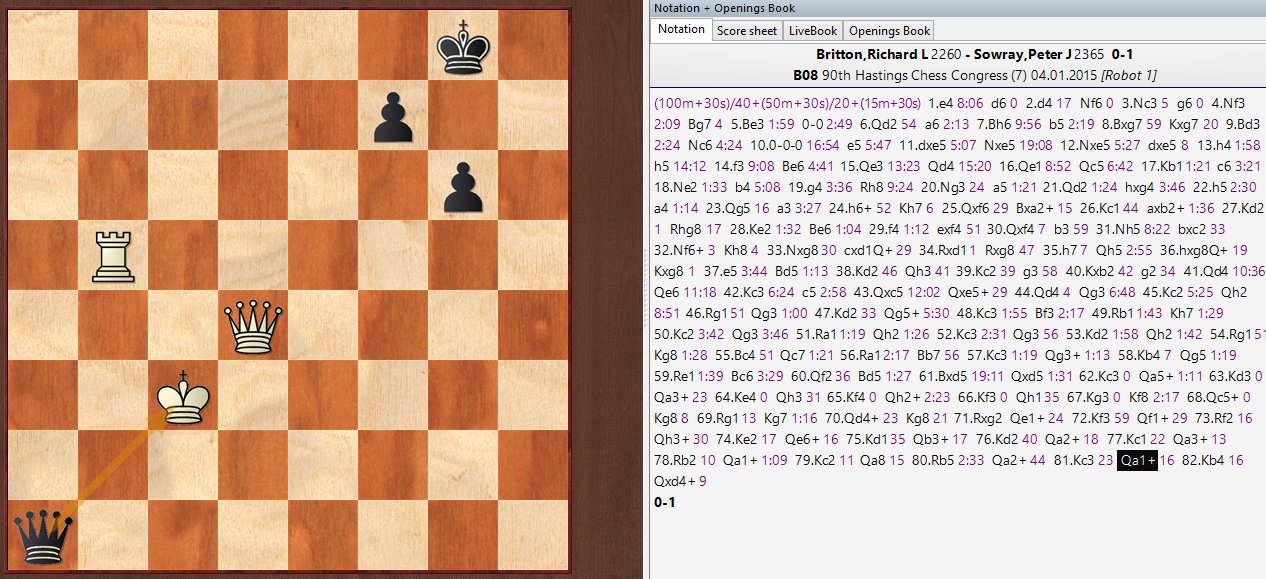
82 Kb4?? and the LPDO Qd4 drops off.
Another fine game from yesterday (4/1/15) was Keith Arkell’s superb endgame win against Maxim Rodshtein. He was able to turn this advantageous position into a win. One to study sometime.
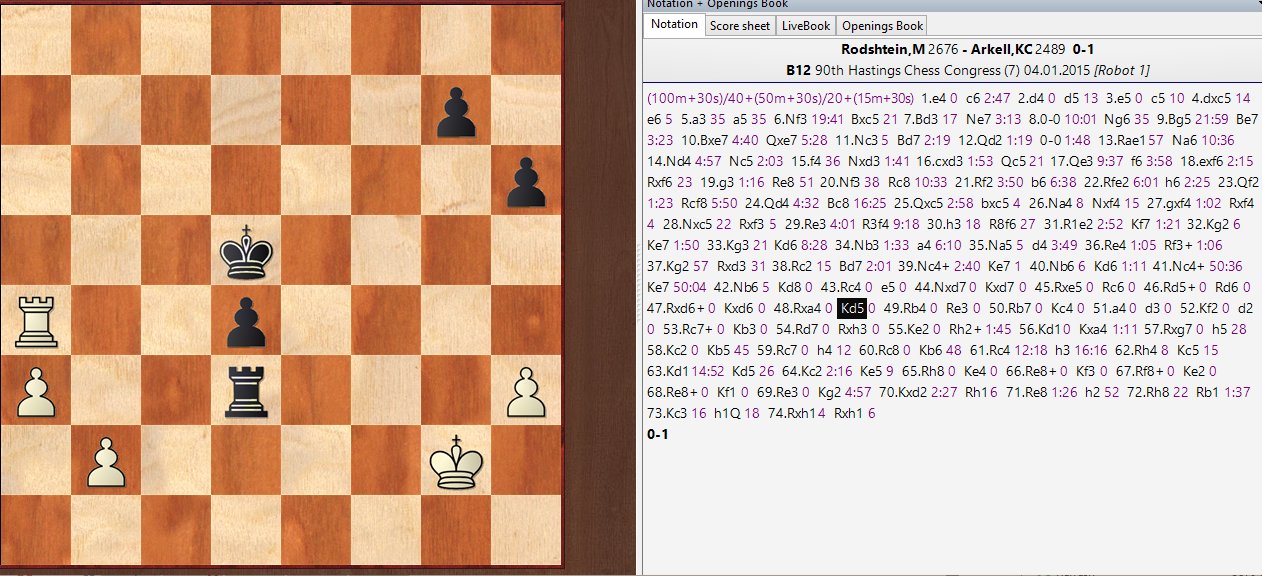
Black to play and win
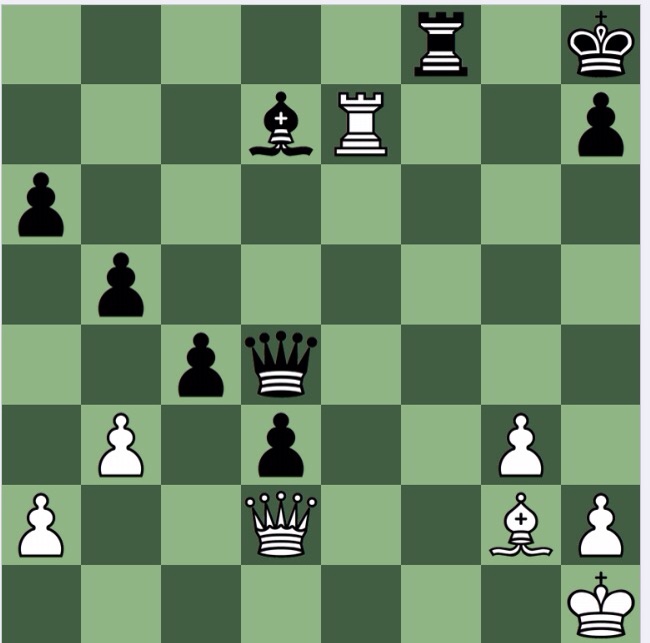
D Wolf v S Galleid 1983
Solution
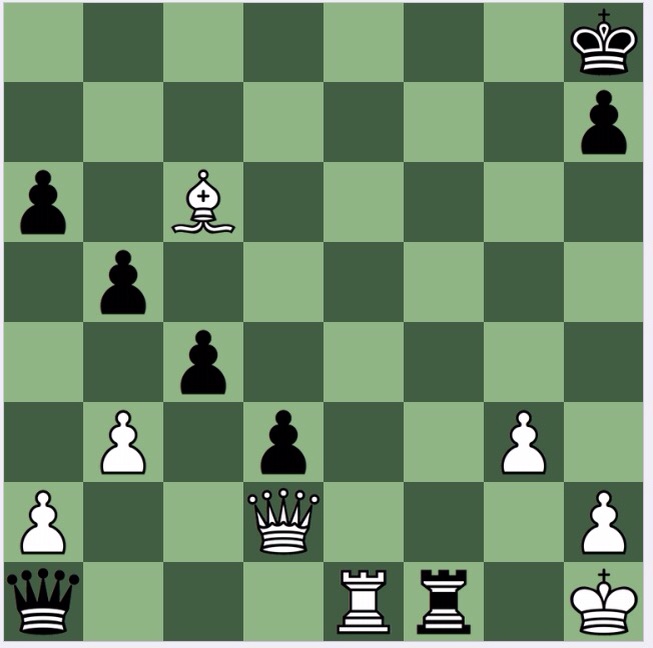
I found the prosaic 1…Rf2 which wins simply enough. White is forced onto the back rank, when either black can take on a2, which whilst winning a pawn also threatens Ra1 picking up the queen, and white is defenceless. There is one cute line: 1…Rf2 2 Qa5 Kg8 3 Qd8+ Rf8 4 Qd7 Qa1+ mating. So, 1…Rf2 is winning, with Stockfish giving -10.
However, the move played in the game, 1…Bc6, is prettier. After 2 Bc6 Qa1+, white can't play 3 Kg2 because of 3…Qf1 mate, so instead has to play 3 Re1 when 3…Rf1+ wins the exchange, with a dominating position.
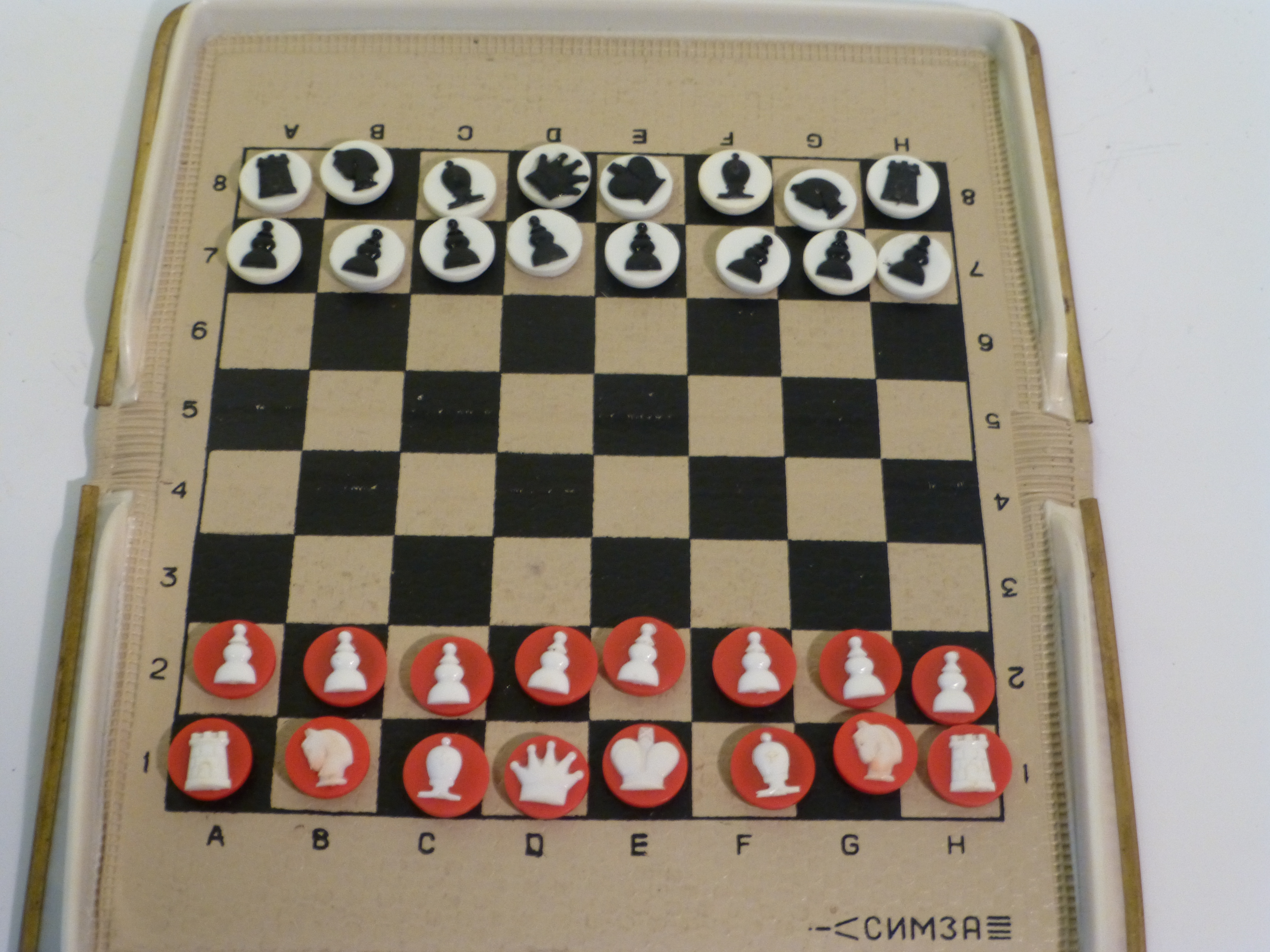
This is an occasional series of postings inspired by a brief discussion on the flight home from Turkey this summer. The flight attendant saw I was reading a chess book (quelle surprise) and, just making polite small talk, said she also liked playing chess, saying that depending on whether other crew members played, she would play on stopovers. Later in the flight she asked me if I had a chess set at home…and that set me thinking. How many chess sets do I have? And since then number is, well, shall we say, quite high, I thought I would blog about them especially those which 'mean something to me'.
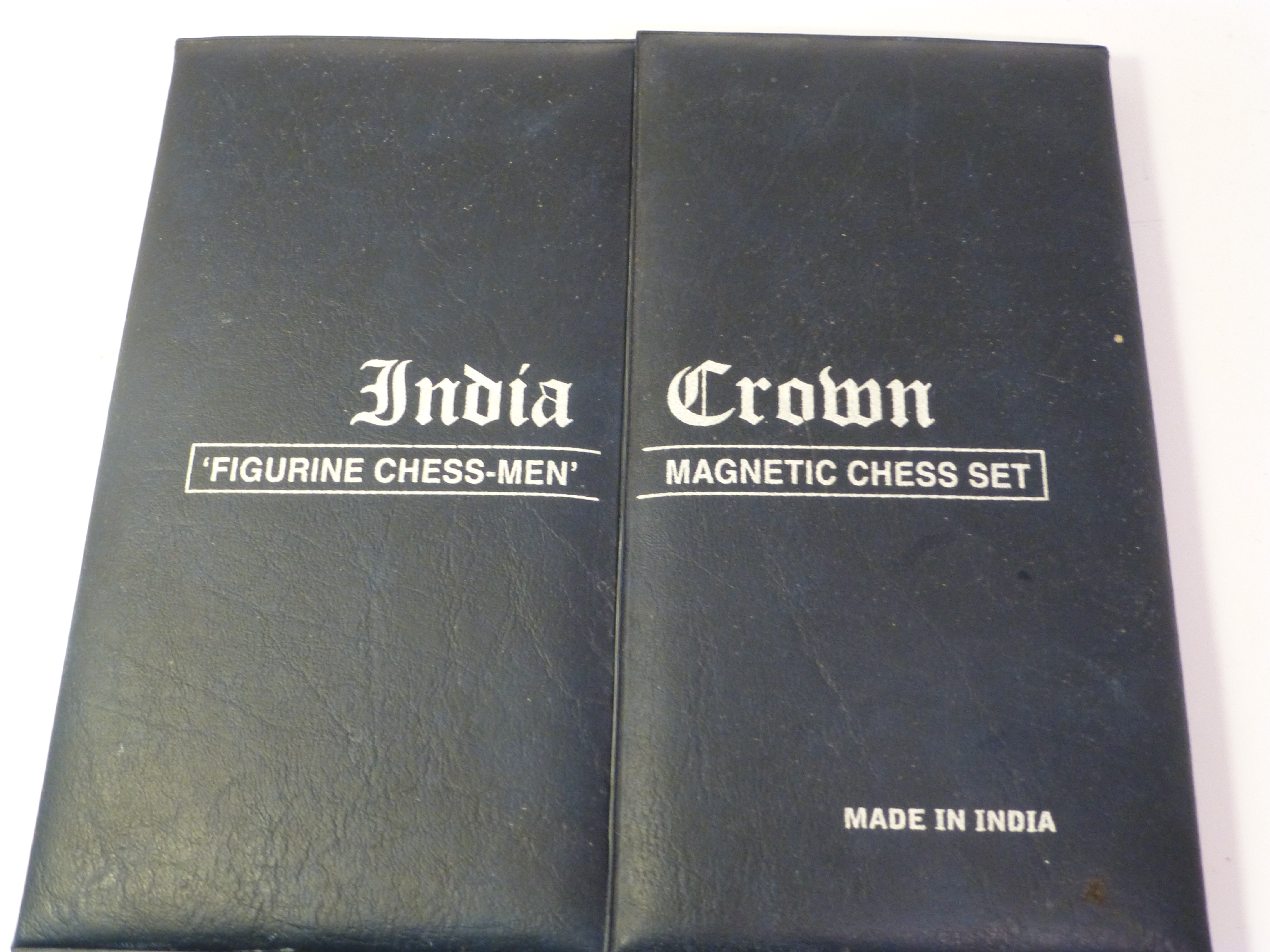
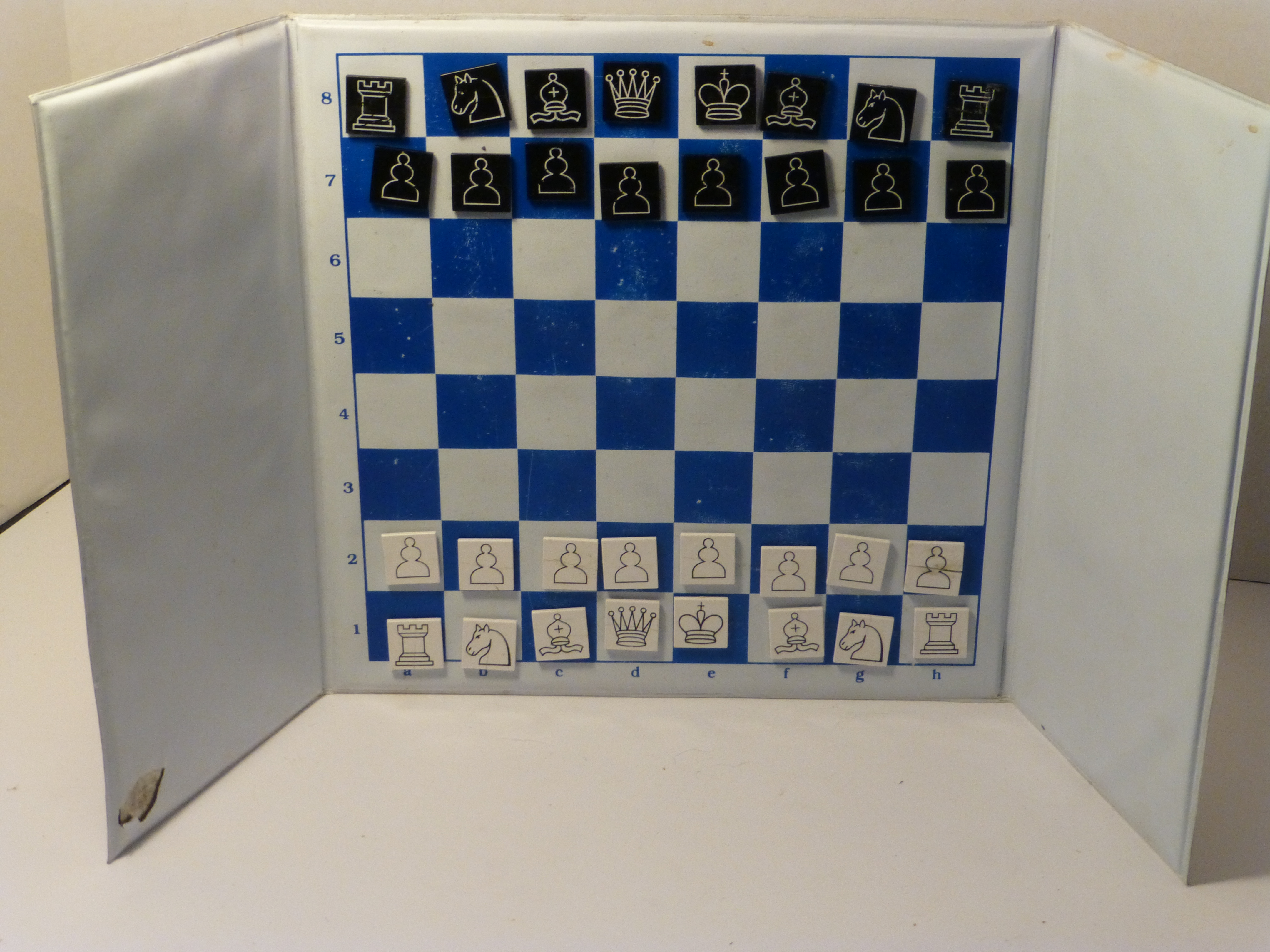
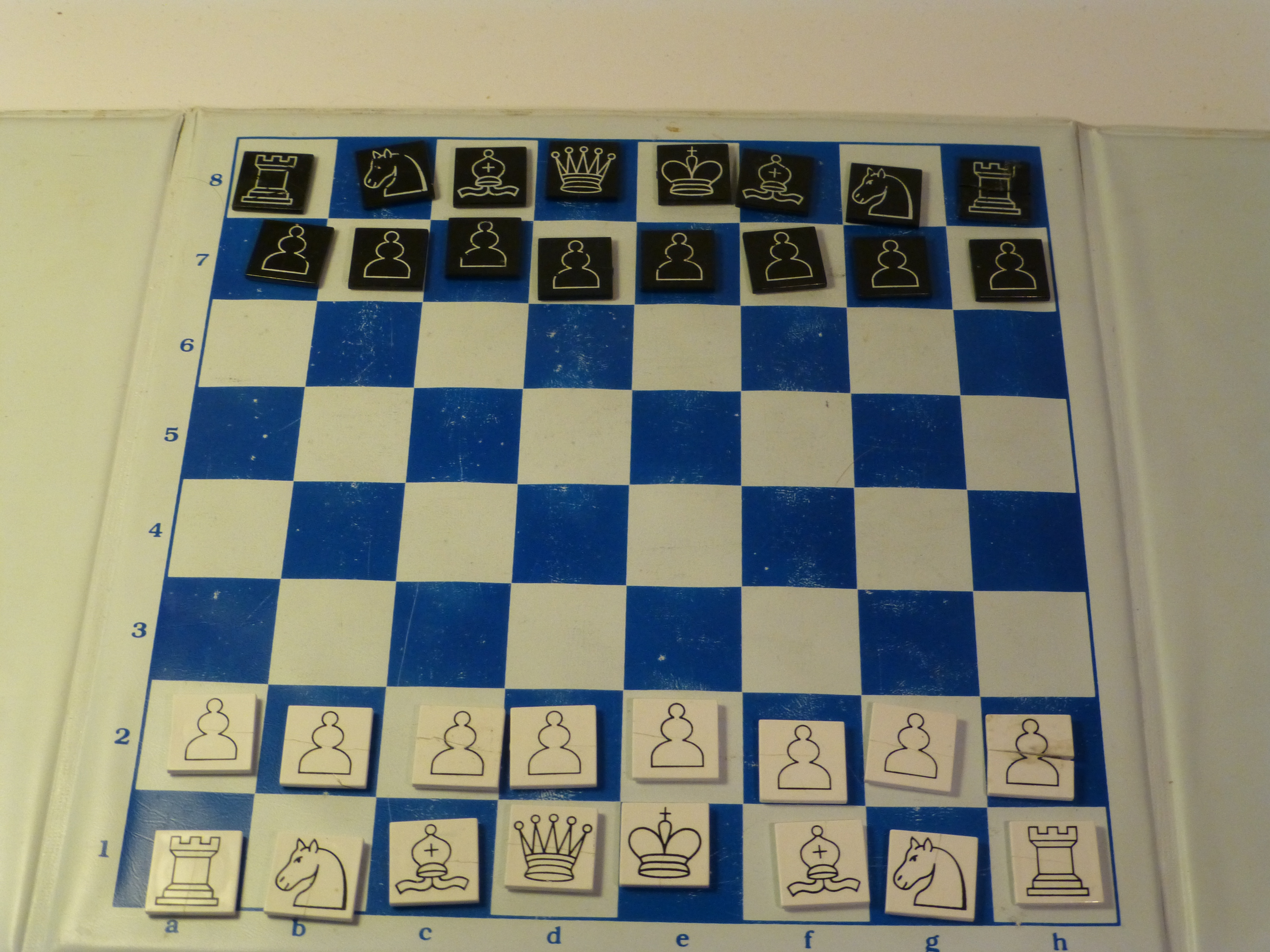
This is an occasional series of postings inspired by a brief discussion on the flight home from Turkey this summer. The flight attendant saw I was reading a chess book (quelle surprise) and, just making polite small talk, said she also liked playing chess, saying that depending on whether other crew members played, she would play on stopovers. Later in the flight she asked me if I had a chess set at home…and that set me thinking. How many chess sets do I have? And since then number is, well, shall we say, quite high, I thought I would blog about them especially those which 'mean something to me'.
 allanbeardsworth