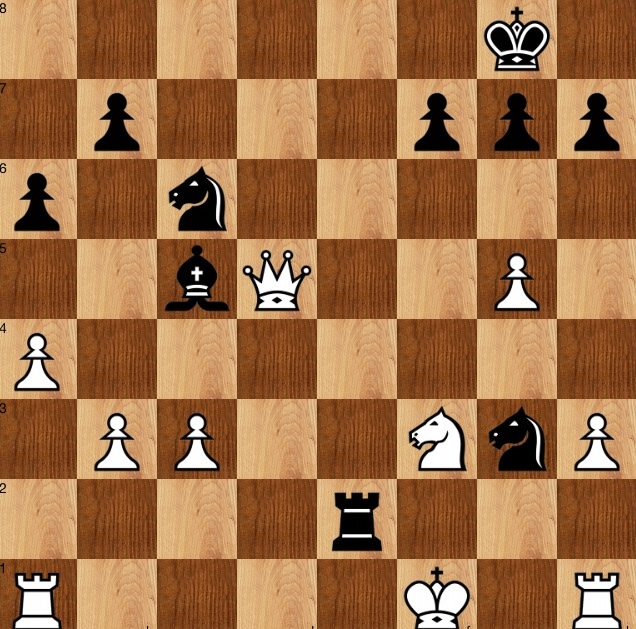
White to play and win
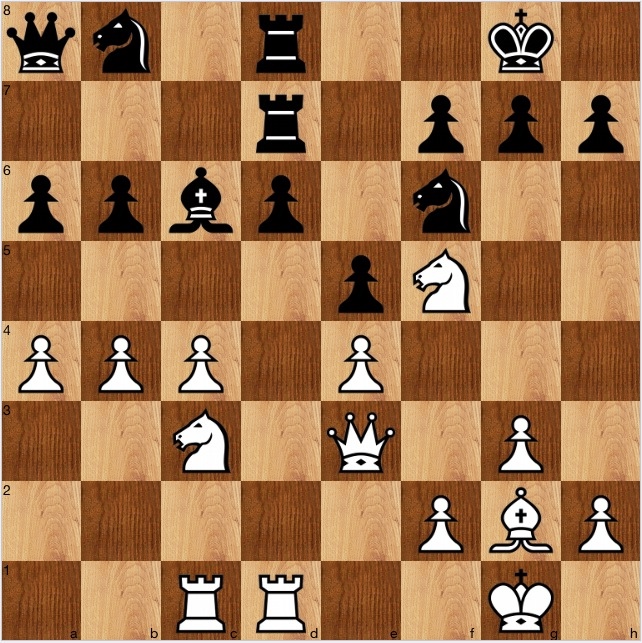
G Michelakis v A Goosen 1989
Solution
Trivial today: a N on f5 looks at g7 (see puzzle 171, a few days ago) and here 1 Ng7 simply wins. If it is captured, then 2 Qg5+ wins the Nf6, and if 1…Ng4 2 Qg5 and black has nothing.
 Posted with Blogsy
Problem: see below
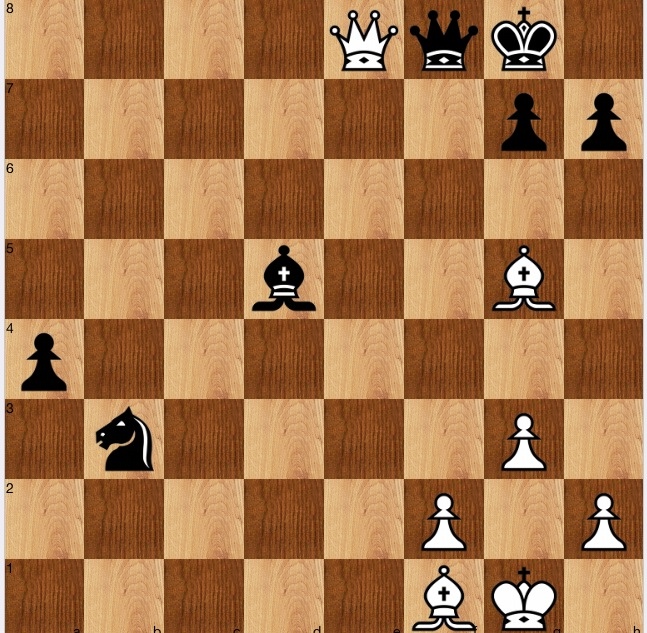
D Wolf v D Macfarlane 1983
Reitstein's rubric (slightly amended) was: White played 1 Qa4 here, and doubtless thought his winning prospects were now high. But Black's reply came as a surprise and White had to find the only move which secured the draw. What was black's reply to 1 Qa4 and then what?
Solution
Today is my birthday, so I was hoping the daily Reitstein would be a good one; and it didn't disappoint, even if, as we shall see, it is slightly cooked. It is a good exercise.
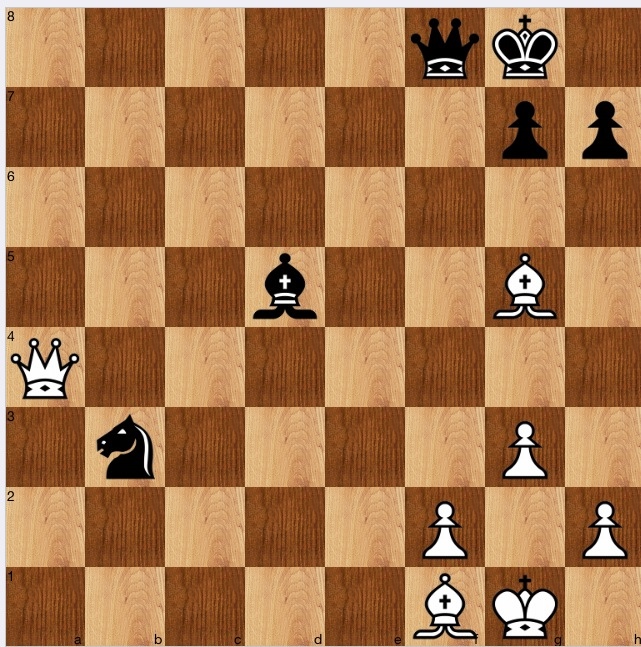
The disadvantage of a puzzle book with rubric is that it provides hints (the advantage is that it provides colour). So here, one knows that black's move has to be a surprise, and it is easy to see that since 1…Qf3 fails to 2 Qe8+, the move has to be a deflection from e8 of the white queen, so 1…Nd4! is not too hard to find.
Then, it is clear that 2 Qd4? would be a blunder, probably losing to 2…Qf3: I say probably, because after 3 Qd5+[] Qd5 4 Be3, white might be able to form a fortress.
White might have a fortress?
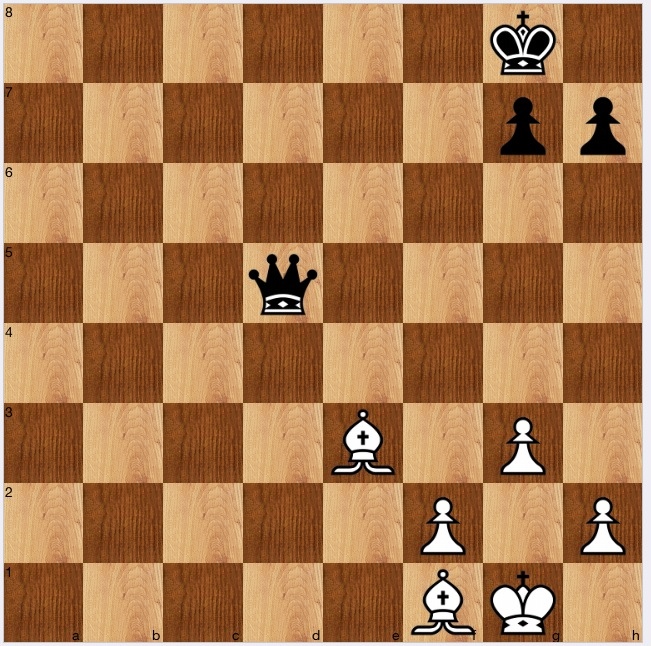
(I suspect white does have a fortress here; by the way, the term/notion of fortress is something I learned in my forties. To my knowledge, or at least based on the endgame books I studied as a teenager (not many) the term wasn't then used – perhaps I am showing a lack of chess culture here)
But back to the main line. As soon as I saw 1…Nd4! I also saw 2 Bc4!, and, thinking it was the only move, turned to the solution: 2 Bg2: so I looked a bit more, and saw that both bishop moves at least save the game, but in fact 2 Bc4! is better.
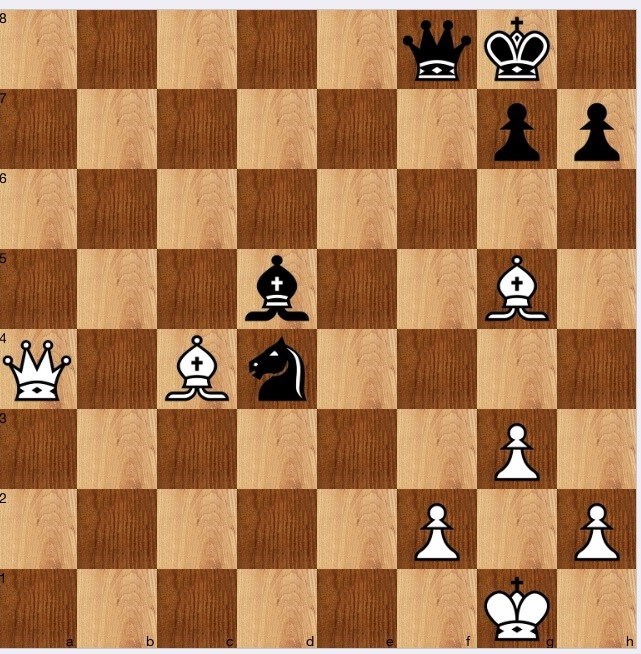
Black can't of course take on c4 (2…Bc4 3 Qd4+ and the LPDO Nd4 drops off) nor can he support the Bd5 by 2…Qf7 (2…Qf7?? 3 Bd5 Qd5 4 Qe8mate) so he must either check on f3, or retreat 3…Be6. I think 3…Be6! is best, when after 4 Be6+ Ne6 5 Be3(say) no-one is winning (or, at least, only Carlsen is winning, whichever colour he is).
3…Nf3+ is more fun, though. 4 Kg2 Ng5 5 Bd5+
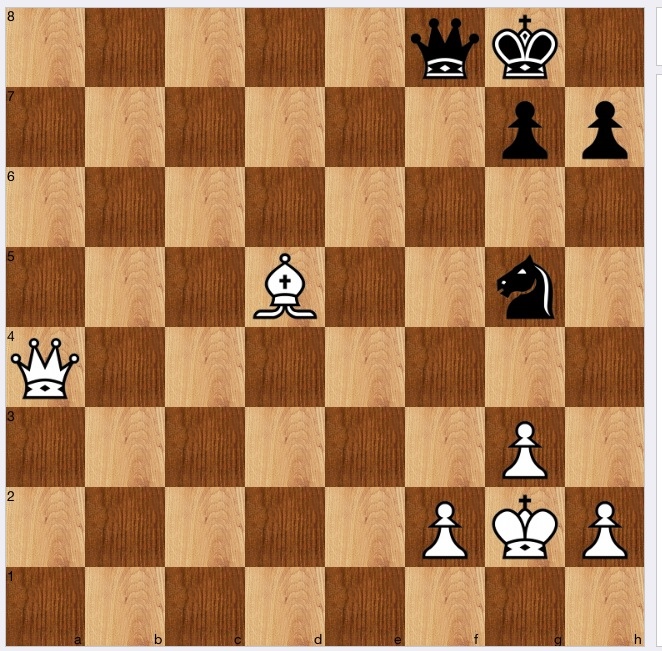
Black can either play Nf7, or wait for h4 kicking it there. So 5…Nf7 6 Qf4! and this position is reached.
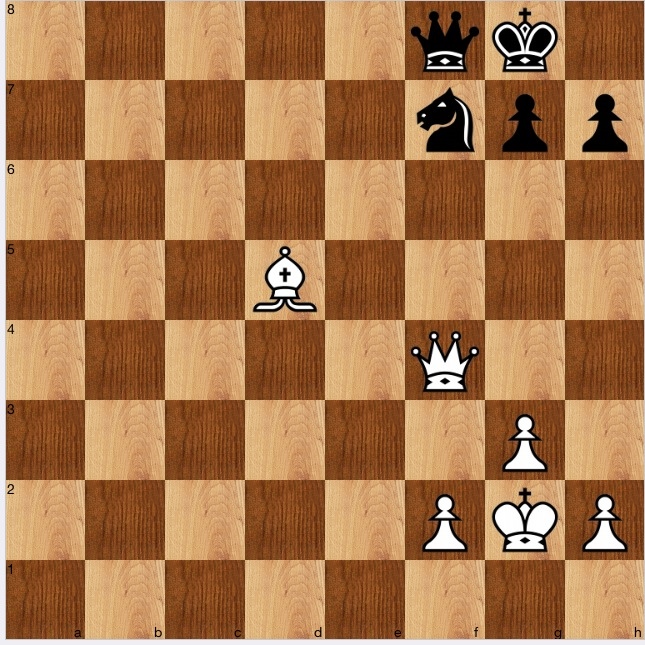
It is clear that black is trussed up, but is the tightness sufficient? I played it out as white against Stockfish, and it squeezed out, but when I changed the colours and tried to defend, its squeeze was cobra like. Instructively, it made a series of super moves from this position, improving the queen first before advancing the pawns. At the end of this posting I give some comments, but I would recommend this position to study.
Problem: how to maximise this position as white?
(Comments below, at the end of this posting)
2 Bg2
Here, the draw is closer. Personally, I would play 2…Bg2, when after 3 Kg2 Qf3+ 4 Kg1 Qe4! the a8 and e8 squares are covered, and there is a N check threatened, winning the LPDO Qa4, so white has to do a few checks to get his queen to safety (5 Qc4+ Kf8[] 6 Qc8+ to start with), then protect his bishop, and then hope there is not a winning Q+N attack: in practice, it is the sort of position I would have kittens playing white, despite the pawn advantage. However, Stockfish prefers 2…Nf3+ when after 3 Kh1 white is trussed up, and can't be better: level.
Black to play and win
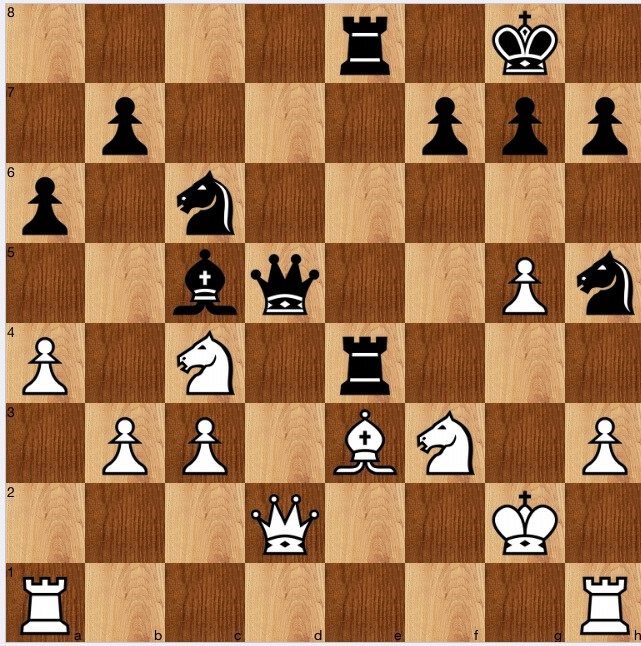
A Goosen v N Vardi 1984
Solution
Reitstein gives this as a 'find a pleasing mate' problem, so I did: 1…Re3 is obvious (but I also looked at 1…Rg4+?? 1…Rc4, 1…Be3 and 1…Qd2+, to examine if not all biffs, most biffs). In a game, I would have played 1….Re3! with little thought. It is obvious that it wins (and, proving that we are in the year of the engine, I quickly evaluated the position as -10 or more; in fact, when I switched Stockfish on, it said -15).
If white plays 2 Qd5, black has at least 2…Nf4+, forking the king and queen: but it wasn't hard to see that even better is 2…Re2+ 3 Kf1[] Ng3 mate, which is indeed pleasing.
The other line to note is that if 2 Ne3 then 2..Re3, and again if then 3 Qd5, 3….Re2+ mates all the same.
However, the problem is slightly cooked because white can grovel with 3 Qe3, but then it is hopeless of course.
Judit Polgar lost unusually quickly on Wednesday.
Black to play and win
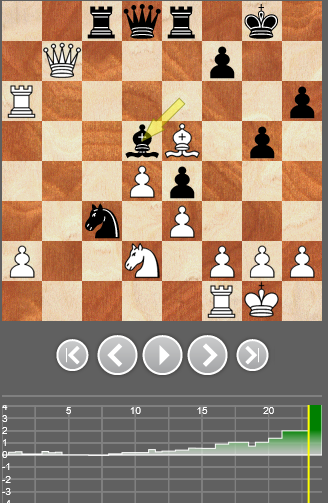
Swiercz D v Polgar J, 11/6/14
Solution
1 Rg6+! and after 1…Kf8 2 Qb4+ Re7 3 Rh6 and the game is over. At first I looked at 1 Rh6 but this fails to 1…Re5!.
I have lightly annotated the fame here.
White to play and win
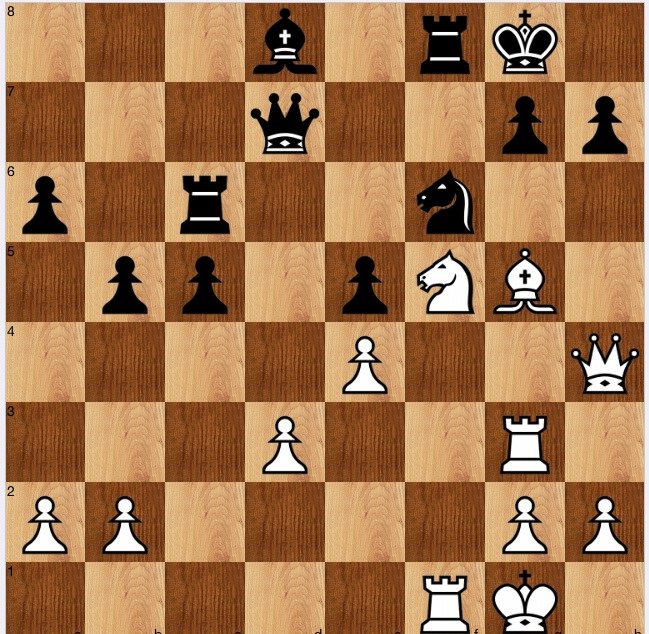
WS Mackie v ED Hill 1952
Solution
The move that cries out to be tried is 1 Ng7!- knights on f5 always look longingly at g7, and here the move breaks open black's defences. Black doesn't have a sensible defence, so on this occasion I won't give variations.
White to play and win
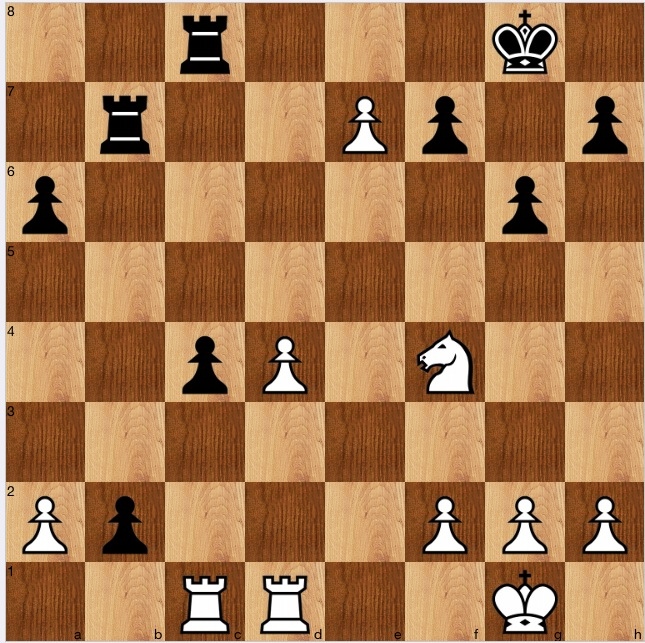
W Berson v G Pearson 1985
Solution
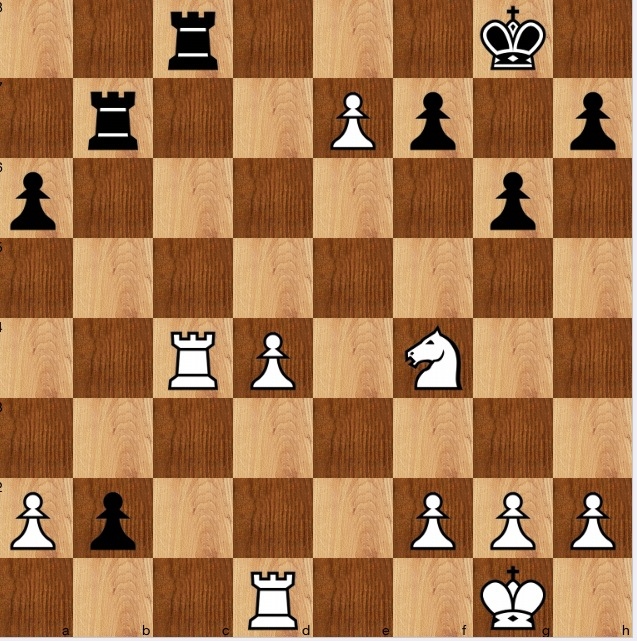
There are more or less only three moves to consider: 1 Rb1, which is hopeless after 1…c3; 1 e8(Q) which similarly loses, throwing away white's key asset, and 1 Rc4!. The Rc8 is tied to defending e8, though 1…Rc4 does need looking at: 2 e8(Q)+ Kg7[] 3 Qe1 and reorganises.
Black has two other defences: 1…Re8, when 2 Rb1 followed by Rc2 and if necessary Nd3 wins the advanced pawn, and it is game over; and 1..b1(Q) when 2 Rc8+ Kg7[] 3 Rf1 and white ends up a rook up.
White to play and win (or not)
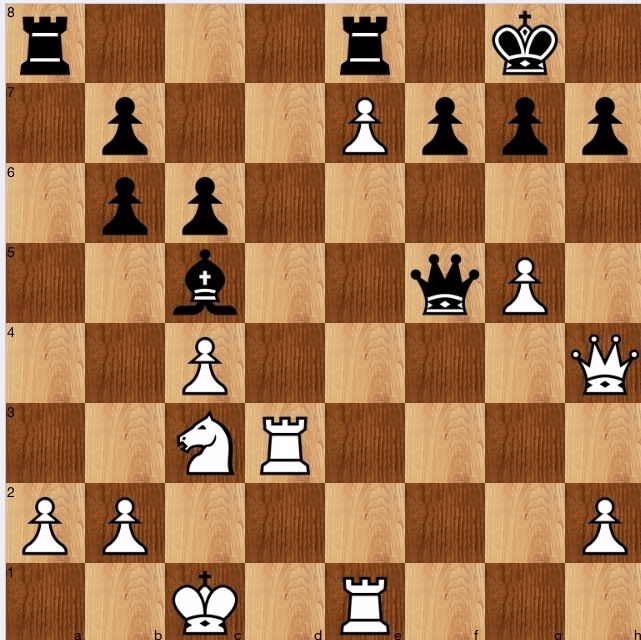
H Westerink v PE van der Walt 1989
Solution
Cooked, I am afraid, and quite badly. (Still, my reckoning, it is only the second puzzle in the book that fails).
Reitstein gives white's combination as brilliant, but in fact if is flawed.
Question 2: what is wrong with the game continuation?
1 Rd8 Rad8 2 ed(Q) Rd8 3 g6 f6 4 Qh7+ Kf8 5 Qh8 mate.
Solution
Simply 1…Be7 and black is easily winning. Examine all biffs.
I tried as an alternate, seeing that 1 Rd8 failed, 1 g6, with actually the same idea, just reversing the move order, but 1..Qg6 2 Rd8 f6 is sufficient to defend, and black will untangle and be winning. Fortunately I intuitively knew that there was either something wrong or something I wouldn't be able to see, and I didn't waste much time on this puzzle.
Black to play and win
NJ de Jong v D Morschel 1967-68
Solution
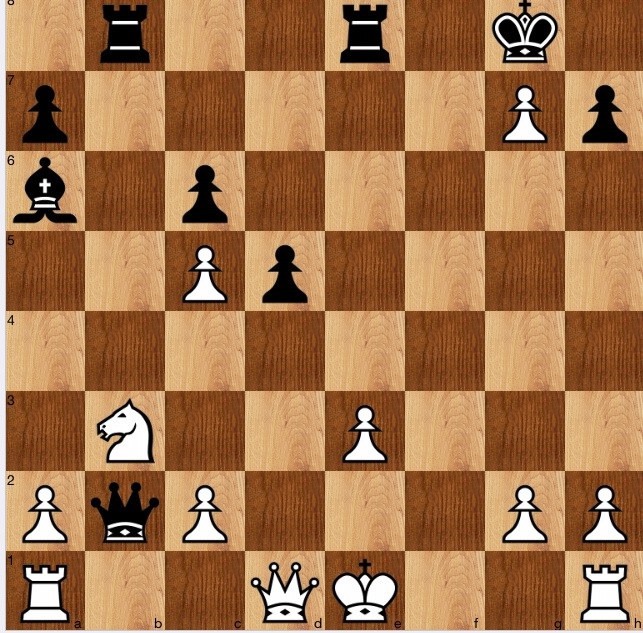
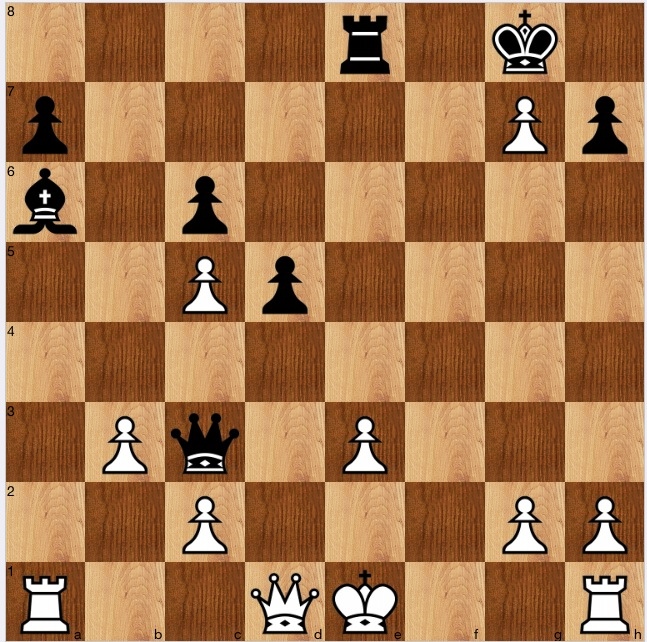
Reitstein's clue says that 1…Re3+ will lead to ultimate victory, but that black's move led to immediate victory. To me, this is a clue, if one were needed, that there is a disruptive move, probably a sacrifice, and 1…Rb3! is therefore obvious.
The point of the move is that now only the Qd1 protects the Ra1, so that after 2 ab (2 cb? 2 Re3+ and mates on e2) 2…Qc3+ is terminal: 3 Kf2 Qe3 mate, or 3 Qd2 and either the said 3…Qa1+ or, even better, 3…Re3+ winning the queen: Rb3 also removes the defence of the Q when on d2.
Round 5 of the No Logo Norway tournament is presently under away, and early on in today’s play, most of the games look level. The most interesting games for me are the clash between Carlsen and Aronian, which looks like it could be interesting, and Grischuk v Agdestein. Simen has (bravely?!) repeated the defence in his round 3 game against Karjakin, a game that I found profoundly interesting. Simen was though the first to deviate.
White to play and win
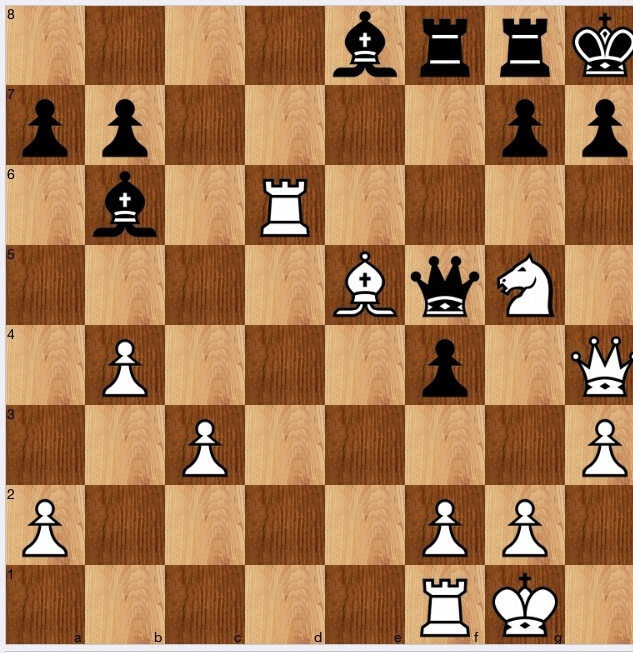
JE Eriksen v KV Grivainis 1952-53
Solution
I messed up this one, thinking that 1 Rh6 won, and turning too quickly to the solution, without checking at all. In fact, there is a good a defence in 1…Bg6. It is no comfort that white is still winning: black is so trussed up that white can afford to play Rd1-d6 and Stockfish tells me white is still winning (after 1 Rh6) but 1 Nh7! is the move: 1…Qh7 2 Rh6 and black is forced to grovel with 2…Bg6 3 Rh7+.
 allanbeardsworth