My near sole form of chess nowadays is 3min blitz, principally on Playchess, occasionally on ICC. Yesterday I played a nice attacking game vs another Turkish player.
Blitz games aren't really worth recording or analysing, but sometimes there are exceptions, and I think this game is one of those.
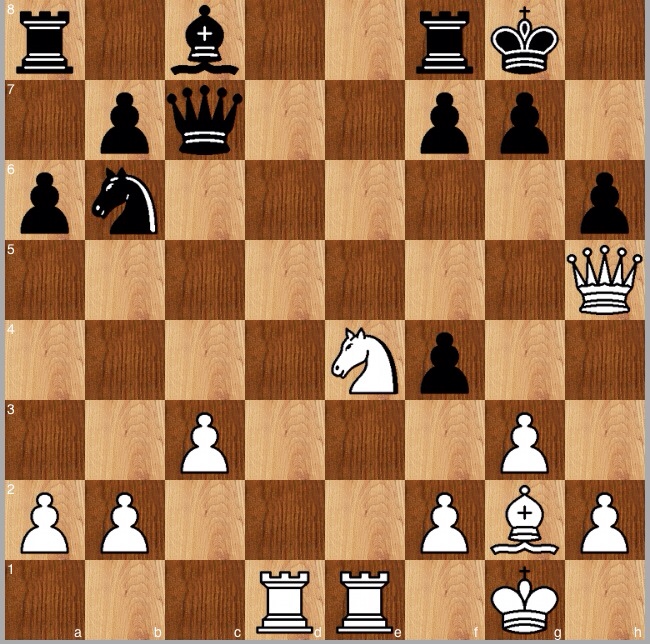
In the first diagram, arising from the Morra declined, Stockfish (which I use in the absence of even more popwwful engines on my iPad) says that 1 Qc5 is winning. I can see that Pb7 is weak,and black is compressed, but not that it is so strong for white, though I can appreciate that it might well be +-.
I sacrificed 1 Nf6+: if blank declines, 2 Rd4 may well be strong enough, but black didn't capture, to he surprised by 2 Ne8!
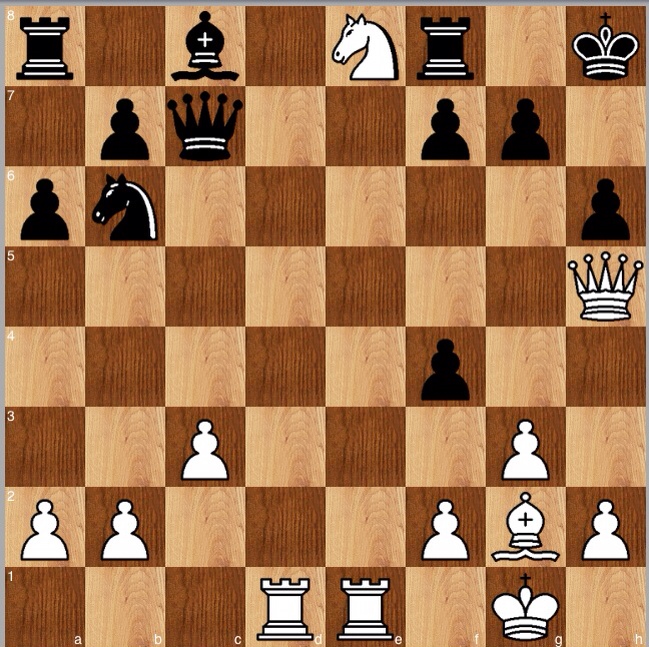
Back's queen is in a net, and its only safe move is 1…Qc4, since 1…Qb8 drop one of the two LPDOs (Nb6 and Rf8) by 2 Qc5. (The third black LPDO comes in a later variation).
After 1…Qc4, black's N is still LPDO and the enables 2 Ng6! to work. 2..Kg7 3 Rd7 forks the Nb6 and h6 pawn. So 3…Be6 4 Rb6 fg 5 hg Rb8, and now the rook lift 6 Re4! followed by the exchange sac 7 Rbe6 is lethal.

This was only position which required calculation. Whilst I flagged the idea of bringing the Bg2 to the party (Be4) in a flash I also saw Rh6+/Rh7+/Qe5+ forking the king and LPDO Rb8. Very pleasing.

Final position
Introduction
A year or two back, my younger daughter gave me a present, 'Dear Dad, from you to me' , one of those gift shop gifts which are very well intentionedy, but, alas, time is so short that they can often gather dust and never be completed. I decided a while ago that I wouldn't let this happen, and would aim to complete it for Sophie, Alice and Tom, so whenever they want to, they could find out a bit more about their Dad. So, I have set up a private blog, to which only family have access, and have been posting to it during our summer 2013 holidays. Many of these postings are personal, and best kept private for the family only, but those which are less private will also be posted on my main blog.
Thirty six years ago (ouch) I got interested in cryptic crosswords. In sixth form at Bolton School we had 'free periods' where I think you were meant to do your own studying, but often I would spend time reading the newspapers, and there I got the crossword solving bug.
Typically for me, once I was able to regularly solve them, I introduced a competitive element or two: try to solve in ten minutes or less; in five minutes or less; do each clue consecutively; don't write any of the answers until you can write them all…all stupid, self imposed constraints which took the pleasure out of the activity, and by the time I left school, I had lost interest in cryptics.
I had a gap of twenty five years without doing cryptics. Then, when we moved from Leeds to Manchester, we became friends (now, more than ten years on, they are amongst our very closest friends) with a couple, John and Fiona, whose routine in those days involved doing the Daily Telegraph cryptic each night, and on occasion I started to try the crossword: practise makes perfect applies to crosswords, and just like as a sixteen year old, it took me a while to relearn the art, but eventually I got back to a broadly similar level of skill that I had before…except that I am always slower, and, some of the pleasure has gone. Partly this is because I only do the crossword on occasional Saturdays, and partly because with time being precious, I realise that cryptics are a pretty pointless activity (unlike chess for instance, which is never a waste of time).
I am writing this blog from our holiday villa in Turkey, from where with the magic of the Internet, I could download the Saturday Telegraph and do the crossword before anyone else was up.
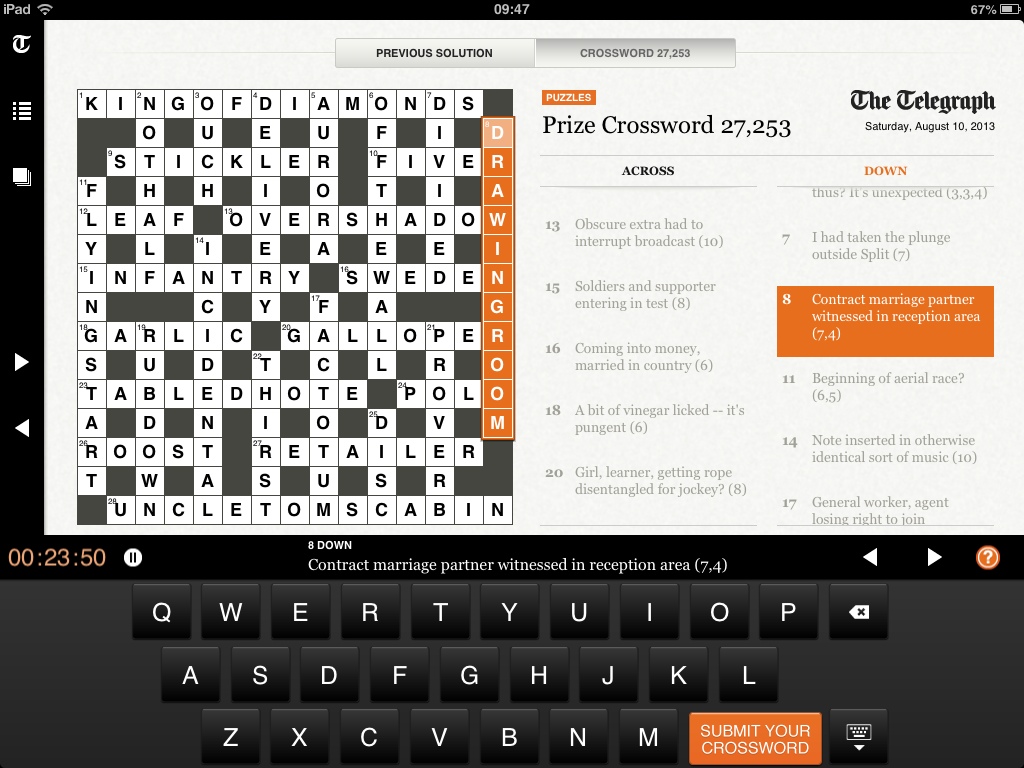
I no longer race *, but try to do the puzzle in no more than twenty minutes, so today was a slight failure. Nowadays I am more interested in why the clues are what they are, not just getting the answer, and I struggled firstly on 16A, until I guessed that a 'sen' would be an Asian currency (it is, in several countries), but the one which stumped me most was 8D, which I could tell was 'drawing room' but couldn't see why: first I twigged its component 'groom', but it took me a good while before I saw that 'contract' meant 'draw in'.
A bit of a smile, and twenty something minutes of the holiday passed by.
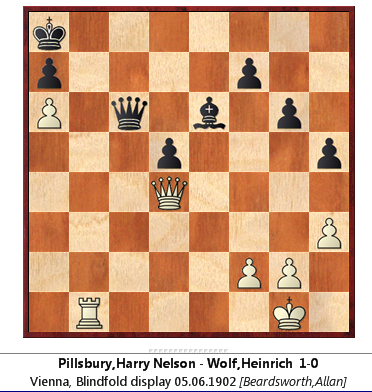
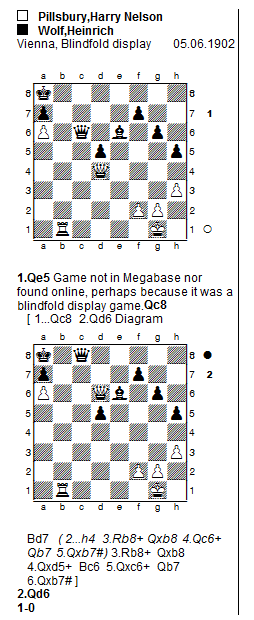
White to play and win
Solution
A nice puzzle, not to hard, since the bank rank motif is plain to see, but pretty, since precise moves are needed. For this one, I think the attached solution says it all.
 Posted with Blogsy
Introduction
A year or two back, my younger daughter gave me a present, 'Dear Dad, from you to me' , one of those gift shop gifts which are very well intentionedy, but, alas, time is so short that they can often gather dust and never be completed. I decided a while ago that I wouldn't let this happen, and would aim to complete it for Sophie, Alice and Tom, so whenever they want to, they could find out a bit more about their Dad. So, I have set up a private blog, to which only family have access, and have been posting to it during our summer 2013 holidays. Many of these postings are personal, and best kept private for the family only, but those which are less private will also be posted on my main blog.
I read Engineering Science at Clare, Cambridge. As it turns out, I am glad I did engineering science rather than engineering because the science aspect, the fundamentals, is less susceptible to being outdated. The fact that it was less practical, more theoretical, was a help to me too.
I think I fairly quickly realised I had made a mistake in choosing engineering as a possible future career. Looking back, I don't know why, but I ruled our a career in academia- I was encouraged to do a Ph D but firmly declined- I think in hindsight this was based on a blinkered view, a reaction, rather than a properly considered decision; and I knew that, not being practical, a career in industry in engineering would not be suited to me. Whilst right from first year I was in the top bunch academically, there were many better engineers- people who tinkered with things, made up electronics kits, wired up or programmed computers, one Clare engineer tinkered with his car- and I knew I had chosen engineering for the wrong reason- not being good enough at maths -rather than a good reason.
Whilst I could have made myself unhappy by this, I think I resolved to be the best I could be, but I made course choices, particularly in my final year ( I did an economics and a statistics module, for instance, as part of the management aspect of engineering), knowing that engineering was not for me. I think this showed some strength of character, striving to do the best I could, finding a new goal, rather than just being unhappy and languishing.
Three parts of my degree come to mind as I write this blog.
Engineering drawing We had sessions with big, A2 (though it wouldn't have been A2-we hadn't gone metric in those days) paper, where we had to draw objects. We might for instance have a physical object in front of us, it might be as simple as a mug, and we had to mathematically draw it, so that a factory could repeat our design. More likely, it would be some mechanical part- say a pump, and we had to draw its internal cross section from different angles.

Some people found this impossible. My close friend, Ania, really struggled with this- although years later she denied this- but I recall many hours spent with Ania sitting on the floor in my room, large sheets of paper spread out, as I tried to help her get to grips with it: I think she did grasp it in the end. I also struggled with it at first, it was one of those subjects which I had to work on really hard, but eventually it 'clicked': my struggle probably helped my deeper understanding. (I should also say that, looking back, the help I gave Ania was typical of me- throughout my life I have taught others, and, in fact, think it is one of the best ways of boosting my own understanding: if you can't explain it to others, then you don't really understand something, and when you do try to explain things, the gaps or limits in your knowledge show.
Materials science If I had remained an engineer, and especially stayed in academia, materials science might have been the one for me. It was very 'new' or a least 'current'. Take for instance plastics. If I ask you in 2013 to describe plastics, such as plastic cups, or a plastic colander, or containers, you wouldn't know what to say- and if you said something, you wouldn't say 'cheap' 'nasty' 'brittle'. These are the sorts of words you would have used in the 1970s and 1980s. Similarly, making materials which could survive ultra high temperatures, or which were shatter proof…the possibilities were endless, and for some reason, the materials science module appealed to me.
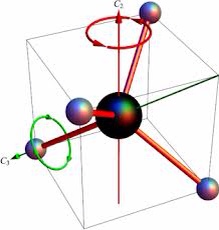
I do remember quite clearly one lecture. Firstly, I should say that it was fairly routine for people in lectures to put their hands up and ask questions: it was encouraged, and even though I was shy, once I had confidence that I was at least comparable with my peers, I would often do this, either answering the lecturer's question, or challenging or extending a topic: such things were part of normal day to day teaching style. Anyway, in one materials science lecture, when the lecturer was discussing the properties of some material, I put my hand up and offered a radical simplification of what he was teaching us, using a symmetry that I had noted: that something was symmetrical viewed from a certain plane. It was my grasp of engineering drawing and 3D visualisation that made me see what I had seen, and the lecturer had to stand back and visualise it himself: alas, it ruined his lecture, killing it mid flow, but boosted my confidence. Afterwards, when the other students has left, the lecturer and I stayed behind and debated it further.
Programming I can't remember if it was in second or third year, but we had to do a project, and I chose to try to program some things which the head of the department, Professor John Carroll wanted doing. (I think that was one way undergraduates got their project topics- a list went up on on the notice board of areas the lecturers wanted some work done on). To understand what follows, you have to appreciate that computers were very new in the early 1980s. We didn't have PCs: I would tap away at a keyboard, and overnight the university 'mainframe' would churn away, so I would get the results the next day, and sometimes (often) they would be ’error: syntax' which you would have to try to find, correct, and try again….at least it taught us the need for accuracy and care.
Anyway, Professor Carroll was interested in a material called Gallium Arsenide which was an even faster semi-conductor than silicon.

It was thought that GaAs might replace Si in computers, and I think it may have, at least in military applications. The professors interest was 'why' was it faster, and I did the computational work. The insight he had had was that mathematically it was no different to why cars bunch up and speed up together on motorways, or why queues build up at supermarket checkouts or cashpoint tills (very topical- the first ATM in the UK was in 1967, and by 1981-84 they were still relatively uncommon- I think people preferred to get their cash from a cashier). So I wrote a model which could be flexed to show how speed of flow varied with impurities in the substrate/ number of till operators/ number of ATMs.

If my memory is correct, I wrote it up as two reports: one for GaAs, and one for ATMs: ATMs appealed to me. Years later, I found my ATM report; the programming seems so antiquated now, and there are packages which do these 'queuing theory' problems in an instant, rather than in months. ( I recall reading the same maths being applied to loos: how many male and female loos does an entertainments venue need, given differences between the sexes: remember this, next time there is a queue for the ladies at the theatre).
Professor Carroll published my paper under his own name, not acknowledging my input. He wasn't being inappropriate here, it was the way of academia. He has the insight, all I did was the (in those days) grudge work. Professor Carroll tried quite hard to encourage me to do a Ph D under him, but I was steadfast in my refusal. I think part of my reason was 'soppy' that I had learned that the main use of GaAs was in military lasers, and the early 1980s was the time of CND (Campaign for Nuclear Disarmament) and I like all students was affected, as you will be, by the mood of the times.
Thirty years later, I remain proud of my ATM paper. I hope that at some stage in your education you will do a thesis or project which will make you likewise proud.
Introduction
A year or two back, my younger daughter gave me a present, 'Dear Dad, from you to me' , one of those gift shop gifts which are very well intentionedy, but, alas, time is so short that they can often gather dust and never be completed. I decided a while ago that I wouldn't let this happen, and would aim to complete it for Sophie, Alice and Tom, so whenever they want to, they could find out a bit more about their Dad. So, I have set up a private blog, to which only family have access, and have been posting to it during our summer 2013 holidays. Many of these postings are personal, and best kept private for the family only, but those which are less private will also be posted on my main blog.
Chess has, as you know, been a defining part of my life. It gives me enormous pleasure and satisfaction, and I have been lucky enough to travel and meet lots of people through it.
I don't know precisely when I learnt, but I do know how and where. My best guess was that I learnt to play chess in 1971, aged eight or nine years old. My brother was playing in our dining room, with a friend of his, who (alas, the names which follow are just a sign of their time) we called either Paki or Abdul: I don't know whether Abdul was his real name; I do know that I had not the slightest of an inkling that there was anything wrong in what we (and everyone else) called him.
I stood by the dining room table, and watched them, and picked up the moves rapidly. My first opponent would certainly have been John (Dad didn't play). I believe very rapidly, instantly perhaps, I became better than John. I bought a couple of books (which I still have) and borrowed countless others from the library.
The following summer was the biggest ever in world chess history: the Cold War world championship match between the Russian Boris Spassky and the American Bobby Fischer. For a brief period, chess was massive, and I was sucked into the game, a child of the Fischer boom. In July 2012, I had to go to see his grave in Stelfoss, Iceland.

Introduction
A year or two back, my younger daughter gave me a present, 'Dear Dad, from you to me' , one of those gift shop gifts which are very well intentionedy, but, alas, time is so short that they can often gather dust and never be completed. I decided a while ago that I wouldn't let this happen, and would aim to complete it for Sophie, Alice and Tom, so whenever they want to, they could find out a bit more about their Dad.
So, I have set up a private blog, to which only family have access, and have been posting to it during our summer 2013 holidays. Many of these postings are personal, and best kept private for the family only, but those which are less private will also be posted on my main blog.
I liked lots of games as a child: indoor games.
A game which sticks in my memory a lot is jacks.
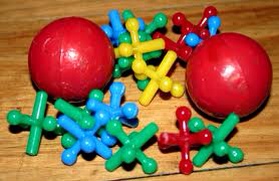
I had lots of jacks as a primary school child, both the coloured ones pictured above, and my favourite, metal, ones.
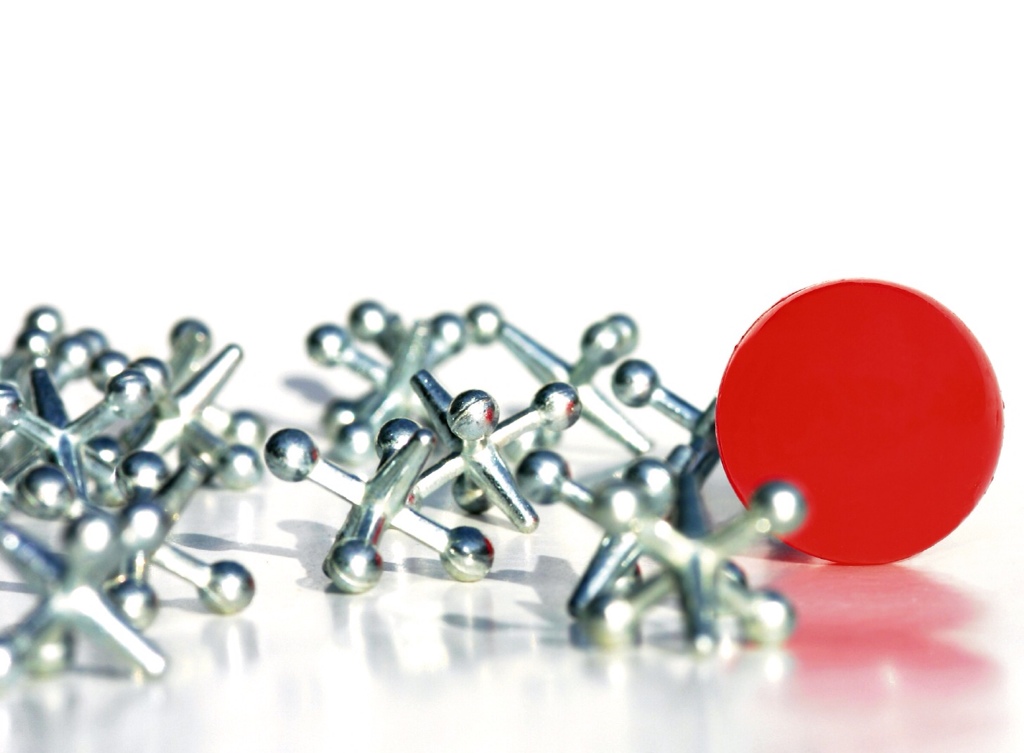
I can't remember all the games we played with them, but recall I was very dexterous and good at the game. We used to sit on the playground floor playing jacks during break time.
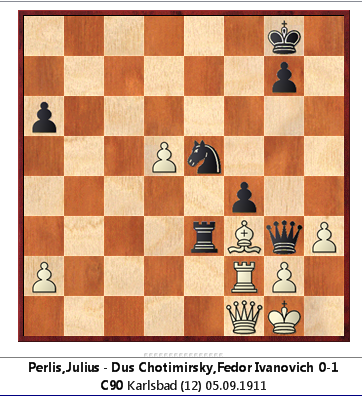
Black to play and win
Solution
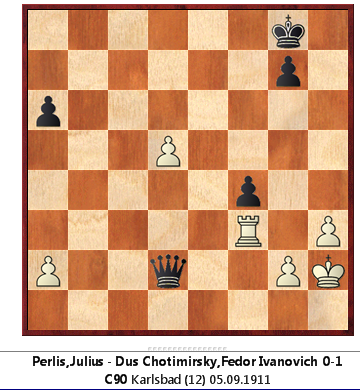
One of the most straightforward puzzles in the book. As soon as you see the first move, which I saw instantly, the rest is obvious. All that has to be checked is that white can't build a fortress, and once you know he can't, it is puzzle solved. 1…Re1+ 2 Qe1 Nf3+ Rf3 4 Qe1+ 5 Kh2 and now 5…Qd2 is probably the precise move to play.
A double puzzle day (explained below)
White to play and win
White to play and win
Solution
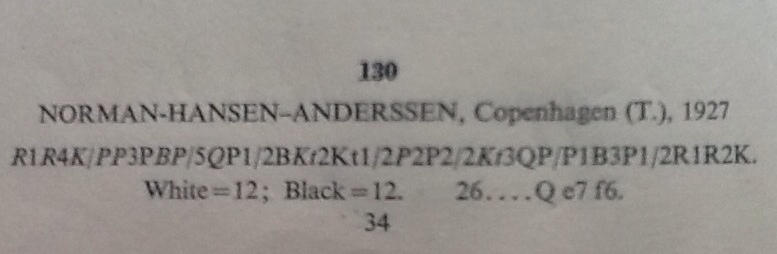
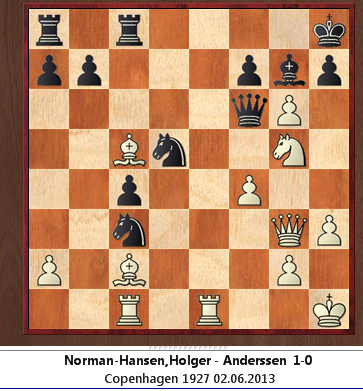
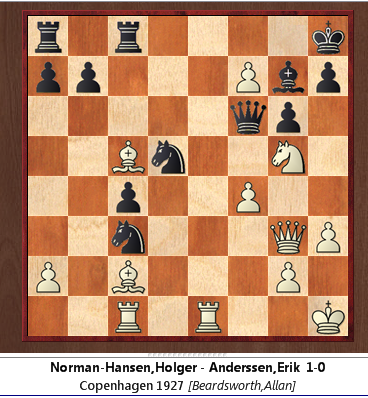
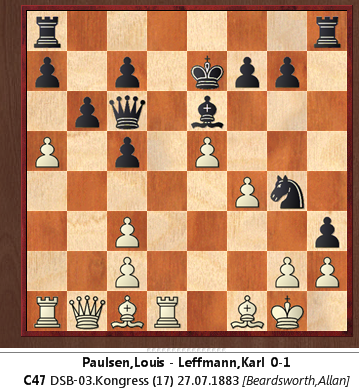
It had to happen. Since this puzzle's number ends in 0 (or 5), I had to either set the position up on the board, or find it in Megabase or by googling. In this particular case, the game isn't in Megabase 2012 and nor could I find it online, so I had to set the pieces up, and in so doing, set it up as in the first diagram. This then was the problem I tried to solve. Note that when using the FEN diagram, I do a piece count check, Cordingley helpfully stating how many pieces each side has: twelve each.
Alas, the FEN description is wrong, and I also misread one piece- I do find, with my eyesight, that distinguishing between his italicised and straight letters somewhat hard, but the first diagram is not unbelievable, the g6 pawn could have got there somehow, and the K could be on h8.
So, I have spent a few sittings trying to solve the first diagram. It took me a while, longer than it should, to find 1 Nf7+ Kg8 2 Bd6!, coming to e5, and demolishing black; I also then found the flashier move 1 Bd6!, but rejected it, not properly delving into it: 1…fg 2 Re6! or 1…fg 2 Qh4! h6 3 Be5 are terminal.
Happy, turned to the solution, and found a nonsensical line: and then found that the pawn on f7 is a white one, which is what Cordingley's FEN actually shows, and I suspect that his error is that the g6 pawn is black.
Alas, I therefore haven't been able to attempt to solve the game position, diagram two. I hope readers did, because it is quite pretty. The Bd1! deflection isn't entirely new to me, but isn't easy to see, and the Bg7+! ending is also nice.
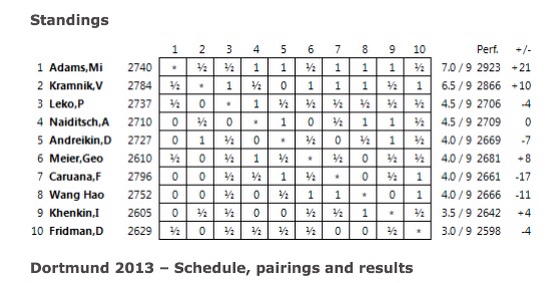
It has been an absolute pleasure, sheer delight, to watch Mickey Adams' games over the last couple of weeks, which resulted in him winning the 2013 Dortmund event ahead of Vladimir Kramnik.
I first met Mickey at the 2004 Olympiad in Calvia, the first time I captained the England men's team.
Right from the start, I knew Mickey was different: a true professional, professional in everything he did concerning chess. That is not to slight others, particularly my lifelong friend Nigel Short, who also reached the very pinnacles of chess, but by 2004 Nigel had passed his playing peak, was interested in the politics of chess, and was interested in enjoying the companionship and spirit of the Olympiad: he remained, and remains a great player, but Mickey was more of a professional sportsman.
I could write a lot about this, from his daily regime, timetable, support of Tara, attitude at the board, all manner of things but right from the start I put Mickey in a class apart.
One of the pleasures of being captain was to be up close throughout the five, six, seven or how ever long the team's matches were on. Whilst some captains wandered off, weren't around, or were in the bar, I took the decision that captaincy was a job and I had been asked to do the role to bring -using the same word- professionalism into the role. So for substantially every minute of every round I was with my players, ready to attend to their needs (from simple things such as fetching coffees, or something to eat, to looking after players who had lost and needed help to leave the arena, to arranging them to sign autographs for fans etc). To make this interesting for me, I also took the opportunity to study chess, both during the games, and where possible, sitting in on post mortems.
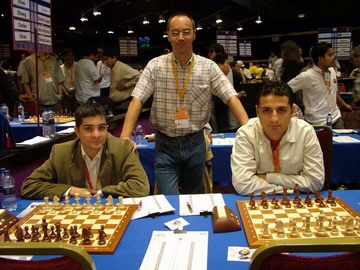
I thought it timely to blog about Mickey because of Dortmund, and thought it might be of interest to look at his very first game in Calvia, playing white against GM Kivanc Haznedaroglu of Turkey (from where, by chance, I am writing this blog).
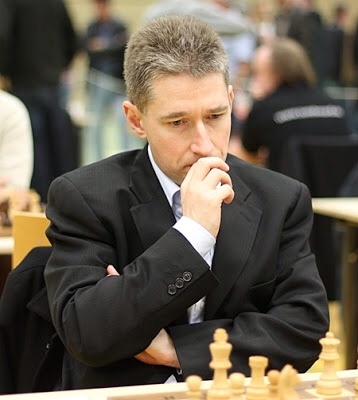
By chance, searching google images brings up a picture of Kivanc, the player on the left, from a later round.
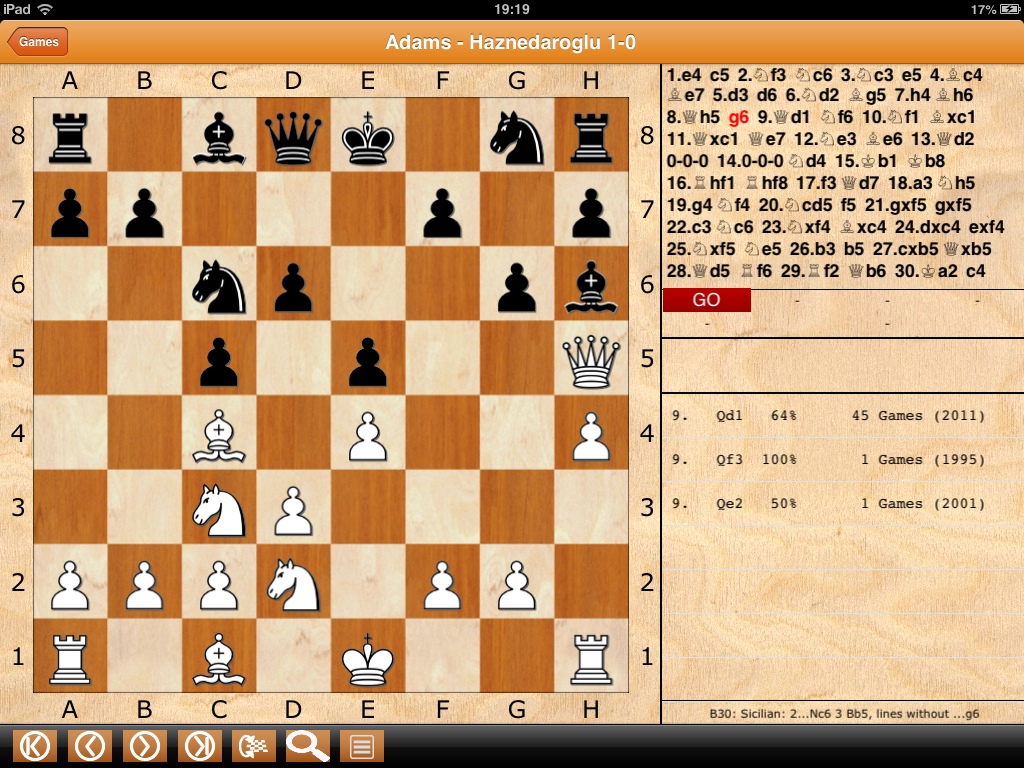
I had of course played over many of Mickey's games over the years, and had some understanding of his play. It was the position below, from a quiet line against the Sicilian, which led me to coin a phrase 'a Micklet' for the tiniest of advantages which somehow, frequently, Mickey could exploit in a way which only th elite can: here, I thought his Qh5 manoeuvre, tempting g6, caused black to have black square weaknesses.
Later, as I got to know the ropes, and know what captaincy required, I started to keep personal notes in my notebook of how I felt my players' games were going, trying to predict the results, trying to assess the positions: this practice, was a boon to my development as a player, and I still carry on this technique, when watching live games on Playchess.com or ICC: no engines, just brain, engaged, and trying to predict moves and outcomes.
Whenever I perceived a micklet, my assessment of likelihood of Mickey winning rose.
Later:
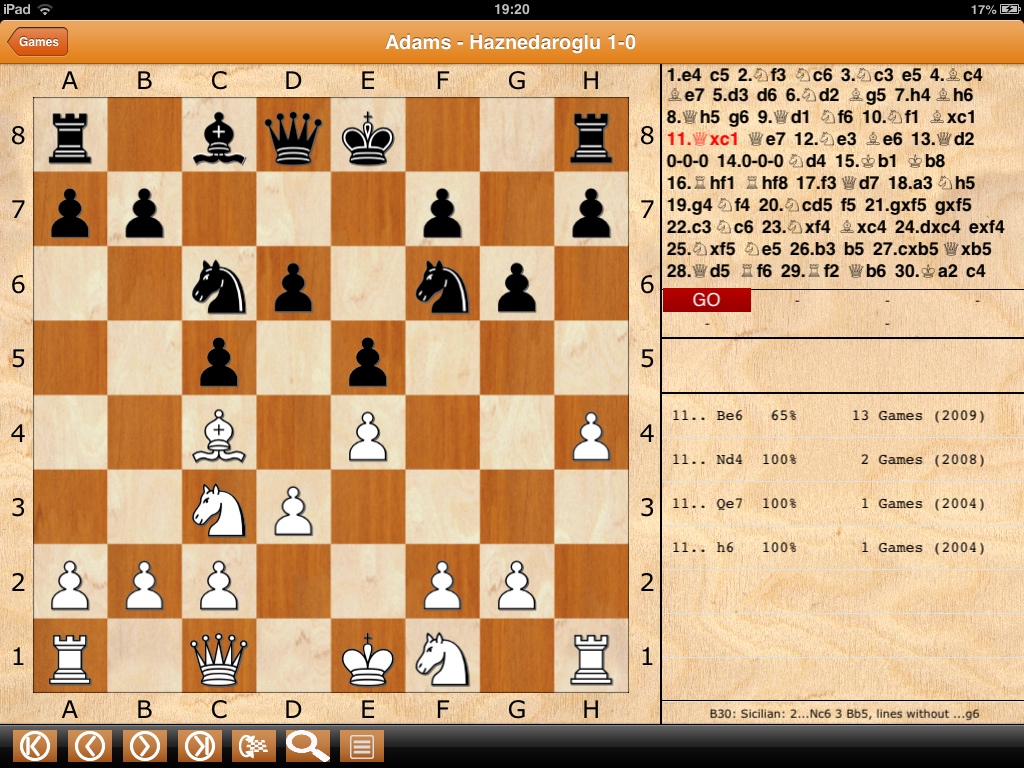
Perhaps, this game is a poor example of micklets, or perhaps it is instead really a story about control of d5.
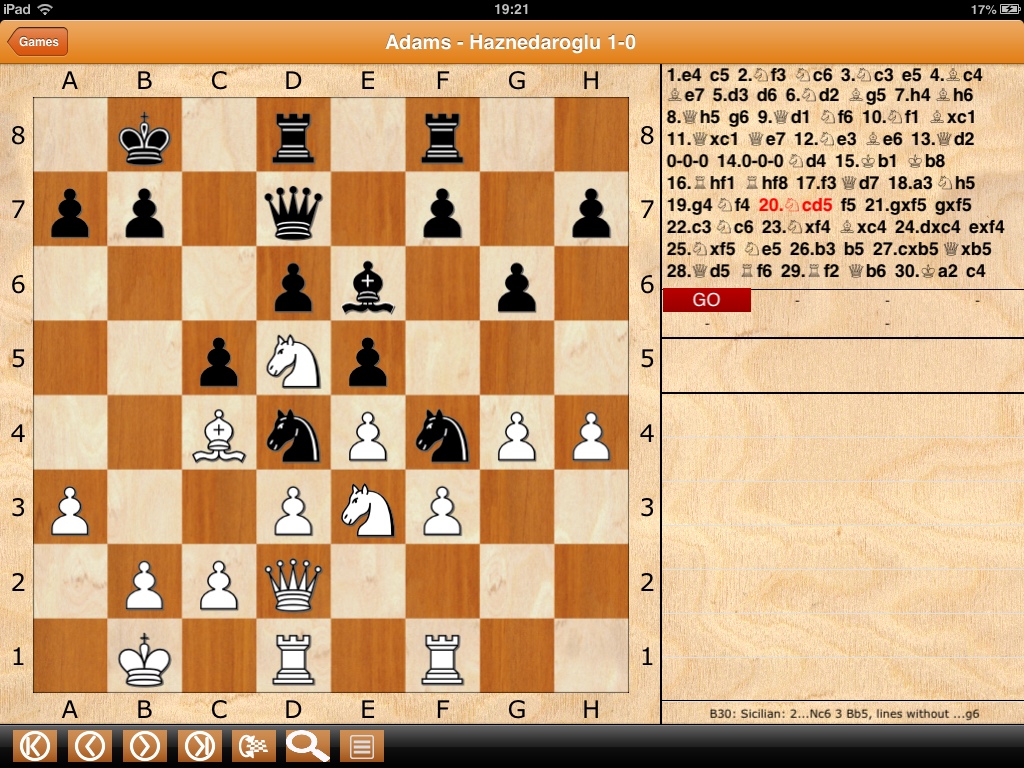
Here was the critical moment, when black's f5 resulted in a tactical sequence from which Mickey emerges a pawn up.
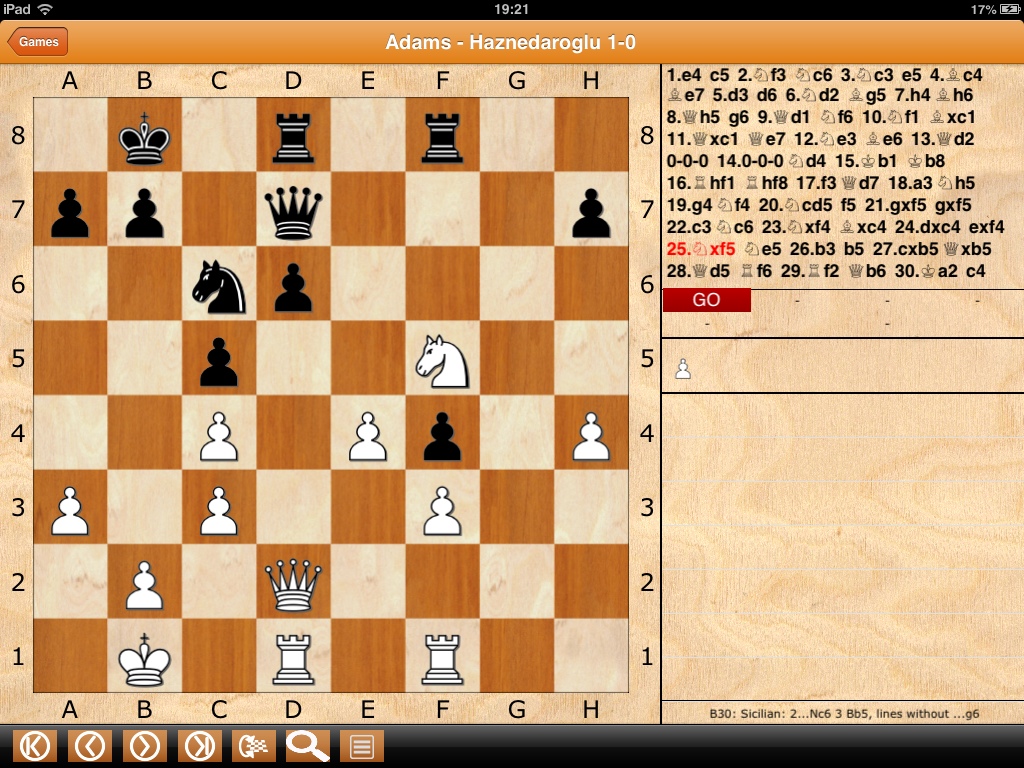
And here, Mickey has a strategically won position. Mickey's play impressed me in two ways: getting here, and then keeping control, and not being phased by black's desperate counter play which …b5 started: a lesser player (for which read me) could easily have fluffed the game by panic.
This game will never feature in a best games collection, but I will always remember it, just as I will always remember Dortmund 2013.
 allanbeardsworth