I am presently watching each round of the annual Wijk aan Zee tournament. Like most fans, I concentrate on the top event, but I occasionally dip into the B and C groups. Often, I look at the wins, particularly the short ones, but also at the games of players I like.
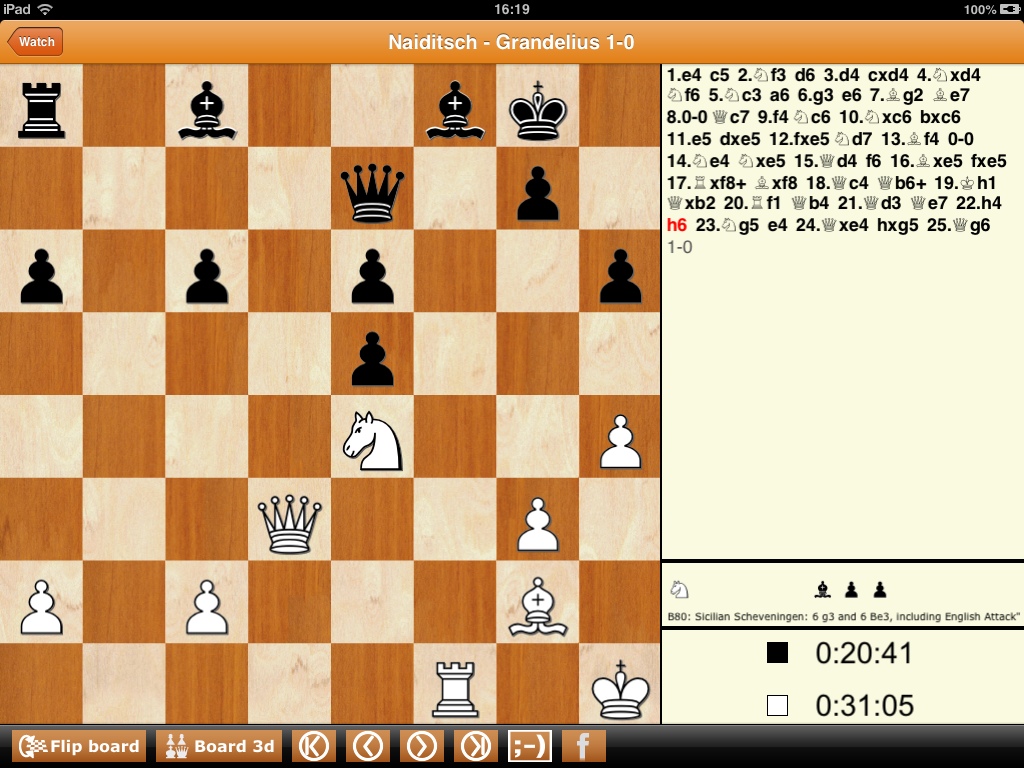
This game caught my eye. Black has just played h6, preventing Ng5, and Arkady plays….Ng5.
I must admit, I didn't get it at first. It took a while to dawn on me that the threat was a 'reloader', to play Qg6 and Be4 and then mate with the queen on h7, it being supported not by the N, but by the B.
Alas, I would never have considered Ng5, thinking it was stopped by black's last move. Now, it looks obvious, and maybe even Nd6 would work, since the aim is not to play Qh7mate, but Qg6 first; but Ng5 is of course the forcing move.
I remember reading, I think in CJS Purdy, that as part of thinking technique, you should consider what you want to play, and not be put off by the opponent's threats. For the moment, ignore the threats, and use your imagination to see 'what if', what if you could play the move you want.
Naiditsch provides a valuable and classy reminder of this technique.
 Posted with Blogsy
I feel, at the start of 2013, that I am witnessing an incredible thing: the coming to maturity of the strongest chess player in the history of the game, in twenty two year old Norwegian, Magnus Carlsen.
I first met Magnus at the Turin Olympiad in 2006: in many ways, he was just a typical teenager, but when Norway played England, he defeated England's No 1, Mickey Adams, the first super-grandmaster he had beaten. That was a shocking and terrifying game for us: we knew Magnus was coming, but that was his arrival. Since then, he has become firmly established as World #1, and recently he exceeded Garry Kasparov's highest ever rating.
Still, there is rating inflation and until the last couple of months, I was unsure who I felt was the better of the two: Garry or Magnus; though to be fair, I should at least consider Bobby Fischer. I exclude him because I don't fully appreciate Bobby's games, since he gave up chess just as I was learning. With Garry, I grew up with him, witnessed all his fights with Karpov, and have studied his games throughout my adulthood, whereas my knowledge of Fischer is weaker, having for instance read his Sixty Memorable Games when I was a relative beginner.
But I now think Magnus has surpassed even Garry. And with his own style, the like of which I have not witnessed before. A lot of the time he does nothing, achieves nothing from the opening, but he does nothing so well, and somehow emerges with something, and then overpowers his opponents, time and again.
His game against Sergey Karjakin, who could well, being similar aged, be Magnus' rival for years to come, yesterday was superlatIve. Being a Sunday, I could have Playchess.com on, and dip into my study every so often, and look closely at the game from time to time.

Magnus has just played Qh1: the Queen having shuffled out to c4/b4, before going back to the first rank, and then unusually to the corner, h1. I wasn't sure whether he was trying to gain control of the h1-a8 diagonal, or swap queens off: in fact, it was the latter, an unusual way to exchange queens. As I saw it unfold, I wondered if he could get much advantage out of the two bishops: no not really; roughly equal, I thought. But I also recalled reading somewhere that one advantage of the two bishops is that pawns only come off the board, are never added to, and as pieces and pawns are exchanged, the position has to open up, so time and exchanges favour the bishop pair.
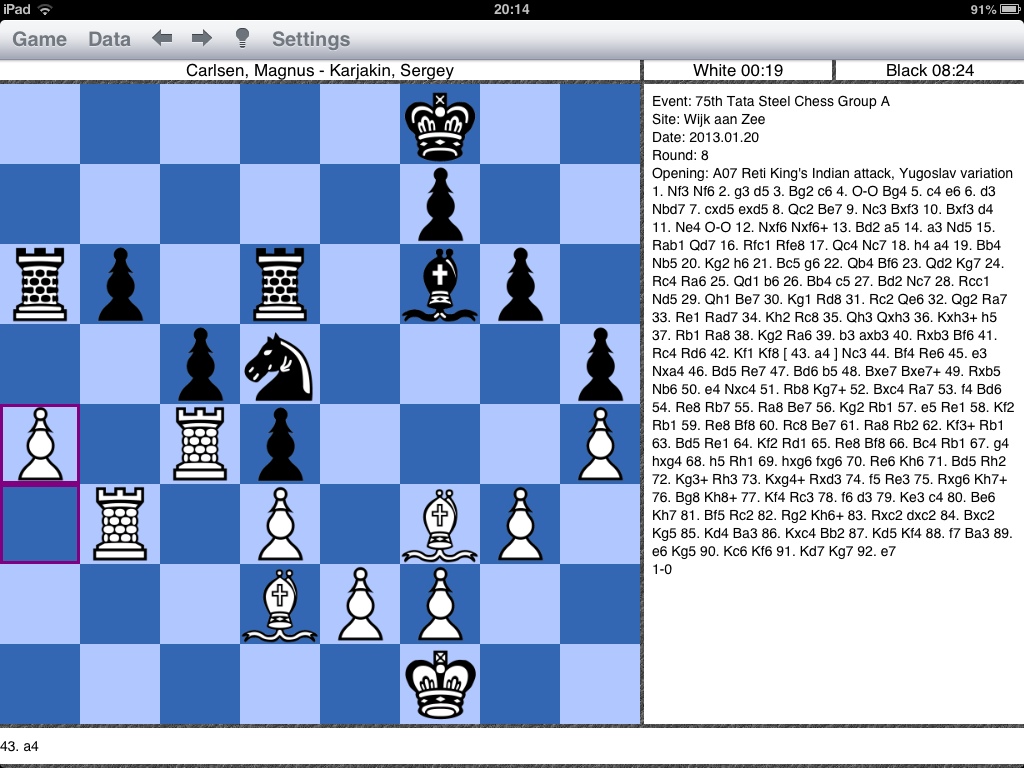
Here, Magnus has just played a4, having previously played b3, opening up the queenside. I, and I believe many GMs, would have been nervous, and instead settled for a draw, but not doing so is one feature of Magnus. Malcolm Pein tweeted yesterday (about this game) that we are witnessing the 21st century endgame virtuoso, and indeed we are. Another feature of his play is the reliance on 'little tactics'. I wouldn't have played a4, fearing Nc3, which Sergey played, but I didn't notice until the position came on the board why a subsequent Ra4 failed: the little tactic Rbc3! wins a piece, for if Ra1+, Rc3c1 is 1-0.
Then, when Sergey took with the N instead, putting it offside, further nuances emerged: the centralising Kf8 might have been a little mistake, although I would have played it, not realising that in some lines Bf4-d6 can pin the R, if the white square bishop has forced it to move to the e file. I think it is the relentlessness of it, with the continual appearance of reasons for not being able to do what you want to do, is part of the psychological pressure that Magnus creates.
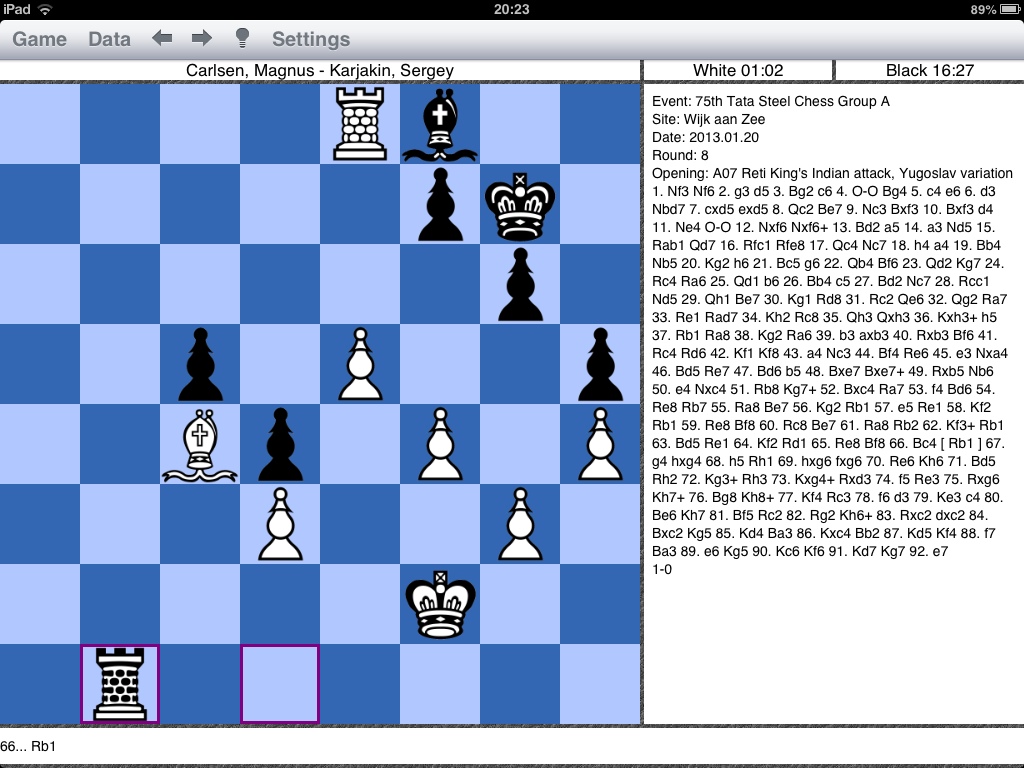
This position is also quiet but remarkable. It would be easy to think not much is happening, or not to spend much time on the position. But I can now see that white is a pawn up! Well maybe not by normal counting, but counting in the way that matters, he is: white's anchored Bc4 and Pd3 contain black's majority on the queenside, whilst white has a 4-3 majority on the king side. I wonder how early on Magnus could see this coming to pass? I wouldn't be too surprised if it was early as my first diagram. White's anchored bishop is of course stronger than black's, focussing on f7 and g8. And white's king is safer than black's, and, being centralised, will soon be employed in slowing down black's pawns.
Magnus was far ahead of Sergey on time by now: I think something like more than 50 min to less than 15 minute, and here he played g4!? hg h5, gambling that the opening up would give him mating threats. Subsequent analysis by commentators has shown that Sergey might still have been able to draw, by taking on h5, with many lines leading to perpetual check, because of the strength of the two passed pawns. But Sergey played cautiously, Rh1, and Magnus was exquisite, precise, perfect, in using a combination of mating threats to advance his pawns, finally simplifying into a bishop ending, two pawns up.
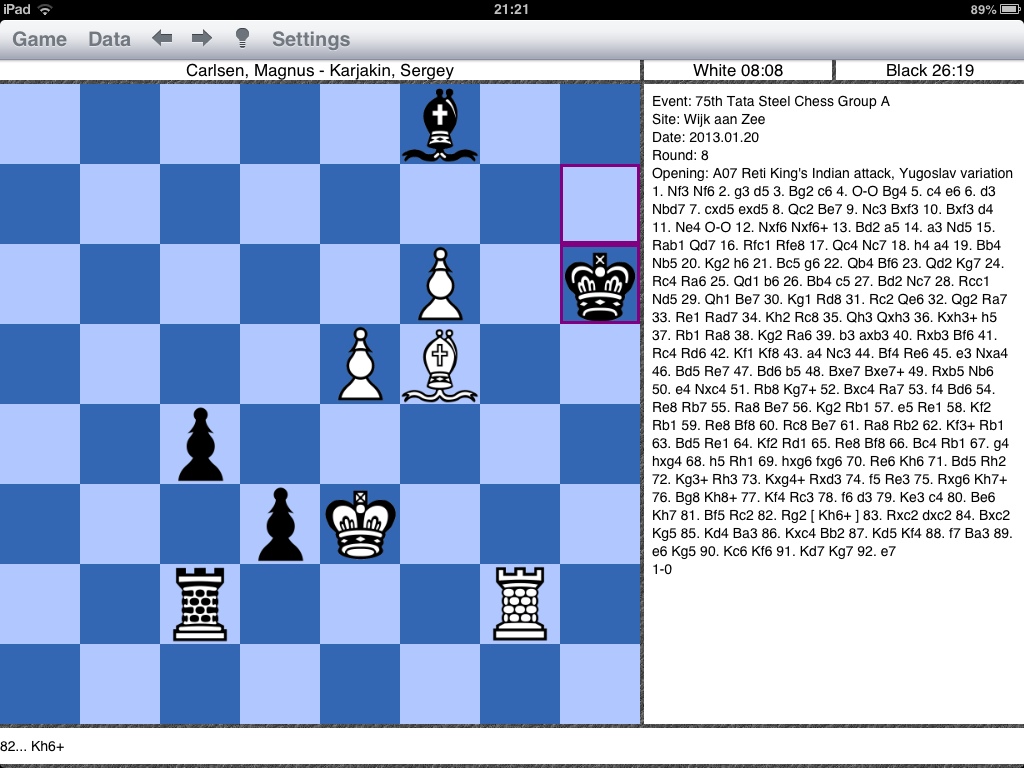
Here, having chosen this route rather than a more complex, but also winning path, Magnus exchange's the rooks, takes black's two pawns, and then wins: he moved at great pace in this last stage, no doubt having seen it all.
Overall, he seems to eschew theory, is happy just to get a playable middlegame, but somehow time and again gains a 'niggle' or a 'nibble'. He seems to know where to put all his pieces, and how to manoeuvre them to employ them to the maximum. And Sergey, here, seemed never to have a chance to try for an advantage.
Incredible.
There are several more rounds to go at Wijk aan Zee: Magnus has got quite a comfortable draw, largely playing the players presently towards the foot of the table, and this coupled with the awesome power he has shown in this and other recent games, makes him odds on to notch up another first. Personally, I expect him to win by a big margin, but we shall see: Vishy Anand, for one, has had a resurgence, and Fabiano Caruana is also playing impressively.
Two days ago, I blogged about the astonishment, bewilderment, thrill and awe of what chess engines can find nowadays.
As someone who has some chess strength (my lifetime #1 feeling of glow was last summer in Manchester, when Garry Kasparov introduced me to someone as 'a strong chess player; no, a very strong chess player' beating Mickey Adams' description of me in Turin in 2006 as someone who has 'some understanding of chess') and an even greater love for the game, I have for a long time now been startled by the moves engines show that I miss (and, in my defence, ones which the world's elite miss). Today, whilst looking through a blitz game which I had saved since aspects of it interested me, Houdini 3 revealed another startler.
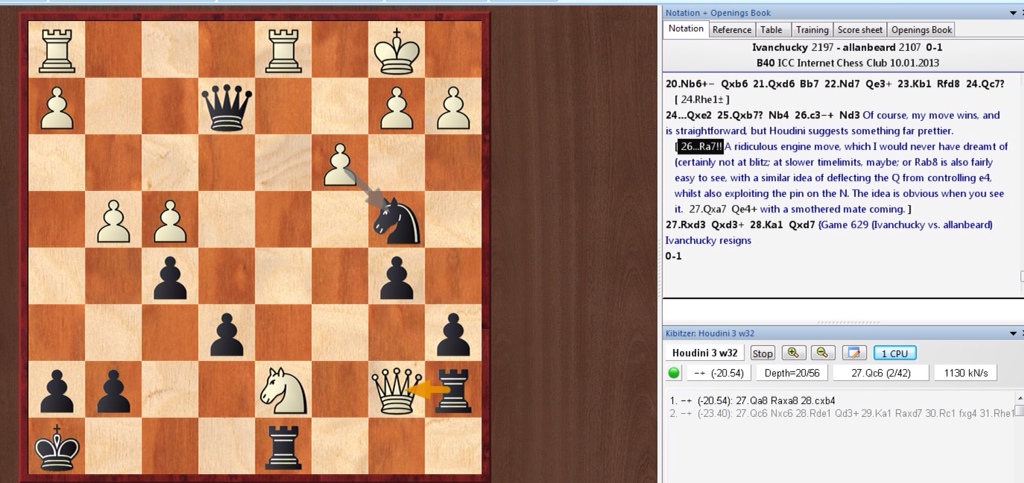
(Ra8-a7, instead of my prosaic Nd3, which of course wins)
Once Houdini shows you the idea of diverting the Q from the h1-a8 diagonal, and particularly its control of e4, the idea is obvious. Whether I would have found it in a classical or Rapidplay game, I don't know, but in blitz, I didn't.
My son, Tom, is now [Jan13] midway through his three years at Oxford.
Almost since the start, he has worked on Cherwell, the student newspaper, as he pursues his interest in politics and journalism.
Yesterday, Jane and I saw what we thought was his first piece on camera. Tom's interview starts at 1min 45 into the video, or watch the first parts for context.
http://www.cherwell.org/news/uk/2013/01/11/assange-invite-sparks-protest
As his dad, I am in awe at his performance: I couldn't be as assured at 50, let alone 19.
One thing I continue to be stunned by is how good computers are now at chess: it is now many years since even the world #1 is a match for a good program. It is also now routine for engines to spot numerous improvements on games played by humans.
However, I was literally stunned tonight by the sheer beauty of what Houdini 3 found in the position below from one of my recent blitz games.
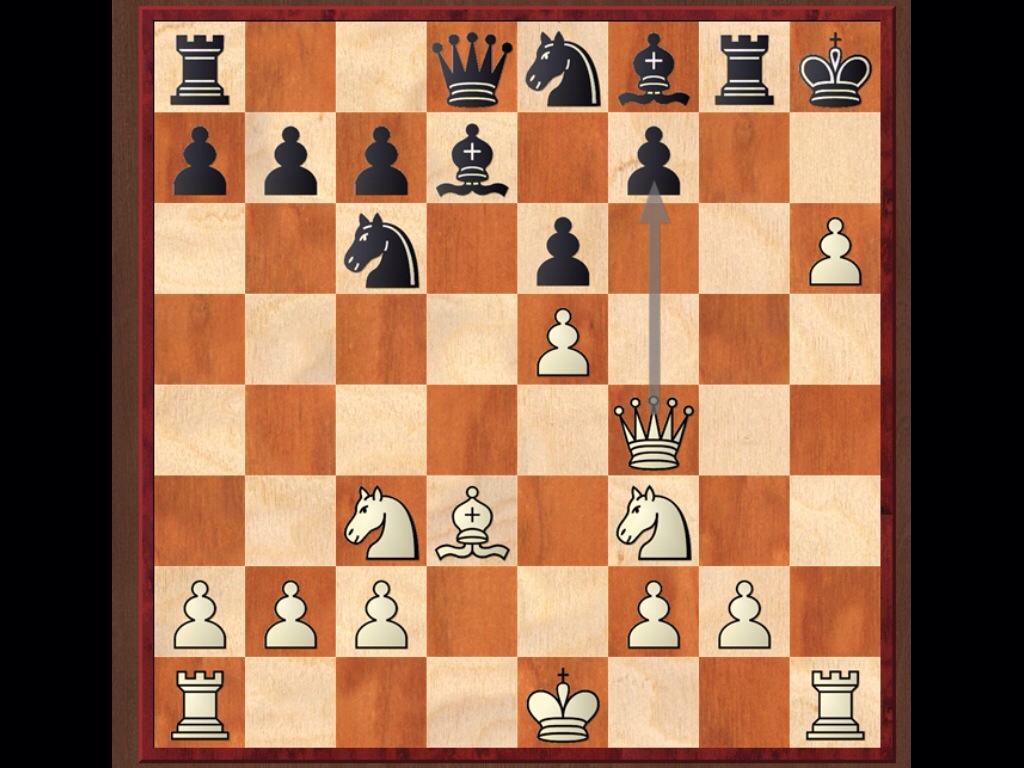
The arrow is misleading: Qf7 is prosaic, answered by Qe7; but white has far better, a move I would never have considered.
Well, not yet she doesn’t, but she would like to.
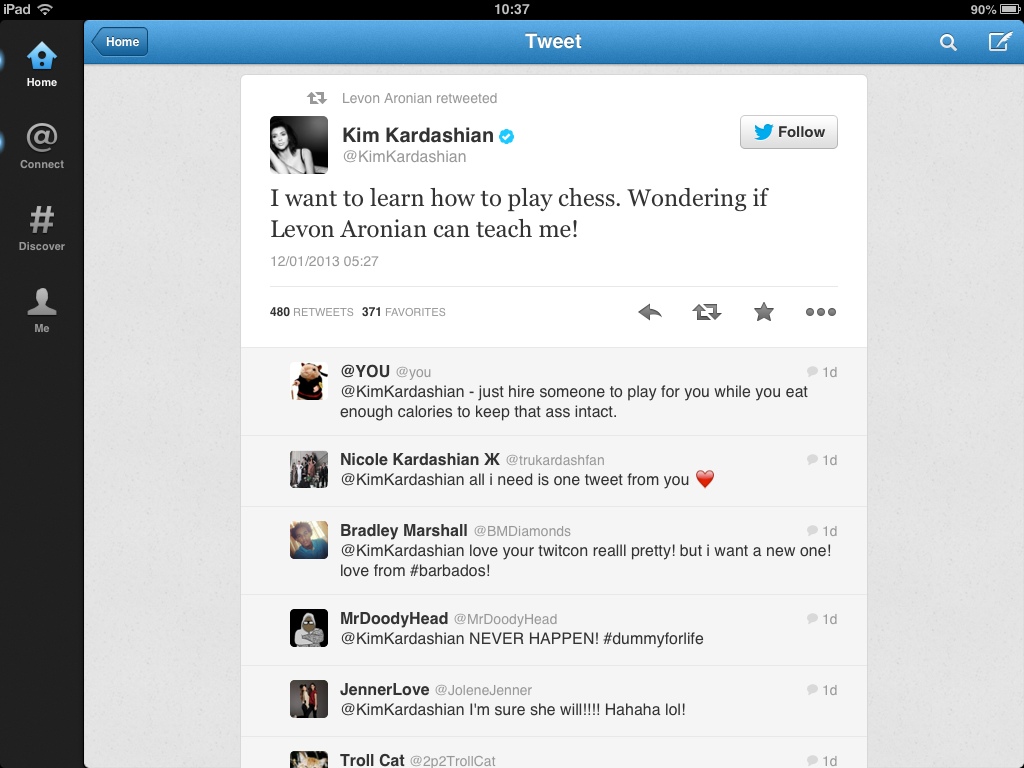
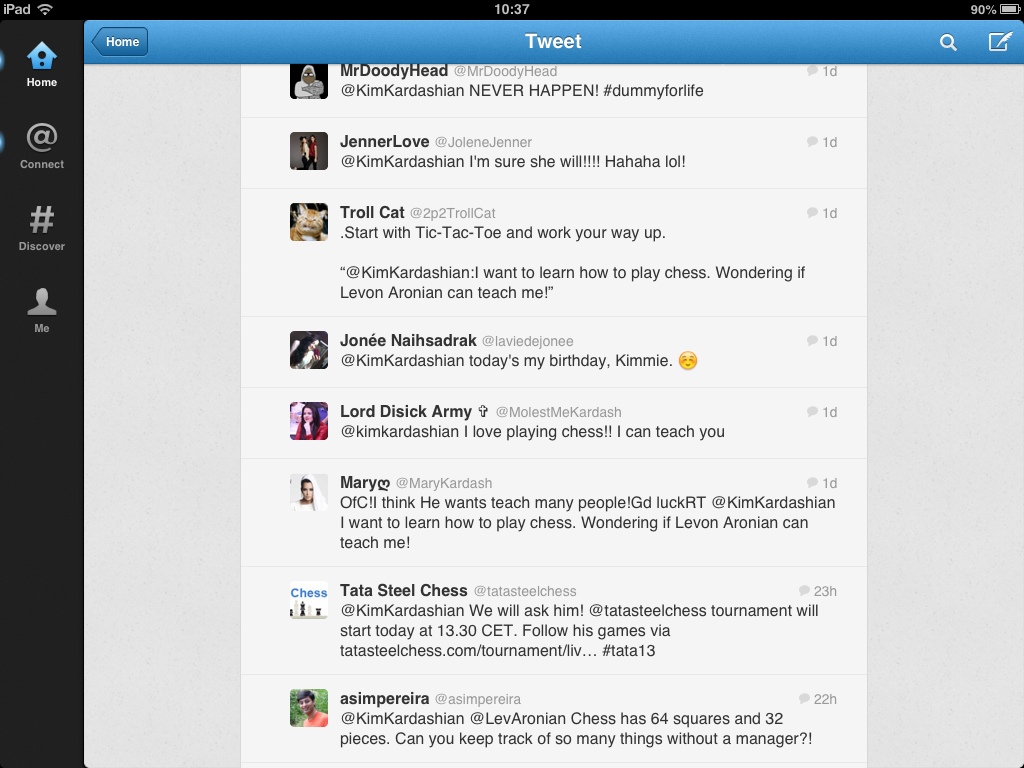
My younger daughter, Sophie, is always watching ‘Meet the Kardashian’s’, so Kim’s tweet naturally caught my eye.
(There are plenty more images of her on google, including the one below, where she is apparently playing chess; the picture quality is poor, but from where her pieces are, she does indeed need to learn to play; in most of the other pictures on google, she is not playing chess; and many where she is not in typical chess attire).

I was once told that all Armenians have surnames ending in ‘ian’ so it doesn’t surprise me in the least, especially since she knows Levon’s name, that Kim has Armenian roots. Thinking of some of top Armenians from yesterday and today, from the former World Champion Tigran Petrosian,Tigran Petrosian – Wikipedia, the free encyclopedia to current world #3, Levon, to his team captain in the 2006 Olympiad, Serjh Sarkisian, they all have such name endings.
In 1978, I drew with Tigran in a simul in London; and in 2006 I had to apologise on behalf of my player Danny Gormally after he pushed Levon to the floor in the Bermuda Party at the Turin Olympiad ChessBase.com – Chess News – Party Time at the Chess Olympiad, and thousands of other sites, the news went ‘viral’. My apology was to Serjh, who was then their country’s defence minister, but is now their Prime Minister Serzh Sargsyan – Wikipedia, the free encyclopedia . In terms of lambs and wolves, when I saw Serjh on the Sunday morning, we had to speak through interpreters; that afternoon, when everyone knew that Levon wasn’t hurt and that Danny had decided to go home, Serjh and I shook hands and spoke in perfect English; and Levon laughed it off. I have seen Levon at each of the London Chess Classics; Danny didn’t get the girl (Arianne Caoili), who remains Levon’s girlfriend. Unlike Kim, Arianne can play a decent game of chess.

So, if Levon decides not to teach Kim, then I shall, but only if Sophie can come with me.
In 2012, I hosted a q&a session for the then first years at Deloittes. I had a couple of hours or so of grilling, some good, some less good, some hard, some easier questions. Afterwards, they gave me their list of questions, to help with any future sessions I run.
Now that I have started to blog, I have decided to write about my answers, in case they might be of interest to others starting their careers. I have had to adapt things, excluding any references to clients, and being sensitive to my firm’s interests. Separate blogs written over time will deal with the various questions.
‘What would I do differently’ was one of the toughest questions. I think the answer is ‘not much’. The main thing is that in my early twenties I was painfully shy (I was told once that I wasn’t shy, but diffident, but thirty years later don’t know the difference) and was quiet to a fault. It was only through the encouragement of my wife and Dale CarnegieGuidebooks | Guide Books that I managed to alleviate this aspect of my character. I particularly recommend How to Win Friends and Influence People – Wikipedia, the free encyclopedia, now available in a digital-era new version, though I read the original 1936 version.
So, aspect one: do the things that you fear.
In similar vein, each year try to do something different. I have been lucky that my thirty years at Deloitte have been thirty different years. I haven’t wanted to leave because tax is as interesting and challenging today as it was in 1984; and client’s need our help just as much. The questions and answers differ, but the questions still need answering. My career would have been far less interesting if I had let one year be the same as the previous one, or if I had stopped learning. Today, now that I have a great deal of tax knowledge, I also have a great deal still to learn. Just as in chess, the more you know, the more there is still to know.
Finally, I wish someone had told me the importance of networking and keeping in touch with colleagues and clients. I learnt this in my late 20s/early 30s, spending my 20s with my head down, ‘doing the work’. By the time when I started to appreciate that the work doesn’t just come in, many people of my era had left, become scattered far and wide. If I had had my time again, I would have cultivated contacts from the start. Maybe Facebook, LinkedIn, and other such tools make it easier, but the stand out people will make it a habit early on.
I read this phrase in Charlie Munger's 'Poor Charlie's Almanac', an expensive book, but one worth reading: especially when you realise that Charlie is Warren Buffett's business partner.
Charlie had a law practice, which did work for Warren; in his training, he was told the importance of relationships: it is possible to charge very top dollar once, but pricing for repeat business and referrals is different.
Particularly so, I feel, in a market such as Manchester, a typical regional city. According to the play, Six degrees of separation – Wikipedia, the free encyclopedia, we are all inter-connected: I would say that outside the very largest centres, the degree of separation is 2 or at most 3; and for service providers like me, you guard your reputation at your peril. Repeat business and a thriving practice come from doing right by clients. Pricing is one element of that, but 'doing to others as you would have done to yourself' is the principal point.
I am not Jewish, but I try to run my practice by a famous quote by Rabbi Hillel. As it was told to me, in answering the question of whether he could explain the whole Torah whilst standing on one leg, he replied: A Quote by Rabbi Hillel | The Gaiam Blog What is hateful to yourself, do not do unto others.
Rabbi Hillel would have been a good business partner in my eyes.
My memory is a mixture of truth and fiction, of wealth and poverty.
I have a great memory for tax cases or tax legislation, or for chess games or chess topics, but a woeful memory of family, friendship or other useful memory. When did I last see someone: I don't know; do I remember the time we went to the Lakes together…often, no, a complete blank. One of the stories Jane likes to tell against me (she is my wife, after all) is how I plainly denied ever having a Peugeot 205 Gti, despite later being shown a picture of me with it.
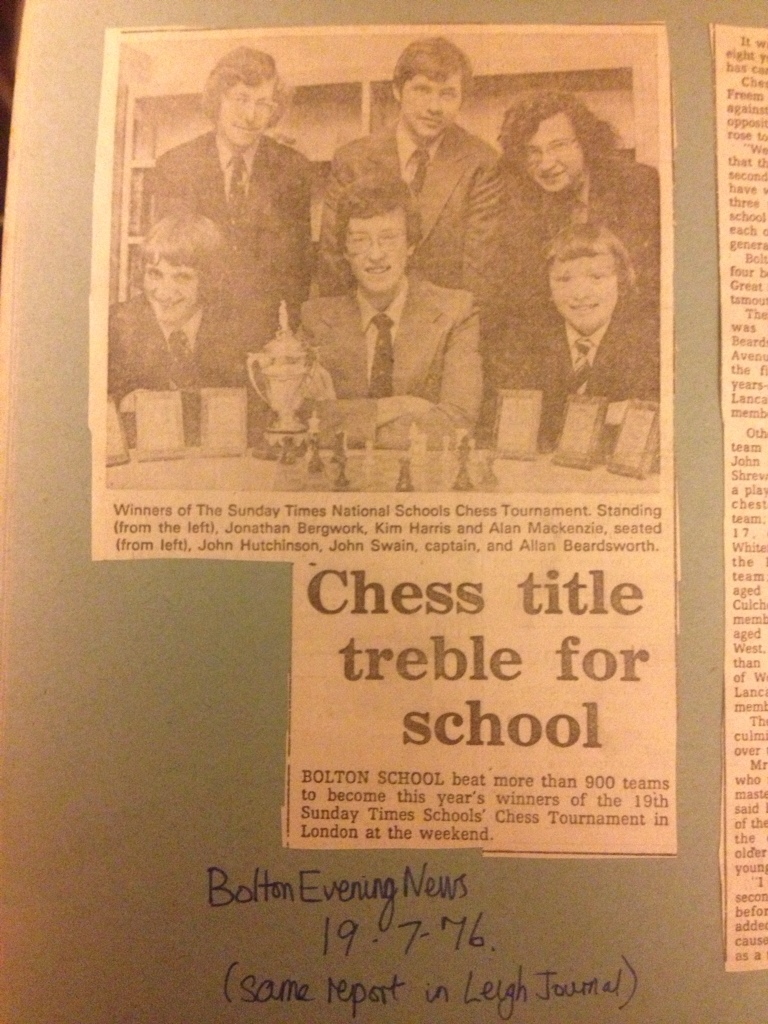
One of my oddest false memories is when we returned by train from London having won the Sunday Times National Schools championship. Bolton School won it once, in the 1960s, and again, in 1976, when I played bottom board (by 1979, I was top board, and Nigel Short – Wikipedia, the free encyclopedia was by board 2, although about that time he started to surpass me.
Anyway,I have clear recollections of us singing along to Queen's 'We are the Champions of the World' YouTube on the train home.
Alas, checking this years later, it turns out that this memory was false: Queen released this record in 1977. So unless I have great song writing powers, I must have made up this memory: I doubt we sang it in 1979, when we came second.
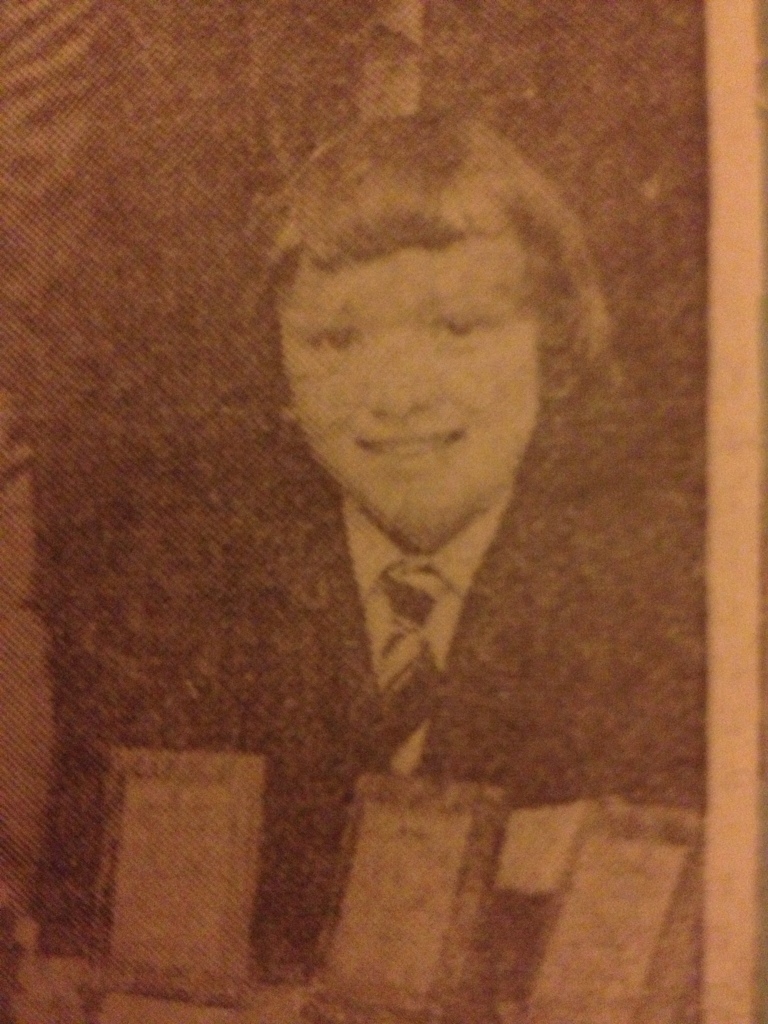
What I do remember, though, is that in 1976 I had some hair, as this newspaper clipping shows.
…and one of my most memorable ones.
Earlier this week, I met a potential client, Grant, who, prior to the meeting, had googled me. So his first question, was not about Deloitte or tax but…did you ever meet Fischer or Spassky? (No to both, but in July 2012, Jane and I visited Bobby Fischer’s grave, in Stelfoss, near Reykjavik, Iceland).
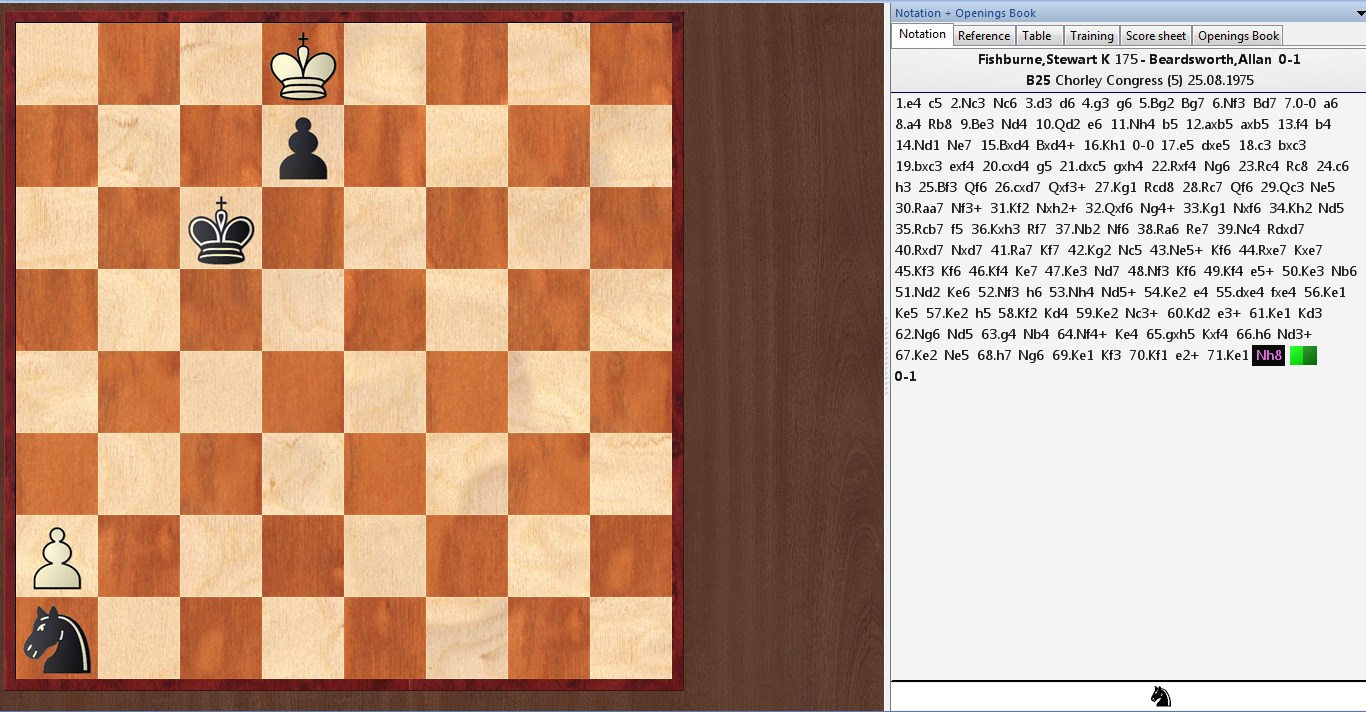
We then had the meeting, and at the end, Grant asked me ‘what was my longest game of chess’. My reply at the time was that it was my 9th December 2010 simultaneous game vs Victor Korchnoi on which I blogged previously. Since then, I have wanted to find out about a particular game which has been in my mind for years, the time I won by playing …Nh8, knight into the corner, the one and only time I have done this.
One of my clients, Morton Speyer, happens to be a lifelong friend; 10+ years older than me, he was my lucky charm in my teenage (prime) years when I was one of the England juniors. I don’t believe I ever lost when Morton watched, and would go as far as to say I always won, sometimes in style. Morton and I were chatting some years back when I asked him if he remembered the game in which I played Nh8 or Nh1- I couldn’t remember which colour I was- but he didn’t, and I then looked in vain at the 1978 Chorley Invitational tournament in which I thought I had played the game. At that time, I was puzzled, but until Grant asked me the question, I hadn’t bothered to look further,
Tonight, and thanks to chessbase, I have found the game. It was indeed played in Chorley- I knew it was-but three years earlier, on 25 August 1975, when I was just 13. I had been playing chess for about three years then, but was already quite strong; and my win, against Stewart Fishburne, put me in equal first place before the last round, in which, alas, I lost.
Through the magic of Chessbase11, with a very few clicks, I have now published the game.
|
|
In addition below is the end position: simply looking at it, gives me immense pleasure, recalling my longest ever competitive game, 37 years ago, with Morton watching.
 allanbeardsworth