White to play and win
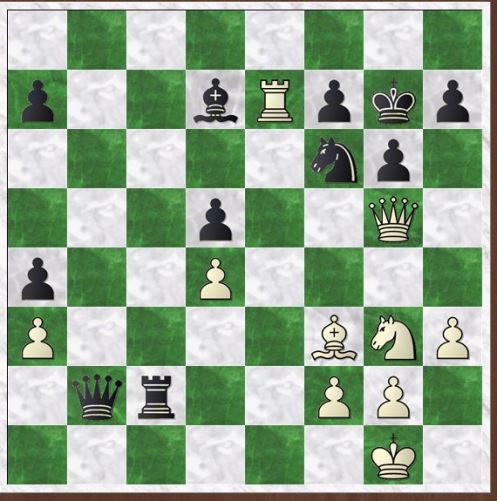
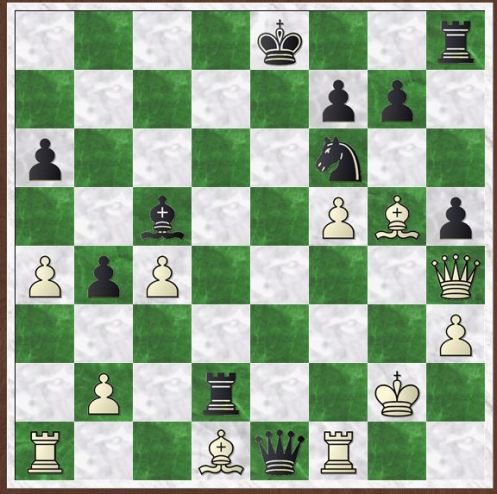
Medina v Marovic, Malaga 1969
Solution
I totally messed this one up, missing the easy/obvious/but not obvious to me 1..Qc1+ defence: I had a nice line starting 1 Rd7 with the idea of 2 Nf5+, and a later, clever Bd5, but 1..Qc1+ exchanges queens before taking the Rd7, and Black is winning.
The winning line is very nice: 1 Qe5! strangles Black’s pieces. Black has many defences, and on this occasion I will leave it to the reader to enjoy working out which of Nh5+/Bd5/Rd7 or even Ne2-f4 succeed. The key points about 1 Qe5 are that it pins the Nf6, therefore meaning the Bd7 is LPDO (and the Pd5 is LPDO) whilst also side-stepping the Qc1+ defence. (I have my own game file of some analysis which I can either send to interested readers or post online). Update: now posted here
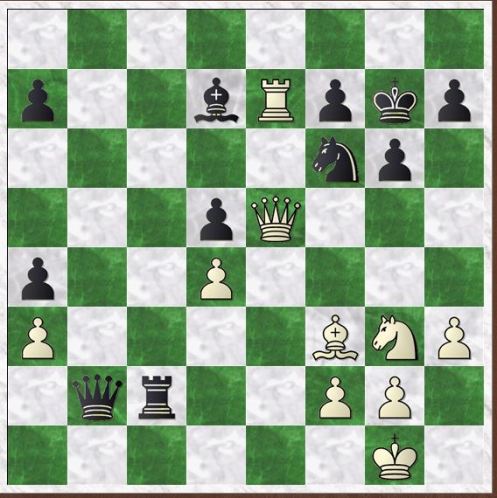
 Posted with Blogsy
Black to play and win
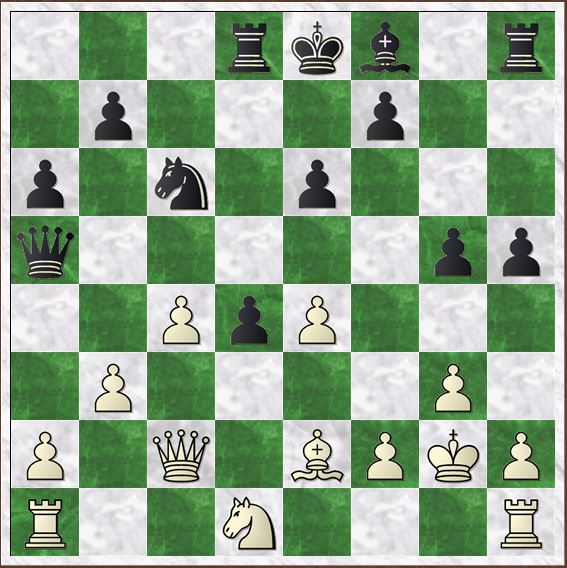
Huguet v Gerusel, Monaco 1969
Solution
Anyone who has read CJS Purdy, or my past blogs (since I often cite CJS Purdy) may know my favourite quote of his, a true LOL moment- it just appealed- when he taught me about potassium cyanide. Such a useful mnemonic.
Here, we have the potassium cyanide features in place: the Qc2, Bd3 are begging to be forked by the Pd4. So 1…d3! and if 2 Bd3, 2…Nb4 wins a piece.
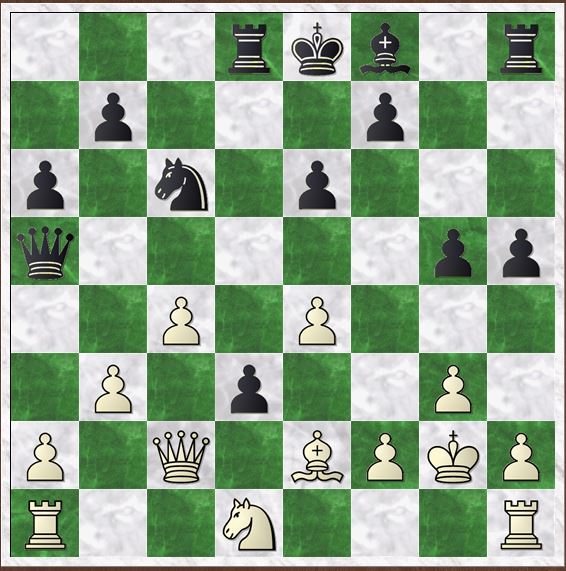
A key point is that if White side-steps, playing 2 Qb2, hitting the LPDO Rh8, Black has 2..de and 3… e1(Q) obtaining the extra piece after 4 Re1 Qe1.
Black to play and win
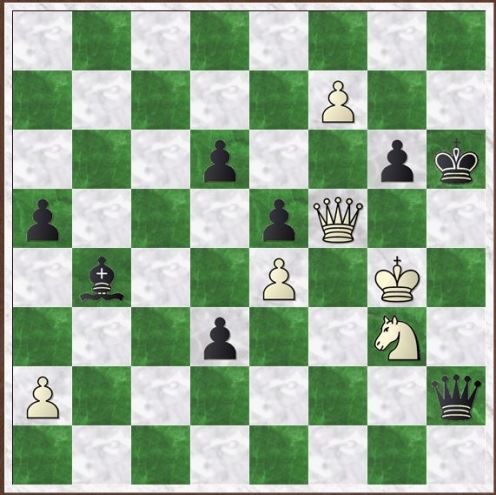
Hennings v Barczay, Sarajevo 1969
Solution
Not to hard today, perhaps; but it took me a long time; most of a twenty minute dog walk before the solution came to me, and then I felt I should have solved it earlier.
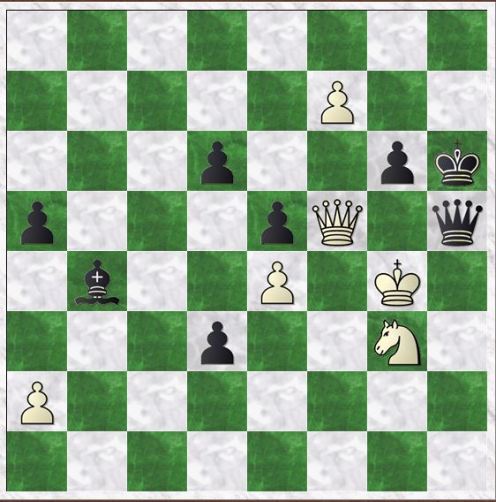
1…Qh5+! (which I suspect I saw immediately, but equally immediately rejected it) and if 2 Nh5 gf+ 3 ef d5! (the point) prevents the Pf7 from queening, so that the Pd3 wins the game.
I think I fell into the typical trap of rejecting moves without thinking: a natural human process; once again, Purdy’s examine all biffs would have helped solve it faster.
Black to play and win, after White plays 1 Rd5?
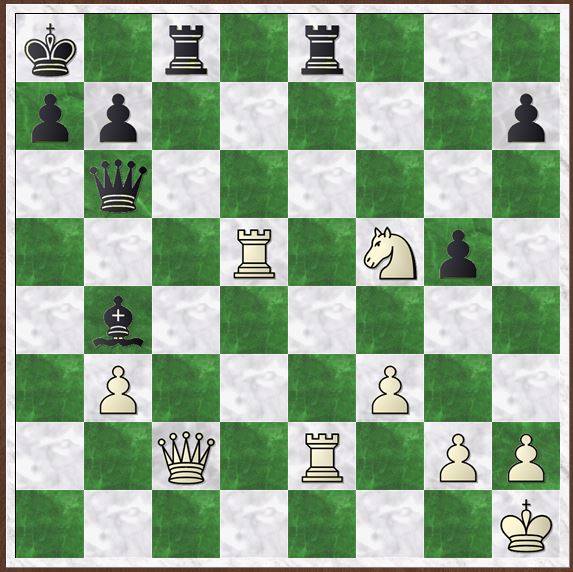
Teschner v Portisch, Monaco 1969
Solution
The sole question is ‘who back rank mates whom’ and, after examining the obvious captures and seeing they fail, the solution 1…Qf2! isn’t too hard to find. Clever defences like 2 Ng3 fail to 2…Qe1+!!
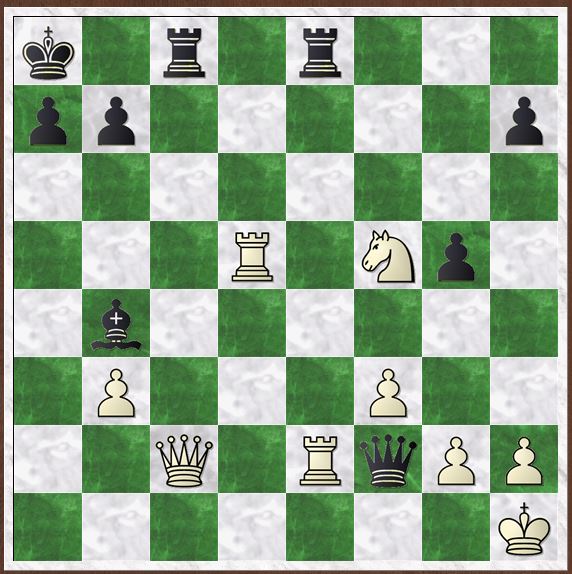
I said “not hard to find”: in the game, Black, a top class player, missed it, playing 1…Qa6, and the game was later drawn. It shows the fundamental difference between problems and real life games.
White to play and win
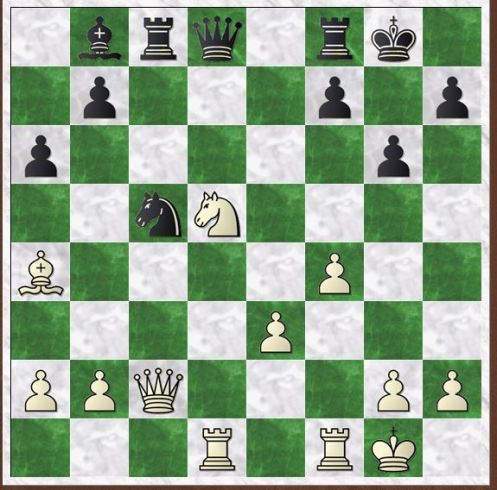
Szabo -Polgar, Budapest 1968
Solution
(firstly, not one of the sisters, but Istvan Polgar; also, Megabase says 1968 but Teschner says 1969; I have gone with Chessbase).
White needs to find a way to fork/discover, and the biff 1 Bd7! is the trick.

Then Black can either play on the exchange down, or capture, 1…Nd7, when 2 Qc8! diverts the Queen:2…Qc8 3 Ne7+ Kg7 4 Nc8 and White emerges a clean exchange up.
Black to play and win
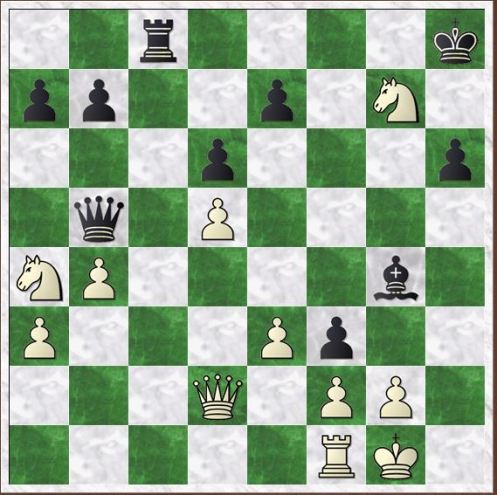
Troianescu v Taimanov, Venice 1969
Solution
I messed this one up. 1…Kg7? 2 Qd4+ +- pt 1…Qa4? 2 Qd4 +- are easy, so I thought I was being clever finding 1…Rg8, but the engines tell me it is 0.0 after simply 2 Nc3. Yes, White is weak on the white squares on the K side, but after Rf1-c1 White might also be able to expose Black’s king.
Instead, Taimanov played 1…fg! 2 Re1 Bh3! – I saw 1..fg, but not 2..Bh3!- when the threat of Qf1+ is decisive.
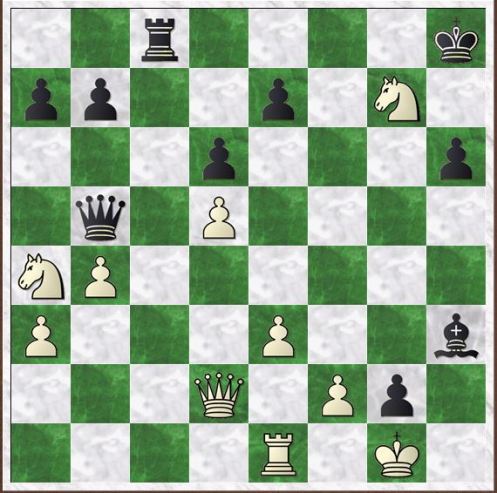
Evaluate (i) 1…d2; (ii) 1…Qf1+ 2 Kf1 d2
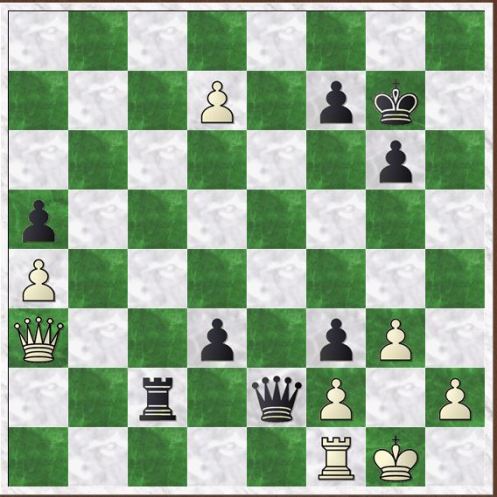
Ermenkov v Sachs, Warsaw 1969
Solution
1…d2 first; the easier one. 2 Qa1+ controls d1 sufficiently to permit d8(Q) next move: White wins.
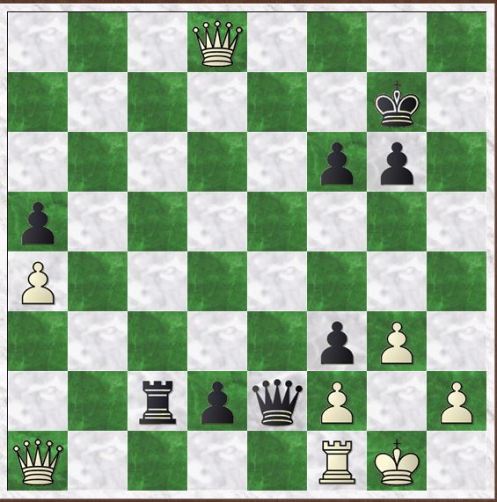
Much harder, and nicer, is what happens after 1..Qf1+ and 2…d2:
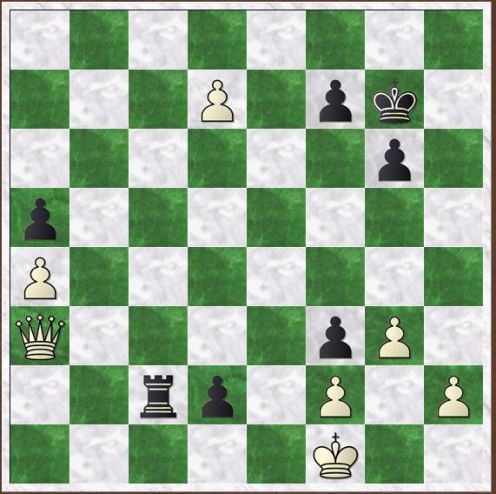
I messed up, playing 3 Qf8+ for a draw, but 3 Qf3! Rc1+ 4 Qd1!! wins beautifully.
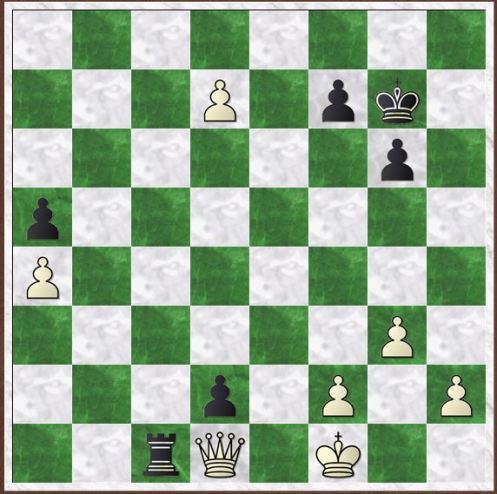
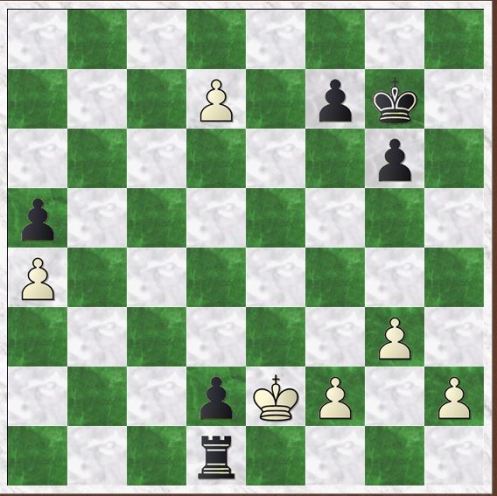
Black has to move his rook, say to b1 (planning Rb8 if Kd2??) when White promotes, and the pawn ending is won.
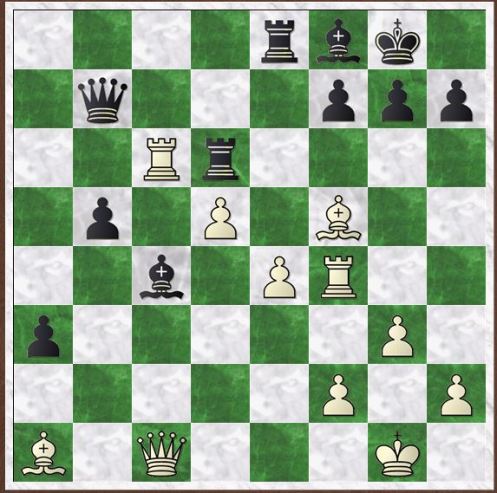
White to play and win
Sakharov v Cherepkov, 36 USSR Chmps, 1968-69
Solution
A nice puzzle, with some good calculation needed. 1 Bh7+! Kh7[] (1…Kh8 2 Rh4 and there is a threat of the same tactic as in the main line: Bmoves+ Rh8+ Qh6+Qg7mate) 2 Rh4+

If 2…Kg6 then 3 Rg4+; if 2..Kg8 then 3 Rh8+! Kh8[] 4 Qh6+ mates next move.

Black to play and win
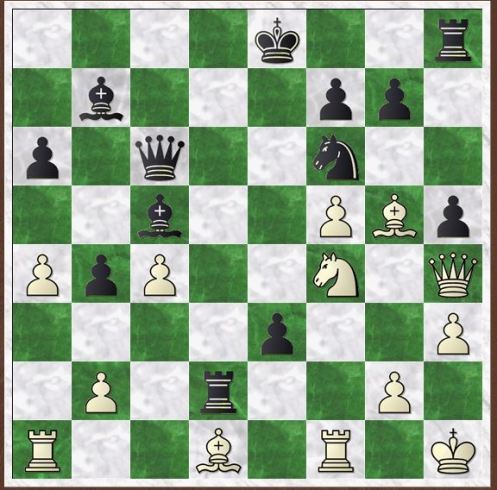
Vujacic v Turunen, Groningen 1968-69
Solution
A good calculation exercise. 1..Qg2+ screams to be played, the only issue to be able to work out all the lines after 2 Ng2[] Bg2+ and either 3 Kh2 or 3 Kg1.
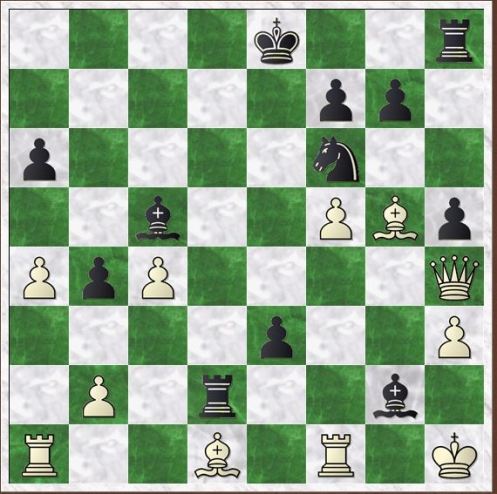
3 Kh2 first: Black discovers with his Bishop, say 3..Bc6+, 4 Kg3 and then cuts off White’s squares with 4…Bd6+; If 5 Bf4 or 5 Rf4 then 5…Rg2 mate; if 5 Qf4 h4+ and Nh5+.
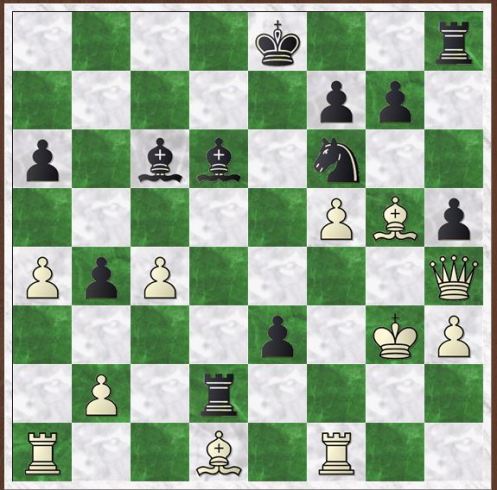
If 3 Kg1, then 3..e2+ is obvious, but after 4 Kg1 not 4…ef+ but 4…e1(Q)+! and 0-1.
White to play and win
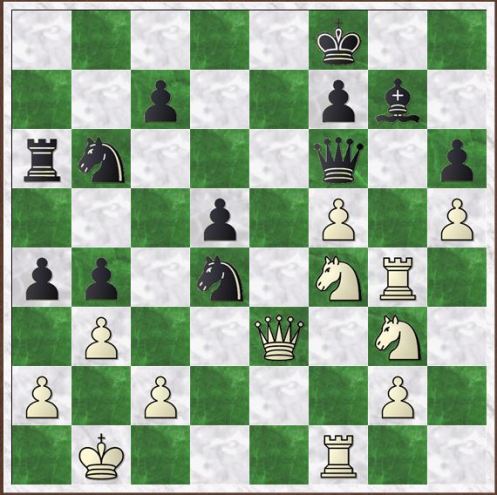
Kurajica- Utjelky, Wijk aan Zee, 1969
Solution
Black has potent threats down the long diagonal, so White needs something decisive, and both 1 Ne6+ and 1 Ng6+ have to be considered. The former is a blunder, losing to 1…Ne6, so 1 Ng6+!

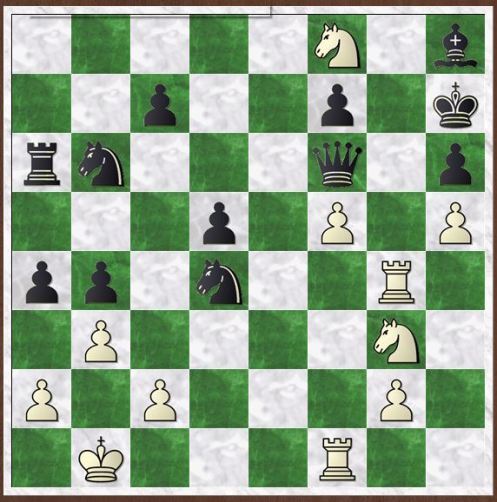
and then the pretty sequence 1…Kg8 (else the f line is opened pinning the Queen and King) 2 Qe8+ Kh7[] 3 Qh8+! Bh8[] 4 Nf8 mate.
 allanbeardsworth