Bank holiday weekend in the Lakes, sun is shining, what could be nicer? Not much, really, this really is one of my favourite places on Earth.
Some months back, I watched a Ray Mears programme on Borrowdale, and found it fascinating. Of course, part of the fascination was working out 'where is he now' but also he taught me several things about our area that I didn't know.
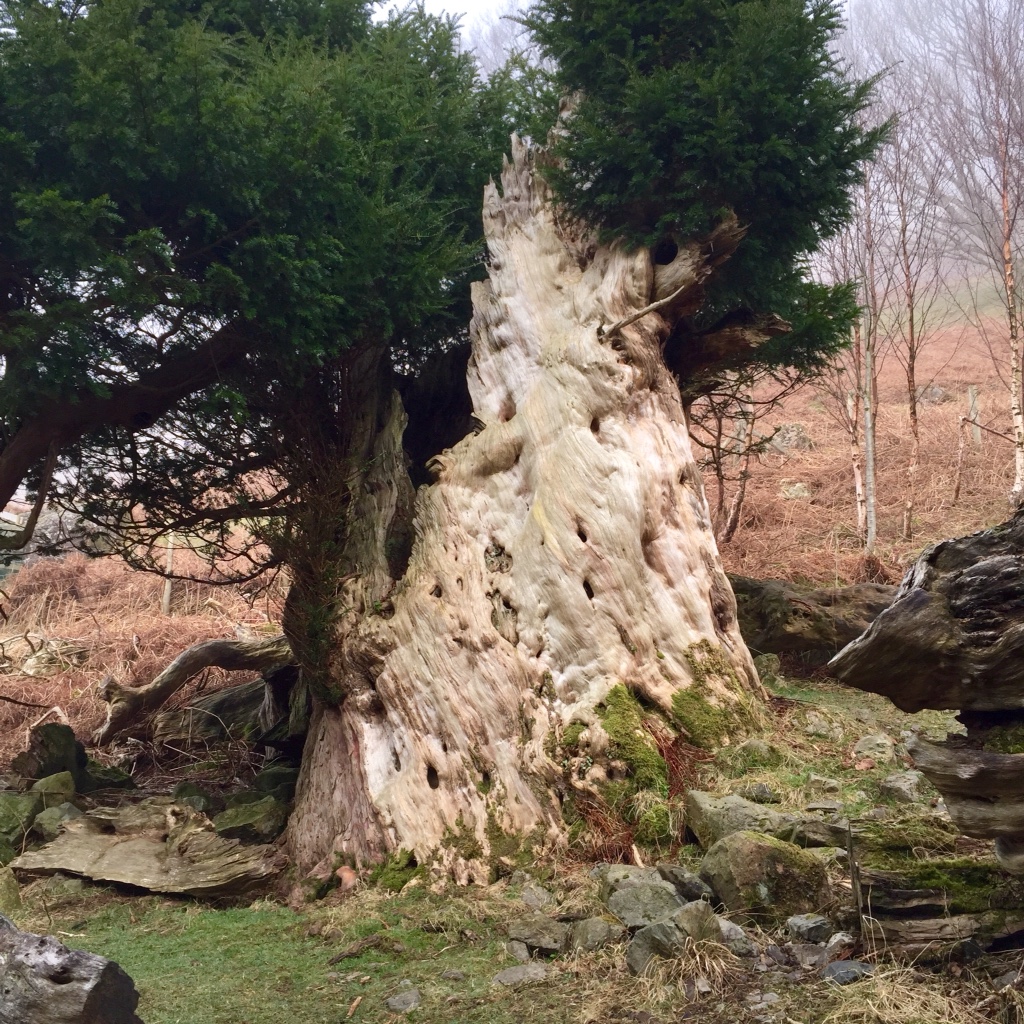
Key amongst them was the existence of the Borrowdale Yews. We have had a cottage in this valley for many years now, never knowing of the existence of these special trees. I had to go to find them.
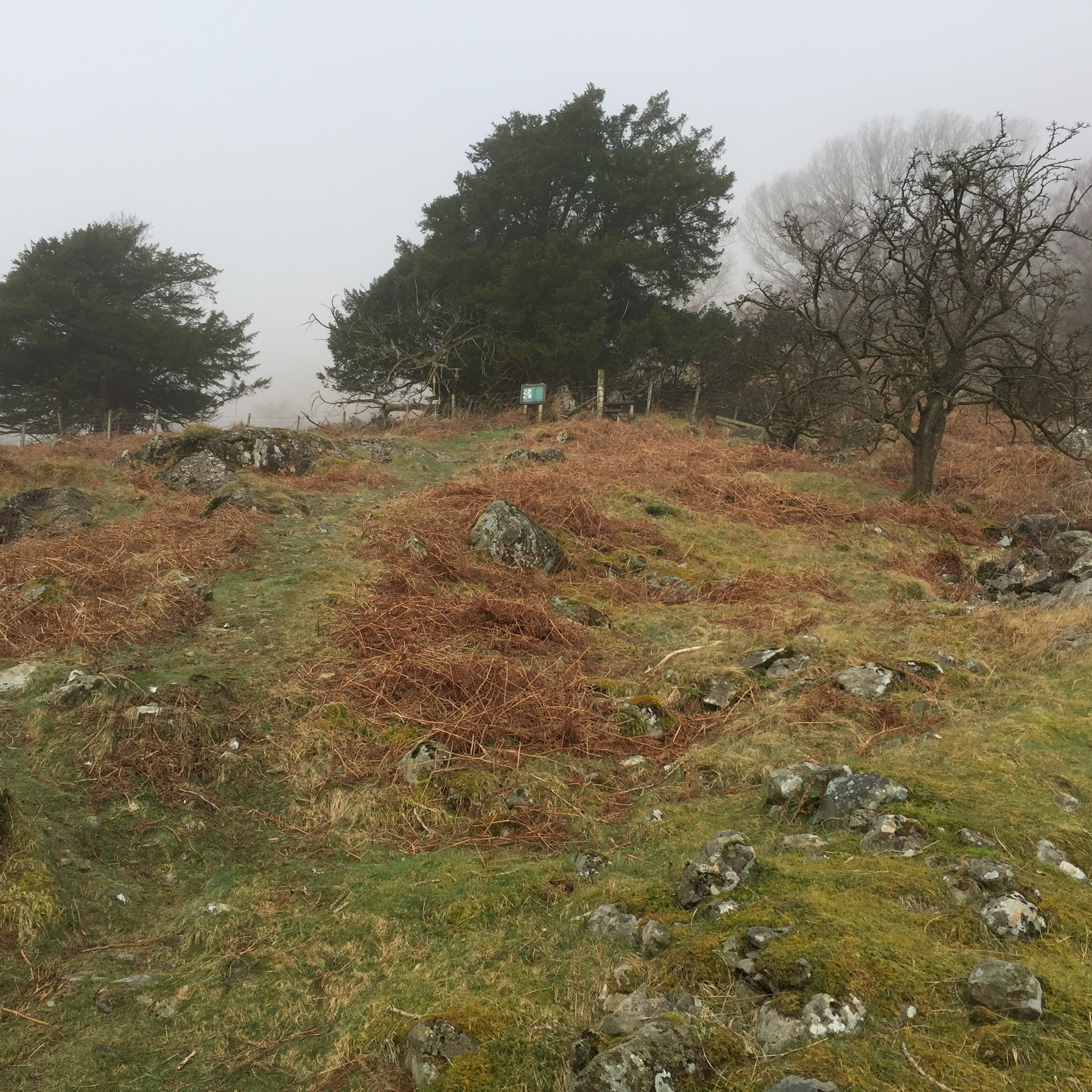
The view up from the river bank
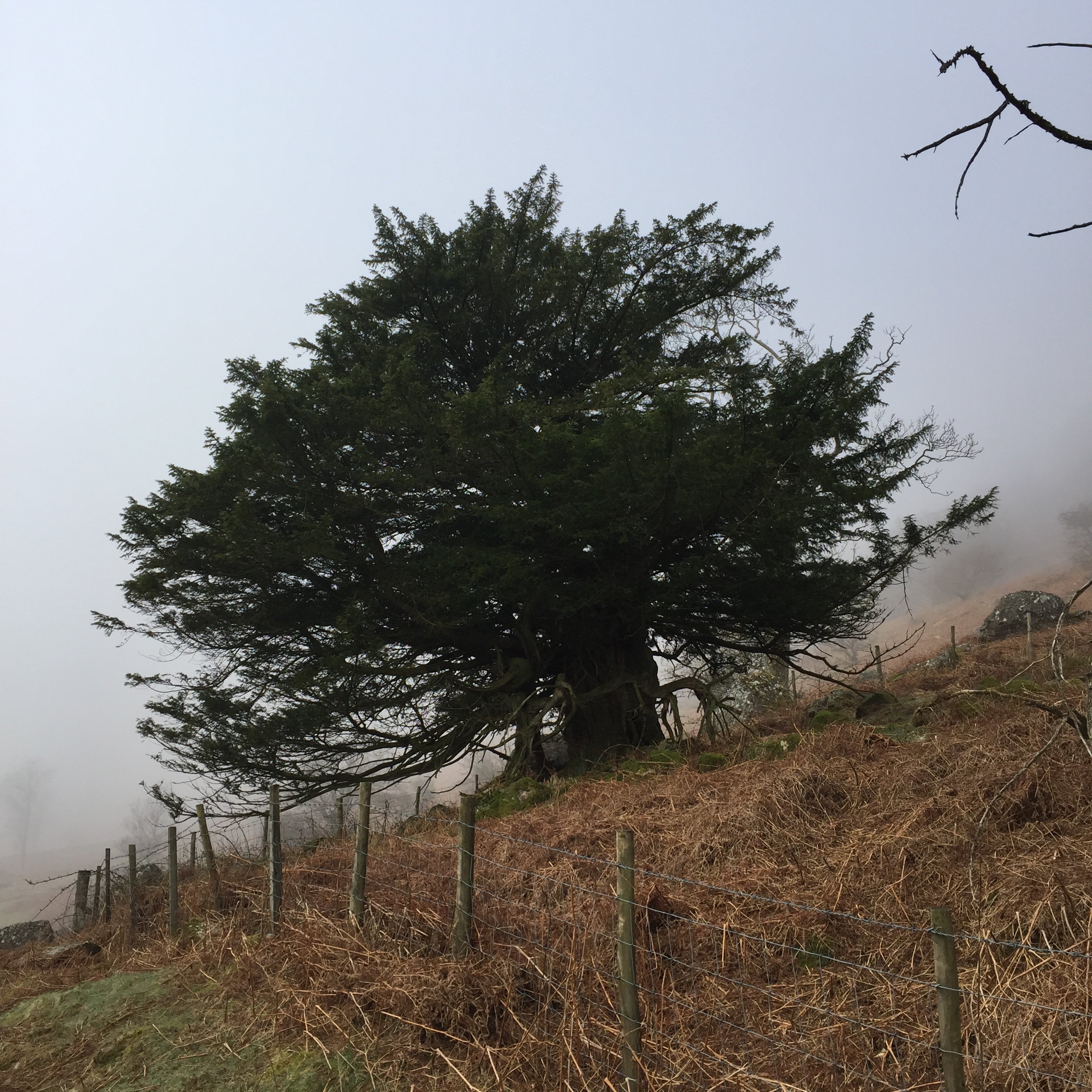
Googling gave some indication, but not a very clear one. So, if others want to find them: turn right at Seathwaite Farm, taking the footpath which starts in the archway between the farm's barns. Cross the river bridge, then turn right, and keep low down, near the river bank, for five to ten minutes. Then, look up, not too far, until a fenced off cluster of trees is seen: these are the Borrowdale Yews, with a green plaque to mark their significance.
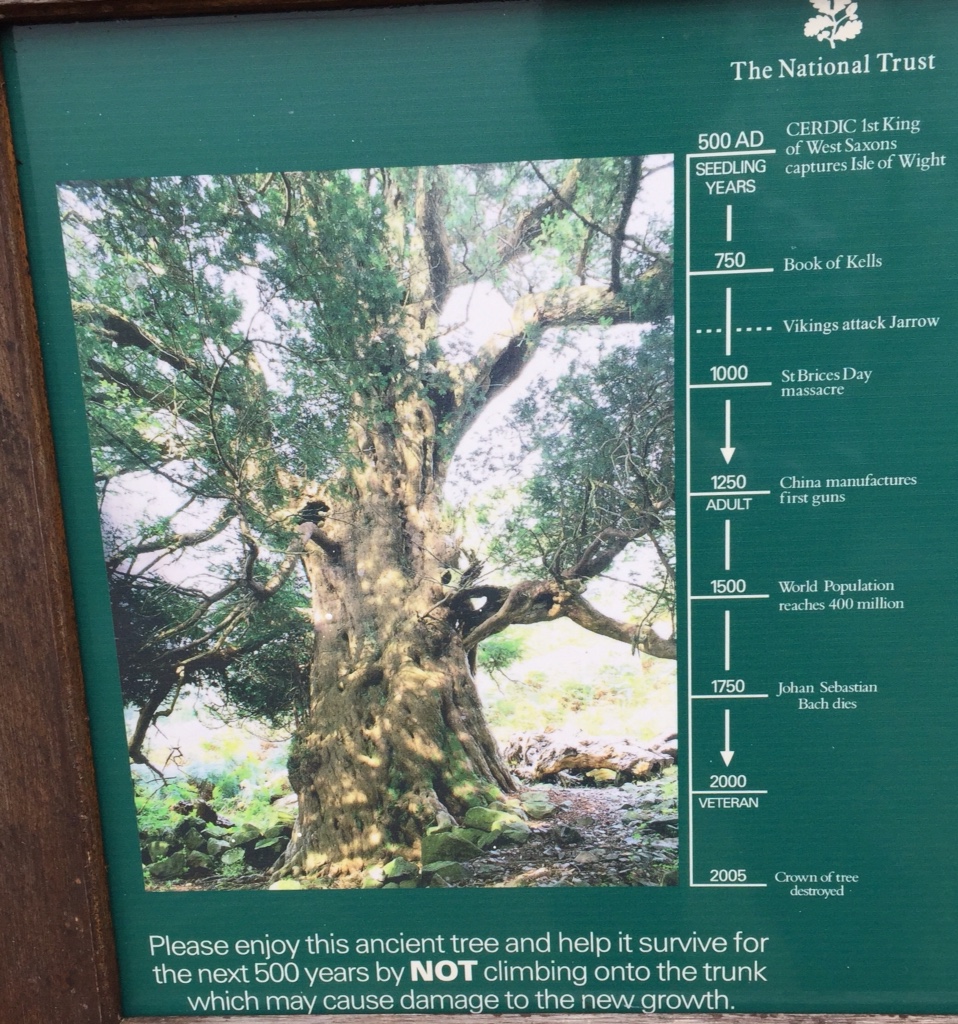
They are said to be sixteen hundred years ago, 500AD. A very special to visit.
 Posted with Blogsy
They are both as cold as each other.
I was browsing through Greg Ross's book, Futility Closet 2 (still part way through it, but a joy to read, just like his first volume) when I came across the brief entry:
–40C=-40F
Surprised, and intrigued, having never thought about it before, I decided to reflect on it. After a while, I realised that the fact that the formula for converting between Celsius and Fahrenheit is linear (multiply by nine firths, add thirty two) is exactly in the same format as y=ax+b, and so I drew the following graph.

The representation of Celsius on the above graph is y=x, the line which goes through both (0,0) and (-40, -40). QED.
Interested, as a result, in temperatures, a quick google found that Gabriel Fahrenheit, a seventeenth century scientist, chose his 0 degrees to be the freezing point of a particular salt and water mix; and 96 degrees to be the temperature under an arm-pit/in a mouth…from which extrapolating 212 degrees was the boiling point of water, and, interpolating, 32 degrees its freezing point. Quite sensible, really, to have something as useful as body temperature to help define a scale.
Black to play and win
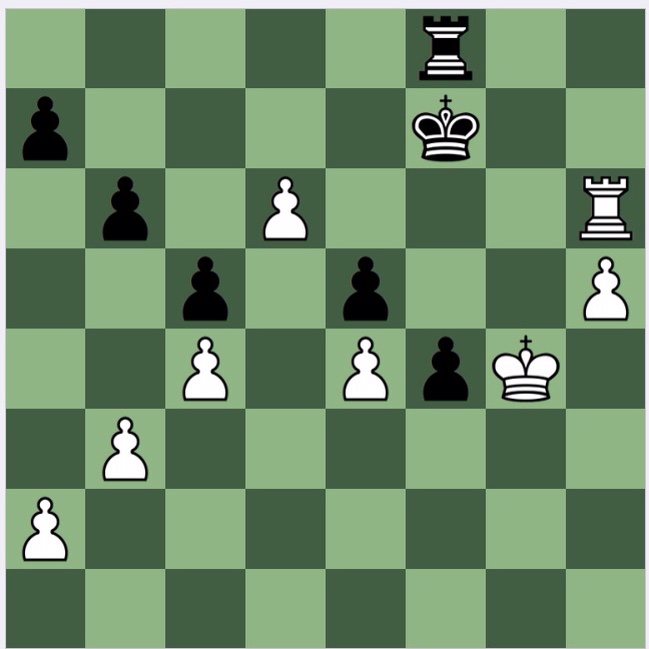
Petrosian v Korchnoi, Moscow 1963
Solution
1…f3! is a better move order than the natural 1…Kg7, met by 2 Rg6+; after 1…f3 if 2 Kf3 then 2…Kg7+ wins the rook.
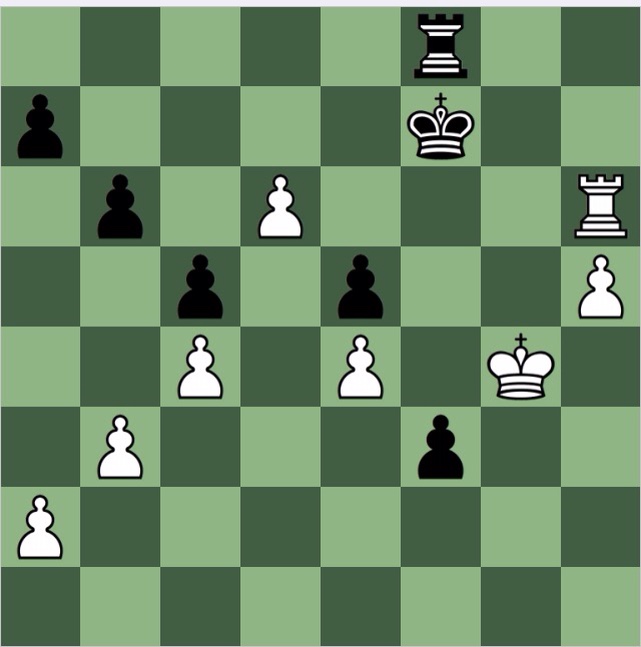
White to play and win
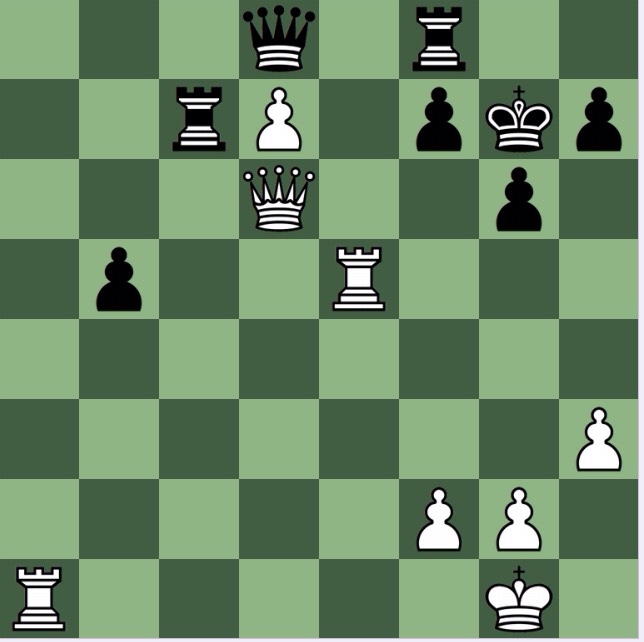
Pavdidis v Koksal, Kavala 2013
Solution
This puzzle isn't from Teschner's book, but was one seen in Malcolm Pein's Daily Telegraph column. When, as here, I find a problem which appeal to me, I will sometimes use it, publishing from Teschner the next day.
Today's problem is a beauty.
Too hard for me to solve on inspection, I tore the position out, and took it on my daily dog walk: the dog got good exercise today, until I had the eureka moment. At first, I got stuck on trying to make 1 Ra8 work, it taking me a long while to see that black has the easy zwischenschach 1…Rc1+! And then I looked at 1 Re8 Re8 2 Qc7?, again thinking I was clever for a while, until I saw the zwischenschach 2…Re1+!; and then, despairing, 2 de(N)+!! came to me.
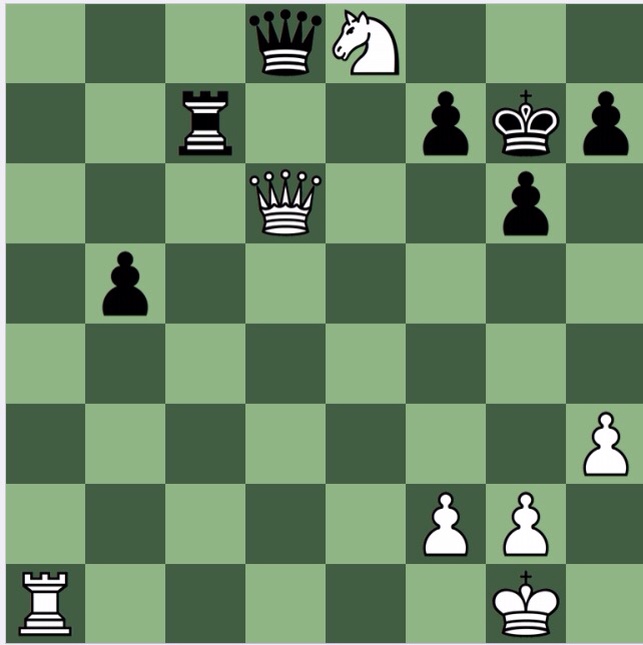
Black to play and win, after white plays 1 Nd4?
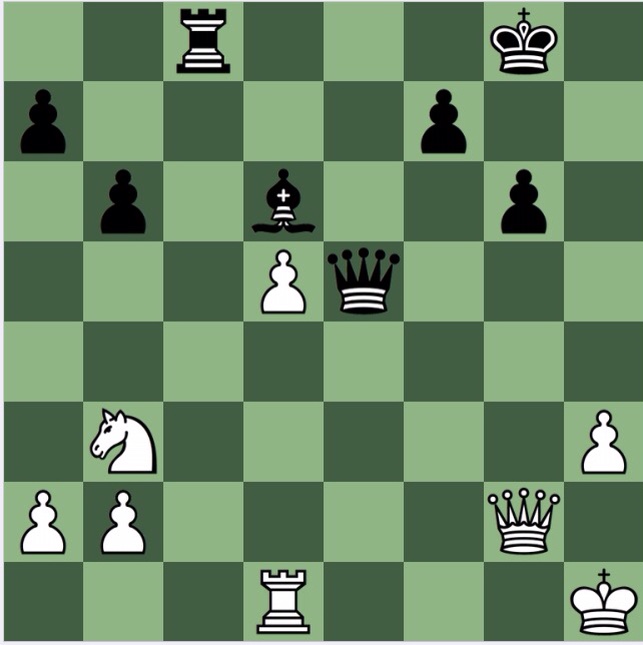
R Teschner v P Keres, 1960
Solution
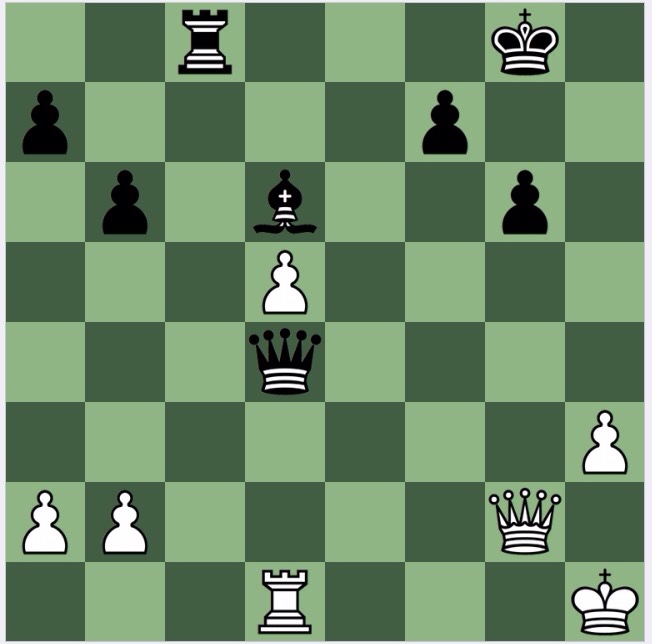
Not too hard today: 1…Qd4 (examine all biffs) and if 2 Rd4 Rc1+ wins the house…the humourous point being that if 3 Qg1 then 3…Rg1+ 4 Kg1[] Bc5 skewers the R and K.
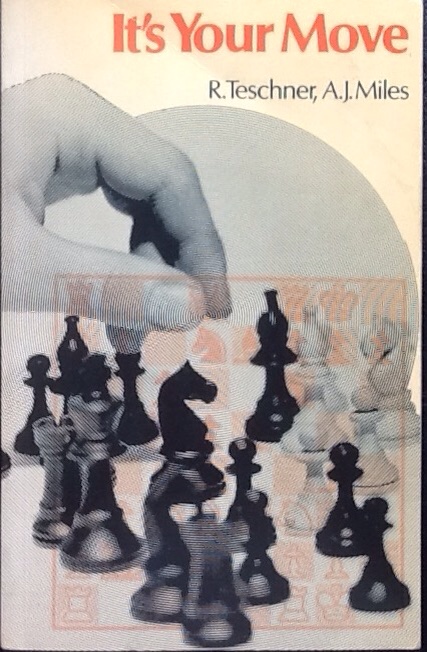
After a short pause of a few days, whilst I decided which puzzle book should be my next series, having finished Leonard Reitstein's second book of South African puzzles, I have now chosen. I wanted a pre computer era, out of publication book and have chosen the 1976 edition of It's Your Move, by Rudolf Teschner and the late, great, Tony Miles.
From the book's preface, Rudolf did the lion's share of the work- 316 of the puzzles were from his 1972 German edition with others added by him later, with Tony adding 28. But it really doesn't matter who provided them, a puzzle is a puzzle.
I only played Tony, Britain's first Grandmaster, once, and played miserably. Still, it had a nice finish, which is today's puzzle. I will start blogging the book's positions tomorrow.
Black to play and win
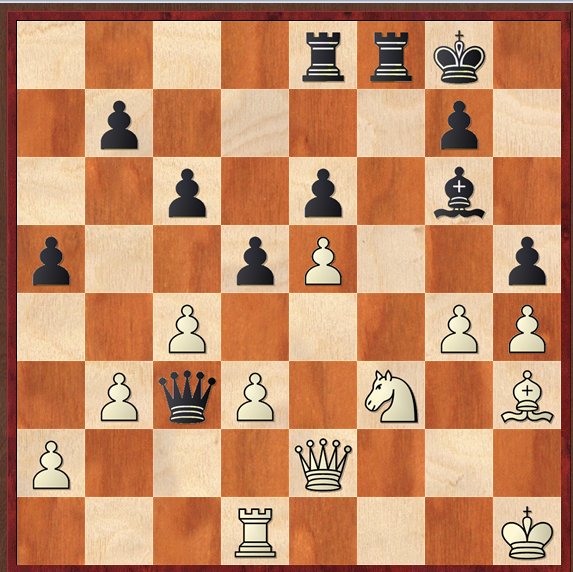
Allan Beardsworth v Tony Miles, 1984
Solution
1…Rf3! 2 Qf3 Be4! and the LPDO queen drops off.
Black to play and win
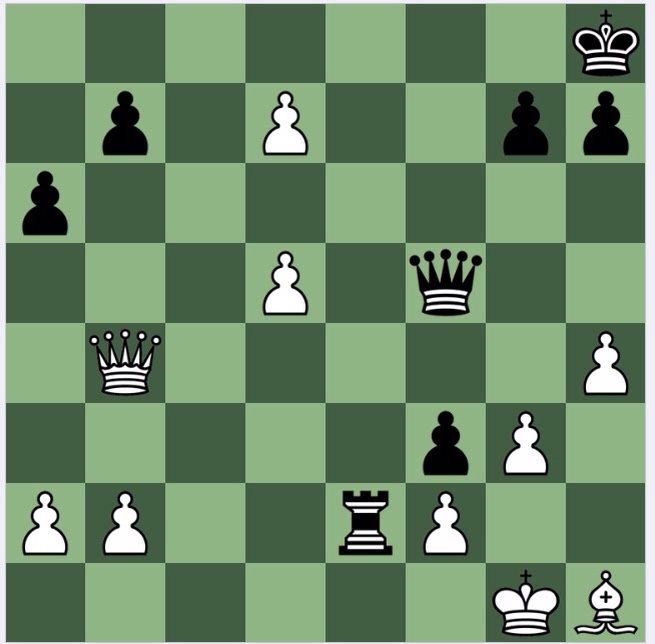
Gata Kamsky v Judit Polgar, Buenos Aires, 1994
Solution
I am presently half way through volume 2 of Judit Polgar's autobiography; the second volume, 'From GM to Top Ten' is superlative.
Every few chapters, she has a break with a few puzzles, all of which I would assess as difficult. This particular one troubled me so much that I had to set the pieces out on my board, and solve it formally, resisting the temptation to move the pieces. Eventually, I had the 'eureka' moment, and very satisfying it was, too.
1….Qb1+ 2 Kh2[] Rf2+ 3 Kh3[] and now black has enough time for 3…h5!
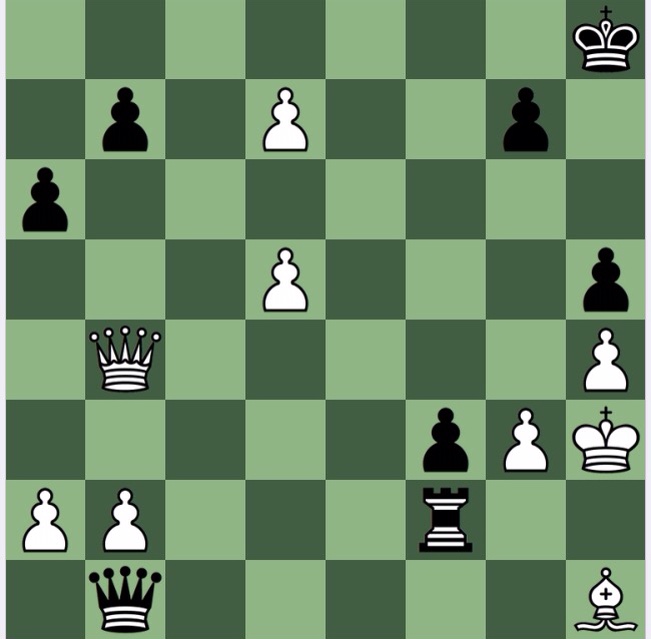
…and the precise layout of the pieces means that white's two queens can't contribute to the defence. White might as well queen his pawn, 4 d8(Q)+ Kh7 and then his only try is 5 Bf3, but 5…Qf1+! is game over. Very nice.
Note that 1…h5? fails to promoting the pawn followed by 3 Bf3 Qf3 4 Qdb6 protecting everything.
Black to play and win
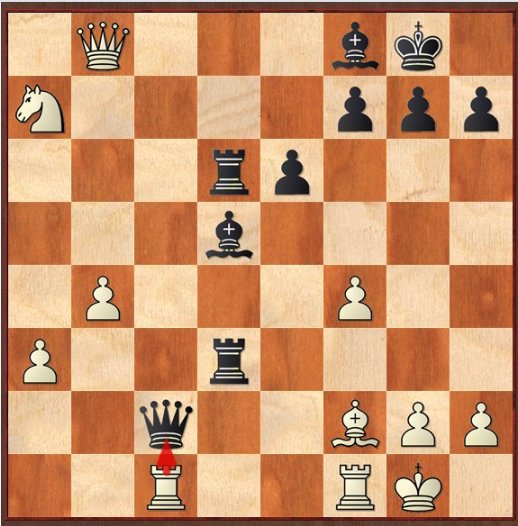
Richard Palliser v Jon Shaw, 4NCL 15/2/15
Solution
My favourite move of the year, favourite finish of the year; so far. The lovely 1….Rg3!! is a perfect example of Purdy's maxim about threats. (See also this posting about Purdy in general)
Imagine the threat could not possibly be executed. Then what would be by best move? Try out each attractive move…visualise the whole position…after this move of yours, and then work out whether the opponent would gain by executing his 'threat'.
So, 1…Rg3!! and if the rook is taken, 2 hg Qe4 mates, or 2 Bg3 Qg2 mate, or if the queen is taken, then 2…Rg2+ 3 Kh1 Rg3 mate. Richard sportingly played 2 hg allowing the prettiest of the finishes, 2…Qe4.
The Silent Sicilian
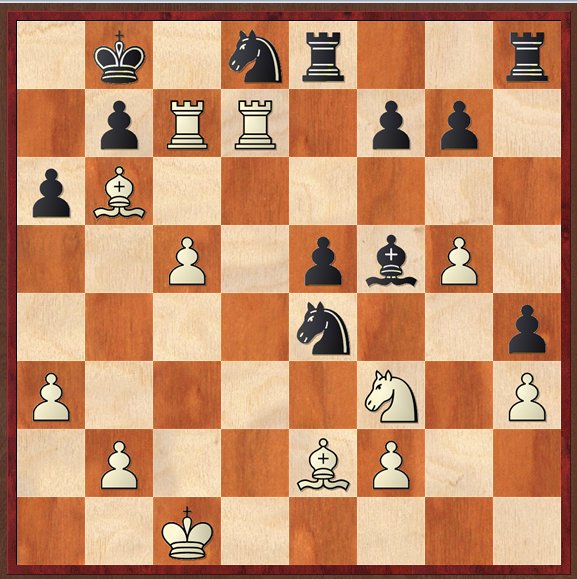
Black has just played 1…Qb4; what is his threat?
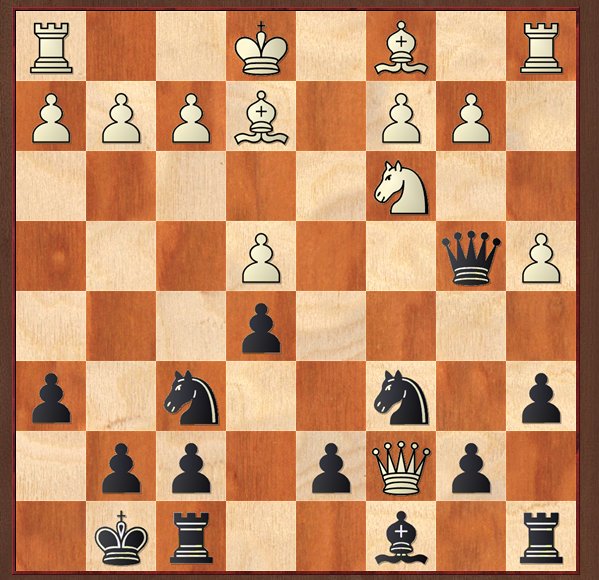
Judith v allanbeard, Playchess 3-0, 1/5/15
Solution
I am a big fan of Andrew Martin’s YouTube videos, which I learn about from following Andrew on Twiter @AMartinChess. I don’t watch them all, time is too short, but those that I do, I always find interesting. Andrew has a great presentation style, too.
One I did catch was an opening I had never heard of, a move I had never contemplated, which he has christened the Silent Sicilian, namely 6…h6 rather than entering the Sveshnikov.
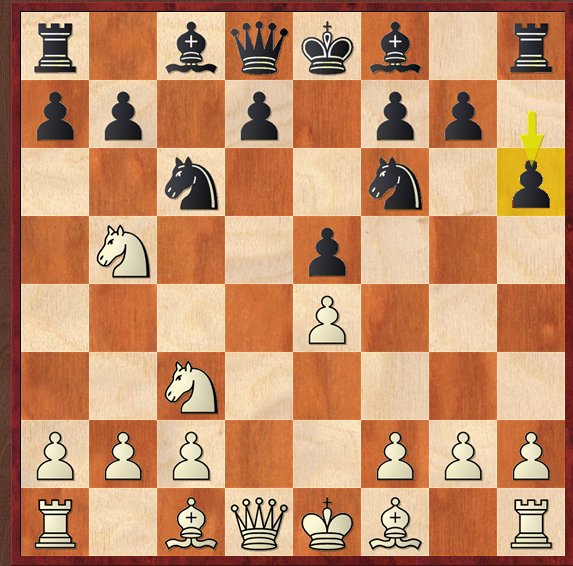
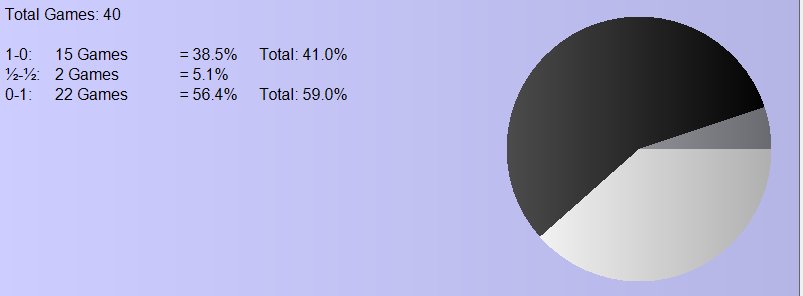
He rightly says it is only for ssurprise, not a main defence, but something about it appealed to me. Yes, if white knows what he is doing black faces the worse of equality, but in the forty 3min blitz games I have played with it since watching the video in mid April, I have a good plus score:
Most people play 7 Nd6+ Bd6[] 8 Qd6 Qe7 and then the queens come off, but in today’s problem game white played 9 Qc7, resulting after a few normal moves in the game position. Black threatens Ne4 because of the pin, and in the game white castled, maybe planning Nd5 if I captured the e4 pawn, but (1 0-0) 1…Ne8! traps the queen.
White loses a piece.
—
Back to the statistics: despite winning a piece as above, I lost the game; that’s blitz; but a few days later I played Judith again, when she exchanged queens, and beat her. So honours even.
White to play and win
Allanbeard v Aegalaivan, Playchess 13/5/15
Solution
Yesterday my puzzle was from the Playchess Wednesday afternoon blitz tournament of a couple of weeks ago; today's is from this week's tournament, which I also managed to (in this case) tie for first on- a rescue effort, having had a disastrous early round loss and another poor early draw – a two pawn Swiss Gambit.
By contrast, the finale for this position was harder than yesterday's puzzle, and, I think, prettier. 1 c6! the idea of which is after 1…Bd7 there is 2 cd with a nice version of Purdy's potassium cyanide (a double attack on Re8 and Rc8, the latter being mate. So Black must either take the pawn with his N, when white's rooks chomp away on the seventh rank pawns, or play as in the game, 1…bc when 2 Ba7+ Ka8[] 3 Rc8mate.
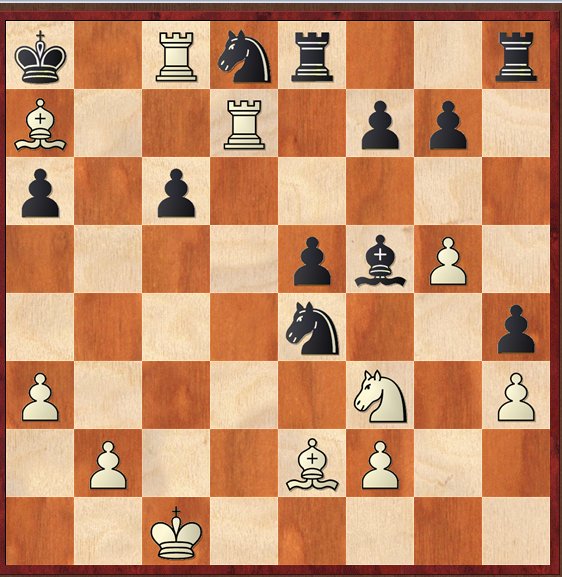
I like pattern, with both white's rooks being unprotected and one being attacked.
(a small detail: if 1…Nc6 then best is 2 Rf7 gobbling up the f and g pawns, rather than 2 Rb7+, which is more natural, but leads to messiness after the Nd6 pin: 2…Ka8 3 Rf7 Nd6 4 Ba6 Bc8 with more or less equality).
 allanbeardsworth