There is a first time for everything, and this Christmas I have been the judge of a cake baking competition. Not that either baker knew they were competing.
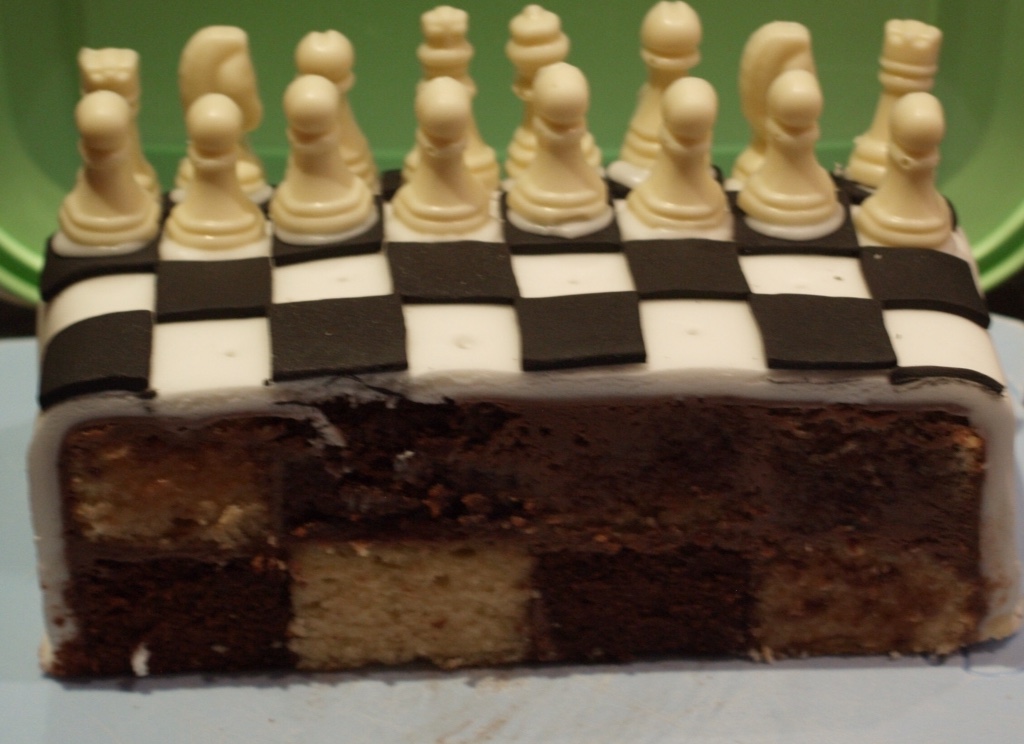
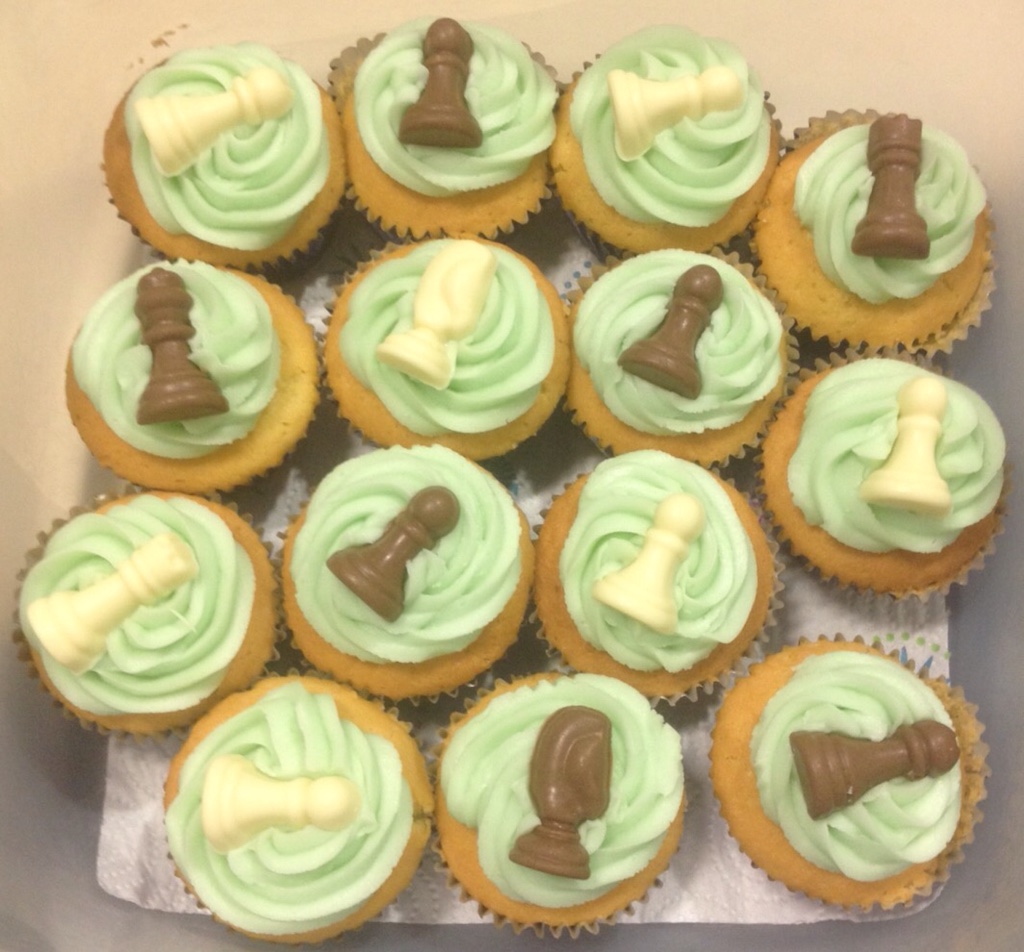
The two finalists were: a well known bakery/cake shop in Manchester, and a Deloitte colleague, Fallon Nolan. Fallon will be one of my most missed colleagues when I finally retire from Deloitte in a couple of days' time, since she is always baking for us (her caramel shortbread being my favourite).
——
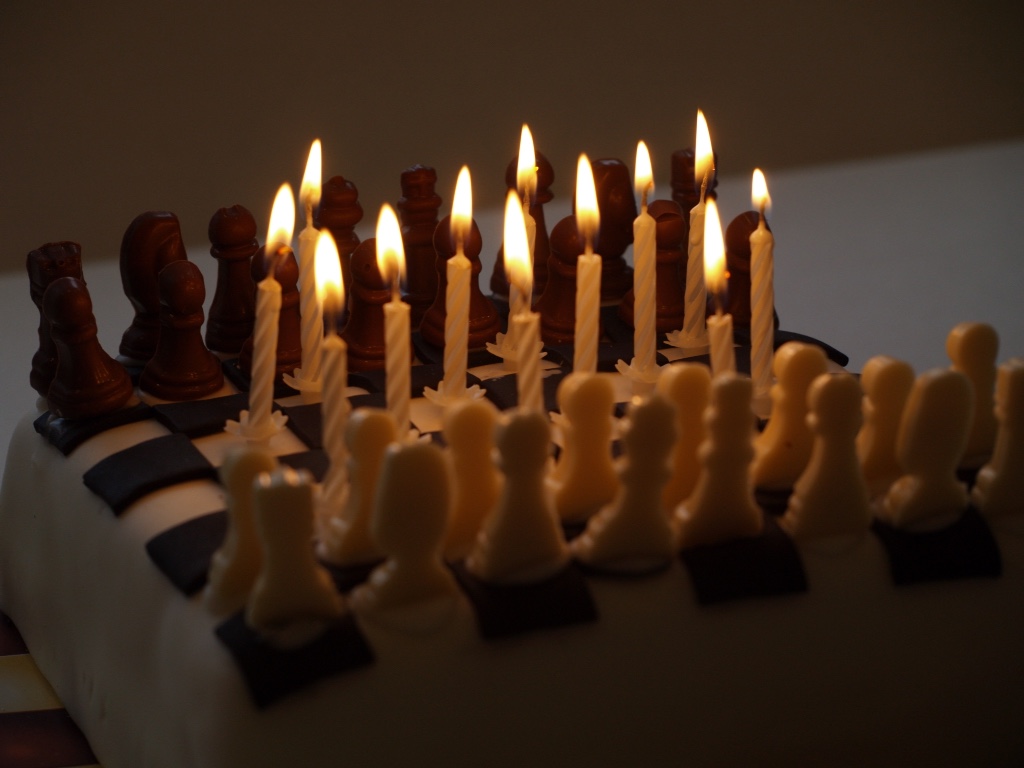
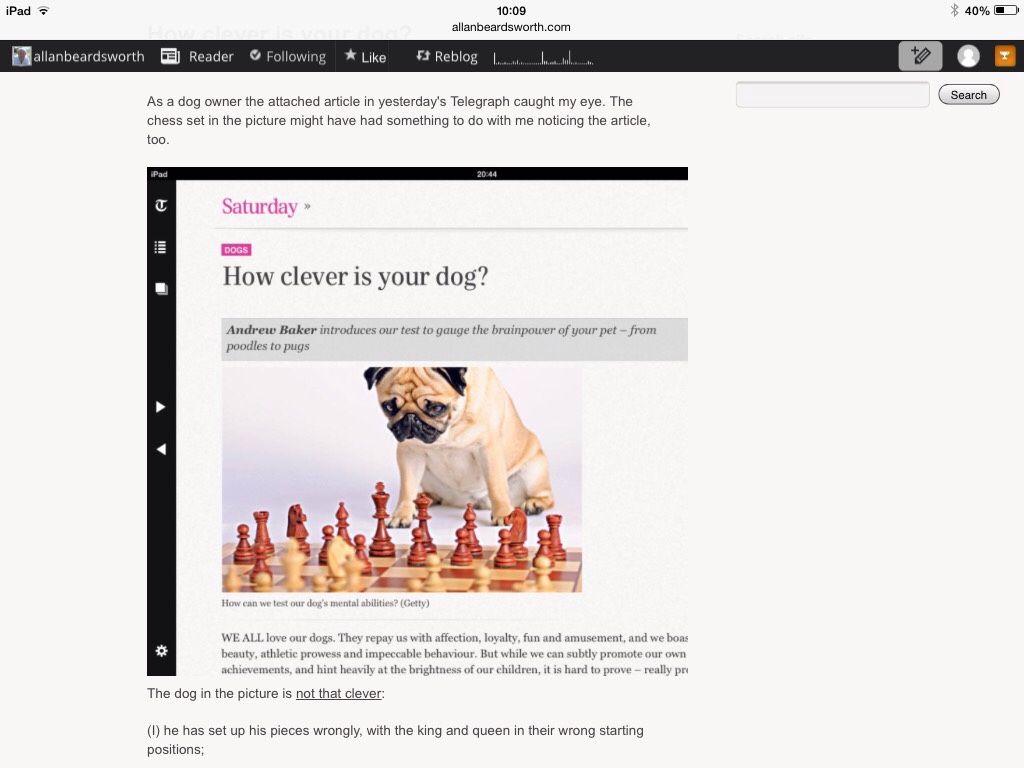
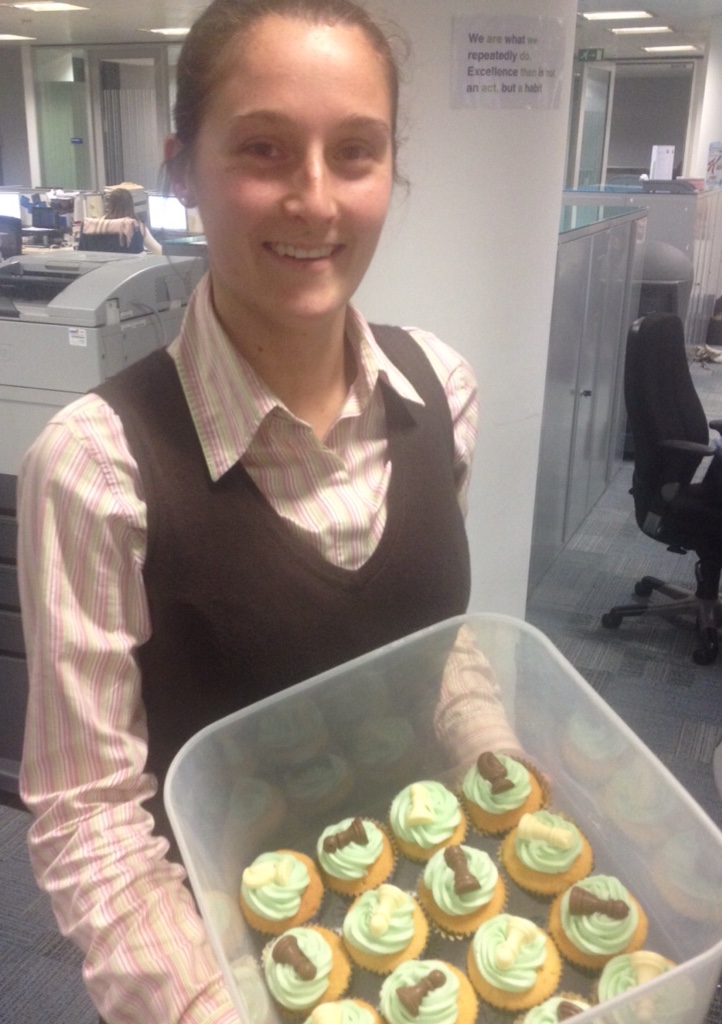
Somehow, my colleagues know that I have a slight interest in chess. First up, as a present after my leaving speech I was given this wonderful cake made by the (un)said well known bakery.



 Posted with Blogsy
White to play and win
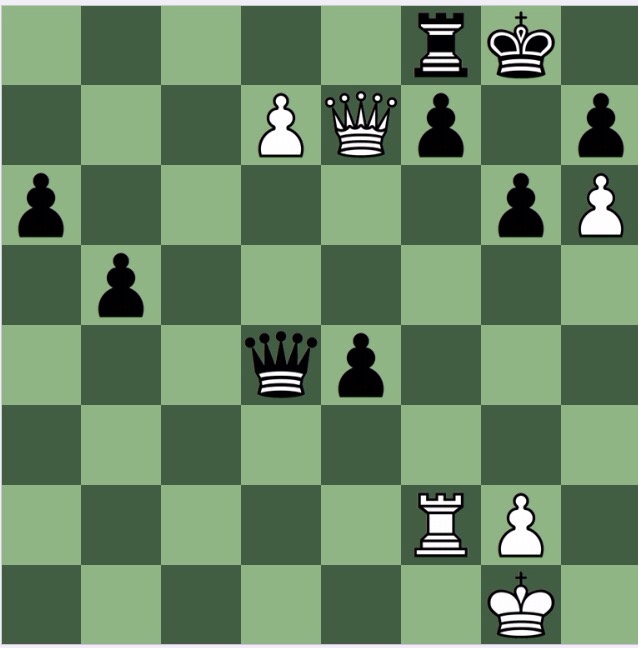
D Morschel v P Kroon 1963-64
Solution
This puzzle took me one standard British unit of time, namely the time it takes to brew and drink a cup of tea, to solve. At first I couldn't see how to break through.
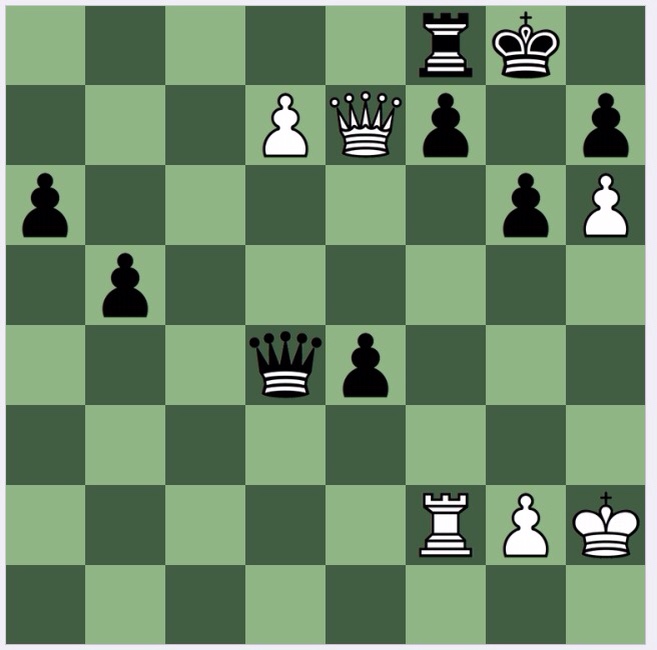
1 Kh2! frees the Rf2. If it is captured, 1…Qf2, then 2 Qf8+! Kf8[] 3 d8(Q) mate. If 1…e3 (say) then 2 Rf7! Rf7 3 d8(Q)+ wins. Finally, if 1…Qd5 (as played) then 2 Qf6 and there is no perpetual: 2…Qh5+ 3 Kg1 Qd1+ 4 Rd1 and there are no more checks.
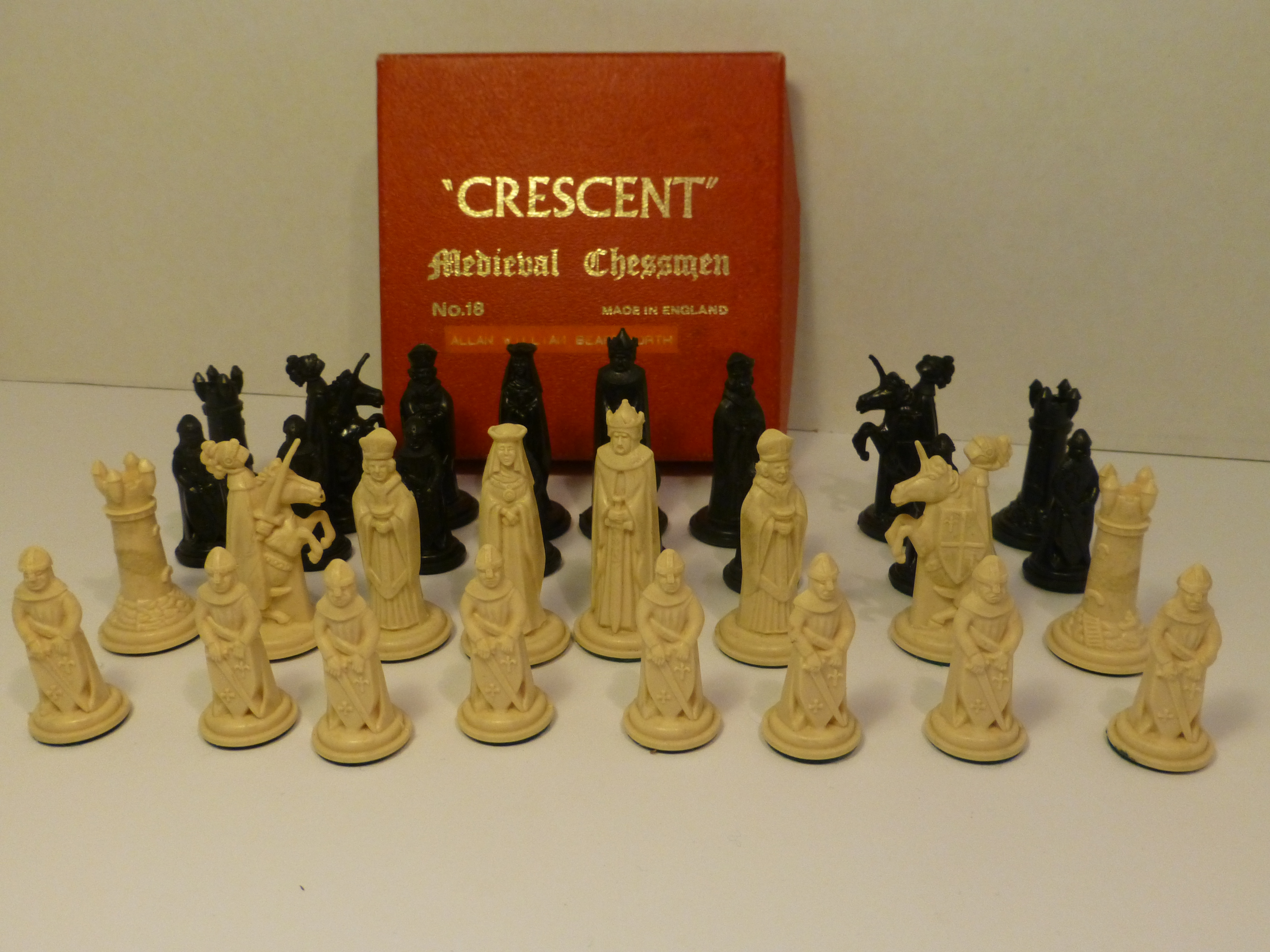
This is an occasional series of postings inspired by a brief discussion on the flight home from Turkey this summer. The flight attendant saw I was reading a chess book (quelle surprise) and, just making polite small talk, said she also liked playing chess, saying that depending on whether other crew members played, she would play on stopovers. Later in the flight she asked me if I had a chess set at home…and that set me thinking. How many chess sets do I have? And since then number is, well, shall we say, quite high, I thought I would blog about them especially those which ‘mean something to me’.
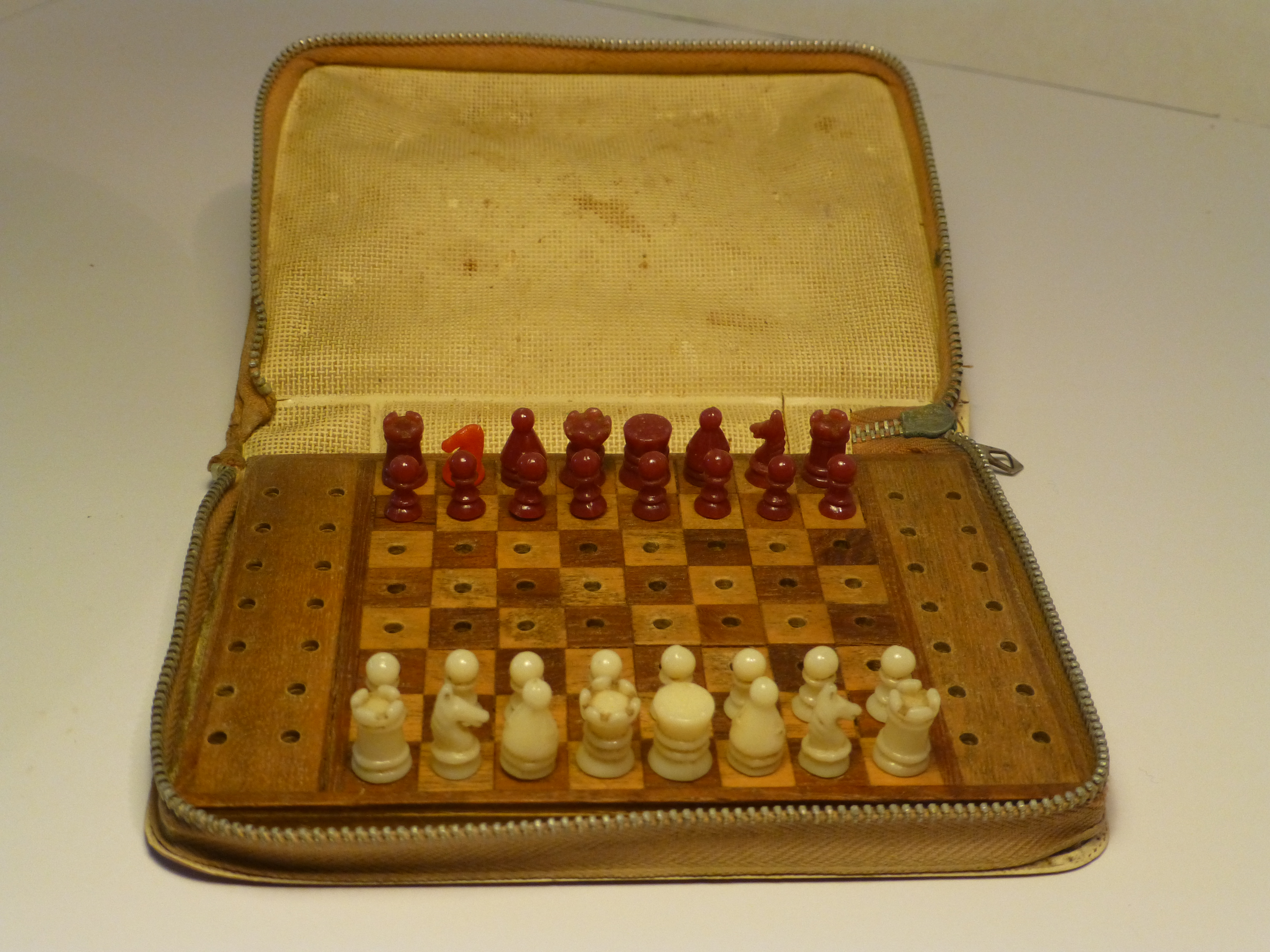
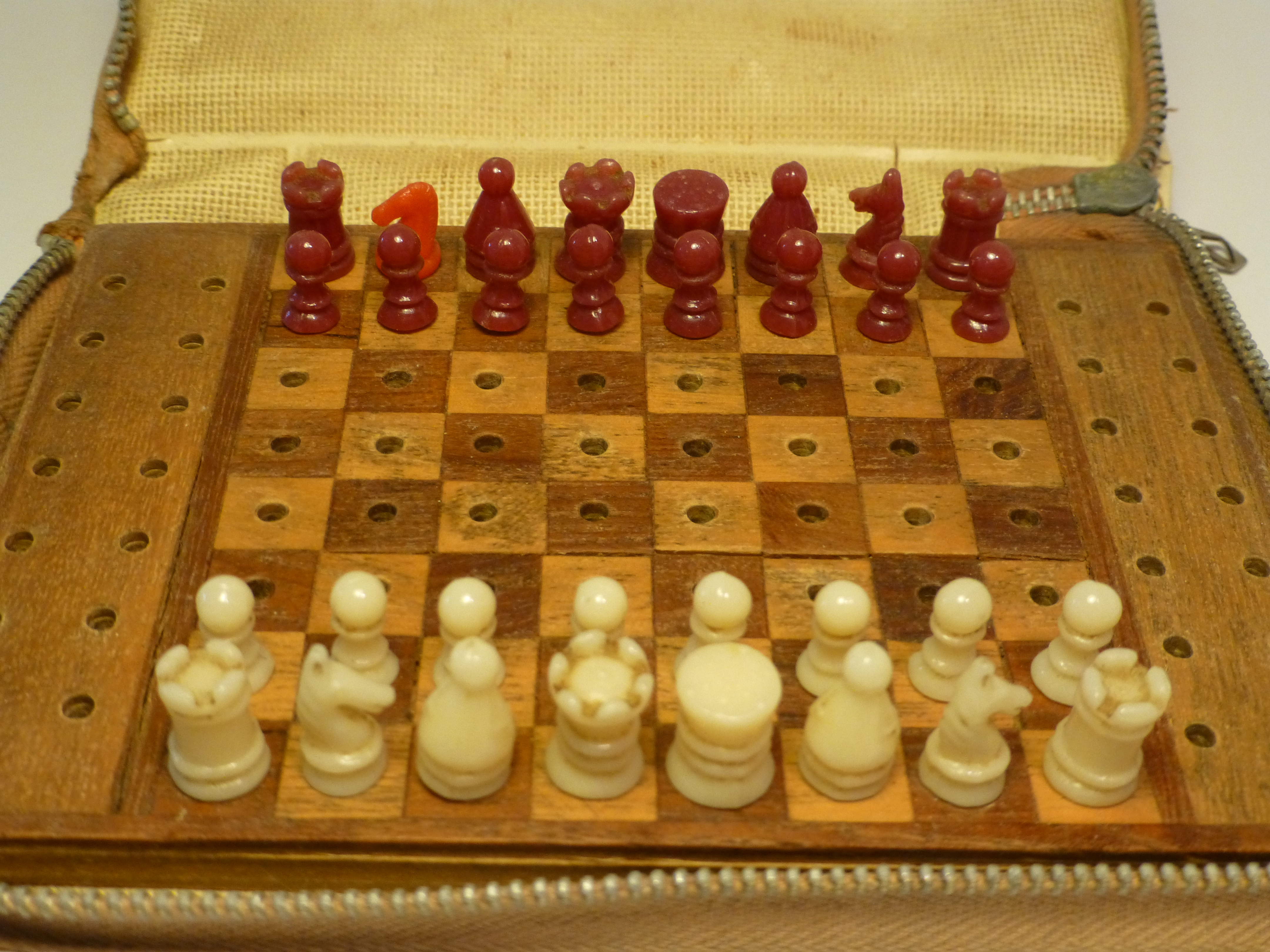
My first pocket set
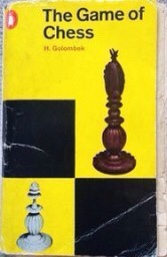
This is an occasional series of postings inspired by a brief discussion on the flight home from Turkey this summer. The flight attendant saw I was reading a chess book (quelle surprise) and, just making polite small talk, said she also liked playing chess, saying that depending on whether other crew members played, she would play on stopovers.
Later in the flight she asked me if I had a chess set at home…and that set me thinking. How many chess sets do I have? And since then number is, well, shall we say, quite high, I thought I would blog about them especially those which 'mean something to me'.
Where better to start this series than with my first set?
White to play and win
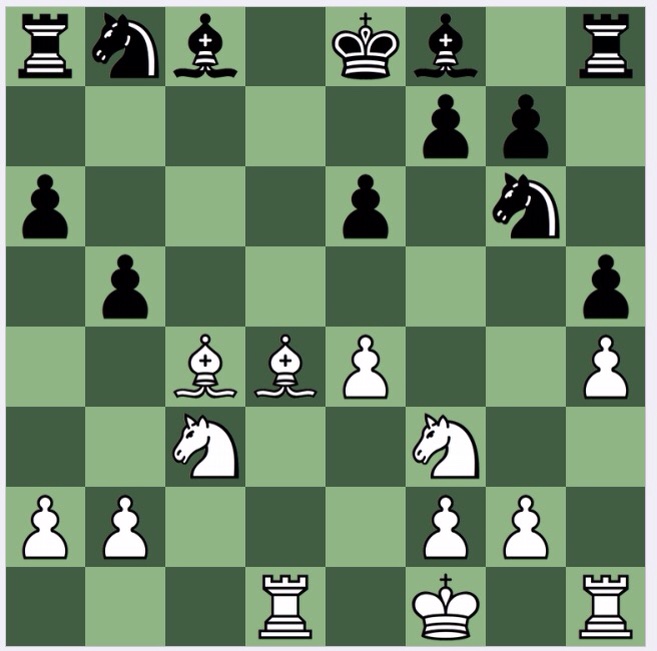
C Meiboom v PE Van der Walt 1986
Solution
I first took a journey down the wrong path, trying to make 1 Bb5+? work, but it doesn't: 1…ab 2 Nb5 Ra2 3 Nc7+ and now not 3…Ke7, which I liked, seeing 4 Bc5+ Kf6[] 5 Ne8 mate, but 3…Kd7 kills the fun.
Then, I quickly tried 1 Nb5? which is just as bad, before finding the right move, 1 Nd5 and white wins material: if 1…ed 2 Bd5 and the Ra8 drops off.
White to play and win
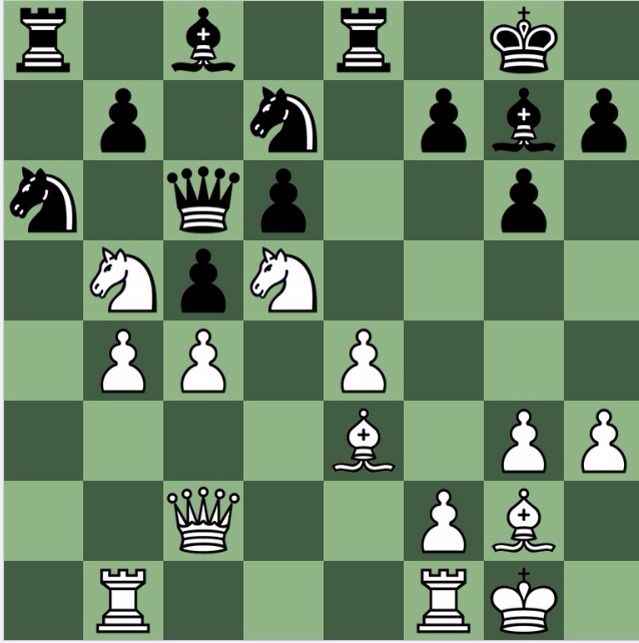
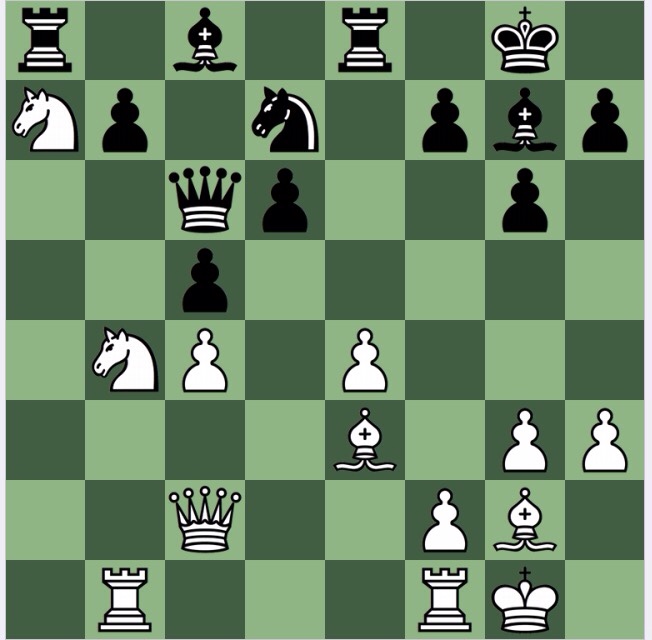
Black to play and win
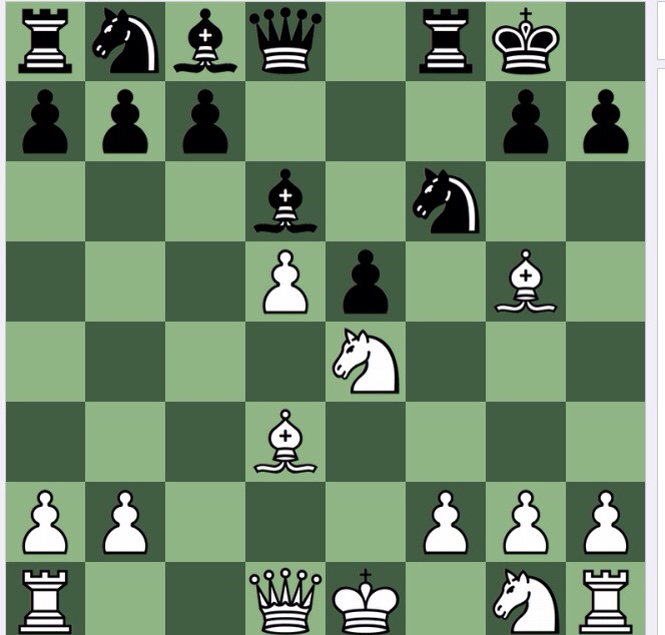
A Memmel v I Peenz 1985
Solution
A nice calculation exercise today. The first move, 1…Ne4!, is obvious, and, even if it weren't , would need to be looked at because of examine all biffs.
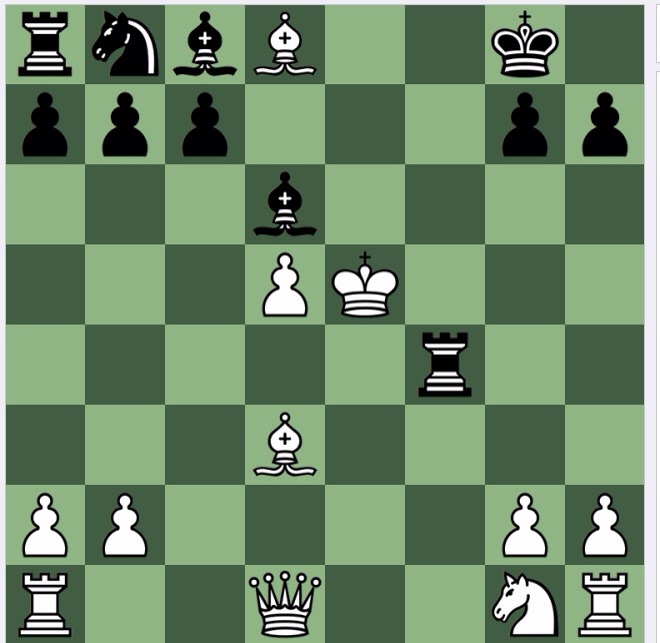
White must take the queen, after which 2..Bb4+ 3 Ke2 Rf2+ 4 Ke3[], but is it mate?
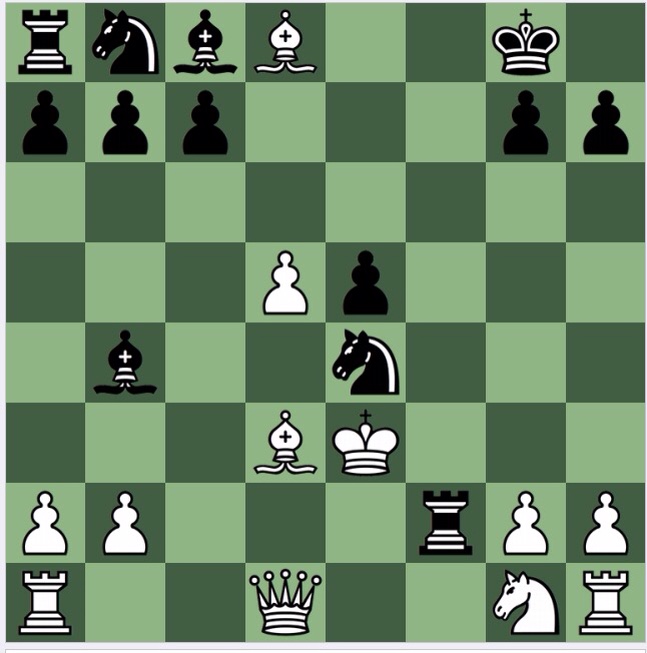
A quick further piece of calculation proves it is: 4…Bc5+ 5 Ke4[] Rf4+ 6 Ke5[] Bd6, a sort of staircase mate with rook and bishop.
White to play and win
D Gluckman v R Gwaze 2000
Solution
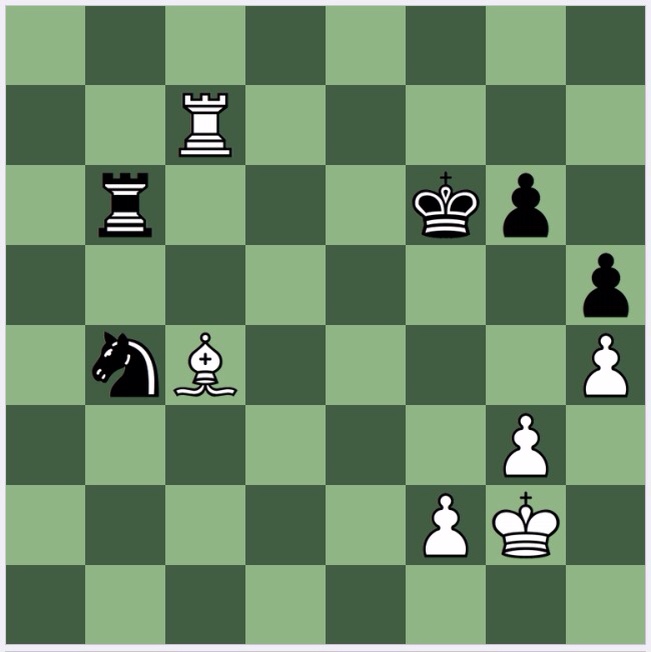
A rest day today: 1 f4 and black's king is in a mating net.
If 1…Kf5, 2 Kf3, and the net is preserved, one line being 2…Rc6 3 Rf7+ Rf6[] 4 Rb7 and if the N moves, 5 Rb5+ 1-0.
White to play: is it won or drawn?
AJ Cameron v H Meihuizen 1910
Solution
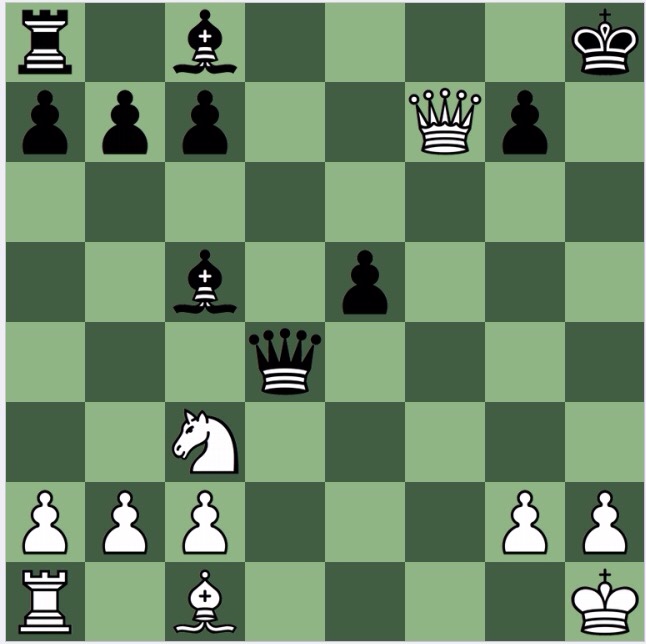
In the game, white repeated by 1 Qh5+, 2 Qh5+, with a draw: which, if I were white, I would do too, fearing that if I tried to play for a win, then I would risk losing, especially given black has many defences.
Reitstein says that close analysis at the time convinced everyone that white could have won by 1 Bh6! which of course is the natural try. I was put off from 'playing it' (I try to mirror, to the extent I can, the thinking in a game when solving these daily puzzles, though of course it is not fully possible) by 1…Qd7, thinking that it wasn't clear after 2 Bg7+ Kh7[].
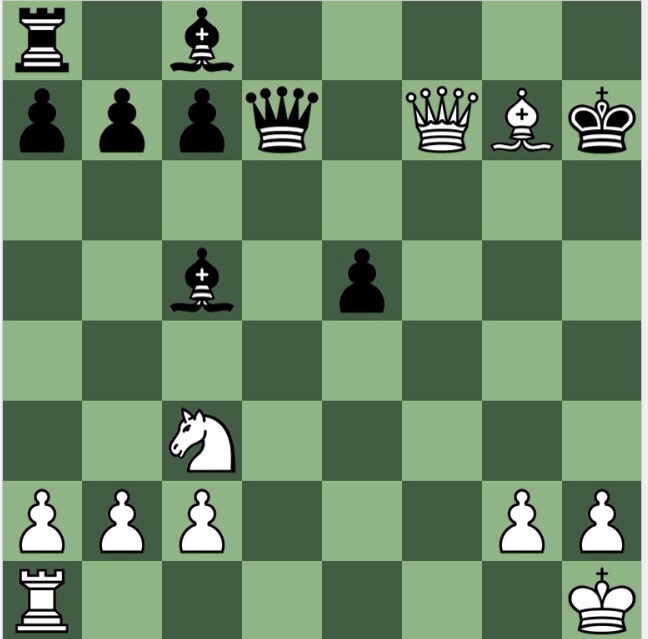
However, Stockfish tells me that white is clearly winning (+6) after 3 Qh5+! Kg7 4 Rf1!
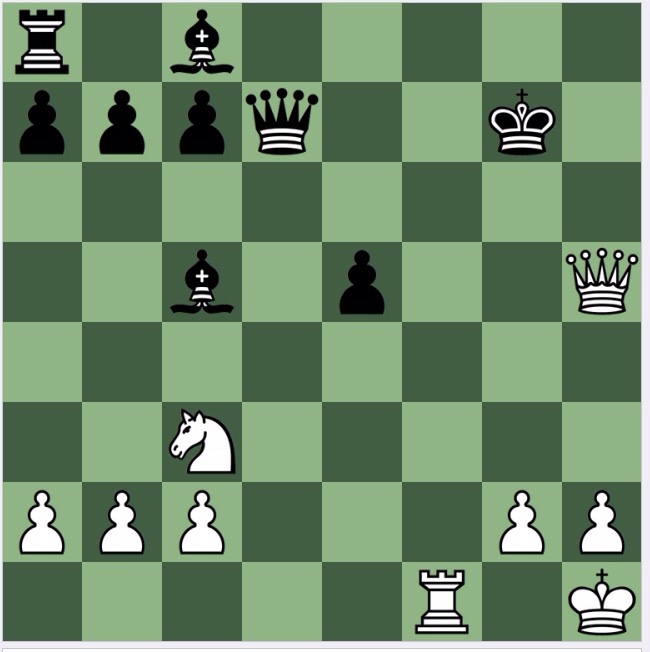
At first blush, that this is so seems extraordinary, but by looking at the positron, the reasons became apparent. Black's rook and queen's bishop are out of play; the Bc5 is LPDO; the N can come to e4; if the Bc8 develops on e6, then the e5 pawn drops off…black does indeed seem to be lost.
Back to the main line: 1 Bh6 gh 2 Qe8+ Kg7 3 Rf1:
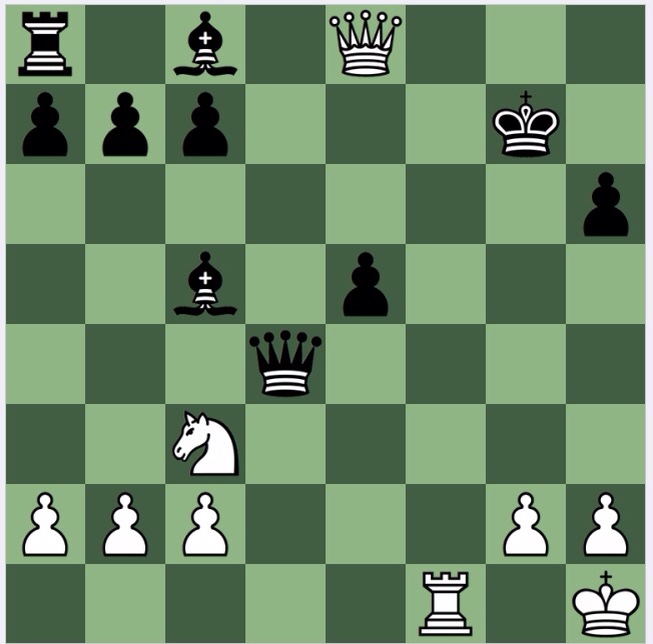
Reitstein says that at the time, white's threats were thought to be overwhelming, so that the conclusion was that white was winning, until this century (the book was published in 2005) Fritz found 3…Bh3!! with a draw:
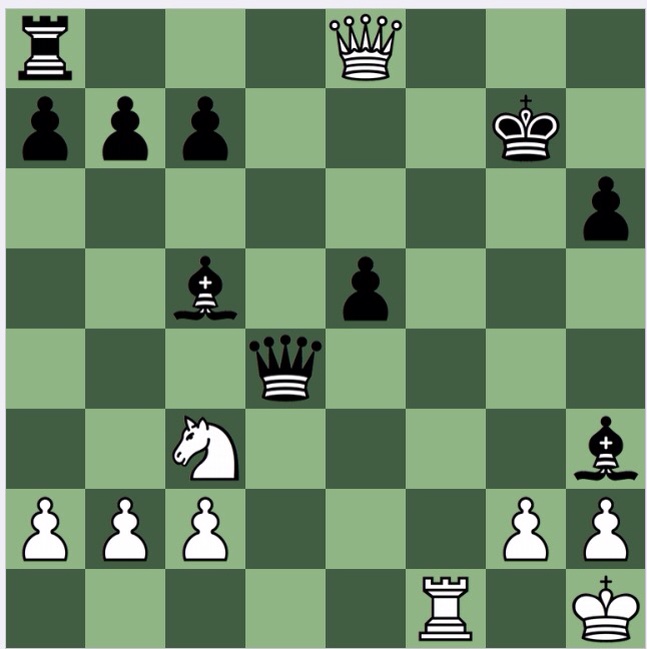
4 Qa8 Bg2+ 5 Kg2[] Qg4+ 6 Kh1 Qh3!!
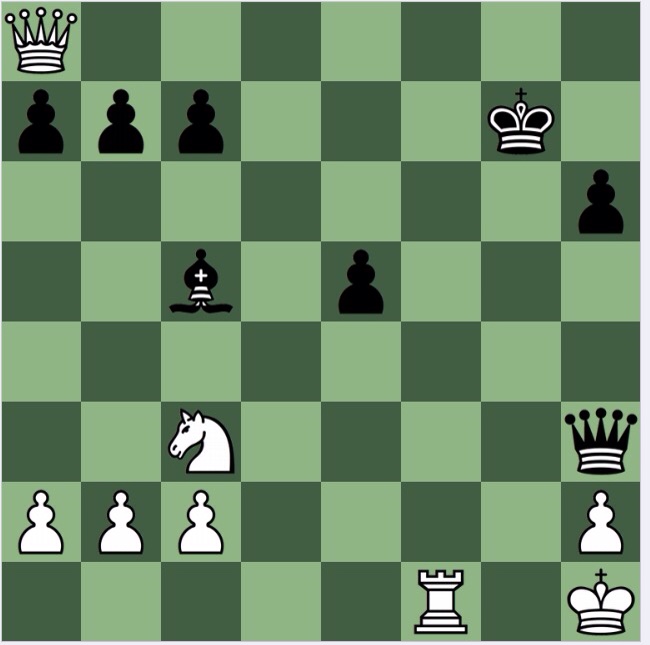
7 Rg1+ and black has a perpetual.
So, Reitstein concludes it was a draw.
But is it? Stockfish (2014) suggests 1 Bh6 gh 2 Rd1!!
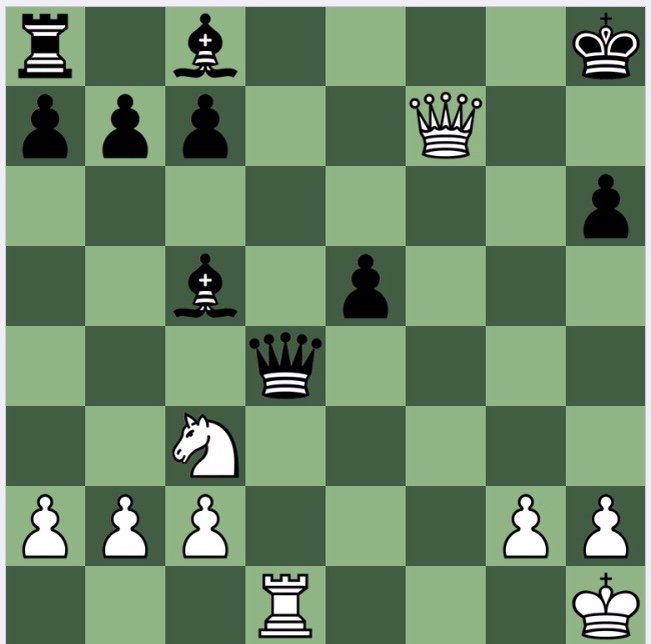
The engine doesn't like 2…Qd1+ 3 Nd1 Bg4, defeating it by 4 Qc4, exchanging one of black's bishops, so that it results in Q v R+B where black's king is open, and some of his pawns drop off:1-0. So 2..Qh4 when 3 Qe8+! Kh7 (3…Kg7? 4 Qe5+ and the LPDOS Bc5 drops off due to the fork) 4 Rf1!
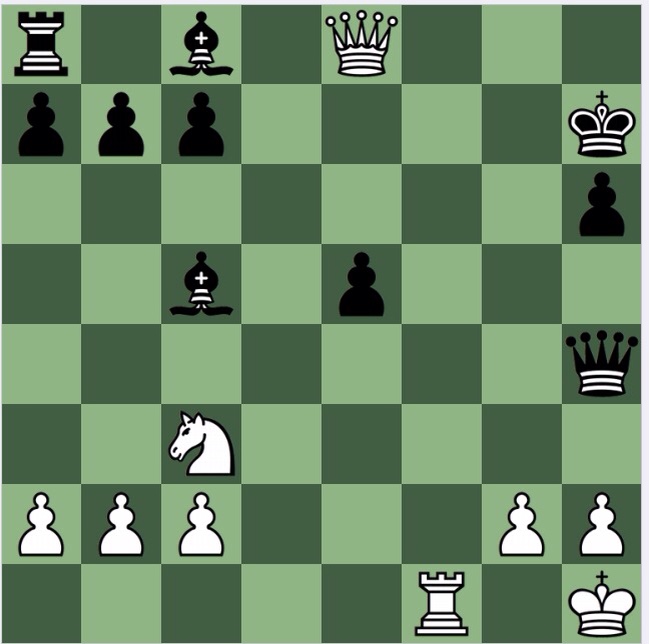
There is a ever so subtle but key difference between the above position and the previous line in which Bh3!! saved the day. The difference is not that the black queen is on h4, but that the black king is on h7! (and not on g7). So 4…Bh3 doesn't now work because 5 Qa8 Bg2+ 6 Kg2[] Qg4+ 7 Kh1[] Qh3 which is very similar except that white can now play 8 Rf7+! since the K is not on g7, so the rook can't be captured. 8…Kg6[] 9 Qg8+ Kh5[] 10 Ne4 1-0 (or 9 Qe8).
So, I suspect, after all, it is a win, but by a subtle change of move order. Chess is a truly deep game.
I am not sure what I have written is the last word in 2014, or whether Komodo or another supremely strong engine could find yet more depths. As I finish this posting, Stockfish is pretty confident that 1 Bh6 is winning. As an aside, at first it liked 1 Bg5, but then after 1…Bg4 2 Qc7 Rf8 it assesses the position as 0.0, giving the line 3 h3 Bf3!! 4 gf Qf2! 5 Qb7 Qg3!!- high class tip toeing, for sure.
Overall, an excellent puzzle: one for Aagaardian analysis, or for an article by Dvortesky.
White to play and win
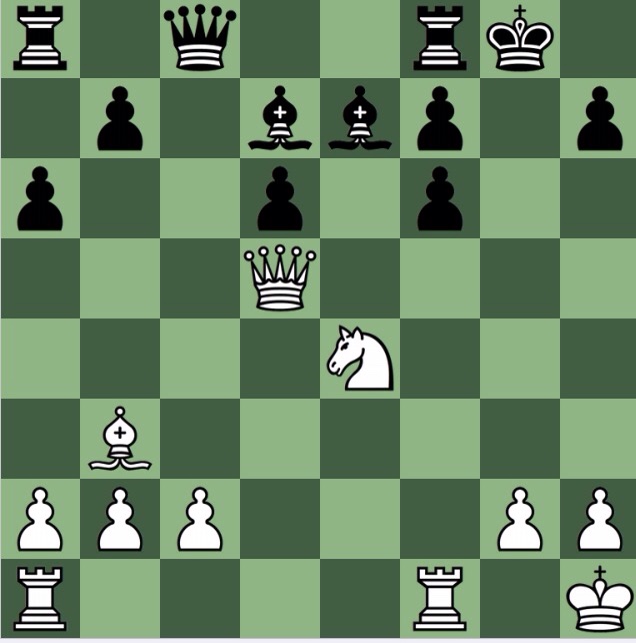
P Aalbersberg v I Friedman 1965
Solution
Slightly unsatisfactory today, since many lines win. I preferred the move played in the game, 1 Rf6, though it is not really any better than 1 Nf6+; 1 Qd4 (which the engine prefers); or 1 Rf3 (a good old fashioned rook lift, also favoured by Stockfish.
None lead to a quick 1-0, but all lead to a +2 or similar evaluation, so on this occasion I won't give detailed lines.
 allanbeardsworth