A two part puzzle today, given as separate postings.
Part two
White to play and draw, after black instead played …Kf7 in the diagram position, rather than the winning move given in the previous posting.
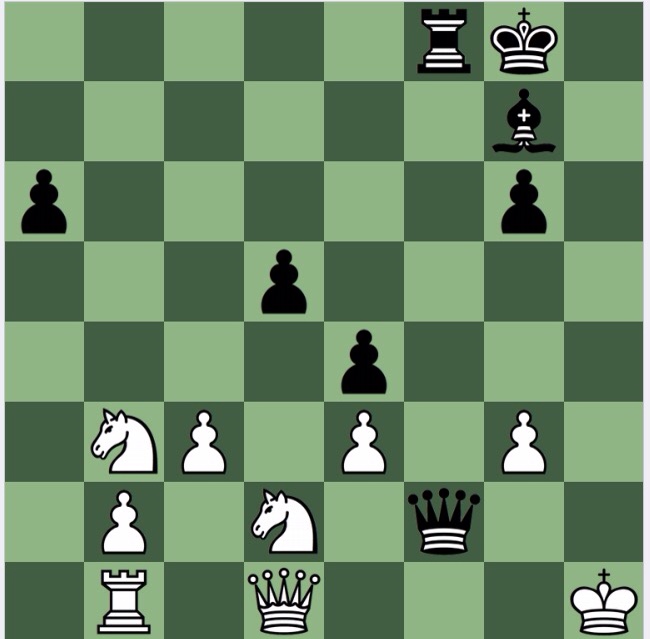
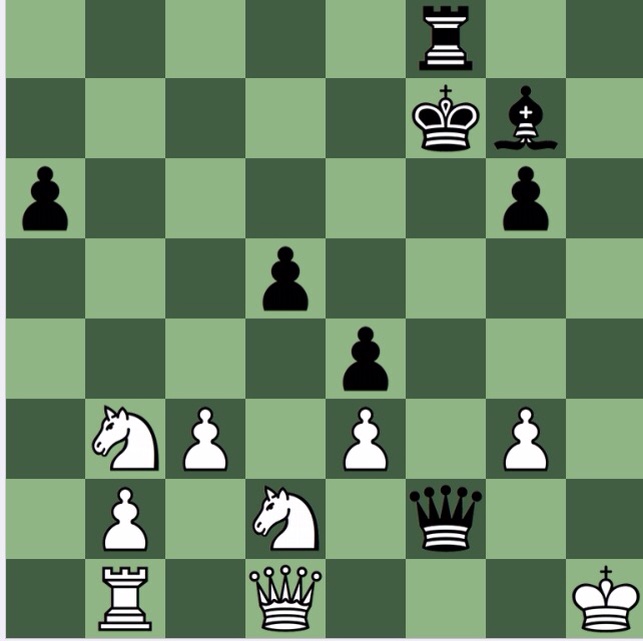
KF Kirby v P Kroon 1967-68
Solution
1 Nf3 is a move I would play more out of hope than from assurance: if it doesn’t work, then there is nothing else, and all I would do is hope there is perpetual.
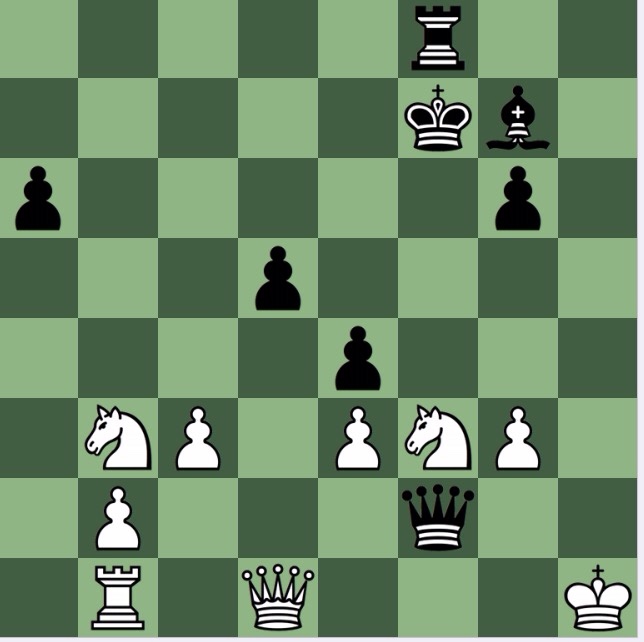
After 1..Kf7? 2 Nf3 ef 3 Qd5+ Kf6, all that white has to do is find 4 Qd4+! locking black’s king in his box, not permitting it to scuttle away- 4 Qd6+? Kg5 and Kh6 etc; after 4 Qd4+, 4…Kg5 is met by 5 Qh4+ pushing the king back into the open.
 Posted with Blogsy
A two part puzzle today, given as separate postings.
Part one
Black to play and win
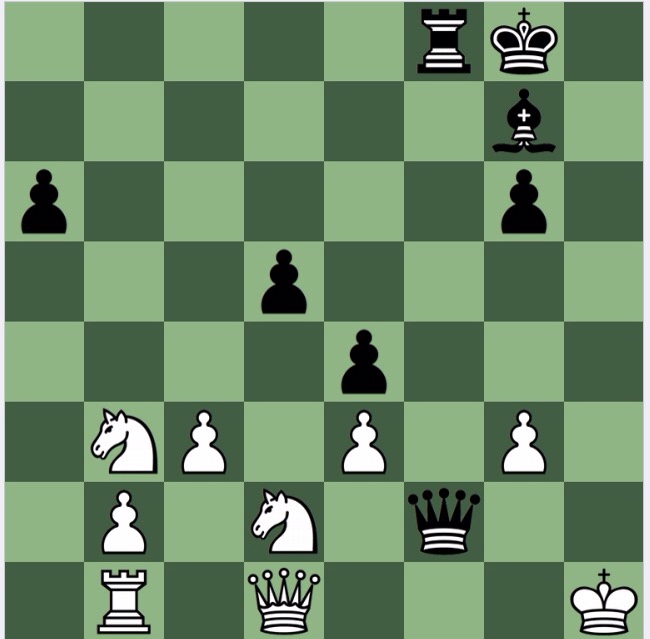
KF Kirby v P Kroon 1967-68
Solution
Simple enough, when you know it is a puzzle: the rook lift 1…Rf5 decides.
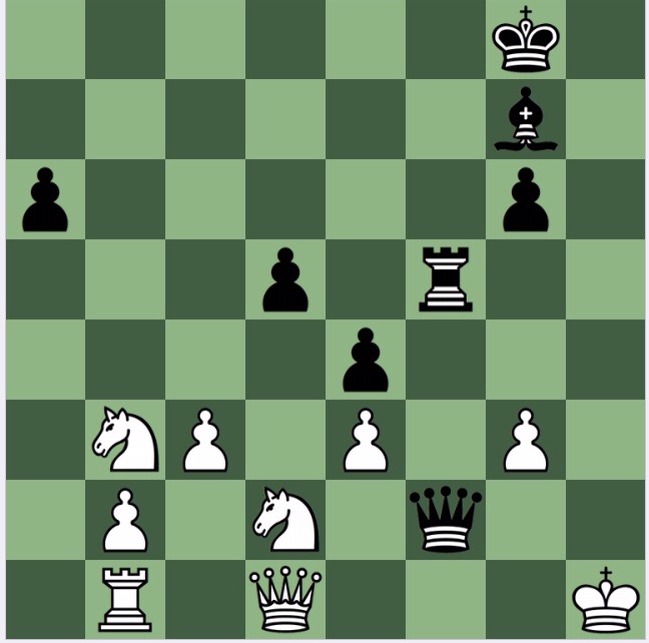
All white can do is grovel on, with 2 Nf1 Rh5+ 3 Qh5 gh, but it is clearly hopeless.
White to play and win
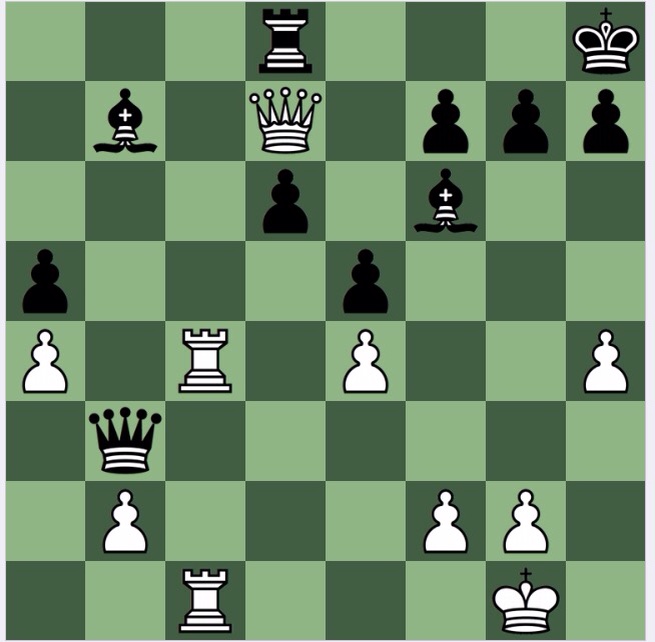
Black has just played Rf8-d8.
H Leicher v D Macfarlane 1980
Solution
A nice variant of problems based on back rank motifs. 1 Rc8! and if 1…Bc8 2 Rc8 Qb6 3 Qd8+!
There are minor lines, such as 1…Rg8 2 Rg8+ and 3 Qe8+.
However, there is more: instead of 2..Qb6??, black can continue the game by moving a pawn, to give luft to his king. In the game, black played 2…h5, and Reitstein just says it is a won queen and pawn ending, which it probably is. Better I think is 2…g6 and after 3 Rd8+ Bd8 4 Qd8+ Kg7 5 Qa5 Qb2 6. Qe1 we reach the following position:
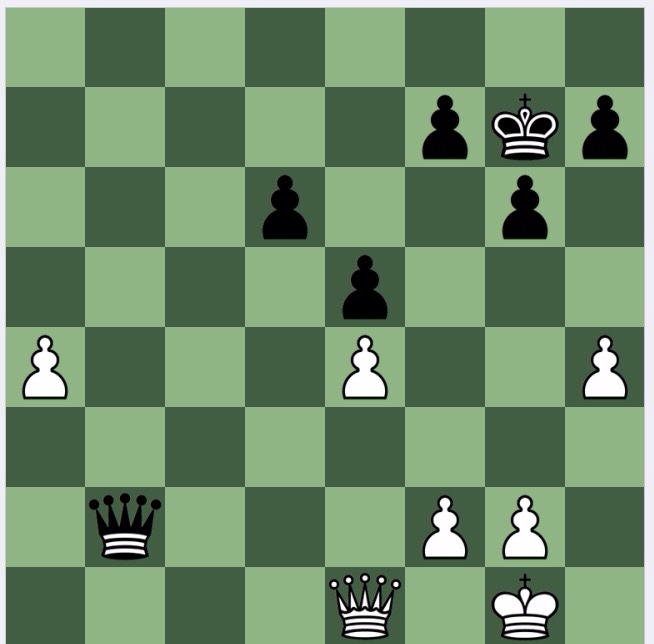
An equivalent position is reached if 2…h5: however, in the above diagram, maybe black can play f5, and eventual open up the white king so that black can check and check and check. I suspect Carlsen would win as white, I have no idea if he could draw as black.
Black to play and win
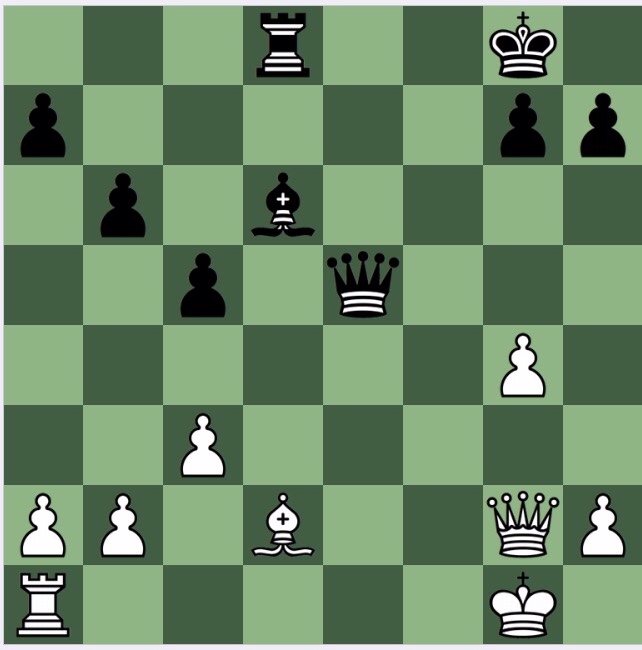
A Laubscher v J Santos 2005
Solution
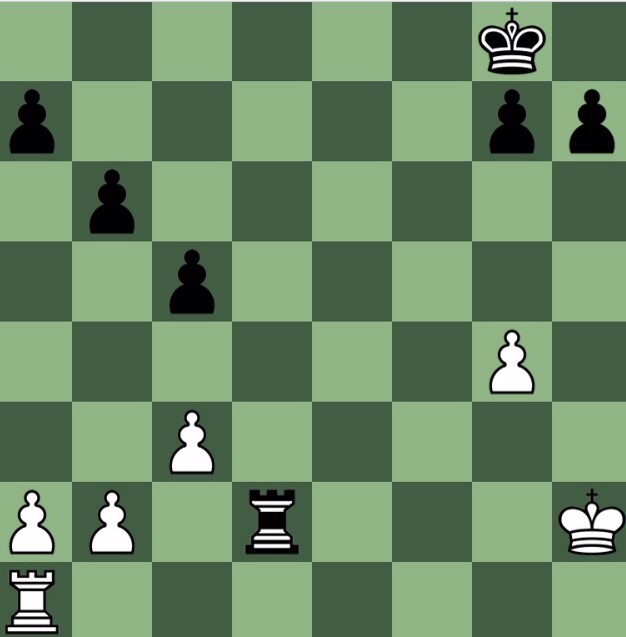
Easy, today, examine all biffs takes you straight away to 1…Qh2+ 2 Qh2 (2 Kf1?? Rf8+ picks up the queen) Bh2+ 3 Kh2 Rd2+.
White to play and win
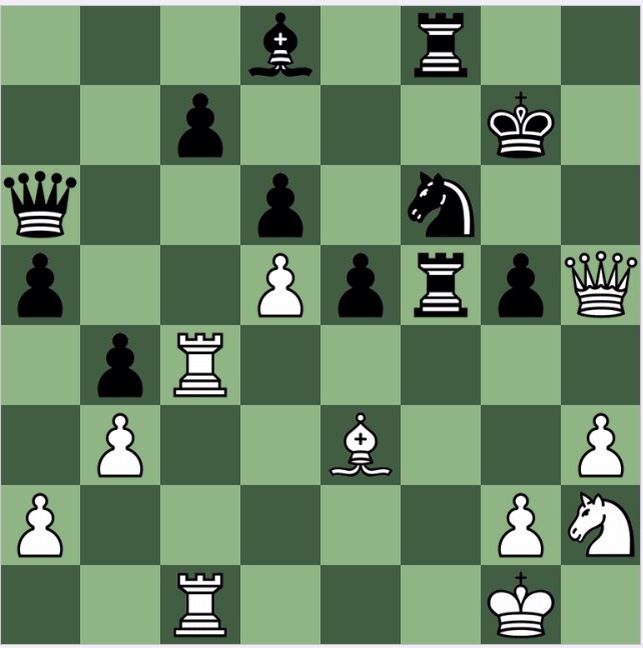
JJ Steenkamp v NP Van der Nat 1997
Solution
Examine all biffs quickly leads to 1 Rc7+!, a fairly obvious breakthrough sacrifice. 1…Bc7 2 Rc7+ is 1-0.
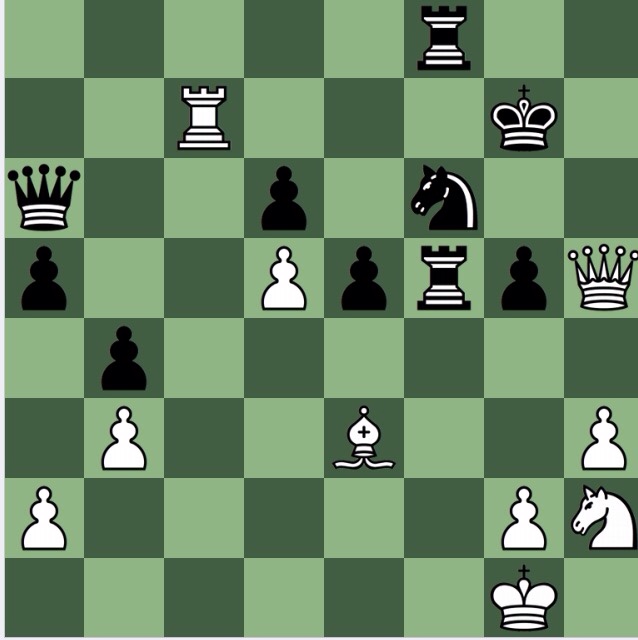
Now, the best black can do is grovel with 2…Nd7 (2…Kg8 3 Qg6+ and 4 Qg7 mate) 3 Rd7+ R(either)f7 4 Rf7+ Rf7 and 5 Qg5+ with a winning position.
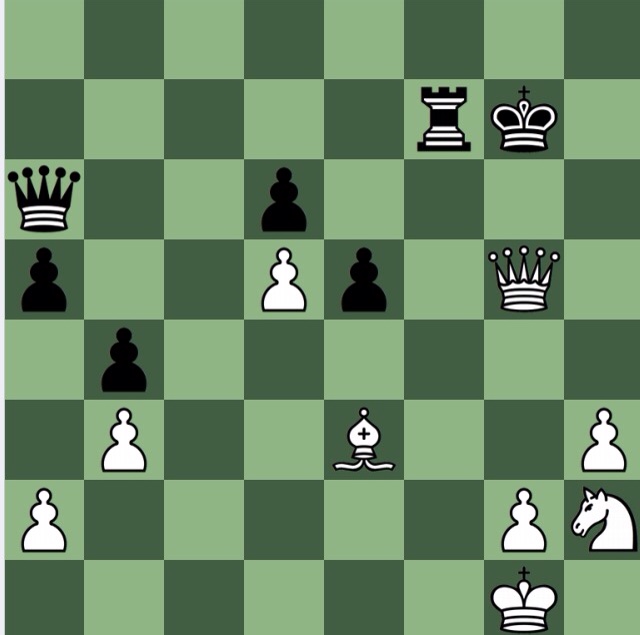
I did wonder if black might strengthen his defence by not taking on c7, keeping his bishop defending g5 and hoping that white's Rc1 is superfluous. But after 1 Rc7+ Nd7, 2 Rd7+ R5f7 (R8f7 drops the Bd8)
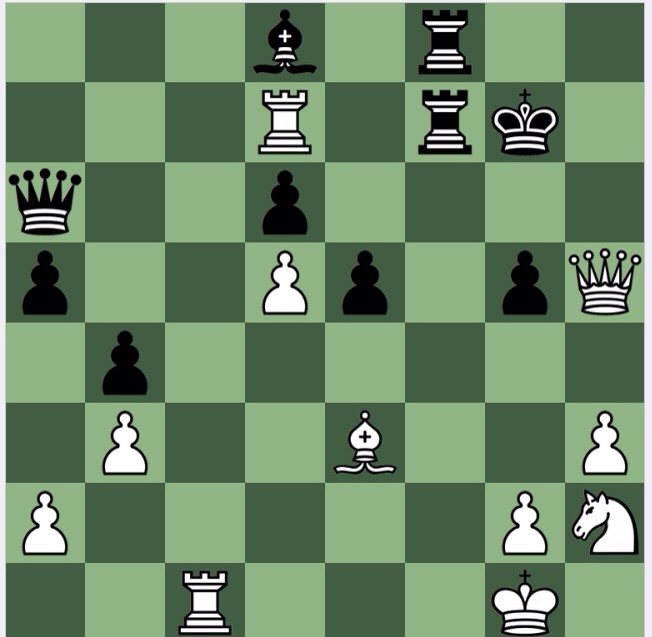
White has the tictac 3 Rd8! all the same: 3…Rd8 4 Qg5+ picks up the LPDO Rd8 by the double attack. Nice.
Black to play and win
HE Price v M Levitt 1988
Solution
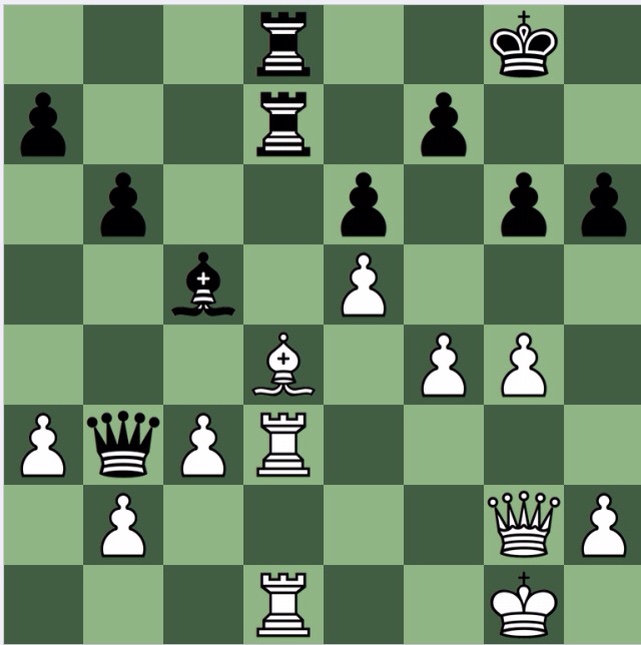
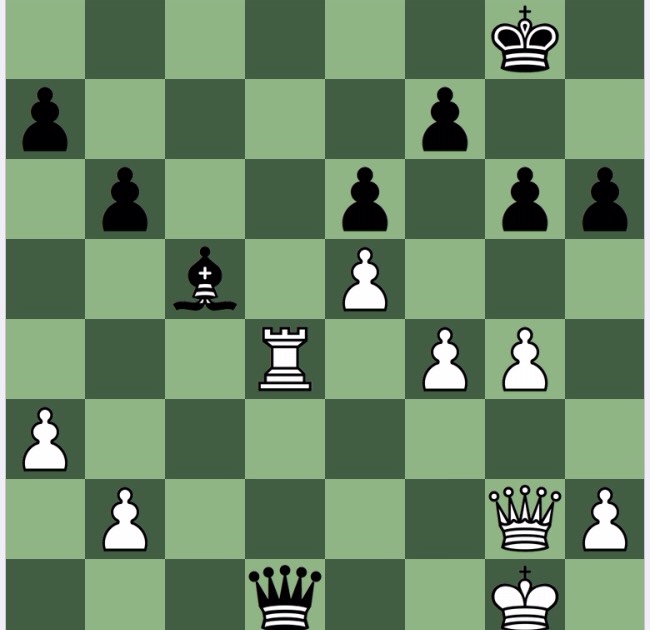
Straightforward enough today, just a little clear calculation needed, the motif of the Rd1 becoming LPDO being apparent.
1…Rd4 2 cd Rd4 3 Rd4 Qd1+ and mops up; there are ancillary lines, but all similar themed.
White to play and win
D Friedgood v A Savinson 1966
Solution
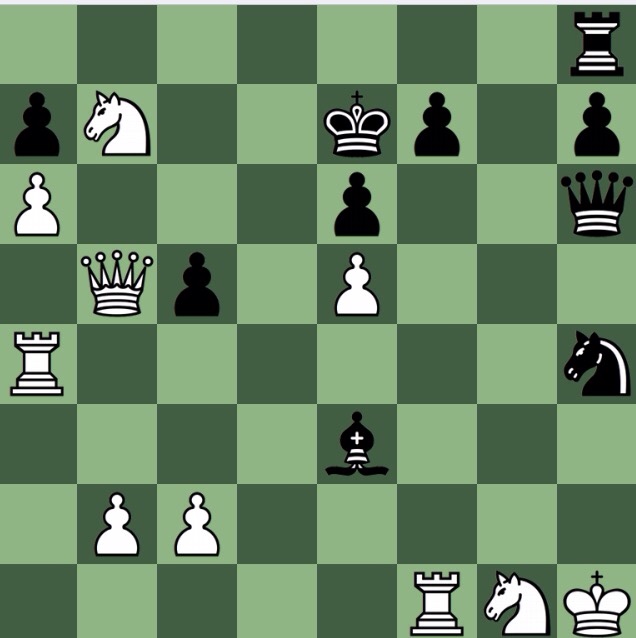
White’s king is very exposed, so urgent action is called for. Examine all biffs becomes examine all checks, and only 1 Rf7+! makes sense, after which 1…Kf7[] is forced. Then 2 Qd7+ and black's king can go to three squares.
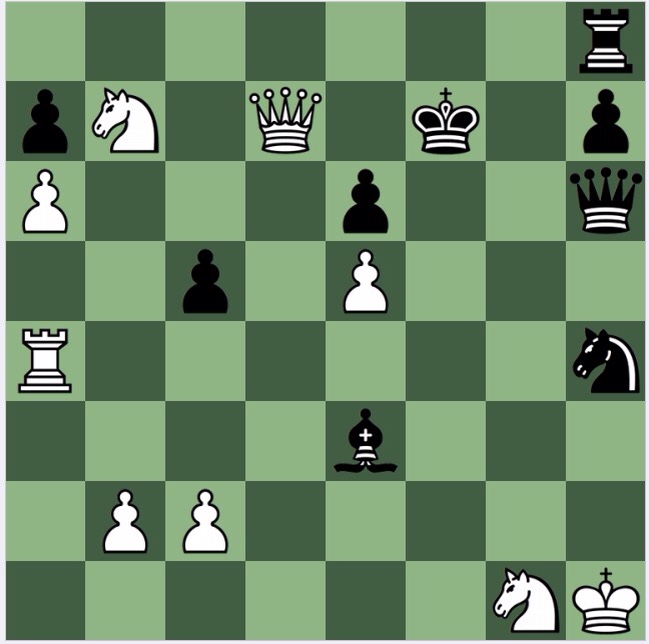
2…Kf8 or 2…Kg8 permit a human player (by which I mean an engine might find something more precise) to simply regain the sacrificed material, with 3 Qd8+ hitting the Nh4, and if 3…Kf7? 4 Nd6+ Kg7 5 Qe7+ (that line can be continued if necessary- 5…Kg8 6 Qf7 mate, 5…Kg6 6 Qf6+ Kh5[] 7 Rh4 mate), or if 3…Kg7 4 Qe7+, protects the queen before next playing R*h4, when black's exposed king can't survive.
So 2…Kg6 when a similar pursuit happens. 3 Qe6+ Kg7 4 Qe7+ is as above, picking up the horsey before continuing with checks. 3…Kh5?? 4 Qg4 mate, and also 3…Kg5?? 4 Qg4 mate.
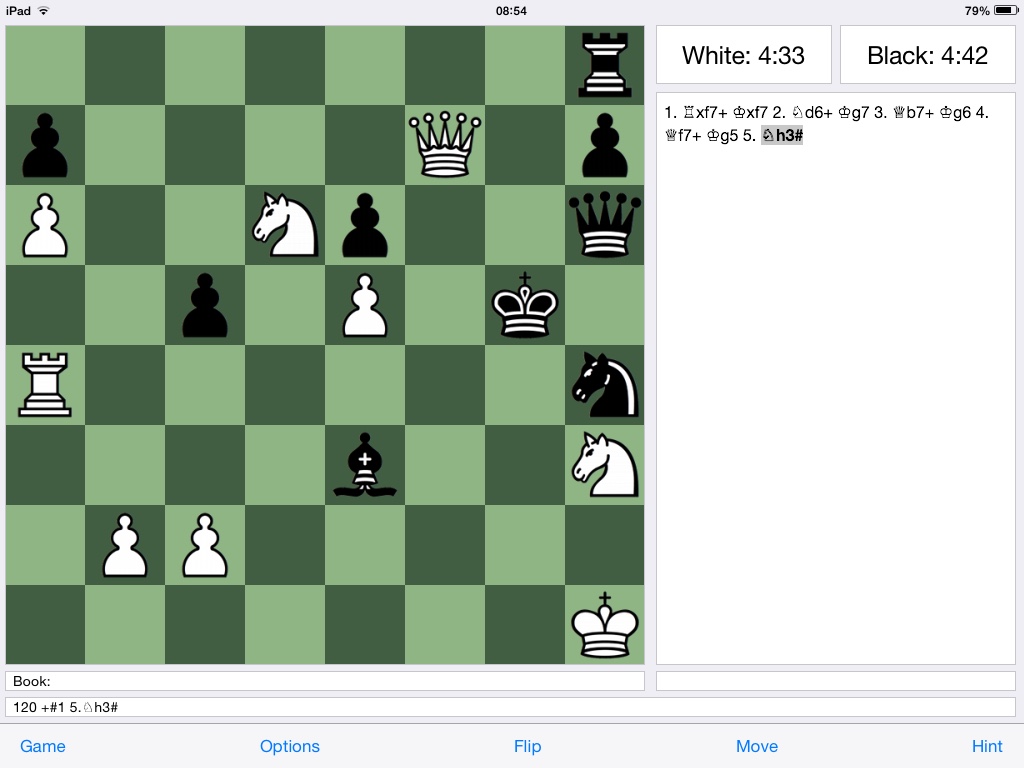
Having written the above, I turned on the engine, and it prefers (in the sense +12 cf +6) the even stronger 2 Nd6+!, which is also what Friedgood played. There is a nice mate in the principal line:
White to play and win
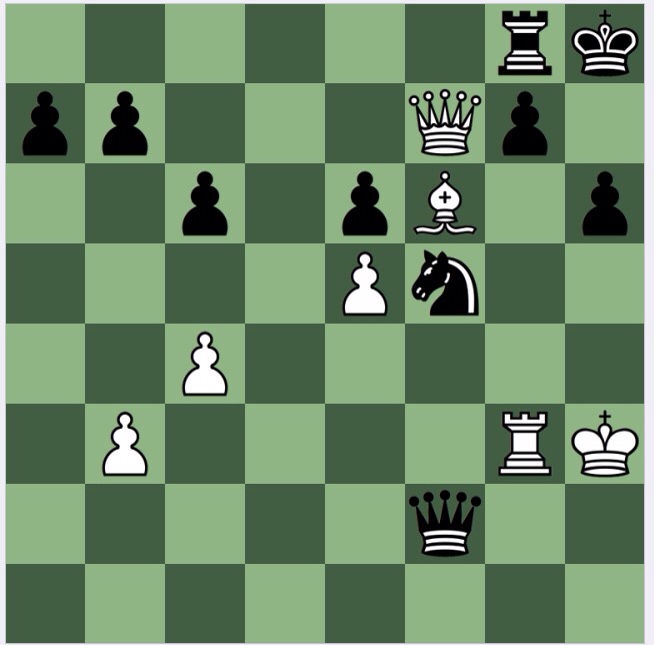
RJ Shaw v S Van de Venter 1997
Solution
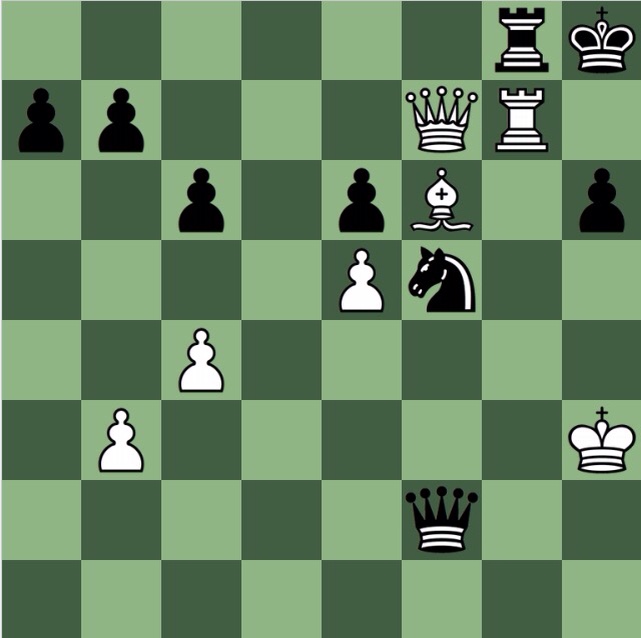
This one isn't too hard, but is optically tricky. But as soon as you see 1 Rg7! Qf3+ (say) 2 Rg3 disc +, then the rest is easy. After 1 Rg7! Ng7, the LPDO Qf3 drops off, and after 1…Rg7 2 Bg7+ Kh7, 3 Bf6+ mates.
Black to play and win
White plays 1 d4 here
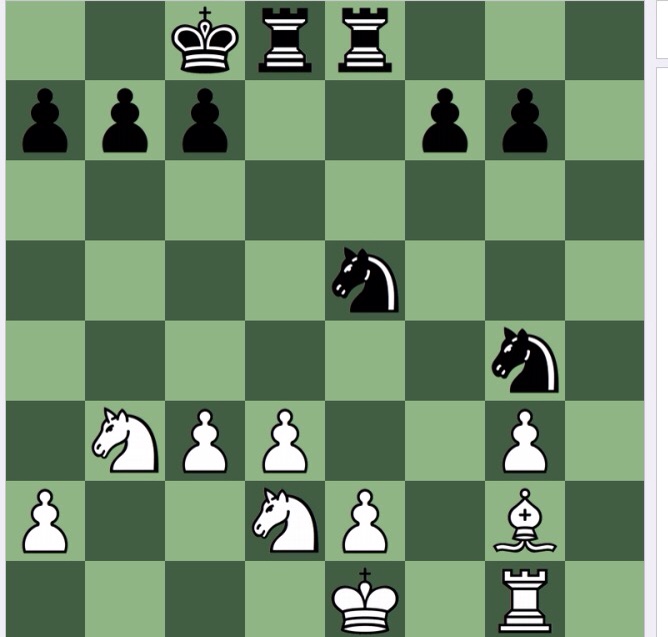
M Bleiden v BE Siegheim 1905
Solution
A rest day today.
1…Nd3+ 2 Kd1 (or Kf1) Ne3 is mate. Pretty, but not hard.
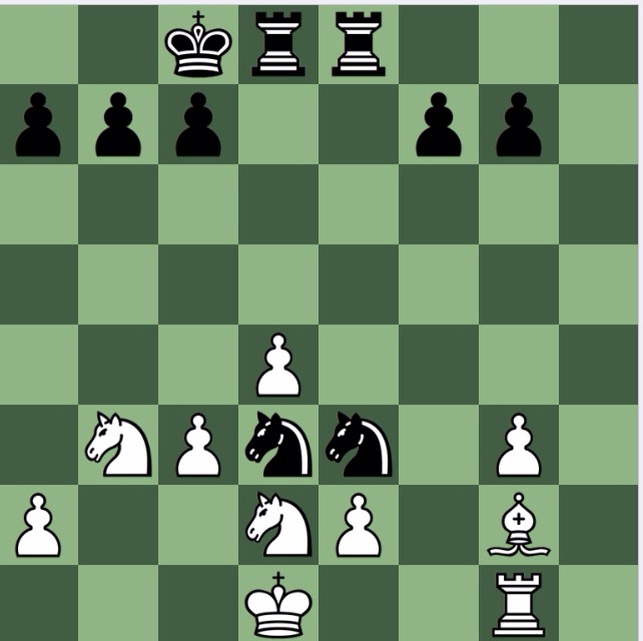
I can only imagine that white knew he was lost, and that e.g. Kd1 would just be a protracted loss (black is the exchange up) and so give black the pleasure of a pretty mate.
White to play and win
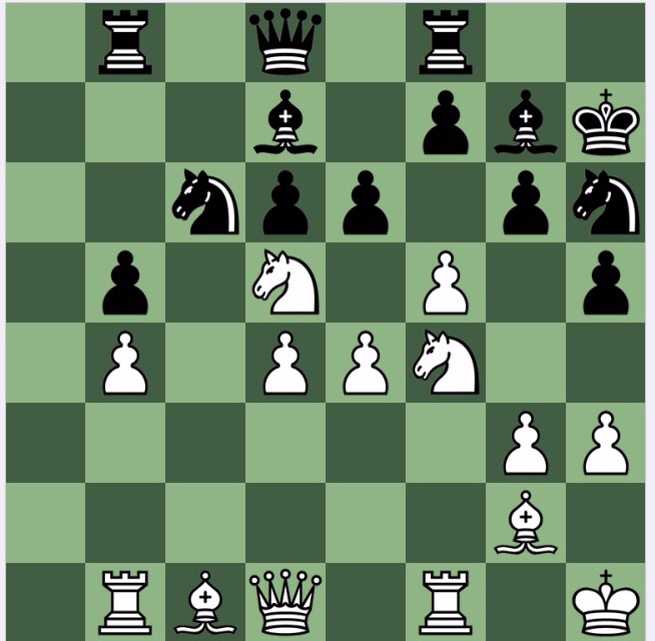
(A tough exercise)
A Haller v CC de Villiers 1971
Solution
1 Nh5! and if 1…gh 2 Qh5 ef 3 f6 regains at least one piece, with black's kingside ripped open, and both pieces about to be regained, for instance after 3…Bf6 4 Qh6+ and 5 Rf6.
Or, 1…ed 2 Ng7 Kg7 3 f6+ Kh7[] 4 Qd2 Ng8[] 5 Qg5 threatening 6 Qh4+.
—
I wouldn't be too suprised if other first moves also won (I have not had access to an engine to check this particular problem) but 1 Nh5! is a natural line opening line. I spent a lot of time on 1 f6! too, thinking it very strong, with a similar aim of displacing the protection of the Nh6 so that white can play the Qd2-g5-h4 manoueuvre. In fact, 1 f6 is more to my taste- I am fairly cowardly, and don't find it easy to sacrifice into unclear or indefinite positions.
 allanbeardsworth